National Standards & Best Practices for U.S. Museums

An essential reference work for the museum community, this publication is available as a free PDF to all museum members.


Collections Stewardship

Standards Regarding Collections Stewardship

  • The museum owns, exhibits or uses collections that are appropriate to its mission.
  • The museum legally, ethically and effectively manages, documents, cares for and uses the collections.
  • The museum conducts collections-related research according to appropriate scholarly standards.
  • The museum strategically plans for the use and development of its collections.
  • The museum, guided by its mission, provides public access to its collections while ensuring their preservation.
  • The museum allocates its space and uses its facilities to meet the needs of the collections, audience and staff.
  • The museum has appropriate measures in place to ensure the safety and security of people, its collections and/or objects, and the facilities it owns or uses.
  • The museum takes appropriate measures to protect itself against potential risk and loss.

Purpose and Importance

Stewardship is the careful, sound and responsible management of that which is entrusted to a museum’s care. Possession of collections incurs legal, social and ethical obligations to provide proper physical storage, management and care for the collections and associated documentation, as well as proper intellectual control. Collections are held in trust for the public and made accessible for the public’s benefit. Effective collections stewardship ensures that the objects the museum owns, borrows, holds in its custody and/or uses are available and accessible to present and future generations. A museum’s collections are an important means of advancing its mission and serving the public. 

Implementation

Museums are expected to: plan strategically and act ethically with respect to collections stewardship matters; legally, ethically and responsibly acquire, manage and dispose of collection items as well as know what collections are in its ownership/custody, where they came from, why it has them and their current condition and location; and provide regular and reasonable access to, and use of, the collections/objects in its custody.

Achieving this standard requires thorough understanding of collections stewardship issues to ensure thoughtful and responsible planning and decision making. With this in mind, national standards emphasize systematic development and regular review of policies, procedures, practices and plans for the goals, activities and needs of the collections.

How Does A Museum Assess Whether Its Collections and/or Objects Are Appropriate for Its Mission?

This is determined by comparing the institution’s mission—how it formally defines its unique identity and purpose, and its understanding of its role and responsibility to the public—to two things: (1) the collections used by the institution; and (2) its policies, procedures and practices regarding the development and use of collections (see also the Standards Regarding Institutional Mission Statements). 

A review of a museum’s collections stewardship practices examines: whether the mission statement or collections documents (e.g., collections management policy, collections plan, etc.) are clear enough to guide collections stewardship decisions; whether the collections owned by the museum, and objects loaned and exhibited at the museum, fall within the scope of the stated mission and collections documents; and whether the mission and other collections stewardship-related documents are in alignment and guide the museum’s practices. 

Assessing Collections Stewardship 

There are different ways to manage, house, secure, document and conserve collections, depending on their media and use, and the museum’s own discipline, size, physical facilities, geographic location and financial and human resources. Therefore, one must consider many facets of an institution’s operations that, taken together, demonstrate the effectiveness of its collections stewardship policies, procedures and practices, and assess them in light of varying factors. For instance, museums may have diverse types of collections categorized by different levels of purpose and use—permanent, educational, archival, research and study, to name a few—that may have different management and care needs. These distinctions should be articulated in collections stewardship-related policies and procedures. In addition, different museum disciplines may have different collections stewardship practices, issues and needs related to their specific field. Museums are expected to follow the standards and best practices appropriate to their respective discipline and/or museum type as applicable. 

The standards require that:

  • A current, approved, comprehensive collections management policy is in effect and actively used to guide the museum’s stewardship of its collections.
  • The human resources are sufficient, and the staff have the appropriate education, training and experience to fulfill the museum’s stewardship responsibilities and the needs of the collections.
  • Staff are delegated responsibility to carry out the collections management policy.
  • A system of documentation, records management and inventory is in effect to describe each object and its acquisition (permanent or temporary), current condition and location and movement into, out of and within the museum.
  • The museum regularly monitors environmental conditions and takes proactive measures to mitigate the effects of ultraviolet light, fluctuations in temperature and humidity, air pollution, damage, pests and natural disasters on collections.
  • An appropriate method for identifying needs and determining priorities for conservation/care is in place.
  • Safety and security procedures and plans for collections in the museum’s custody are documented, practiced and addressed in the museum’s emergency/disaster preparedness plan.
  • Regular assessment of, and planning for, collection needs (development, conservation, risk management, etc.) takes place and sufficient financial and human resources are allocated for collections stewardship.
  • Collections care policies and procedures for collections on exhibition, in storage, on loan and during travel are appropriate, adequate and documented.
  • The scope of a museum’s collections stewardship extends to both the physical and intellectual control of its property.
  • Ethical considerations of collections stewardship are incorporated into the appropriate museum policies and procedures.
  • Considerations regarding future collecting activities are incorporated into institutional plans and other appropriate policy documents.

Standards Regarding Loaning Collections to Non-Museum Entities

Museums hold collections in trust for the public. As stewards, museums fulfill their fiduciary and ethical responsibilities by preserving, caring for and providing access to collection objects for the benefit of the public. The Alliance recognizes that some museums loan objects from their collection to non-museum entities and encourages museums that do so to consider best practices for collections care and accessibility, and public accountability.

In some instances, loaning objects from the collection to non-museum entities may jeopardize the level of care provided for the items. This may constitute a breach of a museum’s public trust responsibility and be perceived as an inappropriate or unethical use of objects held and maintained for the benefit of the public. Further, loaning objects from the collection to non-museum entities may result in inappropriate or inadequate practices in collections documentation and limit public access to the items.

If a museum engages in the practice of loaning objects from the collection to organizations other than museums, such a practice should be considered for its appropriateness to the museum’s mission; be thoughtfully managed with the utmost care and in compliance with the most prudent practices in collections stewardship, ensuring that loaned objects receive the level of care, documentation and control at least equal to that given to the objects that remain on the premises; and be governed by clearly defined and approved institutional policies and procedures, including a collections management policy and code of ethics.

Standards Regarding the Unlawful Appropriation of Objects During the Nazi Era

This area of collections stewardship is of such sensitivity and high importance that it has separate standards and best-practice statements regarding a museum’s obligations. These statements have been promulgated by the field to provide guidance to museums in fulfilling their public trust responsibilities. 

General Principles 

The American Alliance of Museums, the U.S. National Committee of the International Council of Museums (ICOM-US), and the American museum community are committed to continually identifying and achieving the highest standard of legal and ethical collections stewardship practices. The Alliance's Code of Ethics for Museums states that the “stewardship of collections entails the highest public trust and carries with it the presumption of rightful ownership, permanence, care, documentation, accessibility, and responsible disposal.” 

When faced with the possibility that an object in a museum’s custody might have been unlawfully appropriated as part of the abhorrent practices of the Nazi regime, the museum’s responsibility to practice ethical stewardship is paramount. Museums should develop and implement policies and practices that address this issue in accordance with these guidelines. 

These guidelines are intended to assist museums in addressing issues relating to objects that may have been unlawfully appropriated during the Nazi era (1933–1945) as a result of actions in furtherance of the Holocaust or that were taken by the Nazis or their collaborators. For the purposes of these guidelines, objects that were acquired through theft, confiscation, coercive transfer or other methods of wrongful expropriation may be considered to have been unlawfully appropriated, depending on the specific circumstances.

In order to aid in the identification and discovery of unlawfully appropriated objects that may be in the custody of museums, the Presidential Advisory Commission on Holocaust Assets in the United States (PCHA), Association of Art Museum Directors (AAMD), and the Alliance have agreed that museums should strive to: (1) identify all objects in their collections that were created before 1946 and acquired by the museum after 1932, that underwent a change of ownership between 1932 and 1946, and that were or might reasonably be thought to have been in continental Europe between those dates (hereafter, “covered objects”); (2) make currently available object and provenance (history of ownership) information on those objects accessible; and (3) give priority to continuing provenance research as resources allow. The Alliance, AAMD and PCHA also agreed that the initial focus of research should be European paintings and Judaica.

Because of the Internet’s global accessibility, museums are encouraged to expand online access to collection information that could aid in the discovery of objects unlawfully appropriated during the Nazi era without subsequent restitution.

The Alliance and ICOM-US acknowledge that during World War II and the years following the end of the war, much of the information needed to establish provenance and prove ownership was dispersed or lost. In determining whether an object may have been unlawfully appropriated without restitution, reasonable consideration should be given to gaps or ambiguities in provenance in light of the passage of time and the circumstances of the Holocaust era. The Alliance and ICOM-US support efforts to make archives and other resources more accessible and to establish databases that help track and organize information.

The Alliance urges museums to handle questions of provenance on a case-by-case basis in light of the complexity of this problem. Museums should work to produce information that will help to clarify the status of objects with an uncertain Nazi-era provenance. Where competing interests may arise, museums should strive to foster a climate of cooperation, reconciliation and commonality of purpose. 

The Alliance affirms that museums act in the public interest when acquiring, exhibiting and studying objects. These guidelines are intended to facilitate the desire and ability of museums to act ethically and lawfully as stewards of the objects in their care, and should not be interpreted to place an undue burden on the ability of museums to achieve their missions.

Acquisitions

It is the Alliance's position that museums should take all reasonable steps to resolve the Nazi-era provenance status of objects before acquiring them for their collections—whether by purchase, gift, bequest or exchange.

  • Standard research on objects being considered for acquisition should include a request that the sellers, donors or estate executors offering an object provide as much provenance information as they have available, with particular regard to the Nazi era.
  • Where the Nazi-era provenance is incomplete or uncertain for a proposed acquisition, the museum should consider what additional research would be prudent or necessary to resolve the Nazi-era provenance status of the object before acquiring it. Such research may involve consulting appropriate sources of information, including available records and outside databases that track information concerning unlawfully appropriated objects.
  • In the absence of evidence of unlawful appropriation without subsequent restitution, the museum may proceed with the acquisition. Currently available object and provenance information about any covered object should be made public as soon as practicable after the acquisition.
  • If credible evidence of unlawful appropriation without subsequent restitution is discovered, the museum should notify the donor, seller or estate executor of the nature of the evidence and should not proceed with acquisition of the object until taking further action to resolve these issues. Depending on the circumstances of the particular case, prudent or necessary actions may include consulting with qualified legal counsel and notifying other interested parties of the museum’s findings. 
  • The Alliance acknowledges that under certain circumstances acquisition of objects with uncertain provenance may reveal further information about the object and may facilitate the possible resolution of its status. In such circumstances, the museum may choose to proceed with the acquisition after determining that it would be lawful, appropriate and prudent and provided that currently available object and provenance information is made public as soon as practicable after the acquisition.
  • Museums should document their research into the Nazi-era provenance of acquisitions.
  • Consistent with current practice in the museum field, museums should publish, display or otherwise make accessible recent gifts, bequests and purchases, thereby making all acquisitions available for further research, examination and public review and accountability.

Loans

It is the Alliance's position that in their role as temporary custodians of objects on loan, museums should be aware of their ethical responsibility to consider the status of material they borrow as well as the possibility of claims being brought against a loaned object in their custody. 

  • Standard research on objects being considered for incoming loan should include a request that lenders provide as much provenance information as they have available, with particular regard to the Nazi era.
  • Where the Nazi-era provenance is incomplete or uncertain for a proposed loan, the museum should consider what additional research would be prudent or necessary to resolve the Nazi-era provenance status of the object before borrowing it. 
  • In the absence of evidence of unlawful appropriation without subsequent restitution, the museum may proceed with the loan. 
  • If credible evidence of unlawful appropriation without subsequent restitution is discovered, the museum should notify the lender of the nature of the evidence and should not proceed with the loan until taking further action to clarify these issues. Depending on the circumstances of the particular case, prudent or necessary actions may include consulting with qualified legal counsel and notifying other interested parties of the museum’s findings. 
  • The Alliance acknowledges that in certain circumstances public exhibition of objects with uncertain provenance may reveal further information about the object and may facilitate the resolution of its status. In such circumstances, the museum may choose to proceed with the loan after determining that it would be lawful and prudent and provided that the available provenance about the object is made public. 
  • Museums should document their research into the Nazi-era provenance of loans.

Existing Collections

It is the Alliance's position that museums should make serious efforts to allocate time and funding to conduct research on covered objects in their collections whose provenance is incomplete or uncertain. Recognizing that resources available for the often lengthy and arduous process of provenance research are limited, museums should establish priorities, taking into consideration available resources and the nature of their collections.

Research

  • Museums should identify covered objects in their collections and make public currently available object and provenance information.
  • Museums should review the covered objects in their collections to identify those whose characteristics or provenance suggest that research be conducted to determine whether they may have been unlawfully appropriated during the Nazi era without subsequent restitution.
  • In undertaking provenance research, museums should search their own records thoroughly and, when necessary, contact established archives, databases, art dealers, auction houses, donors, scholars and researchers who may be able to provide Nazi-era provenance information.
  • Museums should incorporate Nazi-era provenance research into their standard research on collections.
  • When seeking funds for applicable exhibition or public programs research, museums are encouraged to incorporate Nazi-era provenance research into their proposals. Depending on their particular circumstances, museums are also encouraged to pursue special funding to undertake Nazi-era provenance research. 
  • Museums should document their research into the Nazi-era provenance of objects in their collections.

Discovery of Evidence of Unlawfully Appropriated Objects

  • If credible evidence of unlawful appropriation without subsequent restitution is discovered through research, the museum should take prudent and necessary steps to resolve the status of the object, in consultation with qualified legal counsel. Such steps should include making such information public and, if possible, notifying potential claimants.
  • In the event that conclusive evidence of unlawful appropriation without subsequent restitution is found but no valid claim of ownership is made, the museum should take prudent and necessary steps to address the situation, in consultation with qualified legal counsel. These steps may include retaining the object in the collection or otherwise disposing of it.
  • The Alliance acknowledges that retaining an unclaimed object that may have been unlawfully appropriated without subsequent restitution allows a museum to continue to care for, research and exhibit the object for the benefit of the widest possible audience and provides the opportunity to inform the public about the object’s history. If the museum retains such an object in its collection, it should acknowledge the object’s history on labels and publications.

Claims of Ownership 

It is the Alliance's position that museums should address claims of ownership asserted in connection with objects in their custody openly, seriously, responsively and with respect for the dignity of all parties involved. Each claim should be considered on its own merits. 

  • Museums should review promptly and thoroughly a claim that an object in its collection was unlawfully appropriated during the Nazi era without subsequent restitution. 
  • In addition to conducting their own research, museums should request evidence of ownership from the claimant in order to assist in determining the provenance of the object.
  • If a museum determines that an object in its collection was unlawfully appropriated during the Nazi era without subsequent restitution, the museum should seek to resolve the matter with the claimant in an equitable, appropriate and mutually agreeable manner.
  • If a museum receives a claim that a borrowed object in its custody was unlawfully appropriated without subsequent restitution, it should promptly notify the lender and should comply with its legal obligations as temporary custodian of the object in consultation with qualified legal counsel.
  • When appropriate and reasonably practical, museums should seek methods other than litigation (such as mediation) to resolve claims that an object was unlawfully appropriated during the Nazi era without subsequent restitution.
  • The Alliance acknowledges that in order to achieve an equitable and appropriate resolution of claims, museums may elect to waive certain available defenses.

Fiduciary Obligations

Museums affirm that they hold their collections in the public trust when undertaking the activities listed above. Their stewardship duties and their responsibilities to the public they serve require that any decision to acquire, borrow, or dispose of objects be taken only after the completion of appropriate steps and careful consideration. 

  • Toward this end, museums should develop policies and practices to address the issues discussed in these guidelines.
  • Museums should be prepared to respond appropriately and promptly to public and media inquiries.

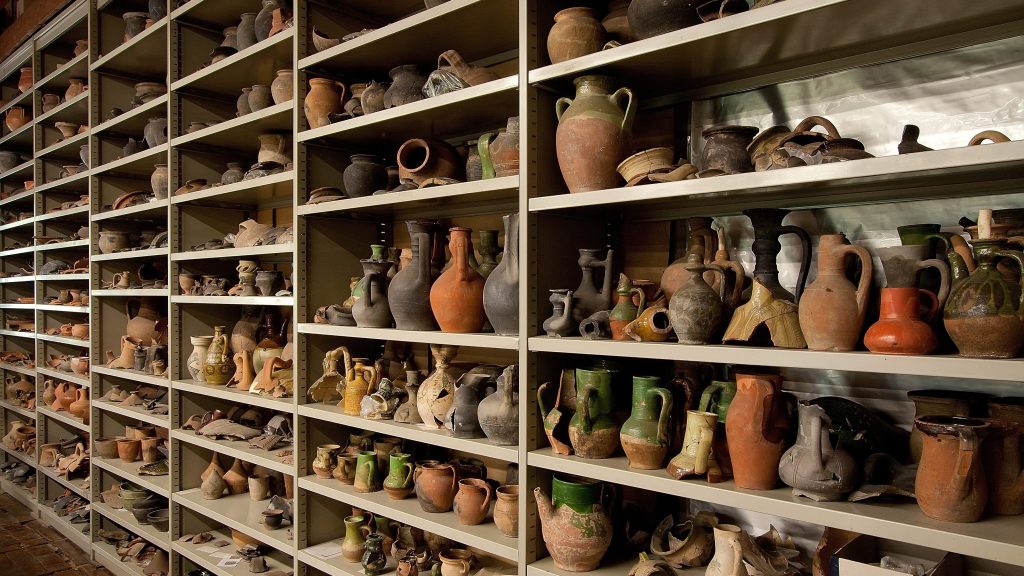
Standards Regarding Archaeological Material and Ancient Art

To promote public trust and accountability for U.S. museums, the Alliance offers the following standards to guide the operations of museums that own or acquire archaeological material and ancient art originating outside the United States.

Collections Policy

Museums should have a publicly available collections policy setting out the institution’s standards for provenance concerning new acquisitions of archaeological material and ancient art. 

New Acquisitions 

Museums should: 

  • rigorously research the provenance of an object prior to acquisition
  • make a concerted effort to obtain accurate written documentation with respect to the history of the object, including export and import documents, and
  • require sellers, donors, and their representatives to provide all available information and documentation.

Museums must comply with all applicable U.S. law, including treaties and international conventions of which the U.S. is a party, governing ownership and title, import and other issues critical to acquisitions decisions.

Beyond the requirements of U.S. law, museums should not acquire any object that, to the knowledge of the museum, has been illegally exported from its country of modern discovery or the country where it was last legally owned. 

In addition, the Alliance recommends that museums require documentation that the object was out of its probable country of modern discovery by November 17, 1970, the date on which the UNESCO Convention on the Means of Prohibiting and Preventing the Illicit Import, Export, and Transfer of Ownership of Cultural Property was signed. 

For objects exported from their country of modern discovery after November 17, 1970, the Alliance recommends that museums require documentation that the object has been or will be legally exported from its country of modern discovery, and legally imported into the United States.

The Alliance recognizes that there are cases in which it may be in the public’s interest for a museum to acquire an object, thus bringing it into the public domain, when there is substantial but not full documentation that the provenance meets the conditions outlined above. If a museum accepts material in such cases, it should be transparent about why this is an appropriate decision in alignment with the institution’s collections policy and applicable ethical codes.

Existing Collections

In order to advance further research, public trust, and accountability museums should make available the known ownership history of archaeological material and ancient art in their collections, and make serious efforts to allocate time and funding to conduct research on objects where provenance is incomplete or uncertain. Museums may continue to respect requests for anonymity by donors.

Claims

Museums should respectfully and diligently address ownership claims to antiquities and archaeological material. Each claim, whether based on ethical or legal considerations, should be considered on its own merits.

When appropriate and reasonably practical, museums should seek to resolve claims through voluntary discussions directly with a claimant or facilitated by a third party.

Fiduciary Responsibilities

Members of the board, staff, and volunteers who participate in the acquisition and management of the collections should be knowledgeable concerning the legal compliance requirements and ethical standards that pertain to antiquities and archaeological materials, as well as the collecting policies and disclosure practices of the museum.