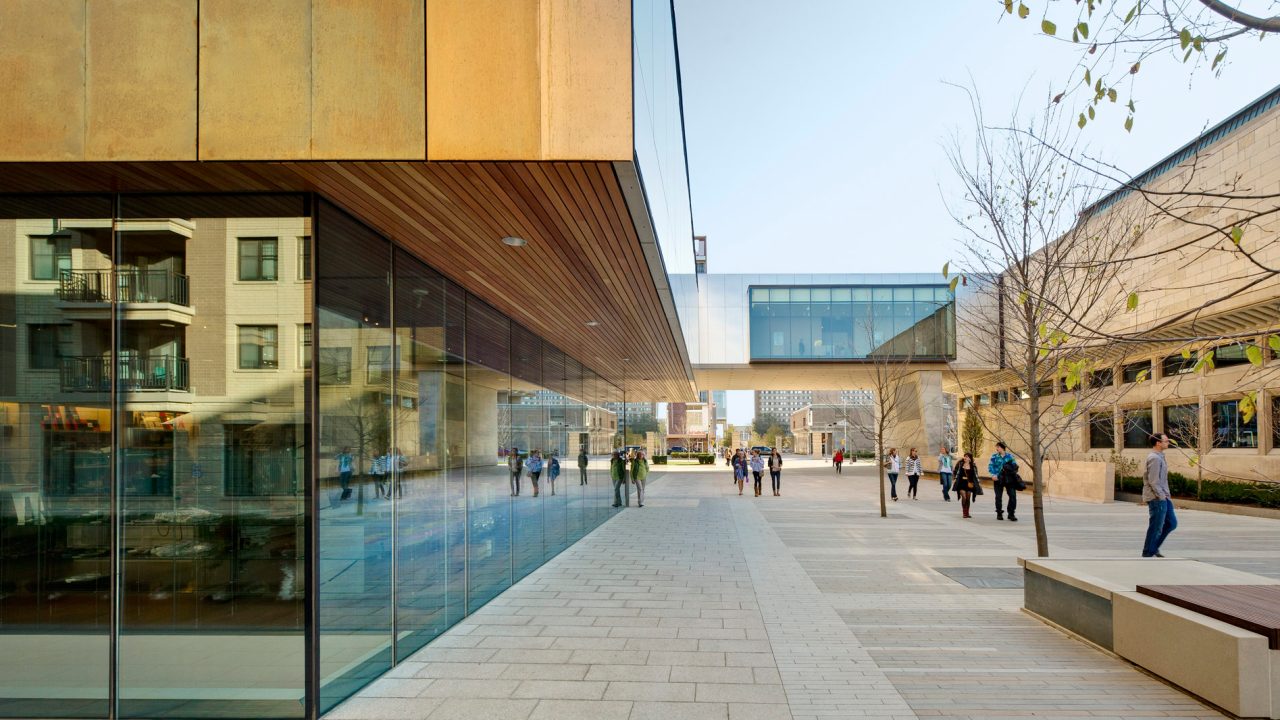
These days, when I stop by the café at the Chazen Museum of Art, I often find myself in conversation with my University of Wisconsin–Madison colleagues—students, staff, and professors from across the campus. I know that these informal conversations over a cup of coffee will help us all in our work in the future. I don’t know exactly how, but that’s part of the fun.
Until September of last year, the Chazen didn’t have a café. We had a retail store, and like many retail stores, it wasn’t doing very well. We could have simply shut it down, but it presented us with an opportunity to think about that space as part of a larger, Chazen-wide exploration of our purpose and role as a university museum.
The Chazen is at an interesting time in its history. Physically, we sit at a crossroads, facing both the campus and the greater Madison community. So, we are keenly aware of our need to serve both the UW–Madison community and the rest of Madison. We are also poised at a moment of great reflection and change.

In 1970, as the museum prepared to open as the Elvehjem Art Center, anti-war sentiment on the UW–Madison campus was high. A four-foot-tall plywood wall surrounding the construction site had become a canvas on which students shared their anxieties and musings, both serious and satirical, on the turbulent era.
Tensions reached a crescendo just three weeks before the scheduled museum opening, when a bomb exploded in nearby Sterling Hall, killing one and injuring several. The museum opened on schedule, providing a moment of respite for a community struggling to make sense of a bitterly divided nation.
This year, 2020, the Chazen (renamed in 2005) will celebrate its fiftieth anniversary. Like everyone in our field, we are trying to figure out how to “museum” in the twenty-first century. Because we are nested in a research university, we have unique opportunities to experiment and share our findings. Below are some of the things we’ve learned in my first few years as director.
The Power of Listening
When I came on board as director in 2017, my goal was to learn as much about being a university museum as I could. I took 145 meetings in my first month and committed to visiting artists’ studios. I knew there was a new path to be forged for the Chazen, but I was determined that the staff, community, and I would discover it together over time. The first steps were to make no assumptions, listen, and observe.
I was lucky; before I arrived, students from the university’s Bolz Center for Arts Administration had launched a research project to examine how undergraduates perceived the Chazen. In that research, we found empirical evidence of what I’d been hearing in all those meetings: the Chazen was widely known on campus, but not widely used. The reasons were many, but they could be summed up in one phrase: “We don’t feel like we’ve been invited.”
That’s a hard phrase to hear, because after all, we’re a university museum. We’re free and open to anyone. But as we started to look into the meaning of those words, we realized that being “invited” didn’t necessarily mean receiving a printed invitation in the mail.
- We heard stories of students being uncertain if the Chazen was open (our lobby is a huge space, and until recently, it was largely empty since our main galleries are upstairs).
- We were told that it was intimidating to be greeted by “policemen” (university security officers did their best to be welcoming, but they were still in uniform).
- And, over and over, we heard, “I’d like to go more, but I never know when you’re open.”
The Power of Research and Experimentation
At the Chazen, we are fortunate to be part of a large research university, one of the best in the world. In my first years as director, we have benefitted from that research, and also from the freedom to try new things. Piloting new programs, exploring new operational models; these are really hard for most museums to do. But in a university setting, we can experiment and learn from the process. I would argue that is fundamental to the mission of a research university and should encompass not just the faculty and academic departments, but the non-academic spaces (such as the museum) as well.
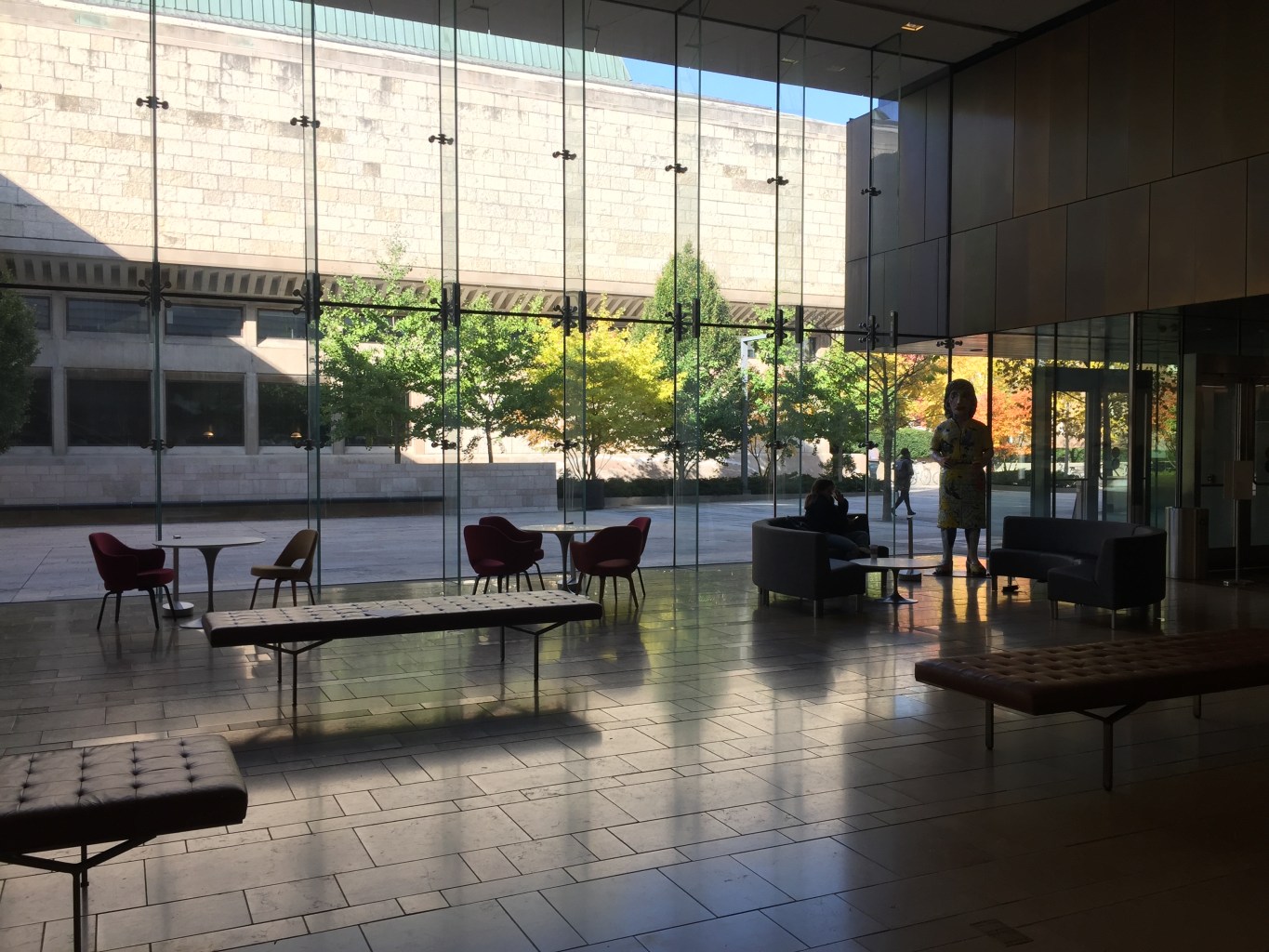
For example, in September of last year, we became the “most-open” among our peer museums in North America, increasing our open hours from forty-eight to eighty-four. We are now open from 8 a.m. to 8 p.m., seven days a week. We also made changes to make our lobby more inviting. In the first few months of this experiment, we’ve learned some valuable things:
- I assumed no one would visit the museum on Sunday mornings. I was wrong—it’s proven to be a busy time for us.
- Since we’ve always been closed on Mondays, we thought Monday would be our least busy day. We were wrong; it’s our third-least busy day. Clearly, people are visiting the museum on Mondays.
- If you give them a chair, people will sit. We’ve already ordered more seating for the Mead Witter Lobby, because the seating we added is always occupied. People seem to love spending time in that space if they can sit down.
Once we have a full year of data, we are excited to share it with the field, in the hope that what we learn could help challenge some of the long-held assumptions about museum attendance.
The Power of Partnerships
Being part of a university like UW–Madison presents an opportunity to form partnerships that help us make changes and try new things. It’s not always easy, because university bureaucracy can be tricky to navigate, but for the Chazen, it’s been vital to achieving our goals in a way that reflects our community and involves our fellow staff, faculty, and students. Here are a few examples:
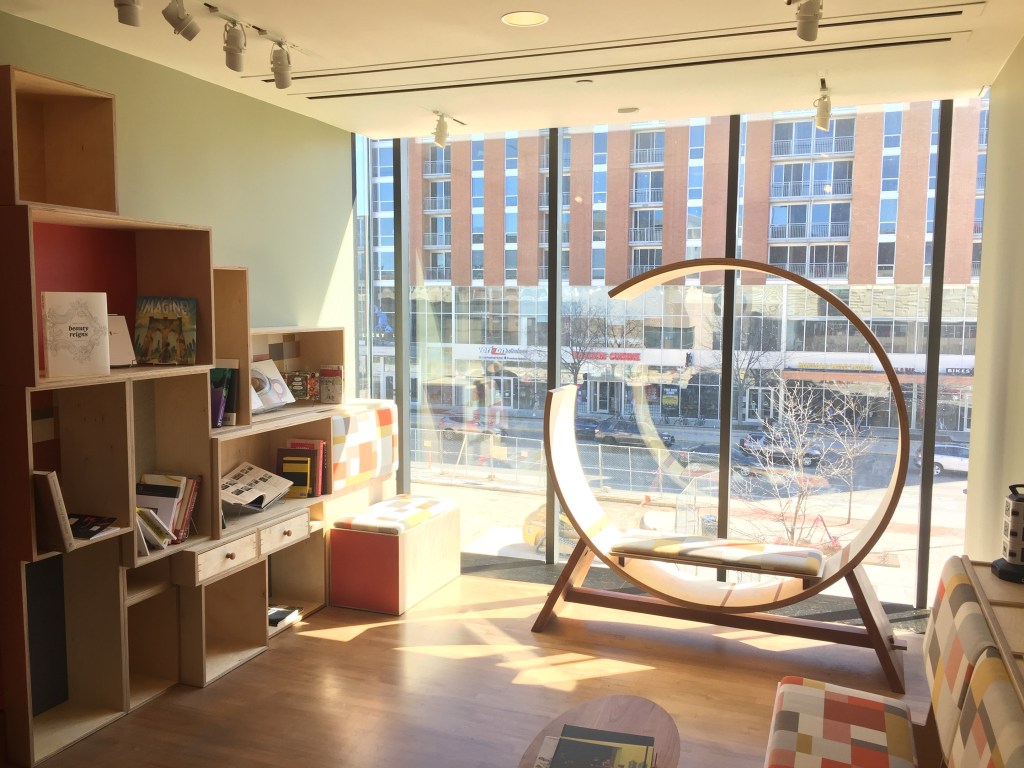
- Up on the third floor of the Chazen building, a beautiful seating area is nestled into a window overlook. It was conceived, designed, and built by an advanced woodworking class in the UW Art Department, and offers visitors a place to sit, read, relax and take a break. The Chazen staff could have contracted out such a construction job, but instead we chose to work with students and faculty at the university.
- When we started to consider turning our retail space into a café, we quickly realized that running a café isn’t something our museum staff could or should be doing. So, we partnered with the Wisconsin Union, the folks who operate other dining options on campus, to make it possible. In addition, all of the custom construction was done by the UW’s Facilities Planning & Management department.
- Changing the museum’s open hours is not a decision that came easily. We had to work hard to get buy-in from the university leadership, and particularly University Police, who provide the museum’s security. The solution prompted the creation of our new Visitor Services department, which means security officers can focus on security issues, rather than greeting visitors. Visitor Services staff now give directions, offer suggestions, and answer visitor questions.
- Like many university museums, the Chazen periodically mounts a faculty exhibition in our galleries. For our fiftieth anniversary year, we opened it up to any faculty and teaching staff who use artmaking as part of their teaching and/or research, inviting them to propose projects that connect their artistic practice with the objects in our collections. More than thirty projects from ten departments are on view through May, and each one involves careful collaboration between our staff and the artists. It’s a major investment of time and energy, but it’s a thrilling new way to engage with our university community.
Final Thoughts
I believe that all museums face similar challenges, even as we vary in size, scope, geography, and mission. We are all trying to figure out how to be what we are—museums—in a way that speaks to a generation who consume media at an incredible rate and are not necessarily loyal to an institution simply because it happens to be in their town. But I have hope, because we know this generation is interested in experiences, knowledge, and understanding—which we can offer them.
When I talk with my curatorial staff about reinstalling or reimagining the presentation of our permanent collection, we talk about grounding the work in deep, art-historical, object-based research; it’s not about pretending we’re something other than a museum. We’re here because of the objects and their history, and our job is to present them in new ways, ways that are different from how it was done when the museum opened in 1970.
I believe that today’s new tools offer wonderful opportunities for visitors to explore collections, learn information, participate, and ask questions. I don’t know how it’s going to work, but that’s one of the most exciting things right now: exploring in this way, staying connected to the traditions of what museums have been, but choosing not to be rigidly tied to those traditions. From the coffee shop conversations to the research being done to help us ask the right questions, we are embracing our role as a university museum, where we can experiment, pilot, and evaluate our new ideas.
After two years as director, I tell my staff we are at the end of the beginning of our process of discovering “the Chazen point of view.” We have more work to do—more listening and experimenting and partnering—but we are excited to learn, to try (and fail), and to share our learning with the larger museum field.
About the author:
Dr. Amy Gilman, an AAM member, became director of the Chazen Museum of Art in September 2017. In that time, she has overseen the expansion of the museum’s open hours to seven days a week, 8 a.m. to 8 p.m. (the most among peer institutions), re-envisioned the Chazen’s security model and visitor services department, and ensured that all student workers are paid. Before joining the Chazen, Dr. Gilman spent twelve years at the Toledo Museum of Art where, most recently as deputy director, she was responsible for the overall operations of the museum and was the leader of the campus master-planning process. Dr. Gilman earned her doctorate in art history at Case Western Reserve University in Cleveland, Ohio; a master of fine arts in photography from Columbia College in Chicago; and a bachelor’s in performance studies from Northwestern University, Evanston, Illinois.

Upcoming Events
-
AASLH-NCPH Joint Conference
Event Date:Presented by: American Association for State and Local History (AASLH)Providence, RI -
All You Need to Know to Drive Success for Your Museum Store Sunday!
Event Date:Presented by: Museum Store Association -
Transit Insurance in Practice for Traveling & Co‑Organized Exhibitions
Event Date:Presented by: American Alliance of Museums -
Digital Collections Summit
Event Date:Presented by: MuseumNext


As I was reading the article I could feel the energy and excitement of what was happening at the Chazen Museum. It made me want to come and experience the changes myself.
Hats off to the Director, for her fine listening skills and not giving up but moving forward.
Thanks, Amy Gilman, for the shout out to the Bolz Center for Arts Administration students and their consulting project. It was a pleasure to be able to lead MBA arts administration candidates through a real-world situation and have the support and enthusiasm of the Chazen staff ever present and reflective as they did their work. This is the power of experiential learning and the Wisconsin Idea in action as students, staff, faculty and organizational stakeholders come together to share ideas, recommendations and theories of change. You and your amazing staff rock!
-Sherry Wagner-Henry
Director, Bolz Center for Arts Administration, UW-Madison
I wan’t aware of the great transformation happening within the Chazen, but I could feel it happening on campus! Thank you, Amy for your leadership; I look forward to the bright future and how it might involve students with the arts even more.
-Henry Ptacek, Director, Performing Arts Committee