Powerful stories about the past can inspire positive action in the future. In the wake of ongoing political threats like Executive Order 14253, “Restoring Truth and Sanity to American History,” and the White House’s letter to the Smithsonian, it is worth learning about artists, curators, and registrars in other parts of the world who have taken extraordinary risks to preserve their institutions’ integrity. The four books below provide valuable historical perspective, as well as a reminder of the devotion, steadfastness and inventiveness that undergirds our field.
Sebastian Smee’s Paris in Ruins: Love, War and the Birth of Impressionism looks at Franco-Prussian War through the experiences of artists who were in Paris during the siege of 1870. Instead of fleeing the city, these painters chose to remain so they could bear witness and fight for a more egalitarian nation. Edouard Manet and Edgar Degas left their studios, enlisted in the National Guard, and manned the city’s ramparts. Gustave Courbet, a pacifist who would not take up arms, helped to reinforce the Louvre with sandbags to prevent looting. Berthe Morisot’s studio was converted into shelter for French soldiers. Their experiences during the siege led to the radical breakthrough in art known as Impressionism. This book makes us think about the new kinds of art-making that emerges from activism and political engagement.
Joanna Pitman’s The Dragon’s Trail focuses on one painting, Raphael’s St. George and the Dragon, now at the National Gallery of Art in Washington D.C. The Italian Renaissance masterpiece survived the 1917 Russian Revolution because a group of curators outwitted Vladimir Lenin. When the Red Army breached the Winter Palace in Saint Petersburg, the Bolsheviks’ first priority was to help themselves to the Tsar’s extensive liquor collection. Staff, meanwhile, compiled inventories of the artwork and then crated it. Twelve curators co-signed an urgent telegram to Vladimir Lenin warning of the dangers of unpacking crates without knowledge of proper handling methods. Lenin complied. The artwork was saved. We learn that even tyrants will sometimes bow to professional knowledge.
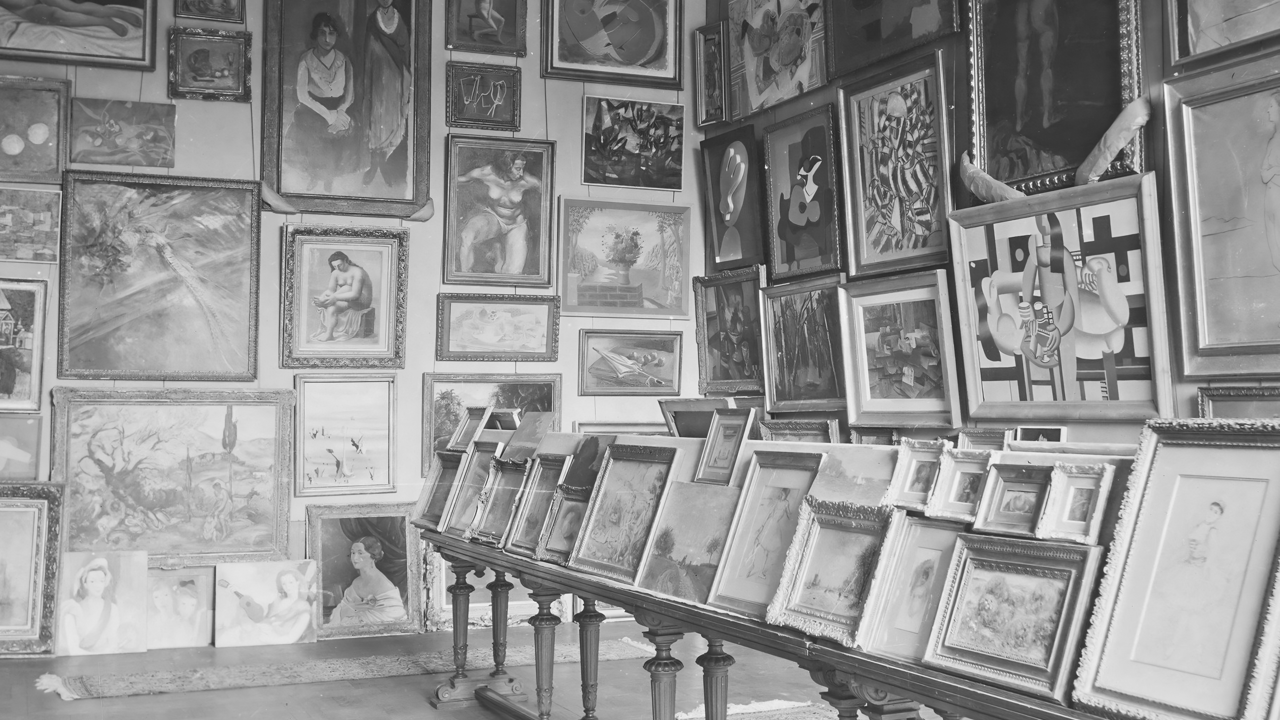
Michelle Young’s The Art Spy: The Extraordinary Untold Tale of WWII Resistance Hero Rose Valland (2025) is a page-turner about the risks taken by curator Rose Valland at Paris’ Jeu de Paume when the Nazis commandeered it as storehouse for loot. If not for Valland’s secretative note-taking, thousands of artworks would have vanished forever. Her situation was especially precarious. She was not only a woman operating in a man’s world, but a closeted lesbian living with her romantic partner. Valland came face-to-face with the notorious Herman Goring. She kept her cool when Nazi thugs escorted her at gunpoint into the museum’s basement art storage area. As much as Young’s book is a tribute to Valland’s professional acumen, it is also a reminder of the personal cost of heroism.
Joshua Hammer’s The Bad-Ass Librarians of Timbuktu may read like a thriller, but every detail in this nail biter of a book is true. In 2012, Haidara, a mild-mannered archivist and historian from Timbuktu, headed a dangerous operation to sneak 350,000 rare manuscripts past Al Qaeda militants. As jihadis tightened their control over Timbuktu’s library and began to burn books, Haidara spent 15 hours a day, talking simultaneously on 8 cell phones to coordinate safe locations for the collection. He organized hundreds of taxicabs, donkey carts, and canoes and other small boats to transport the fragile items up the Niger River to safety. The lesson learned here is that trusted leaders can motivate communities to preserve their history, even against overwhelming odds.
What other stories inspire you? Please share more stories and recommended books about museum heros in the comments.

Upcoming Events
-
AASLH Women’s History Hour: Leading the Change
Event Date:Presented by: American Association of State and Local History (AASLH) -
Museum Digital Summit
Event Date:Presented by: MuseumNext -
Environmental Monitoring for Collections of All Sizes
Event Date:Presented by: C2C Care/FAIC -
Digital Innovations in Collections Stewardship and Access at Jewish Museums
Event Date:Presented by: American Alliance of Museums