
This year’s TrendsWatch examines changes reshaping philanthropy. While charitable giving overall remains strong, that total masks a troubling trend: a shrinking number of US households engage in giving while wealthy individuals play an ever growing role. This growing “philanthropy gap” creates risks for nonprofits, both around the stability of support, and the way in which donors shape an organization’s priorities. In today’s guest post, Jessica Proctor, Director of Development & Membership for the Utah Historical Society tells us how she and her colleagues advocate for the benefits of a community-centric approach to fundraising, creating a wider, more resilient base of support.
–Elizabeth Merritt, Vice President, Strategic Foresight and Founding Director, Center for the Future of Museums
The landscape of philanthropy is shifting. As generational wealth transfers and donor mindsets evolve, the traditional, transactional model of fundraising is becoming harder to sustain. Family foundations are sunsetting, funding priorities are narrowing, and donors are scrutinizing their charitable investments with unprecedented rigor. This presents not a threat, but a vital opportunity for institutions and their development teams to redefine their work through a mission-driven, community-centric lens. Adopting this approach is not just altruistic; it is strategically essential for your organization’s long-term financial health and relevance.
Community-centric fundraising shifts the perspective of development work from donor-centric, in which strategy and messaging are built around and elevates the role of major donors within the success of an organization, towards an authentic mission-driven ideology that celebrates the entire ecosystem of stakeholders supporting the work of an institution. This is a radical notion for very traditional institutions, which have spent decades building complex and sophisticated systems of research, cultivation, and recognition that historically have celebrated the donor as an organization’s hero. However, as the world changes, we are seeing different needs and expectations from donors at every level, and community-centric fundraising presents a strategic opportunity to replace the transactional mindset, enabling organizations to holistically support and deeply engage their stakeholders by prioritizing mission and shared values.
The increasing prevalence of Donor-Advised Funds (DAFs) allows individuals to build both capacity and philanthropic patterns slowly, often through modest, annual contributions. Crucially, some of these contributions are anonymous. This trend demands a critical question: How can we afford to treat any donor as minor, when their true capacity or long-term commitment may be unknown? Every supporter, regardless of current giving level, must be cultivated with equal respect and transparency.
Additionally, studies have shown that younger generations of donors are more mission driven.
Gen Z and Gen Alpha care more about values alignment than transactional philanthropy. They seek to make a real difference, demanding transparency, demonstrable impact, and meaningful, personal connections with the organizations they support. Beyond monetary contributions, they value volunteer opportunities and authentic engagement. These emerging donors care far more about the organization’s impact than where their name appears on a list or the swag they receive.
In times of economic uncertainty, a community-centric approach delivers a wider, more resilient base of support, simultaneously cultivating consistent donors and external champions. In the age of crowdfunding, where people are increasingly comfortable making modest donations to a broad list of institutions to spread their personal impact farther, development officers will need to learn to cultivate larger portfolios of lower-maintenance supporters. I have seen transformational donations come from individuals who were not on the development team’s radar, who had been members at a modest level for years, but left a bequest that changed the financial landscape of the organization for the future. This possibility demands that donors at every level are cultivated with the same focus and enthusiasm that we bring to our major donors.
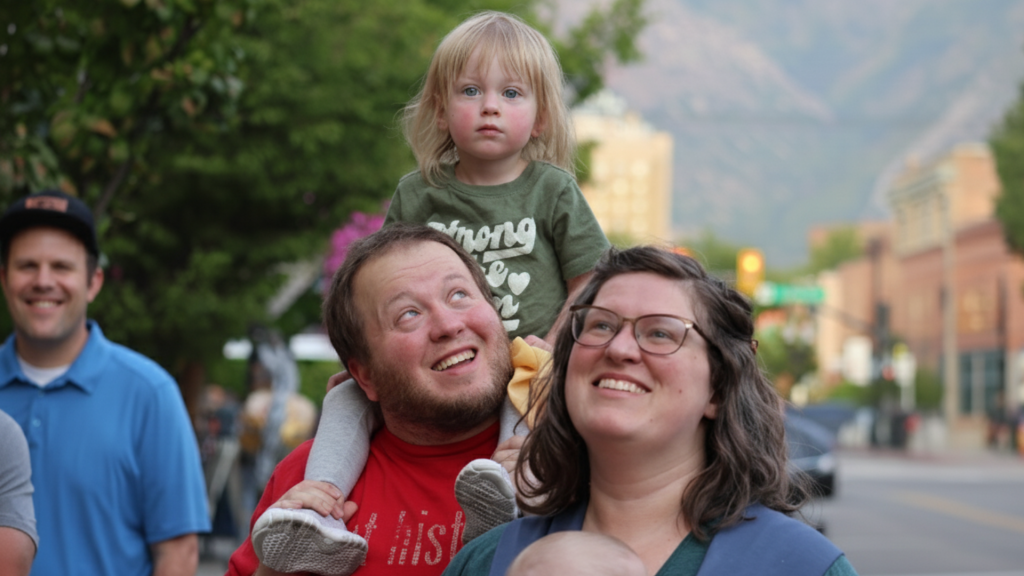
At its heart, community-centric fundraising reinforces and strengthens the mission of any institution by recognizing all contributions—of all sizes and forms of engagement—as valuable and critical. This approach empowers development teams and challenges institutional leaders to prioritize authenticity, shared responsibility, and commitment to the core mission in every interaction.
What does this look like in practice?
Some organizations flatten recognition structures, ensuring all stakeholders receive equal acknowledgment regardless of donation amount. Others include volunteer time as an in-kind contribution, valuing volunteers as vital donors. Every institution is different, and community-centric fundraising may look different for each institution that embraces it. And while community-centric fundraising is rooted in development work, when embraced as a larger ideology by an institution, it becomes a powerful rallying point for all staff and volunteers.
At the Utah Historical Society (UHS), we work collectively to embody and practice a community-centric ideology across the organization. As a public-facing institution tasked with researching, keeping, and sharing the history of our state, we recognize that we are not the creators of history. Our teams work with communities across Utah to build and maintain relationships, and to support them in discovering and sharing their own history in their own way. Internally, we cultivate an environment of support and belonging. We celebrate and work in support of each other, prioritize respect and intentional listening in difficult conversations, and recognize the valuable voice of each distinct staff member.
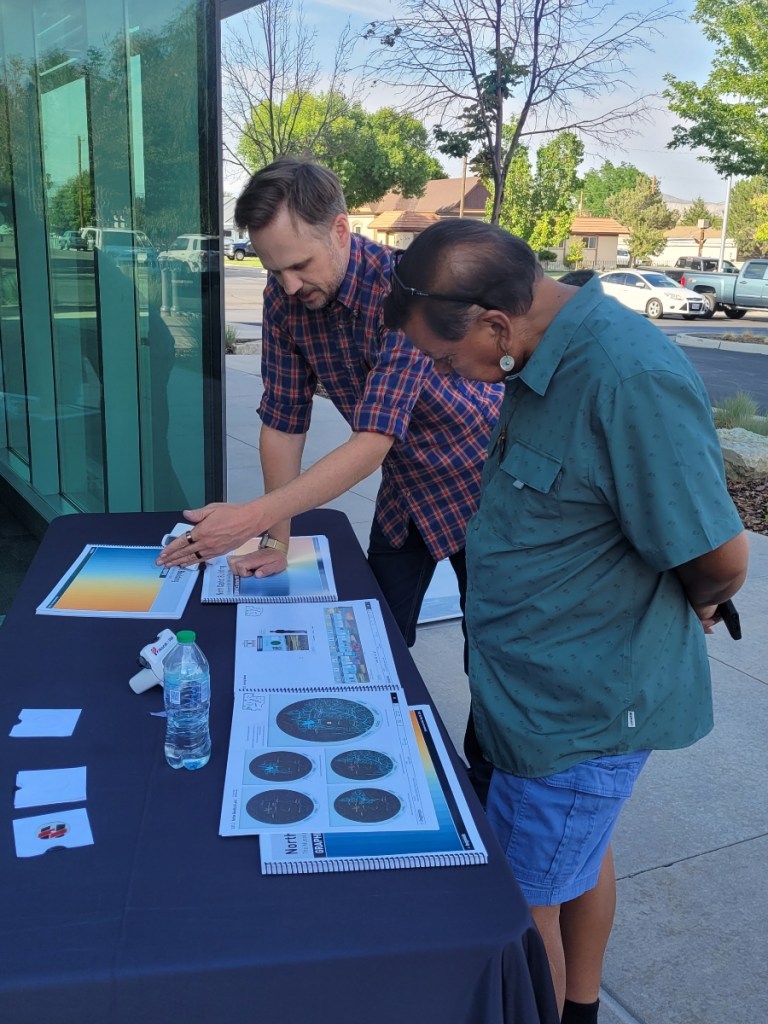
Within the Utah Historical Society’s Museum of Utah, we celebrate the shared ownership of our space with the communities that have helped create it. In developing the exhibition content for our four main galleries, museum curators held focus groups, conducted public surveys, and hosted community meetings across the state over several years in an effort to give a voice to every Utahn. As a result, the content of the museum reflects the voices of those we serve. Further, museum leadership has worked with leaders from our eight federally-recognized tribal nations, giving each the space and authority to tell their story in the museum in the way that feels the most appropriate and meaningful for them. This has required ceding some authority within our own walls, but has resulted in storytelling that feels more authentic, poignant, and just.
We strive to maintain a mindset of abundance that allows us to work with generosity and hope, both internally and externally. UHS has changed and grown dramatically in recent years, and we have brought our stakeholders, from members to partners to donors, along with us. That has led to some nuanced conversations about both the constraints and opportunities inherent in rapid growth and transformation, but we are committed to the vision of our organization that calls for major changes in our day to-day-operations. Looking to the future, we maintain a prioritization of serving every Utahn, and will continue to learn what that means as we engage outside our own walls and meet people where they are at.
As the development officer of UHS and the Museum of Utah, I champion this perspective. Every donor, regardless of size, receives a hand-written note. We create transparent communication and engagement opportunities across all levels so every supporter can see the impact of their part in our collective work. I celebrate and support my colleagues in their work, and show up at their events in an effort to understand the deeper values and motivations of the communities their programs serve. I work in consultation with my colleagues to consider grant opportunities, major funding, and build enabling constraints to guide fundraising efforts. My work is driven by our mission, motivated by our strategic plan, and anchored by the community-focused values we embody as an organization.
Community-centric fundraising is not a fleeting trend; it is the evolution of philanthropic sustainability. It aligns the financial goals of the institution with its moral mandate by prioritizing mission over transaction. In a rapidly changing world where younger donors demand values and transparency, where DAFs hide potential capacity, and where a wide base of support is the best defense against economic uncertainty, community-centric fundraising delivers a clear benefit: a wider, more loyal, and more deeply engaged base of stakeholders. This philosophy demands that we continually learn, engage outside our walls, and meet people where they are, treating every member of our community with the profound respect they deserve. By embracing community-centric fundraising, your development team empowers the mission, strengthens community bonds, and, ultimately, secures a more robust and relevant future for your organization.
Upcoming Events
-
AASLH-NCPH Joint Conference
Event Date:Presented by: American Association for State and Local History (AASLH)Providence, RI -
Transit Insurance in Practice for Traveling & Co‑Organized Exhibitions
Event Date:Presented by: American Alliance of Museums -
Digital Collections Summit
Event Date:Presented by: MuseumNext -
The Federal Grant Landscape: What Museums Need to Know
Event Date:Presented by: Ohio Museums Association





It’s great to see a shift in thinking that empowers everyone within a community to become a stakeholder in their museum. While big checks from deep pockets can go further, getting financial support from “regular people” demonstrates local support and gives community members a stronger sense of ownership.
That matters especially in museums which are tasked with the conservation and interpretation of natural and/or cultural history, where many collections objects are literally public property held in trust for the people.
The more meaningful engagement we have with our community, the greater their interest in supporting us becomes. In my museum we’ve found that the kind of engagement that has the most resonance is events or opportunities for members and visitors to interact personally with the museum professionals who are doing the work. Five minutes talking with a conservator, technician, curator, etc. is a far deeper experience than reading a text panel in the gallery.
If there are enough opportunities for these interactions to take place, relationships start to form between staff members and the public. When this happens, financial gifts represent more than a general contribution to the mission, and come with the donor’s understanding that the dollars will help the people they know do the important work that they’ve learned about.
It is my hope that these more personal connections to museums will bring some needed and overdue changes to the economics of museum labor. When donors care about the people that they’ve met, they may also feel like those people deserve sustainable pay and employment security – IF they’re aware that those issues are a problem for many museum workers.
As museum leaders look to find ways to demonstrate to donors that their values are aligned with those of the museum, perhaps they might consider greater financial transparency when it comes to the payroll, and recognizing that a budget is more than a math problem to solve – it is a statement of priorities and values.
Imagine a development campaign where the goal isn’t a new addition to the building, but instead is ensuring that no staff members are paid less than the area median income, or to fund endowments not only for director or curator positions, but also to ensure sustainable careers for the whole staff.
Financial supporters are changing their expectations of museums. Perhaps museums can meet the moment by addressing some of the lingering challenges that persist as we move forward into this new philanthropic landscape.