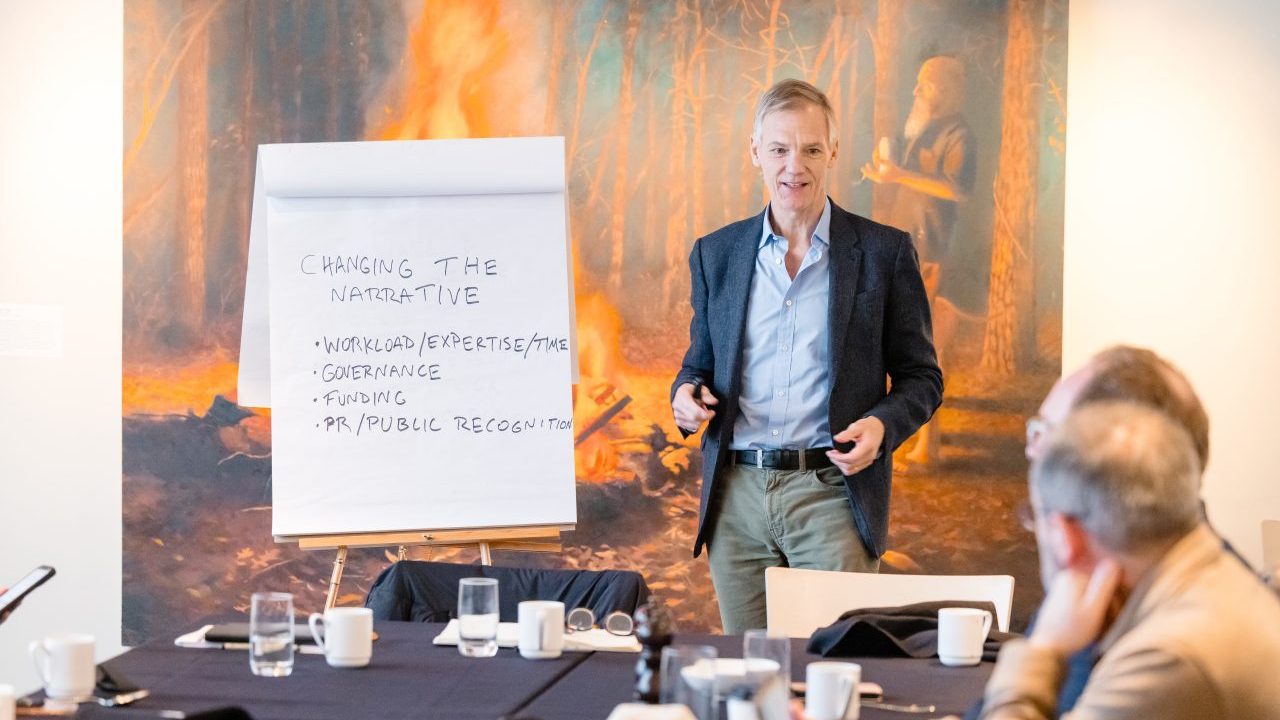
I first learned about Stephen Reily when he was the director of Speed Art Museum in Louisville, Kentucky, which at the time was making headlines for its Breonna Taylor-themed exhibition Promise, Witness, Remembrance. His name popped up again for me when I read he had taken the reins of Remuseum, Crystal Bridges’ think tank dedicated to promoting innovation among US art museums in relevance, governance, and financial sustainability. Curiosity piqued, I decided to reach out to learn more about his journey from board member to director, his time at the Speed, and his new work as a museum champion and researcher. In the spirit of innovation and disruption, our conversation touched on everything from good succession planning, to the actual costs per visitor, to balancing revenue and mission, and much more.
Adam Rozan: Let’s start by introducing yourself, explaining how you got involved with museums, and your work at the Speed Museum.
Stephen Reily: My name is Stephen Reily, and I live in Louisville, KY. I’ve been a lifelong art collector, supporter, and student of museums. Over the years, I served on a few museum boards, ultimately leading me to become the director of the Speed Art Museum—the largest and oldest art museum in Kentucky. I held that role for over four years, beginning in 2017. About two years ago, I transitioned to becoming the founding director of a new project called the Remuseum, housed within the Crystal Bridges Museum of American Art.
AR: Your previous board work included the Speed.
SR: That’s right. I did serve on the Speed’s board for ten years, but when I became director in 2017 I hadn’t been on the board for a dozen years, and I wasn’t involved in the Speed’s extensive renovation, during which they closed for almost four years.
AR: If I’m correct, you were a business entrepreneur by career before your museum life.
SR: I’m a lawyer by training, but my career has largely been as an entrepreneur.
AR: From a lawyer to an entrepreneur to a board member to a museum director. Those all seem like significant shifts—each a great learning opportunity, but all so different.
SR: When I was first asked to step into the director role, I assumed I was probably far down on their list of candidates. I wasn’t the typical museum director, but I brought a unique perspective as someone observing museums from the outside. For example, I previously served on the New Museum of Contemporary Art board in New York, which is very different from the Speed—a non-collecting, entrepreneurial museum. My background made me think of Speed almost like a startup, especially since the museum had closed for four years and reopened with mixed results. I would often refer to Speed as a “ninety-year-old startup” because we were simultaneously a historic institution and a newly revitalized entity within the community.
AR: You said on the Museum Confidential podcast that “a new building is a tactic, not a goal” and that museums and museum directors, and their boards, can get too focused on new buildings and lose sight of their community responsibilities. Could you elaborate on that, especially in the context of running the museum post-reopening?
SR: This is a common issue in museum leadership: a building can be a tactic, but it’s never the goal unto itself; how could it be? Many directors are encouraged to focus heavily on building projects, thinking that an impressive structure is the goal. However, once the building is done, it’s hard to shift focus to serving the community rather than just maintaining the structure. For instance, at the Speed, we worked with architect Kulapat Yantrasast of Why Architecture, who helped us rethink the space for a better visitor experience. However, even a beautiful building can be a burden if it requires too much upkeep, or demands staffing levels that can’t be supported, or distracts from the museum’s mission to serve the public.
AR: The last exhibition you oversaw at the Speed was Promise, Witness, Remembrance, the 2021 Breonna Taylor exhibition. Can we discuss this project?
SR: The project began in the summer of 2020 when Louisville was dealing with the trauma of Breonna Taylor’s death alongside the challenges of COVID-19. The city was in intense turmoil, filled with grief, anger, and pain. I found myself questioning the role of a museum in such a moment. What could a museum do that was truly meaningful in this context? Art became a source of guidance.
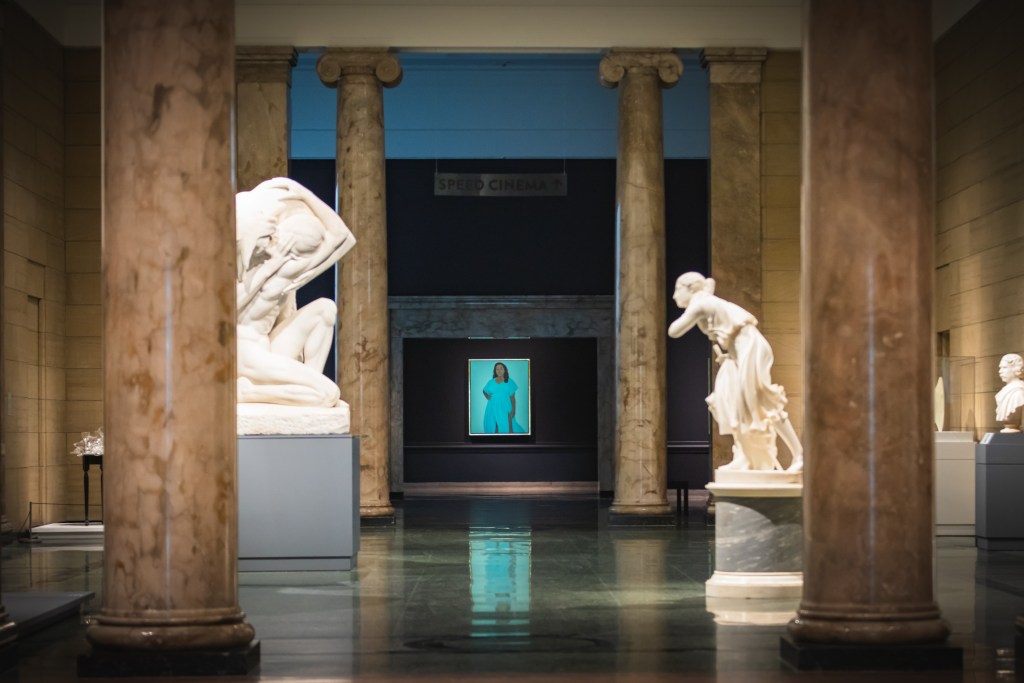
It turned out that Amy Sherald had been commissioned to paint a portrait of Breonna Taylor and had worked closely with Breonna’s mother, Tamika Palmer. One of my colleagues suggested, “What if we could borrow that painting?” We had shown Amy’s work before she became widely recognized, so we reached out, and everything slowly fell into place.
This exhibit raised difficult questions: How do we present something so raw when emotions are still fresh? But I felt strongly that we should try, trusting that art could help the community process its pain. Amy’s portrait isn’t prescriptive—it simply shows Breonna’s life, inviting viewers to reflect and feel however they need to. That’s what artists do best and what museums can offer in times of crisis.
AR: What do you think an exhibition like this one means to its community?
SR: We talked about this internally at the museum, as the exhibition symbolized our commitment to being responsive to community issues. It culminated in our efforts to create a museum that not only preserves art but also plays a role in societal dialogue. Although it was a challenging project born out of tragic circumstances, I’m proud that we were able to engage the community in such a meaningful way.
AR: And what, if anything, is the broader implication of a project like this one on the field?
SR: It proved that museums can respond meaningfully to their communities’ needs. But it also raised a broader question: Why do so many still feel detached from reality if museums have this capacity? How can we keep putting on the same kind of shows when our communities are reeling from crises like gun violence, political division, or natural disasters? I genuinely struggle with this disconnect.
Our field needs to shift towards being responsive to the issues that matter most to the people we serve. Otherwise, we risk becoming irrelevant.
AR: Let’s talk about your decision to leave Speed and your exit process since it seems extremely transparent and would be helpful to know about it from a succession planning perspective.
SR: Of course. I was fortunate at the time, as one of my board chairs had HR background from their time at Humana. I had come in as an interim, so I knew this wouldn’t be a lifelong role. I committed to giving the board at least twelve months’ notice, which allowed us to plan for the future without the surprise exits that some organizations face.
AR: If I understand correctly, you were also as transparent with staff?
SR: I was very open with both the board and my staff. We were also hiring, so it was essential to create an understanding that we were building a strong, sustainable organization that wasn’t dependent on me. I would like to think that this transparency helped create a sense of continuity, ensuring that each new hire was seen as a lasting addition to the institution, regardless of my tenure.
AR: What were some ways you all approached succession planning?
SR: I introduced an idea I called “over-hiring.” Instead of filling a role at the basic level, we hired someone with high potential who might initially seem overqualified. I wanted to create positions that would challenge these hires and help them grow, even if their next role wasn’t as a museum director. For example, they might eventually become a CEO in another organization. This approach reflects the idea that museums should act as training grounds for leaders across the country or within our region.
I wasn’t the first to try this approach—the Toledo Art Museum, for instance, has been a powerful incubator for future leaders despite being in a smaller city. They’ve produced generations of great leaders, which is inspiring. It’s a model of governance that emphasizes cultivating leadership from within, something our field needs more of.
AR: After you stepped down from the Speed, you wrote an essay entitled “The Education of a Museum Director,” which in hindsight was the perfect segue to your work at the Remuseum.
SR: That’s true. I wrote that article to talk about the various challenges in our outdated business model. Ambitions and expenses constantly outpace revenues, and we keep growing assets—like collections and buildings—that often act as liabilities. Museums have more assets than any other cultural institutions in the country, but those assets don’t necessarily support the institution’s mission. For example, it’s odd that we celebrate asset growth rather than examining whether those assets serve our purpose.
At the Speed Art Museum, I often encountered written and unwritten norms that constrained our ability to innovate. An unconventional suggestion might be replied to with a comment like, “That would be irresponsible,” even when the art or the museum wouldn’t have been harmed.
We have to acknowledge that the field can be very defensive and is resistant to change; that’s the truth. It felt ironic because art museums exist to share artists’ work, yet the spirit of artists—open-ended, ambiguous, and constantly reinventing—is often missing from museum operations.
AR: How did the Remuseum come about?
SR: Remuseum is an idea born out of Crystal Bridges, with financial support from Alice Walton, the founder of Crystal Bridges, David Booth, a MoMA board member and entrepreneur, and Rod Bigelow, Executive Director and Chief Diversity & Inclusion Officer of Crystal Bridges. They had the good idea to address some of the challenges we’ve been discussing. Specifically, the ideas of community relevance, innovation, and, most critically, a sustainable business model for our institutions. When I heard about this, I thought, “This is exactly where I need to be.”
AR: You’ve mentioned that the field is resistant to change; if so, how will the Remuseum go about this?
SR: I try not to dictate what people should think, personally and in my work. In art museums, the goal should be to let the art speak for itself. Artists have done their job—they created something that invites people to engage and interpret without prescribing a specific reaction. Museums should aim to do the same. This means that we’re going to put the information out there, share it, and hopefully get those in the field interested in participating in what we’re doing to help their institutions.
AR: We were talking earlier about the actual costs for our institutions, and our visitors when they come to our institutions. Can you share what we were talking about?
SR: It’s a complicated issue, and no single answer works for every museum. However, every museum spends a lot of money on each visitor—on average, about one hundred dollars per person, according to recent data we’ve collected on 153 American museums. This includes the many expenses that go into providing a meaningful experience for each visitor, whether they pay for admission or not.
Somewhere along the line, though, we flipped a switch and started seeing visitors as revenue sources rather than as the core purpose of our mission. There’s nothing inherently wrong with generating revenue—if people want to buy food, books, or souvenirs, or if they’re inspired to support the museum’s mission, that’s great. But we must remember that the visitors are here for the experience, not as a source of income.
Think about a food bank: they use philanthropic dollars to feed people and help them achieve stability. A park system uses funds to let people enjoy nature. Museums should similarly ask, “How can we best use our resources to serve the public?”
AR: As we discussed earlier, directors today are first and foremost fundraisers, and institutions, in general, are now focusing more of their resources on revenue generation. Can you talk about the inherent conflicts that might be caused by the need to generate revenue versus the need to service our visitors?
SR: For the last forty years, nearly every major museum has developed similar revenue-generating ventures: cafes, gift shops, event spaces, etc. But when you fully account for staff time, space, and other overhead, most museums lose money on these businesses. Boards often think these ventures help fund the mission, but they can actually drain resources from it.
I’m not saying museums shouldn’t offer food or souvenirs, but we should be transparent about the actual costs. For example, if a museum’s location makes it necessary to provide an eatery because there are no nearby options, then acknowledge it as a service, not a profit center. Some museums do this thoughtfully—like the Denver Art Museum, which decided not to have a restaurant because great local options surround it. Or the Philbrook in Tulsa, which partners with local chefs to do pop-ups. These are ways to provide services without straining resources.
And, to the other part of your question, the concern is warranted, and museums should always pay attention to this, ensuring a healthy balance.
AR: Where is “purpose” in this, and what’s our role within our communities and society?
SR: I believe museums should aim to excel at a few core things rather than trying to do everything. Our mission is to serve the public by providing access to art, culture, and ideas. We’re here to enrich lives, not to run unprofitable side businesses. If we focus on our primary purpose, we’ll be more effective and better able to make a meaningful impact.
Our industry has become more complex over the years, but I think we need to simplify and zero in on our mission. In my current work, I’m exploring how we can help museums innovate and break free from legacy systems that don’t serve the public. Whether it’s environmental sustainability, workforce equity, or board diversity, there are many people in the field advocating for these changes, but progress is often slow. My goal is to create a framework that empowers museums to accelerate change and align their operations with their mission.
AR: We’ve covered a lot of ground, and these are big topics, each worthy of more conversation. To close, can you share what conversations you think are most needed and how we start making changes?
SR: We don’t discuss financial sustainability or relevance in museums enough. And, if we want to make real change in the field, and if we want our organizations to be the kinds of institutions that make a difference, then we also have to talk about governance. Because the change that’s needed can only happen if our boards are educated, involved, and working to create the necessary changes to support our institutions.
That’s the work we’ve started at Remuseum, and now we have the data to support many of these ideas. We have a lot of work to do, but it’s positive, and we’re ready to make it happen.

Upcoming Events
-
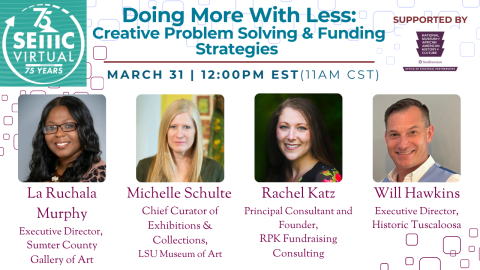
Doing More with Less: Creative Problem Solving & Funding Strategies
Event Date:Presented by: Southeastern Museums Conference -
Outdoor History Walking Tours 101
Event Date:Presented by: American Association for State and Local History (AASLH) -
I’m In Charge of A Museum Store. Now What?
Event Date:Presented by: American Alliance of Museums -
Gettin’ To Know You: The Art of Networking
Event Date:Presented by: American Alliance of Museums

Actually, the Denver Art Museum has a lovely restaurant … The Ponti … and a more casual option, Cafe Gio. Perhaps Mr. Reily is confusing the DAM with either the Clyfford Still Museum or the Kirkland Museum, which are both in close proximity and neither of which have restaurants.