Some years, it takes a bit of reflection to find the throughline in museum discourse. 2025 has not been one of them. The main story has been clear: as a new presidential administration came into power, its actions and policies shook the foundations of the field, eliminating funding sources and undermining intellectual freedom. Much of the attention and energy this year has gone to challenging these developments, advocating for museums’ worthiness of support and right to independent, accurate scholarship. Thankfully, the efforts seem to be paying off, with Congressional appropriations for 2026 looking promising and a successful lawsuit overturning the dismantling of the Institute of Museum and Library Services.
Amid all this turmoil, museums have still kept their doors open and continued to serve the public day after day, even against increasingly difficult odds. As AAM’s Annual National Snapshot report revealed, the field is facing measurable downturns in attendance and financial performance, and having to adapt to carry on its important work. In this climate, the publications that have resonated the most have largely dealt with absorbing the impact of sudden change and attempting to understand and reach visitors at a critical time. Here were this year’s top ten:
1. Breaking Down Visitation by Museum Type
By Susie Wilkening
Visitation is a closely watched metric in any year, but in 2025, when more than half of museums are still seeing fewer visitors than they did pre-pandemic in 2019, it’s been of especially high concern. As our most-read post of the year attests, however, the profile and motivations of visitors can differ dramatically between the wide range of subject matters and visitor experiences our field encompasses. This collection of data reports from the 2024 Annual Survey of Museum Goers breaks down exactly how the age and life stage, race and ethnicity, and visitation and motivation of visitors varies across eight museum types.
2. Gen Z Has Entered the Chat: What We Want from Museums
By Adamali De La Cruz
Amid declining engagement, it’s no surprise museums are looking to cultivate rising generations as audiences. But with their documented tendencies toward disconnection and isolation, breaking through to the generation born between 1997 and 2012 can be a challenge. In this post, members of the Made By Us Youth250 Bureau, a hundred-strong national network of young adults, share what they want to see from museums—and how to sign up for free one-on-one consulting with them.
3. Demographics of US Museum-Goers: 2025 Update
Who visits US museums in 2025? This update from the latest Annual Survey of Museum-Goers is here to tell you. Here’s what the survey reveals about the educational attainment, race and ethnicity, and age and life stage of visitors as of this year—and why comparing frequent to occasional visitors tells two very different stories.
4. Three First Steps You Can Take in a Time of Rapid Change
As new executive orders and directives have unfolded this year, museum people have been left uncertain about the future. This post shares a few preliminary steps you can take to navigate this period of intense and rapid change and protect your well-being, time, and attention.
5. Stop, Look, Think: How to Manage Digital Vulnerabilities
Only a few decades after the birth of the internet, it’s hard to imagine operating a museum today without digital tools and programs. But despite—or perhaps because of—their power, speed, reach, and complexity, these systems are increasingly vulnerable to disruption. In this chapter from the 2025 edition of TrendsWatch, learn how museums can deal with vulnerabilities like degrading data, cyberattacks, and unstable social media platforms.
6. EO Impacts and the Next Era of Museum Funding: Government Income
What does this year’s spate of executive orders mean for the financial stability of museums? This post from the Center for the Future of Museums, the first in a five-part series, dives into how much the field has lost in government income—and what that might mean for our long-term business models.
7. Forecasting 2025
It was clear from the outset that 2025 would be a turbulent year, and museum people were eager for guidance on how it might unfold. In this post, see how accurate the Center for the Future of Museums’ forecasts were for workplace dynamics, the social media landscape, disruptions to insurance, public health scenarios, and attacks on DEI.
8. Ctrl+Alt+Preserve: Why Museums Must Invest in Digital Resilience

With the relentless pace of change in technology, it’s easy for digital strategy to feel like a never-ending chase to keep up with trends (and expenses.) But a successful strategy means thinking long-term about the value digital tools can bring to your museum, and the care and maintenance they’ll require to maintain over time. This post provides a framework for benchmarking whether you’re investing the right amount.
9. EO Impacts and the Next Era of Museum Funding Part 2: Earned Income
As the proportion of museum funding coming from the government has declined in recent decades, “earned” income sources like membership fees, store sales, and facility rentals have become a bigger piece of the pie. But if government funding shrinks further, how much can we rely on this income to prop us up, especially as federal policy creates economic uncertainty? In this post, find out how executive actions are impacting factors like leisure spending, travel, and corporate sponsorships.
10. Scrappy Ways to Get Your Museum in the News
Media relations can be a daunting prospect for many museums, especially those without the benefit of specialized staff. How do you know what journalists to reach out to, how to get them interested in your work, and how to collaborate with them on a successful story? This post shares practical tips for institutions of all types and sizes from an experienced museum public relations consultant.

Upcoming Events
-
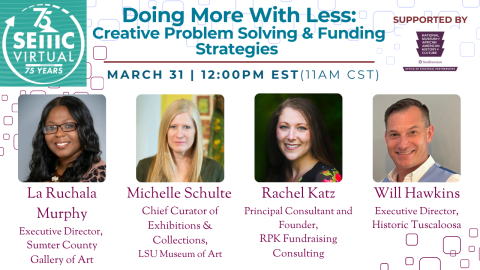
Doing More with Less: Creative Problem Solving & Funding Strategies
Event Date:Presented by: Southeastern Museums Conference -
Outdoor History Walking Tours 101
Event Date:Presented by: American Association for State and Local History (AASLH) -
I’m In Charge of A Museum Store. Now What?
Event Date:Presented by: American Alliance of Museums -
Gettin’ To Know You: The Art of Networking
Event Date:Presented by: American Alliance of Museums