The saying “a penny for your thoughts” might someday become “a penny for your memories.” After more than two centuries in circulation, the penny had its last minting on November 12, 2025, ending Abraham Lincoln’s 100-plus-year depiction. That made the penny a small object carrying outsized meaning. With its suspension, does our connection to Lincoln change? I connected with Christina Shutt, the Executive Director of the Abraham Lincoln Presidential Library and Museum, to discuss and learn more.
Over the course of two conversations, Christina and I discussed Lincoln’s legacy, the role of monuments and memorials in our culture, how they engage visitors, and, of course, the penny. The following are excerpts from our conversation.
Adam Rozan: How long have you been with the museum? Can you share your first museum job with me?
Christina Shutt: I’ve been with the library and museum for almost four years. It wasn’t a museum job, but a library one. I was in third grade. I used to turn the computers on in the morning at my school library. They had just automated the system, and since I often hung out in the library, the librarians gave me that task. From there, I kept returning to libraries, archives, and museums, and I’ve had the bug ever since.
AR: Third grade might just be the youngest answer I’ve heard to this question. So, not a museum studies degree, but a library sciences degree.
From your perspective, how does having a library background help someone think differently about running a museum?
CS: Yes, I do. I have a dual degree in archive management and American history. Library science teaches collaboration, which is essential in the arts and culture. Librarians are also great at organizing and presenting complex information in accessible ways, which is key to helping people connect with history.
AR: Storytelling, organization, and collaboration are three critically important skills for running an organization.
CS: Absolutely. Collaboration is essential, and organizing complex historical information in ways that people can understand is at the heart of what we do. For example, when I worked in higher education, I gave students a mini-course on accessing archives and demystifying history. In museums, you get to do that on a much larger scale, and seeing people connect to history in real-time is very rewarding.
AR: You also have a great story about how you got interested in history. Would you share that?
CS: When I was in high school, I got excited about history because our history teacher famously would take out a hatchet and chop the book on the first day of class, and he would say, “This is what you can do with your history book. Now, get a piece of paper and a pen, and we’ll write history.”
AR: Wow! I’m amazed that the school kept giving him a new book each year to take the axe to it.
CS: I know, right? He used to have a cannon. So, he used to throw a cannonball against the wall, like an antique American Revolutionary War cannon. But the school asked him to stop because cracks were forming in the wall, so he came up with the hatchet. What was great about him was that he was all about students connecting with history. We didn’t learn military formation through textbooks—we went outside to the high school football field, lined up in formation, and discussed it from that perspective.
AR: Okay, let’s talk about the penny as a symbol. Without the penny, are you concerned that people will lose their connection with Lincoln?
CS: I’m not concerned that Lincoln will be forgotten. Lincoln is the most famous person in American history—there are over eighteen thousand books written about him. More monuments are dedicated to him than to anyone else in the US, even more than Washington. So, Lincoln’s memory won’t fade.
AR: How is the penny part of the museum?
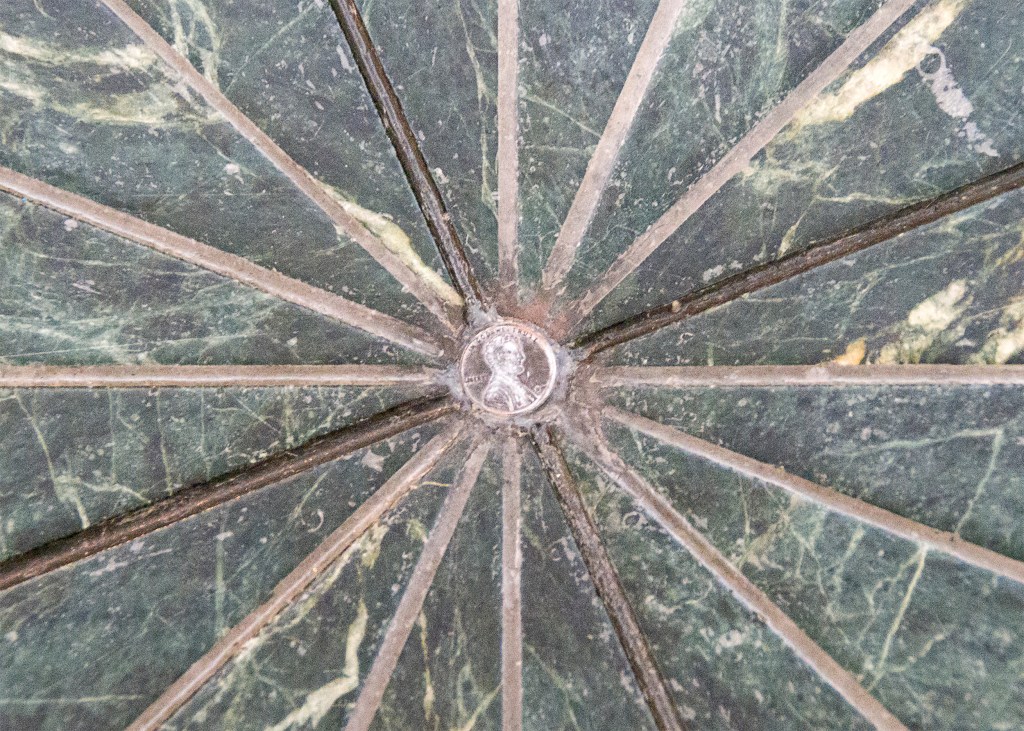
CS: We actually have a penny embedded in the museum. It’s in the center of our beautiful plaza, so all our visitors can see it when they visit. One of the fun things we do, and have done since we opened, is hide pennies in the museum plaza; when kids find them, they can keep them. It’s one of the great ways that our volunteers make visiting special.
AR: Fun! And very memorable.
CS: Thank you.
AR: In the future, as the penny becomes less a part of everyday life, what might this mean for Lincoln’s visibility?
CS: I think it’s a question of what’s most important to us as Americans. We have a story we tell here at the museum that I love. It is about how Illinois children saved their pennies and nickels to help the museum purchase a copy of the Gettysburg Address. The point of the story is that they saved up to do something important, and because of their efforts, the document belongs to the public. If pennies help us get there, then sure, let’s keep them, but I like the bigger picture idea.
AR: Going back to what you said about there being more Lincoln statues and monuments in the country than there are for George Washington. Does this mean we’ve reached peak Lincoln representation?
CS: That’s an interesting question. There are lots of conversations happening about monuments now, and the discussion continues to evolve. As a nation, we’ve always discussed which monuments should be. For example, you don’t see monuments to King George now. They’ve all been removed. Now, we’re asking deeper questions about who deserves to be remembered this way. As for Lincoln, there’s still talk of new monuments, like here in Springfield, where the museum is. My personal view is we don’t need more statues of Lincoln, as his legacy is already well-established.
AR: Do you have a favorite Lincoln statue?
CS: One of my favorite Lincoln statues is in Taylorville, Illinois, of Lincoln pushing a pig out of town. It commemorates Lincoln’s request for a writ of quietus because the pigs were too noisy under the courthouse. It’s a small, random statue, but it’s how that community chose to remember their connection to Lincoln. It’s fun, and I love that about it.
AR: Speaking of fun connections, I recall reading about the museum hosting a screening for Lincoln: Vampire Hunter when the movie first came out. Even though that’s before your time there, I wonder if this reflects the museum’s culture—a fun place that also isn’t too strict about the story they’re entrusted with telling. Am I overthinking the connection between the hiding of pennies and a screening held twelve years ago?
CS: I love that you know that. We can take his history seriously and have fun with it, as we did when the museum held the screening. It’s about keeping Lincoln relevant and approachable for new generations while still honoring the depth of his legacy. That’s what’s unique about Lincoln; his legacy allows us to explore his story in many different and sometimes fun ways.
AR: If we can stay on this topic a little longer, Lincoln seems to be the go-to historical figure for characterization. I’m thinking about the “Night at the Museum” series and similar stories.
CS: That’s right, partly because Lincoln is so well-remembered, and you have to remember he didn’t take himself too seriously. He was serious about ending slavery and leading the country, but he always made jokes. One of my favorite stories, and I’m going to butcher this, is when Lincoln said, “They call me two-faced, but if I had two faces, would I be using this one?”
AR: I have to imagine it’s easier for you all to have a lighter touch, partly because your museum isn’t a historic site where Lincoln lived. Is there a difference in how you approach history in a non-historical site museum versus a historical site?
CS: It’s probably a little bit of both. We do have more flexibility in how we approach Lincoln’s story.
AR: How does the museum manage a program that gives away money? We’re talking only about pennies, but logistically, how do you do it?
CS: Our volunteers do this and fund it out of their own pockets. And I should say that there’s no pressure on them, but it’s something that they have enjoyed doing since the museum first opened almost twenty years ago.
AR: I love that. It’s a great story about how your volunteers and docents have found a simple but meaningful way to create an impactful experience for visitors.
CS: Absolutely. Our volunteer program is the best, and I always brag about it. We have over five hundred volunteers, and seventy-five of them have been with us since day one—many even before the museum opened.
AR: How do you manage such a large volunteer program?
CS: We have a full-time volunteer coordinator and two assistants, a program that I’m proud that, under my tenure, was able to add the two supportive positions.
AR: Tell me about some of the ways that you give back to your volunteers and support them. For example, do the volunteers have a dedicated meeting space?
CS: Yes, they do. It’s a lovely space with a lending library located right below my office.
AR: With snacks, water, and coffee?
CS: Yes. It’s a budget item, and we ensure they have snacks in the space. It’s a cost, but impressively, the value of the time that volunteers have donated over the years adds up to $22 million. Hence, it’s worth every penny, no pun intended!
AR: It’s so important to care for this community of individuals who give to the museum. As you shared, there is value to the time given, and I’m guessing many are donors themselves. If I understand correctly, you even have volunteers fly in to serve their hours at the museum, and the museum has developed a next-gen volunteer program. Is that right?
CS: We have volunteer members from the community, and many of them are donors as well. Some volunteers fly in from other states, like North Carolina, or drive from Nebraska several times yearly to help.
We’re very excited about our next-generation volunteer program, which launched this year in 2024. While most of our volunteers are retirees, we recognized the need to involve younger people, so we recruited middle schoolers aged twelve to fifteen for this effort. We pair them with older, experienced volunteers, and it’s been amazing to see the connections between Gen Z and boomers.
AR: Do they have the same time commitment as your other volunteers?
CS: Like the adults, they undergo twenty hours of training before being paired with a mentor. They learn about the museum’s operations, meet staff, and acquire job-training skills.
AR: Do you have a stash of pennies in your house or your desk at work?
CS: No, I don’t! I have a toddler, and he eats everything.
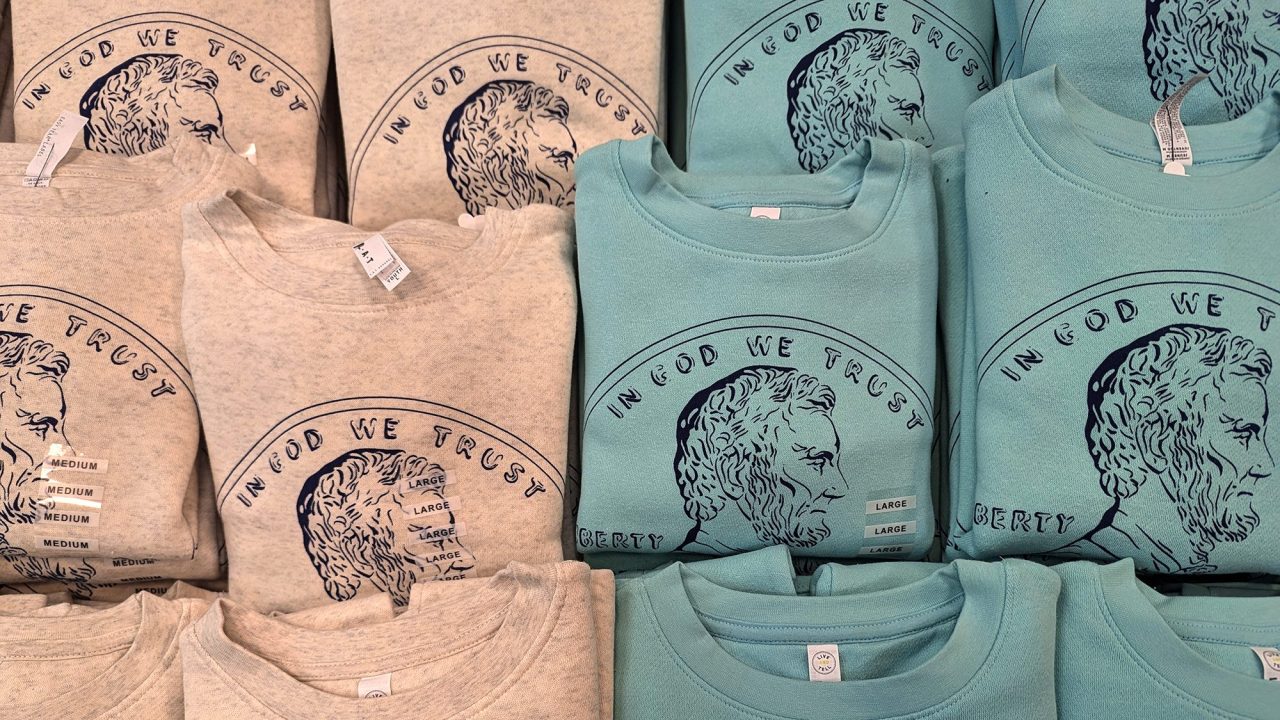
AR: What’s your favorite Lincoln-related item in the museum store, and by any chance, is it the penny t-shirt?
CS: Not the penny tee, but that is a popular item. My favorite is the “Presidential Perk” coffee we just launched. Lincoln’s love of coffee inspires it. We worked with Custom Cup, a local coffee company in Springfield, to create a custom blend, and it’s probably my favorite item right now.
AR: Thanks for talking, and I’m looking forward to a future visit, coffee, and of course, trying to find one of those hidden pennies.

Upcoming Events
-
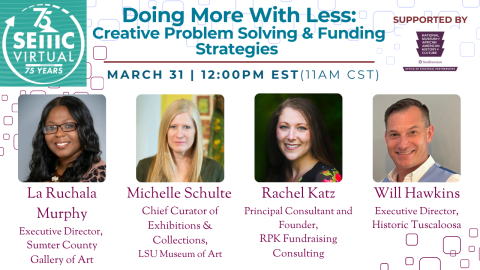
Doing More with Less: Creative Problem Solving & Funding Strategies
Event Date:Presented by: Southeastern Museums Conference -
Outdoor History Walking Tours 101
Event Date:Presented by: American Association for State and Local History (AASLH) -
I’m In Charge of A Museum Store. Now What?
Event Date:Presented by: American Alliance of Museums -
Gettin’ To Know You: The Art of Networking
Event Date:Presented by: American Alliance of Museums