The Museum of Early Trades & Crafts built a roadmap for restoration, expansion,and community impact.
What makes a museum a museum? Is it the collection, the educational impact, or the relationship it cultivates with its community? Undoubtedly, it is a blend of all these elements. But we might also consider how the museum’s physical envelope—its building—shapes the visitor experience long before one steps inside.
This article originally appeared in the Mar/Apr 2026 issue of Museum magazine, a benefit of AAM membership.
» Read Museum.
Iconic structures, like the Guggenheim in New York City and The Getty Center in Los Angeles, illustrate how architecture can define identity. However, most U.S. museums are small, local, or regional institutions housed in modest or historic buildings. These structures come with their own demands and rewards, particularly when adapting them for modern use.
“The museum is dedicated to interpreting the lives of the everyday people who lived and worked in this region long before New Jersey became one of the nation’s most populous states.”
With a blend of vision, strategic planning, collaboration, and respect for heritage, small or midsized museums can successfully complete major building projects that improve the visitor experience. The Museum of Early Trades & Crafts (METC), where I have served as executive director for 10 years, offers a case study. We have recently designed and executed two major initiatives: our Main Level Permanent Exhibit renovation and our Viewable Storage Facility.
For a small historic museum, undertaking renovations that balance preservation, collections care, and visitor engagement requires creative choreography and a deep respect for both the past and future. As we discovered, with careful planning, small institutions can remain nimble, responsive to community needs, and forward-thinking.
Our Context
METC is a New Jersey history museum with five full-time employees, five part-time employees, and an annual budget of $875,000. The museum is dedicated to interpreting the lives of the everyday people who lived and worked in this region long before New Jersey became one of the nation’s most populous states. The museum traces the core of its collection to its founders, Edgar and Agnes Land, who in the mid-20th century amassed an impressive array of tools, equipment, textiles, and objects that represent the everyday trades of the 18th and 19th centuries.
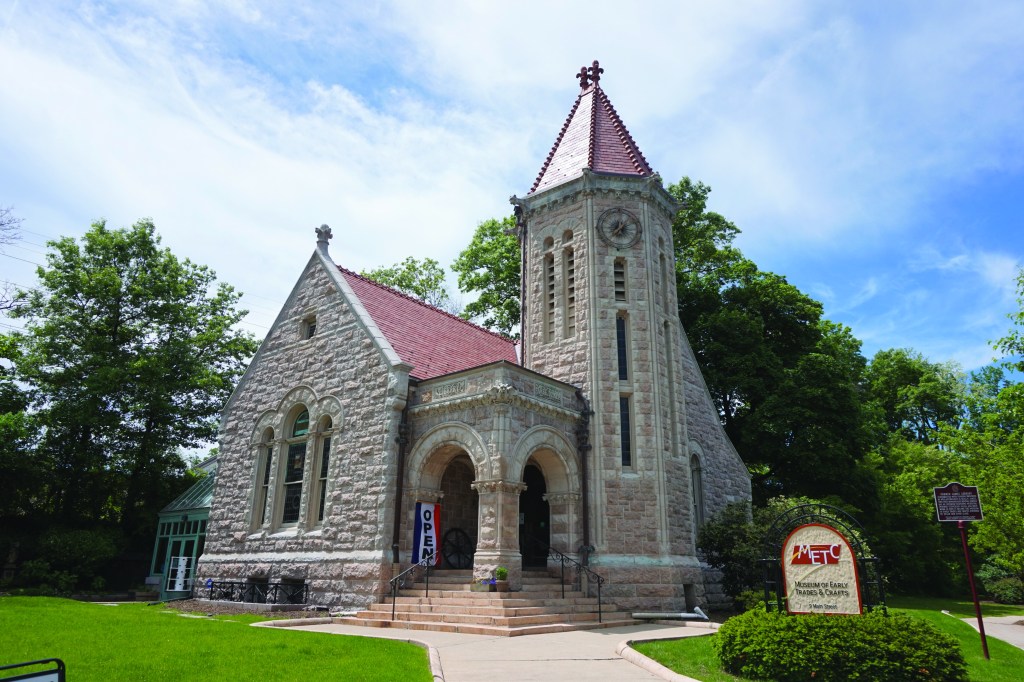
structure, was built in 1899 to serve as Madison’s first
public library.
Recognizing the lack of representation of ordinary New Jerseyans in the state’s historical narrative, the Lands committed themselves to collecting and interpreting artifacts that illuminate the skills, livelihoods, and ingenuity of early residents. Over the years, the collection has grown, but its heart remains the same: a comprehensive record of New Jersey’s evolution from early settlement to industrialization, told through the lens of home, shop, and farm.
Equally significant is the building that houses our museum—the first public library in Madison, New Jersey. Built in 1899 by philanthropist D. Willis James, the James Library Building is listed on both state and national registers of historic places. Although borough-owned, METC has had full use of the building at no cost since 1970. In exchange, we assume full responsibility for its preservation, maintenance, and capital needs, often partnering with the municipality on major projects.
Renovations from the Outside In
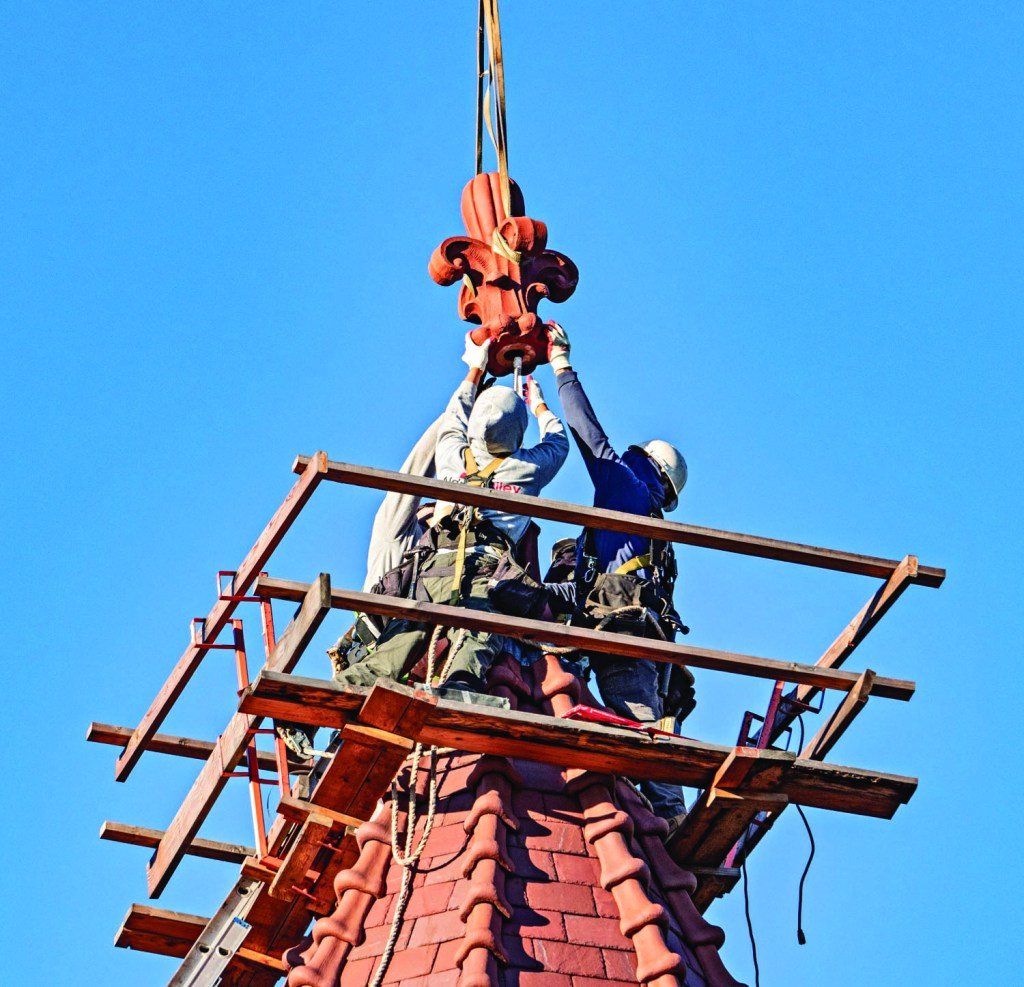
Our preservation work began in earnest in 2013 with exterior projects, including replacing the original slate roof, repointing the stonework, and fabricating two new terracotta finials. Interior restoration followed, including conservation of the ornate stenciled walls, supported by county and state grants. As we progressed, it became increasingly clear that we needed to turn our attention to our public spaces, beginning with our exhibits.
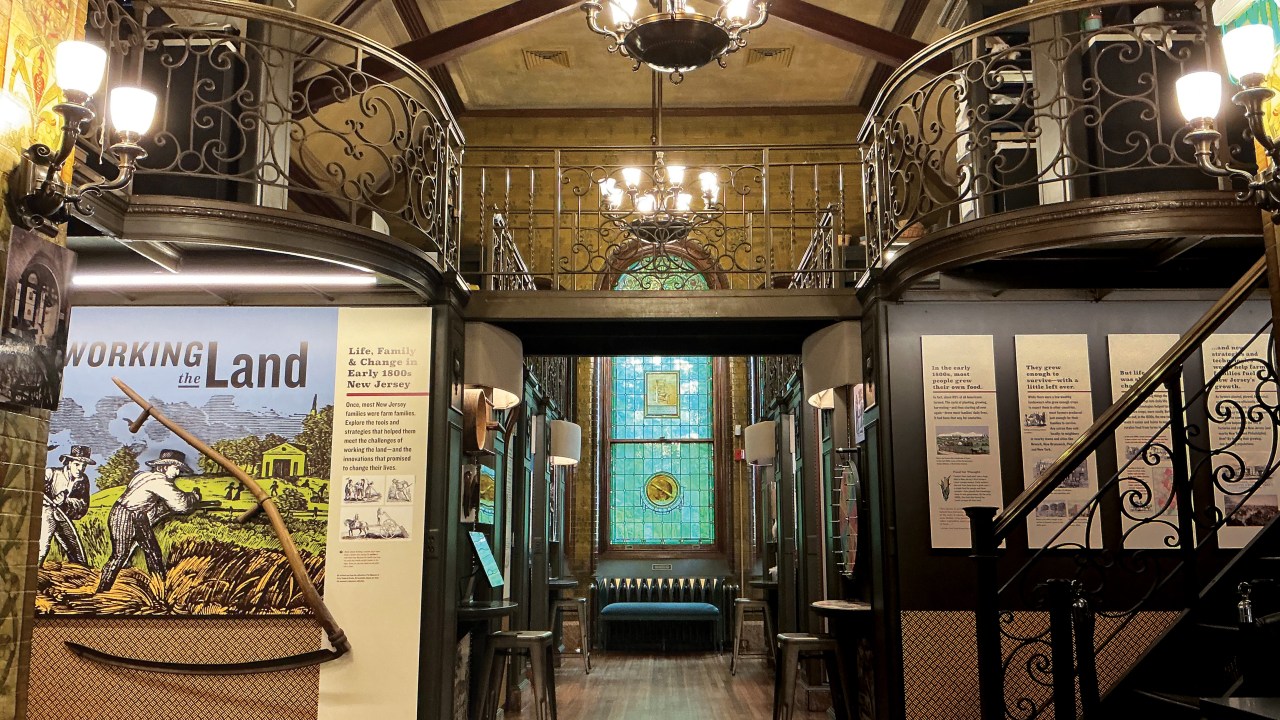
The redesign of our Main Level Permanent Exhibit, completed in 2019, was our first major effort in 18 years to directly advance our mission of education and engagement. The goal was to transform the gallery into a dynamic interpretive experience rooted in our themes of ingenuity, craftsmanship, and history. We maintained the core narrative but introduced 21st-century interpretive strategies to better illuminate early 19th-century life. The creative team added interactive components, colorful wall panels, and additional interpretive text panels that scaffolded the information to reach different audiences—from kids and young adults to researchers and the casual visitor.
Balancing architectural integrity with accessibility was essential—particularly because the space still contains the building’s original metal bookstacks from 1899. Ultimately, the redesigned gallery blended contemporary design with historic character. Enhanced lighting and casework opened the space, while graphic panels, audiovisual elements, and hands-on components energized the visitor experience. This project’s success was driven by trusted partners—designers, curators, and preservation architects—and strong existing relationships with funding sources.
Our second major project was larger in scope and ambition: the creation of a nearly 1,000-square-foot viewable storage facility on the building’s lower level. Addressing collections care had been identified in earlier strategic plans, and we envisioned a space that would combine conservation-grade conditions with public access and educational interpretation. Because our building lacks passive environmental stability, we needed to create a self-contained envelope for the storage facility with its own HVAC system and moisture barrier.
However, as with most complex projects, the timeline shifted dramatically. A mold infestation required immediate action to stabilize temperature, humidity, and light levels—and forced us to close the lower level, redirect staff time, and pause other museum activities. The crisis accelerated our planning and reinforced why such a facility was essential. Then, as we prepared for remediation and object relocation, the COVID-19 pandemic halted all activity for nearly five months. However, this pause also gave us additional time to shape grant proposals and communicate our urgent needs to funders.
Working with Historic Building Architects, we developed a timeline that integrated mechanical, environmental, and security requirements within the constraints of our historic building. We applied for and received funding for a feasibility study, which in turn positioned us to secure a major construction grant from the New Jersey Historic Trust and a substantial award from the National Endowment for the Humanities (NEH). Additional funding came from the museum’s Bruehne Trust.
5 Tips for a Successful Building Project
1. Spend time developing a detailed building plan with input from the board, staff, andarchitects.
2. Understand your funding options and any historic building requirements.
3. Identify issues that need immediate attention (structural concerns, moisture, electrical work)and address those first.
4. Research which project will have the greatest impact on your community (education, conservation, historic preservation, community space).
5. Build in flexibility. Be prepared to adjust or extend your timeline—unexpected challenges will happen!
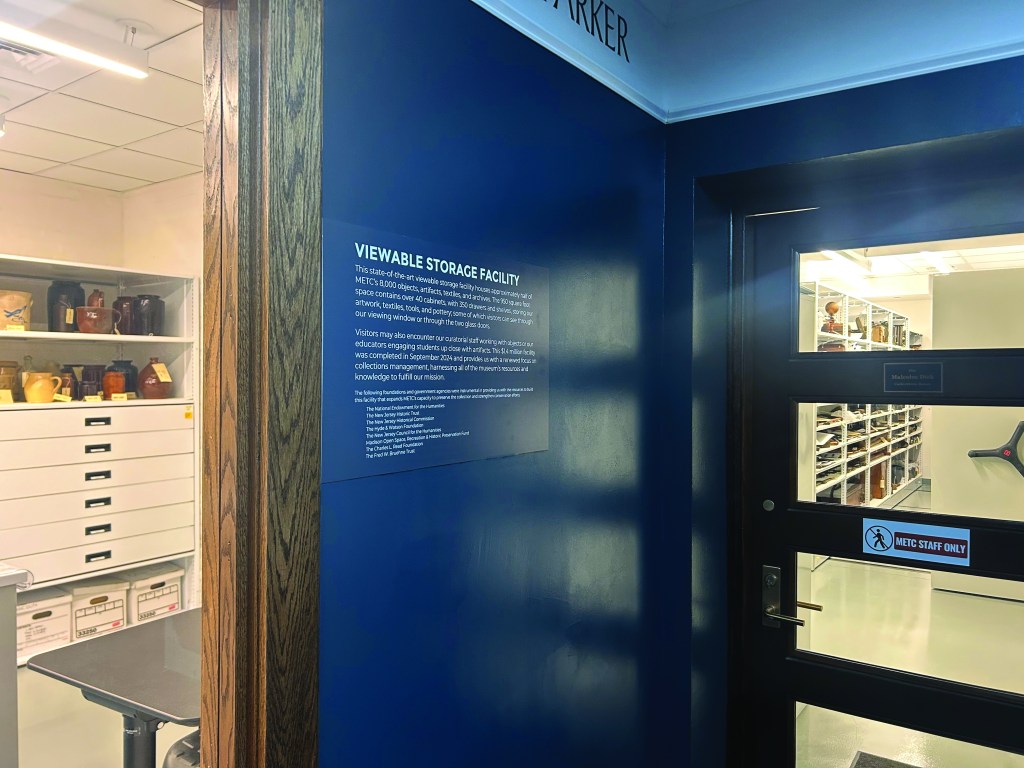
storage facility and Curatorial Lab offers the public
a “behind-the scenes” view of the collection.
On the right: Contractors delicately installed a newly fabricated fleur de lis–shaped terracotta finial atop the building’s tower to replace the original, which was damaged.
Project coordination was extensive. We completed the New Jersey Association of Museums Artifact Assessment Program to clarify preservation standards, and our curatorial team created a detailed method of inventory management, including volumetric mapping for rehousing. Collaboration among architects, engineers, designers, and museum staff kept the project moving, even as challenges emerged.
Originally estimated at four months, construction ultimately extended to accommodate HVAC lead times and unexpected structural issues. Removing the concrete floor revealed original19th-century sanitary lines that had to be replaced. We also had to close our entire lower-level exhibits to the public, which temporarily impacted our public engagement. A second, more significant issue occurred when the initial concrete pour did not meet specifications for embedding the rails for the mobile shelving units. After consulting National Archives recommendations, we switched to an epoxy flooring system better suited to conservation needs—adding six months of delay and requiring an NEH grant extension.
Construction was finally completed in January 2024. Rehousing the collection began immediately, and our team continues to evaluate the facility’s impact on daily operations, staff workflow, and long-term preservation. The new space represents a major achievement: a modern, efficient, conservation-appropriate environment that reflects METC’s commitment to stewardship and transparency.
Our Building Blocks for Success
An agile strategic framework was essential to our success. Our 2018 and 2024 strategic plans emphasized expanding public access to the collection and improving the efficient use of our limited space. With this focus, we could align all major projects with our mission and values.
Just as important as our strategic planning was our comprehensive Preservation Plan, which helped us reconsider our building not as a constraint but as an asset. Initiated in 2013, the Preservation Plan included an extensive list of potential areas of concern. Specifically, we needed to address moisture that had begun to cause significant deterioration in the interior glazed brick and stenciled plaster. There were also issues with the original slate roof and the concrete floor in the basement. Preservation decisions were made collaboratively by museum leadership, municipality partners, and our preservation architect.
Understanding the architectural significance of the James Library deepened our commitment to stewardship. Over the past five years, our historic building has fueled new public programs, architectural tours, and seminars that highlight both the building and its history.
Strong financial stewardship also played a critical role in our renovations. In 2015, a generous benefactor left METC an endowment bequest specifically designed to help this small museum balance preservation with innovation. The donor understood the challenges museums face in addressing growth and infrastructure needs simultaneously. We leveraged this flexible funding to secure significant grant support for both major projects.
We learned countless lessons—about timing, communication, flexibility, and the realities of working within a historic structure—from both major projects. Yet the outcomes have been profoundly positive. We have seen increased public interest, deeper engagement from diverse audiences, and higher visibility within the museum and funding communities. Our curatorial staff now accesses objects more easily, monitors conservation needs more effectively, and works in a vastly improved environment. Most importantly, these projects have strengthened our ability to safeguard METC’s collection and enrich our community’s cultural landscape.
Achieving this vision required risk, commitment, and a shared belief in the potential of our museum and its historic home. Thoughtful planning, strong leadership, and appreciation for our building’s unique character have transformed how funders, partners, members, and visitors perceive us. While the road has not always been smooth, hard work and determination—accompanied by a bit of luck—have served us well.
Upcoming Events
-
I’m In Charge of A Museum Store. Now What?
Event Date:Presented by: American Alliance of Museums -
Core Issues Briefing Series
Event Date:Presented by: American Association for State and Local History (AASLH) -
Strengthening the History Workforce Virtual Summit
Event Date:Presented by: American Association for State and Local History (AASLH) -
Gettin’ To Know You: The Art of Networking
Event Date:Presented by: American Alliance of Museums