An architect offers advice for museums of all sizes on master planning.
As an architect and planner who has spent many years working with museums of all types and sizes, I’ve heard it all when it comes to master planning.
“We’ve done planning before and nothing ever happened. It’s a useless paperweight on my bookshelf.”
“Master plans always feel like giant wish lists: beautiful, expensive, and impossible to actually build.”
This article originally appeared in the Mar/Apr 2026 issue of Museum magazine, a benefit of AAM membership.
» Read Museum.
“We ended up with a plan for the museum we wanted to be, not the one we were ready to grow into.”
I understand how master planning has come to have a bad rap in leadership meetings and boardrooms. Historically, the process has followed a familiar path: defining a long-term and often grandiose vision with an equally grand physical response and then hoping that the funding and institutional willpower would follow—a sort of “build it and they will come” approach. These plans were often conceived as a singular path toward building multiple large projects, leaving no room for adaptation. When one project became untenable, the museum had no viable path forward.
The result was a loss of faith in the process. But as museums face an increasingly treacherous environment fueled by financial pressures, operational constraints, changing audience expectations, emerging technologies such as AI, and more, master plans that are adaptable and flexible are arguably more important than ever. In a word, museums need their plans to be strategic.
So what does a strategic master plan look like?
- It is grounded in and accounts for the realities (building, financial, and operational) of their existing conditions.
- It acknowledges that uncertainty is a given and is adaptable to changing funding climatesand priorities, offering multiple ways to progress goals
- It is designed to be a living document that is revisited annually to guide decision making.
What Makes a Master Plan ‘Living’?
- Revisited annually to ensure alignment and advancement toward goals.
- Built around priorities and implementation options rather than a single sequence of projects.
- Includes triggers for revisiting assumptions, such as leadership changes, funding shifts, and audience trends.
Over the years, I’ve honed a three-phase framework to lead clients through this process. The framework—discovery, analysis and development, and recommendations—provides essential structure while remaining flexible enough to account for each museum’s unique strengths and challenges. Let’s walk through it.
Phase 1: Discovery
Discovery is where we are “establishing the ground truth,” as I like to call it. We’re gathering as much information as possible to build a clear and data-backed understanding of the museum as it exists at the start of the planning process. We’re seeking to understand its strengths and weaknesses both as an organization and in terms of the physical space that it inhabits.
This work begins with conversations with stakeholders—leadership, staff, and sometimes the broader community. These conversations surface aspirations, strengths to capitalize on, and challenges that are holding the institution back.
At smaller museums, lean teams and broad individual roles mean staff have an exceptionally deep, hands-on understanding of their institution. They know every corner of the building, every community partnership, the lessons behind programs that didn’t take hold, and the drivers of exhibitions that resonated most. This knowledge base is a powerful asset—especially in contexts where formalized data or large analytical teams may be limited. Discovery is best done in a concise and nimble way. This may mean individual or small group interviews rather than extended work sessions, relying on anecdotal insights over deep-dive data collection, and ending with a summary of the collective insights rather than a narrative report that is more time-consuming to review.
Large museums operate with a broader set of resources. Their teams are often composed of specialists with deep expertise and access to extensive audience and financial datasets built over many years. But at this scale, departments are often siloed, and decisions must go through more structured and multilayered approval frameworks. The challenge here is creating alignment from a wide array of inputs with competing priorities and political realities. These inputs and solutions must relate back to the primary goals, which can often be achieved through a combination of consensus-building workshops and smaller side conversations. A strong steering committee can help cut through the noise and reinforce mission alignment.
Midsized museums operate somewhere in between: they have more departments and larger datasets to draw from, but their staff are often stretched thin. Communication gaps may emerge between departments, not from a lack of expertise but from limited time and competing priorities. Discovery at this scale requires structure but not bureaucracy: focused departmental workshops that surface a broad set of perspectives that are then synthesized and shared with all stakeholders. Moderate data analysis provides grounding, but the most important work happens in honest conversations about ambition versus feasibility.
Discovery is where we learn how the museum naturally moves and how the framework must respond. For some museums, this phase needs to stretch, allowing for broader engagement, deeper analysis, or longer alignment building. For others, it must compress, focusing the work tightly so the process remains manageable and relevant.
Pilot Projects in Practice
In 2021, EwingCole developed a master plan for Nemours Estate, a 200-acre country estate with formal gardens in Wilmington, Delaware, built by Alfred I. duPont in 1910. Because the estate shares a campus with Nemours Children’s Hospital, the plan identified a relocated visitor arrival point as a long-term opportunity to better serve both audiences: it would make the estate more visible and accessible to hospital families and staff while also resolving longstanding wayfinding challenges for all visitors. The new location would allow visitors to enter on foot and experience the grounds as a cohesive landscape rather than being shuttled from a remote visitor center—strengthening orientation, immersion, and overall visitor experience.
Even so, there was hesitation about committing to the change. Moving the main entry would also mean significant operational shifts and a large capital investment. The design team proposed piloting the change to test the solution and confirm its value and viability. Nemours implemented a temporary but intentional setup. New signage clarified arrival and circulation; two 10-foot-by-10-foot sheds were introduced to serve as ticketing and guest services; and new landscaping beautified the service entry, giving it a more welcoming feel. With the hospital and estate more visibly and functionally connected, the pilot made it easier for hospital visitors, families, and staff to discover the estate.
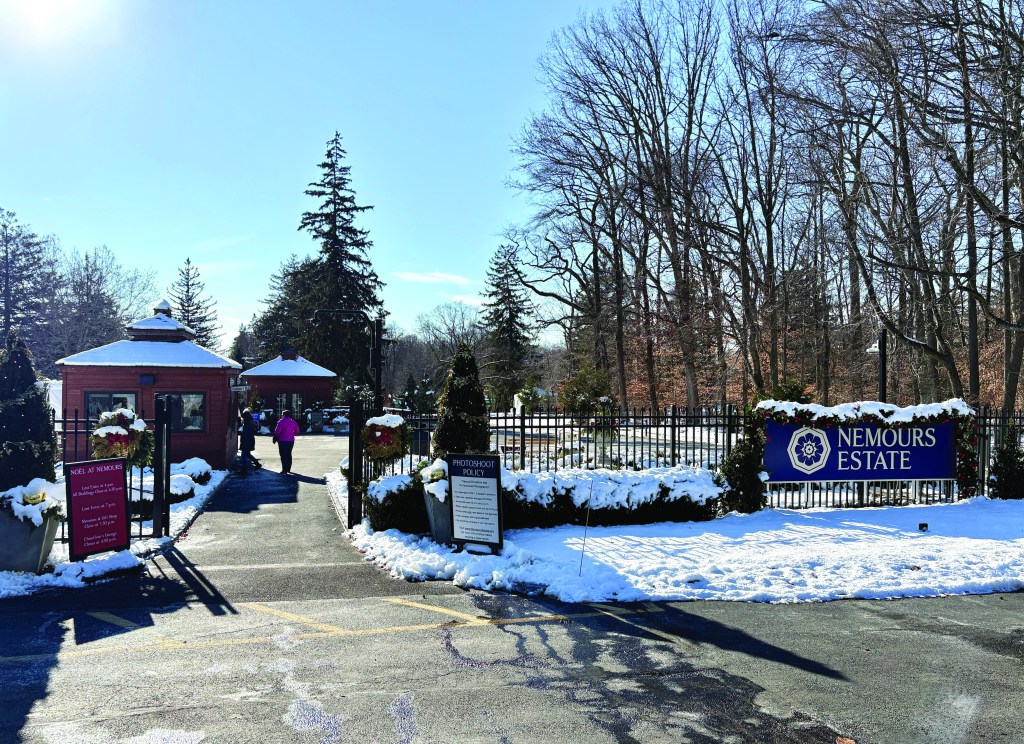
modest ticketing structures, fencing, signage,
and landscape improvements to test circulation,
wayfinding, and visitor experience.
The impact was immediate and measurable. Guest confusion dropped, circulation improved, and visitation surged. Annual attendance increased to approximately 38,000 visitors, surpassing the estate’s previous high-water mark of 28,000 in 2019.The pilot did more than validate a design idea. It generated the data needed to support future investment, built internal confidence, and gave leadership tangible proof of what a permanent change could achieve.
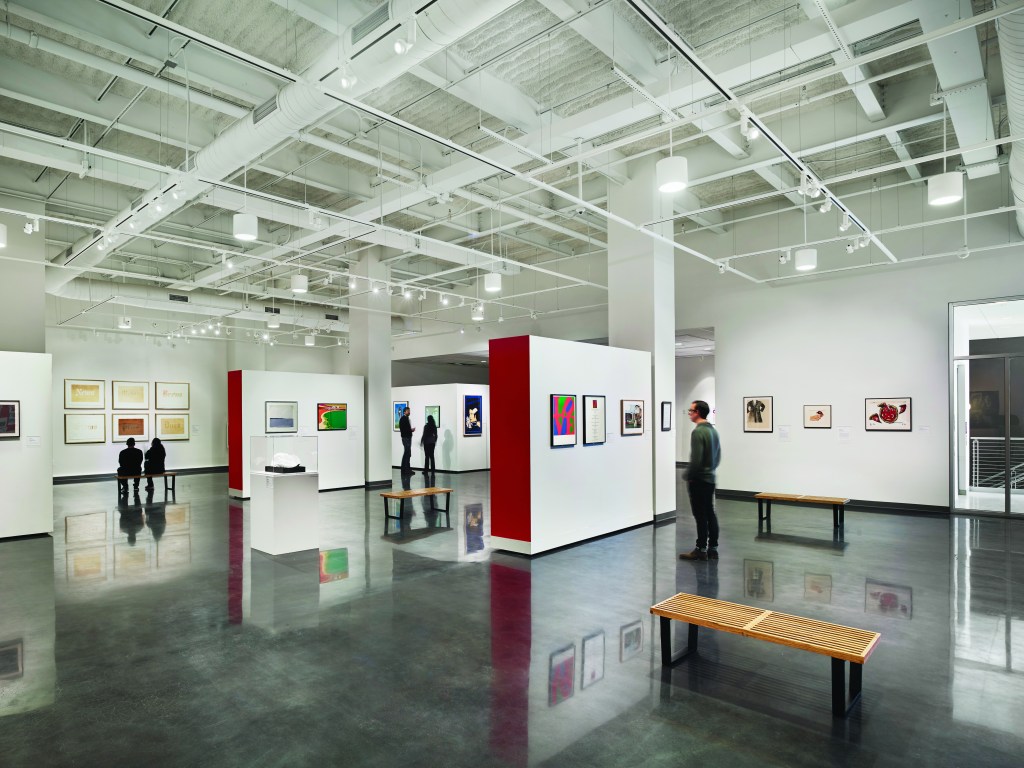
illustrating how a mix of flexible spaces allows every area of the museum to serve multiple functions.
Phase 2: Analysis and Development
With our ground truth established, the process turns to the analysis and development phase where the planning team starts to map out the patterns of use, underutilized spaces, operational pain points, and areas where visitor experience suffers. We consider aspirational goals, along with the museum’s capacity to support these changes, by testing different scales of intervention, from small operational shifts to moderate reorganizations to fully realized transformations. This phase allows the museum to evaluate if the “juice is worth the squeeze” or if more modest adjustments can offer meaningful improvement.
This phase is also where the balance between scope and ambition starts to come into focus. When confronted with multiple scenarios, and the reality that not every need can be met, museums are compelled to prioritize, weigh tradeoffs, and make more strategic, sustainable choices about where to invest their time and money.
Smaller museums often discover impactful improvements can be achieved fairly quickly through operational creativity versus significant new construction. Improving circulation, streamlining operations, and reallocating existing space are low-cost ways that these museums can affect real change. Larger museums oftentimes desire grander-scale changes where scenario planning becomes critically important. Mid-sized museums often fall somewhere in between and must balance capital improvements with operational alignment.
This is the phase where gaps in data become visible and we might propose pilot projects: small, low-risk initiatives that generate data to support decision-making down the line. A new ticketing model, a partial workspace reorganization, or a new visitor entry point can be tested in relatively low-cost ways to confirm or negate a proposal. (See the “Pilot Projects in Practice” sidebar for a real-life example.) They allow museums to try out changes before fully financially and physically committing to them and offer data that can be persuasive in building support from the board and staff.
Phase 3: Recommendations
The final phase—recommendations—is where we synthesize all the previous information and finalize the preferred method into a clear and actionable plan for change. It’s where spatial and operational implications are documented along with the decision-making framework that was used to generate the recommendations. This includes outlining the proposed scenario, program and space strategies, operational considerations, and construction cost estimates.
Implementation plans will vary depending on the size of the museum, with smaller museums focused on a timeline of up to five years and large museums focusing on no more than 15–20years. The longer-term vision is articulated to ensure that early development work reinforces, rather than undermines, the infrastructure and spatial capacity required for future phases.
Most importantly, the result must be designed as a living document. Today’s museums need plans that survive leadership transitions, funding fluctuations, and external pressures. That means the plan cannot hinge on a single sequence of projects. Instead, it must provide a menu of potential projects; clear criteria for evaluating opportunities as they arise; and the flexibility to re-sequence based on funding, readiness, or shifting priorities.
Putting the Plan to Work
Many museums choose to implement their plans opportunistically, selecting projects based on donor interest, grant cycles, or emerging partnerships. A flexible master plan supports this: whether a museum receives funding for a collections vault, a visitor center upgrade, or a new education program, each project advances the broader strategic goals.
An important consideration in outlining the phasing of the work is the rhythm of change. This may mean looking at how each project ticks off key goals to ensure a balanced approach and progression. Or it might mean beginning with projects that are lower-cost but high-impact before embarking on larger, more ambitious projects. Quick wins allow museums to build momentum and demonstrate their commitment and ability to realize their plan.
Whether for a small historic house or a large museum with multiple buildings on sprawling grounds, a flexible master plan grounded in the institution’s reality is a critical document. Using this three-phase framework, museums can ensure they are developing strategic master plans that pave the way to a successful future—and not creating expensive paperweights.
Upcoming Events
-
I’m In Charge of A Museum Store. Now What?
Event Date:Presented by: American Alliance of Museums -
Core Issues Briefing Series
Event Date:Presented by: American Association for State and Local History (AASLH) -
Strengthening the History Workforce Virtual Summit
Event Date:Presented by: American Association for State and Local History (AASLH) -
Gettin’ To Know You: The Art of Networking
Event Date:Presented by: American Alliance of Museums