How can museums successfully develop the next generation of leaders?
“Success without a successor is a failure.”
— John C. Maxwell, American author and pastor
People in leadership positions across the for-profit and nonprofit sectors are burning out and leaving their professions, and it’s not clear who will step forward to fill their shoes. With financial and political stress rising, and conflicting pressure being brought to bear from the government, the public, and their own staff, leading an organization, or a department, is not as attractive as it once was. Young people are showing less interest in taking on management responsibilities and rising through the ranks. Individuals who do step up often find themselves overwhelmed and ill-equipped for the job.
This article originally appeared in the Jan/Feb 2026 issue of Museum magazine, a benefit of AAM membership.
» Read Museum.
Museums face particular challenges to developing the next generation of leaders, who will need to deal with multiple, overlapping crises, including climate emergencies; rising economic inequality; diversity, equity, and inclusion (DEI) backlash; partisanship; and federal attempts to control museum content. Old leadership pipelines are no longer workable or appropriate, and succession planning is distressingly rare. How can museums create new pathways for training and supporting future leaders? What new skills will these leaders need? How can museums continue to support equitable development of the next generation?
The Challenge
Professional development, offering a path from line staff to managers to the C-suite to the director’s office, has long been the template for advancement. That’s beginning to change. In the past decade, the very concept of leadership has expanded, encompassing people at all levels of the organization in response to a desire for a workplace in which everyone shares authority and responsibility, and anyone can move up in the organization. Now the pendulum is beginning to swing the other way, and fewer people are interested in managerial or leadership roles. Forty-two percent of employees are rejecting promotions, and over half of Gen Z workers—52 percent in one study—don’t want to pursue middle management roles at all. Sixteen percent would refuse any job that puts them in charge of others. Even Fortune 500 companies offering multimillion-dollar compensation packages are having trouble attracting top candidates.
Why the aversion to taking charge?
Staff who don’t want to take the first step up the career ladder by becoming managers cite a number of disincentives, including increased stress and pressure, longer hours, personal commitments outside work, and a simple lack of interest in leadership responsibilities. Management is often a vilified role. Trust in supervisors is low and dropping, with 46 percent of employees expressing such trust in 2022 compared to 29 percent in 2024. Becoming a manager often means more work for the same salary. People managers have twice as many reports as five years ago, and promotions increasingly come with more work but not higher pay. While two-thirds of employees are willing to accept a promotion without a raise, that’s often because they can turn around and use that to shop for a higher paying job—in one recent study, 29 percent of employees who received a promotion left within a month. For a long time, moving up the management hierarchy within your own company or by changing jobs was seen as the best route to financial stability. Now people are often broadening their financial base through independent work and entrepreneurship, or they are prioritizing personal interests and wellbeing over maximizing income.
Being a leader at any level is harder than ever as the pace of economic, technological, and climate disruptions continues to accelerate. It isn’t enough to learn one successful model of doing business—those leading a team, a department, or an organization must continually adapt and help others deal with the stress of a constantly changing environment. Today’s leaders need “soft skills,” the ability to lead with empathy and care for the psychological wellbeing of their staff, but these skills have only recently begun to be taught and valued.
The “Bring Your Whole Self to Work” movement aimed to improve wellbeing and engagement, but one side effect has been an increase in conflict as people bring strong opinions on politics, culture, and values into the office. Almost half of Gen Z workers expect businesses to take a stand on social issues. Over a third openly discuss politics at work, 28 percent would consider resigning over political differences with colleagues, and 32 percent say they might leave if their CEO expressed views they disagree with. In this increasingly fraught environment, nearly half of emerging leaders struggle to manage workplace conflict, and only 30 percent of current leaders have confidence in their ability to do so.
And while artificial intelligence is touted by tech titans as a tool for increasing productivity and “making work easier,” it’s impact on the workplace is not entirely benign. AI is picking up some of the work traditionally done by people managers, potentially easing their workload, but younger workers want mentorship and human relationships at work. To the extent that AI displaces middle management, it interrupts the pipeline for mentoring staff into leadership roles. This is already disrupting the traditional structure of law firms by reducing the ranks of junior associates, paralegals, and legal support staff. This disruption might spread all the way to the top, as some suggest that AI will soon be able to outperform CEOs.
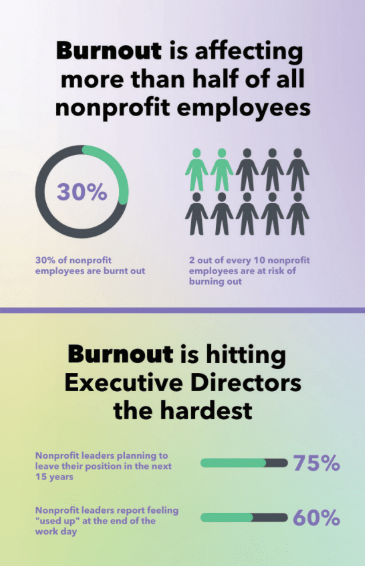
The leadership crisis poses a particular challenge to the nonprofit sector and the vital services it provides to society in this moment. The lingering challenges from the pandemic and the systematic dismantling of federal support for health, education, and human services have created more demand than ever on the US nonprofit sector. But these needs, together with decreased government funding and partisan attacks on their work, place incredible stress on nonprofit leaders. In the 2025 State of the Nonprofit Sector Survey, when asked to identify major challenges in their work, 24 percent of respondents said “executive director/senior leadership burnout,” another 24 percent chose “staff burnout,” and 20 percent picked “identifying and developing our organization’s next generation of leaders.”
What This Means for Museums
Museums present an idiosyncratic set of challenges to organizational leaders. Only a few decades ago, the stereotypical museum director was recruited from the curatorial ranks. That created its own mini-crisis as people trained and selected for scholarship found themselves being evaluated on their ability to cultivate donors and build stable financial models. Now museums are looking to a broader pool of candidates with experience relevant to running a museum, including financial planning. (This has sometimes created yet another set of issues when leaders recruited from the for-profit sector struggle to adjust to the realities of a nonprofit, mission-driven operation.)
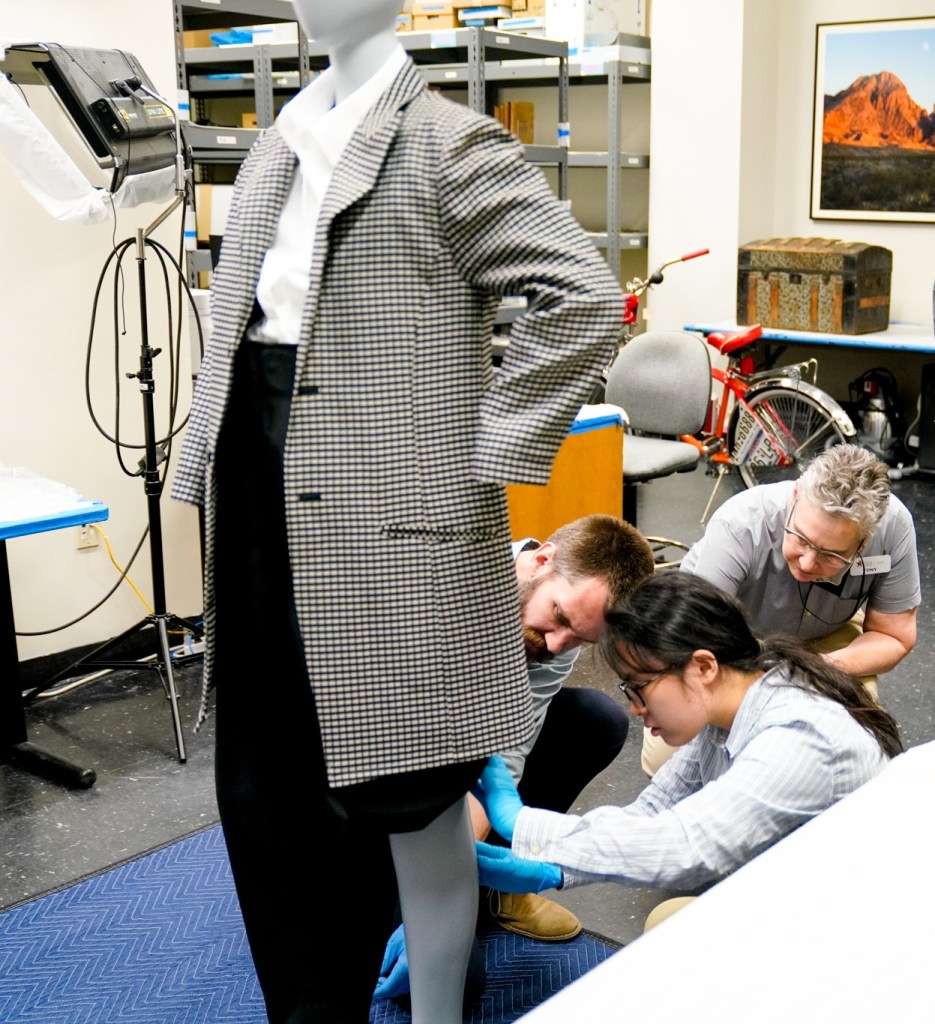
positions with benefits, providing pathways for entry-level workers.
The past decade has also challenged directors to address the sector’s legacy problems, including unhealthy and inequitable working environments and unsustainably low wages. As museums strive to improve their organizational culture, the checklist of skills and abilities for the ideal director candidate has expanded to include agility, empathy, and conflict and crisis management. Post-2020, with the rise of Black Lives Matter, directors are often called on to navigate deeply conflicting expectations from the board, the staff, the public, and political leaders. Now directors are confronting DEI backlash, partisanship, and federal attempts to control museum content.
Directors are at the point of maximum pressure in the organizational chart, between the staff below and the board above. Some feel that, to paraphrase Winston Churchill, “Nonprofit boards are the worst form of governance except for the alternatives.” Ideally, boards provide accountability, oversight, insight, and resources as well as emotional, professional, and practical support for their director. Even at their best, boards require a great amount of time and attention to recruit, educate, and care for a constantly rotating group of people, many of whom have no familiarity with museum operations or even nonprofits generally. At their most problematic, they can challenge directors with their apathy or personal priorities and enthusiasms. It’s a constant balancing act to find people who want to do real work but not get too deep in the weeds. Board members, in evaluating directors, often are guided by for-profit measures of success. Growth of collections, attendance, the building footprint—these measures can feel good in the short term. Long term, these metrics can result in unsustainable expansion that creates unrealistically complex organizations that have no mechanism for “right-sizing” in the face of changing circumstances.
The tensions in the three-way relationship between director, staff, and board have only become more fraught with the platform and megaphone social media affords to all. A single staff person, equipped with a hashtag and an X account, can not only bring their concerns to the attention of the public, and the board, but possibly even destroy a museum leader’s reputation or end their employment.
Current events threaten to undo a decade of slow progress in fostering diversity among nonprofit leadership. In 2022, the Building Movement Project documented declining interest among Black, Indigenous, and people of color (BIPOC) staff in moving into nonprofit leadership roles, a trend doubtless accelerated by the current federal directives to dismantle and suppress DEI. In early 2025, many rising museum leaders in DEI roles lost their positions due to grant cancellations, executive orders, and pre-emptive censorship. The ongoing suppression of DEI-related work by the federal government may well reduce the interest or willingness of BIPOC staff to move into leadership positions. On the other hand, the Building Movement Project found that people are often “pushed” into leadership positions as a reaction to negative work experiences—perhaps the current challenges will strengthen the resolve of BIPOC staff to build a better workplace for the next generation of museum workers. If that is the case, museum boards will need to create safe, supportive environments in which such leaders can thrive.
What’s Next for Museum Leadership?
According to AAM’s 2024 Museum Board Leadership report, over half of directors are between the ages of 50 and 64, and 20 percent are 65 or older. Given that the average retirement age for college-educated Americans hovers around 65, those demographics presage a coming wave of vacant positions. This surge may be amplified by the exodus of directors who, on the cusp of retirement in 2020, stayed on to steer their organizations through the COVID-19 pandemic. Our field is facing an immense loss of institutional knowledge, as well as the cost of bringing new leaders into the sector or the organization and up to speed.
In the best-case scenario, the next generation of leaders is on deck, ready to be recruited into vacant positions, and museums are primed to find the candidates they need from that pool. Neither of those conditions currently holds true. Given the challenges outlined above, many staff are not interested in stepping into the director role. The field overall has underinvested in leadership training, and very few museums are engaged in the kind of staff development, and board planning, that prepare them to recruit their next leader.
The most important step museums can take to fill this gap is to engage in succession planning—working over the long term to prepare high-potential employees to fill positions that become vacant when current leaders or key staff leave, retire, or are promoted. Unfortunately, succession planning is rare overall, and even less common in museums than in other sectors. There are reasons: directors may be uncomfortable preparing for their eventual departure. Directors and boards may prioritize scarce resources for immediate issues rather than eventual needs, however inevitable. Good succession planning requires leadership from the board chair and human resources staff, and individuals in those positions may feel ill-equipped to tackle this challenge. Some areas of museum practice can be catalyzed by sample documents—examples from peer institutions of strategic plans, emergency preparedness, and collections care. For obvious reasons, succession plans, when they do exist, may be highly specific to an institution or too confidential to share.
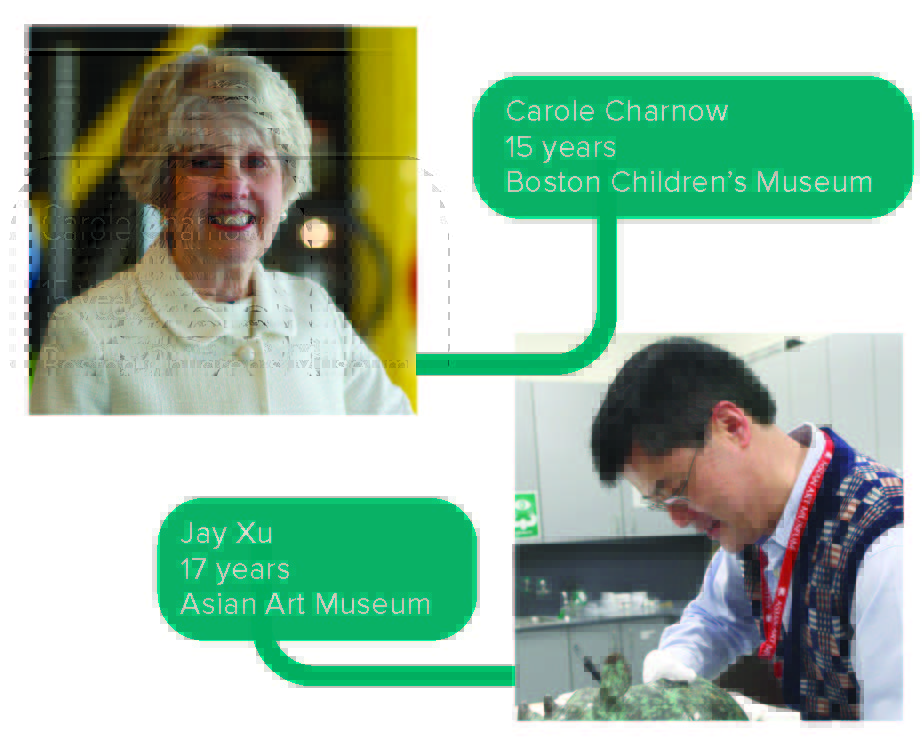
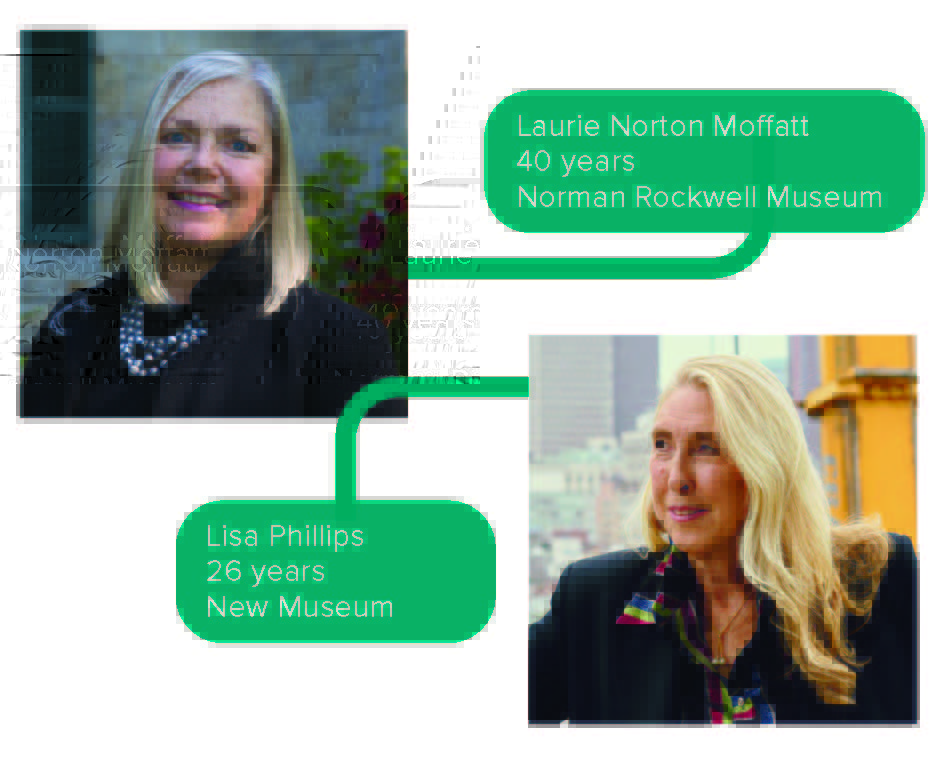
In 2025, many long-tenured museum directors announced their retirements. When veteran directors leave, a wealth of institutional knowledge is lost and unique challenges face their successors.
Museums are currently navigating economic uncertainty, pressure to censor or soften content, and politicization of arts, culture, and science. They need skilled leadership at all levels of the organization; however, these challenges may amplify stress, accelerate burnout, and make leadership positions less attractive than ever. To address the needs of their communities, and the country, museums will need to attend to the health and wellbeing of their staff by creating safe, supportive workplaces where people can continue to do this difficult work.
“People really don’t want to be directors
right now because the jobs are emotionally
unsustainable.”— Laura Raicovich, writer, curator, and former President and Executive Director, Queens Museum
Museums Might …
- See the entire staff as a source of potential leaders. Institute practices that involve staff of all levels in museum operations in meaningful ways, including financial and strategic planning.
- Give staff members experience reporting on behalf of their teams at staff and board meetings to build their confidence and provide opportunities for advancement.
- Invest in staff development. Partner with other museums and colleges and universities to create appropriate, affordable training programs for staff.
- Develop career paths within their organizations that provide emerging and mid-career professionals with ways to build skills, take on new roles and responsibilities, and advance in meaningful and satisfying ways.
- See themselves as training grounds for staff who may move on to other institutions, thereby playing a significant role in developing the next generation of museum leaders writ large.
- Challenge their boards to review and reform how they set expectations and measure performance for museum directors, ensuring that they create a supportive working environment and provide the necessary resources to achieve success.
- Educate their board on the changing nature of and appropriate qualifications for leadership. Embolden the board to hire emerging leaders rather than fishing from the same small pool of candidates already filling comparable positions.
- Make succession planning an ongoing part of the board’s education and work and an enduring assignment for the current director. Regularly include time on the board agenda to discuss leadership development and what the museum will need from a future director.
- Create succession plans that include both the development of internal candidates and building relationships with potential external candidates far in advance of immediate needs.
- Create or maintain plans to foster BIPOC leadership, especially in the face of current pressures to suppress DEI practices and the loss of funding supporting this work.
- Help the board feel comfortable discussing diversity in the current anti-DEI climate, and empower it to factor diversity goals into hiring in legal, appropriate ways.
Elements of a Succession Plan
- Internal pathways for professional development supported by an appropriate budget.
- A “hit by a bus” plan for how the museum would cope with the sudden absence of any member of the leadership staff. This includes identifying who would serve as interim director should the director be incapacitated.
- Input from staff and the community on what a new leader could bring to the institution.
- A review of the position description. Has the director position become bloated and unsustainable? Do some responsibilities need to be redistributed to another (potentially new) position? Do any legacy assumptions about qualifications (e.g., education, experience) need to be re-examined?
- A plan, systems, and structures for bringing a new director up to speed, particularly if they are new to the director’s role or are coming from outside the field. This includes comprehensive policies and procedures, and detailed annotation of the current budget that explains underlying assumptions.
- A “90-day goals” document to guide the onboarding of a new leader. This may include review of internal procedures, meetings with key constituents, and a summary of short-term priorities.
- For small and all-volunteer organizations, a calendar for the incoming leader that includes important dates, assignments, and responsibilities, and a briefing book on key contacts and stakeholders.
Museum Examples
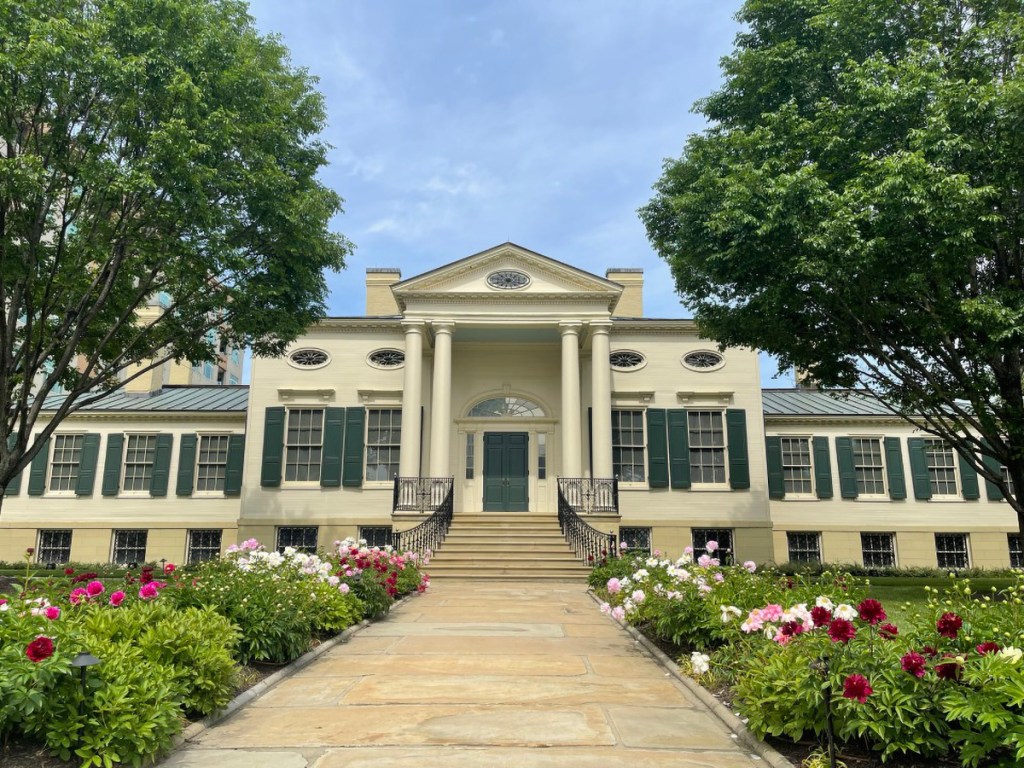
The Taft Museum of Art in Cincinnati, Ohio, sees itself as a “AAA farm team for the major leagues” that prepares its staff to be competitive candidates for leadership roles at bigger institutions. By encouraging professional development opportunities and outside projects, such as writing opportunities and board service at other organizations, the museum supports individual professional development while extending the reach and burnishing the reputation of the Taft. Supervisors initiate conversations about career goals and priorities (“What makes your heart sing?”), making individual planning around career transitions a collaborative process. The museum’s leadership believes that creating comfort with experimentation and fluency with best practices builds cross-departmental collaboration, strengthens autonomy and shared agency, and positions the Taft as a workplace of choice and a leading institution in the field.
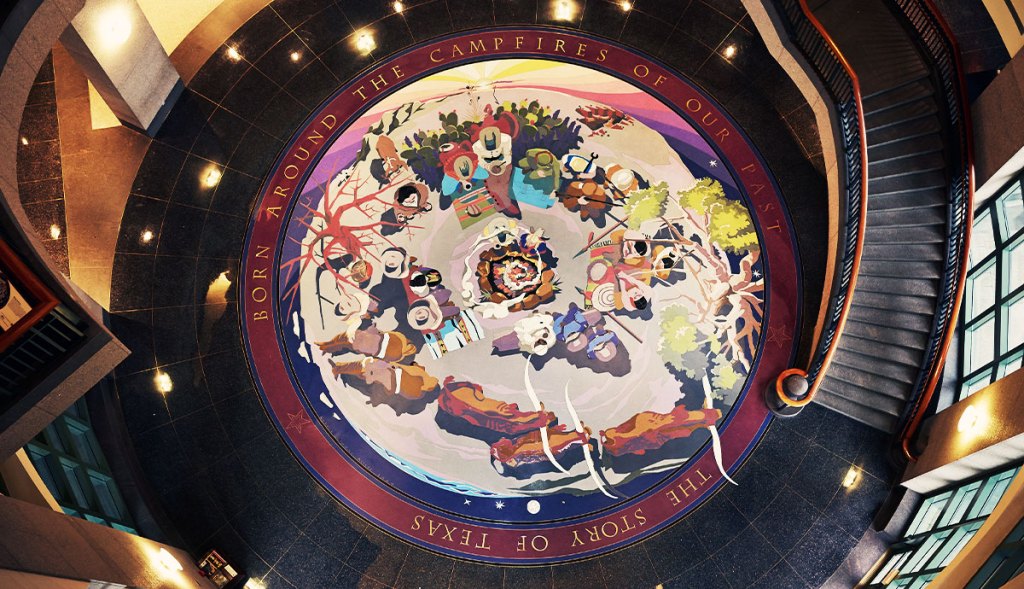
In 2020, amid pandemic disruptions, the Bullock Texas State History Museum in Austin evaluated what it was doing well and what required improvement to better serve its mission. The museum identified its staff as one of four primary institutional stakeholders, along with families, educators/students, and museum members, and expanded its definition of leadership to include mid- and lower-level managers. The museum aligned its internal systems with these goals in a variety of ways, including investing in leadership skills-building at multiple levels; promoting from within where possible; and creating professional development opportunities and small-group gatherings for staff on topics that include technical skill-building, wellness, museum-specific issues, and management training, emphasizing creativity, communication, and successful leadership approaches.
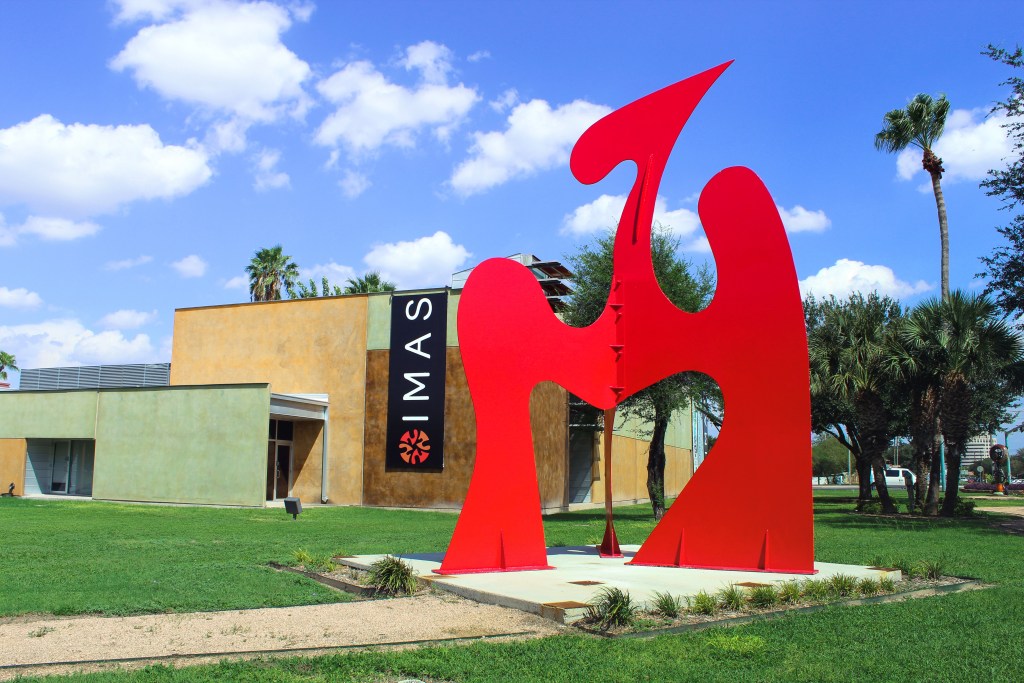
The International Museum of Art & Science in McAllen, Texas, provides professional development for all full-time educators, including National Association of Interpretation (NAI) certification as a standard of practice. This new knowledge was instrumental in the internal promotion of one staff person to director of education. In her interview, she skillfully used examples of applications from NAI training sessions to demonstrate how her approach to program development and implementation changed to become more audience focused and how she teaches part-time educators and interns to use NAI audience engagement techniques.
Upcoming Events
-
Climate Change Education Virtual Summit
Event Date:Presented by: American Public Gardens Association & the United States Botanic Garden -
AASLH-NCPH Joint Conference
Event Date:Presented by: American Association for State and Local History (AASLH)Providence, RI -
Transit Insurance in Practice for Traveling & Co‑Organized Exhibitions
Event Date:Presented by: American Alliance of Museums -
Digital Collections Summit
Event Date:Presented by: MuseumNext





This entire article was just tone deaf and dismissive of the actual problems facing the museum industry today. Baseless claims with no clearly cited and readily visible sources to bounce off of, the writer apparently does not care to think of anybody on the front lines of museum jobs. Oh, but this leadership crisis is negatively affecting executive directors the most. These “soft skills” you claim that haven’t been implemented for long is just a weird way of saying “i don’t see my employees as people, therefore I find it hard to empathize with their plights”. You want to know why management roles aren’t being filled? It’s due to superiors being in their positions for 20+ years not wanting to actually train their next in line, willing to cut corners, use AI to replace their employees, and get snippy and act underhanded when their employees dare ask for decent working conditions and proper communication. “Nobody wants to work the jobs of 3 people for the pay of 1 anymore!!! Young people are so entitled!!” Give me a break and come back to me when you actually care about the people you employ. This article angered me so much I went searching for it just to leave this comment. Do better.
Thank you for your comment Olivia. I absolutely agree with you on the need for citations. The PDF version of TrendsWatch, released later this spring, will have embedded links to stories and research used as sources for statements in the article. For example, this article summarizing research on Gen Z attitudes towards management (https://theindependent.sg/the-rise-of-conscious-unbossing-how-gen-z-is-shaping-the-future-of-work/) and another on employees turning down promotions (https://www.forbes.com/sites/cherylrobinson/2025/02/17/why-nearly-50-of-employees-are-turning-down-promotions-what-leaders-can-do/) I hope you download the PDF when it becomes available to check out those sources.
That said, the research I’ve found it either about the labor force over all, or to the nonprofit labor force, not museum workers specifically. The experiences of people who chose to pursue museum jobs is absolutely critical. The post from Ariel Waldman published this week on the CFM blog (https://www.aam-us.org/2026/02/09/becoming-a-museum-leader/) shares input from diverse individuals on their ambitions, experiences, and attitudes towards advancement in the field.
It is my hope that the recommendations in the article and Ariel’s post, about the need to provide support, training, and pathways to advancement to museum staff at all levels, will help museums create workplaces where staff find it practical and desirable to become leaders themselves.