One of the critical issues addressed in this year’s TrendsWatch is the profound impact climate-related disasters are having on museum insurance. As the frequency of severe weather events and wild fires rises, insurance is becoming more expensive and, in some areas, hard to obtain at all. The rising risks from flood, storm, wind, and fire make it wise to engage in a regular review of your coverage, procedures for responding to such emergencies, and for filing a claim. Today on the blog, Ross Pristera, Historic Preservationist at the University of West Florida Historic Trust, shares his organization’s experience with Hurricane Sally. I highly recommend sharing this essay with your staff and board to ground a review of how your museum would respond to a similarly damaging event.

Elizabeth Merritt, Vice President, Strategic Foresight and Founding Director, Center for the Future of Museums, American Alliance of Museums
Preparing for the Storm
On September 15, 2020, Hurricane Sally hit Pensacola, FL as a category 2 storm at 9:45pm. In the days leading up to the storm, weather models showed the path going toward Mississippi and Louisiana. Considering the hurricane’s path, the University of West Florida Historic Trust staff started to prepare the nine-acre site, containing 30 buildings, for a moderate-level weather event. As the storm approached the coast, the path changed at the last minute, and staff quickly prepared the site for a direct hit. All that could be done in the short amount time was putting hurricane panels over the southern windows of most buildings, moving artifacts away from windows, and covering furniture with plastic.
Stress mounted, as bands of rain and high wind moved over the area the night of the storm. In the early morning hours, the highest winds hit Pensacola, resulting in many security alarms being activated for the buildings, followed by a mass power outage. The last alarm staff was notified about was the “main flow switch active for fire suppression system.” This was for one of the larger museums that contained exhibits, collection storage, and workshops. Not knowing what caused the alarm, staff could only speculate what had happened, fearing a fire set the sprinkler system off.
Assessing the Damage
With limited cell service and blocked roads, getting to the site was difficult. A general contractor familiar with the Historic Trust was the first to survey the damage. They found a 40×60 foot section of roof had blown off the Museum of Commerce and landed in the road. This explained why the sprinkler system was activated and contributed to flooding the building with three inches of water.
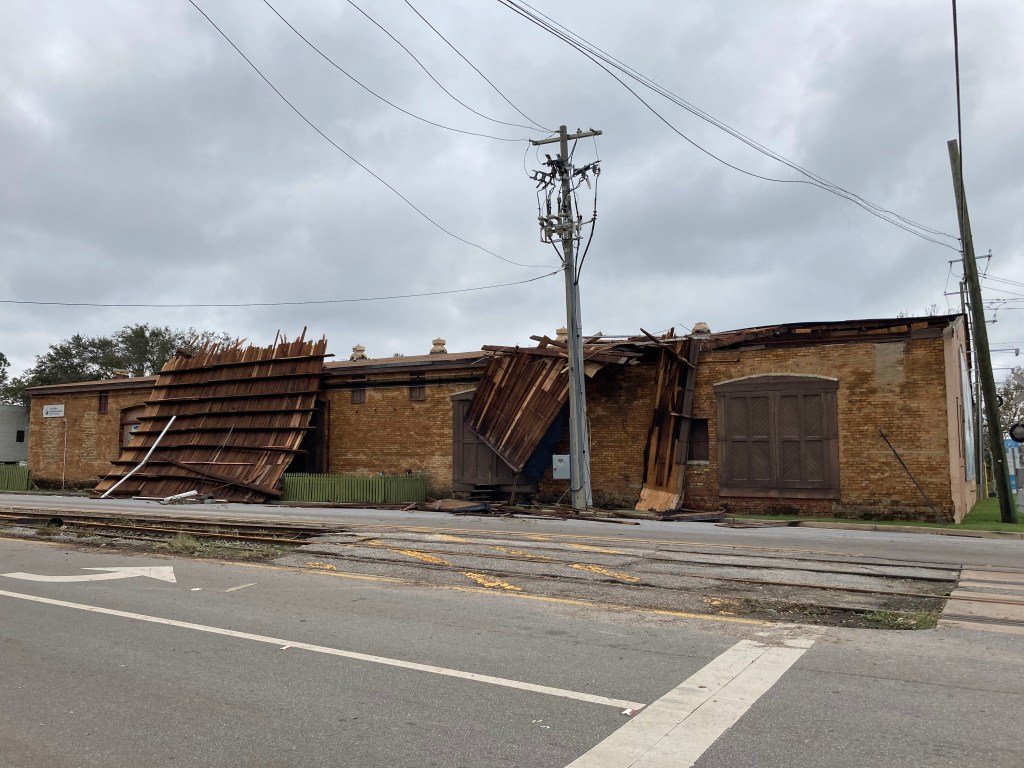
On September 17th, staff were able to begin assessing the damage in-person. Working as a team, staff inspected each building, noting all visible damage through photographs, marking plans, and writing descriptions. This level of documentation would prove to be invaluable when dealing with our insurance company. It was important documentation occurred before any clean-up so there was a clear record of what was damaged by the storm.
The level of damage throughout the site was moderate, with mostly roof damage and water intrusion. Out of the hundreds of windows in the 30 buildings, only one was broken. After a close inspection, no artifacts were harmed and the majority of the cleanup would involve drying the buildings’ interiors.
Involving Insurance
The UWF Historic Trust is a direct support organization of the University of West Florida, and all of the buildings are state owned. Historic Trust staff, working closely with UWF, began the insurance claim process. The first step was sharing all the information collected by staff with an insurance adjuster. What made the process efficient and painless was having good before and after documentation, which eliminated almost all disputes.
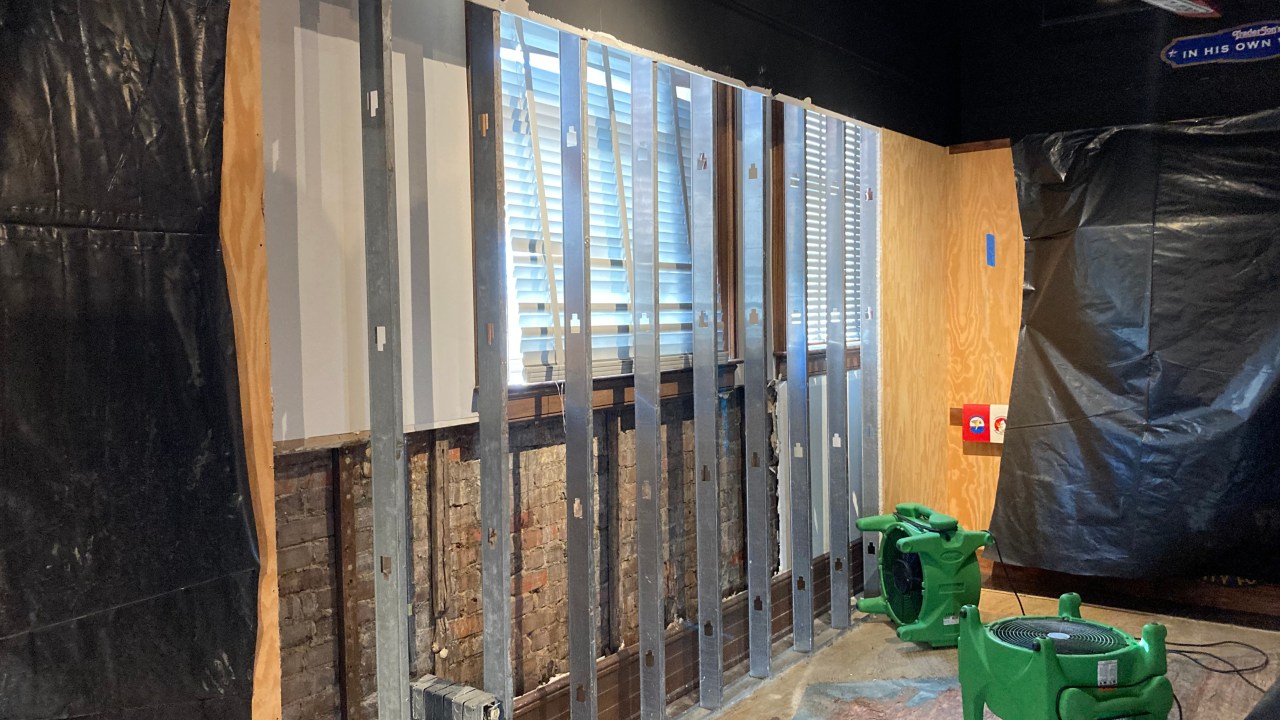
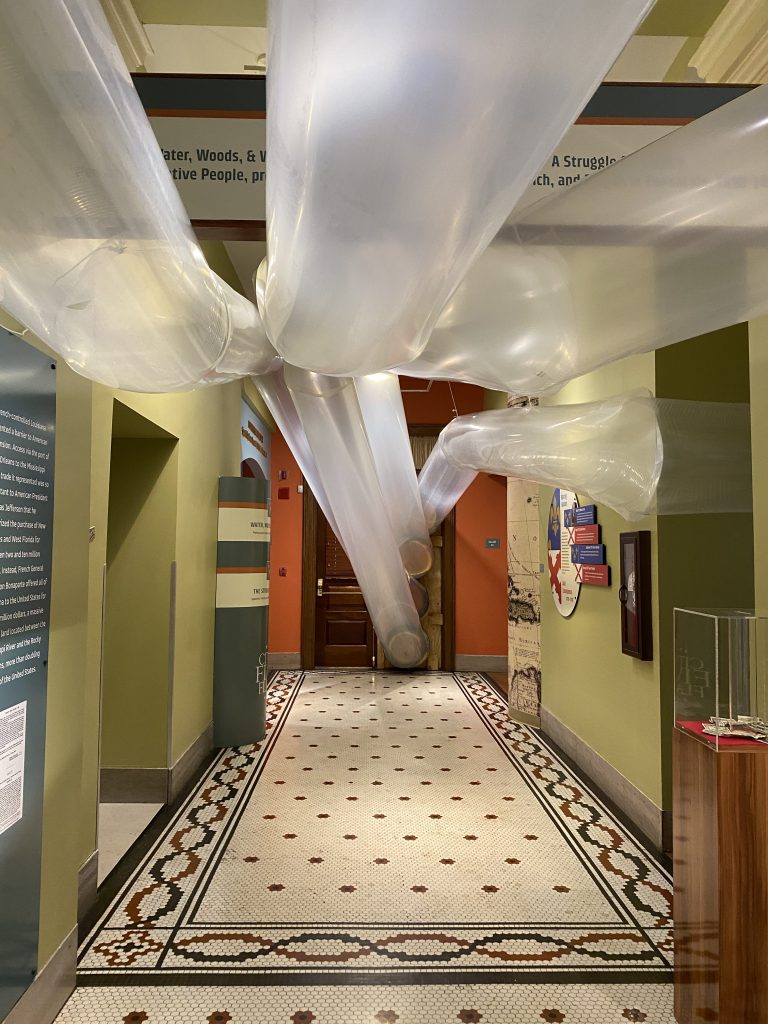
The insurance company selected a disaster response contractor from a pool of companies that were pre-approved with set pricing. On September 20th, the contractor arrived with a large team of workers, generators, and drying equipment. They quickly got to work running plastic ducting through the buildings connected to large portable air conditioners. A team specializing in water mitigation surveyed each building noting moisture levels on all surfaces. A roofing team went around the site making temporary patches. Overall, the insurance company prioritized early water mitigation response, as it’s less expensive to address the damage early than to postpone repairs. Within the first 24 hours of arriving, the recovery process was moving faster than anyone had expected.
As the days progressed, teams removed damaged drywall, flooring, and cabinets. The water mitigation team was on-site for a week until moisture levels had returned to normal. As power was restored, the large generators and portable air conditioners were slowly removed. By the end of the second week, there was considerable progress, with many of the spaces being ready for repairs. Since the disaster response contractor and water mitigation team were hired by the insurance company, the recovery process was very easy. The Historic Trust did not have to find equipment, contractors, or worry about pricing, which allowed staff to focus on general site cleanup and collection care.
The largest repairs were at the Museum of Commerce, which lost a huge section of the roof. After the insurance company approved the repair plan, the Historic Trust staff coordinated with a local contractor to rebuild the roof. With so much damage in the area, there was high demand for people and resources; having good relationships with a construction company and building material suppliers proved invaluable as they prioritized our requests. Our general contractor was able to secure all the roofing and framing materials within days and have a crew on-site within a week.
Reopening and Paying the Bill
In the months that followed the storm, staff worked on exhibit repairs and getting the site ready to reopen. There was a lot of cleaning, moving items, checking inventory records, and resetting exhibits. By December, many of the museums had reopened to the public with only a few buildings still closed for repairs.
Over the course of the year, staff worked diligently on processing insurance and FEMA paperwork. This was done with the assistance of a consultant, which made the process a lot easier. Throughout the recovery process, there was fear around what the final cost to the Historic Trust would be. Once all the numbers were in and checks were processed, the total damage and recovery bill was $2.4 million. Insurance and FEMA paid around $2.3 million, leaving the Trust paying around $100,000. This was better than expected and a big improvement from previous hurricane recovery in 2004.
Some Helpful Tips
- Have a hurricane and natural disaster plan
- Designate a person to lead the site prep and recovery process.
- Have the proper tools and equipment ready. For multi-site organizations, have supplies in each location and check them throughout the year.
- Train staff on natural disaster prep and recovery processes.
- Have a reserve fund for disaster response.
- Document
- Take yearly pictures of the entire site (interior and exterior) to be used as before pictures.
- Train staff in documentation methods.
- Establish a shared drive for recovery documentation. Have building plans (even simple drawings) on the shared drive.
- Designate a person to lead the documentation team, in case of a natural disaster. Limit the number of people involved in initial documentation to ensure accuracy.
- After a natural disaster, take a lot of photos, make notes, and save all communications.
- Claims
- Know who to contact first after a natural disaster.
- Learn the process to follow when starting an insurance claim.
- Be upfront and clear when reporting damage and do it as soon as possible.
- Know approved disaster response contractors, water mitigation contractors, general contractors, and any other professionals needed to assist with natural disaster recovery.
- Understand how to pay for materials and contractors.
- Keep good records of all quotes, invoices, and payments.
- For multi-site organizations, keep all information organized by site. For example, damage and repairs for each building. Have contractors break the costs apart if working on multiple buildings.
- Track staff time related to recovery process
- Other
- Maintain good relationships with contractors and suppliers.
- Know if you are considered a priority client after a disaster.
- Have funds available for purchases and accounts set up with suppliers.
- Let law enforcement or campus security know which staff are emergency response coordinators. Update this information as necessary.
Upcoming Events
-
AASLH-NCPH Joint Conference
Event Date:Presented by: American Association for State and Local History (AASLH)Providence, RI -
Digital Collections Summit
Event Date:Presented by: MuseumNext -
The Federal Grant Landscape: What Museums Need to Know
Event Date:Presented by: Ohio Museums Association -
Accessibility by Design: Empowering Staff for Human-Centered Change
Event Date:Presented by: American Alliance of Museums