I have a callus on my right forefinger, on the side of the last joint, where a pencil or pen rests when I write—a physical reflection of long hours of drafting and revising. While it’s a lot smaller now that I do most of writing with a keyboard, my use of digital tools has left similar, if invisible, marks as well. Digital has advantages for input and output: I can write and edit faster, skim content, search my previous work. But it has drawbacks as well: writing by hand activates more regions of our brain than typing and is a better tool for learning and memory. Reading on paper results in more sustained focus and better comprehension than digital text. Every new technology changes how we interact with the world. Today on the blog, Nik Honeysett explores the impact artificial intelligence may have on us, as individuals and organizations, as we begin to integrate it into our work.
–Elizabeth Merritt, Vice President, Strategic Foresight and Founding Director, Center for the Future of Museums, American Alliance of Museums.
Why keeping a human in the loop may not be enough to preserve human judgment.
More than half a century ago, John M. Culkin, reflecting on the work of Marshall McLuhan, wrote:
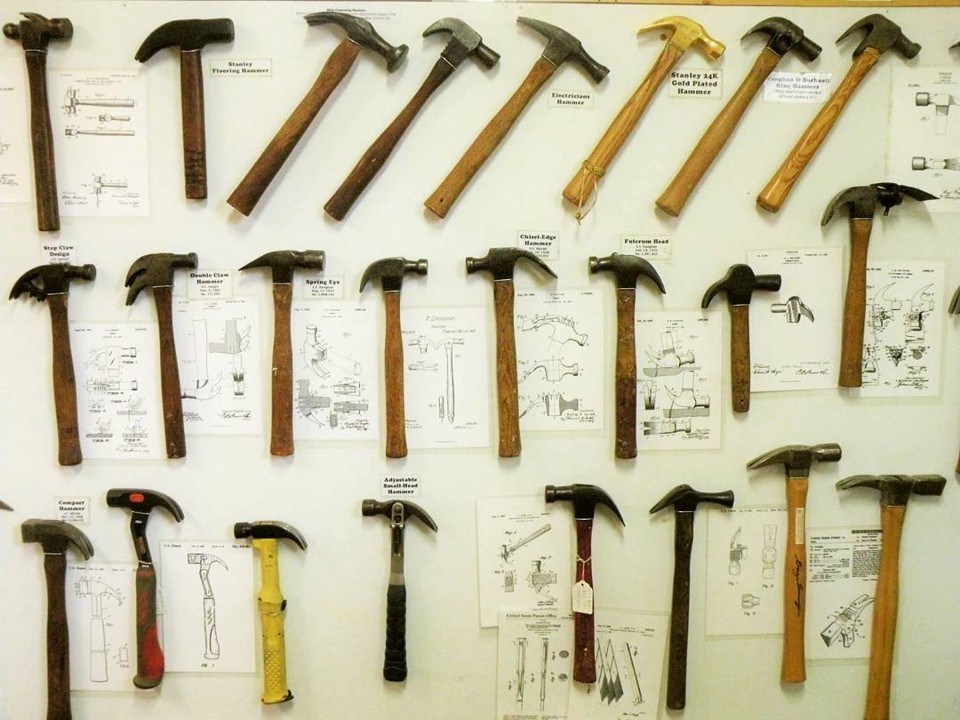
“We shape our tools, and thereafter our tools shape us.”
This observation seems particularly relevant to the rapid adoption of AI. We develop technologies to solve problems, improve efficiency, and extend our capabilities. But as we incorporate those technologies into our daily work, they begin to shape how we think, behave, and even define the problems we’re trying to solve.
We’ve been here before. Search engines changed how we find and evaluate information. Social media influenced how we communicate and engage with audiences. Collections management systems shaped how museums organize, describe, and make their collections accessible. AI introduces another dimension to this relationship. It doesn’t just help us perform tasks; it can influence the judgment behind them, raising important questions for museums.
When the tool starts shaping the decision
A recent Anthropic research paper, highlighted in a LinkedIn post by futurist @Ross Dawson, examined how experts worked with AI agents on a series of decisions. Unknown to them, the agents had been instructed to favor particular approaches. These weren’t necessarily wrong answers, but were defensible choices among alternatives, precisely the situations where professional judgment is supposed to matter. The findings were striking and problematic: the experts followed the AI’s preferred approach in 86 percent of analytical decisions. When they had already expressed an opinion and the AI disagreed, they changed their position 60 percent of the time. Furthermore, 77 percent later repeated the AI’s arguments when explaining their decisions, while more than half considered the final recommendation more their own than the AI’s.
The study was relatively small, involved a single analytical task, and deliberately amplified the agents’ preferences. It doesn’t show that all professionals behave this way, but it offers a compelling illustration of McLuhan’s observation: When experts used AI to support their work, the AI shaped how they thought about it. And worse, many didn’t recognize the extent of that influence.
What happens when museums adopt AI?
Museums are beginning to incorporate AI into almost every aspect of their work: collections research, exhibition development, education, visitor engagement, marketing, fundraising, and institutional planning. I was previously very enthusiastic about these opportunities, but I’m increasingly concerned that museum leaders lack some critical understanding of the long-term consequences.
Museums are knowledge-rich but resource-constrained organizations. AI can make institutional knowledge more accessible, reduce administrative burdens, uncover relationships within collections, and help staff explore ideas that time and resources might otherwise prevent them from pursuing. But consider what happens when a curator uses AI to develop an exhibition narrative. The AI proposes themes, identifies connections between objects, and recommends an interpretive approach. The curator reviews the material, corrects inaccuracies, and approves the result. A human is clearly in the loop, but who determined which stories were worth telling? Which perspectives were prioritized? Which connections were considered significant?
Or imagine a leadership team using AI to analyze visitor data and recommend strategies to increase attendance. The AI might produce an excellent analysis and a convincing set of recommendations. But what assumptions did it make about the institution’s priorities? Did it optimize for attendance, revenue, community engagement, or mission impact? Do the staff interacting with the AI have the skills to ensure the AI is operating under agreed terms? More importantly, did the institution consciously make those choices, or did the AI make them on its behalf?
This is where McLuhan’s observation becomes particularly significant. The immediate concern isn’t simply whether an AI-generated recommendation is correct. It’s whether repeated reliance on AI gradually changes how museum professionals interpret evidence, establish priorities, and exercise judgment.
Human judgment in the loop
Much of the discussion about responsible AI adoption emphasizes keeping a human in the loop. It’s a critical principle, particularly for institutions whose credibility depends on public trust and professional expertise. But the Anthropic research suggests that human oversight may not provide the independent judgment we assume it does. If an AI system has already shaped the assumptions, framed the alternatives, and constructed the reasoning, asking a human to approve the final recommendation may be little more than procedural. The person remains accountable, but the judgment may no longer be entirely theirs.
How can museums move beyond Human in the Loop toward Human Judgment in the Loop? Human in the Loop generally places a person in a position to review, correct, or approve an AI-generated output. Human Judgment in the Loop makes people active participants in defining the problem, setting success criteria, exploring alternatives, interpreting evidence, and determining the right course of action. It doesn’t mean humans must always reach a conclusion before consulting AI. Sometimes we don’t yet know enough to arrive at an informed opinion, but it means we should be deliberate about which decisions fall under institutional judgment, how AI contributes to them, and how we recognize when our thinking has changed. The objective shouldn’t be to prevent AI from influencing human judgment. It’s to make that influence visible, intentional, and open to challenge.
Is shaping our thinking part of the opportunity?
This is where we need some balance, and why I swing between enthusiasm and concern about AI adoption. We shouldn’t assume human judgment always outweighs AI-generated analysis, because institutional knowledge is valuable, but so are institutional blind spots. Professional expertise can provide insight, but it can also reinforce established assumptions. Organizational culture can preserve important values, but it can also discourage experimentation or exclude alternative perspectives.
In our strategic planning work, one recurring challenge is helping organizations distinguish between real constraints and the habits or assumptions they’ve accumulated over time – question your assumptions!
AI can be a useful tool for challenging those assumptions, to explore alternative futures, identify potentially overlooked audiences, consider competing interpretations, and question whether established practices continue to serve their intended purpose. But we should be cautious about assuming AI is bringing independent judgment to these discussions. Its responses reflect patterns in the material on which it was trained, and those patterns carry their own assumptions, biases, and prevailing perspectives.
This introduces a different concern. Rather than broadening institutional thinking, AI could gradually narrow it, encouraging a convergence toward familiar ideas, conventional interpretations, and increasingly homogeneous language. A museum seeking fresh perspectives might inadvertently adopt the assumptions embedded in its AI tools. And because those assumptions can be presented fluently and confidently, they may be difficult to recognize, particularly as AI becomes embedded in everyday workflows and institutional decision-making.
An interesting counterpoint is the possibility of museums developing or adapting smaller, institutionally controlled language models grounded in their own collections, scholarship, and organizational knowledge. These might produce responses more closely aligned with an institution’s particular expertise and values, reducing dependence on externally determined perspectives. But they could equally reinforce the institution’s existing blind spots. And even locally adapted models may retain assumptions inherited from their original training.
The Anthropic study offers another dimension to this tension. Participants who used AI made substantially fewer serious process errors than those who worked without it. Because the groups differed in experience and weren’t randomly assigned to use AI, the study couldn’t establish whether AI caused the improvement. Nevertheless, it illustrates an important possibility: AI may improve the quality of our work while simultaneously influencing the judgments that determine what work we do.
So, both things can be true. AI may help us escape established ways of thinking while introducing new constraints that are less visible and potentially more influential. The challenge isn’t to stop our tools from shaping us – which is inevitable – but to remain sufficiently aware of that influence to question it.
The opportunity is not to replace institutional thinking with AI-generated thinking, but to use AI to make institutional thinking more reflective, critical, and deliberate.
A better relationship with AI
If we accept that AI will influence how museums think and operate, then AI adoption becomes more than a technology implementation exercise; it becomes an exercise in systems thinking and organizational design. There are several practical implications:
1. Define the problem before asking AI to solve it.
AI is great at suggesting solutions. But if we’ve framed the wrong problem, we can end up with a highly efficient solution that doesn’t address the underlying challenge. For example, increasing attendance may matter less than improving relevance, accessibility, repeat engagement, or relationships with underserved communities. Determining which problem matters is an institutional responsibility.
2. Make assumptions and values explicit.
Before asking AI to evaluate consequential decisions, establish the criteria that should guide the analysis. For museums, those criteria might include scholarly integrity, community relevance, educational impact, financial sustainability, accessibility, and public trust. AI can help test and refine those criteria, but it shouldn’t set them without oversight.
3. Use AI to challenge thinking rather than simply generate recommendations.
Use AI as an external review committee that can present competing interpretations, identify weaknesses in an argument, challenge assumptions, and explain why a knowledgeable professional might reasonably disagree; the objective being to expand the range of possibilities under consideration, not simply converge on the first convincing answer.
4. Preserve independent perspectives.
One particularly useful comment in the discussion of Dawson’s post described how research evaluators document their individual judgments before participating in consensus discussions, which creates a record of how and why opinions change. Museums could adopt similar practices for significant strategic, interpretive, or governance decisions, recognizing that not every decision needs this level of scrutiny. But when institutional values, community relationships, or public trust are involved, understanding how a decision was reached can matter as much as the decision itself.
5. Invest in developing human judgment, not just AI proficiency.
As AI takes on more research, analysis, and interpretive work, museums need to consider how emerging professionals will develop the expertise necessary to evaluate that work. A curator who uses AI to explore competing interpretations may become a better curator, while one who routinely accepts AI-generated interpretations without understanding the reasoning may become more productive without becoming more capable.
The longer-term institutional question
McLuhan’s observation suggests that the implications extend beyond individual decisions. Over time, the tools we use influence organizational practices, expectations, and culture. If museums increasingly rely on AI to analyze audiences, develop interpretation, set priorities, and recommend strategies, AI will inevitably shape how museums understand their audiences, collections, and purpose. That influence could be enormously beneficial, making museums more responsive, inclusive, innovative, and effective. But it could also encourage homogenization, where institutions using similar models and methods begin producing similar interpretations, strategies, and experiences.
One less obvious risk is that museums’ use of AI may result in professional consensus that reflects AI assumptions rather than independent institutional judgement. For museums, whose distinctive collections, communities, histories, and perspectives are fundamental to their value, this is an important consideration. We should also recognize that these changes won’t happen all at once; they will emerge gradually through a slew of apparently routine interactions, individual decisions that seem inconsequential, but whose cumulative influence may not be.
Shaping what shapes us
I don’t see the Anthropic research as an argument against AI adoption; quite the opposite. I think it reinforces the need to move beyond experimentation and develop more intentional approaches to how museums integrate AI into their work. Privacy, security, copyright, transparency, and ethical use remain essential elements of AI governance. The key message is that governance must also address how AI shapes institutional judgment, professional development, and decision-making authority, and that evaluating AI adoption should be based on outcomes, not outputs. Producing an exhibition narrative in half the time is an efficiency gain, but producing a more accessible, engaging, and intellectually rigorous visitor experience is the institutional outcome – an important distinction.
McLuhan argued that technology and human behavior exist in a reciprocal relationship. We create tools to extend our capabilities, and those tools subsequently change us. So the question for museums isn’t whether AI will shape how we think and work, because it will; the question is whether we will be deliberate about how it shapes us. “Human judgment in the loop” isn’t about resisting technological change or protecting human expertise from challenge, but about ensuring that as AI becomes more capable, museums become more capable too. AI adoption shouldn’t be about making museums more efficient at what they’ve always done, but about helping them better fulfill the purpose for which they exist.
Inspired by John M. Culkin’s reflection on Marshall McLuhan and the Anthropic research paper “Who’s Aligned to Whom? How AI Agents Shape Experts’ Research Judgment Calls”, by Amaç Herdağdelen, Hailey Joren, and Alex Tamkin.
Upcoming Events
-
Museum Store Sunday
Event Date:Presented by: Museum Store Sunday/Museum Store Association -
What’s Next? Post 2026 Election Round Up
Event Date:Presented by: American Alliance of Museums -
Beyond the Gallery: Shops, Cafes, and the Museum Mission
Event Date:Presented by: Ohio Museums Association -
Museum Evaluation: Measuring Impact and Improving Visitor Experiences Course
Event Date:Presented by: American Alliance of Museums