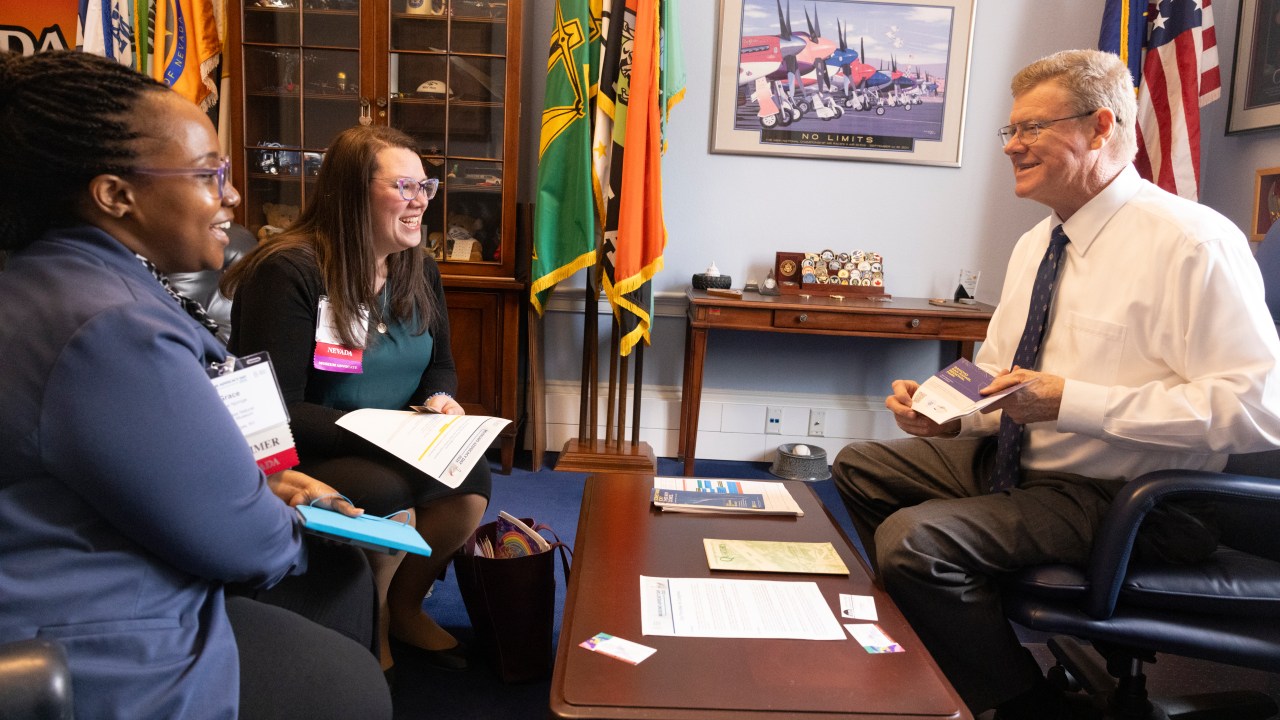
How can we defend the nonpartisan nature of nonprofit status and empower the public to support our work?
“The work that nonprofits do is
like air, and no one appreciates air until it’s gone.”
— Vu Le, writer, speaker, and activist
The nonprofit sector plays an essential role in the United States—an equal partner with the private and government sectors in creating and maintaining the infrastructure that supports our communities. Nonprofits are responsible for many of the essential functions, from health care to higher education, social services to arts and culture, performed by government elsewhere in the world. Most nonprofits are relatively small social service organizations that provide food, housing, education, and health care to people who would otherwise fall through the considerable gaps in the US safety net. The sector also encompasses cultural organizations, including museums, that enrich society by preserving and sharing art, history, science, and culture.
This article originally appeared in the Jan/Feb 2026 issue of Museum magazine, a benefit of AAM membership.
» Read Museum.
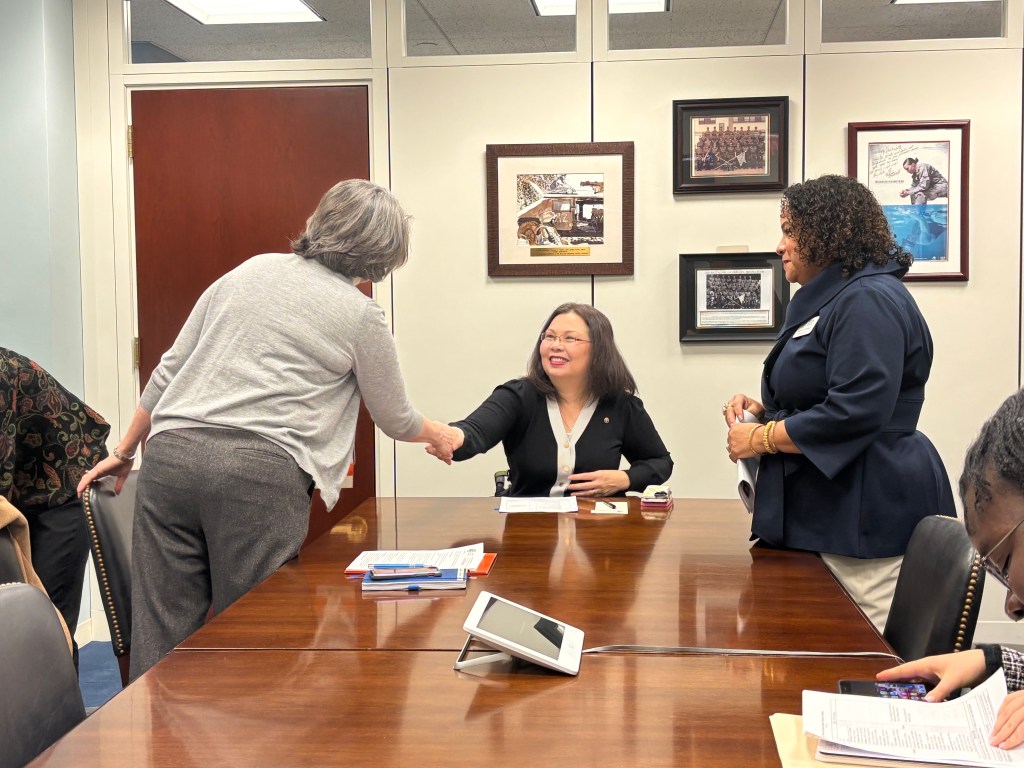
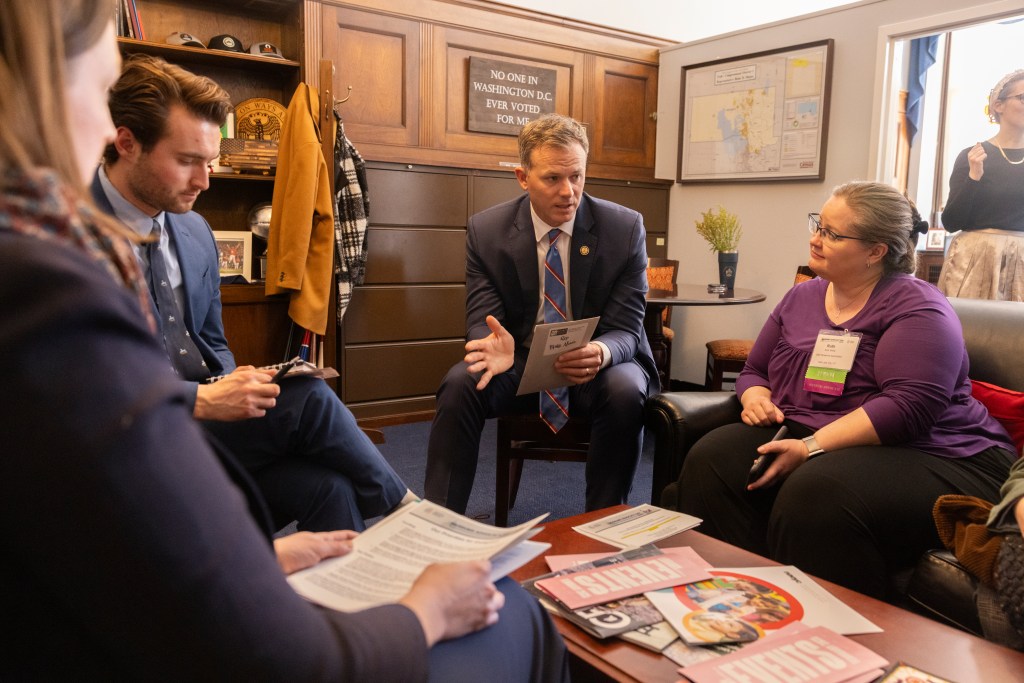
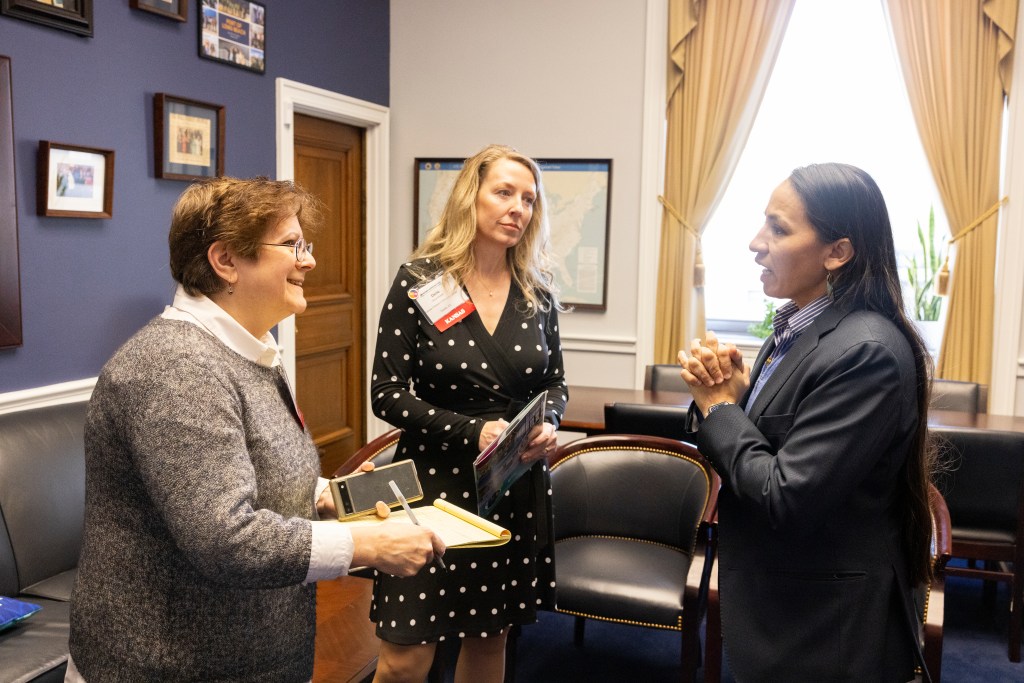
secure billions of dollars in financial relief by sharing our cause with elected officials. Here AAM President
and CEO Marilyn Jackson and an AAM member meet with Illinois Senator Tammy Duckworth.
Roughly two million nonprofit organizations were registered with the IRS in 2023 and contributed more than $1.4 trillion to the US economy. Over a quarter of Americans volunteer for nonprofits, nearly one in 10 work in a nonprofit, and 69 percent believe that nonprofits and government must work together to solve societal issues. Fifty seven percent of the public express high trust in the nonprofit sector—far exceeding the portion that trusts big business (21 percent), the media (20 percent), or the federal government (18 percent). And trust in nonprofits is holding strong even as people’s trust in business, government, and their own neighbors is in decline.
Despite the vital services provided by this “independent sector,” deep engagement with the public, and its good reputation, a small but growing number of critics from the right and the left are attacking nonprofits as a class, seeking to shrink the sector’s ranks and curtail its role in society. The critique of nonprofits is grounded in a variety of arguments, including:
- Nonprofits are largely funded and influenced by the political philosophies of the government and big donors.
- The growth of the nonprofit sector is being driven by groups with political agendas, predominantly left-leaning and advancing progressive goals (e.g., climate change; racial justice; diversity, equity, and inclusion).
- Nonprofits compete with for-profit businesses, with the unfair advantage of tax breaks.
- Nonprofits support the status quo rather than advancing real change to systems of capitalism, exploitation, and inequality.
Some think tanks and policy institutes use these critiques in their recommendations for reform. One particularly influential set of proposals, Project 2025, published by the Heritage Foundation in 2023, appears to be a blueprint for the current administration’s actions shaping policies and law. The Trump administration has used grant cancellations, reductions in force, and threats to revoke nonprofit status to control what nonprofits do and say, their values, and the issues that they address. Many of these actions threaten not only individual organizations but the legal and tax structures that undergird the independent sector.
Our country is facing profound disruptions—economic, political, and cultural. Now more than ever, we need the stability and support provided by a robust, diverse independent sector. What can we do in the face of the rapidly escalating challenges to nonprofits? How can we depoliticize nonprofit status and empower the public to support our work? Here are two perspectives from people working on the front lines.
Not All Threats Are Equal
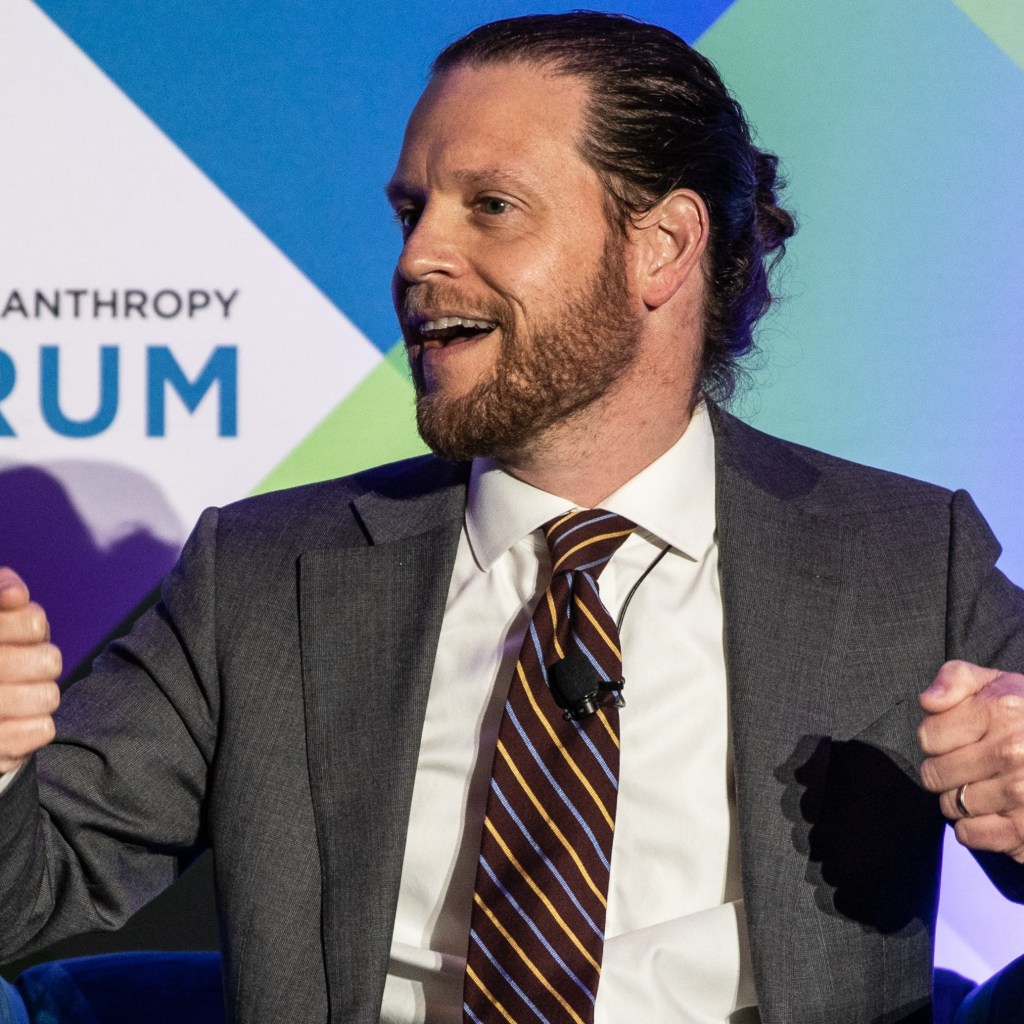
Ben Kershaw, Director, Public Policy
and Government Relations, Independent Sector
Threats to the charitable sector—both nonprofits and foundations—should be considered in two distinct categories: those that are about us, and those that really aren’t.
Challenges Not Really About Us
I won’t try to minimize the ways in which executive action has affected our sector’s work already and could do existential damage going forward. They are manifold. However, I don’t see many of these challenges as specific to the charitable sector. An administration that unilaterally suspends an organization’s tax-exempt status or declines to spend congressionally appropriated funds is not attacking nonprofits; it is rejecting the constitutional separation of powers.
This distinction might be cold comfort to impacted museums, but it is important because the remedies for it are so different. In many ways, they are remedies that every American is equally qualified to employ: defend the rule of law, engage in peaceful protest, vote, speak up for the US Constitution.
Representative Challenges to the Sector
Given my career trajectory as a Capitol Hill staffer, an AAM lobbyist, and now an advocate for the full breadth of the charitable sector, I feel qualified to prescribe remedies for the other profound challenges we face—those that have come about through more traditional representative democracy. While congressional Republicans passed major legislation that uses the charitable sector as a piggybank to fund other priorities, Democrats have also expressed skepticism of our sector’s tax preferences in the past.
What Can We Do?
Recommendation 1: Build relationships relentlessly. If legislators don’t hear from museums, nonprofits, and foundations regularly, the characterizations they see in the media become baked in. Luckily for museums, the fantastic team at AAM has loads of advocacy resources to make this outreach easy.
We can use the playbook that helped improve the 2025 reconciliation bill during the legislative process, ensuring we have legislative champions in place who understand the impact of harmful policies on their voters and will go to bat for our priorities. It’s too late to build new champions in a crisis.
Recommendation 2: Talk to the general public. Communicating our value can’t stop with our current audience: it needs to reach the general public as well. Nonprofits are still the most trusted institutions in American life, but that position isn’t assured if our messages only resonate with half of the country. As the Civic Language Perceptions Project demonstrates, even language that is designed to unite can in fact divide. We need to learn to speak in a way that resonates across the political spectrum.
Recommendation 3: Look out for new principles for independence and advocacy.
In 2007, Independent Sector first issued the Principles for Good Governance and Ethical Practice, a set of sector-facing recommendations for self-governance developed in response to the threat of oppressive federal regulation. In response to the current environment, Independent Sector is launching two panels that will update the Principles through the lenses of sector independence and advocacy.
By collectively adopting these and other effective practices, nonprofit organizations and workers can help build nonpartisan support for the good work we do, insulating us from future threats.
How Museums Can Use Their Agency, Authority, and Power

Ann Fortescue, Executive Director, International Museum
of Art & Science, McAllen, Texas
In trying times, hope and positivity are necessary and useful, but it can nonetheless be difficult to envision a positive future. In fact, thinking ahead might seem like too much effort while dealing with critical issues. The best way to overcome these barriers is to focus on creative planning for the shorter term.
During the COVID-19 pandemic, short-term adaptations yielded long-term benefits for many museums. Onerous fundraising events were discontinued, and more successful mission-specific efforts were launched. Educational programs were reimagined, many with an increased level of co-creation. Exhibitions opened online out of necessity, and now installations are frequently designed for both in-person and online engagement. These positive impacts came from museums using their agency to make good things happen in the short term.
Amid the current disruptions, what short-term, practical steps can we take to serve us well in the long run? Here are some suggestions:
- Find internal and external opportunities to take small steps that may guide your museum toward strategic goals. Seemingly minor internal achievements can yield outsized positive outcomes while focusing attention on activities within your control. Small actions can uplift morale, improve practice, and demonstrate value.
- Pay attention to local and state connections when national funding sources may be curtailed. Recent advocacy led by Texans for the Arts and supported by many Texas museums resulted in an additional $7.9 million in state arts funding.
- Network relentlessly. Connect with peers through state and regional museum associations to exchange successes and discuss concerns on a local level. Invite board members of other local institutions to attend your exhibition openings, events, or programs.
- Strengthen existing relationships. As a field, museums excel at modeling, sharing, and collaborating among individuals and across institutions. Trusted partnerships are excellent starting points to build on what you already have or do well.
- Get the word out. Work with your board chair to write an op-ed or letter to the editor to a local or statewide news outlet on the value your museum brings to the community. Volunteer to present an update about museum activities at a Chamber of Commerce meeting or gathering of local stakeholders.
- Use storytelling to illustrate how you are meeting the needs of your community, and advocate for the value of what you do. Reach out to colleagues to gather evidence of proven practices, successful programs, and compelling data sources to make the case for support.
- Plan a local or state museum advocacy effort using AAM’s Speaking Up: Museum Advocacy in Action toolkit.
- Practice the foresight skill of “scanning.” Keep up with the news to identify trends, threats, and opportunities. Follow a mix of credible sources of information, preferably from a variety of perspectives, to create a well-rounded understanding of current events.
AAM member constituents
Exploring Potential Futures
One of the fundamental truths of foresight is that there is no one, inevitable, predetermined future. At any moment in time, we face many paths forward, points at which our decisions to act or not act will influence future events. To help prime your imagination, explore multiple versions of the future. As fodder for planning, here are a few statements about things that may be true in various plausible scenarios of the near- and long-term future of the nonprofit sector.
As you read these statements, consider: Which do you think are most likely? Which do you consider preferable? What actions can you take that would make the statements you prefer actually occur?
In the near-term future:
- Public trust in nonprofits declines under the influence of negative messaging from politicians, think tanks, and the media.
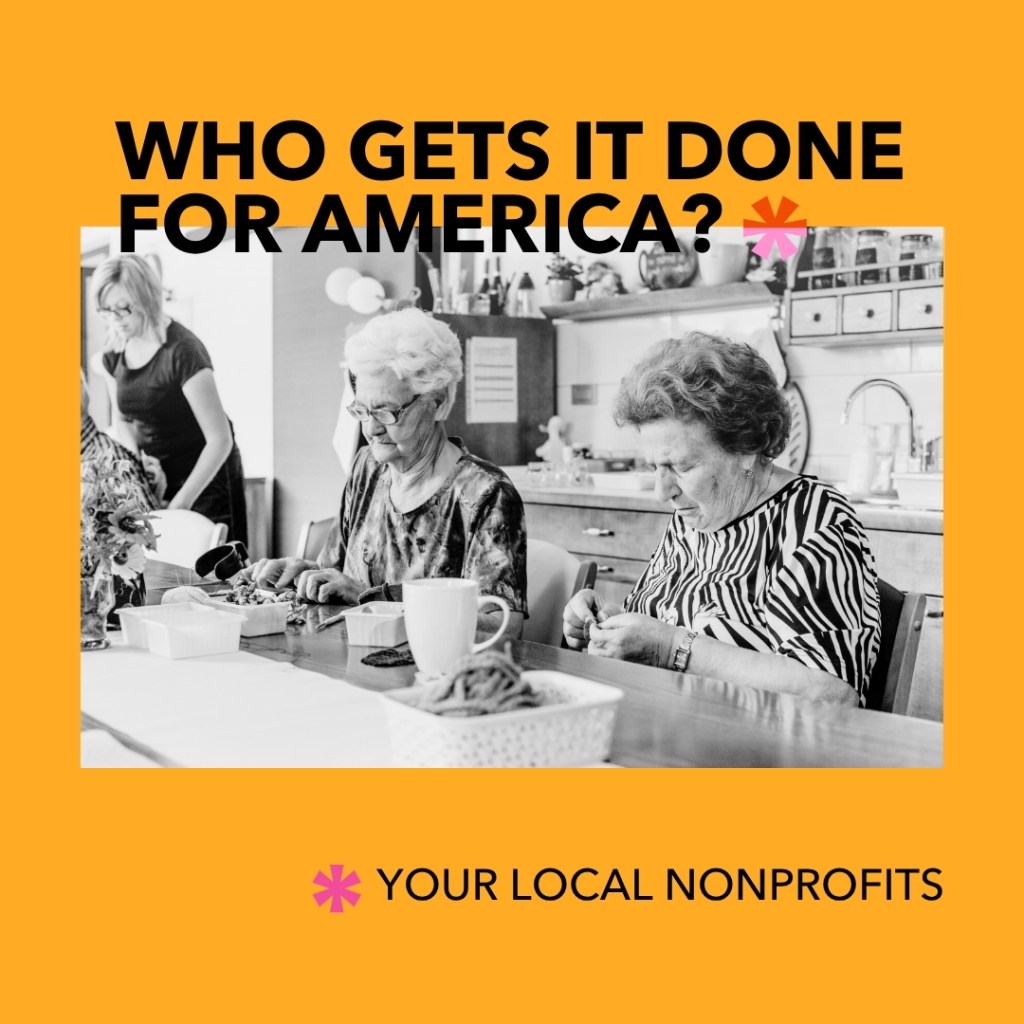
- The nonprofit sector unites behind the national Nonprofits Get it Done campaign to increase public awareness of the essential support nonprofits provide Americans. Public trust in nonprofits climbs even higher and public opinion strongly favors government policies that support the independent sector.
- The number of nonprofits engaged in advocacy soars, climbing from 31 percent in 2022 to 80 percent in 2030
- The number of nonprofits engaged in advocacy plummets to 20 percent in 2030 as organizations fearing political weaponization of tax policy back away from taking positions on issues important to their missions and communities.
In the long-term future:
- The independent sector contracts due to decreased funding, barriers to qualifying for nonprofit status, and erosion of tax exemptions.
- The independent sector expands, filling the gaps in public infrastructure left by the reduction in government services.
- A future administration reverses the current executive orders and actions that harm the nonprofit sector, and Congress enacts stronger protections to shield nonprofits from government interference or politicization of funding and regulation.
- Politicization of government funding and regulation of nonprofits become a normal strategy for the implementation of presidential objectives. Each new administration creates its own rules for nonprofit funding and nonprofit behavior.
What’s Next?
Even if a future federal administration restores nonprofit funding and embraces civil society as an essential partner, our country can no longer take nonprofit status for granted. Going forward, museums need to educate the public about and advocate for the legal, tax, and regulatory systems that enable the nonprofit sector to serve as a vital infrastructure for America.
Resources
National Nonprofit Day of Action Toolkit, National Council of Nonprofits, 2025
In 2025, the National Council of Nonprofits declared August 17 to be National Nonprofit Day, calling on nonprofits across the country to unite in a powerful, visible show of support for the sector. The social media resources provided in the toolkit are designed to help nonprofits remind the public and policymakers that nonprofits are indispensable pillars of American life. Watch for National Nonprofit Day of Action in fall 2026.
councilofnonprofits.org/files/media/documents/2025/ncn-nonprofit-day-of-action.pdf
33 Principles of Good Governance and Ethical Practice, Independent Sector
Public trust is essential to maintaining a healthy sector as we work to achieve a nation where all can thrive. The principles outline 33 sound practices every charitable organization should consider to strengthen effectiveness and accountability.
independentsector.org/research/principles-for-good-governance/
The Future of Museum Funding: Exploring the Impact of Executive Orders, Actions, and Policies on Museum Income Streams and Business Models, Elizabeth Merritt, American Alliance of Museums, 2025
This resource from the Alliance’s Center for the Future of Museums analyzes the impact of recent executive orders and actions on museums’ ability to fund their operations and examines growing threats to the foundation that supports this business model—nonprofit and tax-exempt status. It offers resources to help museums stay up to date with developing events, recommends issues to watch in coming months, and suggests opportunities for museums to respond to emerging challenges.
aam-us.org/2025/08/13/the-future-of-museum-funding/

Upcoming Events
-
Strengthening the History Workforce Virtual Summit
Event Date:Presented by: American Association for State and Local History (AASLH) -
Gettin’ To Know You: The Art of Networking
Event Date:Presented by: American Alliance of Museums -
Environmental Monitoring for Collections of All Sizes
Event Date:Presented by: C2C Care/FAIC -
2026 AIC & CAC Annual Meeting & Conference
Event Date:Presented by: American Institute for Conservation