This article first appeared in the journal Exhibition (Fall 2026) Vol. 45 No. 2 and is reproduced with permission.
Museums are among the few public places where people are still invited to slow down, look carefully, and encounter something beyond the speed of everyday life. Visitors arrive after navigating news alerts, social media, digital notifications, and visual content that constantly competes for attention. For museums, this context presents a choice. They can try to compete with digital noise by becoming louder and faster, or they can offer something more valuable: environments where attention can recover and curiosity can unfold.
In this article, I define wonder as a state of heightened curiosity, sensory attention, and openness to meaning that occurs when an exhibition offers something unexpected while still allowing the visitor to feel oriented. Wonder is not simply surprise or spectacle. In exhibition practice, it can be cultivated through scale, pacing, lighting, sound, material encounter, interpretive layering, and moments of pause.
I use neuroaesthetics to describe the study of how aesthetic environments engage perception, attention, emotion, memory, and meaning-making in the brain and body. For exhibition teams, neuroaesthetics is useful not because museums need to become clinical spaces, but because it helps explain why certain design choices invite visitors to linger, regulate, notice, question, and connect.1
This article considers wonder as a design outcome for all visitors, while using neuroinclusive practice as a crucial lens. Neurodivergent visitors often reveal with particular clarity where exhibitions support or strain attention, orientation, sensory comfort, and emotional safety. Designing with those visitors in mind does not narrow the audience. It expands the museum’s capacity to welcome many kinds of bodies, minds, and memories.
I write for exhibition teams broadly understood: designers, curators, educators, accessibility staff, evaluators, and public historians who make decisions about how visitors enter, move through, interpret, and remember museum spaces. The article argues that wonder can function as a practical exhibition design methodology when it is supported by four conditions: shifts in scale, layered discovery, sensory modulation, and shared meaning-making.
What Wonder Looks Like in a Gallery
In exhibitions, wonder is often visible before it is verbal. It may appear when a visitor slows their pace, leans closer to an object, turns back for a second look, asks a question, sits down to spend more time, points out a detail to another visitor, or changes their route through the gallery because curiosity has taken over. Wonder may also appear quietly: in stillness, in sketching, in reading a label more than once, in pausing before a difficult object, or in choosing to remain in a space that feels unfamiliar yet safe.
These behaviors matter because they are evidence of active attention. Rather than moving through an exhibition as a sequence of completed stops, the visitor begins to explore. For exhibition teams, this means wonder can be treated as more than an emotional aspiration. It can be designed for, observed, and evaluated through dwell time, visitor comments, movement patterns, repeat looking, social interaction, and qualitative responses gathered through interviews, surveys, or gallery observation.
The Neuroscience of Wonder
Wonder begins with attention. When a visitor encounters something unexpected, the brain directs resources toward the new stimulus. Research on novelty and dopamine suggests that unfamiliar or surprising stimuli can increase our motivation to explore and learn.2
This does not mean every exhibition should seek constant novelty. Too much surprise without orientation can become difficult to enter or sustain. Wonder works best when the visitor experiences a productive balance between recognition and surprise: enough familiarity to feel grounded and enough difference to invite a second look. Recent predictive-processing accounts of aesthetic experience describe this balance as a dynamic relationship between expectation, fluency, and discovery.3
In practical terms, these moments can shift a visitor from passive looking into active exploration. A visitor who expected to glance at a case may suddenly notice a material detail, compare two objects, ask what changed, or imagine the hands that made, held, wore, repaired, or preserved the object. From a neuroaesthetic perspective, wonder is one bridge between perception and meaning-making.
Designing Conditions for Wonder
For museum professionals, wonder is often treated as an aspirational outcome of exhibition design rather than a methodology. Yet exhibition teams can foster wonder through specific design choices. The goal is not to overwhelm visitors with spectacle, but to create conditions where curiosity is supported and prolonged through structure.
Scale: Create a Shift in Bodily Awareness
Scale can change how visitors perceive themselves in relation to history, art, or place. A large object, immersive environment, or expansive gallery can create awe by making the visitor feel small in relation to something larger. A miniature or other intimate object can produce wonder in the opposite direction by asking the visitor to move closer and notice what might otherwise be missed. In both cases, scale interrupts habitual looking.
Awe research describes this response as involving perceived vastness and a need to adjust one’s existing mental frame. In exhibitions, this adjustment can happen through physical size, emotional scale, historical consequence, or the sudden intimacy of material evidence.4
For neurodivergent visitors, shifts in scale can be powerful, but they also require spatial orientation. A large immersive environment may invite awe, while clear exits, seating, predictable transitions, and sightlines help to preserve awe and stave off overstimulation. Scale becomes most accessible when the visitor can choose how close to move, how long to stay, and where to pause.
Layered Discovery: Reward the Second Look
Wonder grows when an exhibition does not reveal everything at once. Layered discovery can be created through design and interpretive strategies—including sightlines, object groupings, label hierarchies, hidden details, audio or tactile components, projected media, and interpretive prompts—that allow visitors to uncover meaning gradually. This is especially important for complex histories, where visitors may need time to move from recognition to reflection.
Layered interpretation also supports visitors who process information differently. Some visitors enter through image; others through sound, touch, plain language, movement, or narrative. Multiple entry points allow visitors to choose how much complexity they are ready to engage with. This does not dilute the exhibition’s intellectual rigor; it broadens the paths through which rigor can be reached.
Close looking is one of the simplest forms of layered discovery. A label may identify the object, but lighting, placement, texture, comparison, and interpretive pacing can help visitors find their own route into why the object matters. When an exhibition rewards that second look, it creates room for curiosity to become personal.
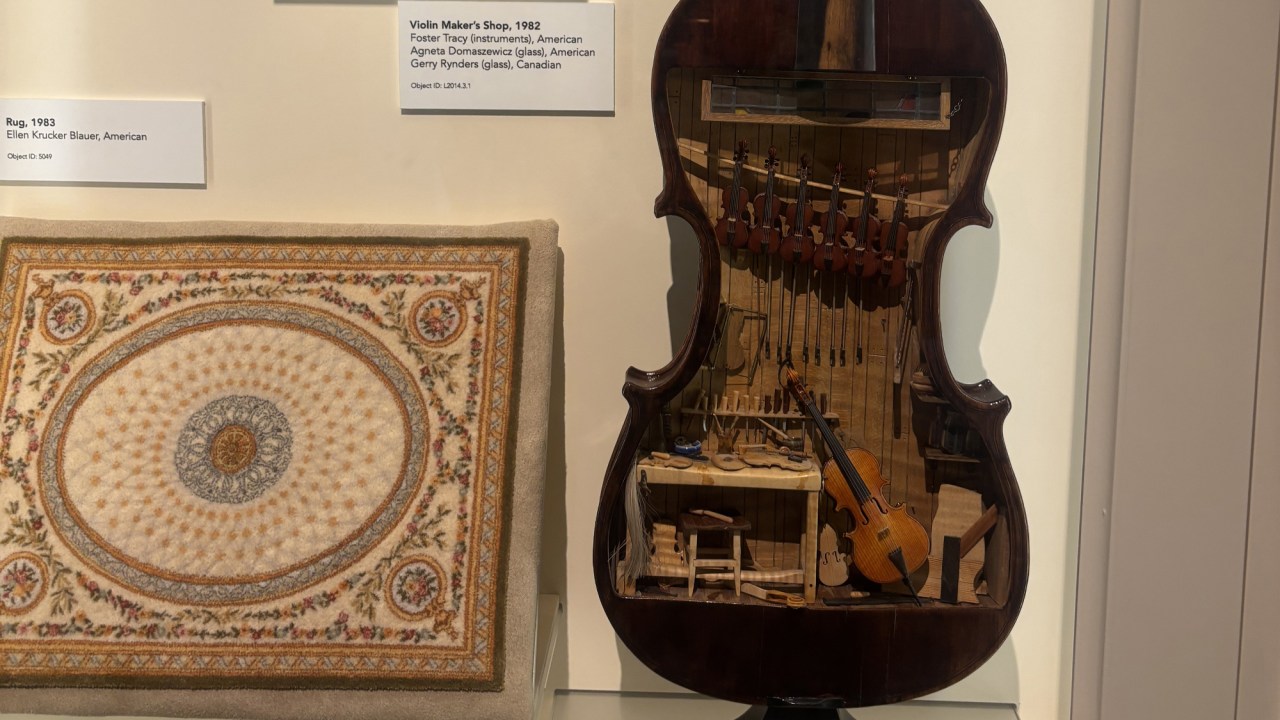
The National Museum of Toys and Miniatures in Kansas City, Missouri, offers a concrete example of wonder through a shift in scale, layered discovery, and close looking. Fine-scale miniature environments ask visitors to adjust their bodies and attention: to lean in, slow down, and notice a world built from details that could easily be missed at ordinary speed. This is not spectacle through size but wonder through compression.
The museum’s 18th-Century Violin Maker’s Shop demonstrates how miniature displays can support layered discovery (intro image). At first glance, a visitor may recognize a workshop. With more time, the experience changes: tools, surfaces, work rhythms, and material traces begin to emerge. The miniature becomes a practice in attention. It rewards the second and third look, allowing curiosity to unfold gradually rather than all at once.
This example illustrates how wonder does not require overwhelming stimulation. It can be created through precision, intimacy, and interpretive pacing. Miniatures can also support neuroinclusive engagement because they offer a clear focal field, invite self-paced looking, and allow visitors to choose how closely they want to investigate. The design lesson is transferable beyond miniature collections: visitors need moments where detail, scale, and spatial orientation work together to make attention feel possible.
Sensory Modulation: Support Attention Instead of Demanding It
Wonder requires enough stimulation to invite curiosity, but not so much that visitors must spend their energy managing the space. Lighting, sound, density, seating, and transition areas all shape whether visitors can remain present—emotionally, intellectually, and even physically—in the exhibition. A gallery that gives people places to pause, orient, and choose their level of engagement is more likely to sustain attention than one that treats constant intensity as impact.
Research on restorative museum environments suggests that museums can support emotional coping and attention when the built environment offers coherence, orientation, and opportunities for pause.5 Display research also shows that arrangement and visual conditions can shape looking behavior and dwell time.6
Sensory-conscious design is not a reduction of wonder. It is often what makes wonder possible. When glare, noise, crowding, confusing circulation, or dense text dominate the experience, the visitor’s attention shifts from curiosity to self-protection. When spatial rhythm, moderated sound, seating, and clear orientation are built into the exhibition, visitors have more capacity to notice and connect.
Architectural pause is one of the most overlooked conditions for wonder. Visitors cannot remain curious if the body is searching for where to stand, where to rest, or how to move through a space. Benches, clear sightlines, quieter thresholds, and visual breathing room help visitors regulate attention before re-entering interpretive content. In this sense, seating is not separate from exhibition design. It participates in meaning-making by allowing visitors to stay longer, look again, talk with another person, or sit quietly with material that may be emotionally or cognitively demanding. A comfortable seat can become the hinge between overload and reflection.
Martha Valenta’s Lost & Found Meditation at the Saint Louis Art Museum offers an example of wonder through embodied engagement (fig. 2). Its value for exhibition practice is not only the artwork itself, but the way it invites movement, spatial exploration, shared attention, and nonlinear interpretation within the gallery. Visitors are not asked to decode a single message quickly; they are invited to notice what draws them, move through the work, and build meaning through bodily attention.
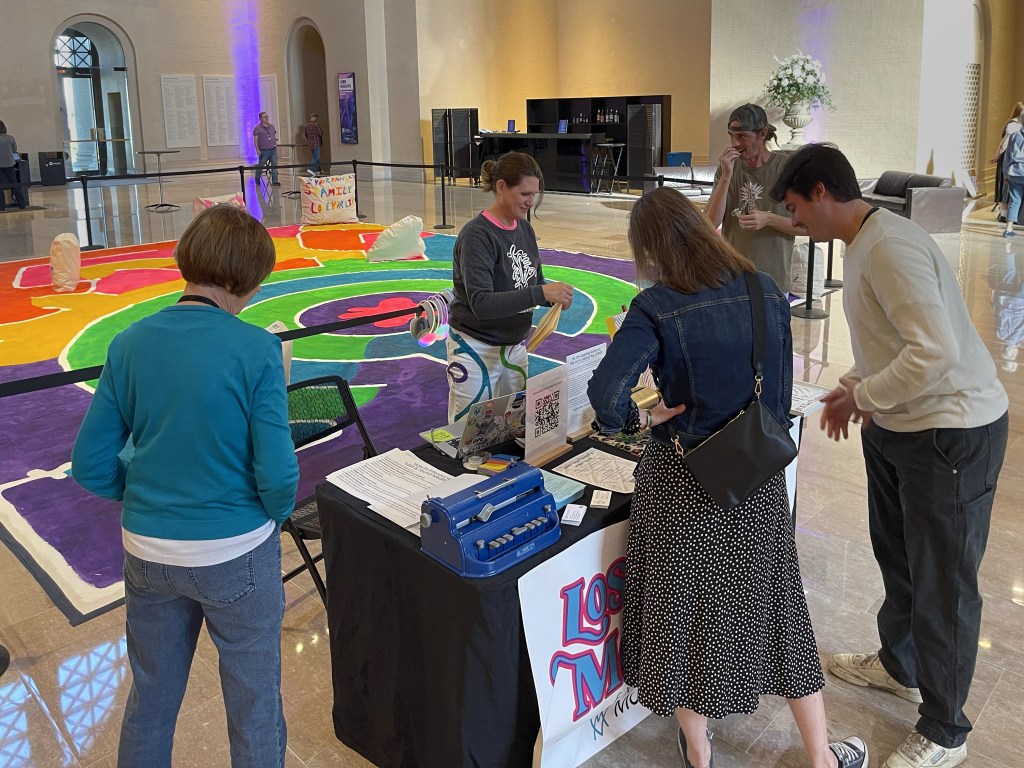
This matters because not all visitors process meaning primarily through text or stillness. Some visitors think through movement, pattern, spatial relationship, color, or social exchange. For neurodivergent visitors and others who process through embodied attention, an open-ended gallery encounter can create a more accessible pathway into reflection. Wonder, in this example, is not produced by spectacle alone. It is produced by permission: permission to move, pause, circle back, notice differently, and make meaning without a single required route.
For exhibition practice, this suggests that interpretive design should not assume one correct tempo of attention. A visitor may read every label, follow a guided path, sit quietly, move repeatedly through a space, or share an observation with another person. Each can be a legitimate route into wonder when the exhibition supports orientation, choice, and reflection.
Social Meaning-Making: Let Visitors Discover Together
Wonder deepens when it is shared. A question overheard, a child pointing out a detail, a guided conversation, or a participatory prompt can help visitors test their assumptions and see through another person’s eyes. Exhibitions do not only transmit knowledge from institution to visitor; they create conditions where visitors make meaning with one another.
This social dimension is especially important because human nervous systems do not operate in isolation. Co-regulation—the process through which people stabilize emotional and physiological states through interaction and shared environments—helps explain why a museum feels different when visitors are invited into calm, respectful, and exploratory forms of communal attention.7
A shared glance, a quiet comment, or a brief laugh can act as a subtle cue of social safety. For autistic visitors and for others with sensory hyperreactivity, this dimension of safety may be especially important because repeated sensory input may remain highly salient rather than fading into the background.8
Neuroinclusive Wonder as a Museum Practice
Wonder is not experienced uniformly. Visitors arrive with different sensory thresholds, attentional reserves, physical needs, emotional histories, cultural references, and relationships to museum authority. Neuroinclusive design shifts the emphasis from simplifying content to broadening access to complexity.
A neuroinclusive exhibition offers multiple pathways into meaning: visual, tactile, auditory, narrative, social, and spatial. Clear orientation, quieter zones, flexible seating, sensory maps, tactile or audio options, and layered interpretation can help visitors regulate their engagement without separating access from the exhibition itself. Access becomes part of how the exhibition is entered, understood, and remembered.
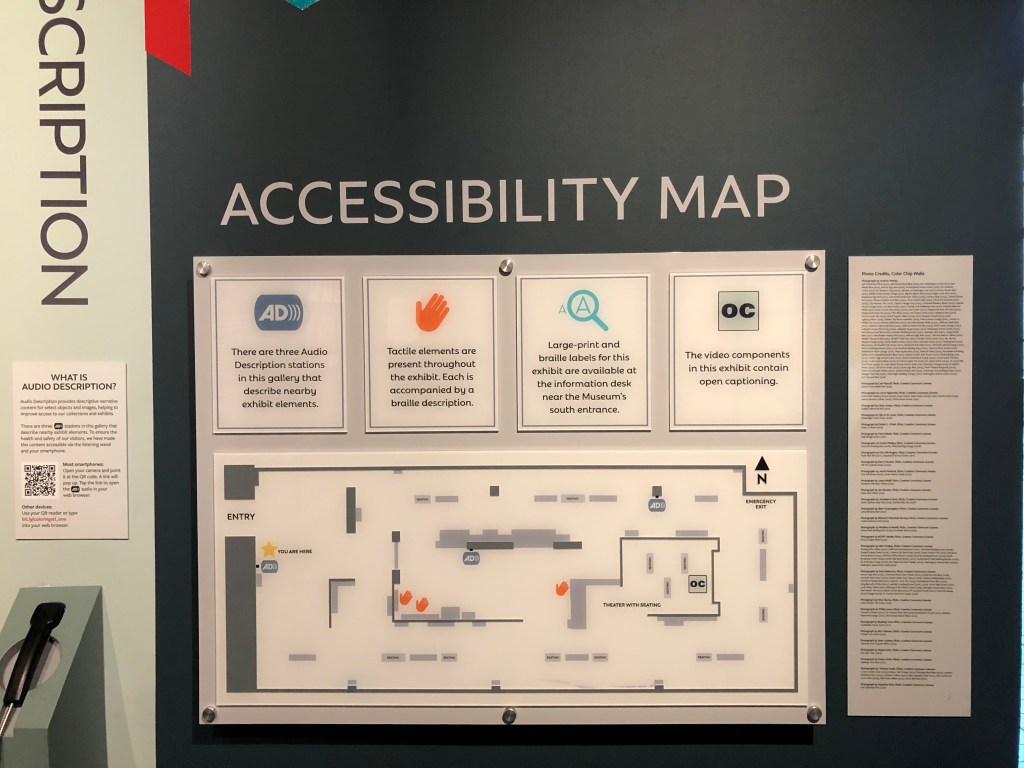
The strongest access tools are not merely supplemental. They are interpretive. A sensory map does not only identify bright or loud areas; it gives visitors agency over how they approach the museum environment (fig. 3). A tactile object does not only accommodate touch; it can deepen material understanding. Plain language does not only simplify; it can clarify stakes. Neuroinclusive wonder asks exhibition teams to design so that more visitors can remain curious rather than merely endure.
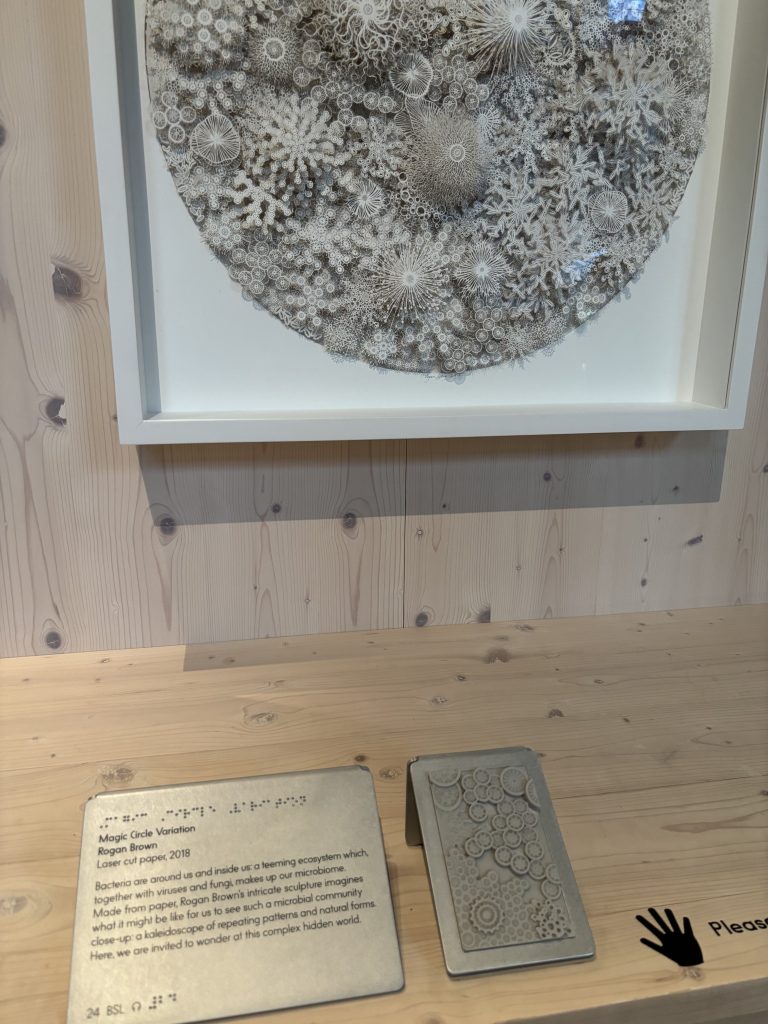
Rogan Brown’s Magic Circle Variation extends this principle by pairing intricate biological patterning with tactile and braille interpretation (fig. 4). Its shifting scales—from microscopic forms to a dense, almost planetary whole—invite close looking while the accompanying access elements create more than one sensory route into that complexity. Here, accessibility does not sit beside wonder; it helps structure the conditions through which wonder can be encountered.
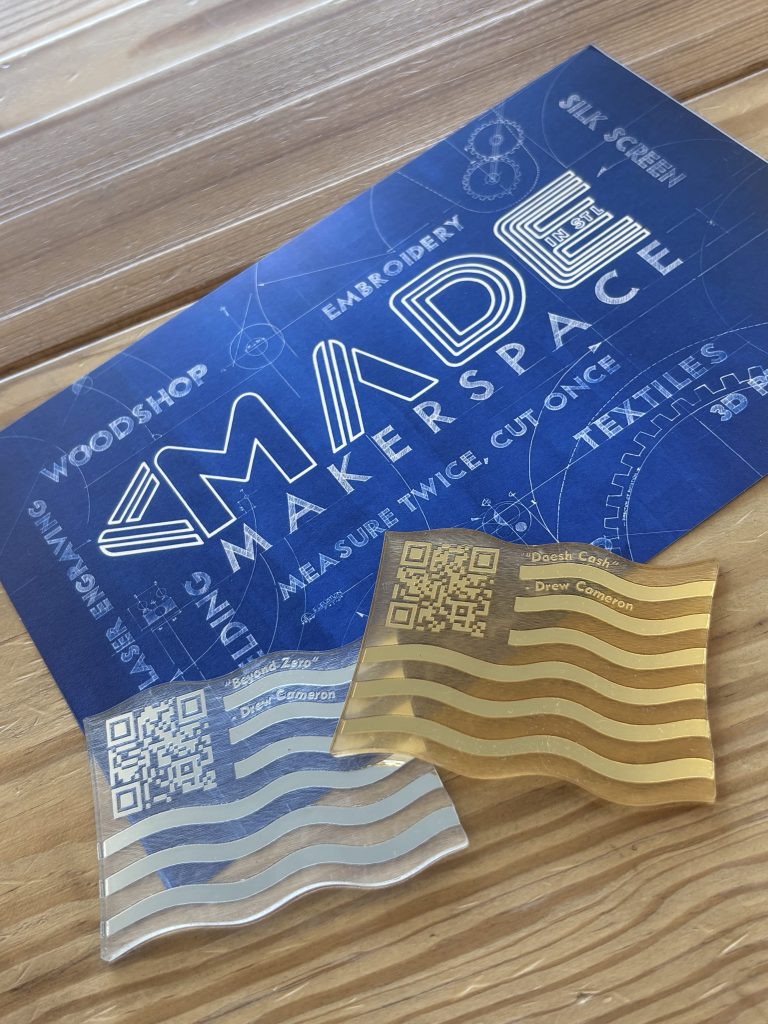
The tactile audio markers developed through makerspace MADE in St. Louis for W[A]RN and TRANSFORMED: Uniforms as Stories of U.S. offer a strong example of access becoming interpretation (fig. 5). Presented at the State Historical Society of Missouri Center for Missouri Studies in Columbia, the exhibition centered veteran artists and the transformation of military uniform materials into works of personal and collective meaning. The markers invited visitors to hold, scan, and listen, linking raised QR-code access with material handling, audio interpretation, color, and sensory grounding. Rather than treating audio as a separate accessibility layer, the markers made sound, touch, and story part of the exhibition encounter itself. For visitors with varied service-related, sensory, or emotional experiences, this kind of multimodal design creates agency: one can enter the story through the hand, the ear, the eye, or the body’s own pace.
These strategies support neurodivergent visitors, while also helping anyone arriving with limited attentional bandwidth, sensory sensitivity, fatigue, grief, or unfamiliarity with museum spaces. In that sense, neuroinclusive design is not a special-interest add-on. It is a method for improving the exhibition experience for a wider public.
Attention Restoration and the Museum Environment
In an age of chronic informational noise, wonder offers museums an alternative to acceleration. Attention Restoration Theory argues that restorative environments engage soft fascination: forms of attention that hold interest without exhausting directed effort. Although this framework was developed largely in relation to nature, later scholarship clarifies that restorative qualities are not exclusive to natural settings.9
Museums can support similar restoration when exhibitions balance complexity with coherence and provide moments of pause within the interpretive experience. This is where exhibition design matters. Dense text, abrupt sensory shifts, and visual crowding can reproduce the overload of digital life. By contrast, spatial pacing, moderated lighting and sound, clear orientation, and intentional shifts between visual intensity and calm can help visitors move between focused attention and reflective processing.
Wonder-based design does not ask museums to compete with digital media by becoming louder. It asks them to become more legible, more breathable, and more attentive to how people encounter objects over time.
Museums cannot outpace the speed of digital life, and they do not need to. Their value lies in offering another rhythm: one in which visitors can slow down, orient themselves, encounter material evidence, and make meaning through attention. Wonder is one way to describe this rhythm; it is also a design responsibility.
When exhibitions use scale, layered discovery, sensory modulation, and shared interpretation with care, they create conditions where visitors can remain curious without becoming overwhelmed. Neuroinclusive practice sharpens this work by reminding museums that attention is embodied, sensory, emotional, and unevenly distributed. Visitors do not arrive with empty minds ready to receive content. They arrive with histories, nervous systems, fatigue, memories, and different ways of making sense.
Designing for wonder means designing for that full human reality. It asks museums to create spaces where surprise is supported by orientation, complexity is supported by clarity, and historical encounter is supported by enough sensory and emotional room to stay. In a noisy world, this may be one of the museum’s most important public roles: to protect the conditions in which people can still notice, question, feel, and connect.
Piper Hart is a NeuroArts researcher, educator, and neuroinclusive arts and health consultant, and an adjunct professor at Lindenwood University.
- Anjan Chatterjee and Oshin Vartanian, “Neuroaesthetics,” Trends in Cognitive Sciences 18, no. 7 (2014): 370–75. ↩︎
- Emrah Düzel, Nikolaus Bunzeck, H.-C. Guitart-Masip, and Raymond J. Dolan, “Novelty-Related Motivation of Anticipation and Exploration by Dopamine,” Neuron 63, no. 6 (2009): 837–46. ↩︎
- Jenny Yoo, Katarzyna Jaśko, and Piotr Winkielman, “Fluency, Prediction and Motivation: How Processing Dynamics, Expectations and Epistemic Goals Shape Aesthetic Judgements,” Philosophical Transactions of the Royal Society B: Biological Sciences 379, no. 1895 (2024): 20230326. ↩︎
- David B. Yaden, Scott Barry Kaufman, Elizabeth Hyde, Alice Chirico, Andrea Gaggioli, Jia Wei Zhang, and Dacher Keltner, “The Development of the Awe Experience Scale (AWE-S): A Multifactorial Measure for a Complex Emotion,” Journal of Positive Psychology 14, no. 4 (2019): 474–88. ↩︎
- Keren Mao and Sijin Qian, “Restorative Museum Environments: Emotional Coping Strategies for People Living with Chronic Multimorbidity,” Frontiers in Psychiatry 16 (2025): 1677909. ↩︎
- Luise Reitstätter et al., “The Display Makes a Difference: A Mobile Eye Tracking Study on the Perception of Art Before and After a Museum’s Rearrangement,” Journal of Eye Movement Research 13, no. 2 (2020): 1–29. ↩︎
- Stephen W. Porges, The Polyvagal Theory: Neurophysiological Foundations of Emotions, Attachment, Communication, and Self-Regulation (W. W. Norton & Company, 2011). ↩︎
- Rachel Millin et al., “Reduced Auditory Cortical Adaptation in Autism Spectrum Disorder,” eLife 7 (2018): e36493. ↩︎
- Anjan Basu, John Duvall, and Rachel Kaplan, “Attention Restoration Theory: Exploring the Role of Soft Fascination and Mental Bandwidth,” Environment and Behavior 51, nos. 9–10 (2019): 1055–081. ↩︎
Upcoming Events
-
From Informational Interview to Real Connection
Event Date:Presented by: American Alliance of Museums and National Emerging Museum Professionals Network -
Understanding the U.S. History Workforce
Event Date:Presented by: American Association for State and Local History (AASLH) -
TrendsWatching: To Live or Die in AI Webinar
Event Date:Presented by: American Alliance of Museums -