“The problem with assumptions is that we believe they are the truth.”
— Miguel Angel Ruiz, Mexican author and spiritual guide
Hello and welcome to the 2026 edition of TrendsWatch, AAM’s forecasting report, which we publish as the first issue of Museum magazine each year. My assignment, as AAM’s in-house futurist, is to explore a few trends having a profound impact on museum operations and offer some suggestions, rooted in real-world practice, for how museums might respond to these challenges.
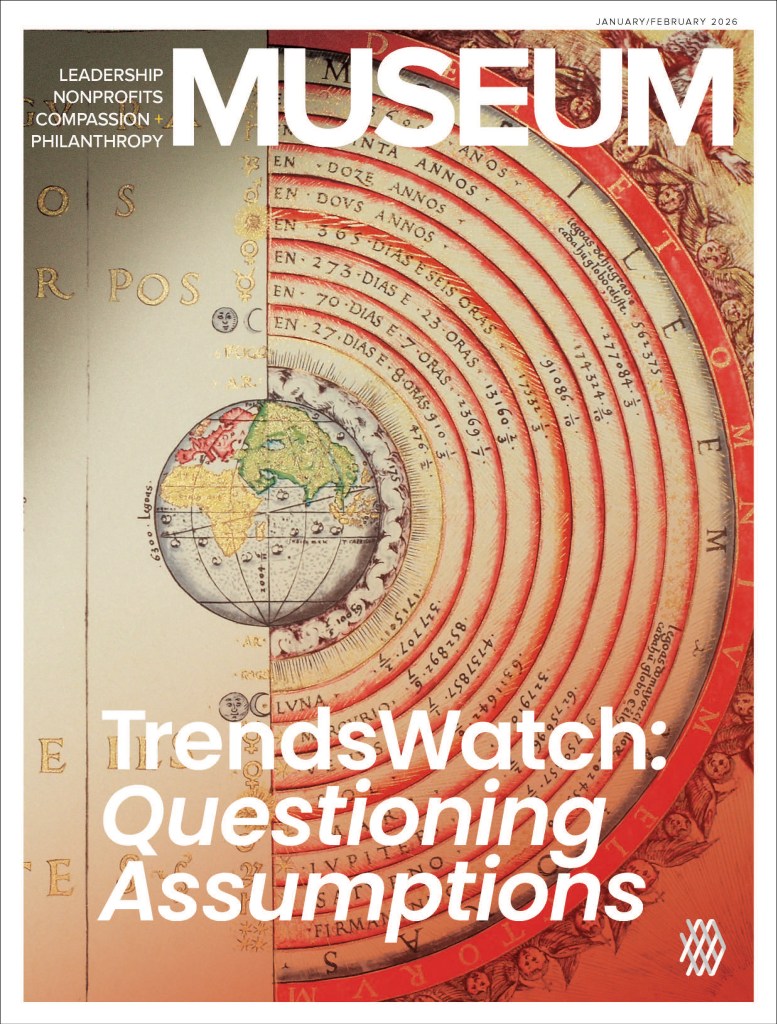
This introduction originally appeared in the Jan/Feb 2026 issue of Museum magazine, a benefit of AAM membership.
» Read Museum.
The last thing I do when finishing the text is to read over all the articles and identify a unifying theme that gives rise to the title. This year that common thread is “questioning assumptions.” Challenging preconceptions about the world, and the future, is always a major goal of foresight. Much of my work consists of exploring the edges of what is possible given time and circumstances. Sometimes I help our field imagine how a new technology (internet-connected devices, virtual reality, artificial intelligence) could transform our practice. Other times I explore how a confluence of events may create unlikely futures. (In 2018, one TrendsWatch scenario explored a future in which the survival of nonprofit status was threatened by a global pandemic, financial insecurity, and a nationalist presidential administration, thus proving that “improbable” is not the same as “impossible.”) Most often the themes I explore suggest minor, albeit important, course corrections to meet the needs of our visitors, our communities, and our nation.
This year, however, the challenges to basic assumptions about how our world works are profound and pervasive, encompassing the whole environment in which nonprofit museums operate. Here are three statements I, for one, would not have doubted 10 years ago that have been called into question by current events:
- When a museum director retires, there are many qualified people eager to apply for their position.
- Philanthropy is a nonpartisan activity that is, overall, good for society and for the organizations it funds.
- The nonprofit sector is baked into the DNA of America, co-equal in importance to government and business in the creation of a functional society.
In fact, our sector is facing an acute shortage of leaders, in part because of rising pressures on managers and directors as well as shifting generational attitudes toward work. Philanthropy is under fire as an undemocratic tool of (depending on who you listen to) the radical right or the extreme left. And a decade of work by donors, think tanks, and political advisors is culminating in a spate of executive orders and actions that threaten the independence of the nonprofit sector, if not its very existence.
OK, pause, take a deep breath, and don’t panic. Everything I outline above and deconstruct in-depth in the following pages can sound scary. It is scary. We may need to broaden our advocacy to the public and lawmakers to make the case for the value of having an independent sector at all. We need philanthropy now more than ever as a mechanism (however imperfect) for addressing the inequitable distribution of wealth and power in the US. And in the face of these challenges, we need leaders at all levels of our organizations who can guide us through an era of change.
While these risks are profound, they also present museums with the opportunity to shine. We can provide our staff with training, support, and opportunities to step forward and lead. We can use disruptions to philanthropy as an opening for meaningful conversations with funders, both individuals and foundations, about how to be good partners to accomplish good things. And we can use the data we have about the incredible trust and support that members of the American public—regardless of political alignment—have for museums, and on the measurable good we do in our communities, to make the case for policies and funding that will allow our sector to thrive.
One last assumption I’d like to spotlight: you may assume that humans (mostly me) wrote this report. You would be, for the most part, correct. Along with about 40 percent of American workers, I experimented with generative AI as I developed the text. It helped me find some of the quotes that open the chapters and some of the data cited in the report. (Although, given AI’s well-documented tendency to make stuff up, I had to laboriously fact-check its suggestions.) I even invited ChatGPT to write some chunks of the text. But, in the end, I threw most of that out, finding that I prefer my own quirky voice to an AI imitation of me. That said, I invite you to spot the one paragraph in this edition that was generated by ChatGPT. Email your guess to emerritt at aam-us.org; if you are right, I owe you a coffee next time we intersect at a conference.
Yours from the future,
Elizabeth Merritt
Vice President, Strategic Foresight and Founding Director, Center for the Future of Museums,
American Alliance of Museums
TrendsWatch
TL;DR Tear Sheet
One assumption that I needed to question in producing this year’s report is that busy museum people actually have time to read TrendsWatch cover to cover. To that point, this year I am introducing a tl;dr (too long; didn’t read) summary of the topics with a few key recommendations. Share this tear sheet with colleagues to identify which chapters you might want to read more deeply, discuss, and integrate into your work.
The Philanthropic Future
Overall, individual giving is strong, but a growing chunk of charitable dollars comes from a small cadre of ultrawealthy individuals. Young donors are less likely to support arts and culture than previous generations and want to engage with charities in new ways. Foundations, responding to the challenges rocking the nonprofit sector, are changing their practices to be more flexible and supportive of their grantees, but they are not able to fill the considerable gap left by federal grant cancellations.
What museums can do: firewall fundraising to protect independence of content; understand the goals and preferences of the next generation of donors; build a broad base of people willing to make small gifts; advocate for healthy, sustainable funding practices.
The Looming Leadership Crisis
Fewer people are interested in being leaders or managers, and many young people don’t want to “climb the organizational ladder” at all. This is partly because being a leader is harder than ever: successful leadership demands an ever growing portfolio of skills, stress is high, and burnout is rampant. Despite this challenge, few museums engage in the vital work of succession planning.
What museums can do: provide training and support to develop all staff as potential leaders; create career pathways within their organizations; make succession planning a regular part of the board’s work; create or maintain plans to foster BIPOC leadership.
Securing the Future of the Nonprofit Sector
The current presidential administration is using grant cancellations, reductions in force, and threats to revoke nonprofit tax status to control what nonprofits do and say, their values, and the issues that they address. Many of these actions threaten not only individual organizations but the legal and tax structures that undergird the independent sector.
What museums can do: build relationships with legislators; communicate to the general public; take small steps toward strategic goals; network relentlessly and advocate, advocate, advocate at the local, state, and federal levels.
Upcoming Events
-
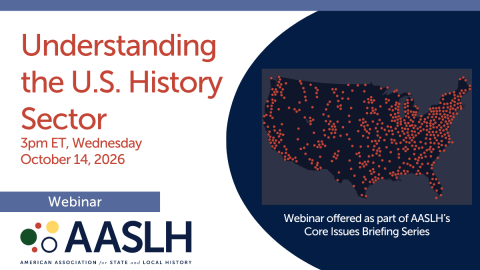
Understanding the U.S. History Sector
Event Date:Presented by: American Association for State and Local History (AASLH) -
-
-
Industry Showcase: Innovative Digital Solutions
Event Date: