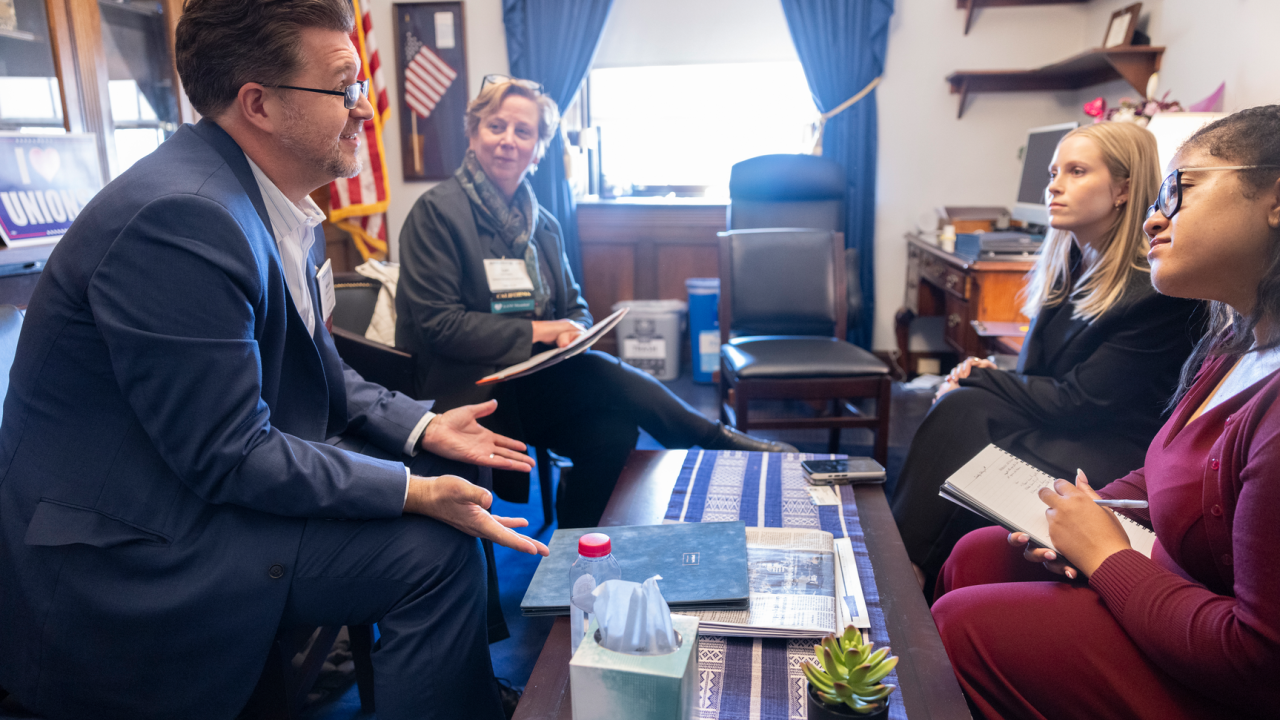
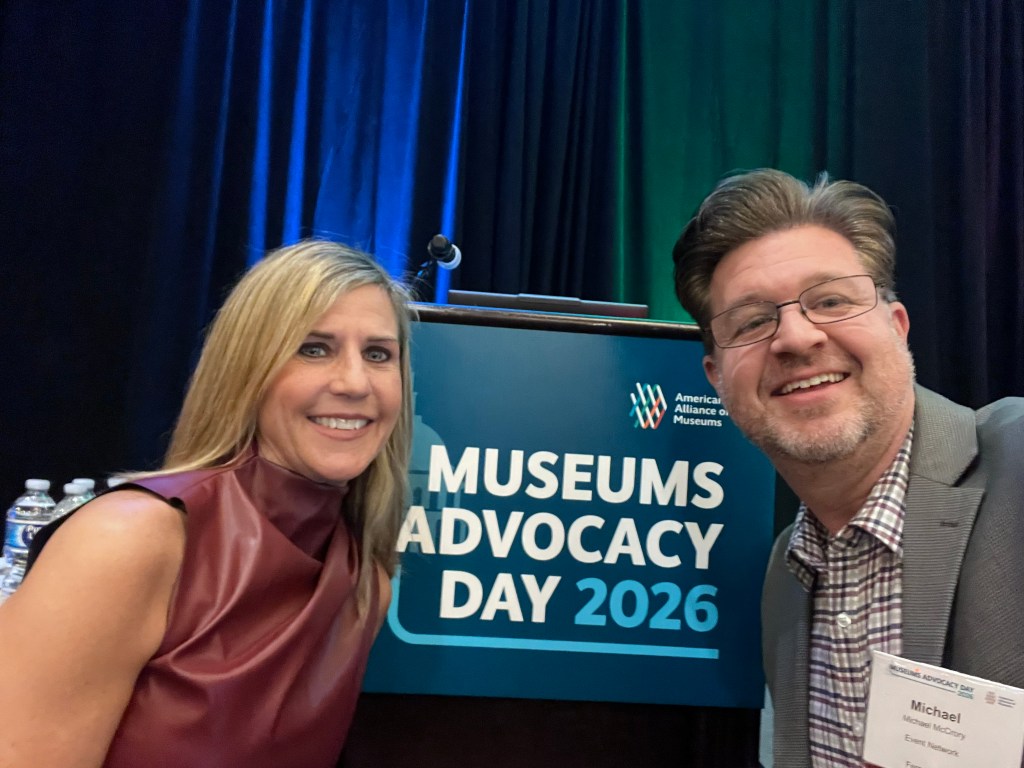
For over 15 years, Museums Advocacy Day has brought together museum professionals, supporters, and allies from across the country to make the case for museums to Congress—unified under one voice, one mission. This year, that voice was joined by a new, perhaps unexpected presence: a for-profit retail partner. As the lead sponsor of Museums Advocacy Day 2026, Event Network didn’t just show up with a logo. They showed up ready to advocate.
We sat down with Michael McCrory of Event Network to find out what it was like walking the halls of Capitol Hill for the first time as a museum advocate, why it mattered to them, and what they think other culture-adjacent organizations should know.
A Room Full of Common Ground
Ask Michael McCrory what stood out most about his first Museums Advocacy Day, and his answer is immediate.
“What jumped out to me most was the sense of community in the room…the sense of shared values.”
For Michael, this was both unexpected and meaningful. Event Network’s day-to-day work is built around differentiation, understanding what makes one cultural attraction distinct from another. But Museums Advocacy Day revealed something else entirely.
“Here we are in a room full of different cultural attractions, from all across the country, and yet the values that we all came in the door with were very much aligned.”
That sense of alignment reframed the experience. Beyond operational differences, what connected everyone in the room was a shared belief in the importance of cultural institutions and the role they play in serving communities.
Finding a Voice on Capitol Hill
While the sense of community was immediate, stepping into advocacy conversations brought a different challenge. As a for-profit partner in a largely nonprofit sector, Event Network was initially unsure how to position its message.
That changed through collaboration. Working alongside Lori Fogarty, Executive Director of the Oakland Museum of California and an AAM Board member, they found a natural rhythm, building on her insights while testing where his perspective could add value.
What emerged was a seamless exchange of perspectives, combining museum operations with retail economics to present a fuller picture of how cultural institutions function. The conversations, Michael noted, “felt really organic.”
His experience highlights an important point: advocacy is strongest when multiple perspectives come together. Commercial partners, in particular, can offer valuable insights, especially when it comes to articulating economic impact.
Museums and the Local Economy
That economic perspective became central to Event Network’s conversations with policymakers. As Michael explained, cultural attractions don’t operate in isolation; they exist within a wider ecosystem that surrounds and supports them.
From his perspective, museum stores are often the first point where the local economy is activated. After visiting an exhibition or attraction, “you come out of the museum, and where are you going? You’re going to the store.”
But the impact extends far beyond that initial interaction.
Cultural institutions create ripple effects across surrounding businesses, from hospitality and transport to the wider local economy. As Michael put it, there are “rings and rings of layers” influenced by their presence.
This framing offers a clear way to understand the broader value of museums not only as cultural assets, but as economic drivers within their communities.
Visitors Already Understand the Value
For Michael, one of the clearest indicators of this value comes directly from visitors themselves.
Through Event Network’s roundup donation program, which has generated over $2 million for cultural institutions, guests can contribute additional funds at checkout. Many choose to do so.
“A lot of times, people will say, ‘Can you add 10 bucks?’…‘Can you add another 20?’”
This behavior reflects more than generosity; it signals trust. It shows that visitors understand the role these contributions play. Museum stores are not simply an added feature; they are part of the revenue streams that support daily operations.
A Call to Other Business Partners
Michael and the Event Network team left Museums Advocacy Day with a clear message for other organizations working alongside cultural institutions.
At the heart of it is a simple idea: museums are for everyone. As Michael put it, “no matter what your life experience is…there’s a museum out there that is telling your story.”
That universality underscores why advocacy matters. Museums are not niche or peripheral; they play a foundational role in preserving and sharing stories across communities.
He also pointed to strong public support, noting that many Americans trust museums and want to see them supported. In his view, “this is not a challenging issue…we’ve just got to keep speaking to it.”
For Event Network, participating in Museums Advocacy Day was not a departure from their role as a business partner, but an extension of it, putting their core values of people, partners, and planet into action in a new way.
“Event Network’s” experiences show that advocacy is not limited to any one part of the sector. It is a shared responsibility that spans institutions, partners, and communities alike.
Event Network was the lead sponsor of Museums Advocacy Day 2026.
Upcoming Events
-
-
-
Industry Showcase: Innovative Digital Solutions
Event Date: -
Creative Museums Summit
Event Date:Presented by: MuseumNext