I recently read the book The Fly Trap by Fredrik Sjöberg, which I highly recommend to museum colleagues, for reasons which get to the very essence of museums and creative aging.
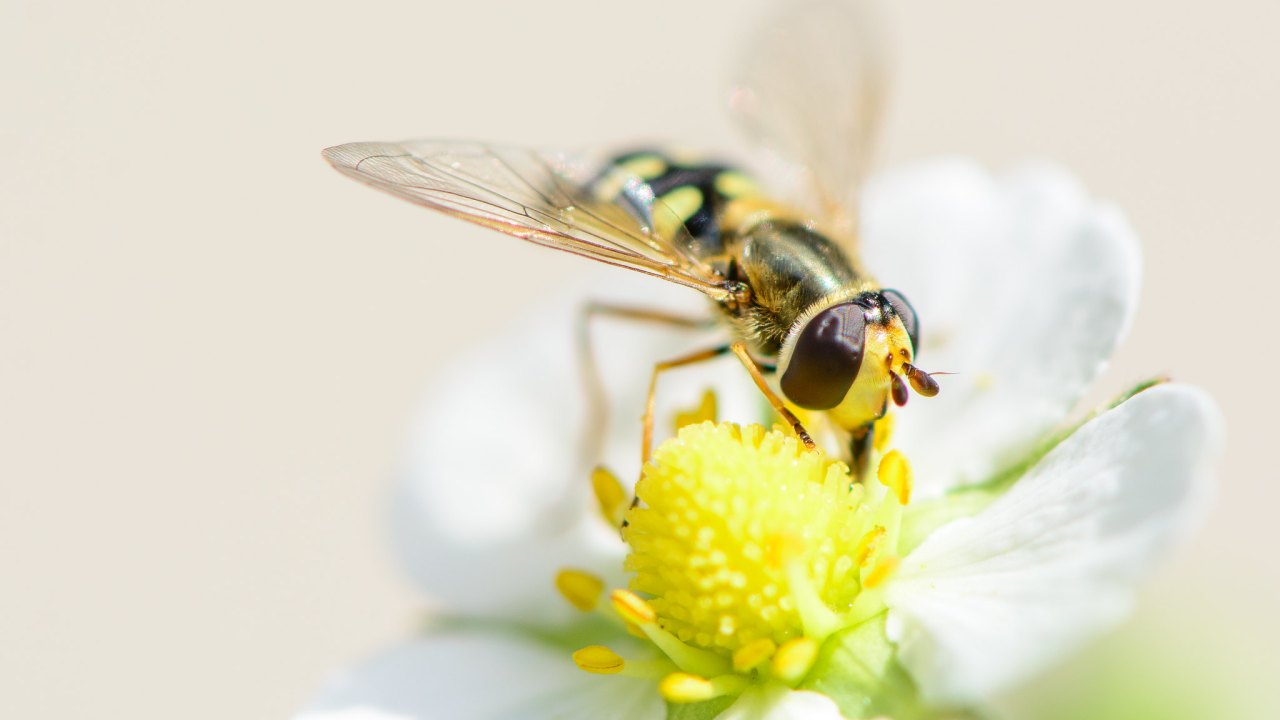
Sjöberg is an entomologist who lives on the island of Runmarö east of Stockholm and specializes in catching and collecting hoverflies (I had to look it up, too). For the first chapter or two of his book you will scratch your head as I did, wondering what you are getting yourself in for; Sjoberg offers a rambling reminiscence of his earlier days as a prop manager in a theater company, segueing soon into an explanation of his lifelong work since as an entomologist with a particular and beguiling interest in hoverflies. In the process of understanding this transition, the reader is immersed in the entomological facts that define the lifecycle of this insect. Believe me, please, it’s just fascinating stuff!
From there, we are led into the woods and marshes side-by-side with Sjöberg as he sets up his huge “Malaise” trap and sits quietly as it collects his specimens. Before we know it, we too are eager to see what flies into his trap next, hoping very much that it is—you guessed it—the hoverfly itself! Hours, days, months, and in fact a lifetime flies by in this pursuit and, because of Sjöberg’s passion and self-effacing writing style, we are pulled almost inescapably into his world. It is a world of the present, a world about which he knows a great deal, and because he has become a specialist in this world he sees and can so clearly describe the beauty of it to the reader. We appreciate his deep knowledge of this little corner of the entomological universe, but what is so vividly demonstrated is his deep, serene, and solitary love for his avocation. (Despite clearly being a world expert on the hoverfly, he is always quick to say is just an “amateur,” in a wonderfully self-effacing way.)
Throughout the book, Sjöberg alludes to museums and some of the human “curiosities” who work in them. He has some caustic words to throw at specialists who fail to see the larger beautiful context of their science, calling them “buttonologists,” a term invented by the Swedish playwright August Strindberg.
“’Buttonologist:’ The man who collected buttons had accumulated a fearful quality, as he did not know how he was going to preserve them, he sought and received money from the state to house the collection. He sat down and organized his buttons; there were many different ways of sorting them…. but to do this he needed help so he wrote a treatise on The Need for the Study of Buttons on Scientific Principles…”
As we get to know Sjöberg better and better with each passing page, we see that he is just the opposite of a buttonologist: a person with an extensive understanding of the wider world of science, who has specialized in one area that brings him joy, and who—through his particular pursuit of the hoverfly—has found extensive and lasting pleasure in a world obscure to most. His passion is such that time becomes an insignificant measure:
“That’s why I go collecting with my net in the here and now and read my landscape in the present tense.”
Throughout The Fly Trap, Sjöberg refers to “Dr. Malaise” (the creator of the ingenious trap mentioned above), who fascinates him both because of his creation and because of his elusiveness as a significant figure in the field of entomology. This search for Malaise takes us to Kamchatka in Russia and beyond, with still only faint hints and indirections as to who he was and why he went there in the first place. Still, we join in the quest, and in the process we witness again a man uninhibitedly in pursuit of his passions. His is a “wild-goose” chase where the fun is mainly in the search, similar to Professor Feynman’s consuming search for the remote country of Tuva in Mongolia. While neither Sjöberg nor Feynman is finally satisfied with coming into contact with the actual object of their respective quests, they are nonetheless thrilled by the chase which sustains and only kindles further curiosity!
Ronald Gross authored a book called The Independent Scholar’s Handbook—How to Turn Your Interest in Any Subject into Expertise. One excerpt in the book speaks eloquently to this spirit of passionate pursuit that characterizes the creative ager; it is advice that publisher Max Schuster gave to Gross when he began his work at Simon and Schuster:
“Begin at once…not tomorrow…but right now, at this precise moment—to choose some subject, some concept, some great name or idea or event in history on which you can eventually make yourself the world’s supreme expert. Start a crash program immediately to qualify yourself for this self-assignment though reading, research, and reflection…”
Sjöberg is just this kind of person and a model to all creative agers. He has mastered a particular (though narrow) aspect of life, and through his understanding of it is now skilled at seeing its beauty, and more importantly, the beauty of the larger world beyond it.
It’s a good read. Stick with it, as you will soon be awash in the beauty of his writing and his enthusiasm.
Plus, it doesn’t hurt to know a lot about hoverflies!

Upcoming Events
-
Leadership Succession Plans and Planning
Event Date:Presented by: American Alliance of Museums -
-
Honoring African American History in America’s 250th
Event Date:Presented by: Southeastern Museums Conference -
Environmental Monitoring for Collections of All Sizes
Event Date:Presented by: C2C Care/FAIC