The Nora Eccles Harrison Museum of Art has invested in high impact design of its space to enable 21st -century learning.
The museum experience of 40 years ago is easy to imagine—a friendly front desk, a map of current exhibitions, and leisurely gallery browsing based on curiosity or personal taste. Today’s visitors still value that model, but museums now face a more complicated challenge. Members from each generation arrive with different expectations for how they want to experience art, and younger audiences—raised in interactive, interdisciplinary, and collaborative learning environments—seek more than static encounters.
This article originally appeared in the Mar/Apr 2026 issue of Museum magazine, a benefit of AAM membership.
» Read Museum.
Exhibitions and programs can change quickly, but facilities cannot. Renovating or expanding a building is a decision that lasts for generations, and as construction costs continue to rise, museums cannot afford to create spaces that feel outdated before they even open. Nor can we rely on multipurpose spaces that attempt to serve many functions but achieve little. Essential questions arise: What types of new spaces can meaningfully support long-term evolution? And how do we design buildings that help museums deepen their impact rather than simply house activity?
Having overseen two major building projects at the Nora Eccles Harrison Museum of Art (NEHMA) over the past decade, I have spent a lot of time thinking about what renovations must accomplish, what bold ideas can realistically be built, and how other museums have integrated innovative learning modalities into their facilities. I now have a greater understanding of how strategic design decisions can shape how effectively we serve our communities.
Two Transformations
In 2018, NEHMA, which is part of Utah State University, completed a renovation and expansion that addressed the core needs of its 40-year-old building. The updates—a new lobby with café, refreshed and newly added galleries, and modestly expanded storage—were essential. Less glamorous but crucial improvements included a complete overhaul of the fire-suppression system and the replacement of every window with triple-pane, UV-treated glazing.
Altogether, we renovated 30,000 square feet and added 7,600 square feet. The result was a modernized, more intuitive visitor experience. Circulation improved, exhibitions breathed easier, and the museum finally met the expectations of a 21st-century “traditional museum visit.” This project elevated the baseline—but it did not fundamentally change how visitors engaged with our collection or how we supported academic learning.
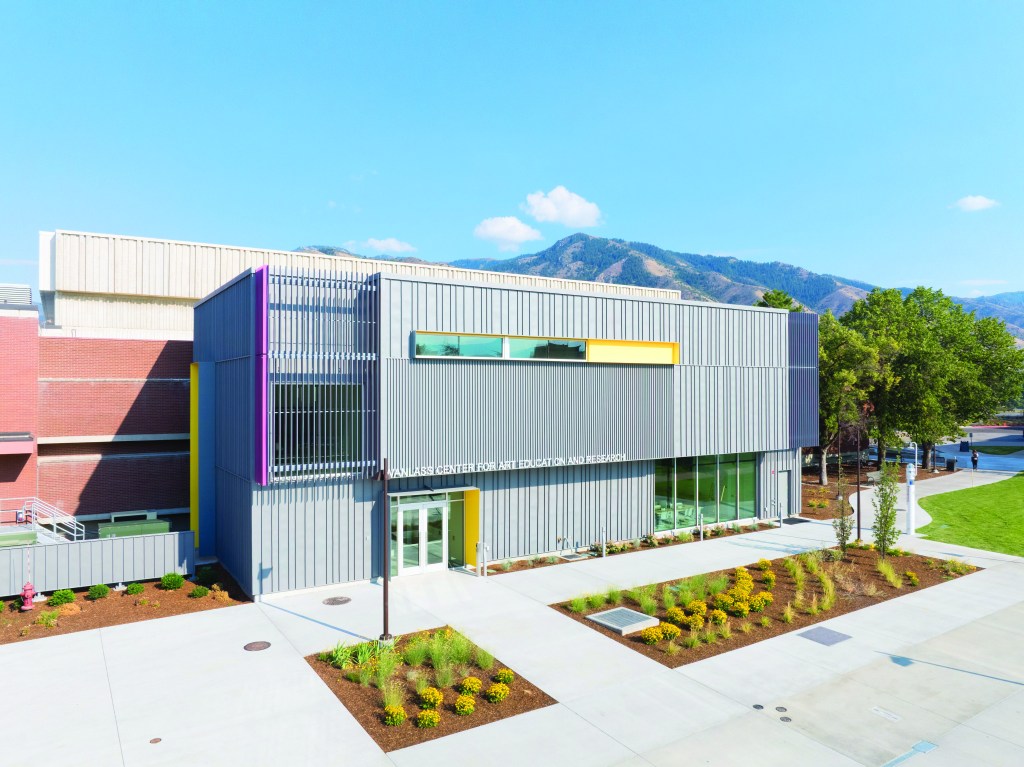
The more ambitious work culminated in 2025, when we opened the Wanlass Center for Art Education and Research, a new adjacent facility designed to expand how our community interacts with art. Limited by a tight footprint due to immovable underground infrastructure in the middle of a campus, and by the financial pressures of building in a time of escalating costs, we could not rely on grand gestures such as a soaring atrium or vast exhibition hall. Instead, we built with precision and purpose. Every one of the 9,500 square feet was designed to work hard.
On arrival, visitors are unsure what to expect—and this is intentional. We want visitors to be ready for a new experience. They first move through hallways lined with display cases—each revealing thoughtfully grouped artworks and glimpses into visible collection storage behind them. These corridors open into two distinct teaching and learning environments:
- A studio classroom with built-in display cases that safely hold artworks while students actively make art.
- A flexible art study room with floor-to-ceiling wall easels and a central table, designed for customized groupings of artworks pulled specifically for each class or research session.
Though modest in size, these spaces fundamentally transform what’s possible.
Designing for Customized Learning at Scale
As the only art museum in an 80-mile radius, NEHMA serves the region’s community, K–12students, and Utah State University. Before the Wanlass Center opened, our academic support was significant—we served 80 classes across the university last year—but limited. We could rely only on artworks currently on view or bring a small number out of storage in drawers, restricting both the quantity and type of objects accessible.
Within the first semester of operating the Wanlass Center, we have already served over 70classes, spanning disciplines and including religious studies (examining horses in religious iconography), marketing, studio arts, and more. Each class receives a customized checklist of artworks selected in collaboration with faculty. These objects are then installed in the new art study room, where:
- Wall-mounted easels allow safe display of many works simultaneously.
- A large central table supports close study of objects and collaborative dialogue.
- An acoustic ceiling ensures clarity for discussion-based learning.
- An integrated camera system provides remote students a high-quality view of artworks.
- An adjacent library supports immediate access to primary sources.
This is a fundamentally different model from traditional museum teaching: flexible, collaborative, interdisciplinary, and dynamic. The design itself makes that possible.
As a small art museum with 22,000 annual visitors and a $1.8 million budget, we approached both building projects without a consultant—our small staff of 12 full-time employees worked directly with architects. We drew inspiration from other institutions while adapting ideas to fit our scale and budget.
The Spencer Museum of Art was a key reference. Its preparator developed the original concept for the wall easels we now use, which Spacesaver later adopted as a commercial product. The Spencer Museum’s customized art-study spaces proved that thoughtful, purpose-built environments need not be enormous to be transformative.
This experience taught us that grandness is no longer the benchmark—at least not for museums not among the world’s largest institutions. For many of us, especially those embedded in universities or serving rural regions, compact, efficient, and customizable spaces may be the better 21st-century model.
Why These New Spaces Matter
What we built is not entirely new, but it is intentionally novel. Museums are adept at promoting exhibitions and reliable monthly programs, but audiences rarely know about the deep, customized learning experiences many of us offer every day. These experiences—carefully designed and widely varied—are where museums can have the greatest academic and community impact.
The Wanlass Center demonstrates that when design aligns with educational purpose, museums can more creatively serve more classes and disciplines; provide deeper, object-centered learning; accommodate hybrid teaching and remote access; integrate collections directly into making, research, and interdisciplinary inquiry; and engage visitors not just as observers but as participants.
A building alone cannot create innovative learning, but the right building makes innovation possible, sustainable, and scalable. As museums consider renovations or new construction—whether a modern building needing updates, a natural history museum planning for growth, or a university museum preparing for collection and visitor growth—the questions remain the same:
- What educational experiences do we want to make possible?
- How can spaces support—not constrain—those experiences?
- What can we build that will remain flexible and relevant for decades to come?
Master planning, regardless of scale, should begin with these questions. The Wanlass Center has shown us that even with constraints, a strategic, educationally driven building can expand not only who we serve but the depth and richness with which we serve them.
Upcoming Events
-
Outdoor History Walking Tours 101
Event Date:Presented by: American Association for State and Local History (AASLH) -
I’m In Charge of A Museum Store. Now What?
Event Date:Presented by: American Alliance of Museums -
Gettin’ To Know You: The Art of Networking
Event Date:Presented by: American Alliance of Museums -
Environmental Monitoring for Collections of All Sizes
Event Date:Presented by: C2C Care/FAIC