CFM’s summer dive into artificial intelligence has included scenarios of potential futures, and commentary from the field. The series will also profile examples of “killer applications”—ways in which AI can help museums do things that would be impossible, impractical, or unaffordable without the technology. This week, Patrick Madden, Chief Executive Officer of the National Archives Foundation shows us how AI gives visitors access to the vast scope of the National Archives holdings and supports personalized journeys of exploration.
Elizabeth Merritt, VP, Strategic Foresight and Founding Director, Center for the Future of Museums, American Alliance of Museums
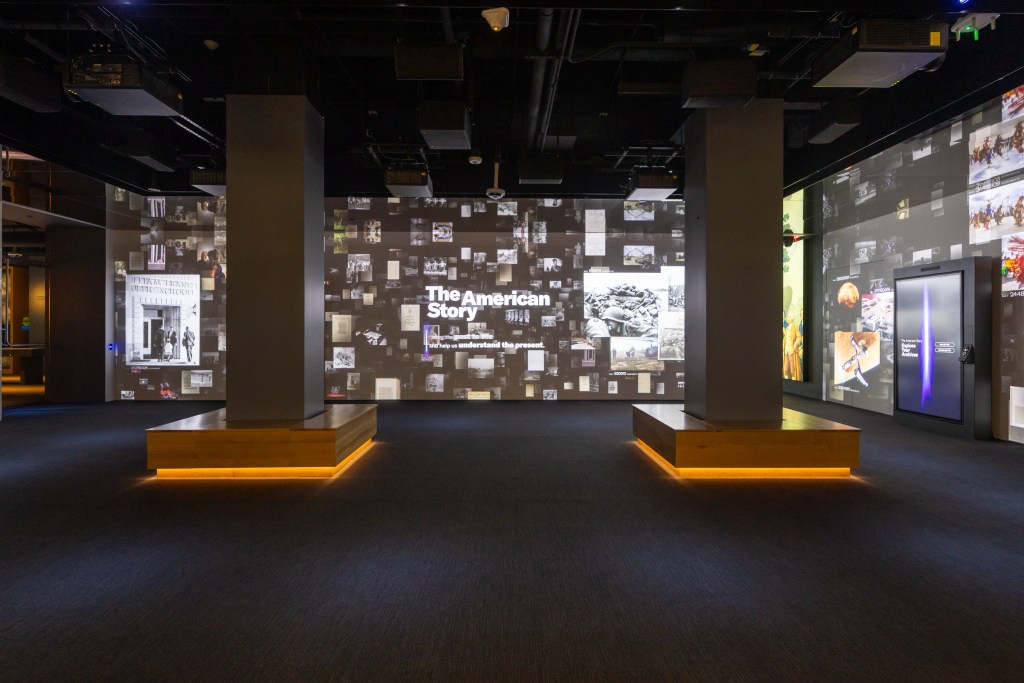
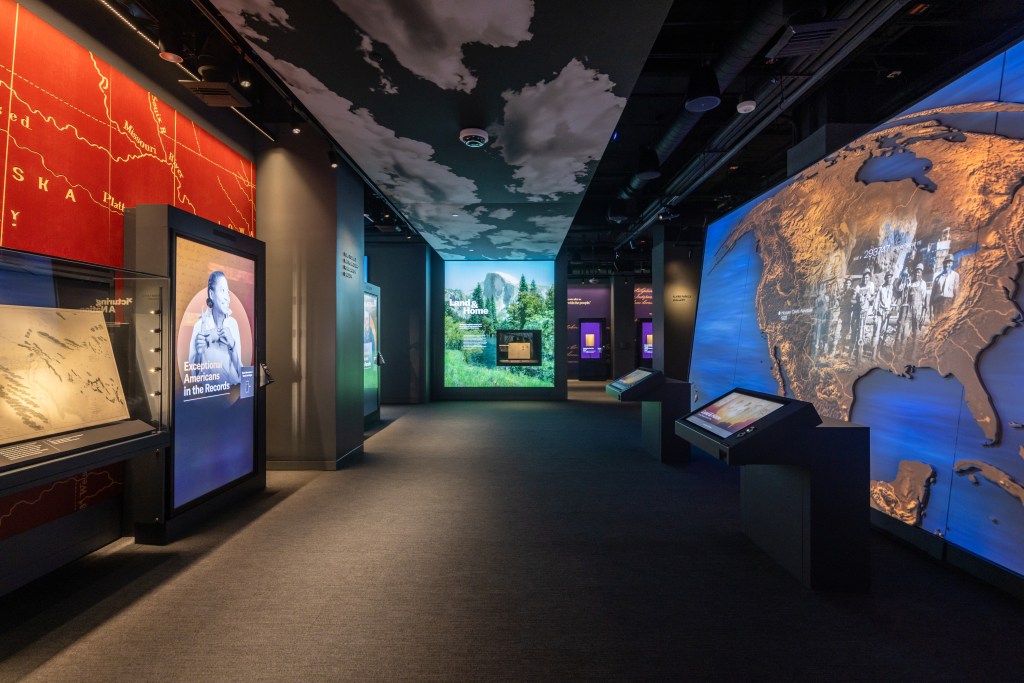
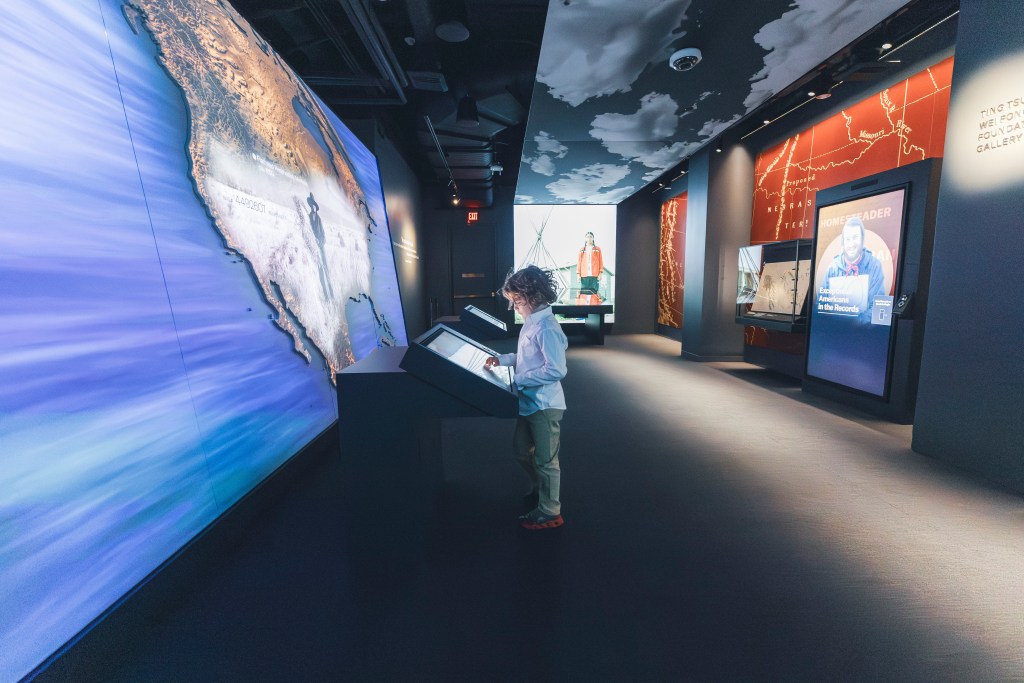
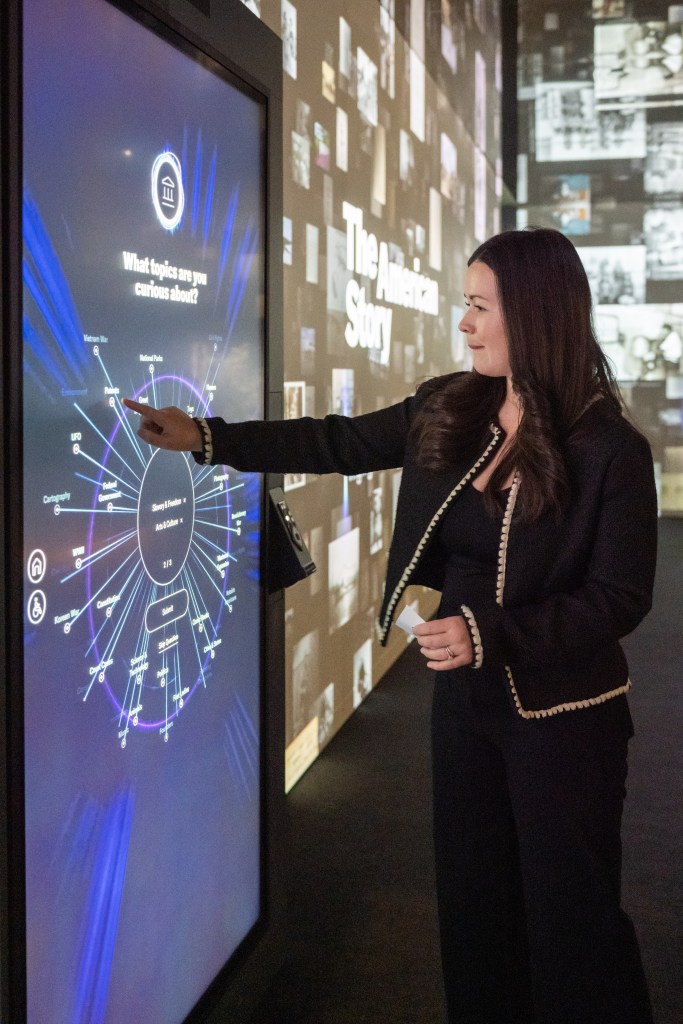
Welcome! You’re entering the Cosmos – the first gallery of the National Archives Museum’s new nine-gallery permanent exhibition, The American Story. The room is dark, featuring seven interactive portals, each with a growing light beam from a black screen. Thousands of records float up the walls into the mirrored ceiling, this awe-inspiring display captures the vastness of the National Archives holdings of over 13.5 billion paper documents and 30 billion electronic records.
How did this exhibit come to be?
Backstory
Since the historic National Archives Rotunda opened in 1952, tens of millions of visitors have flocked to the historic National Archives building in Washington, D.C. But from the beginning, the Archives Museum suffered from the “Mona Lisa Syndrome.” Everyone who visits the museum wanted to see the “iconic trio”—the Declaration of Independence, the U.S. Constitution, and the Bill of Rights—and leave. This syndrome persisted despite expanding the public museum experience with new permanent galleries, a temporary exhibition space, a learning center, and theater in the early 2000s,
In 2018, the National Archives leadership tackled the challenge again. How could we encourage curiosity in the rest of the National Archives’ holdings during the visitor experience? This wasn’t a fixer-upper. This was a complete reimagining of the 9,000 square foot permanent gallery space, which was led by exhibition designer C&G Partners.
Working in partnership with the National Archives, the National Archives Foundation team identified five goals for the project:
- Transform the visitor experience and make history more accessible and welcoming.
- Surprise visitors with subjects that connect to their personal interests.
- Humanize history with individual stories and show, rather than tell, how citizens interact with the U.S. government.
- Use media and technology to augment original record displays and entice all types of museum-goers.
- Allow visitors to explore their Archives findings at home afterward.
The National Archives has more than 750 million digitized records and objects. Using the archives’ online catalog is a daunting task even for the most experienced researcher due to the wide variety of metadata attached to each record. We quickly realized that artificial intelligence was a tremendous asset in making even a fraction of this information navigable by the public. Working with media and technology partner Cortina Productions, the Archives applied machine learning to two million digitized records, creating consistent, searchable tags that allow the system to recommend records based on each visitor’s evolving interests. The iterative review and testing of the new tags was a labor intensive effort by staff over months.
Getting Personal
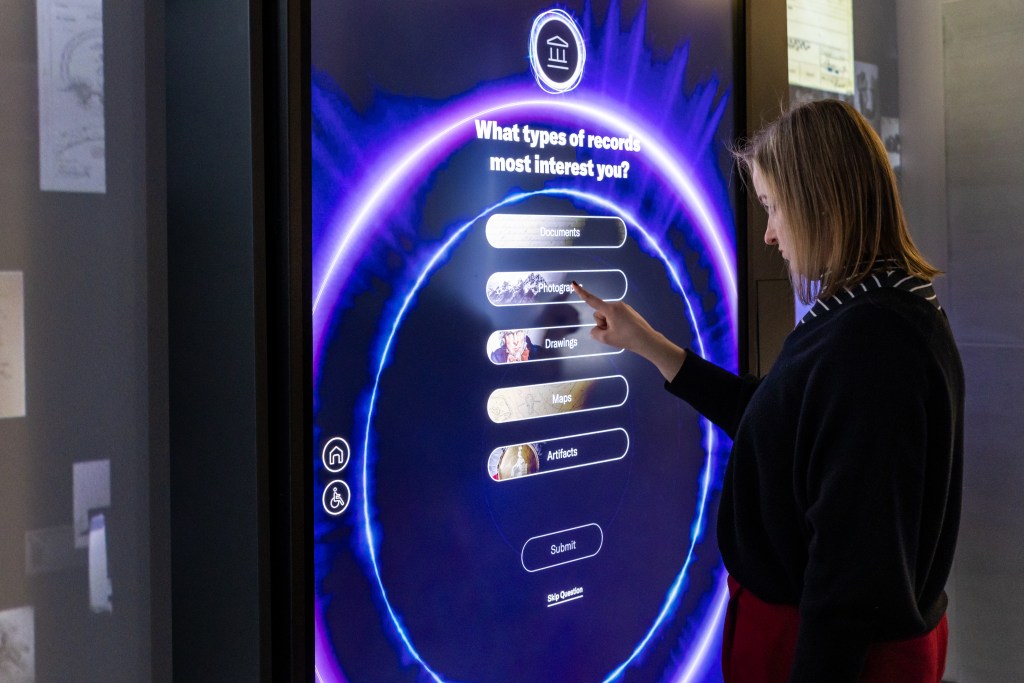
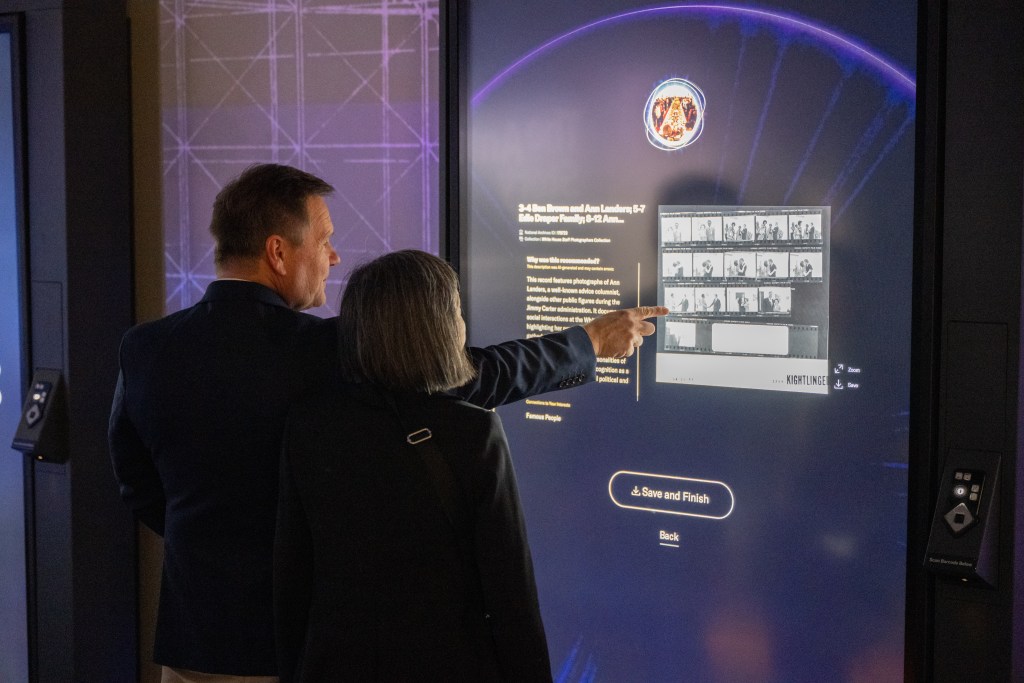
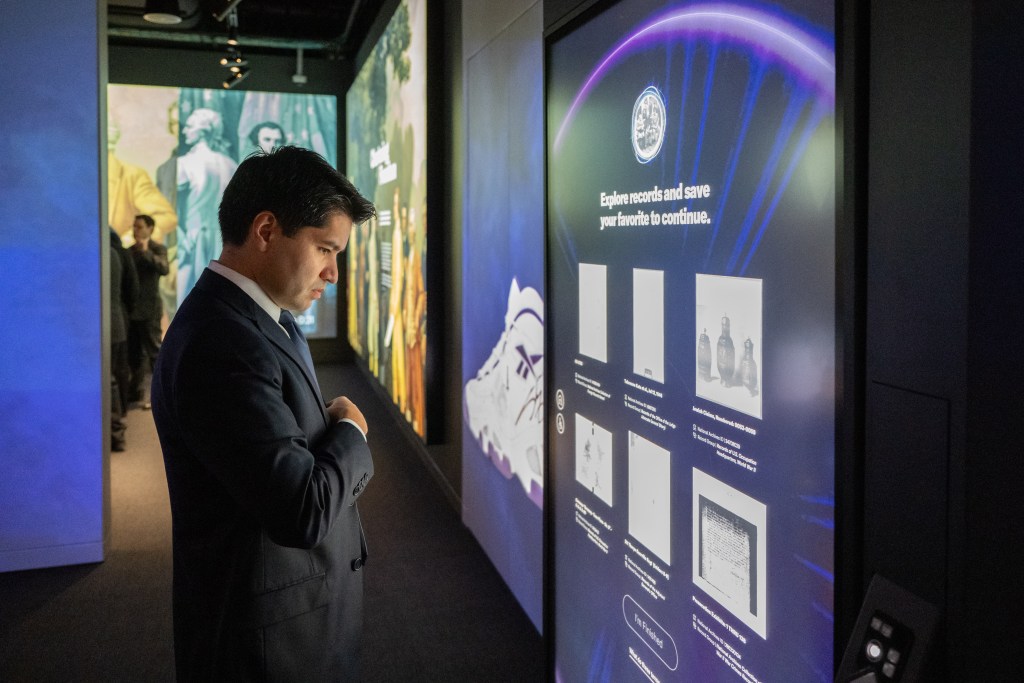
Let’s return to your visit. The Cosmos serves as the launch point to your AI-powered experience where you will personalize your museum visit by starting your profile and selecting three topics, from 65 options, and the types of records you’re most interested in. For the purposes of this imaginary visit, let’s have you select the topics railroads, space, and women’s rights, and the record types documents and photographs. This profile will follow you through the galleries, prompting the system to serve up content from the archives that connect with your interests.
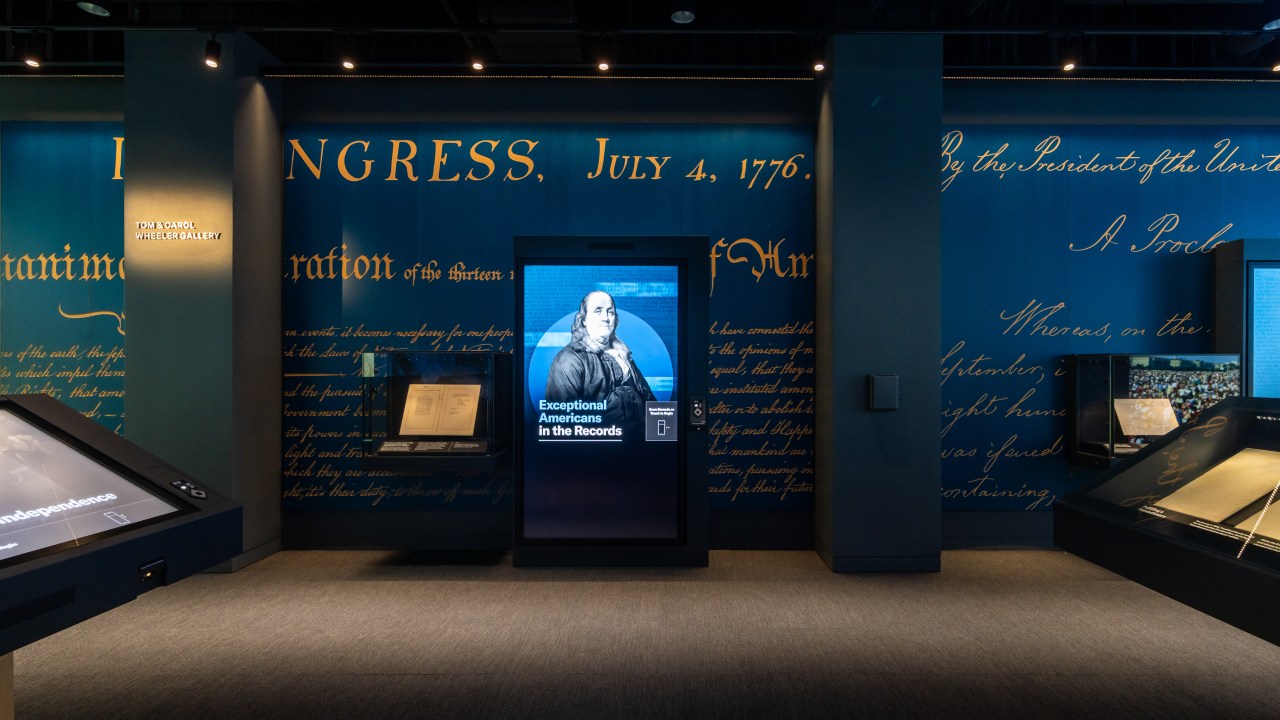
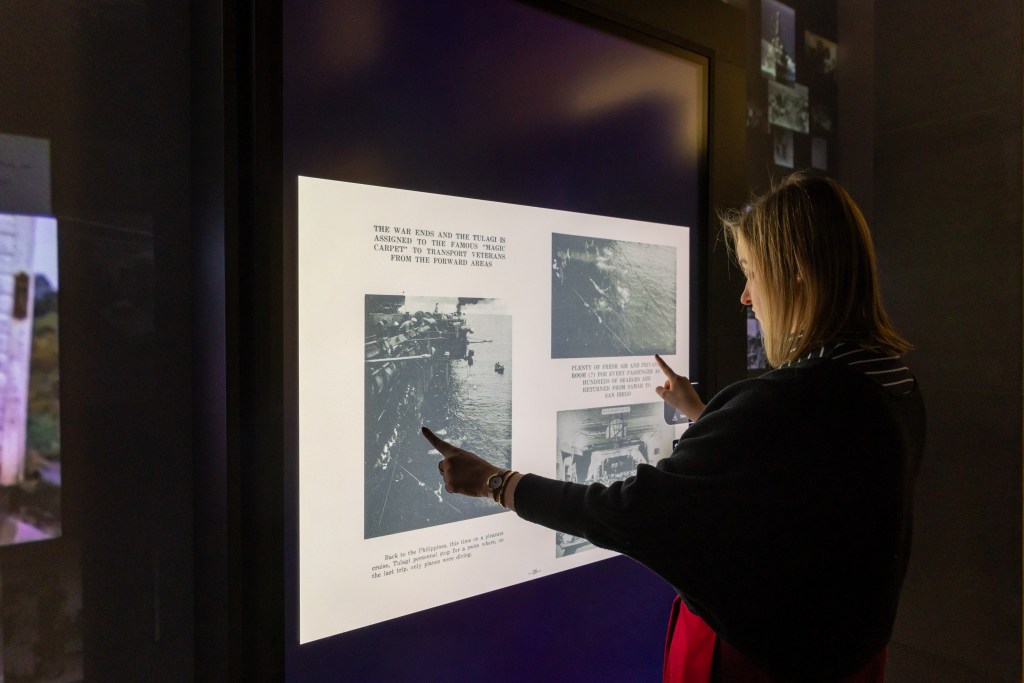
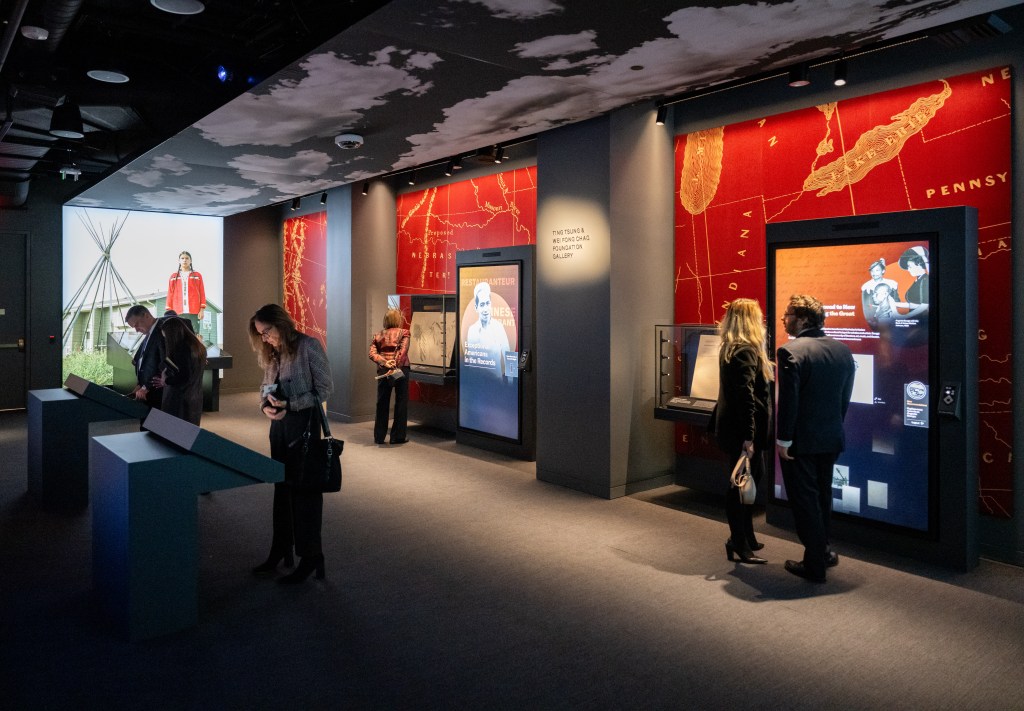
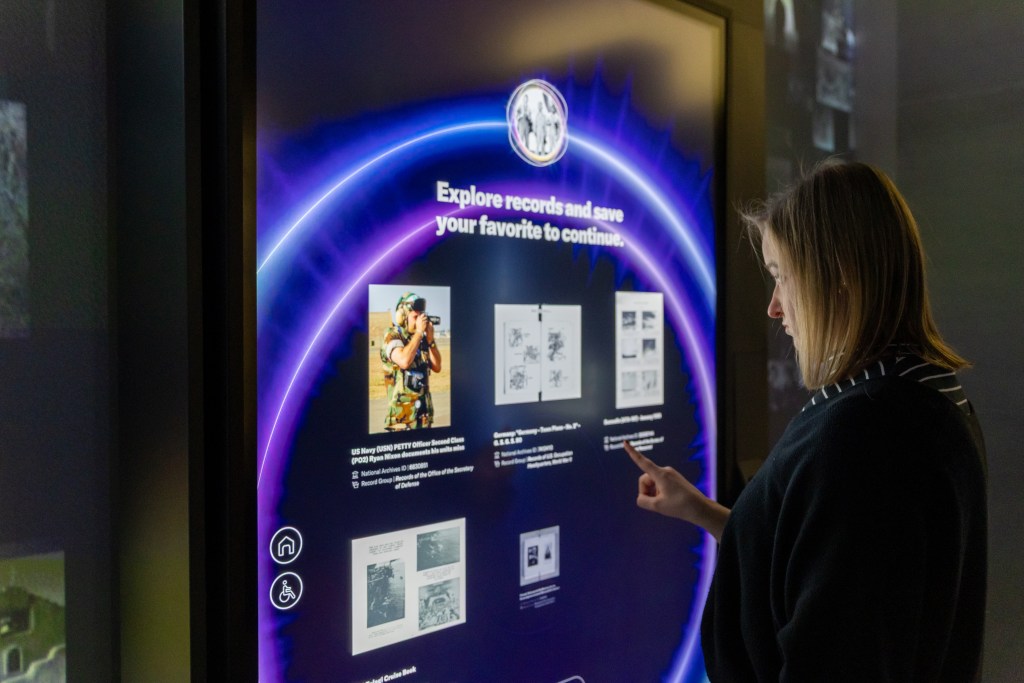
The galleries are thematic (e.g., westward expansion, branches of government, expansion of rights, innovation and the space race,) and highlight historic moments and periods of history. This approach showcases the strengths of the records held in the National Archives. As you move through the galleries and engage with the interactives there are three layers of content. The first two layers are curated: information about the original document in the case and records related to the document in front of you; and the third layer is created by machine learning, providing examples of personalized documents based on the subjects that you selected.
One prominent type of interactive in the galleries is a “phygital” – a physical document case next to a digital screen. Let’s say you stop to look at the Emancipation Proclamation. President Lincoln wrote it in script, but you can’t read nineteenth-century handwriting, so with one tap, you bring up a synchronized typeset transcription while still looking at the original document. Next you explore related documents, like the 13th Amendment or the Juneteenth Proclamation. Finally, you are presented with personalized recommendations based on your profile. You originally picked railroads, space, and women’s rights – now the system recommends documents and photographs that connect these themes to the Emancipation Proclamation and slavery. As you move through the galleries, your profile continues to learn and expand based on your interactions.
The fourth layer of the personalization system is post-visit. Every document you looked at during your visit is saved in a digital backpack which you can access through the museum website at home or on your phone using the barcode on your ticket. You can see every document again, share them on social or email, and come back to them over time.
Choppy Technology Waters
Not everyone on the staff of the National Archives was enthusiastic about taking such a technology-forward approach. Because the National Archives is a federal agency, the conversations extended well beyond the visitor experience and exhibition staff and regularly included legal, IT, security, and executive management. The agency experienced numerous changes in both leadership and staffing during the development of the project, which created challenges in the project’s planning and evolution.
There were many (!) meetings to discuss, prioritize, and debate policies surrounding the use of AI and its role in the exhibition.
Questions we had to address included:
- How should we handle personally identifiable information (PII)?
- Could we use facial recognition instead of a barcode on a ticket?
- How would minors and school groups use the personalization system?
- What options would be available for visitors who chose not to use the AI-powered experience?
- What was the environmental impact of operating the system?
- What aspects of the exhibit technology infrastructure would be housed in-house or in the cloud?
- What staffing, training, and budget would be needed to maintain the system over time?
These were not simply technology decisions. They were institutional decisions that touched on privacy, accessibility, security, operations, and public trust.
Takeaway: We Could Never Build A Museum Big Enough
Making the National Archives records more accessible to museum-goers and exposing them to this level of scale and range of content is only possible with the use of machine learning and drives new visitor exploration and curiosity. This may be true for other museums with large and complex holdings. And for any AI-sceptics reading this, we are proud to report that the new media-rich exhibition has more original records on display than the old analog exhibition – and the historic Rotunda has been untouched by AI. We now welcome all types of museum-goers from traditionalists to early adopters.
Patrick Madden is the Chief Executive Officer, National Archives Foundation

Upcoming Events
-
Industry Showcase: Innovative Digital Solutions
Event Date: -
Getting Started in Local Advocacy
Event Date:Presented by: American Association for State and Local History (AASLH) -
Creative Museums Summit
Event Date:Presented by: MuseumNext -
So…You Want a Museum Career? Part II
Event Date:Presented by: Southeastern Museums Conference