When asked why they don’t visit museums, many people point to a previous negative experience, often involving an interaction with staff enforcing museum rules. I have observed museum personnel enforce rules by snapping their fingers, yelling across a gallery, talking down to people, and then following visitors they perceive as rule breakers. This is not how we create a sense of belonging in museums.
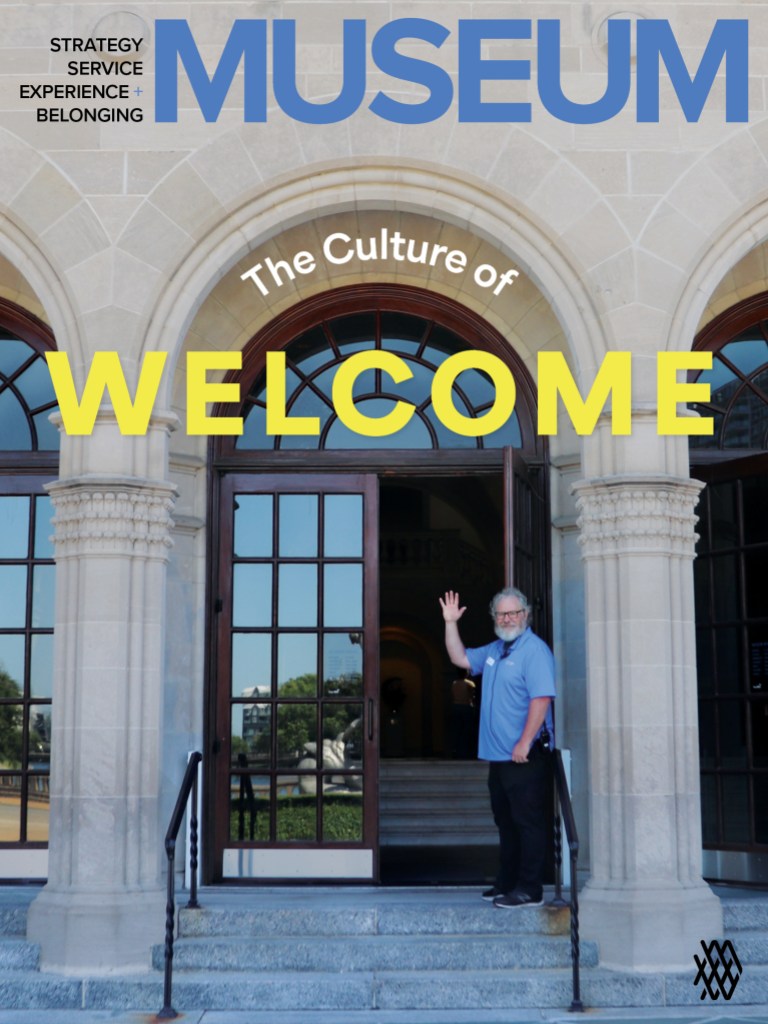
This article originally appeared in the Sept/Oct 2026 issue of Museum magazine, a benefit of AAM membership.
» Read Museum.
As museum professionals, we are responsible for the safety of thousands of priceless objects, and we take that responsibility very seriously. That said, we don’t have to sacrifice service to maintain that safety. We can create a welcoming environment while prioritizing the security of both objects and people.
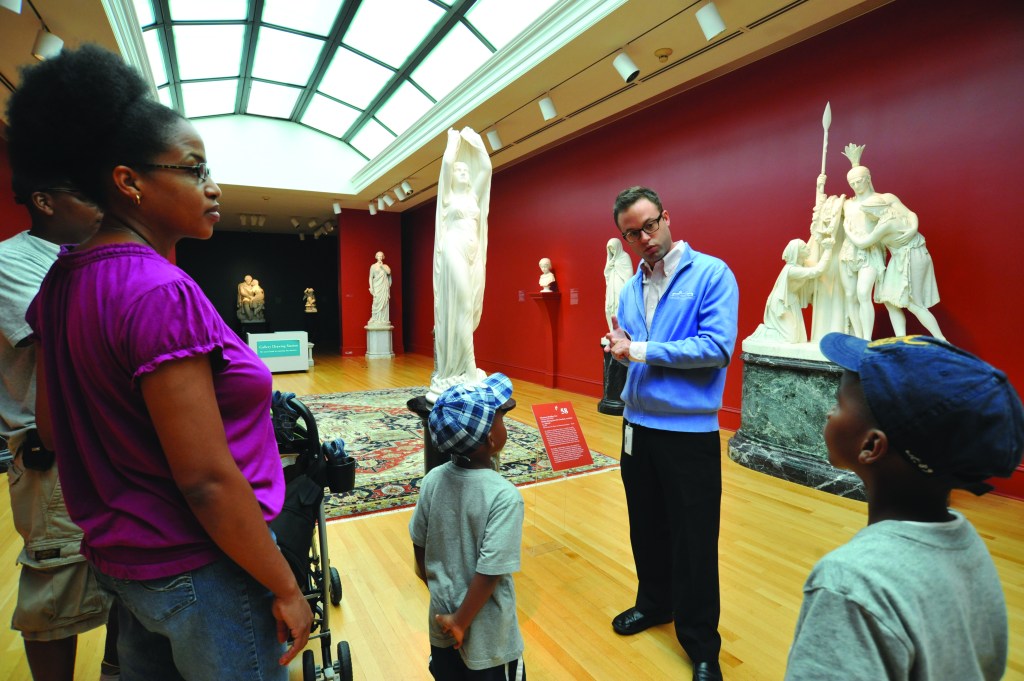
At the Chrysler Museum of Art in Norfolk, Virginia, we employ gallery hosts in our public spaces, part- and full-time paid staff. This role is a mix of security, service, and engagement. Gallery hosts make regular rounds through the museum, greeting visitors, answering questions, enforcing rules, observing visitor behavior, and engaging people in conversations about the art. They maintain the safety of our collection through positive interactions.
Rule Enforcement Do’s and Don’ts
It’s easy to underestimate the impact that rule enforcement can have. When I was a child, I spent every day at my local pool. I thought the lifeguards there were the coolest people I’d ever seen. I was a well-
behaved kid, but one day, I got excited and ran on the pool deck. Meg, the lifeguard, blew her whistle and yelled that no running was allowed.
That moment is still with me 40 years later. I was deeply embarrassed and sure that I had been labeled a troublemaker. Fast forward to the many years I spent as a lifeguard myself. I told hundreds of people to walk, not run. I realized that my embarrassing incident was likely not at all memorable to Meg, but it sure was to me.
Similar incidents can occur in a museum. A negative experience with rule enforcement could lead a visitor to think that they don’t belong and aren’t welcome, especially if they were then followed throughout their visit. We need to be aware that what is routine to us may not be to our visitors.
When someone breaks a rule, we should graciously assume it was a genuine mistake. We need to address the behavior because our policies exist for a reason, but we should not assume any ill intent. We are not trying to embarrass the visitor or prove our authority; we simply need to correct the mistake.
It’s important to approach the visitor, rather than yell across a room, and speak at a normal volume. There is no need to yell. During the conversation, maintain positive body language and tone of voice. Use concise language to share the rule and follow up with the reasoning behind the rule if necessary.
For example, if someone is touching an object, catches themselves as you approach, and demonstrates that they know the rule and just made an error, you do not need to give a lengthy explanation about why we ask visitors not to touch. That could be perceived as condescending. On the other hand, if they say it was a gentle touch and they are careful, you can take a moment to explain the damage that can be caused by the oils that are present even on very clean hands.
As another example, a mom with a toddler may have planned to occupy her little one with a steady stream of Cheerios throughout their visit. When she is told that isn’t permitted, she may assume that the rule exists to ensure she purchases food from the museum café. If you explain that the reason is to help prevent pests that can damage the museum collection, the visitor is more likely to understand and accept the restriction.
After explaining the rule, offer alternatives when possible. In the example above, if someone has food or drink where it isn’t permitted, you can tell them where they can finish their snack or offer a locker for them to store their items. If they aren’t permitted to carry their backpack, you may be able to check the bag for them or allow them to borrow a tote bag.
When someone is corrected, particularly as an adult, it can be embarrassing. To help alleviate this feeling, staff should continue the conversation after the correction. This can be as simple as sharing their own love for Cheerios, telling them they understand the temptation to touch a fuzzy object, or pointing out a fun detail about a nearby object. Asking “Are you enjoying your visit?” is a great default follow-up if nothing else comes to mind.
If the visitor doesn’t understand the policy, don’t simply repeat yourself. Try different wording or an alternate approach. For example, if you are enforcing a touching rule, and the visitor says they didn’t touch it, you could refocus the conversation on maintaining a safe distance from the object rather than debating whether contact occurred.
While the majority of visitor rule-breaking can be attributed to a lack of knowledge or simple mistakes, a small number of visitors do have ill intent or simply don’t listen. In these cases, a stronger approach is necessary. After a second interaction (or an adversarial first one), get a supervisor involved.
Sometimes, a supervisor simply walking by can make a big difference. The visitor realizes that the situation has been escalated and chooses to change their behavior or exit the museum. If needed, a supervisor can clearly repeat the expectations (still in a polite and positive way) and the consequences if the expectations are not met. Any escalation beyond that will be in collaboration with the behind-the-scenes security professionals.
Using Observation and Engagement
At the Chrysler Museum, we train staff to follow a simple framework we call GRACIOUS (see sidebar below), which emphasizes respectful, visitor-centered rule enforcement.
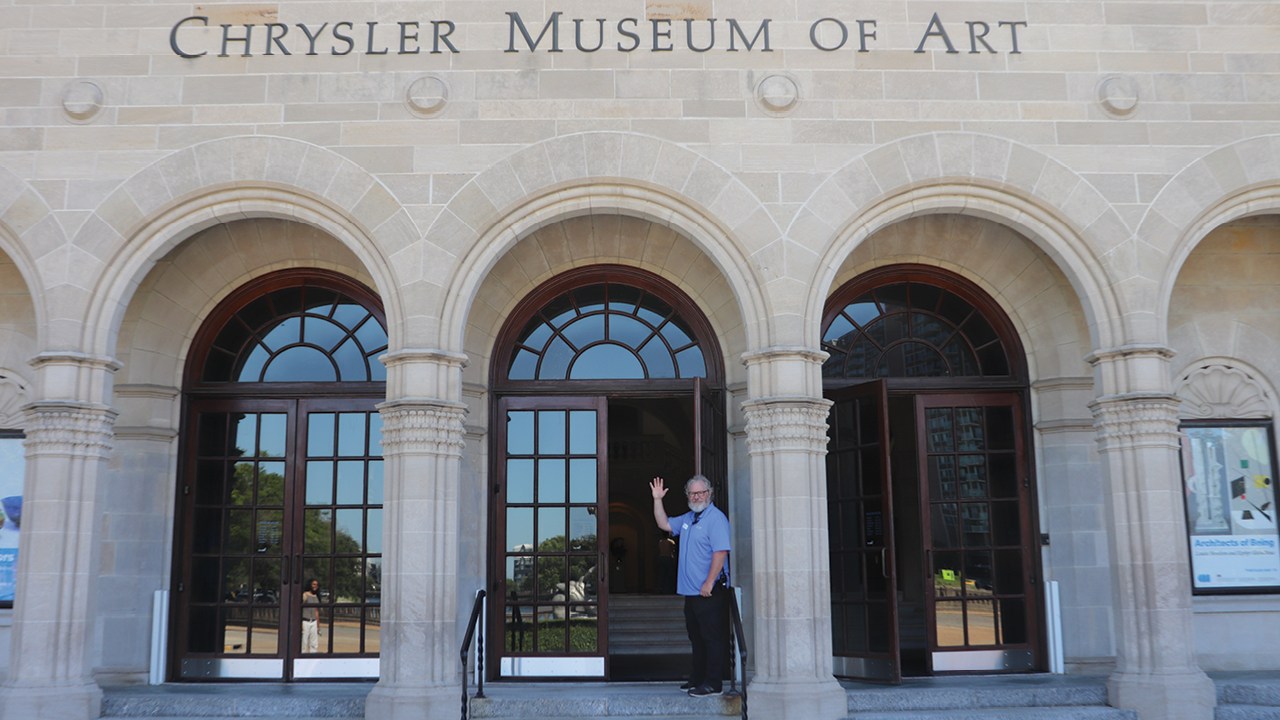
A visit to the Chrysler Museum of Art begins with a gallery host physically opening the door for each visitor. This genuine gesture of hospitality allows us to greet visitors, assures them they are welcome, and guides them to the welcome desk. It also gives staff a chance to quickly assess each visitor and note any behavior concerns, and it sends a clear message that you can’t enter the museum unnoticed.
Throughout their visit, visitors encounter gallery hosts on their rounds. Through these regular check-ins, staff make sure people are enjoying their visit and potentially enhance their experience by engaging in conversation about the art. By engaging with visitors regularly, staff establish a presence on the floor, build rapport, and recognize behaviors or situations that may require attention. On these rounds, gallery hosts are blending security with service.
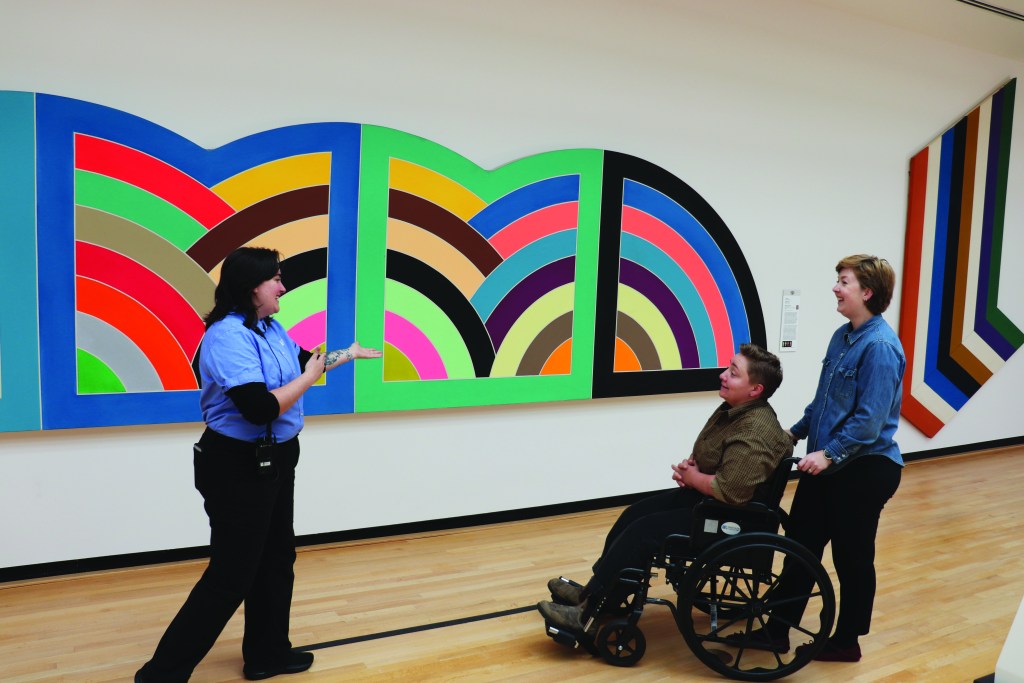
Museum visitors are unique, and our training takes this into account. Gallery hosts begin with a week of classroom training, followed by a few days of shadowing, and then weekly continuing learning sessions. Training focuses on warm customer service, including body language and tone of voice, engagement techniques, rule enforcement, emergency procedures, and information about the collection from each curator. Gallery hosts also learn how to provide personalized experiences, including serving people with disabilities, understanding and recognizing different motivations and preferences, welcoming the LGBTQ+ community, and much more.
Even across individual differences, there is a pattern to a museum visit. Our gallery hosts are trained to spot things that are out of the ordinary and then act on them. This might include someone who appears disoriented, is moving significantly faster or slower than other visitors, or is behaving in ways that warrant additional attention. Staff are also alert to a contractor or equipment where it shouldn’t be, or a visitor asking unusual questions or taking photos related to museum security.
Importantly, observation is not about treating visitors with suspicion. It is about being attentive and present. Staff who actively engage with visitors are often better positioned to recognize when someone needs assistance, when a misunderstanding is developing, or when a situation warrants additional attention from other staff.
Anything that strikes a staff member as odd is quickly and discreetly reported to management, who can observe and then engage with the visitor. Not all odd behavior is nefarious, of course. It may be a fellow museum professional asking security-related questions. I’m sure I’ve raised a few red flags over the years with photos I’ve taken in museums.
GRACIOUS Rule Enforcement
G—Goal: Always be mindful that your goal is not to embarrass the visitor.
R—Reach: Unless there is an emergency, wait until you reach the visitor before speaking.
A—Attitude: Maintain positive body language and a respectful tone of voice.
C—Concise: Be brief and use clear language to communicate.
I—Inform: Explain the reason behind museum policies when appropriate and offer alternatives when possible.
O—Original Engagement: Don’t walk away after addressing an infraction; try to engage with the visitor in a way natural to you.
U—Understanding: If the visitor doesn’t understand, try a different explanation.
S—Supervisor Support: If the visitor repeats the action or becomes argumentative, promptly involve a supervisor.
Critically, the team on the floor is collaborating with the security professionals behind the scenes. They are two sides of the same coin and need to work well together. If the frontline team is monitoring a specific visitor’s behavior, the behind-the-scenes team should pull up the corresponding camera to also monitor the visitor. Conversely, a security officer monitoring the cameras may notice a visitor’s behavior first and can alert the team on the floor.
In any conversation with a visitor, we remain friendly. Effective engagement supports both hospitality and security. The more connected staff are to visitors, the more likely they are to notice problems early, prevent issues before they escalate, and create an environment where people feel welcome and cared for.
The Power of Redirecting Behavior
We’ve all encountered rambunctious groups of young visitors. As they get excited, their conversations get louder, and their behavior is more likely to disturb other visitors. This can be frustrating for staff, and sometimes the impulse is to be very stern, yell, and tell the youngsters that they must immediately stop the behavior or they will be removed from the museum. While this approach may stop the behavior in the moment, it can leave young visitors with the impression that museums are places where fun is discouraged and mistakes are punished.
Alternatively, a staff member could gather the attention of the group by giving them interesting information about an object or asking them to find all the dragons (or similar) in the artwork in the room. The main goal was still accomplished: the group has calmed down. But they now have more focus through a positive interaction that redirected their energy.
Every interaction between staff and visitors communicates something about who belongs in a museum. When we enforce rules with respect, empathy, and clarity, we protect not only our collections but also the relationships that make museums meaningful.
Resources
Colleen Higginbotham, Creating Great Visitor Experiences: A Guide for Museum Professionals, American Alliance of Museums, 2022
Colleen Higginbotham is Deputy Director for Visitor Experience at the Chrysler Museum of Art in Norfolk, Virginia
Upcoming Events
-
-
Industry Showcase: Innovative Digital Solutions
Event Date: -
Getting Started in Local Advocacy
Event Date:Presented by: American Association for State and Local History (AASLH) -
Creative Museums Summit
Event Date:Presented by: MuseumNext