Most museum professionals can tell you exactly where visitor services sits on the organizational chart. Usually somewhere near the front entrance. Often operational. Sometimes overlooked.
But after more than 20 years working across heritage sites, museums, visitor attractions, and cultural organizations in both the UK and the United States, I’ve come to believe something much bigger: visitor services is not support work. It is strategic work.
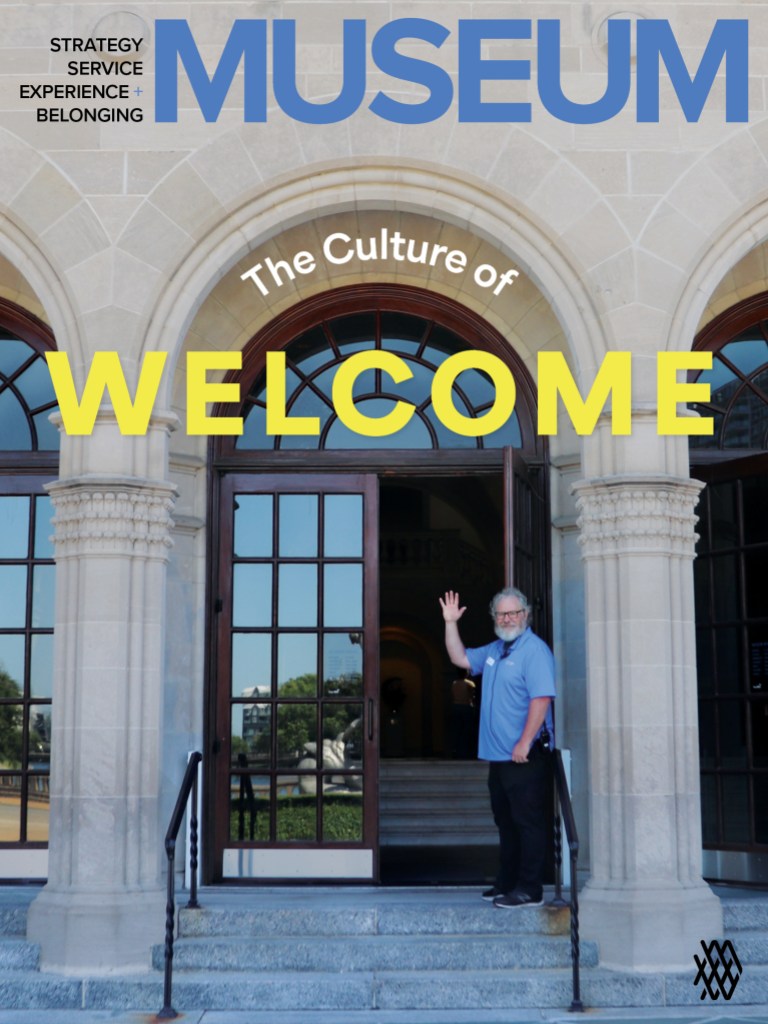
This article originally appeared in the Sept/Oct 2026 issue of Museum magazine, a benefit of AAM membership.
» Read Museum.
The reason is simple: participants experience museums horizontally, while most museums are organized vertically.
Participants do not experience curatorial, learning, facilities, retail, marketing, security, and visitor services as separate departments. They experience a single journey. They experience arrival, orientation, welcome, discovery, comfort, confusion, delight, frustration, and connection. The frontline sees this more clearly than anyone else.
You can spend years crafting a strategic plan, developing interpretation, fundraising for capital projects, and refining exhibitions. But if arrival feels confusing, staff appear disconnected, accessibility feels performative rather than practical, or people leave exhausted instead of energized, participants experience that organization, not the one described in board reports.
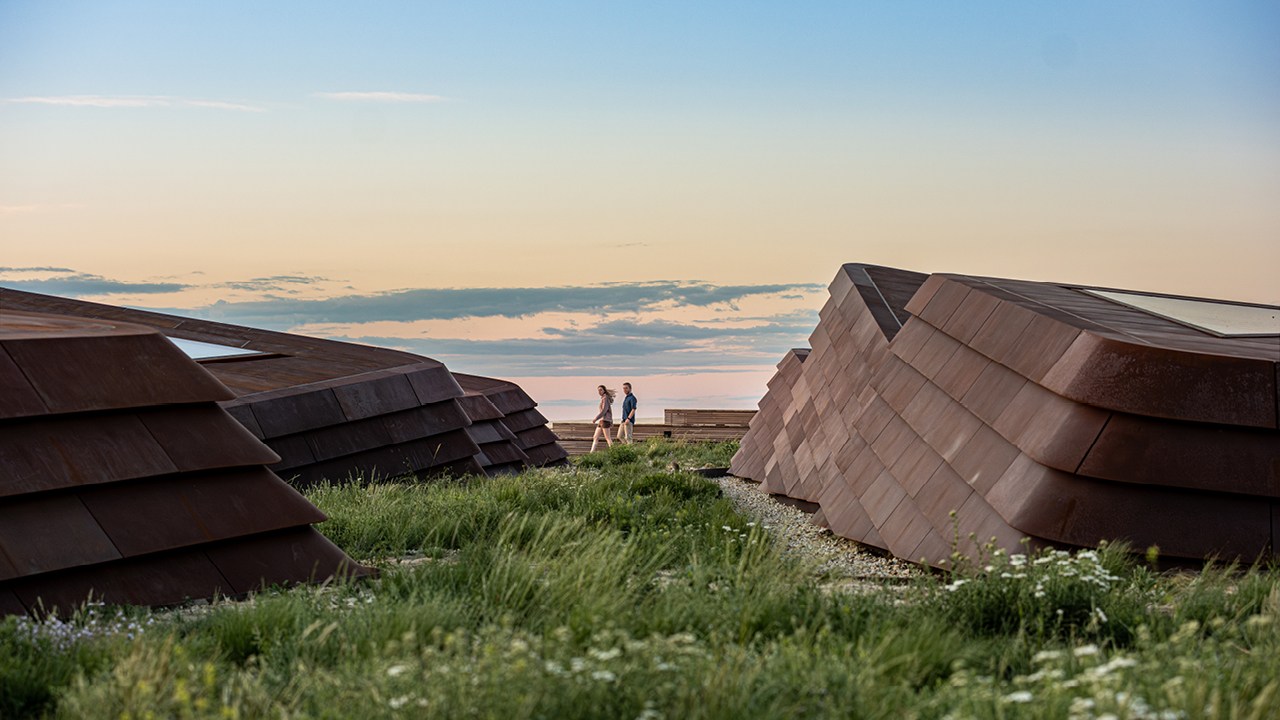
Increasingly, I have come to believe that participant experience is not something delivered by a department. It is something created by the entire organization. This is the approach we have taken at the newly opened Theodore Roosevelt Presidential Library (TRPL) in Medora, North Dakota.
The Library combines immersive exhibits, public programs, hospitality, retail, and dining with artifacts on loan from institutions including the American Museum of Natural History, the National Park Service, the Library of Congress, and other leading collections. While our participant experience team represents only a portion of our approximately 100-person staff, creating a successful participant journey depends on alignment across every department.
Tapping Into Frontline Knowledge
In many museums, frontline teams hold enormous institutional knowledge but very little organizational authority. They know where people consistently get lost. They know which interpretation sparks conversation and which gets ignored. They know when participants are anxious, overstimulated, embarrassed, confused, or delighted. They know which policies create friction. And they often know operational problems long before leadership does. Yet museums frequently treat this knowledge as anecdotal rather than strategic.
One of the biggest shifts in my own leadership thinking came during my years with the National Trust in the UK. I found myself spending less time thinking about individual attractions and more time on journeys, transitions, and the moments between the headline experiences. At properties ranging from historic houses to major landscapes, I saw often that participant experience is not created by one department. It is created by organizational alignment.
A beautifully interpreted exhibition can still fail if ticketing creates stress. A major donor event can still disappoint if parking collapses. An ambitious digital initiative can still alienate audiences if onboarding feels awkward or overly complicated.
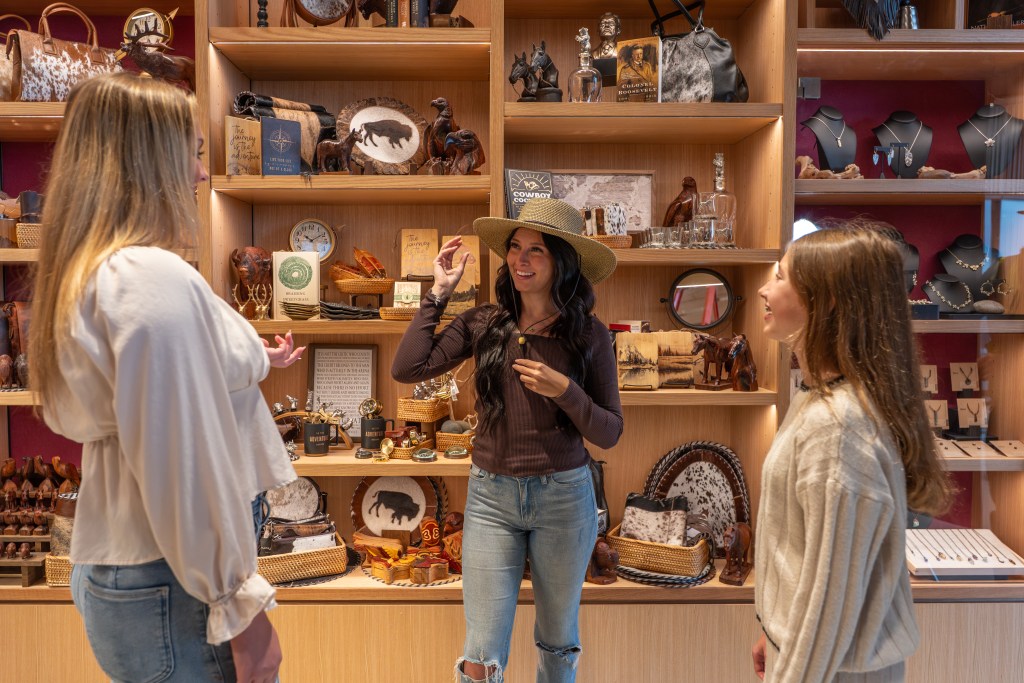
Participants do not experience departments. They experience flow. Curatorial, facilities, retail, security, learning, events, marketing, visitor services: participants move through all of them in a single visit. That sounds obvious, but operationally it is surprisingly difficult for organizations to achieve because museums are often structured vertically, by department.
The organizations that understand visitor flow tend to outperform others not simply in satisfaction scores, but in membership conversion, retail spend, repeat visitation, donor engagement, volunteer retention, and staff culture. Success comes from organizational alignment around the participant journey. Visitor services may see the journey most clearly, but they cannot deliver it alone.
One unexpected lesson from helping prepare a new museum for opening is that participant experience begins long before anyone arrives on-site. At TRPL, some of our most important conversations have had nothing to do with frontline staffing. They have involved everything from signage and accessibility to security screening, ticketing systems, exhibit flow, parking, food service, and volunteer roles. For example, we spent considerable time discussing not simply how security screening would function, but how it would feel. We wanted participants to feel welcomed and reassured rather than processed or scrutinized. None of these topics would typically appear in a museum strategic plan. Yet every one of them shapes how people feel when they arrive.
Visitor Services Is Not ‘Soft’
One of the most persistent misconceptions in museums is that visitor services is primarily emotional labor. In reality, participant experience teams manage an extraordinarily complex set of operational, human, and environmental factors. They manage throughput, conflict resolution, accessibility implementation, operational communication, behavioral observation, risk escalation, environmental conditions, crowd flow, and real-time problem solving.
At TRPL, our work includes timed-entry arrival modeling, accessibility pathways, operational signage, onboarding systems, queue management, VIP experiences, service recovery protocols, and frontline training frameworks. We partnered with a local disability advocacy organization to walk the site, review participant journeys, and help train staff ahead of opening. The goal was not simply compliance but creating an experience that feels genuinely welcoming and usable for all participants. That is not peripheral to strategy. That is strategy.
This is particularly true in a post-pandemic environment where many museums are facing pressure around attendance, earned revenue, staffing, and public trust. The organizations that thrive will not just have the strongest exhibitions. They will reduce friction, build emotional connection, and make participation feel both meaningful and manageable.
I’m not advocating scripting every interaction or manufacturing delight. But when museums can eliminate unnecessary friction, people can engage more deeply with the mission. People want clarity, warmth, competence, confidence, ease, and humanity. They want to feel that someone has thoughtfully considered what it actually feels like to arrive.
I sometimes worry museums hear the phrase “experience design” and immediately picture over-
scripted interactions or artificial cheerfulness. That is not what audiences want.
The Internal Culture Piece
Museum professionals occasionally speak as though scholarship and hospitality exist in tension with one another. I disagree completely. In fact, I think poor operational experience can actively undermine intellectual engagement. When people feel anxious, rushed, confused, physically uncomfortable, or socially uncertain, their cognitive bandwidth shrinks. They stop exploring. They stop lingering. They stop asking questions.
Good visitor services creates the conditions for deeper learning. This is especially important as museums attempt to welcome people who may not already feel culturally confident in these spaces. Many museum professionals underestimate how intimidating museums can feel. Where do I go? Am I allowed to sit here? Can I ask questions? Do I belong? Am I doing this “correctly”? Frontline teams navigate these invisible questions every day. Often, small operational decisions matter enormously. These include clear signage, visible staff presence, tone of welcome, simple wayfinding, accessible seating, nondefensive policies, reducing jargon, and explaining processes before people feel embarrassed asking.
At TRPL, participant testing revealed that even when signage was technically correct, some people were still uncertain about where to begin their experience. That insight led us to focus not only on directional signage but also on human wayfinding through volunteers and frontline staff positioned at key transition points.
There is another reason visitor services deserves strategic attention: frontline culture tends to reveal organizational culture with startling accuracy. This insight extends beyond wayfinding and touches the broader organizational culture that visitors encounter. If frontline teams are poorly informed, siloed, excluded from planning, or treated as operationally “less than,” participants feel it almost immediately. You cannot build a generous external culture on top of an anxious internal one.
One thing I have learned repeatedly in leadership roles is that participant experience improves dramatically when frontline staff understand the broader mission and feel trusted within it. At TRPL, we invested heavily in cross-functional onboarding ahead of opening—not simply because staff need technical information but because shared understanding creates better decision-making.
When teams understand why something matters, they adapt more intelligently in real time. That matters because museums are increasingly dynamic environments. A child overwhelmed by sensory input, a frustrated member, a technology failure five minutes before opening: frontline staff constantly navigate situations no standard operating plan can fully predict.
Strong participant experience teams do not simply follow procedures. They interpret organizational values operationally. That requires training, communication, and leadership investment.
Measuring What Actually Matters
Museums also need to better evaluate visitor services success. Too often, metrics focus narrowly on attendance or basic satisfaction surveys. But participant experience influences a much wider ecosystem: membership conversion, repeat visitation, retail and food service spend, dwell time, donor perception, social advocacy, volunteer retention, staff morale, accessibility trust, and institutional reputation,
among others.
Importantly, many of these outcomes are interconnected. People who feel emotionally connected stay longer. People who stay longer spend more. People who feel welcomed return. People who trust staff forgive operational hiccups more easily.
5 Lessons from Opening a Museum
- Participants experience museums horizontally. Most museums are organized vertically.
- Signage is never just signage. Good wayfinding is a form of hospitality.
- Accessibility works best when considered early, not added later.
- Frontline staff know more than leadership thinks they do.
- Every operational decision communicates something about your mission.
This is not about manipulation. It is about reducing friction so people can engage more deeply with the mission itself. Some of the most effective museums I have encountered are not necessarily the wealthiest or most technologically advanced. They are the ones where operations, interpretation, hospitality, and culture feel intentionally aligned. Participants can sense coherence.
Perhaps the biggest lesson I have learned is this: museums often design experiences around idealized behavior rather than actual human behavior. We assume people read every panel, understand every process, arrive emotionally regulated, feel physically comfortable, share our vocabulary, and understand institutional norms. But real people arrive tired, distracted, grieving, overstimulated, uncertain, excited, skeptical, wrangling children, managing mobility needs, or trying to fit a museum visit between other obligations.
Good visitor services acknowledges reality rather than resisting it. That does not diminish scholarship or rigor. If anything, it strengthens it because it makes engagement more possible.
I think museums are entering a period where operational empathy will become increasingly important. Audiences have higher expectations, more entertainment choices, and less patience for institutional friction.
At the same time, many museums are under financial pressure and stretched operationally. That means participant experience cannot sit only within one department. It must become organizational thinking. Not every museum can build immersive technology or major capital expansions. But every museum can ask:

- What does arrival feel like?
- Where does confusion happen?
- What invisible barriers exist?
- What are frontline teams telling us repeatedly?
- Does our operational reality actually reflect our mission?
Ultimately, participant experience is where mission becomes reality. It is where values become visible. It is where strategy stops being something written in a planning document and becomes something people actually feel.
When museums get it right, visitor services is no longer viewed as a function at the front door. It becomes one of the clearest expressions of mission, values, and institutional purpose.
Resources:
Will Guidara, Unreasonable Hospitality: The Remarkable Power of Giving People More than They Expect, 2022
Priya Parker, The Art of Gathering: How We Meet and Why It Matters, 2018
AAM Accessibility Resources
AAM Center for the Future of Museums
Future of StoryTelling (FoST)
Debbie Queen is Director of Participant Experience at the Theodore Roosevelt Presidential Library in Medora, North Dakota, which opened on July 4.
Upcoming Events
-
-
Industry Showcase: Innovative Digital Solutions
Event Date: -
Getting Started in Local Advocacy
Event Date:Presented by: American Association for State and Local History (AASLH) -
Creative Museums Summit
Event Date:Presented by: MuseumNext