This article first appeared in the journal Exhibition (Fall 2026) Vol. 45 No. 2 and is reproduced with permission.
In the post-COVID era, museum audiences bring more than just curiosity to our exhibitions.1 Many come already saturated by alerts, misinformation, polarized arguments, and the emotional residue of years of pandemic news. The World Health Organization describes “pandemic fatigue” as distress that can lead to demotivation to follow recommended protective behaviors. At the same time, an “infodemic” refers to the overabundance of information—accurate and inaccurate alike—that produces confusion, weakens trust, and complicates public response.2 For museums addressing public health, this creates a practical curatorial problem: How can an exhibition inform without further overloading visitors?
This article argues that “quiet reflection” should be understood not as an aesthetic preference, but as an interpretive strategy. In other words, quietness can be designed as a form of exhibition infrastructure: a way to reduce fatigue, redistribute attention, and return interpretive agency to visitors. The broader museum problem is not new: Benjamin Ives Gilman described “museum fatigue” more than a century ago, reminding us that excess display can impede attention rather than enrich it.3 Rather than trying to compete with digital media through louder screens and faster stimuli, exhibitions can offer another rhythm—one that encourages reading, comparison, memory, and contemplation.
This article explores Plague: How Was the Black Death Stopped?, a special exhibition organized by the National Cheng Kung University (NCKU) Museum in Tainan, Taiwan. On view from November 22, 2024, to February 11, 2025, the exhibition interpreted bubonic plague outbreaks in Taiwan during Japanese colonial rule from 1896 to 1917 through a Science, Technology, and Society (STS) lens. STS is an interdisciplinary approach that examines how social, political, and cultural contexts shape scientific knowledge and practices.4 The exhibition deliberately took a low-tech approach to these deadly epidemics, wagering that intentionally slowing visitors down could prompt deeper engagement. This idea was both simple and risky.
Subtractive Curation in a Repurposed Campus Residence
Plague was not presented in a neutral gallery, but in the repurposed Kun Yen House, a connected pair of former campus faculty residences completed in 1982 and renovated after 2020 into one public venue. Dr. Huang Kun-Yen (1933–2012) was the founding dean of NCKU’s College of Medicine and a physician-educator whose humanistic approach to medical training shaped the university’s medical culture. He was not personally connected to Taiwan’s colonial plague history; rather, the site’s resonance stemmed from its association with medical education, care, and campus memory. One side preserves Huang’s former kitchen and living room, while the other side held the plague exhibition on the ground floor (fig. 1).5
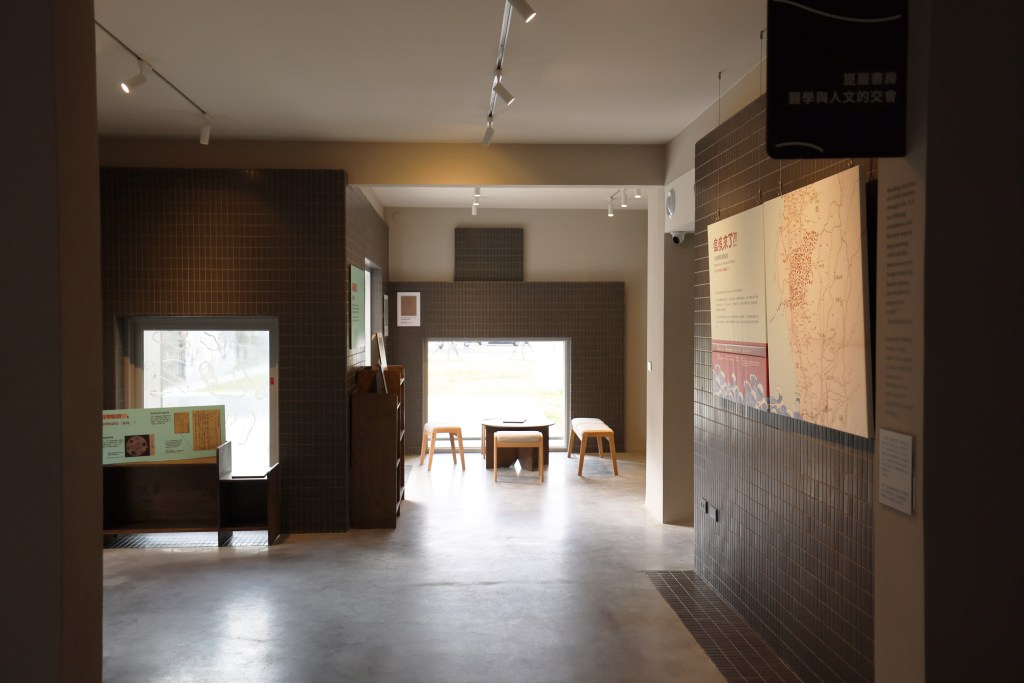
For precision, this article refers to the site as a “repurposed campus residence,” not as a “historic house.” That distinction matters because the curatorial method did not depend on a monumental house-museum aura or on Huang’s personal connection to plague. It emerged from adapting a lived-in, human-scale interior to a public health story.
The domestic scale of the residence shaped curatorial choices from the beginning. The entrance still reads as a living room; the circulation feels residential rather than institutional; and the smaller rooms resist the kinds of large immersive installations commonly used in contemporary exhibitions. Because the exhibition used only the ground floor on one side of the two-storyresidence complex, visitors moved through four connected domestic areas: the entry/living room, a study-like display room, adjacent reading and response corners, and the concluding area. The team therefore chose to “adapt to” rather than “transform” the site. Rather than becoming media-driven galleries, the rooms themselves became pacing devices, encouraging study, conversation, and quiet dwelling rather than spectacle.
The spatial sequence reinforced the argument. After a threshold introduction, visitors moved from outbreak and spread to scientific verification, social negotiation, and a concluding zone that asked what remained after plague besides mortality—institutions, infrastructures, and changed expectations about everyday hygiene. The exhibition posed this question first and answered it through the route, so each room functioned like a chapter rather than an all-at-once visual field. That progression replaced the familiar epidemic arc of “crisis solved by science” with a slower narrative of “crisis worked through by society.” The residential rooms made that shift tangible by separating phases of thought and response.
This use of the house also has implications for campus heritage and adaptive reuse. The project suggests that legacy buildings on university campuses need not be activated only through preservation rhetoric or event rentals. Reuse can itself be interpretive. In this case, the former residence did not simply host an exhibition; it participated in the exhibition’s epistemology. As a former domestic space, the home’s scale, flow, and natural light supported the argument that public health decisions enter homes, daily habits, and embodied life.
This curatorial logic may be described as subtractive curation. Archival documents, data visualizations, and facsimiles were placed beside books for browsing. Labels were intentionally brief. Seating was integral to interpretation, not merely a visitor service. The exhibition sequence did not ask visitors to keep up with projected loops or synchronized sound. Instead, it permitted stopping, rereading, and retracing. Subtraction, here, does not imply less thinking but rather fewer demands on attention so that more thinking could happen. The goal was not less interpretation, but a redistribution of interpretive labor.
Visitors today are burdened not only by physical overload but also by digital acceleration. In this sense, subtractive curation is not anti-technology; it is anti-friction. It asks which interpretive elements support understanding and which increase cognitive drag.
Slow Museology and Mixed-Age Audiences
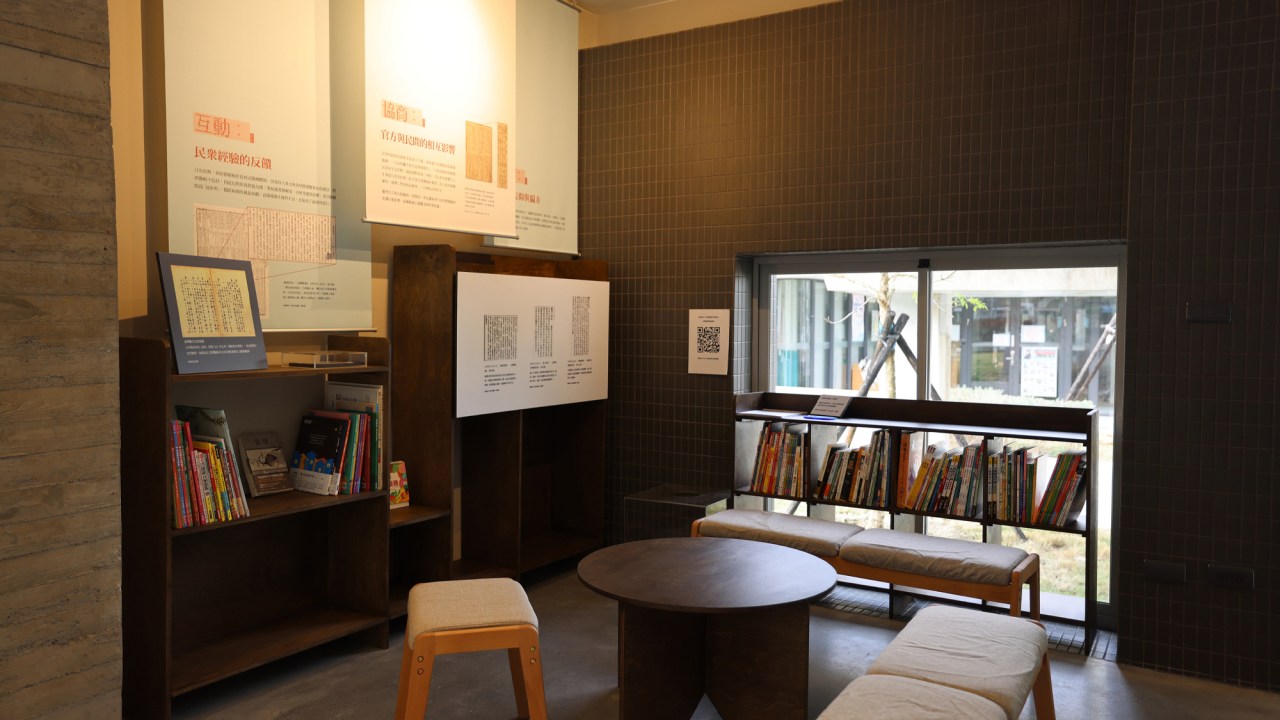
The repurposed residence also made possible a practical alignment with “slow museology.” Researchers Nicola Wallis and Kate Noble describe the museum as a nurturing environment that can offer affordances of time, connection, and exploration, especially for children and families.6 Plague adapted this insight in concrete ways: preserving natural light, positioning chairs to invite lingering, and placing children’s picture books in the space. These were not decorative touches. They were part of the exhibition’s pacing.
The residence, not the main NCKU Museum building, sits near NCKU’s nonprofit kindergarten for employees’ children and in a campus district used by students, faculty, staff families, and neighbors. Staff also observed parents or caregivers entering with children after kindergarten pickup or while passing through campus. Recognizing children as expected rather than accidental visitors softened a heavy subject without trivializing it. Seating and picture books let families sit, read, and pause; adults could move between archival materials and reflection without feeling rushed, while children could enter the exhibition’s atmosphere without following its historical argument. Quietness thus became hospitable rather than solemn. Because no separate family interviews or questionnaires were conducted, this family-audience point rests on venue context and gallery observation.
Public health exhibitions can reproduce the urgency of crisis communication, becoming dense, didactic, and emotionally pressurized. The NCKU exhibition’s slow format worked against this pressure, allowing visitors to dwell with uncertainty rather than demonstrate immediate comprehension—a condition for understanding how epidemic knowledge itself is made.
An STS Frame for Colonial-Era Plague in Taiwan
The exhibition focused on bubonic plague outbreaks during Japanese colonial rule in Taiwan. Japan governed Taiwan from 1895 to 1945, and the period from 1896 to 1917 was especially significant for the emergence of modern public health governance on the island. Drawing on the author’s prior research on science communication and STS-informed curation, the exhibition treated this period as more than a sequence of medical events.7 Taiwan CDC’s summary further situates the epidemic with reported first cases in 1896 and especially severe outbreaks in 1901 and 1904.8 Yet the curatorial aim was not simply to narrate the rise of successful disease control. It was to complicate the assumption that epidemic history can be told as a straightforward story of scientific progress.
STS examines how scientific knowledge and technology are shaped by social, cultural, and political contexts rather than standing apart from them. For that reason, the exhibition drew on physician and biologist Ludwik Fleck’s concept of the “thought collective.” Fleck argued that scientific facts do not emerge in a vacuum; they are shaped within social groups sharing particular styles of reasoning and standards of evidence.9 This concept was crucial because it allowed the exhibition to move away from the question, “What did science discover?” toward the more difficult question, “How did certain interpretations become accepted as fact?”
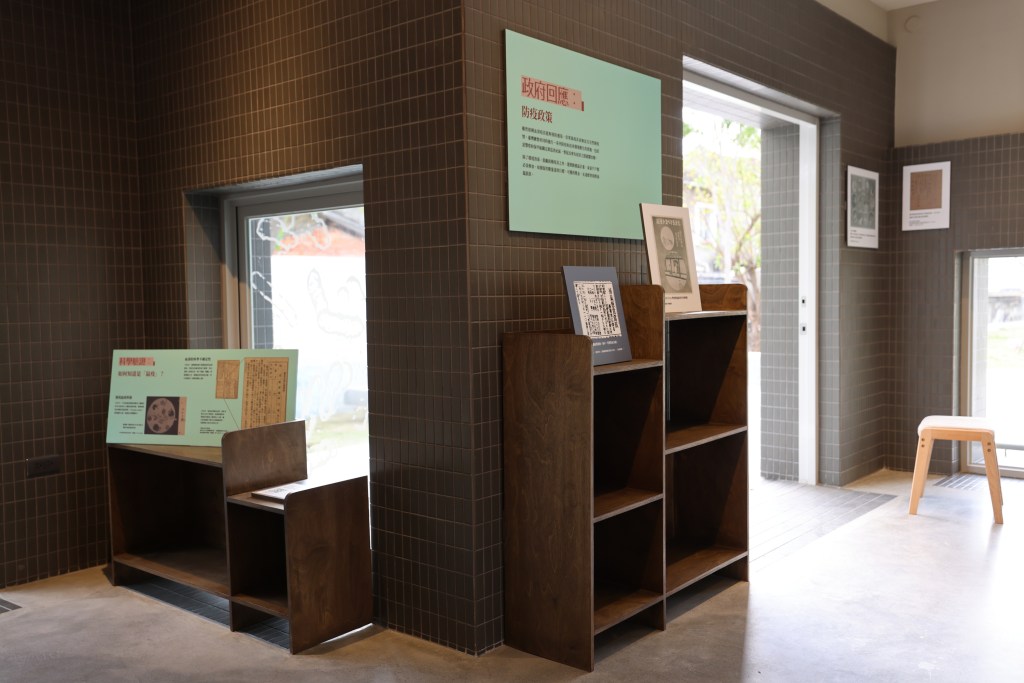
In exhibition form, this STS approach relied on juxtaposition. One area of the exhibition presented biomedical perspectives: disease-spread mapping, bacteriological imagery, and explanations of transmission. Another focused on governance: quarantine rules, rat-catching policies, sanitation campaigns, and official records. These were placed alongside material that conveyed local responses—fear, rumor, folk explanation, resistance to medical intervention, and everyday uncertainty—so that visitors could encounter competing interpretations rather than a single authorized narrative (fig. 2).
The point was not to relativize all knowledge claims into sameness but to show that public health knowledge became actionable only through negotiation among authorities, experts, and the public. Rather than asking visitors to master STS vocabulary first, the exhibition invited them to notice how evidence became persuasive in practice.
Rat control and quarantine are useful examples. From an administrative perspective, these measures were rational within a bacteriological framework. For many residents, however, they could mean surveillance, stigma, forced compliance, and government intrusion into domestic life. By placing official and vernacular materials side by side, the exhibition made visible a tension that often disappears in retrospective histories: the gap between technical justification and lived reception. For post-COVID readers, this gap may carry contemporary resonance. Many may recognize from recent experience how official public health measures can be interpreted differently across governments, communities, families, and individuals. The exhibition did not need explicit comparisons; the juxtaposition itself created space for recognition.
A Hinge Object: Takagi Tomoe and Public Health Modernization
The exhibition’s most resonant object was the bronze bust of Takagi Tomoe placed near the conclusion of the visitor route. Takagi Tomoe (1858–1943) was a Japanese physician and public health administrator who came to Taiwan in 1902 amid bubonic plague outbreaks and became associated with plague control, sanitation reform, and medical training. Made in 1929 by Huang Tu-shui, a pioneering Taiwanese modern sculptor, the bust mattered both as a portrait of a public health figure and as a work within Taiwan’s modern art history; it is also among the relatively few known Huang Tu-shui works preserved in Taiwan.10
News coverage surrounding the Huang Tu-shui bust underscores the object’s later cultural and historical significance.11 Within the exhibition, however, the bust did more than illustrate biography; it functioned as a narrative hinge.
The bust helped shift the story from plague as a disease event to plague as a turning point in public health modernization. Instead of connoting plague only with medical backwardness, visitors could see it as a catalyst for sanitary reform, institutional development, and changed understandings of hygiene. The bust, therefore, bridged “epidemic disaster” with questions of memory, governance, and transformation.
This object also clarified a broader curatorial principle. Complex ideas often become legible not through explanatory texts alone, but through strategically placed objects that embody relationships otherwise requiring extended explanation. Here, the bust brought several ideas into view at once: colonial medicine, state power, commemoration, institutional reform, and the afterlife of epidemic knowledge. The point is not that objects automatically communicate theory; rather, a carefully positioned object can make layered relationships available for reflection without requiring long explanatory panels.
Visitor Feedback and the Limits of Quiet
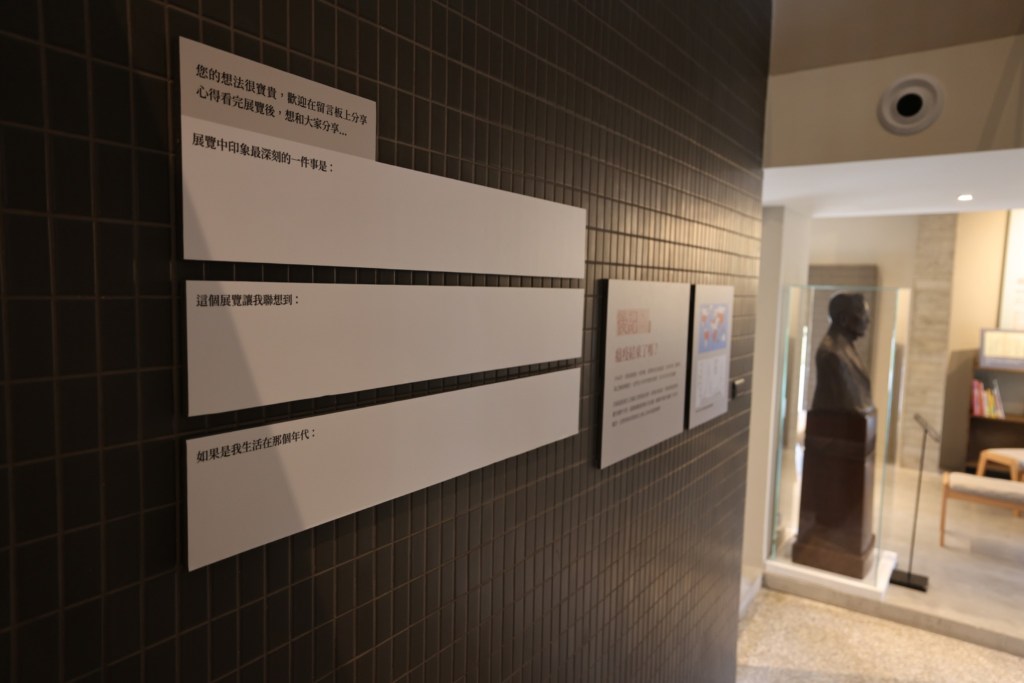
Evaluation was designed to match the exhibition’s low-pressure rhythm. A reflection station invited responses to three prompts: What was most impressive? What did the exhibition remind you of? How might you have reacted if you lived in that era? The exhibition received approximately 1,000 visitors, and about 80 people participated in guided tours or volunteer training. Written survey responses, however, were very limited: only five usable questionnaire responses were returned. The observations below, therefore, are curatorial reflections supported by a small set of visitor comments and gallery observations, not statistically generalizable audience research.12
For post-COVID readers, the juxtaposition of official measures and lived reception may resonate with recent experiences of public health regulation, changing social norms, and debates over responsible behavior. In the small written sample, however, visitors did not name COVID-19 directly. They instead connected the exhibition to contemporary public health more broadly. One response named influenza as the modern issue that came to mind;13 another condensed the exhibition’s relevance into the phrase “public health.”14 These brief comments suggest that the historical materials did not remain sealed in the past, but became a way of thinking about present-day public health concerns.
A second response was affective rather than analytic. One visitor described the exhibition setting as “very warm,”15 while supplementary reflective feedback imagined plague-era society as “full of panic and despair” and daily life as “full of unease and fear.”16 Though limited, these comments suggest how empathetic historical imagination could move the exhibition beyond retrospective certainty toward lived historical complexity, and why the setting needed to hold severity without sensationalism.
One key lesson of the exhibition is that quietness can create interpretive time, but it does not automatically provide interpretive scaffolding. In the small written sample, four of the five respondents selected the final section—on how scientific facts are shaped by social and cultural conditions—as the most difficult to understand. One respondent wrote that the display method “did not help me understand the content better,”17 and another described the content as “too difficult.”18 These responses suggest that visitors could follow the historical narrative more readily than the STS concept of the thought collective: even when they responded to objects, maps, and epidemic history, the abstract philosophical layer did not translate quickly through text panels alone. Quiet needs bridges (fig. 3).
Designing Quiet Bridges
The exhibition also clarified several ways the quiet format could be strengthened without sacrificing atmosphere. Rather than a checklist of visitor requests, these suggestions synthesize the small written sample, gallery observation, supplementary reflective feedback, and discussion after the Takagi Tomoe public program. Low-noise additions might include silent animation, flip panels, layered-reveal panels, a sticky-note response wall, a simple microscope station, and short documentary comparisons. Taken together, these additional strategies suggest a transferable curatorial methodology for difficult exhibitions in low-noise environments.
The first part of that methodology is silent conceptual priming. A short, optional, silent animation at the entrance or in a side corner could have introduced plague transmission and the social response in two or three minutes. Because it would be optional and silent, it would not break the exhibition’s atmosphere. Still, it could serve as a conceptual threshold before confronting archival complexity.
The second part is analog interaction. If an exhibition deliberately avoids dense audiovisual media, it cannot rely solely on texts to carry theoretical weight. Physical flip panels, layered drawers, comparison cards, or sorting prompts can help visitors think through distinctions in tactile ways beyond what passive reading can do. A small participatory wall asking visitors which actors shaped “plague truth”—government, experts, communities, or all of them—could help to visualize the STS question in a low-tech way.
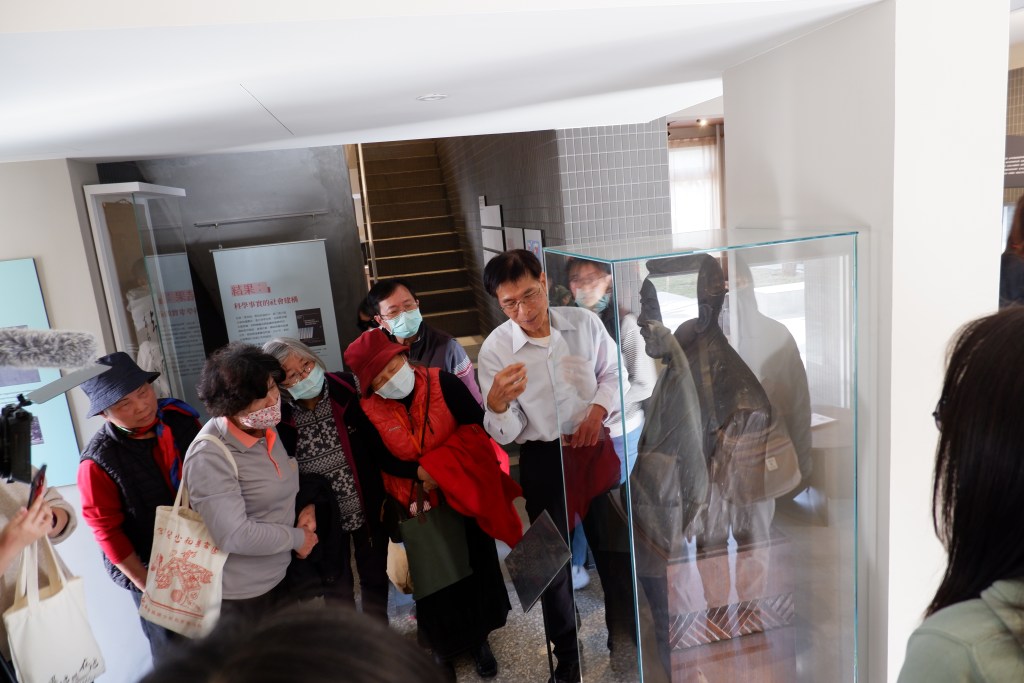
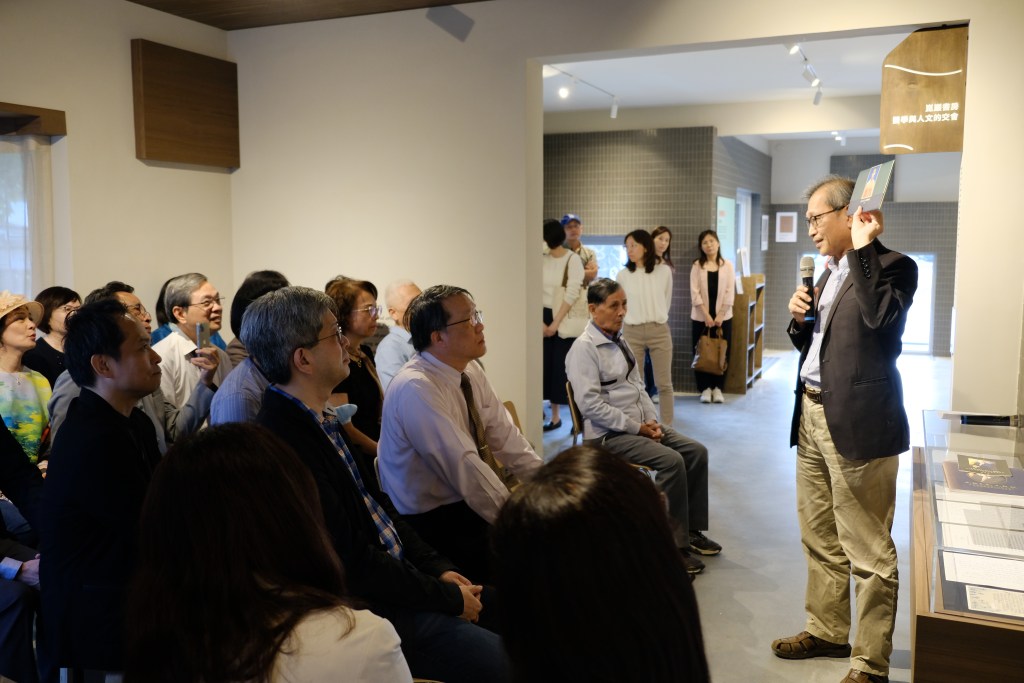
The third part is human mediation. The public program on Takagi Tomoe and public health history suggested that guided oral interpretation can help audiences connect object, history, and concept more effectively than text panels alone (fig. 4). The opening gathering likewise showed that the preserved living-room side could serve as a shared forum for listening within the exhibition (fig. 5). Quiet exhibitions do not need more noise; sometimes they need more human interfaces.
Though the available responses support it only indirectly, there is a methodological lesson here for university museums: visitor response to theory may be nonlinear. Objects, atmosphere, and pacing may first generate emotional or historical recognition; conceptual naming may come later. Four of five respondents nevertheless identified the final STS section as the most difficult to understand. Evaluation should therefore ask not only whether visitors can repeat theoretical vocabulary, but whether they begin to notice relationships —between evidence and authority, between fear and policy, between expertise and everyday life— that the theory illuminates. The children’s reading corner and seating area are discussed as curatorial design choices rather than measured outcomes: located near NCKU’s nonprofit kindergarten for employees’ children, they were intended to offer young visitors and caregivers a quieter point of pause within the exhibition’s slower rhythm (intro image).
Conclusion: A Transferable Module for a Noisy Age
Plague: How Was the Black Death Stopped? proposes that in an age of information fatigue, museums can use subtractive curation to create reflective conditions for difficult subjects and that these conditions must be paired with carefully designed interpretive bridges if abstract ideas are to become legible.
This case study matters beyond Taiwan’s public health history: museums working on climate anxiety, war, contested memory, vaccine politics, or other high-noise topics may assume they must compete with mass media through intensity, but the NCKU exhibition suggests another route—domestic scale, slowed pacing, restrained interpretation, and an STS-informed narrative paired with quiet scaffolds that connect evidence to concept.
For colleagues seeking to adapt this model, Plague suggests four practical moves:
- Match form to emotional temperature. Ask what visitors are carrying —fatigue, grief, confusion, or distrust— and design the exhibition rhythm accordingly.
- Use scale as interpretation. Small rooms, seating, natural light, and opportunities to reread can signal that visitors are allowed to slow down and think.
- Juxtapose expert and everyday knowledge claims. Place policy, scientific explanation, local response, rumor, and lived consequence in relation so visitors can see how public knowledge becomes persuasive, contested, and actionable.
- Build quiet bridges to abstract ideas. Silent animations, analog sorting tasks, guided conversations, and hinge objects can help visitors move from historical recognition to conceptual understanding.
In a noisy age, these moves may help museums become distinct public spaces for thinking with history rather than ever-so-slightly quieter versions of the news cycle. Museums do not always need to speak louder to be heard; sometimes the more effective intervention is to lower the volume, arrange the room carefully, and let visitors do the difficult work of thinking.
Chia-Hsin Chen is an Associate Research Fellow and Chief of Promotion at National Cheng Kung University Museum in Tainan, Taiwan.
- This article was copyedited for English language usage with assistance from an AI language model. The ideas, arguments, curatorial experience, and empirical materials are the author’s own. ↩︎
- “Pandemic fatigue: reinvigorating the public to prevent COVID-19: policy framework for supporting pandemic prevention and management: revised version November 2020,” World Health Organization, Regional Office for Europe, December 10, 2020; “Infodemic,” World Health Organization, accessed March 16, 2026. ↩︎
- Benjamin Ives Gilman, “Museum Fatigue,” The Scientific Monthly 2, no. 1 (1916): 62–74. ↩︎
- Plague: How Was the Black Death Stopped?, exhibition notice, National Cheng Kung University Museum, accessed March 16, 2026. ↩︎
- “Two-Side House: Renovation of the Huang Kun-Yan Residence,” Archi-tec, 2024, accessed July 19, 2026. ↩︎
- Nicola Wallis and Kate Noble, “The slow museum: the affordances of a university art museum as a nurturing and caring space for young children and their families,” Museum Management and Curatorship 39 (November 2024). ↩︎
- Chia-Hsin Chen, “Curating as STS-in-Practice: Exhibition Design and Knowledge Translation in NCKU Museum’s Plague: How Was the Black Death Stopped?,” Technology Museum Review 29, no. 4 (2025): 19–43; Chia-Hsin Chen, “以醫療史進行科學溝通:以日治初期鼠疫為案例 (1896–1917),” in 成為臺灣的我們, ed. 徐珊惠, gen. ed. 陳玉女 (成大出版社, 2025); Plague: How Was the Black Death Stopped?, exhibition notice. ↩︎
- “Plague,” Taiwan Centers for Disease Control, accessed March 16, 2026. ↩︎
- Ludwik Fleck, Genesis and Development of a Scientific Fact, trans. Frederick Bradley and Thaddeus J. Trenn (University of Chicago Press, 1979). ↩︎
- Lin Tsuei-yi and Sherry Hsiao, “School receives bust by Huang Tu-shui,” Taipei Times, April 27, 2018; Tseng Wei-chen and Jake Chung, “Historically significant statue heads back to Taiwan,” Taipei Times, November 4, 2013. ↩︎
- Ibid. ↩︎
- National Cheng Kung University Museum, internal exhibition report for Plague: How Was the Black Death Stopped?, 2025; “2024年『瘟疫來了?! 日治時期的臺灣鼠疫』展覽觀眾問卷調查,” unpublished internal questionnaire data, five responses. ↩︎
- Original response: “流行性感冒,” Plague visitor questionnaire, 2024, response 1. ↩︎
- Original response: “公共衛生,” Plague visitor questionnaire, response 4. ↩︎
- Original response: “很溫馨,” Plague visitor questionnaire, response 1. ↩︎
- Supplementary reflective feedback, not counted in the five usable questionnaire responses. Original response: “如果我是生活在那個年代的一般民衆,看到身邊的人不斷死亡,我可能也會非常恐慌,甚至覺得世界快要毀滅了。因為不知道原因,也不知道怎麼避免感染,生活應該每天都充滿不安與害怕。” ↩︎
- Original response: “展示手法無法幫助更好地理解內容,” Plague visitor questionnaire, response 5. ↩︎
- Original response: “內容過於艱澀,” Plague visitor questionnaire, response 1. ↩︎
Upcoming Events
-
Museum Store Sunday
Event Date:Presented by: Museum Store Sunday/Museum Store Association -
What’s Next? Post 2026 Election Round Up
Event Date:Presented by: American Alliance of Museums -
Beyond the Gallery: Shops, Cafes, and the Museum Mission
Event Date:Presented by: Ohio Museums Association -
Museum Evaluation: Measuring Impact and Improving Visitor Experiences Course
Event Date:Presented by: American Alliance of Museums