Most museum staff yearn to affect those who visit their museum; they want to create meaningful experiences that will be remembered long after people’s encounters. Stephen Weil believed that museums are uniquely suited to make a positive difference in people’s lives; that phrase: make a positive difference in people’s lives is how I generically define a museum’s intended impact. Presumably, each museum has its own unique brand of intended impact—derived from staff members’ passions, the museum’s distinct qualities, and how the museum envisions the results of its work on target audiences. A museum that works to make a positive difference in the quality of people’s lives answers the “so what?” question that so many museum friends and foes have posed about museums and their relevance, or lack thereof. Wanting to meaningly affect museum visitors is very different from actually affecting them. Likewise, saying you want to make a positive difference in people’s lives is different from knowing exactly how you want to make a positive difference in people’s lives. In what way? How will you know? What evidence will you be looking for to indicate that you have done so? If your museum achieves impact, what will it look like? What will it sound like? How will the citizens of your town or city be different because your museum has made a positive difference in their lives?
A museum’s first step to achieving impact is describing—with great clarity—the impact it wants to achieve. While this first step seems simple, often the elegance of simplicity, coupled with the intensity that comes with fulfilling a museum’s sole responsibility—achieving impact—it is no wonder that articulating a museum’s intended impact is difficult. Even more difficult than articulating a museum’s intended impact is achieving a museum’s intended impact because to do so, all staff and all their actions should funnel towards the impact the museum wants to achieve. Similarly, if a museum’s actions do not support the impact the museum wants to achieve, then it is wasting resources, and not just dollars, but staff intelligence and time—a museum’s most important resource. I use the “Cycle of Intentional Practice” shown below to support museums in their quest to plan for and achieve impact. Impact is in the center of the cycle, as it is the engine that powers the museum. All four quadrants are situated around impact because they are connected to impact, as indicated by the questions posed:
- Plan: what impact do you want to achieve?
- Evaluate: in what ways have we achieved our intended impact?
- Reflect: what have we learned? How can we do better?
- Align: how do we align our actions to achieve impact?

These quadrants are not mutually exclusive and there is no particular order in which one can move around the cycle. However, if a museum does not have an impact statement that clarifies what it wants to achieve with the audiences it serves, it makes sense to start at the “plan.”
Plan
As you plan for impact, together, you and your colleagues will be exploring every person’s deepest passions for their work, what your museum is best at, and how you envision results among your target audiences. As the staff explores these ideas together, imagine what you may realize and learn about yourself, your professional practice, your colleagues’ practices, and your museum’s practice. As you move around and traverse the cycle individually and collectively, your learning is amplified. Imagine all of your colleagues learning with you, albeit in different ways. These individual and collective explorations spur learning in two ways—your personal learning and your professional learning—both of which can advance your organization’s learning.
Evaluate
What might you learn from working in the “evaluate” quadrant where audience research or evaluation would be conducted to determine the ways in which your museum’s work is (or is not) supporting the impact you want to achieve? Regardless of whether results are positive or negative (often results are mixed), think about what might be revealed about your how your museum practice affects others.
Reflect
The “reflect” quadrant is intended to support critical analysis of your work and help you think through what you and your colleagues can do to strengthen or deepen impact. In the absence of data (depending on where on the Cycle you begin your intentional practice), you can facilitate reflective discussions focused on your museum’s operational systems and how your museum does its work.
If you have visitor data, consider facilitating a discussion around these questions:
- Which results did not meet your intentions and aspirations?
- What is the one result or takeaway that will stay with you as you work on future projects?
- Which results support your assumptions about visitors?
- Which results challenge your assumptions about visitors?
- Which results are most actionable (e.g., suggest a change you can make)?
- Which results are most perplexing (e.g., may require further discussion to interpret)?
Align
The remaining quadrant is “align.” Alignment is the most difficult quadrant to explore, as it is here where staff consider what they do (e.g., specific projects, programs, partnerships) in the context of the impact they want to achieve and the resources (time and dollars) they spend engaged in that work. The goal of alignment is to determine which projects or actions do not help the museum achieve its intended impact and whether the museum is spending too many resources towards a different end. Alignment discussions may:
- result in a “stop-doing” list that could disrupt the status quo
- insinuate that the museum, and in turn, people, need to change their habits and behaviors
- and cause resentment if a beloved project or program is deemed ineffective or too costly for the return.
The museum’s work within the four quadrants on behalf of creating the museum’s intended impact on audiences can create a positive dual effect: audiences will benefit, and so will those who comprise the organization—museum practitioners. As noted above, the facilitated discussions that will take place as part of a museum’s intentional practice can lead to learning: personal learning and professional learning. Any learning that one might experience as part of their intentional practice is enriching all by itself. However, your learning can be viewed in another, larger context, given that you are part of an organization. Consider that you and those around your workplace are all learning from your intentional practice. What you are learning may be unique because everyone starts off in a different place and has different perceptions. Your personal and professional learning may feel large, yet when placed in the larger frame of an organization, may feel underwhelming. That’s okay, as there are many ways to apply your learning:
- you can work within your sphere of influence, such as your department
- you can also, in collaboration with your colleagues, discuss how to gain traction from the quality of your individual and collective personal and professional learning experiences to shift (ever so slightly) how your museum does its work
Wanting to shift how an organization does its work is often desirous; it is also aspirational and requires considerable patience. One way to structure the challenge is to identify teeny-tiny baby-steps the museum can take, so as to not create discomfort among colleagues, as most people fear change. Small steps can result in small successes or failures; in either case, your learning will continue. These small steps will create momentum for greater change and build organizational confidence to take risks. Intentional practice requires a steadfast focus on the museum’s intended impact, so all change actions, no matter how small or large, should be taken to bring the museum closer to what it wants to achieve. Museum practitioners, like museum visitors, are lifelong learners, and intentional practice is a productive platform for furthering everyone’s learning, including a museum’s learning.
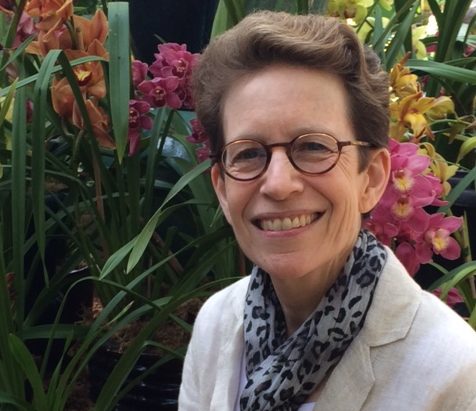
Randi Korn is Founding Director of RK&A and currently works on intentional practice projects as Intentional Practice Leader. Prior to starting RK&A in 1988, Randi had held a variety of positions in museums, including executive director at a history museum; exhibition designer at a natural history museum; interpretive planner and writer at a botanic garden; and an audience researcher and evaluator at an art museum. These multi-disciplinary experiences heightened her sensitivities about what different museums afford the public and deepened her knowledge about many topics, strengthening her ability to have purposeful conversations with a range of staff when discussing their museum’s work.
Randi’s new book Intentional-Practice-for-Museums-A-Guide-for-Maximizing-Impact provides instructions for facilitating impact-planning exercises for museums that want to pursue impact.
Upcoming Events
-
The Federal Grant Landscape: What Museums Need to Know
Event Date:Presented by: Ohio Museums Association -
Accessibility by Design: Empowering Staff for Human-Centered Change
Event Date:Presented by: American Alliance of Museums -
-