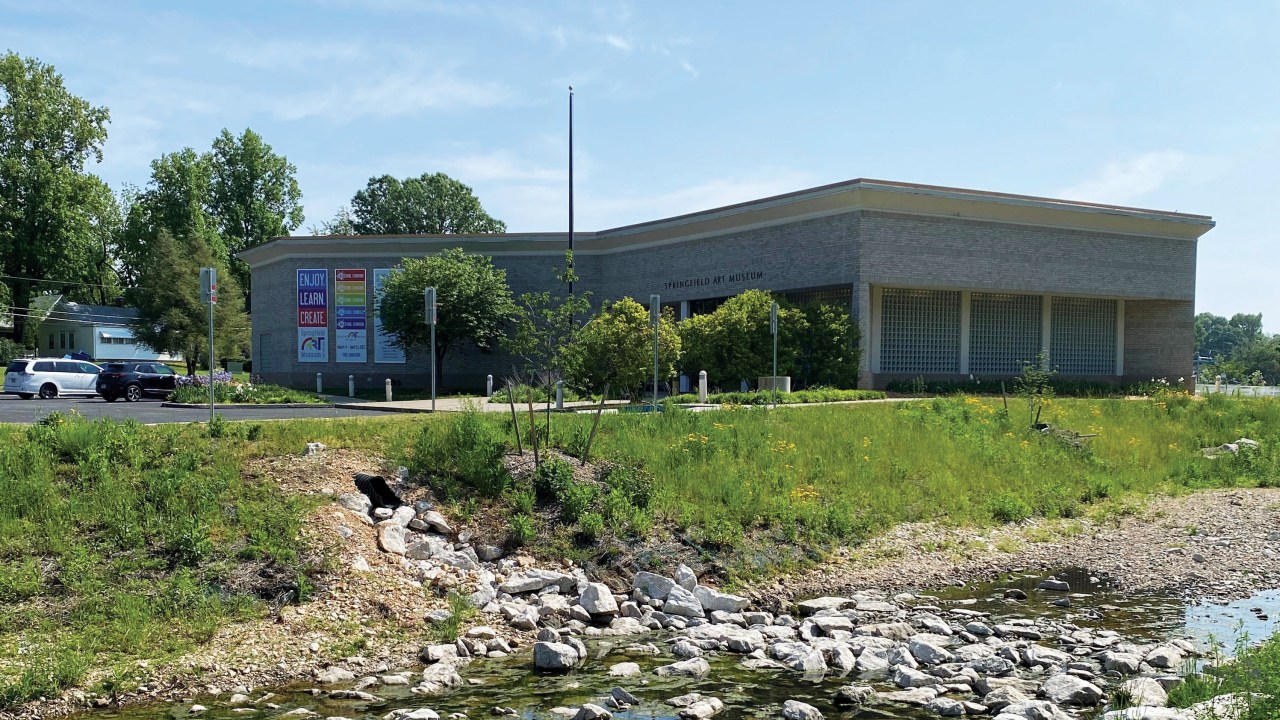
The Springfield Art Museum is in the middle of a major renovation. It’s been complicated.
One of the best pieces of advice I received early in the Springfield Art Museum’s construction project was to get my own hard hat. Bring it on tours, I was told. Don’t rely on the contractor’s loaners. Those loaners … well, let’s just say they have seen some things, and you don’t want a sweaty, used hard hat cramping your style.

This article originally appeared in the Mar/Apr 2026 issue of Museum magazine, a benefit of AAM membership.
» Read Museum.
With any big, highly visible project, you tend to get a lot of advice—some of it wise, and some of it … memorable. Perhaps the most memorable came from a former board member as we began developing our plans to transform our building and grounds. He shared this old chestnut from architect, urban designer, and Beaux-Arts baddie Daniel Burnham: “Make no little plans. They have no magic to stir men’s blood and probably will not themselves be realized.”
Burnham said this in a bygone era when one could say such things about blood and magic and still be taken seriously. Of course, I, not being a serious person, took this advice to heart and have dealt with complications ever since. What follows is a brief recounting of the renovations to the Springfield Art Museum and grounds, which began in 2017, continue today, and will be completed at an as-yet-unknown time.
A Creek Runs Through It
To be fair, our whole construction project was destined to be complicated. The Springfield Art Museum sits on a seven-acre site with a Works Progress Administration–era amphitheater and Fassnight Creek, which was confined to a concrete channel in the 1930s—a practical decision at the time that created future complications no one could have anticipated. I’ll return to those complications in a bit.
The first museum building was built in 1957, and wings have been added every 15–20 years since, resulting in a 52,000-square-foot “Franken-building,” or Franken-building’s Monster, as we lovingly call it today. Four different wings, built across four different decades, are stitched together with good intentions and incompatible mechanical systems. The first addition, a 400-seat auditorium, was added in the 1970s; our Jeannette L. Musgrave Wing was built in 1994;and the last addition was completed in 2008.
In 2017, in anticipation of the museum’s 90th anniversary, we secured funding to complete a full 30-year site plan for our building and grounds. Franken-building would finally be subdued and tamed. We launched an extensive community engagement process—hosting meetings, interviews, and focus groups, and digging deeply into data about our community’s needs. After issuing an RFQ that attracted leading firms from across the country, we selected BNIM, an award-winning firm based in Kansas City. As we considered our 90-year history, we set a bold goal: build a museum that will serve our community for the next 90 years.
Our values guided the design. Whatever we built must foster collaboration, honor the history and character of our community, promote inclusion, be innovative, engage the outdoors and nature, and model environmental and fiscal stewardship and sustainability. The list of must-haves was long. Again, we would make no little plans.
At the second meeting with our architects, we got the news: the museum was being put into a Federal Emergency Management Agency (FEMA) floodplain. If you’re reading Museum magazine, you probably have at least a base-level knowledge of museum operations and understand that being put in a floodplain is not cool.
At one point someone asked if we would consider relocating the museum. After some consideration, we decided to do the most reasonable thing—we doubled down on staying put. We asked our architects to not only solve the floodplain issue but also improve parking and expand our green space. We would stay where we were, Franken-building and floodplain be damned!
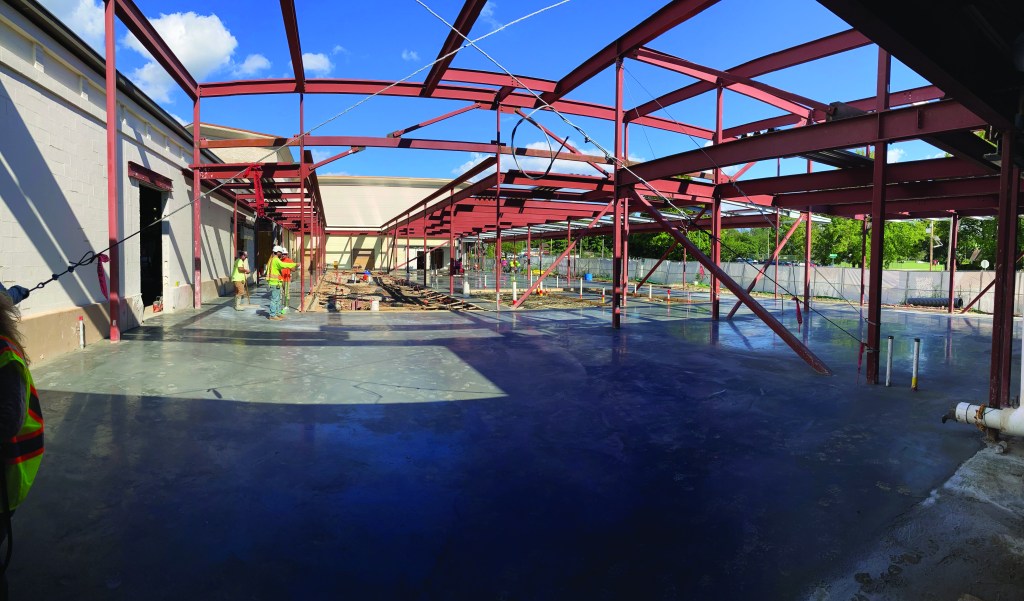
museum’s renovation and expansion began in March
2025.
My Top 3 Pieces of Advice
- Well begun is half done. A well-considered plan with lots of killer renderings will help generate opportunities.
- Build your team and trust them to do their jobs. Surround yourself with the best people you can find (and afford) and always listen to museum staff.
- Be flexible enough to take advantage of opportunities but stick to core principles. Having a project vision or values statement is a great way to do this
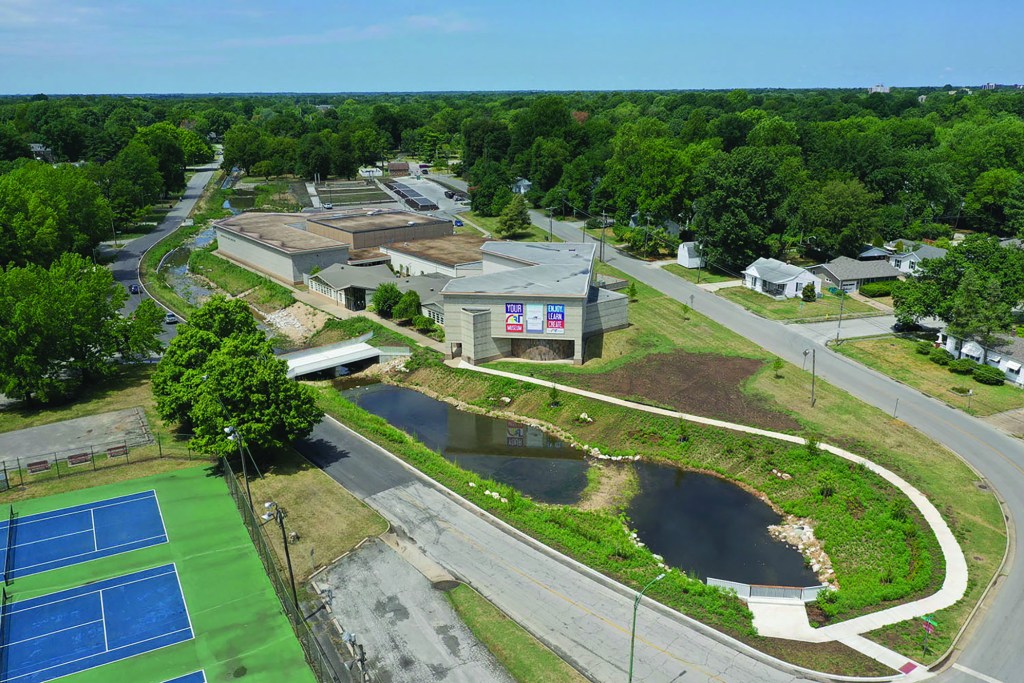
floodplain, architects solved the challenge by improving
parking, expanding green space, and restoring
Fassnight Creek to a more natural state.
Which brings me to another piece of bad advice: when given the opportunity, always embrace the complicated. The tallest mountains have the best views, or so they say.
As a testament to the talent and patience of our architects, we were able to solve the flooding issues, improve parking, and expand green space. The solution was simple but brilliant: tear out the concrete channel and restore Fassnight Creek to the natural, Ozarks stream that meandered through the area over a century ago. The restored creek would not only mitigate flooding but also improve water quality, fulfilling our mandate for environmental stewardship.
Parking improvements included a parking lot with pervious pavers to filter runoff and pollutants through native plantings before returning it to the creek. However, with this new plan, a fairly straightforward building renovation and landscaping scope suddenly became a stormwater project involving heavy construction, sewer lines, and road work. Sometimes when you reach the top of the mountain, your view is another mountain.
And Then the Pandemic
With support from the city of Springfield, by early 2020 we had secured funding for the Fassnight Creek naturalization. We could take the museum out of the floodplain and start work on improvements to our building. What we had not factored into this 30-year plan, unfortunately, was a global pandemic.
As COVID-19 shut the world down that spring and summer, we masked up, worked remotely, and hoped for better days. But we still had a museum at risk of flooding and a project to complete. So, we pushed forward, through existential dread, supply-chain meltdowns, labor shortages, and a construction market in turmoil. Tracking timelines and budgets seemed like a fool’s errand—every cost estimate came with gigantic caveats. We were doing the best we could; it was our first global pandemic after all.
As the project progressed, we met with even more complications. I got to know and dread the phrase “unforeseen site conditions.” The hydrological modeling found that to escape the floodplain, we had to remove a bridge and vacate a street on the western edge of the museum grounds that was acting as a pinch-point. This bridge provided pedestrian and vehicular access to the museum and the neighborhood across the creek, but its removal was necessary.
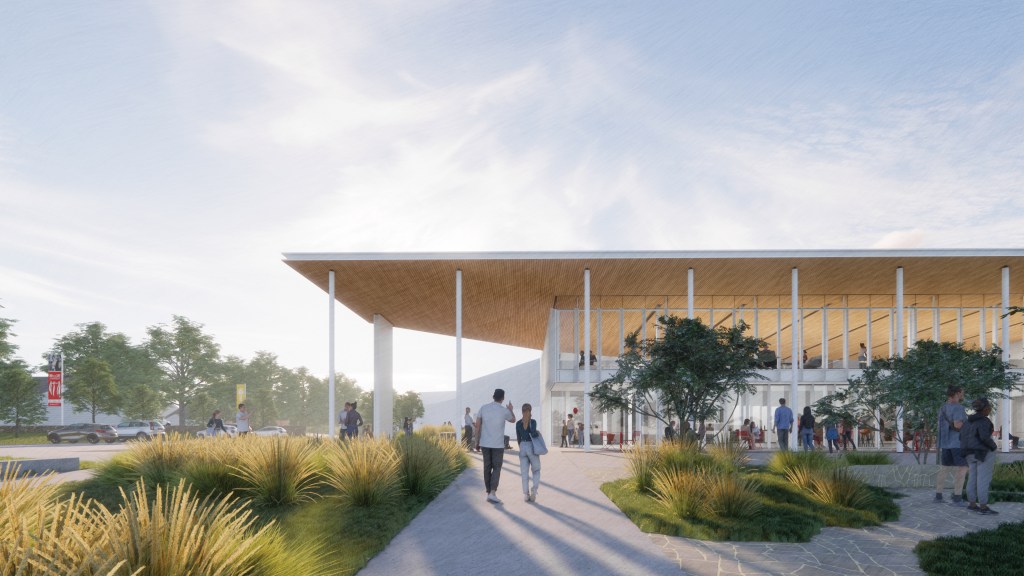
connected to expanded art and community spaces.
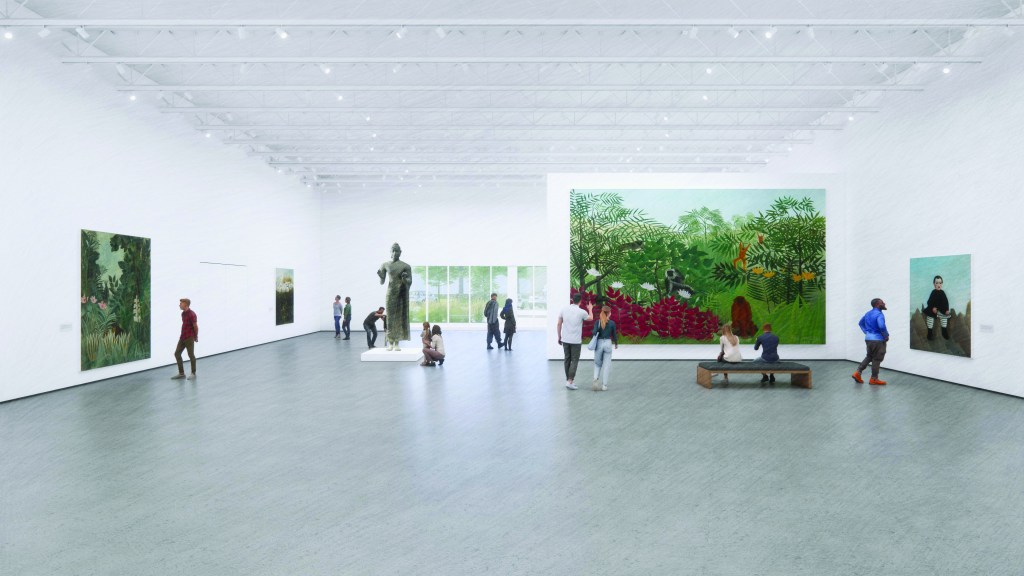
Exhibitions Gallery featuring 20-foot-high ceilings
Unfortunately, this was not just an inconvenience to travelers. These changes radically altered the planned site circulation for the future museum. It sparked frustration and protests among neighbors, especially since pandemic restrictions limited how we could communicate these changes. In addition to the construction project, we would have to patch up relationships with our neighbors while managing the traumas of a global pandemic.
And yet, even during crisis, opportunities appeared. The first was an influx of federal funding in the form of the American Rescue Plan Act (ARPA). States and municipalities were given billions of dollars to rebuild economies and communities. The Springfield Art Museum received ARPA funds, which spurred private investments, which further spurred additional public funding. By 2023, the museum had enough money to start the first phase of the building renovation and expansion.
The second opportunity afforded by the pandemic was perspective: the opportunity to think differently and reinvent. The world had changed dramatically, and we weren’t interested ingoing back to “normal.” We wanted to build something better. Apparently, we learned nothing about the dangers of big plans and climbing mountains, and, again, we embraced the complicated. We tossed most of our earlier plans out the window and all but started over.
What Now?
We had many good reasons to jettison our earlier plans: the radical changes to site circulation caused by the bridge closure during the Fassnight Creek project, the need to address aging HVAC systems and other infrastructure, and unforeseen code compliance issues within the oldest parts of the building. The museum’s auditorium had serious ADA violations, so it made more sense to convert it into a large, high-ceiling gallery. With the changes to site circulation, we decided to flip the entire program by moving the new educational spaces from the east side of the building to the west. Most importantly, we focused on gutting the entire 1957 wing, including the mechanical systems, and rebuilding almost entirely.
We added changes that improved accessibility: large family restrooms with changing tables that could also accommodate visitors with disabilities, a lactation suite, and a sensory safe room. We insisted that staff offices have as much daylight as possible. We focused on building not just a museum that would serve our community for the coming generations, but an inclusive one that would serve everyone. The building would also be sustainable, achieving the LEED Silver certification.
Of course, our uncompromising embrace of complexity has led to an expanded scope, an expanded budget, and expanded unknowns. I have spent many sleepless nights worrying about our project and its future.
The initial Phase I is funded and under construction. This work focuses on critical behind-the-scenes upgrades, including the HVAC infrastructure and an improved loading dock and art-receiving areas, along with highly visible improvements, such as adding the Special Exhibitions Gallery (the former auditorium), a collection study room, and new classroom spaces.
The final phase, refreshing and expanding the museum’s lobby and galleries and completing a full exterior transformation, is pending funding. A $30 million local sales tax measure is now before Springfield City Council for a late February vote; this funding would position the museum for a 2028 centennial reopening.
People love to encourage big thinking. They rarely linger on the fact that realizing those big thoughts is really, really hard. What has helped me sleep easier is knowing that despite the challenges and complications, we are doing right by our museum and our community. The work is difficult, messy, and expensive. But the project’s impact on future generations will be worth the costs and the complications.
And so, I will close with a final piece of bad advice: a thing worth doing is worth the doing. Make no little plans. Climb the mountain. And please, make sure to bring your own hard hat.
Upcoming Events
-
AASLH-NCPH Joint Conference
Event Date:Presented by: American Association for State and Local History (AASLH)Providence, RI -
All You Need to Know to Drive Success for Your Museum Store Sunday!
Event Date:Presented by: Museum Store Association -
Transit Insurance in Practice for Traveling & Co‑Organized Exhibitions
Event Date:Presented by: American Alliance of Museums -
Digital Collections Summit
Event Date:Presented by: MuseumNext