Museum standards emerge over time as the museum sector challenges norms, reexamines values, and tests new ways of being and doing. The Clyfford Still Museum’s deep partnership with the Colville Confederated Tribes is an exemplar of this evolution, as museums begin to regard co-creation and sharing authority as integral to their work. This is a profound form of reparative practice–in this case, healing relationships between museums and Native American communities. I hope the work of the Clyfford Still Museum contributes to a future in which tribal youth take for granted that museums are a place to exercise their power and celebrate their culture.
–Elizabeth Merritt, Vice President Strategic Foresight, and Founding Director, Center for the Future of Museums, American Alliance of Museums
The Clyfford Still Museum (CSM, @still_museum) in Denver, Colorado, began a partnership with the Colville Confederated Tribes (CCT, @colvilleconfederatedtribes) in 2021 to explore how rekindling a century-old connection between American abstract expressionist painter, Clyfford Still (1904–1980), and the Reservation of the Colville Confederated Tribes might forge new paths forward and shared understanding. For more background and context on how this partnership originated, check out the series’ first post titled, Reviving Roots: Clyfford Still Museum and the Colville Confederated Tribes Partner for the Future.
The text below describes a recent milestone in the partnership’s evolution, recounted as a shared dialogue between Michael Holloman, enrolled Colville Tribal member (sńʕaýckstx/Lakes) and Professor of Art and Coordinator of Native American Arts Outreach at Washington State University; Bailey Placzek, CSM’s Curator of Collections and Catalogue Raisonné Research and Project Manager; and Nicole Cromartie, the Museum’s Director of Learning and Engagement.
Connecting with Tribal Youth
“You really need to think about growing your elders and preparing people to take on different roles within the community, giving them that knowledge…the history and the cultural background…so that when it’s their turn to step up, they’re ready.” – John Sirois (sʔukʷnaʔqín/Okanogan sp̓aƛ̓mul̓əxʷəxʷ/Methow ps’quosa), traditional territories advisor, Colville Confederated Tribes
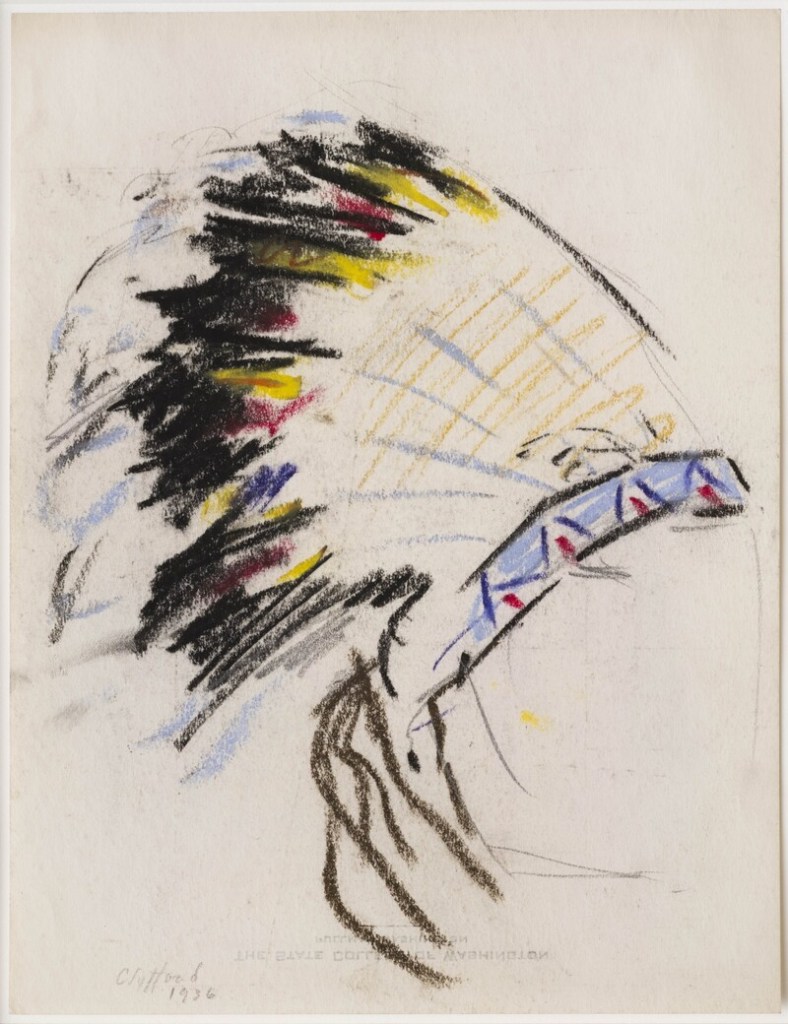
Michael Holloman (MH): In 2015, I was a presenter for the One Painting at a Time Lecture series at the Clyfford Still Museum. I spoke about Still’s 1936 drawing, PP-854, which is a beautiful pastel study of a Plateau-style headdress he encountered while teaching at the Nespelem Art Colony. I thought it was important to symbolically add the Tribal people’s culture, identity, and continued living spirit to the empty headdress. This effort has been extended directly by the Still, through their engagement, partnership, and development of art programming and activities with the native schoolchildren involved in the Tell Clyfford I Said “Hi” exhibition project.
Bailey Placzek (BP): When Colville Confederated Tribes (CCT) Traditional Territories Advisor, John Sirois, and Michael suggested in fall 2022 that the path forward for our partnership with their community should involve Tribal youth, I turned to my longtime friend and collaborator, Nicole Cromartie, Clyfford Still Museum’s director of learning and engagement. Cromartie and I had just completed a profound, multi-year journey together that established a strong institutional foundation for shared authority and learning about Clyfford Still alongside our youngest audience members.
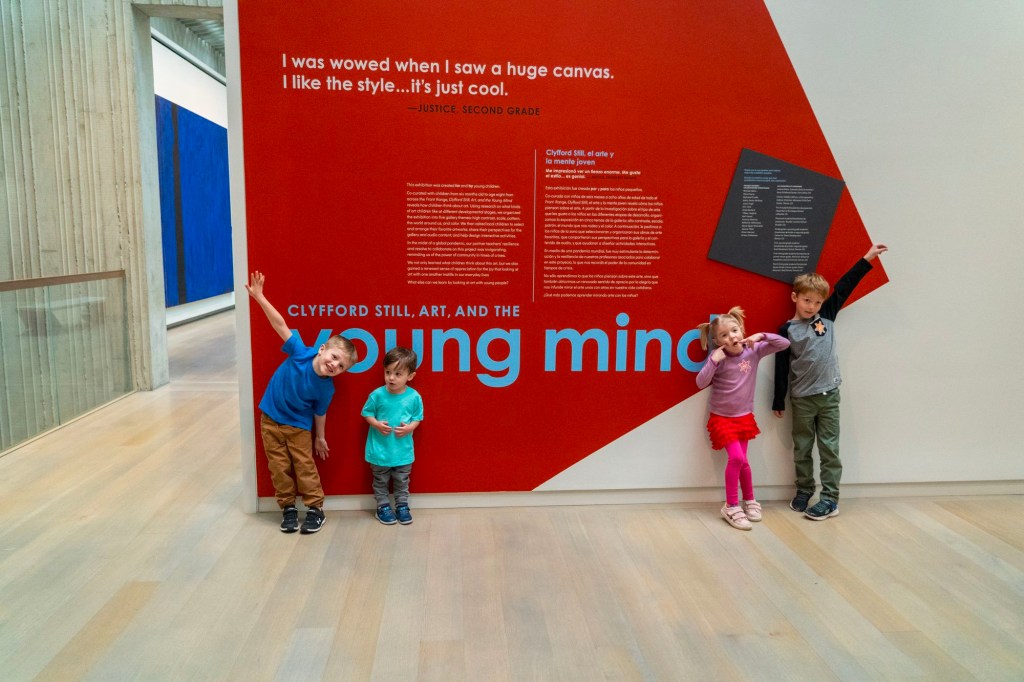
Nicole Cromartie (NC): The year 2019 marked a transformation at CSM that culminated in Clyfford Still, Art, and the Young Mind (March 11–August 7, 2022), an exhibition co-curated with children ages six months to eight years. Our young curators selected all the artworks, provided insights on the art for the wall text and audio guide, and led curatorial tours of the resulting show. This was not simply an exercise in understanding which artworks our youngest community members preferred and why, though witnessing young children engage with Still’s work was both joyful and fascinating. It demanded something deeper: that we lean into liberatory and democratic theories of learning, centering listening, reciprocity, and uncertainty as foundational principles. Doing so opened new ways of understanding Clyfford Still’s work and new possibilities for sharing authority with our communities.
The Making of a Collaborative Exhibition
BP: Given all that we learned from Young Mind, Nicole and I were overjoyed at the opportunity to embark upon a similar adventure with the Colville Tribal community. Yet, we knew from our experience (both with Young Mind and with the CCT community) that we could not approach the project with preconceived expectations about the collaboration’s outcomes. Instead, we recognized the importance of centering openness and curiosity in our journey, especially given these collaborators’ direct expertise on the material.
We began by accepting John’s invitation to visit the Reservation for the CCT’s annual July Celebration and Powwow with only one goal in mind: to reconnect with and learn more about the community. Through this visit, we gained a much deeper understanding and appreciation for the Tribe’s history, which led Cromartie and me to have important discussions about the complicated role we would play as non-Native museum professionals working with Tribal schools and children. We forged ahead with the shared understanding that relationships took precedence over any product we might produce as a result of our time together, knowing that Michael and John’s guidance would be crucial.
We presented ideas about the future of our partnership, alongside John and Michael, to the Colville Business Council, the CCT’s governing body, and obtained a research permit. The CBC’s support set in motion what ultimately led to our partnering with three schools: Nespelem School District, Nespelem Head Start, and Hearts Gathered Waterfall School in Omak, Washington. Over the next two years, we visited the reservation six more times to work with over 100 students ages three to fourteen, and learn about our collection through their eyes. Our student collaborators not only enriched our understanding of Still’s Nespelem artworks, but they also pointed out new connections between their home and the artist’s abstract expressionist paintings.
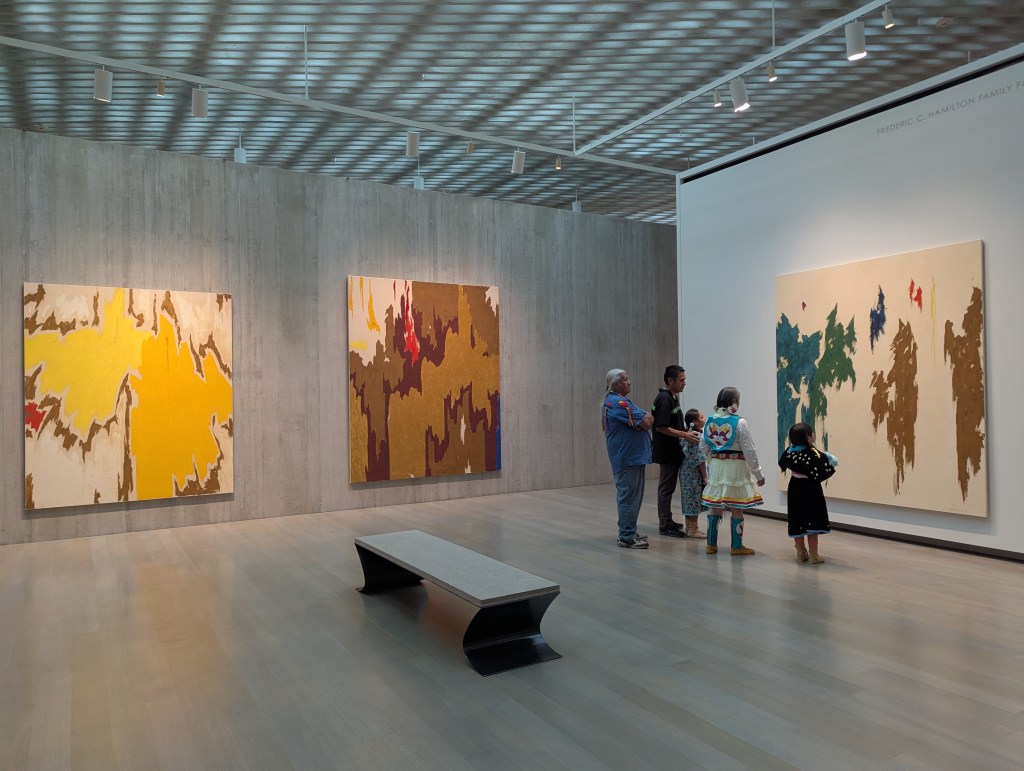
After our third trip in April 2024—during which each of our collaborators selected and presented about their favorite artwork by Still—we realized we had the makings of an exhibition. Tell Clyfford I Said ‘Hi”: An Exhibition Curated by the Children of the Colville Confederated Tribes opened on September 19, 2025, ninety years after Clyfford Still first visited the Reservation, all thanks to the students’ enthusiasm and generosity.1
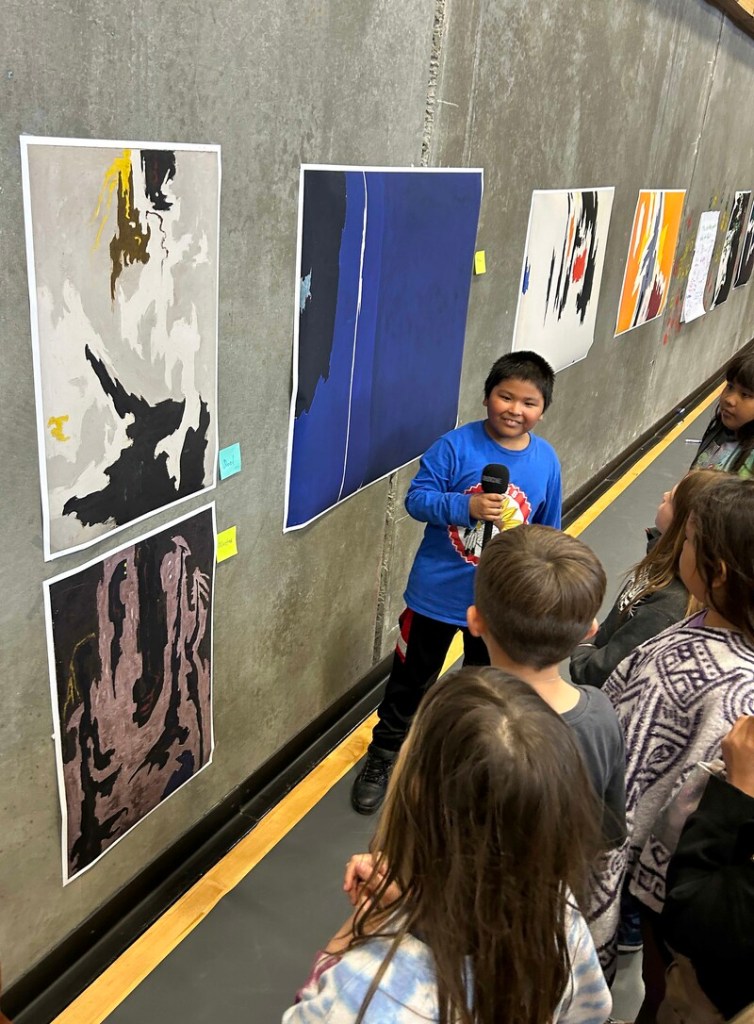
NC: Drawing on lessons from Young Mind, the Museum made a significant investment in documentation. Each trip to the CCT Reservation included exhibition organizers Michael, Bailey, and me, alongside Katie Watson-Best, CSM’s Digital Media Manager. Katie captured not only children’s responses to the artworks, essential for the exhibition’s interpretation, but also the in-between moments, our most open-ended opportunities to listen without an agenda. From her recordings, we developed wall text, anchored by our curators’ own words, and an audio-visual experience, available on Bloomberg Connects. Listen to the first stop, a welcome from our curators, here.
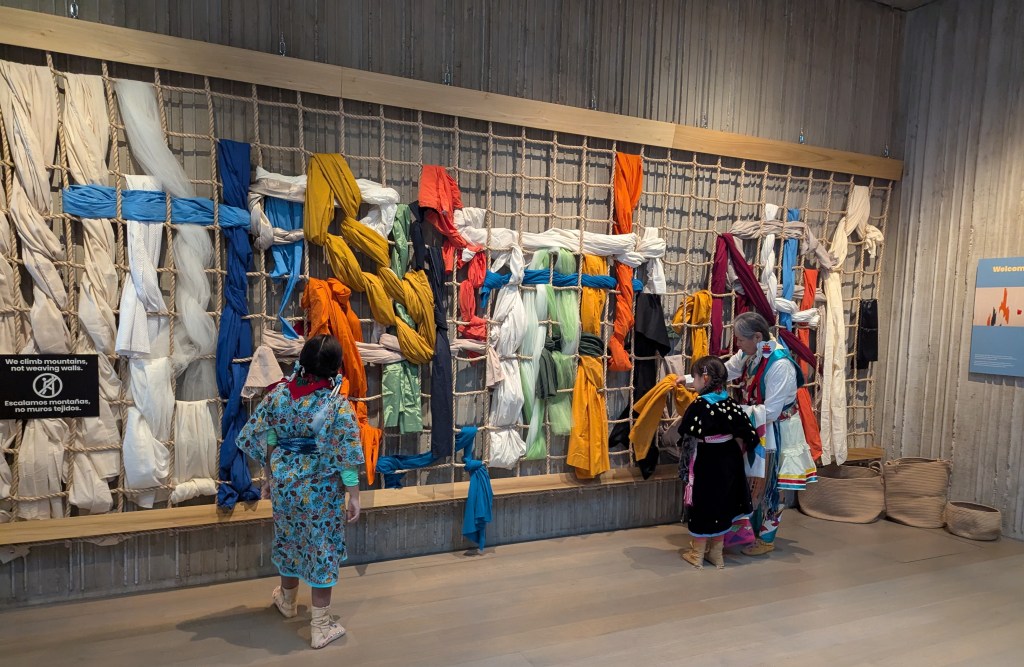
One emergent theme in the documentation was the children’s passion for making art and the inspiration they drew from Still’s works. This led to all manner of art-making with the schools, including a twining experience with Tribal artist Carly Feddersen and our co-curators on one of the school’s playgrounds. We translated this into a wall-sized interactive weaving experience located in the Museum’s Making Space to recognize artmaking’s significant role in our process.
BP: Katie’s rich documentation of our co-curators’ insights also aided our planning for the exhibition’s organization. Unlike Young Mind, we aimed to develop a process for this project that empowered our co-curators to shape the exhibition’s overall structure and flow, not just its checklist and didactic material. We combed through hours of recordings from our visits to identify recurring ideas and topics of discussion. Then, we grouped their artwork selections based on what interpretations lined up with these themes. Finally, we presented our co-curators with excerpts of their own descriptions to vote on the names for each gallery.
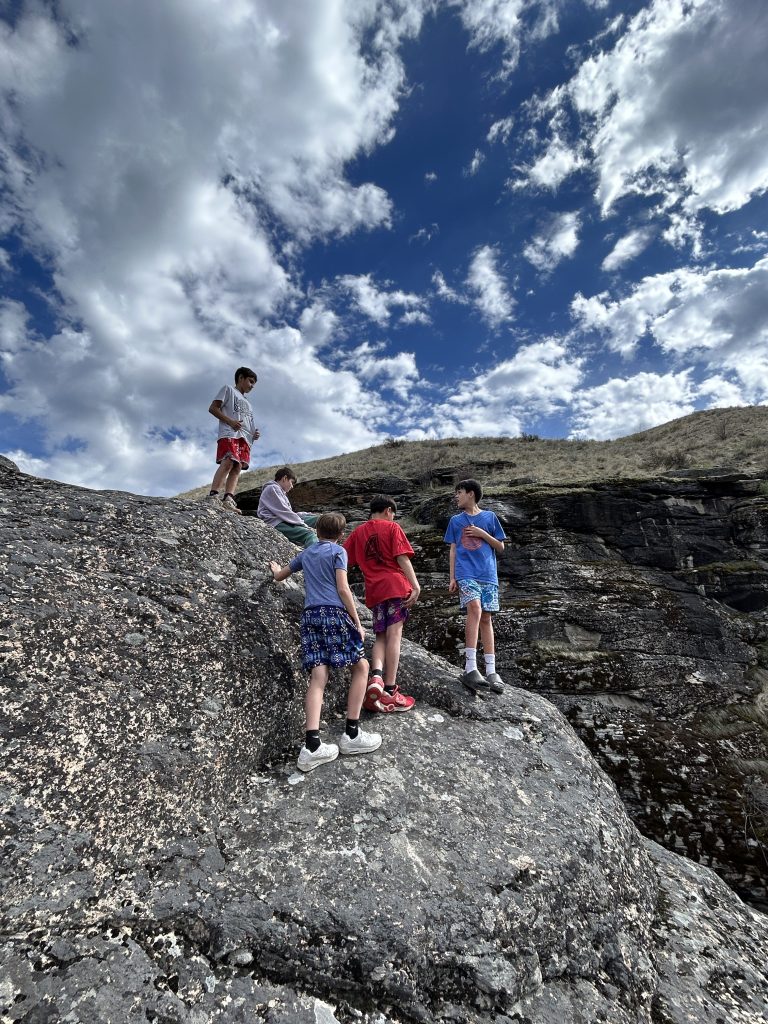
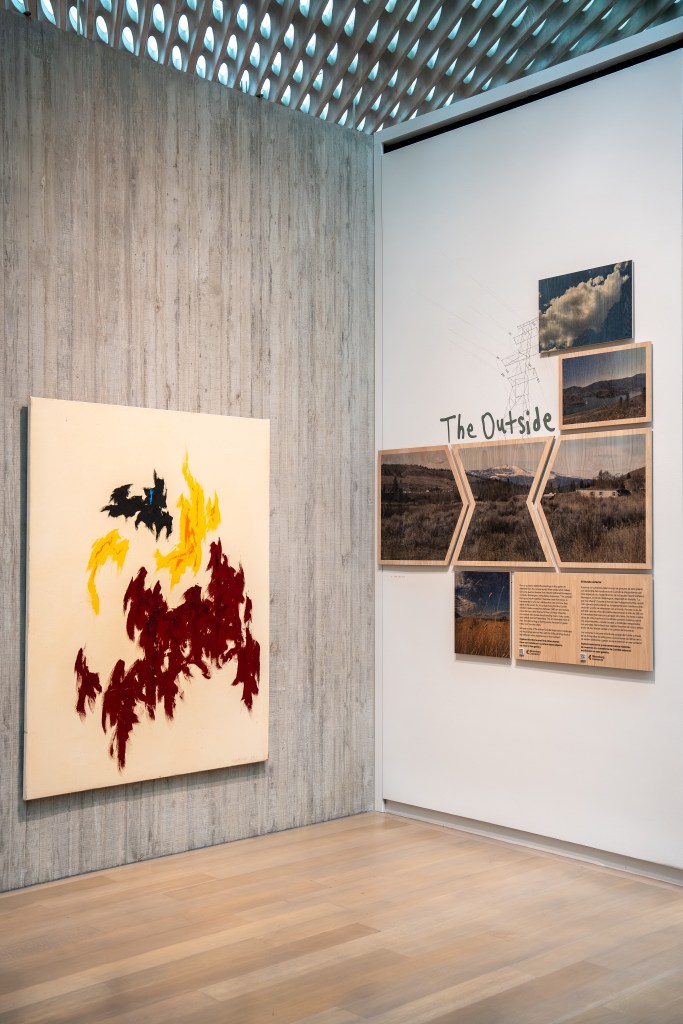
NC: Our curator’s passion for nature led us to consider how the exhibition itself might be more environmentally sustainable. We sought creative ways to reduce or eliminate vinyl signage, with our designer ultimately utilizing reclaimed wood panels, recyclable paper Falconboard, and painting directly on the gallery walls to honor our partners’ values.
Celebrating “Their Knowing”
“This is their history that they deserve to address and speak to in their knowing.”– Michael Holloman
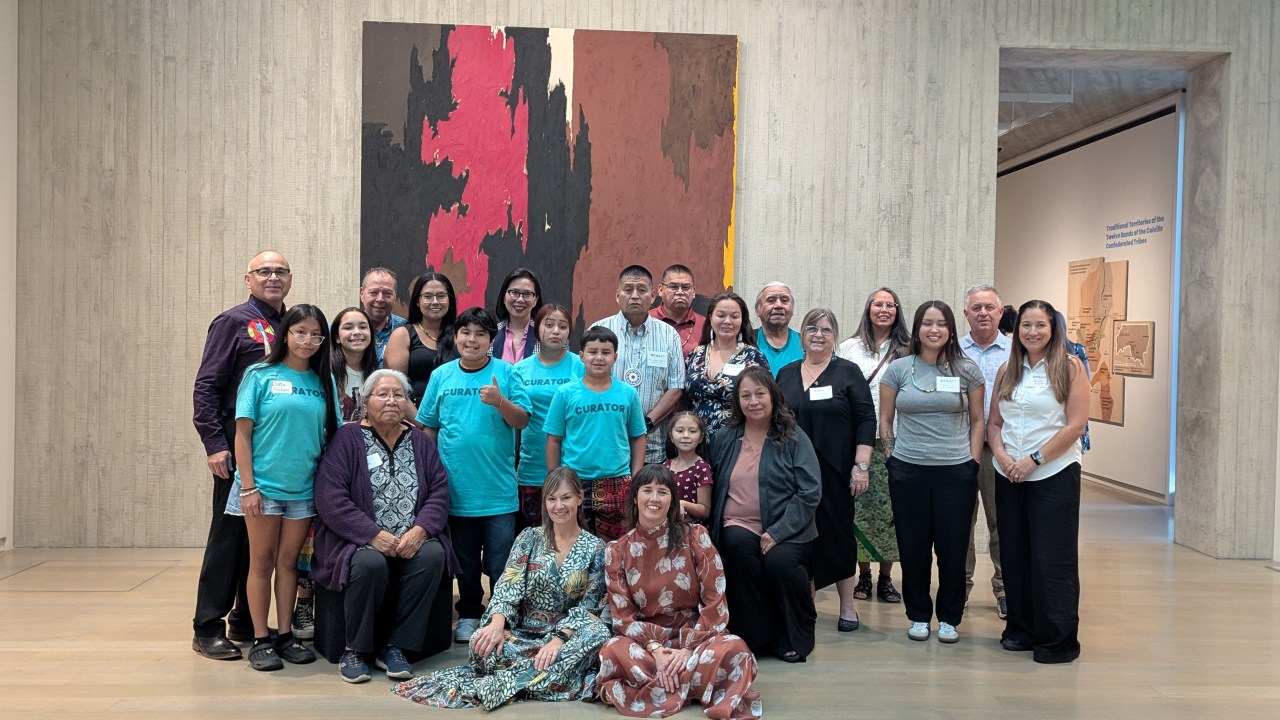
MH: Family and community are prominent pillars of Tribal identity. Knowing this connection and being a part of it is paramount to the Confederated Tribes of the Colville Reservation, where previous generations fought to maintain these values against the historic backdrop of Federal policies of forced assimilation. The exhibition’s opening celebration revealed this cultural commitment, as multigenerational families, participating schoolteachers, and Tribal council members all traveled from their rural reservation in North Central Washington state to support the young curators and their remarkable accomplishments. For most of the children, this was their first trip on an airplane and their first experience at a museum larger than the local historical society. The Tribal community’s supportive presence in Denver allowed the children to thrive in the limelight of the opening celebrations. Throughout the weekend, the children, clad in bright blue “Curator” t-shirts, were enthusiastic about sharing their experiences from the exhibition’s interpretation and curation process with all interested audiences. Elder and former tribal council member Mike Marchand thoughtfully remarked, “It is so great to see the children tell us what they see, before we tell them what they should be seeing.”
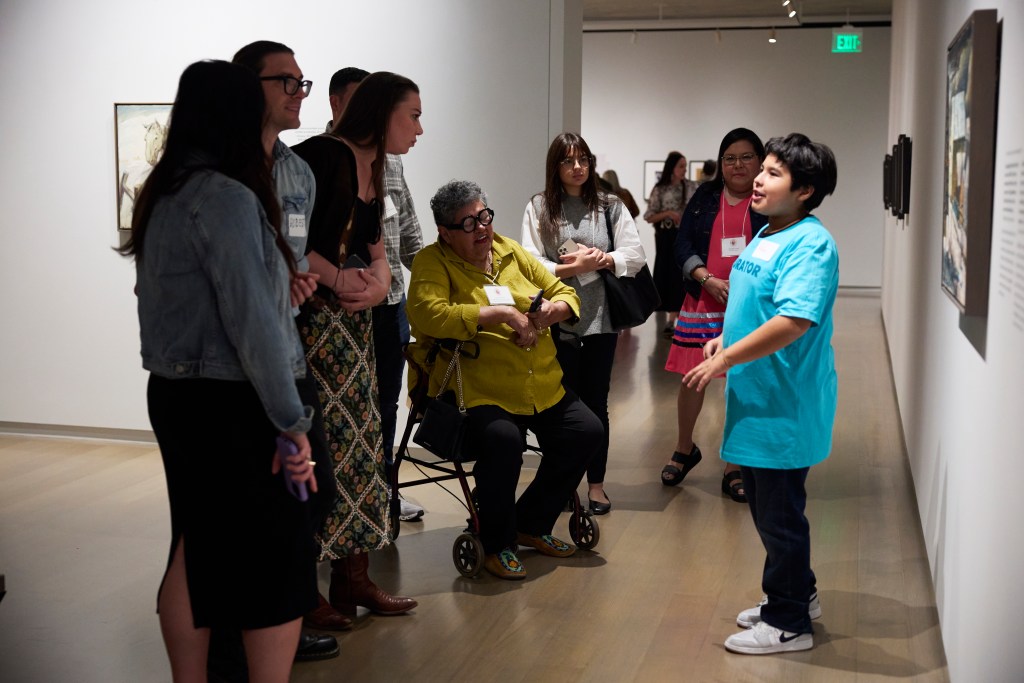
NC: Nikolai, a fifth-grade curator, accompanied by his mother, made an impromptu announcement at the exhibition opening, inviting everyone to gallery 3 to ask him questions about “his painting” (the Still painting that he selected) and his curatorial process. Watching Nikolai claim that space, microphone in hand, before 250 people on the Museum’s front lawn, was one of the great privileges of my career. He exercised the authority of someone who knew, without question, that his voice belonged in the room.
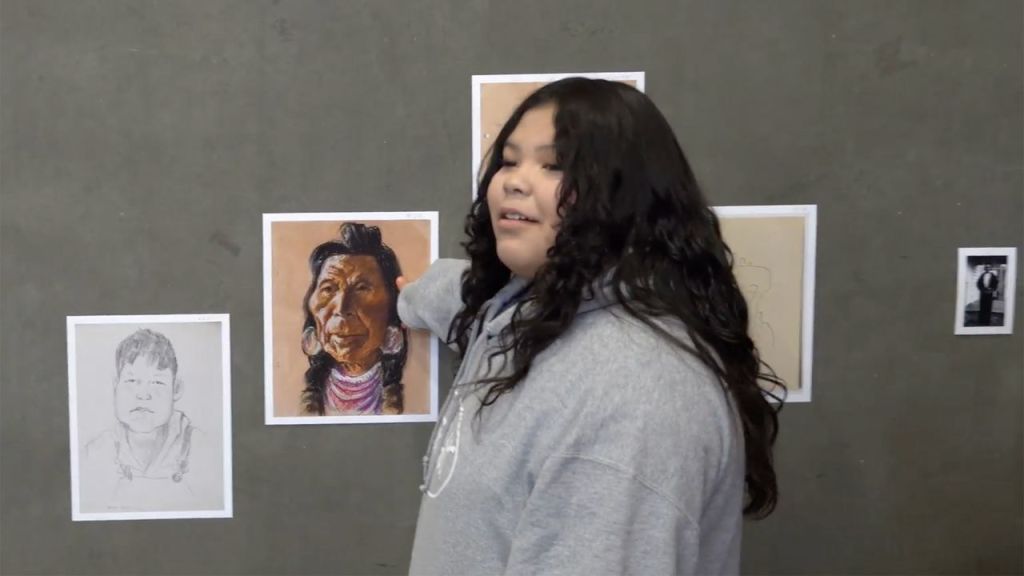
BP: One of my favorite moments from the exhibition’s opening weekend happened in the “Our People…Our Culture” gallery during our special curator walkthrough. I noticed a younger sibling of one of our co-curators lingering near a portrait of Willie Red Star Andrews (selected by his ancestor, Tahayma Red Star; listen to this audio stop to learn more). When I saw the young girl’s father, Jewie Milton Davis, Jr., approach and ask her to pose under the portrait for a picture, I realized that she, too, was a descendant of Andrews. In that moment, I witnessed a family connecting across generations—a moment of joyful self-recognition and belonging in a space hundreds of miles from their home—all inspired by a single pastel drawing.
NC: Evaluating our exhibition development process is both an act of accountability to our partners and an opportunity to deepen our understanding of meaningful collaboration with the CCT. Through a partnership with First Light Education Project, we began a multi-year process evaluation organized around four interconnected stories: Foundational, Community, Institutional, and The Field. Early findings reveal that the impacts of this collaboration extend well beyond the exhibition–opening possibilities for cultural restoration.
The exhibition also drew attention beyond our community, including a New York Times profile that described this project, and others like it, as a way for institutions to “democratize their storytelling.” 2
Evolving relationships
MH: After one of our first school presentations on Clyfford Still and his artwork, one of the Tribal students asked, “When do we get to do art?” We found that limited school budgets, combined with competing academic priorities, led to minimal or absent art activities in their general curriculum. The CSM team responded by developing an “Art Day” event at Nespelem School District, featuring Colville Tribal artists working directly with students through various activities in both traditional and contemporary mediums. Throughout, the students’ artwork reflects both cultural empowerment and a fluid and energetic embrace of new media and ideas. Art Day’s success was immediate, and the event has continued annually with new partners.
NC: When concluding tours of the exhibition, I remind participants that John didn’t approach us with the intention of having children curate an exhibition, but rather to “involve youth in our partnership.” The development of Tell Clyfford was just the starting point, an opportunity for us to build partnerships with some of their schools and to get to know some of the teachers and children. We have invited members of the Colville Tribes who have worked with the children to lead exhibition programming throughout the show’s run, including Holloman, Frank Andrews, and Julie Edwards.
We’ve continued to practice active listening and to find new ways to learn together, including co-creating a bilingual nsəlxcin (Okanogan Salish)/English infant board book featuring a selection of images from the exhibition chosen by the infants and toddlers of Hearts Gathered Waterfall School.
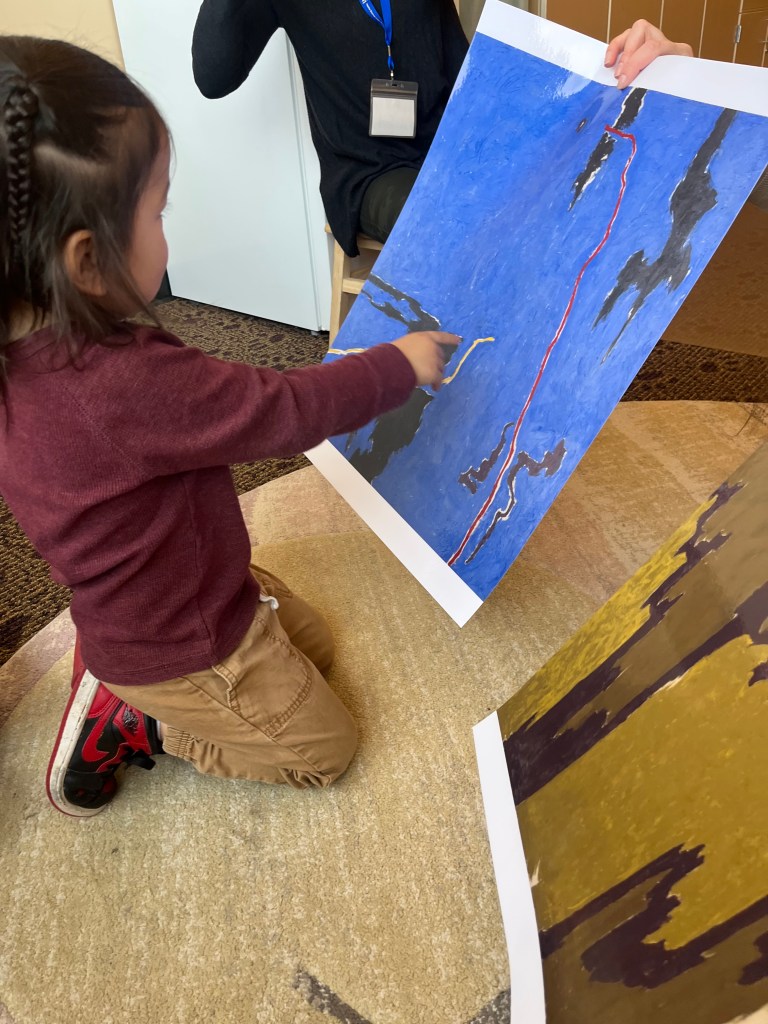
BP: As Nicole and her team expand upon the foundation we’ve built with schools and teachers, we continue our dialogue with the community and families of individuals Still met in the 1930s to inform our research and description of Still’s Nespelem artworks for the artist’s catalogue raisonné. Given how crucial these community perspectives are to sharing a more holistic view of the objects’ significance, we feature them prominently alongside those of our student collaborators, scholars, and artists as “Critical Perspectives” on our comprehensive online resource, Clyfford Still Online.
MH: Clyfford Still’s time at the Nespelem Art Colony could have been relegated to a mere footnote in his bio. When the CSM obtained and processed its collections, it afforded access to a broader contextual portrait of his artwork and associated ephemera from this period. Almost immediately, it opened the door to new and ongoing research while offering the opportunity for necessary and continued engagement with the Native people he personally encountered. The Tell Clyfford I Said “Hi” project was not a one-off transaction but instead a continuum of a cross-regional partnership that will continue to define and build upon Still’s thoughtful choice to draw, paint, and teach there.
Footnotes
[1] We pulled the exhibition’s title from a quote by one of our co-curators. All the students’ perspectives are captured in the exhibition’s catalog, produced at the request of our partners who aren’t able to travel and see the exhibition in person.
[2]Ray Rinaldi, “One Way to Shake Up Museum Curation? Hand the Keys to the Kids.” New York Times. 2025 October 15. https://www.nytimes.com/2025/10/15/arts/design/museum-curation-children-teenagers.html.
Upcoming Events
-
AAM Member Week
Event Date:Presented by: American Alliance of Museums -
AASLH History Hour: Is This Place Haunted?
Event Date:Presented by: American Association for State and Local History (AASLH) -
Disaster Preparedness for History Organizations
Event Date:Presented by: American Association for State and Local History (AASLH) -
From Informational Interview to Real Connection
Event Date:Presented by: American Alliance of Museums and National Emerging Museum Professionals Network