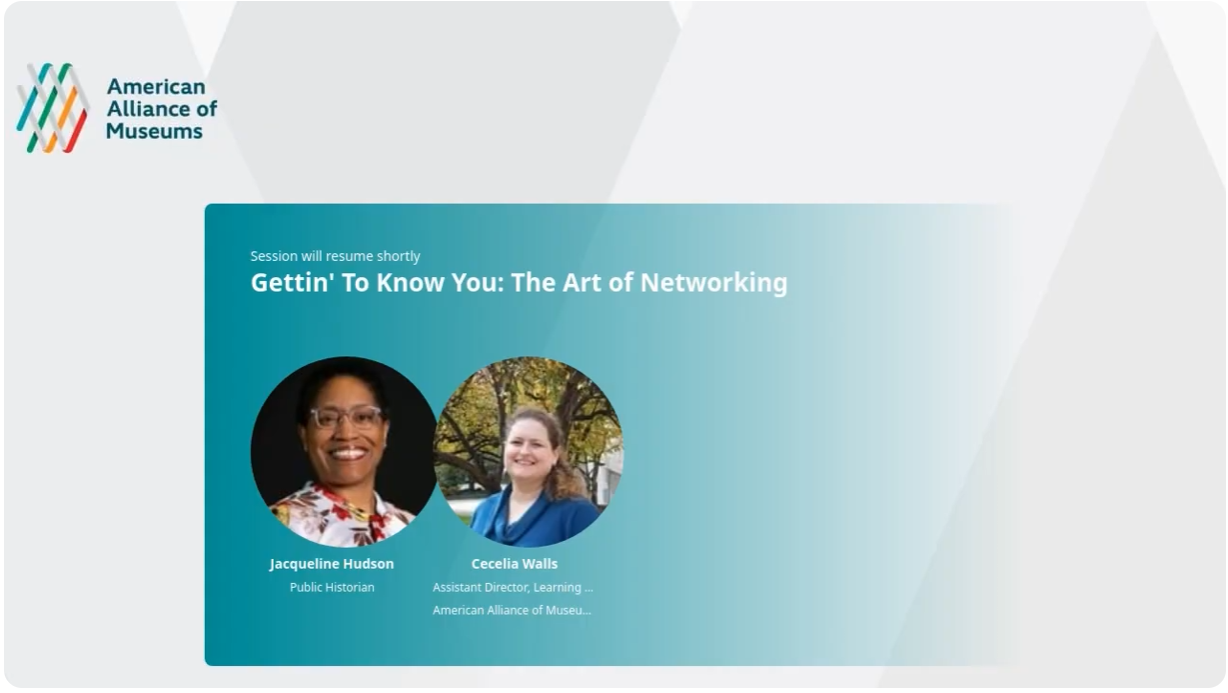
As museums and public history organizations navigate tightening budgets, political pressures, and shifting partnerships, building strong professional relationships has never been more essential. Gettin’ To Know You: The Art of Networking is an engaging webinar that helps professionals rethink how they connect, collaborate, and grow in a changing field. This conversation moves beyond traditional, transactional networking to explore more creative, authentic, and sustainable ways of building community and opportunity.
Through practical examples and real‑world strategies, participants will learn how to use informational interviews, cultivate meaningful connections, and confidently navigate professional spaces. Framing networking as a tool for collaboration, resilience, and long‑term career sustainability, this session empowers attendees to develop a personalized, adaptable approach to professional growth—one that supports both individual careers and a more inclusive, forward‑thinking museum field.
Additional Resources
Getting’ to Know You the Art of Networking PDF presentation slides
Transcript
Cecelia Walls:
Welcome, everyone, to getting to know you, the art of networking. I’m Cecilia Walls with the American Alliance of Museums. And we’re so glad you’re here with us. Networking doesn’t have to feel awkward or transactional. Today’s session invites us to reimagine networking as a meaningful, sustainable practice rooted in curious collaboration, and community, in a moment when strong professional relationships are more important than ever. In our field. We’re thrilled to welcome doctor Jacqueline Hudson who will share practical authentic approaches to connection building that support long term career growth.
You’re welcome to drop questions into the q and a tab on the right, and Dr. Hudson will answer some of these at the end of the session. We are recording this for registrants and members to access in the coming days, so keep your eyes on your email for that. And there is a copy of the presentation available in the resources tab.
Doctor Hudson, welcome, and thank you for joining us today.
Jacqueline Hudson:
Hi, everyone. My name is Dr. Jacqueline Hudson. And I will be talking about, the art of networking.
Is the, pre now? I didn’t see it.
Cecelia Walls:
Hi, Jacqueline.
Jacqueline Hudson:
Hi.
Cecelia Walls:
Just trying to get it up on the stage. Give us just a moment.
Jacqueline Hudson:
Got it.
Cecelia Walls:
It’s not wanting to cooperate with me at the moment.
Alright. We can do this another way.
Oh, here we go.
Alright. There you go.
Jacqueline Hudson:
Here we are.
Hello, everybody. Good afternoon. Like Cecilia said, I am, my name is Dr. Jacqueline Hudson, and I am the African American history program manager here at the Tulsa Historical Society in Louisville, Kentucky.
Welcome to the webinar called getting to know you, the art of networking where I’m going to help everyone to rethink how they connect, collaborate, and grow in a changing field, which involves tightening budgeted, budgets, political pressures, and shifting partnerships.
Begs the question, how do we reimagine networking in 2026?
Next slide.
So this webinar, this is basically are gonna be the agenda in regards to, the webinar. I’m gonna try as much as I can to follow the agenda, but I might go off the cuff a little bit, on some of these, during the presentation. So just bear with I’m gonna cover everything, but I’d just like to know, do little things a little different. Every once in a while.
So, next slide.
This is me, at the African American I’m sorry. The Association of African American Museums last year. And my t shirt reads, doctor j Hud, in charge of black stuff. Basically, my research is, embedded in black history and culture. So I thought I’d, you know, always like to do a little tongue and cheek sometimes.
Next slide.
So here’s a little bit of a, a bit of a background on me.
Like I just said, I am the African American history program manager at the Philson historical society.
And I do will be coming with a new job title very soon, which we’re very excited about. So I will, you know, gonna be focusing more on curation. So, I will have a cure a curator, position in my you know, a curator title in my position. So I’m very excited about that. I do have a PhD in American cultural studies at Bowling Green State University in Bowling Green, Ohio. I have certificates in both public history and historic preservation. So I do you know, my work is embedded in public history. Some of the, field or the skills that I do have is historical and culture curation, content development, and interpretation, as well as public history programming. So I always like to say that I’m the Jackie of all trades. I worked in both private and public sectors. I’ve worked also with, like, cities. I’ve worked with, on a national on a in a federal capacity as well. And but a lot of my work has been in, both private institutions as well as, academic institutions as well. So like I said before, my research interest includes telling stories about black history and culture, more specifically telling stories about the black experience. I’ve written scholarship on public history and various publications. I’ve done history news. I’ve done you know, exhibition, magazine. I’ve, you know, done a lot of publishing here at the Philson.
You know, talking about our collections, via social media. I have consulted on three successful Ohio historical markers. They’re all in three different cities in Toledo and Cincinnati as well as Dayton. And I am a certifiable next slide, please.
Introvert. A lot of people have like, the people that who have known me have were very surprised to when I tell them that I am an introvert. I do like to keep my to myself most of the time, but, obviously, this does not work in the field of networking. So but I do, use this skills that I have of, you know, using my passion for public history to to translate into, you know, doing different types of networking.
So, but, yeah, we’ll talk a little bit about that more in the presentation. Next slide, please.
So, the art of networking.
So we’re gonna start off with, the first poll question.
Next slide, please.
So the first question is, how would you define networking? I’m going to give you about thirty seconds to think about it, and don’t think too hard about it. Just pick one of the choices that speaks close to you. Next slide, please.
So where’s the, I’m sorry.
Okay. There we go.
So, the results Yeah. I see the, the words, but I just don’t see, like, the
Cecelia Walls:
Okay. I, I see that we had about 36% of folks saying connection.
And 6% saying collaboration, 57% said relationship building.
Jacqueline Hudson:
Okay. Great.
Next slide.
So I personally feel that, you know, and I agree with everybody on the majority that it is relationship building. But, I think it’s a combination of all of them.
So but, you know, like, some people think that connection is, you know, more important than collaboration or membership is mentorship is more port than collaboration, collaboration. So, yeah, I think, you know, connecting with people is very important, but you not only, you know, trying to connect with people, but then also, you know, con you know, foster that connection or keep in touch with people is very key in, you know, networking because you know, people can have some different insights on you know, whether, like, whether it’s the job market or whether it’s, like, you know, how to do, you know, different types of, like, you know, with education or exhibits or, you know, public programming.
So, again, connection is very important and as well as I know for me, you know, I network to collaborate whether it’s, you know, session, like, you know, sessions at conferences or you know, doing programs at my own institution. I think that’s very important because, you know, we don’t live, you know, we don’t work in silos. This, you know, this particular industry is very, you know, heavy on collaboration. And so, you know, I think always say the more the merrier in regards to collaboration and mentorship. Mentorship is very, you know, important as being a mentor in a mentee. You know, I’m gonna explain in later the presentation that there’s, you know, different types of mentors and different types of mentees. And, you know, relationship building is so important. Again, it kinda goes with the connection part where it’s you know, building that building that relationship and connecting and, you know, having, you know, different types of avenues to access to different resources, very important.
So next slide, please.
So relationship building as you know, most of you thought that that’s the, you know, the crust of, of networking is you know, relationship building, but it’s also you know, it’s a combination of you know, exchange information, share ideas, discover new opportunities. I think that’s very, very, very important in, you know, the realm of networking. I think, you know, just you know, thinking of, like, different benefits that each party might have in regards to, you know, making that connection. Like, you know, for instance, I’m I was writing on, an application about the history of a specific history on the civil war. And I am not a civil war, you know, historian. But I know, you know, that there’s people that I’ve, you know, made prior connections who do. And I reached out to them and saying, hey.
Can you know, help me you know, get me some information on, you know, after Americans in civil war, and, you know, during the civil war and how they, you know, were taking, you know, like, participated in the war. So, again, it’s just and then also thinking about you know, discovering new opportunities. I know that, you know, with me, you know, you may never know that that this person might have access to this particular resource or, you know, thinking about, like, you know, writing a book or writing about you know, some exhibit labels or, you know, about like, local history. And then exchanging information like, hey.
You know, I always like to reach out to people, and people could reach out to me and say, hey. Have you heard that you know this person’s coming into town to, you know, talk about the subject that you’re passionate about. So I think, you know, that relationship building and that networking does is a culmination of all of those you know, those ideas or those concepts.
Next slide, please.
Pull number two.
What might be a reason to not network?
Again, give you, you know, give you thirty sec couple seconds. Though, again, those think too hard about it. Just come, just pick what comes to mind to for you.
There it is. Alright. So it looks like a or like a tie you know, thinking about, you know, don’t know how and not a people person. And that’s you know, that’s a very fair reason why not to network. So next slide, please.
So there’s I know, like, with the you know, we’re tie we’re there was a tie between not a people person and, you know, don’t know how.
And I when I first started being getting, you know, getting into this industry, or this field, I was the exact same way. I’m you know, like I said earlier, I’m an introvert.
But when it comes to you know, about history and specific black history. You just gotta find your niche and find that find that subject or that topic or that research interest that you’re very passionate about. And it will definitely, you know, flow easy on talking to other people in the field. So, I wrote down or on the slide, very avenues on how you can network and one of the things that has and, again, I wanna preface by saying that this is specific to my experience and everybody’s experience going to be different. I mean, I you know, the best I can do is to give you this information. And like I said, I’m more than you know, more than happy to, you know, talk about this a little bit further. Or give you some got you know, a bit little bit of a guidance in regards to how to network or, you know, and how to network on, like, not being a people person and or don’t know how. So here are ways that I’ve done in the past on how to network and how it’s been had how it’s become successful for me. So number one is informational interviews.
That has had that was really helpful for me when I was in school and, you know, having an internship and having, you know, these volunteer, opportunities. And informational interviews is basically I’ve you know, sent an email to, you know, finding people whose position that you, you know, you would like to have. Or find some, you know, other person that might be an interesting, you know, person to talk to, and because I’ll let you know, and I know it could be very daunting or, you know, very scary, but it’s you know, people like to talk about themselves. And especially if you are know, have a genuine a genuine interest in what in the work that they do.
So, I, you know, I, sometimes well, and it also sometimes it’s hard to find email you know, find the emails, but if, you know, email addresses of these of these people that you’re, you know, looking to talk to, But, you know, you just gotta dig a little deep on nine times out of 10, almost like eight times out of 10, you’ll find that person’s email address on their website of the organization that they work for, or know, good old Google.
That has been very successful. And with me, you just gotta do a little you know, a little research or, you know, a little put a little push or put a little more effort in the research in regards to finding these email addresses. And so in the email, you know, the content of the interview. Now, also, I wanna preface by saying you know, please go into this avenue knowing that it’s not a job interview. It’s just you know, having a conversation with you know, this person that you wanna talk to and also be prepared. You know, be prepared and have you know, be prepared on what you wanna talk about in in the email, but then also be prepared when you finally talk to person. Have some questions. You know? Think about you know? And also give them a time, you know, a time period, like, you know, fifteen, twenty minutes. And then, like, you know, write down, you know, three or four questions that you would like to, you know, ask that person. And think about what’s going on in the field as well. Like, you know, we have a lot of things going on in our in our in the public history field, so you have a lot of things to, you know, maybe address to that person.
So, I mean, even though mean I mean, I have a, you know, a whole PhD and I have this great job, I still network. I still reach out to, you know, do informational interviews because, you know, even though know, I’m just like, just curious about, you know, leadership or curious about what’s going on, you know, in regards to you know, finding money finding funding. So I definitely am not know, above or don’t not afraid to reach out to cold email people to say, hey. I’m, you know, I’m interested in your work. I’m want some advice on x, y, and z. Would you be willing to talk to me? For, you know, fifteen, twenty minutes? And to be quite honest, some of these conversations have lasted, you know, more than ten, fifteen minutes. It’s I mean, fifteen, twenty minutes. It’s been, you know, some have last, like, forty-five minutes. So again, it just depends on, you know, what, you know, what’s going on with everybody’s lives. So, again, you know, I also have, a template that I’ve, you know, shared with some colleagues of mine, but I also will share with you all, as after the presentation. So, basically, it’s a, a step by step it’s like a template, what I’ve used But then also in the comments, I just kinda describe on why did I put this particular, you know, text in the, in the in the email. So, it’s like a guide by know, a guide thing where you can literally just read and then also you can just kind of, like, place know, what your, you know, what your job is or what, you know, who you’re talking to or what issue you’re talking wanna talk about. So, again, you can definitely reach out to me if you have any further questions after you receive the template.
Conferences. I know some you know, we are going to conferences, and it could be very overwhelming. For me, I always think about know, finding sessions that speak to me, but then also not only just the sessions itself, but the people who are presenting. I definitely am very strategic about that. So I, you know, go to the, you know, go to these con when you go to the conferences and go to these sessions, and then afterwards, I, you know, go up to the, you know, to the panelist to congratulate them on the on the session, but then also ask for a card. If they don’t have a card, you know, you can actually you know, write an email or you know, or whatnot.
But then also in but the but the trick to it is that you have to follow up.
Like, I like, take for instance, I was in a conference in Atlanta, and it was a comp, a session on curation. And, and that’s, like, my one of my specialties, and I got it the email I mean, I got the business cards from all the panelists.
And I followed you know, I sent an email, like, that you know, that month first thing Monday morning, and you know, just and sometimes I send it during the weekend, but I do a schedule, send so it’ll get there on Monday. Then also, I follow-up. I follow-up. I mean, there’s once like, going back to the conference in Atlanta, I, you know, there was four women on the panel, and I’ve actually reached out to all of them. And I talked to each and every one of them. It took, like, three or four months, but we finally got a I finally got a chance to reach out to them. And then also, I’m, you know, thinking, like, with one of the women one of the panelists, we’re actually thinking about doing some type of collaborative programming.
So, again, that’s the whole thing about conferences, and that’s another way to, you know, to network. Advocacy. Advocacy is very important. I think there’s, you know, ways you can, you know, network with our, civic servants, like, on a local level. On a, you know, on a state level as well as the federal level. I think advocacy you can think of advocacy of connecting with you know, grassroots, local grassroots organizations. I’m gonna go a little bit more about that at my, you know, at my specific job here at the Phil Set. Service. Service, it, you know, can be of anything where you, you know, serve on a board. Or you can, you know, you know, work on, I guess, like, you know, writing for you know, do some writing for an a museum organization like AAM. Or, you know, serve on a committee at an organization like AAM.
So service can be in different types of ways to and, you know, though that’ll be another avenue to connect because you might you know, might find somebody who has, you know, thinking of the exchanging the information and sharing ideas and discovering new opportunities. That’s another way that you can figure you know, find those through service and build an online presence. I know a lot of you know, of my colleagues present, on LinkedIn, whether it’s a program that they put together or a program that there might, you know, somebody might else be, you know, interested in or thinking about, like, you know, a job opportunity or even you know, not I know everybody cannot do this, but I have a, I have a website. Like, I have a professional website. And that has, you know, been very helpful in in connecting with people as well. So I know that, you know, building a website is can be very time consuming, but then also I you know, had the privilege of having somebody built it for me and, you know, taught me how to add on.
Know that everybody doesn’t have the funding. I may find a computer, like a student who specializes in, you know, computer science or, you know, find somebody who’s you know, who do it for a nominal fee. But I think, you know, having that presence on online does help in regards to, you know, making those connections. And then you know, your current job. Like, I’m gonna go a little bit further, deeper detail, in later in this presentation, but you can even do it even between, you know, if you’re in between jobs. That’s had that happened to me. I you know, did some volunteer work. And, when I was you know, in in transition from one job to another, I, you know, just I did the informational interviews. I, you know, I did the advocacy route. I did do, you know, conferences when I could. So and then thinking about service, I did all of those things while I was, you know, going from one job, transitioning to one job into another. So, again, those are some of the avenues that I have done, that work you know, that has worked for me in regards to networking.
Next slide, please.
So other types of networking is, the connect connection or the connector and the mentor and mentee. So, I pride myself or, you know, strive to be not only connecting myself with other people, but connecting other people with other people. So, like, for instance, I had you know, I have a colleague who was interested in you know, like, he showed me some work some work of a person that he would felt spoke to him. So I said, “Well, I know him. So I you know? So you know, sit the connect I connected them through email. So now he’s you know, they’re going back and forth of, you know, trying to figure out what they can do in co you know, collaboratively. So, again, that’s one of the things that I do. Like, I even, you know, connect know, if I know somebody who’s working you know, who’s applying for a job or who’s, and I know that I know a person at this job, then I can, you know, maybe connect them with them. So, again, and why I and why I put this, individual, Clarence, a Clarence Avon, is that he’s a hero of mine. And he’s was, you know, he was a businessman. He was a record company.
Owner. He was, basically an exec you know, an executive and, a film producer. So he not only did he have like all of these, you know, positions, but he connected people. Like, they call him the black godfather. For a reason. There were people, like, you know, presidents, like, you know, even, you know, music executives even film executives were and business people. So he would connect every you know, he had all of these connections, but he also connected other people. And that’s one of my, you know he’s, like, one of one of my North Stars. So then there’s a there’s a really great documentary on him on Netflix. And incidentally, like, his son-in-law is one of the CEOs of Netflix. So there you go. There’s another connection there.
So, again, another type of networking is that it’s, good to have several mentor mentees that serve different purposes. So I learned this while I was in school where there you know, you should have a mentor, Minjee, for, you know, thinking about, like, emotional, you know, emotional health or thinking about, like, you know, thinking about mentoring in a social setting. Thinking about a mentor mentee regards to, you know, the field. So, again, I think, you know, when we think about the mentor mentee, dynamic, it’s not just one person. You can have different people dessert to serve different purposes, and that that has helped me connect with other folks as well. So, again, it’s not just connecting in the field, but connecting outside the field as well.
Next slide, please.
So poll number three, what is the main reason why you want to fine tune your networking skills? And, again, just don’t you know, just come you know, think about what comes to mind.
Don’t think too hard about it.
I’m a give everybody a couple seconds to make a choice.
Great. So it looks like an over 60% said open more for you and your institution.
That’s very, you know, fair. But, I mean, all of the other ones are valid reasons too. So, next slide.
So other things to think about regarding networking.
Thinking outside the box.
These days, we have to be we have to be creative. Thinking outside the box on how to network but then also how can we collaborate, how we can connect, how can we, you know, think about you know, relationship building? So thinking outside the box has helped me in regards to networking. Passion. Like I said earlier about passion, You know, when you’re passionate about something, you know, that that being an you know, introvert or, you know, don’t know how to or go out the window because people will see how passionate you’re that, passionate about, you know, these, this field or a specific, research interest or a specific topic.
So I think you know, being passionate will, you know, erase all or at least alleviate some of the fears you have about networking. It definitely has helped for me because people will come up to me and when I’m talking about a specific you know, topic about, you know, about black life, and I, you know, very you know, talk about it like with such vigor. And they’re like, Jackie, you could really you know, you’re really passionate about you know, this particular topic. So and then, you know, just having that connect then developing that connection, you know, will be very, very easy.
Be strategic.
You know, I think that’s very important as well. I mean, what do you wanna get out of talking to this person? Or what do you want to think about in regards to like, finding ways to, you know, have a better profile for your institution. So I think you know, being strategic is very important as well. Career advice, that’s another way to network. Thinking about, like, okay. Well, I’ve done this, and I wanna do this.
How do I get to, you know, get to that space? So thinking, like so that think that thinking about outside the box as well as being strategic comes into play. So all of these things that are listed on this, slide do intertwine with each other. How to small talk. I know if, you know, we live in a, a, sit we live in a area or not area. We live in a time there we go. Live in a time where you know, we’re pretty much, you know, depending or on social media all the time. To be quite honest, I’ve pulled back quite a lot and start to talk in real time. You know, in regards to small talk, you know, think about something that that that might be light, you know, that that a light topic that’s not too heavy or find a common interest. You know, maybe, you know, I know it sounds really quite cliche, but, you know, talk about the weather, Talk about, like, you know, talk about a new project that you’re working on. You know? Think about, like, a little you know, something that will spark an interest in that person. So I think you know, small talk will get you into, you know, a bigger conversation. And this one, the people speak highly of you when you’re not in the room. I’ve learned that very you know, I’ve learned that very recently where people have come up to me and we talk, and they say, hey.
Yes. You know, John Smith said that you were doing such and such or thinking about, like or, you know, Mary, you know, John Jane Doe was saying that you were doing all of this work. Or whatnot. So, again, you know, having that doing networking will, you know, follow or go into other you know, people having conversations about you when you’re not in the room. Let me rephrase that. Speak highly of you when you’re not in the room. Thinking about, you know, you know, recommend recommendations about, like, you know, doing this particular exhibit or doing this particular program. So, again, you know, you have like, use networking that so it’ll come to those people speaking highly of you when you’re not in the room.
So I’ve like, I’ve gotten a lot of opportunities because of that.
Next slide, please.
So I’m going to use, my example, you know, working here, at the Philson and thinking about the networking journey that I have had so far in this role. So when I like, this is a new, like, this is a new position. When I mean new position, as of two years ago, this was a newly created position. I’m the first person in this position. So and then I have the unique experience of not being from, you know, Louisville. So I was able to, you know, like, find like, you know, get a list of all the peer institutions here in the city, and actually my coverage is not just the city of Louisville, but the whole Ohio Valley region.
So anything that I can, you know, get my hands on in regards to other institutions that doing the similar work, I would reach out to them to say, hey. I’m, you know, new in this position. I’m new to Louisville. You know, I would like to talk to you to, you know, to get to know you and figure out what we you know, just to just to have a conversation. And always when you’re meeting somebody for the first time, it’s always not the goal to just to say we’re gonna come up with an idea. It’s just something to talk you know, just to have a conversation about what you do, what we do, and thinking about, like, you know, maybe some cool projects that we’re doing, or you know, thinking about a specific, object that we have in our collection. So, again, it’s not just to come up with an idea or come up with, you know, come up with a concept or whatnot, but just to have a conversation. Because, honestly, that has happened to me with another, peer institution here in Louisville where we just met. We just had a conversation. We were just talking about our career trajectory, And then months later, we’re gonna now we’re gonna have a, a joint program for Juneteenth. So, again, it’s and then I’ve had, you know, a, a joint presentation with the Louisville’s, Slugger Museum about talking about black baseball players. So, again, it’s one of those things where you, you know, just having just having the conversation or having that contact with the other person. Because, I mean, be quite honest, they’re probably feeling the same way as same way too. So again, you just have to, you know, get yourself out there. And like I said, just maybe have some things in your head that you wanna talk about.
Visiting, grassroot organizations. I mentioned this earlier. You know, there’s a lot of, like, grass root organizations here in Louisville. And, you know, just, again, taking that same approach with meeting the, staff members at other I My you know, introduce my I’m introduce myself.
What, you know, what do I do? And thinking about and then finding out what they do at their organization. So, again, it’s just getting, like, you know, the title of the webinar, getting to know you. So just and then later on in the, you know, this happened to me again where I met with somebody, we had a talk, at this grassroots grassroots organization, and then we ended up have you know, me going to one of their events and to table and to talk about our institution. So, again, it’s just, you know, one of those things where you just scatter, you know, put yourself out there.
Then also and then also thinking about and also going back to one of the things or ideas or concepts about networking, you know, be strategic. You know? Like, there’s a lot of grassroot organizations here in Louisville that focuses on African American communities. So those are the things that those are the organizations I’m targeting. I mean, it’s not just them, but those are ones that I really wanna put my focus focus on. And then co you know, I mentioned co emailing. Co-emailing other institutions across the state. I’ve you know, even the little historical societies, whether they’re you know, or, like, organizations that are run strictly by volunteers or even other, like, you know, library small town libraries. So anything that you think that might be helpful or anything that you might think that would be know, instrumental in in your work do it. I mean, I’ve gotten so many, like, positive responses in in regards to that. But, also, you have to also, again, you have to follow-up as well.
So visit local community members who have deep road deep rooted connections to the history of the area.
So super important. Like, we have a lot of like, our elder, women who are you know, elder women older I’m sorry. Elders well, elders in the African American community who are, you know, who has a you know, deep history in the, the city. So you know, I’ve actually, you know, connected with them. And then they tell me, oh, you should meet this person. Oh, you should meet that person. So, again, just thinking about, like, who has made, tremendous impact in the city, you know, and have conversations with them, have a you know, a coffee or, you know, just or visit their home or something like that. So just to make that connection.
Serve on state level boards and committees. I’m on I’m on the Kentucky Museum and Heritage Alliance. I’m you know, serve on, like, other you know, different committees on other at other museum. Professional museum organizations. So, again, you know, that’s what I do, on a on a local, a state, and a national, level. Advocacy Day.
I’m you know, when we talk about being an introvert, it’s like, you know, working with or know, reaching out to, serve it you know, like, legislators on a, you know, on a city level and a in a, state level, you know, scares the crap out of me. But I you know? But there was this we had a Kentucky arts advocacy day, and I thought, you know what? This is you know, let me let me, you know, get out of my shell and actually go to it, and I’m so glad I did.
Because I met with the state senator. I met with the state representative. I, you know, went in there. I told them what I was looking for, some, you know, some, you know, support and, you know, getting the word out about my the program that I lead. And so and then couple months later, I, you know, reached out to them again to ask for some letters of support. And next thing you know, two days later, I got the letters of support for this application. I that I was gonna submit. So, again, you know, that is one of the things. So now I feel a little bit more comfortable And then like I said, you know, I can reach out to them and say, hey. Can you help me with x, y, and z? Or can you connect me with to this person or whatnot?
So, again, that’s one of those things that are that has been very helpful or very instrumental for me. And then lastly, with you know, service. Like, I serve on, as one of the lead editors for another, museum professional organization. So thinking about you know, and I and I serve on a committee that’s across the way in Southern Indiana to put together a, you know, the history of a, specific black neighborhood in, one of those towns in in South Southern Indiana. So, again, you have to put yourself out there and, like I said, they’ve you know, the people on these committees have connected me with other, other, like, other invested stakeholders in, in these situations. So yeah, those are some of the examples that I’ve you know, used my networking skills at the job at my present job.
Next slide, please.
And so here are some of like I said, Cicilia said that you’ll get these, these slides, but here are just some of, different resources that you can read up on to better, you know, have you, have you a better get you a better way to do networking. So in you know, networking, whether it’s like, from, a business person, from the federal government, also from AAM. So here are just some resources that you can, refer to in regards to, you know, thinking about networking.
Next slide, please.
And thank you very much for your, attention, and and next slide, please.
And there’s my information, there. And like I said, you’ll see it on the slide when you receive it.
Later.
Any questions?
Okay.
So the first question is, which social media platform is best for museum professional networking LinkedIn? I agree. I think that would probably be the best one to, to, you know, make those networking connections. Actually just connected with somebody today. So, like, so I guess it’s basically, you know, LinkedIn is probably the best social media platform to network. I wouldn’t suggest, like, Facebook or Instagram. I just use that just to promote my, you know, projects or whatnot. But for actually connecting with people would be LinkedIn.
So the next question is, what sort of information would someone include on their professional website? So, just an FYI, I did put my professional website on this, the thank you slide, so you can refer to that. But I do I put my CV. I don’t put everything on my CV in on my website, but I do it as an attachment.
And then also I put it in the body, on one of the pages. And then I also put, like, special by you know, projects I’ve done. So, basically, my website is like a professional portfolio. So I have, like, projects. I have selected projects. I have, like, community, engagement projects. I have, I think, like, you know, a bio on me and then also have, like, a, a blog that I attached on my website too. So I think the basic things you know? So you don’t have to be all elaborate.
It’s just to put your your bio, headshot, you know why you do this work. I put that that’s on my, website. It’s like, maybe a one or two sentence on, like, my objective or what I, you know, what why I do this work. So, again, that and then I used to have, like, a contact me but I don’t do that anymore because, first of all, it costs money, and I don’t like and then I don’t think anybody’s gonna really contact me like that. So I just I just have, I think I have a general email on my on my on the website. So, again, though those are some of the information that I have on there. So again, my digital website is on the slide, so you can definitely look at that. So for as a template or how I approached it.
Alright. I still feel as though I don’t know what to say. I have I have also experienced my boss have a conversation on the phone, hang up, and say, “I wish I didn’t agree to that call. It was just saying hi with no context. Oh, wow. Wow.
Still I still feel this though. I don’t know what to say. I’m, so, wow. That’s interesting. So, I mean, like I said earlier, is when you’re when you originally or initially reach out to these to the people to the, you know, the to the individual, I would just say in the email, you know exactly what you wanna talk to this person about. And then, like, in the email, don’t make it a long email because as is you know, we all get overwhelmed with seeing a email with a lot of text. So just get to the point, what you wanna talk about, and then just say, I wanna talk to you for ten, you know, fifteen twenty minutes.
And it’s honestly, that’s that’s that purse that your boss saying, I wish I didn’t agree to that call, then shouldn’t have take that person shouldn’t have took taken the call. You could easily, you know, like, people could easily ignore your email, or they can just you know, say that I don’t have the time or something like that. It’s just weird that that that person would say that, but I would like I said, I’m the straight to the point person. I’m like, look. This is what I’m this is what I wanna talk to about, and, you know, no more, no less. And when I say ten, fifteen minutes, I mean, fifteen, twenty minutes, I mean, fifteen, twenty minutes. And like I said, it’s up to the person if they wanna talk more. I’m not gonna say I’m not gonna, you know, say no to them. But I’m going in there I’m I have an agenda.
I’m going to do what you know, ask the questions. Maybe have a couple of follow ups. And then say thank you for your time. And then I’ll also send a, a thank you follow-up for as well. So, again, and, you know, nine times you know, they may not read it, but at least I, you know, did do the follow-up thank you email.
Oh, I guess she was too busy. So, yeah, that’s just that that’s very interesting. So but, again, I just feel like and you and you definitely don’t take you know, you shouldn’t take it personal if they don’t reach out to you. Just I just feel like at this point, you know, if is what how I do it. I when I do informational emails or informational interviews, I reach out to them, I give it a week, I follow-up.
And after that, I move on.
Because, again, we’re all busy, and I don’t take it personally. And I just you know, pour in or, you know, invest in the people who do reach out to me.
Anybody have any more questions?
I guess not.
Cecelia Walls:
Great. Thank you so much, Jacqueline. This was such a useful, webinar. Well, of really useful information about how you approached this topic. So thank you. Appreciate that. And thank you all for joining us today. We hope that the webinar helps you approach networking with greater clarity and confidence and intention. No ugly recording of this session will be shared shortly, so keep your eyes out for that. And thank you for joining us. Have a great rest of your day.
Thank you. If you have any questions, do not hesitate to reach out to me. I will respond. Have a good day, everybody.
Yes. She will. She’s very, responsive.
Thank you all very much.

Upcoming Events
-
-
Industry Showcase: Innovative Digital Solutions
Event Date: -
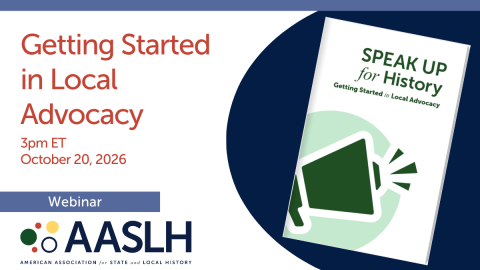
Getting Started in Local Advocacy
Event Date:Presented by: American Association for State and Local History (AASLH) -
Creative Museums Summit
Event Date:Presented by: MuseumNext