This article first appeared in the journal Exhibition (Spring 2026) Vol. 45 No. 1 and is reproduced with permission.
Collin County has been a farming community since its founding in 1846.[i] It spans over 538,240 acres with a robust network of streams and creeks that cut through a mix of Blackland prairie and patches of woodland.[ii] Yet, as of 2022, only 197,374 of the county’s original acres remain farmland.[iii] The historic landscape is vanishing. Geographically, Collin County sits on the northeastern edge of the Dallas-Fort Worth metroplex. Starting in 1960, farmland began being sold to developers because the county serves as a transition zone between the dense urban core of Dallas and the more rural counties that extend outward toward the Red River.
As Dallas grew, development pushed northward along major corridors such as U.S. Highway 75, the Dallas North Tollway, and State Highway 121, making Collin County a primary destination for suburban expansion.[iv] By 2010, fields of grain, cotton, and corn were replaced by model homes and luxury apartments, winning Collin County the prestigious designation as one of America’s fastest-growing counties.[v] Economically, Collin County transitioned from a socially rural, agriculturally dependent county to one of the most dynamic and affluent counties in Texas, now home to major corporate headquarters, technology firms, healthcare systems, and a robust service industry. The problem isn’t that economic diversification and suburbanization are happening—it’s that it’s unfolding so quickly that cultural, environmental, and historical costs often go unrecorded and unexamined. This is why Vanishing Space is powerful: this DIY, modular, accessible, and interative exhibition interprets these transitions in the present tense, capturing the transformation of fields into rows of houses that are now visible from the gates of the Collin County Farm Museum.
The erosion of traditional farmland we are seeing in Collin County is not an isolated event. Many counties and cities around the nation are experiencing rapid suburbanization.[vi] Without local museums like the Collin County Farm Museum (the Museum) to secure and interpret our agricultural heritage, much of the historical significance of farming communities and traditions may be lost. Farming isn’t just about crops, barns, or tractors; it’s a way of life that carries generations of knowledge, values, and cultural heritage. Every tool the museum saves and displays is tied back to a planting season or shared harvest, reflecting stories of persistence and adaptation. This is the history that binds the community to its land. As farmland vanishes nationwide, so too do many of the traditions, skills, and shared experiences that gave rural life its meaning.
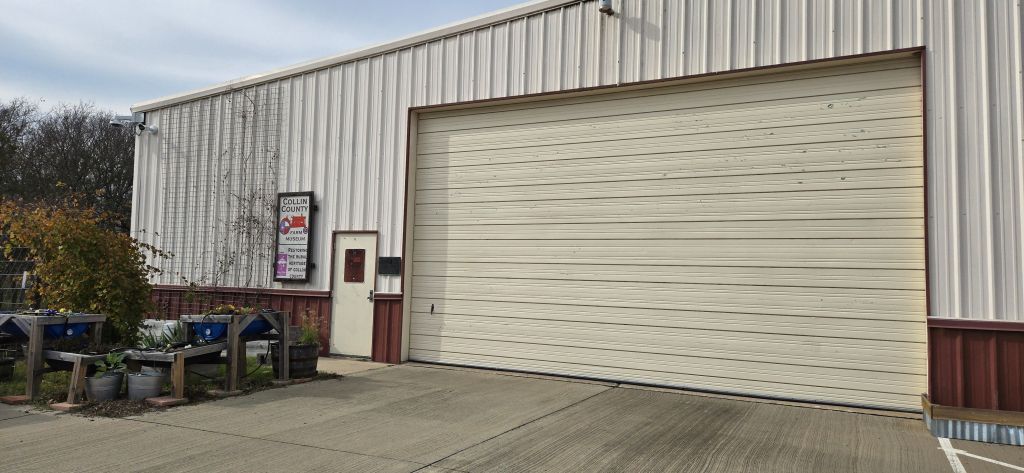
The Museum is situated within Myers Park & Event Center, a 158-acre park that was once home to two thriving farms. Though the Museum’s mission is to preserve Collin County agricultural history from its inception to 1960, we (the authors) felt that ignoring the ongoing changes to the County’s landscape would artificially impose an end date on a story that is very much still evolving and will undoubtedly continue to evolve in the future.
As a small museum, we can record events at the community level. Despite our limited resources—the Museum has only a single staff member and a group of dedicated volunteers who are responsible for all organizational functions—we respond agilely to local changes. The Museum remains one of the few local organizations keeping rural traditions alive through exhibits and hands-on homesteading-style workshops, such as cheese-making, canning, and basket weaving. In the past, the local community often had personal and generational ties to these traditions, so interpretation naturally resonated with lived experiences. Today, however, the County’s rapid growth means many residents arrive without agricultural backgrounds. Rather than diminishing our mission, this shift has broadened it. We now interpret agricultural history not only as a record of the past but as a foundation for understanding the present and the future.
It was against this backdrop that Vanishing Space opened to the public on October 4, 2025, with the Museum’s largest-ever opening attendance.
Designing for Impermanence, Iteration, and Accessibility
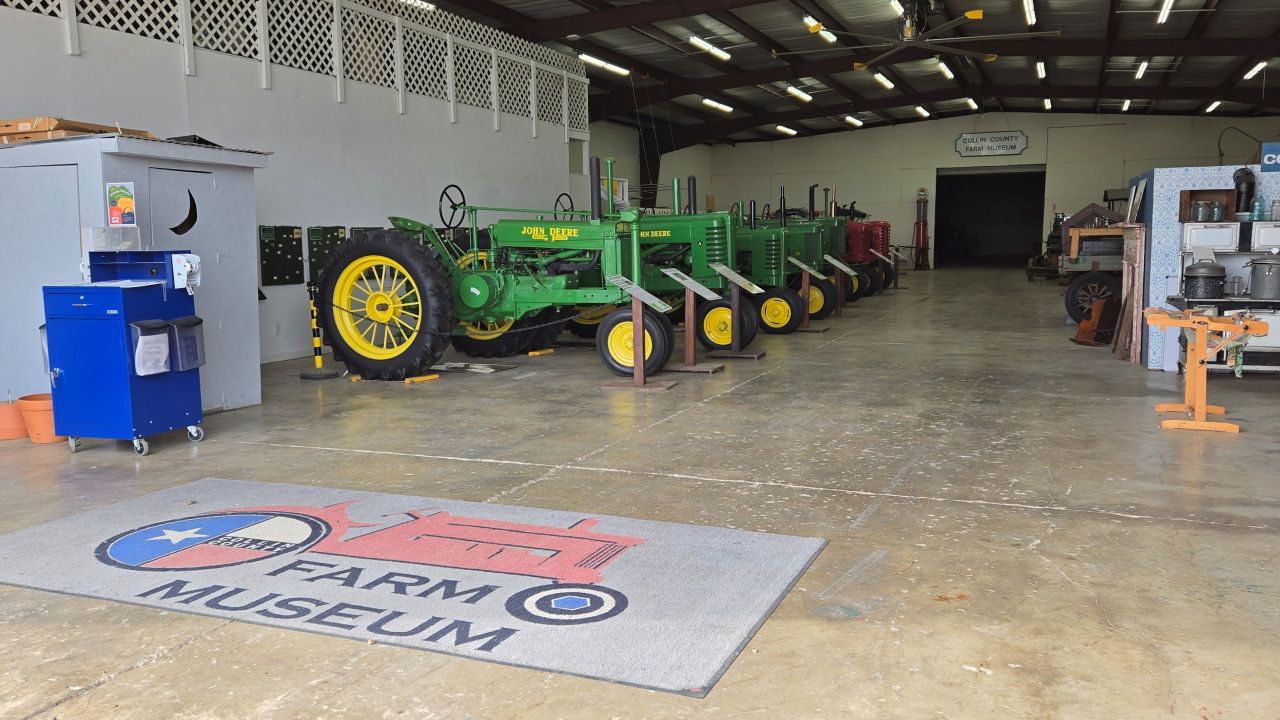
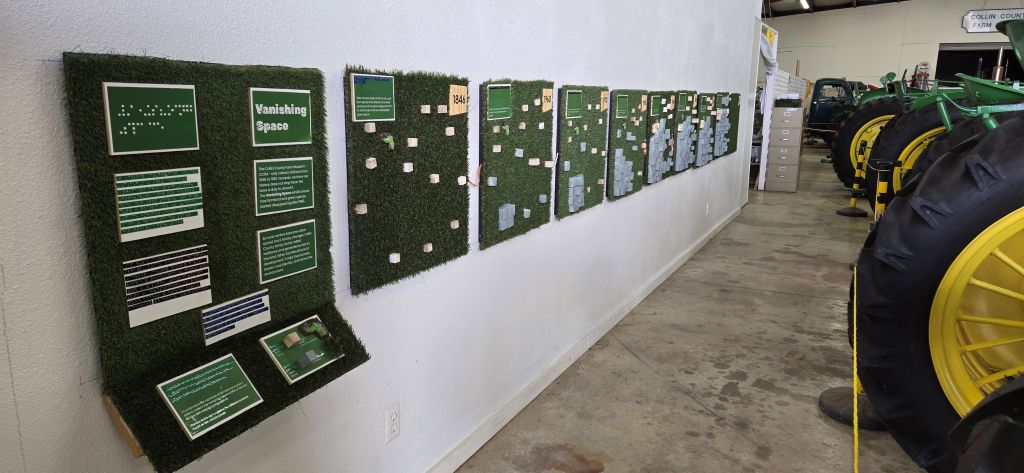
While the story of Vanishing Space could easily have been narrated in a video or through an interactive game, digital formats do not work for our space. The Museum is a warehouse (fig. 1); though enclosed and protected from the elements, it is not climate-controlled and offers little protection against insects or vermin. So, while historic farm equipment resides quite comfortably in the museum, modern technology does not. Additionally, like many small museums, our limited financial resources, personnel, and in-house technological capabilities make creating digital media challenging, if not impossible. Instead, we leaned into our strengths in physical design, which integrates a DIY, modular, and impermanent approach.
In the past, we might have approached this exhibition as a mural or series of flat, informational panels, but the Museum has recently embarked on an initiative to create more inclusive exhibitions. Following several school and adult tours where we hosted a variety of groups with collective accessibility needs, the Museum completed an accessibility self-assessment. This led us to focus on increasing access for the blind and low-vision (BLV) community, where we scored the lowest. Vanishing Space became part of our training.
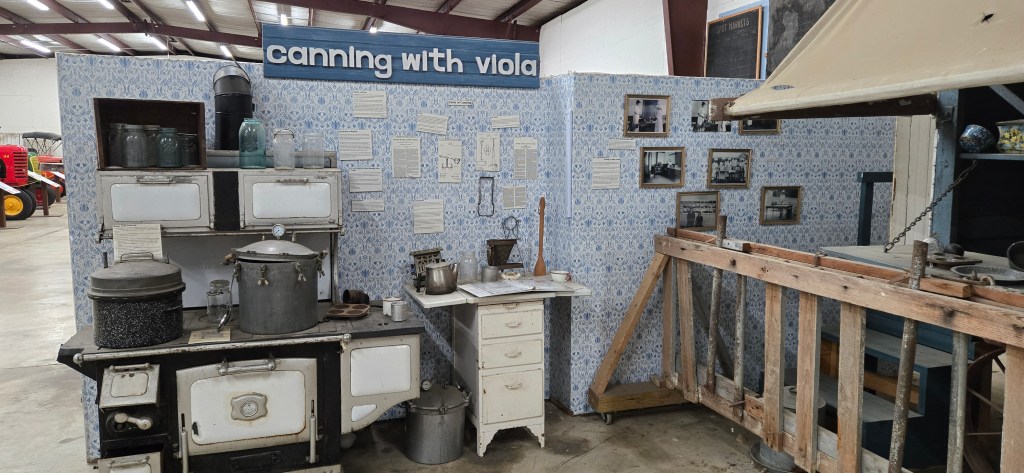
At the Museum, a DIY approach to exhibitions is essential due to financial and practical constraints. It also allows us to adapt and update our exhibits as needed. While this approach has been in place since Dr. Rogers joined the Museum in 2011, it became a core exhibition strategy in 2018 with the launch of our Youth Directed Exhibit Program, which engages teenagers from Scout organizations, 4-H Club, and Future Farmers of America (FFA) in creating exhibitions around historical topics. Exhibits that have resulted from this program include Refrigeration is Cool *Literally, Daily Dairy,and Canning with Viola (fig. 2).
Modularity and impermanence support the Museum’s interpretive goals by enabling space to be reconfigured for new projects after each exhibition. The guiding idea is to “repair, replace, improve” with minimal deconstruction since exhibits are refreshed every January and February while the Museum is closed for the winter. These approaches were a natural fit for Vanishing Space, particularly given its open-ended timeline. We needed to create a visual thread from the past to the future without a hard stop in the present.
Much of the data on land use comes from U.S. Department of Agriculture (USDA) reports and census records, which are consolidated every 10 years. As we relied on this data to tell our story, we allowed the way it was collected to shape the timeline. We decided to create uniform panels with a standard size and shape. Each panel represents the county’s land dichotomy (rural v. urban/suburban) at a decade mark. Fortunately, Collin County is roughly square-shaped, with a small cutout in the upper right corner that synced beautifully with the overall design of the panels. To assist with orientation and continuity, we created a visual anchor: A land plot in the shape of Myers Park & Event Center, where the museum is located, became an essential interpretive touchstone on each panel. The L-shaped plot helps viewers track the loss of farmland and increasing development as it encroaches closer and closer to the park (fig. 3).
![] A square panel covered in artificial grass features small beige cube markers arranged across its surface, along with a single green-and-blue L-shape of Myers Park & Event Center. A wooden plaque in the upper right corner reads “1846.” A green sign with braille and printed text explains that in 1846, farmers settled Collin County and divided its 538,240 acres into plots ranging from 170 to 4,000 acres or left the land as undeveloped green space.](https://www.aam-us.org/wp-content/uploads/2026/05/fig_3-1.jpg?resize=1024%2C1024)
Through the research and design process, we quickly learned that vision impairment exists on a spectrum and there is no one-size-fits-all solution. Mobile apps such as CVS Simulator and Tengo Baja Vision helped us make informed decisions about contrast, color, and layout. At the same time, regularly asking ourselves, “Is the contrast high enough?” or “Is it tactile as well as informative?” became routine. Simple additions, such as Braille created with a label maker or stylus, proved easier to incorporate than expected. By integrating these considerations with our modular approach, we developed an inclusive design for Vanishing Space that successfully addressed the needs of our BLV visitors.
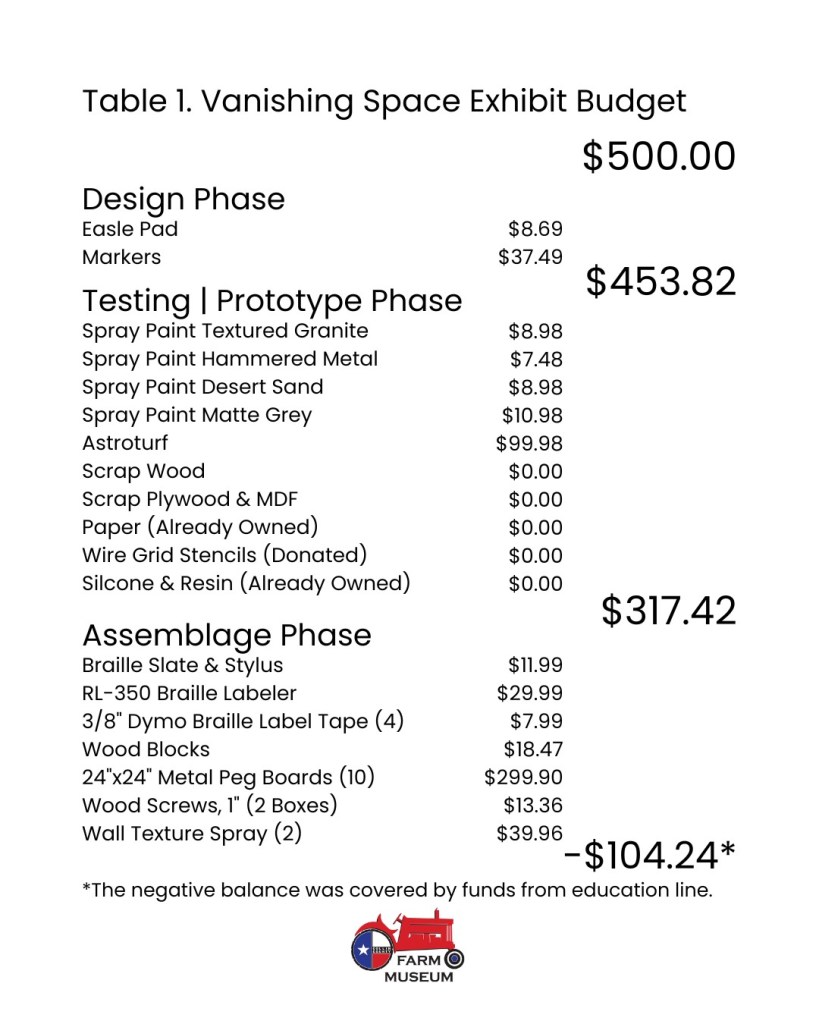
As with all our DIY exhibits, our design process remained consistent. BLV accessibility research and interpretive information were collected during the annual winter planning session of 2024–25, in which the theme, Vanishing Space, was decided. The budget was initially set at $500 and later expanded to $1,000 to accommodate design changes. The exhibition schedule was created, and the four-person exhibition team began work on the first Wednesday in July.
In a departure from our standard design procedure (where we meet around a worktable), we held our weekly meetings in the space where the exhibition would be installed. Being able to interact directly with the space proved helpful when coordinating tactile elements and creating a visual timeline through which visitors move.
After measuring the space, we configured the shape and number of panels needed to create the visual timeline. For the initial configuration, we decided on a linear display of 10 panels, with development plans in place for alternative formations that would allow for future growth. Additionally, we have ensured that the exhibition panels are placed at a comfortable height for tactile engagement. To be accessible to a third-grade child or to an individual using a wheelchair, the upper corners of the panels must not exceed five feet.
With rudimentary panel designs underway, the exhibit team returned to the overall layout of the timeline, recognizing the need to create repeating patterns and links between the panels to guide visual and kinetic movement. An L-shaped plot of land representing Myers Park & Event Center—made from poured resin cast from a silicone mold of a clay model—provides visitors to with a consistent interpretive anchor across the panels. Since the mold can be saved and used to make more resin casts for future panels, this approach supports our goal of leaving space for iteration and future change.
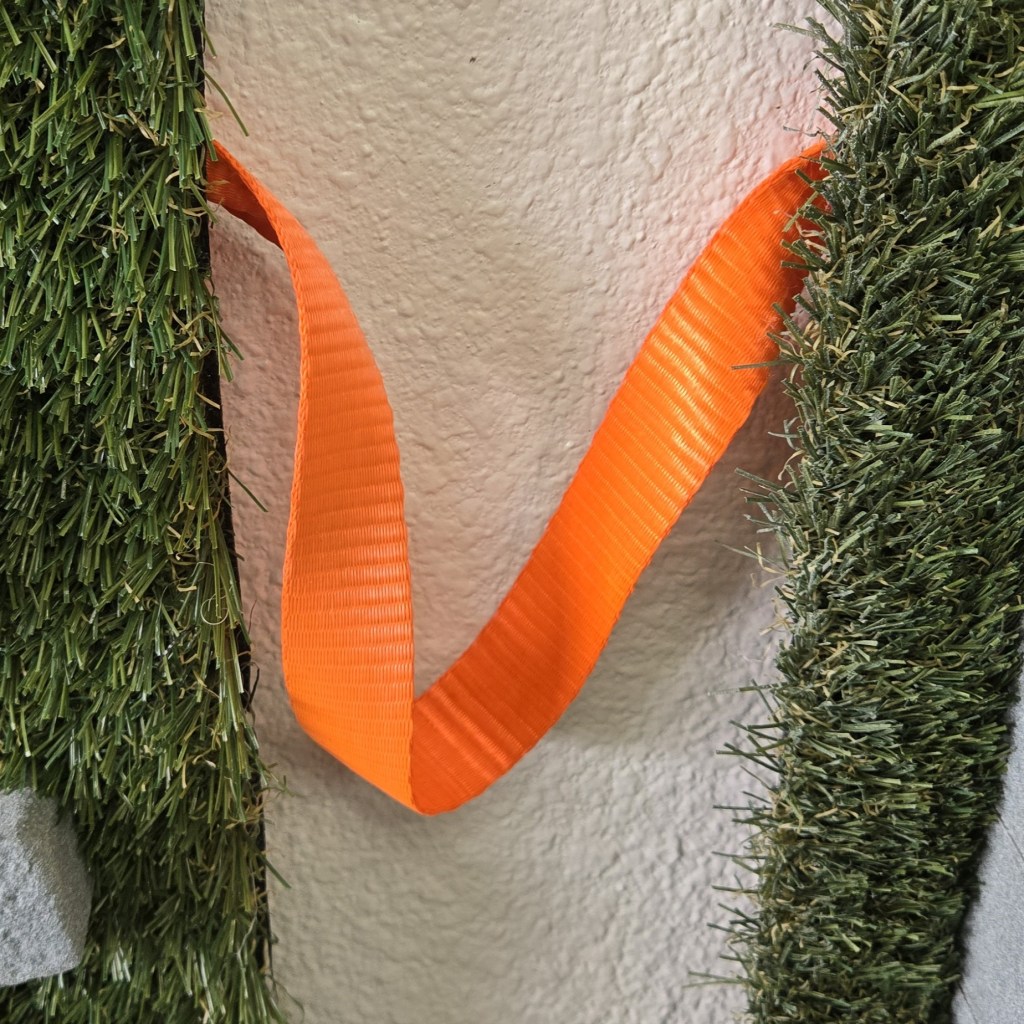
Education Volunteer Lyndee Yarger proposed another creative solution: using rope from different periods to accentuate the progression of time (fig. 4). The first link is made of hemp rope, a standard material in the 1840s, while the last link is made of vinyl-coated metal cable designed for UV resistance and outdoor durability. The shift from simple rope to modern cable reinforces the timeline’s narrative arc, making the passage of time legible through the materials themselves.
From the beginning, we realized that promoting tactile engagement meant things would break. We chose materials that are resilient, readily available, and within our budget. This meant discarding an early idea for including LEGO Braille bricks due to their high price, the limited number of pieces required, and the fact that the pieces were too easily removable.
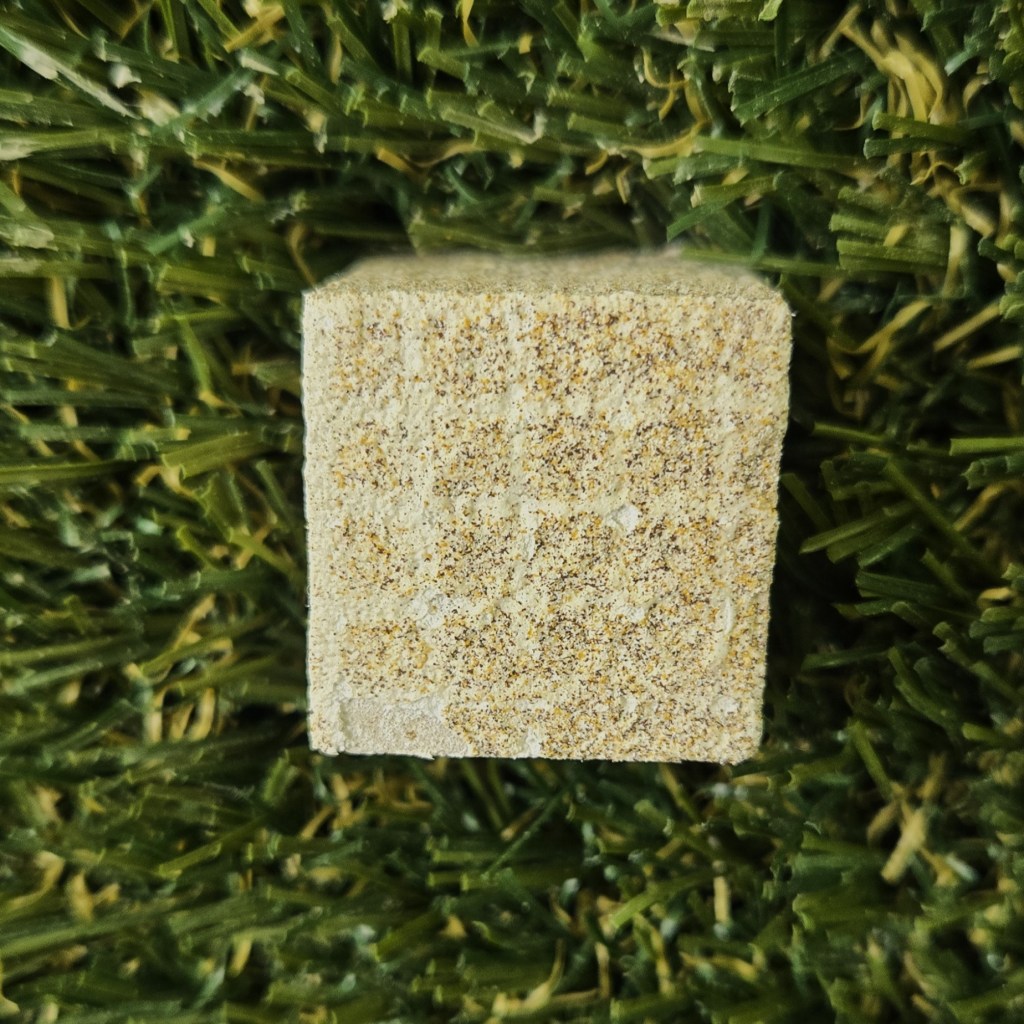
Another critical design decision was how to visually and texturally distinguish between farmland and development zones, or grassland and concrete. Astroturf proved to be a quick solution for grassland, as it resembles natural grass and is designed for outdoor use and high-traffic situations. To mimic concrete, we cut wood pieces and coated them with textured sprays to create a concrete-like roughness that contrasts with the astroturf.
The design phase spanned four Wednesdays in July 2025, during which we created a prototype panel, a testing schedule, and an initial supply list. In August, the exhibition team began creating mockups and testing different materials. By September, we were in full build mode, working several days each week with four rotating personnel to complete the exhibition by Saturday, October 4, 2025. The final panels were installed on the Friday before we opened (fig. 5).
Prototyping, Feedback & Real-Time Adaptation
The most challenging aspect of material testing was developing the correct texture for the concrete. We tried several sprays before finding a wall texturizer that delivered the desired tactile experience. Other issues arose: pieces were too easily removed from the panels, which we knew would lead to a high repair and replacement rate. The panels were initially designed using MDF boards, but we decided to shift to square metal garage peg boards—a significant investment that put us over budget (table 1). However, the peg boards solved several problems, including providing a grid for the placement of each panel’s components. The panels were also raised with a metal frame wrapping around the sides, preventing fingers from slipping behind the panels and getting cut or encountering spiders.
Throughout the prototyping process, we continually checked the visual components for our BLV visitors through free apps and live feedback. Dr. Rogers reached out to two organizations serving the BLV community in North Texas for feedback; however, the most useful feedback came from BLV friends and family. As a result of these consultations, we redesigned several components, including the font, as BLV testers preferred fonts that provided precise spacing between letters, such as Poppins, which we ultimately used. Another suggestion was to include handheld magnifying glasses in the exhibition.
Several people liked the textural contrast between the astroturf and the concrete invasion, but thought it was visually boring. Martinez successfully tested a creative solution: using gridded metal sheets as stencils, she overlaid grid patterns onto the existing concrete texture with spray paint. The grid patterns mirrored plots of land seen in urbanization (fig. 6). In earlier years, the grid pattern is larger, with 1-inch spacing. As the years pass, the grid pattern becomes smaller, with tighter clusters of quarter-inch squares.
Following the assembly phase, the exhibition opened on schedule on October 4, 2025, for 136 visitors. Visitors arrived in extended, multigenerational family groups, some spanning four generations, with great-grandparents and grandparents sharing firsthand memories of farm life. At the same time, children traced the shifting boundaries of the timeline with their fingers. Many had lived the history represented on the timeline; others were seeing for the first time how quickly the fields of their childhood had become subdivisions. As they moved along the exhibition wall, they began narrating their own connections to the land, whether here in Collin County or somewhere else. Their conversations wove past experiences directly into the present-tense story the exhibition is telling.
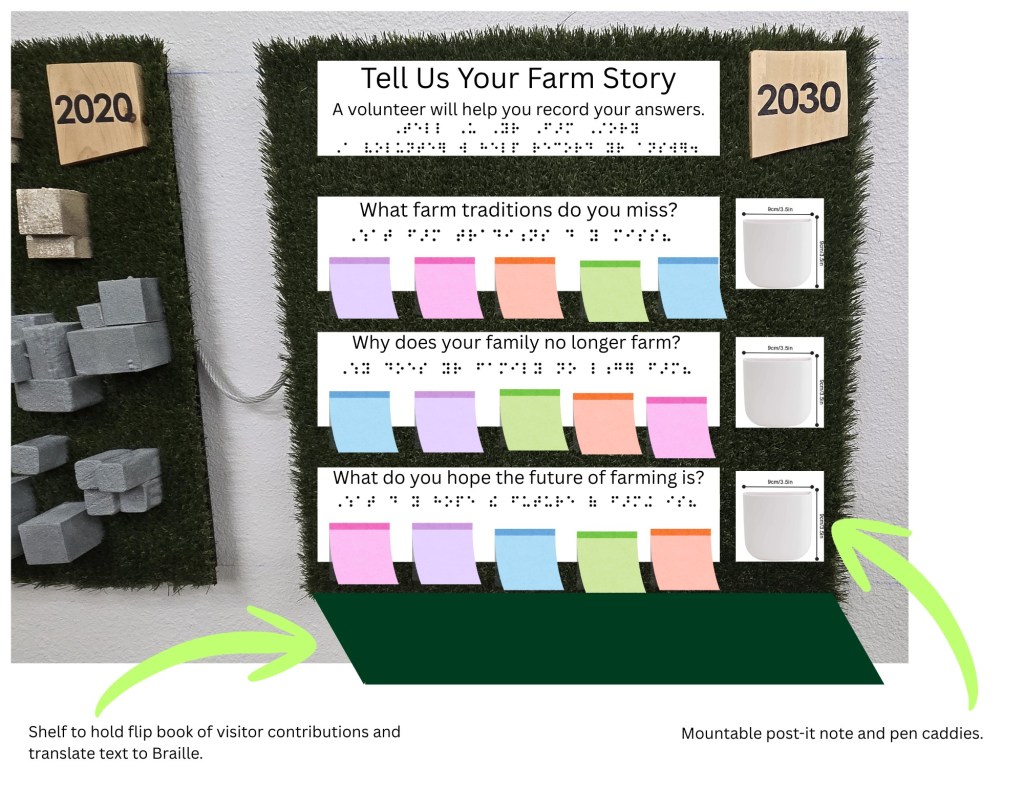
While this was happening, we realized the need to capture these stories. We immediately transformed the last panel, originally a simple interpretive element, into a living document. Text and Braille labels applied with adhesive paper or vinyl were peeled from the white panel boards, leaving a blank surface to repurpose. Using our text and Braille label makers (yes, during the exhibition opening itself!), we created new labels that shifted the interpretive approach from purely informative to intentionally participatory, inviting visitors to share their thoughts and stories. The panel is now continuously updated by museum personnel and visitors as new accounts surface. In this way, the Museum is fulfilling an expanded role in recording history as it unfolds, learning from the community it serves.
As we look forward, upgrades and updates are on the horizon. The Museum prefers to open exhibitions in the fall so the public can interact with them for several months before we close for the winter. The short opening months allow us to evaluate both the exhibit’s structure and visitor engagement with interpretive materials, and to plan changes and improvements during the winter refresh months. We’ve already seen that a specific brand of labels falls off while others remain strong. Other Braille labels are scheduled for replacement due to typos or color issues. A better sticker paper needs to be identified, and new text labels will be printed and replaced. Additionally, the hastily assembled final engagement panel needs to be refined and formalized, and a future brainstorming meeting for this winter is planned (fig. 7).
From Hyperlocal to Broad Application
Based on our experiences developing Vanishing Space, we recommed small museums adopt the following tactics to help interpret and design for rapid change:
- Embrace a modular, DIY approach with intentional exhibit design, recognizing that components must be easily repaired, replaced, and updated without dismantling the entire display. Additionally, the use of standardized panels and recurring visual elements enables the exhibition to expand or adapt as new information becomes available.
- Plan for future development. An open-ended timeline means updates are coming, so the space needs to accommodate them. We chose to alter the linear pattern for future additions rather than maintain it and occupy more space. This ensures that new content will be integrated seamlessly. Additionally, as the story and information evolve, the continuity will remain the same thanks to the work we did to establish textures and land motifs.
- Link practical elements of the exhibition design to your interpretive message. The combination of modular design and an open-ended timeline embraces impermanence as a framework for interpretation. Accepting that exhibit(ion)s are not static, but living reflections of our ongoing community, means highlighting change. Using an interpretive touchstone (like the recurring Myers Park & Event Center land plot) anchors the evolving narrative while highlighting the impermanence.
- Prototype and test in real-time with feedback. Building and testing within the actual exhibition space enabled us to gain a deeper understanding of how visitors would navigate it. We also used inexpensive prototyping materials first, then refined them after testing durability and visitor interaction. The key to the exhibition’s design success was feedback from formal organizations, local stakeholders, volunteers, and community members.
- Work within your budget. Small museums need to rely on readily available, cost-effective materials, which means sourcing everyday items (such as garage peg boards, ropes, textured sprays, and astroturf) that are durable, affordable, and easy to replace. Avoid overcomplicated or fragile elements (e.g., LEGO Braille bricks) when they prove impractical.
Conclusion
Vanishing Space proves that even the smallest museums can shape narratives of change. Visitor engagement has revealed something profound: the exhibition is not only interpreting a vanishing landscape, it is also prompting the community to name what was lost, what still remains, and what will endure. Stories shared during the opening and beyond have reshaped the exhibition. This is the essence of interpreting in the present tense—acknowledging that history is unfolding around us and that museums must respond in real time.
Small museums can engage meaningfully with rapid change by embracing impermanence rather than resisting it. At our museum, a modular design and an open-ended timeline allows the exhibition to grow alongside the community’s stories. Vanishing Space demonstrates how exhibitions can be a living reflection of their communities when they invite participation and remain open to revision. These tactics are not unique. They are strategies any museum can adopt when facing shifting landscapes, changing demographics, or uncertain futures.
[i] The Collin County Farm Museum uses Grammarly and ChatGPT professionally. We follow the American Historical Association’s “Guiding Principles for Artificial Intelligence in History Education.” Please note that the writing, words, and tone for this article are our own.
[ii] Francesca D’Annunzio, “North America’s Most Endangered Ecoregion is in North Texas’ Backyard. Here’s What You Need to Know,” Dallas Morning News, December 28, 2021.
[iii] U.S. Department of Agriculture, National Agricultural statistics Service, 2022 Census of Agriculture, “County Profile,” February 2024.
[iv] Parmanand Sinha and Daniel Griffith, “Incorporating Sprawl and Adjacency Measures in Land-Use Forecasting Model: A Case Study of Collin County, TX,” Transactions in GIS, August 2019.
[v] Nick Wooten, “Three Collin County Cities Top List of Nation’s Fastest-Growing Communities,” Dallas Morning News, May 14, 2025.
[vi] Yanhua Xie, Mitch Hunter, Ann Sorensen, et al., “U.S. Farmland Under Threat of Urbanization: Future Development Scenarios to 2040,” Land, 2023, 12(3).
Jennifer Rogers, PhD, is Museum Coordinator at the Collin County Farm Museum in McKinney, Texas.
LaShell Martinez is Lead Exhibit Volunteer at the Collin County Farm Museum.
Upcoming Events
-
Digital Collections Summit
Event Date:Presented by: MuseumNext -
The Federal Grant Landscape: What Museums Need to Know
Event Date:Presented by: Ohio Museums Association -
Accessibility by Design: Empowering Staff for Human-Centered Change
Event Date:Presented by: American Alliance of Museums -