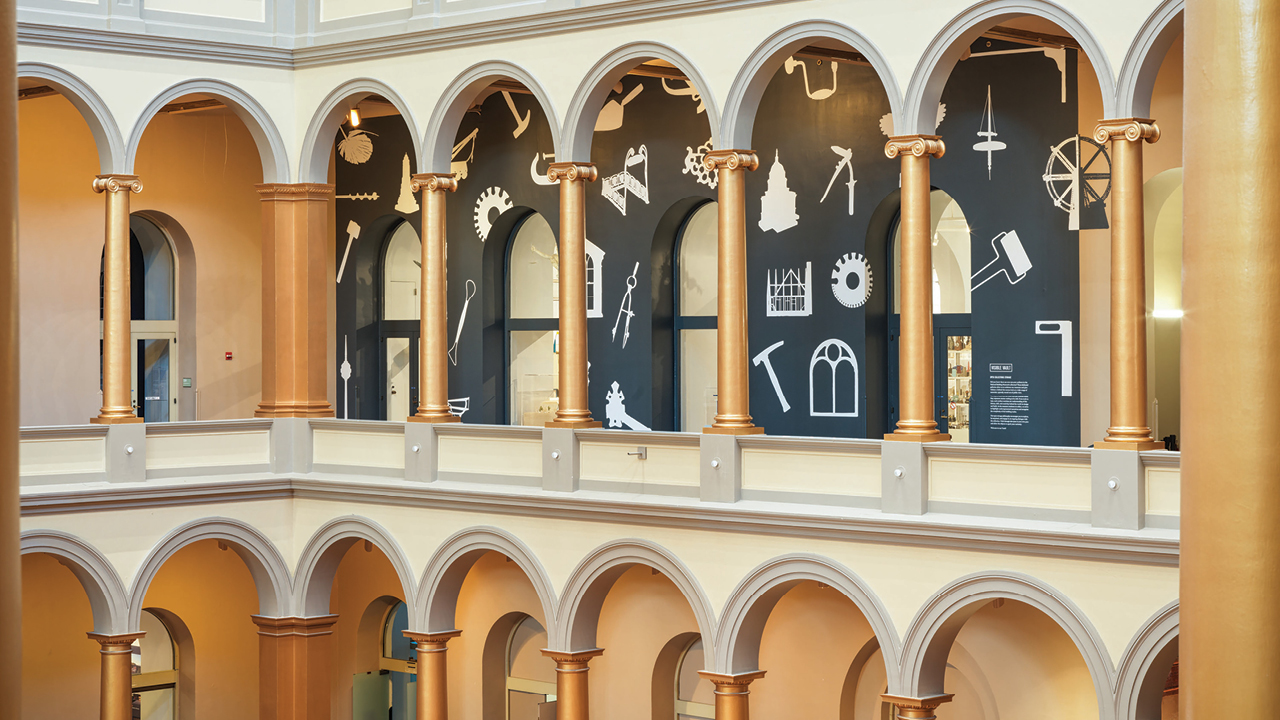
The National Building Museum has given visitors access to a trove of previously uncatalogued artifacts through its “Visible Vault.”
The National Building Museum, located in Washington, DC, in the historic Pension Building, was established by Congress in 1980 to showcase the building arts. The museum’s founding trustees and director went straight to work creating exhibitions, developing educational programming, and collecting artifacts for the new museum.
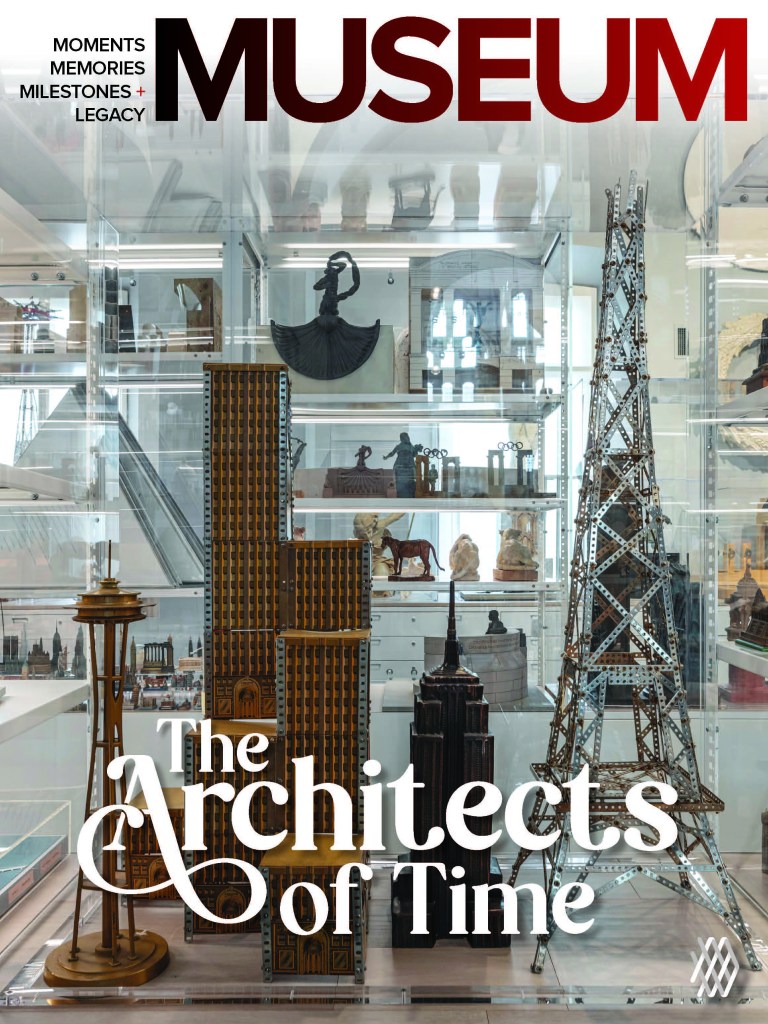
This article originally appeared in the May/June 2026 issue of Museum magazine, a benefit of AAM membership.
» Read Museum.
And collect they did: by the museum’s 40th anniversary in 2020, the permanent collection had more than 500,000 artifacts, including architectural drawings, photographs, tools, models, and even fragments of structures. However, the decades of rapid collecting, coupled with a limited number of dedicated collections staff, left much of the collection uncatalogued and without a searchable digital database.
If a museum’s collection is inaccessible, how can it contribute to the institution’s mission and broader goals? How can such a museum maintain its relevance within the community?
The consequences of this problem affected exhibitions, public programming, and other areas of visitor engagement. Due to its inaccessibility, the artifact collection was rarely considered when museum curators brainstormed new exhibitions. Although education staff were eager to include artifacts in programming initiatives, they had no way of knowing what was in the collection; even when they discovered something compelling, it could not be easily located or displayed. The collection was carefully cared for but remained accessible to a limited few.
Determined to increase the accessibility of the collection both in person and online, museum staff initiated an ambitious three-pronged plan in 2020: digitize the collection into an online database, construct a flexible open storage gallery to display the artifacts to all visitors, and bring object-based learning to the forefront of the museum’s storytelling and inclusive education efforts within that gallery.
Making the Collection a Living Archive
Rather than cataloguing all 500,000 artifacts in the permanent collection at once, staff began by tackling the three-dimensional portion of the collection: 20,000 items that include tools, toys, architectural models, artists’ maquettes, and building fragments. Starting here made sense because more than half of these 3-D items had already been partially catalogued, so staff didn’t have to start from scratch.
Perhaps most importantly, these items include some of our most visually interesting pieces, such as building facades and colorful blocks for children’s play. They possess inherent storytelling attributes that could spark exploration and discovery. To include these items in an easily accessible, long-term, open storage gallery, we needed to update the existing records according to modern standards, photograph the artifacts, and add the information to the museum’s online database.
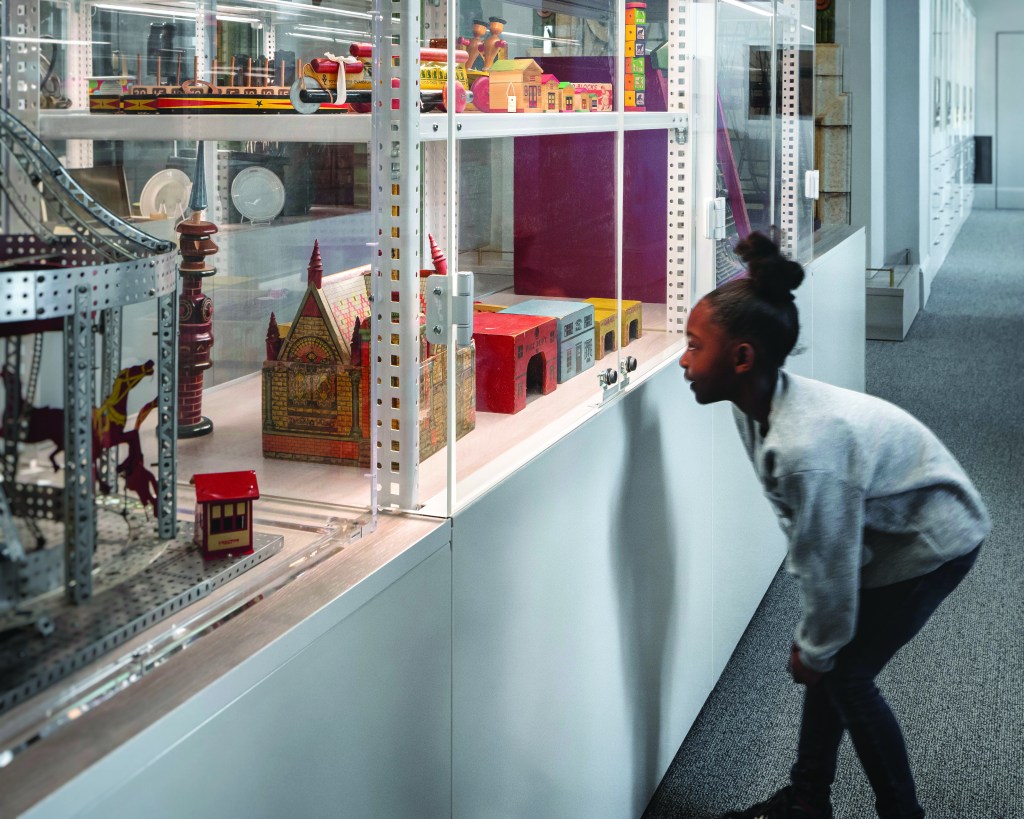
Photo by Stephen A. Miller
Cataloguing 20,000 artifacts was not a simple task, however, especially with only two full-time collections staff members. Thanks to funding from the Institute of Museum and Library Services, the museum mobilized extra help, including three temporary full-time staff members, four contractors, 16 interns, and three volunteers, who worked on this project over four years.
The museum was determined to create a standardized cataloguing process that was easy for the young professionals to follow, was replicable across the collection, and could integrate with our collections management system, PastPerfect 5.0. Standardizing the process ensured that our hard work would live beyond this project’s lifespan.
Staff amassed cataloguing data for the artifacts using easily accessible Excel spreadsheets instead of entering them directly into PastPerfect. Those Excel spreadsheets were standardized across artifact groups so that PastPerfect staff could later combine and upload them in the database. This allowed us to catalogue artifacts in batches, which was particularly helpful when working with thousands of similar tools or items that shared parallel descriptions and search terms.
By 2024, the museum’s collections department had developed a sustainable, streamlined cataloguing and digitization process. The work has now expanded into other areas of the permanent collection. By the end of 2025, more than 100,000 artifacts were newly accessible to the public through the online database and interactive maps.
Creating a Visible Vault
Once the data had been collected and made digitally accessible, it was time to make parts of the collection physically available as well. The museum partnered with Wendy Evans Joseph and her team at Studio Joseph to transform an outdated gallery space into a tailor-made display of architectural elements and artifacts related to the built environment.
The museum’s 3-D collection is wildly diverse in size, material, subject matter, and condition, which created equally varied challenges for Joseph and her team. Her primary goal was to create a display armature that showed the diversity of the collection in an accessible and playfully engaging way. The installation represents three display styles—platforms, drawers, and transparent casework. Each display typology is uniquely suited to the wide-ranging demands of this diverse collection: easy to access, flexible, secure, and robustly manufactured.
Studio Joseph chose a neutral palette of light gray walls; white cabinetry; and white oak platforms, countertops, and flooring so the colorful artifacts would draw visitor focus. Low podiums along the entry wall permanently display oversize artifacts and architectural fragments that attract visitors walking by the gallery. Additional monumental pieces hang from the walls above.
Storage cabinets by Delta Designs Ltd. line the eastern perimeter, providing more than 90 glass-topped drawers that visitors can open. These can display small, delicate, and light-sensitive objects for long periods of time. Custom, freestanding cases with locking doors and adjustable, lit shelves occupy the center of the gallery. These cabinets, locally fabricated and installed by South Side Design & Building, provide flexible space for medium-sized artifacts that can be easily changed for special events and educational programs.
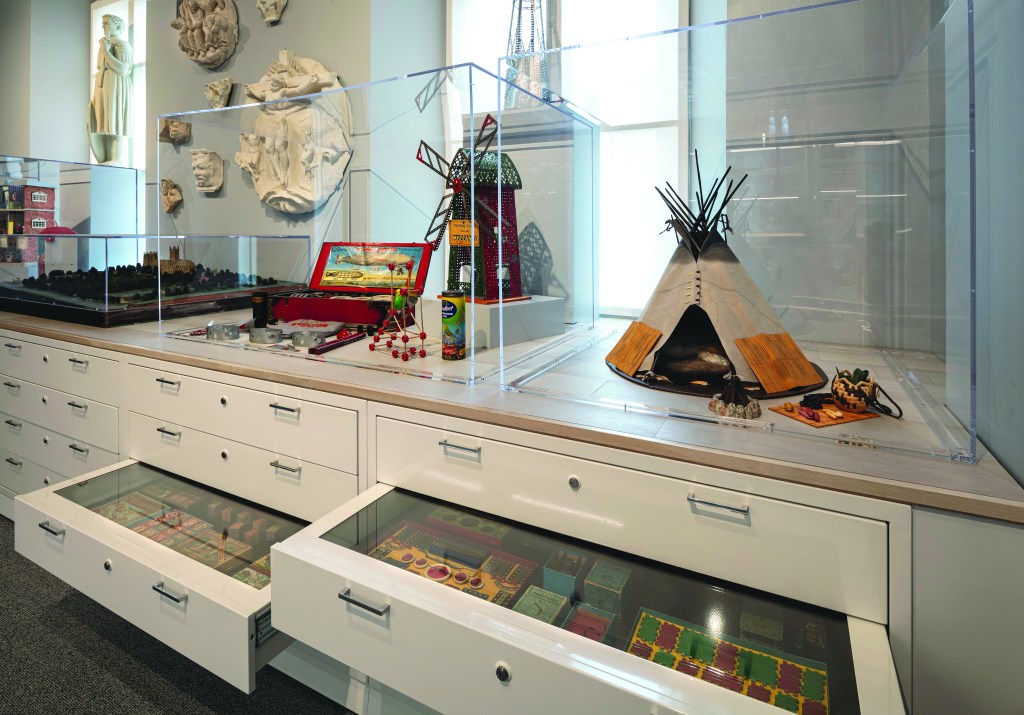
Photo by Stephen A. Miller
The “Visible Vault: Open Collections Storage” exhibition opened in December 2024 and quickly became one of the most visited galleries at the museum. The museum is currently conducting formal evaluations, but early findings suggest the gallery attracts visitors of all ages and interest levels, aided by its windows to the outside hallway that spark curiosity. In addition, almost every school group visits the gallery, and our popular docent-led tours begin there.
Each artifact in the exhibition has a digital record in our online database. Using a QR code, visitors can access additional information on their personal devices by entering the object’s unique ID number. QR codes on larger artifacts that were part of buildings (e.g., windows, facades, maquettes of sculptures) link to an Esri StoryMaps interactive that allows users to view a global map showing where the building is—or once was—located. Visitors can zoom in to see the building and historical photographs of that artifact in situ.
The flexible display design and the digital database have given visitors, staff, and students unprecedented access to the museum’s collection.
Improvements to Programming
Since its opening, “Visible Vault” has become integral to the visitor experience, fundamentally shifting educational and public programming offerings through new field trip curricula, maker’s workshops, and hands-on learning.
Before “Visible Vault,” the museum’s educational programs lacked a direct connection to our permanent collection, relying mostly on narrow topics covered in highly specific temporary exhibitions. The education team can now access a variety of objects that seamlessly fit into many built environment program content areas, themes, and objectives. They have far more flexibility to connect programs to career development, city planning, artistry, literacy, or toys with the same objects on display.
School programs and field trips now focus on object-based learning. Students attending a city planning field trip arrive with a prompt—look for inspiration for the city you are going to build after this! The excitement this generates is palpable, the curiosity is deeper, and the connections are stronger.
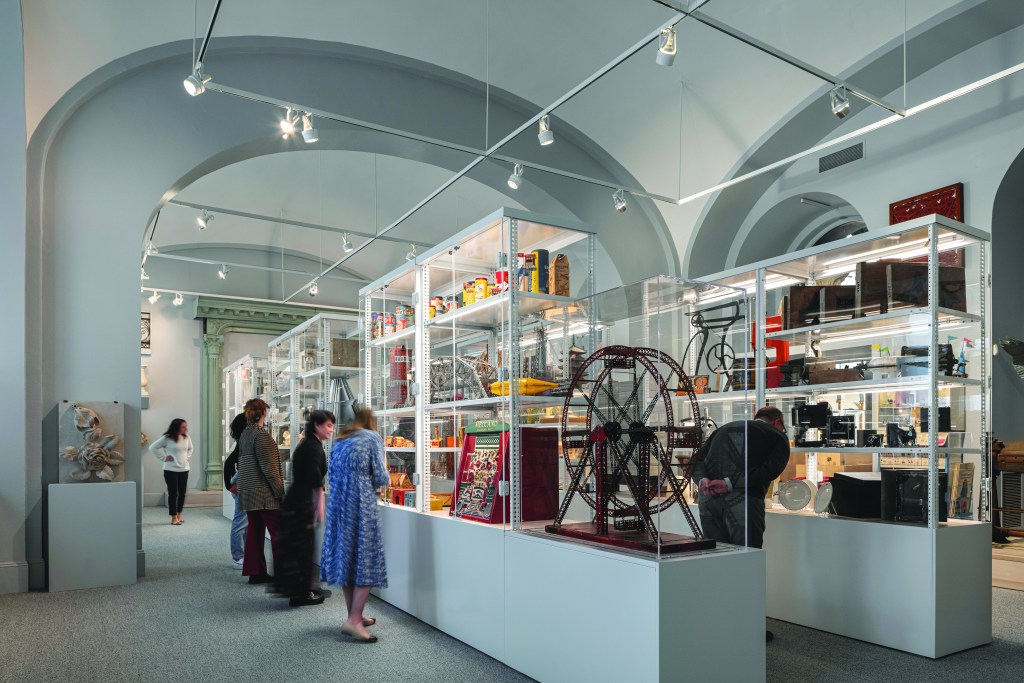
Photo by Stephen A. Miller
“Visible Vault” also enabled the museum to create programs like Career Exploration, in which pre-K–12th grade students learn about careers in professions related to the built environment. With such a wide range of artifacts on display, the museum can easily scale this program for different age groups and educational backgrounds.
The gallery has also strengthened community engagement through the Meet a Professional series and Maker’s Workshops. In a woodworking workshop, for example, participants start in the gallery to learn about the woodworking tools on display, such as planes and saws, before building their own clock using contemporary versions of the tools. In a mosaics workshop, participants learn about the history and design principles of mosaics and then create their own mosaic trivets. By incorporating historical tools into programming, the education team connects visitors with the workers and industries represented in the collection and elevates skilled trades that often go unnoticed or are underappreciated.
Increasing access to the collection—digitally, physically, and intellectually—filled a void at the museum. Every aspect of our outreach and mission now ties back to the physical collection. The museum can bridge the crafts of the past with emerging digital fabrication technologies, bringing to life intergenerational stories about the world we design and build.
Tips for Creating Open Storage
Create flexible displays. The museum’s collection continues to grow, and every year we have new, unique artifacts to display. Thanks to the flexible design of “Visible Vault,” especially the movable shelves and adaptable cases for displaying both huge and tiny artifacts, items can be easily rotated in and out of the gallery.
Choose larger objects carefully. “Visible Vault” is a permanent exhibition, and we rotate smaller, more fragile artifacts on a schedule. Larger objects are more difficult to remove and replace. Consequently, conservators selected durable stone, brick, and metal oversized artifacts that could safely remain on display for extended periods of time, if not permanently.
Tell personal stories. Through cataloguing, staff learned more about the architects, engineers, builders, and clients represented in the collection. Sharing these stories helps visitors connect with artifacts on a personal level.
Spotlight the fan favorites. Give the people what they want! From years of behind-the-scenes tours, our collections staff knew which artifacts generated the most visitor curiosity. The museum displays these popular artifacts prominently, and they remain a top draw.
Allow deeper exploration online. Direct links to the database enable visitors to learn more about the objects’ history and context at their own pace.
Upcoming Events
-
AASLH-NCPH Joint Conference
Event Date:Presented by: American Association for State and Local History (AASLH)Providence, RI -
All You Need to Know to Drive Success for Your Museum Store Sunday!
Event Date:Presented by: Museum Store Association -
Transit Insurance in Practice for Traveling & Co‑Organized Exhibitions
Event Date:Presented by: American Alliance of Museums -
Digital Collections Summit
Event Date:Presented by: MuseumNext