Curious about what it’s like to participate in Museums Advocacy Day? Whether you’re considering attending for the first time or simply want to learn more, this webinar will give you an inside look at the experience.
Hear directly from past Museums Advocacy Day participants as they share why they attend, what they gained from the event, and what first-time attendees can expect. You’ll also have the opportunity to hear from AAM staff, who will answer frequently asked questions and offer practical tips for completing the registration form—including how to maximize your chances of receiving the meeting schedule you want.
Transcript
Brandy Dillingham
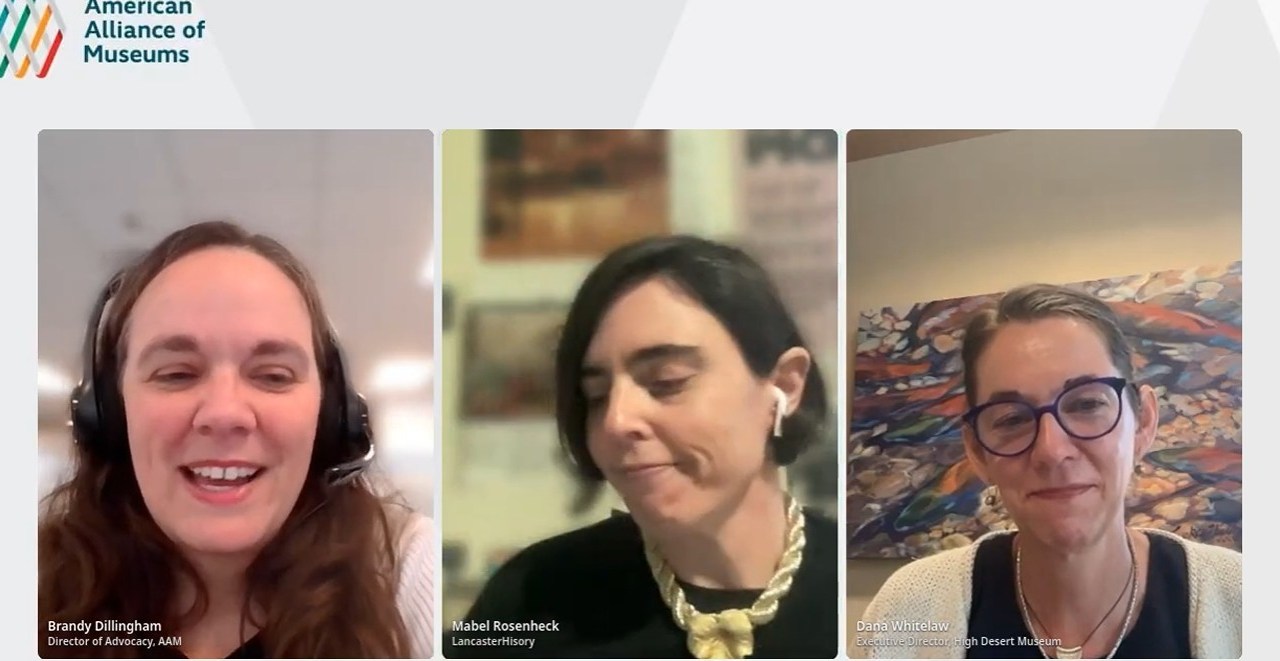
Hello, everyone. Thank you so much for joining today’s webinar, What It Is Like to Participate in Museums Advocacy Day. This webinar is aimed at those who have not attended Museums Advocacy Day before and wanted to know what the experience is like before making a decision to come. On this webinar, you will hear from two past attendees, one who has participated multiple times and one who participated for the first time earlier this year, talk about their experience, why they choose to attend, what they gained from attending, and what first-time attendees can expect. AAM staff will answer frequently asked questions and offer practical tips for completing the registration form, which plays a big role in what congressional meetings attendees are scheduled for.
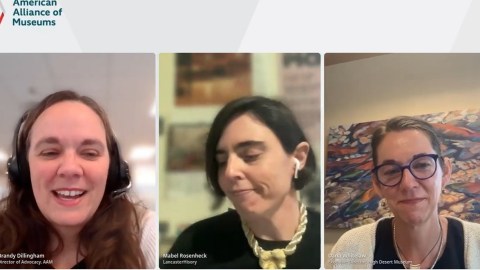
As we go through the webinar today, if you have any questions, please make sure to type them into the Q&A box. And now we’re going to kick off introductions. My name is Brandy Dillingham. I am Director of Advocacy for the American Alliance of Museums. I have been in this role for two years now, and I have over twenty years of experience working in advocacy, government relations, policy. And I spent a little over seven years working in a congressional office. So I can help bring some of that experience to this webinar today. And now I would like to introduce our two guests. Who will be joining me on stage. Ariel, can you bring? Thank you.
Dana, why don’t you get started and introduce yourself?
Dana Whitelaw
Great. Hi, everybody. And so nice to be joining you all today. My name is Dana Whitelaw. I’m the Executive Director of the High Desert Museum. We’re in Central Oregon. Also an AAM board member. And also the board chair for the Cultural Advocacy Coalition of Oregon.
Brandy Dillingham
Mabel?
Mabel Rosenheck
Hi. I’m Mabel Rosenheck. I’m the Director of Education and Exhibitions at LancasterHistory. So we’re a bunch of things. We’re in South Central Pennsylvania. We are a museum and research center for Lancaster County. We are also stewards of James Buchanan’s Wheatland, the home of the fifteenth president, and we just opened a brand new museum, the Thaddeus Stevens and Lydia Hamilton Smith Center for History and Democracy.
Brandy Dillingham
Great. Thank you both for joining us on this webinar today. And I’d also like to encourage the audience to introduce yourself in the chat so that we all know who’s joining us today.
Before we launch into conversations about Museums Advocacy Day, I did want to give those of you who are who have not attended Museums Advocacy Day and have maybe don’t know what it is a little information, a simple overview of the event.
So Museums Advocacy Day brings together the museum community together to advocate on Capitol Hill. We have many museum associations, state, regional, national associations that partner with us on this event. Attendees come from a wide spectrum of museum types; we have industry partners who work with museums that participate. Museum employees of varying levels. We even have a few universities that bring in some of their museum studies students to participate. So we have a wide participation from the from the museum ecosystem. Registration for Museums Advocacy Day usually launches in the fall, and registration closes in mid-January, with the event taking place at the end of February.
I will talk more about 2027 later on in this webinar. In the weeks leading up to Museums Advocacy Day, we send out training materials, we do a what-to-expect webinar that goes into a lot more detail than this one will. That’s specifically for attendees. We send out instructions on how to do research on your members of Congress before you come. And this past year, we started doing staff office hours leading up to the event so that attendees can get questions answered before they come.
Now for the event itself, Sunday evening of museum advocacy day is an optional reception. It’s a great opportunity for networking. On Monday, there is a full day of programming at the homebase hotel. And while the programming may change from year to year, there are couple things that will always be a part of it. That is training on the policy issues that we are going to be asking congressional offices to support or oppose. We will do advocacy training, specifically for the meetings the next day, and you will always have time set aside for everyone to meet with other attendees from their state to coordinate with each other before going to their meetings.
So now let’s kick off some more in-depth conversation. I want to start with this question is for both of you. If you could start off sharing what motivated you to attend museums of day in the first place. Mabel, I will start with you.
Mabel Rosenheck
Sure. So I was a first-time attendee earlier this year, and I was really just curious. As I’ve gotten, you know, as I’ve gotten older and particularly in the current, you know, social and political climate, I’ve gotten more interested in civic engagement and more interested in advocacy. And this just felt like a really interesting opportunity to see it up close and particularly to see it going on in my own field. So I asked my boss if I could go. She said yes. It was easier for me to do since I’m in Pennsylvania. I could drive, you know; it wasn’t too expensive for me. But, yeah. Luckily, she said yes. I didn’t have a lot of expectations, but it was a really great experience. I really enjoyed it.
Brandy Dillingham
Dana?
Dana Whitelaw
I attended my first Advocacy Day in DC in 2020, and we were motivated here at the High Desert Museum for a couple of reasons. We’d recently received a few IMLS grants that were really inspiring our work and making a lot of impact. And one of those grants was to work with the Museum at Warm Springs, which is a tribal museum about an hour away. So we came with our colleagues and friends at the Museum at Warm Springs and had the Central Oregon Museum Caucus attend Museum Advocacy Day. And coming from the West Coast as opposed to Mabel, it’s more expensive and a bigger trip. And combining it with Smithsonian visits and meeting with colleagues at other offices like NEH and NEA and IMLS is a great way to kind of expand what you can do along with the time at Museums Advocacy Day.
Brandy Dillingham
Mabel, from the perspective of a first-time attendee, please talk about the experience from your perspective, and was there anything surprising about the experience?
Mabel Rosenheck
Yeah. It was a great experience. I learned so much about advocacy, about Congress, and also about AAM. So it was really an educational experience. And I think this is one of the things to emphasize for audiences, for all of you guys here, is there’s lots of different reasons why people come, and you can come just to learn and observe, or you can come with specific advocacy goals.
So I really just came, you know, mostly out of curiosity came to learn and to observe. The thing that kind of surprised and impressed me the most was the range of reasons why people were attending. You know, there were some people who had specific advocacy goals, some people are just coming because they thought it was important to advocate to Congress. You know, the people who work for land conservation, but also museums, you know, just people came for so many different reasons. And it gave me a sense of, in the future, why I might want to come back or what we might want to do in our organization.
I think the thing that was surprising, some of the sort of more material things, is just how big Congress is. The hustle to get from one meeting to another is real, and it just gave you know, I just had no idea. And I think the other thing that that surprised, you know, another thing, like, I knew but didn’t know was how much Washington is really run by, like, twenty-somethings. You know, those are the staffers that you’re going to meet with. They were most mostly young, mostly white, and mostly male. So that was definitely another learning, particularly in the offices that I went to. So that was another surprise, but not surprise.
Brandy Dillingham
And, Dana, as a multi-year participant, talk about the experience from your perspective.
Dana Whitelaw
What I’ve loved about being able to participate for a number of years is building some rapport with the staff in the congressional offices and with the senators and representatives as well. And being able to scaffold some of the topics that we’ve talked about year over year. And like Mabel mentioned, there are so many other groups advocating at the same time, and I have really grown to appreciate the importance, the critical importance for museums to be at the table and have us there in force to talk about the power of our work, the impact of federal funding, the other variables that impact our organizations, and unifying the field. As museums, we’re deployed across the country and doing this really important work in our communities, and coming together to activate all of that energy, and that important work is so critical to show our elected officials that we’re there. And it’s really inspiring. And a lot of walking.
Brandy Dillingham
Yes. There is a significant amount of walking. Well, one of the things we always tell participants is to bring comfortable shoes because you will be walking and standing quite a bit.
Dana Whitelaw
Get your steps in.
Brandy Dillingham
Yeah. Exactly. For both of you, for the folks who have no idea what to expect, what are the meetings with congressional offices, like, are they intimidating, or is it fairly easy? What is it like from your perspective? Dana, I’ll kick it off with you.
Dana Whitelaw
Sure. I did find it a little intimidating at first, just not knowing what to expect. And I had a piece of advice from a mentor who said, Dana, remember it’s their job to meet with you. And they’re opting in to this profession, and they need to meet with you. We’re their constituents, and they are our elected officials. And that helps sort of put the perhaps the perceived power differential at bay. Our work is so exciting at museums, just talking about our work, telling your story is a really great way to just make an in, break the ice. They have had a profound museum experience. Typically, usually, you know, a way to make a connection with them. And that can really help create a relationship.
Brandy Dillingham
Mabel?
Mabel Rosenheck
Yeah. I agree. It’s a little intimidating for sure. I, you know, I think the thing is just be prepared. You know, definitely, as Dana said, I mean, be prepared. These people are there to listen to you, you know, that’s what they’re there for. They’re there to represent you. But also, I mean, we’re, well, most of us are educators or, you know, work with, you know, work with the public in some capacity, whether talking to donors or talking to students. We’re all used to talking to people who kind of are only half listening to us. You know, or people who are sort of obligatory. So I think, you know, making sure that you know, it’s all practice, I think. So, you know, you may have different levels of engagement. They may or may not take notes with you. You may be in a hallway, not even in a real office. But, yeah, they’re there to listen to you. You’re there to share your piece. And you know it’s good practice for giving your elevator pitch even if they don’t seem engaged. But also, you just don’t know what’s going to stick. Again, I think we all know this: those of us who work with the public extensively, you never know what detail is going to hit with them or what they’re going to think about later. So you have to just make your pitch, do your best, and, yeah they’ll be they’ll be listening at least in some capacity.
Brandy Dillingham
And there’s one thing I wanted to jump in on that you just mentioned. The meeting spaces. Offices are surprisingly small, particularly on the House side. And because they want to meet with as many constituents as they can, they may have to meet with you in some very odd places. It may be in a hallway, maybe in the smallest room that could be a closet. You may be in a busy reception area. You just never know. But they want to meet with you, so they’d rather meet with you in those locations than to tell you no just because they don’t have meeting space.
My next question, and this one’s for Mabel. You had the experience of participating with a big group for your Senate meetings. But you were the only person in a few of your House meetings. And given that this was your first time, I’m sure that that had a difference on your experience, but I was hoping you could talk a little bit about what you saw for the differences between meeting with the larger group and then meeting as a solo or even in a smaller group for your meetings.
Mabel Rosenheck
Yeah. I, to some extent, I’m lucky. I’m from Pennsylvania, so there was a large contingent of folks from my state. So in my Senate meetings, of course, I was with, you know, eight or nine other people. And also lucky those came first in my day. So I was lucky that I got to see the process and action I got to see, you know, just exactly what I was saying, I got to see the degree to which they’re engaged with you, which can kind of vary and, you know, can vary over the course of the meeting even.
So first of all, I was just lucky that I got to see that first, you know, the big meetings are a little easier because, yeah, the spotlight isn’t on you, and you can observe. You can watch both what your colleagues are doing, but also what the staffers are doing and that kind of thing. The other big difference, again, particularly coming from Pennsylvania, coming from where I am in my Senate meetings, there were lots of other people from the state, but there was nobody else in most of my meetings with my representatives. But, of course, those are the people who are much more invested in my museum and much more invested in my, you know, in my community, particularly since we’re the Lancaster County Historical Society. So just the attention, I think, was different. And, again, some of that was the Senate versus the House as well as, you know, that geography as well as the different sizes. So I think, yeah, it was just slightly different dynamics based on how on how much they knew and how much, yeah, how much they were invested in their district. I think that was the biggest difference. Yep.
Brandy Dillingham
Yeah. And, also, jump in regarding meeting sizes, it’s going to vary widely from state to state. There are some states that have a very big group that attends. I will say that’s typically more of the East Coast states where it’s a little easier to get here. And then there are some states where, like, Dana, this past year, was the only person from Oregon. So that does sometimes happen as well. But if you do find yourself in a meeting by yourself and you do not wish to be in a meeting by yourself, you can let staff know, and either we will go with you, or we will help find an experienced attendee to go with you. We don’t want people to be by themselves if they don’t want to be, but also if people want to be in the meeting by themselves, we’re happy to let them, you know, go on their own. So don’t feel like you have to do a meeting by yourself if you do not wish to. And as Mabel mentioned, even in states that may have a bigger delegation, you may be in a part of the state where not a lot of those other attendees are from, so you may have the opportunity to have a bigger meeting with the Senate and then smaller individual ones with your House. It just kind of depends on where you’re from. And I should also note with that there’s also many state associations and regional associations that also attend Museums Advocacy Day. And so some of their staff may also be willing to go with you if you’re in a meeting by yourself. It again, it varies, but we will find someone to go with you. Don’t worry. If you don’t want to be by yourself, you don’t have to be.
My next question is about and, Dana, you had actually touched on this earlier about making the connections with your congressional offices. And you’ve been doing this for a few years. Have you been able to develop relationships with those congressional offices, and how have you been able to utilize that relationship? And then after that, I’m going to turn it on to Mabel. Having done that for the first time, has she already been able to see the benefits from beginning to develop those relationships? So, Dana, starting with you.
Dana Whitelaw
Sure. Thanks, Brandy. I have been able to develop relationships with the Senators themselves, their field office representatives here in Central Oregon. And a couple of things that have developed from that is that the Senator actually brought the Department of Interior Secretary to the museum because I had been at Museums Advocacy Day. They knew that we were working with tribal partners, and so the relationship has really become pretty incredible for us to elevate the profile of the museum. And it’s not that hard if we’re just telling our story, and museums are fantastic meeting places for our elected officials. So that relationship building can really go pretty far.
The other piece that I found particularly the field office representatives tend to be folks in their twenties. They’re younger. And they are museum nerds here in Central Oregon. So they come to a lot of events, and I would encourage folks to develop relationships that way too, from folks who are deployed from the federal offices out into your state. That can be a really fun relationship to develop. And, especially with the disruption in federal funding from the agencies: IMLS, NEA, and NEH, we often, as museums, are getting communication that those elected officials aren’t getting in their offices. So they’ve reached out to me to say, you know, what are your reinstatement emails look like? And what’s that process? And that can be a great way to feed information. That was so surprising to me that Gavin, my field office representative here, was like, oh, Dana, we didn’t know that that’s, you know, that you’re getting reinstatement emails from the National Endowment for the Humanities. So there’s real-time information that can be super helpful, and I think it helps elevate the position of museums and how dynamic often federal funding streams are, how things that are happening at the federal government are impacting these. You know, I think museums can be perceived as being stable and weathering all of these things, but we know that our field is really dynamic, and they need to know that. So that real-time feedback has been part of that relationship building for me.
Brandy Dillingham
And Mabel for you?
Mabel Rosenheck
Yeah. So, obviously, as I said, this was my first time. But I did connect with one of the staffers in my representative’s office, and he’s actually coming down to visit next week, so next Tuesday. You know, a lot of them said that, you know, during the summer break, during the August break, they’re more likely to come visit their, you know, to visit their districts. And, you know, that was the impression I got is that, you know, one of the things that did surprise me that I didn’t mention earlier is they’re not from their district. Like none of the people in the House of Representatives were actually from Pennsylvania, much less from Lancaster County, or most of them anyway. And so visiting the museum is a way for them to get to know the district. So I think it is meaningful for that reason, and there’s a lot of potential to build that relationship with people who do want to get to know the district a little bit better, particularly in those breaks.
Brandy Dillingham
And to add to that, every congressional office is different when it comes to their staffing. You will find some offices where you’re meeting with folks who have no connection to the state, and then you will find some offices where almost everybody working in the office is from the state. So it does vary widely. And you never know what you’re going to get. As Mabel mentioned, it’s so important to do these meetings because you don’t know. We talked about what the experience was like to do the meetings, but what is it like just being on Capitol Hill? Dana, I’ll kick off with you.
Dana Whitelaw
Sure, I think what really impressed me in being the naive first-time visitor into 2020 for Museums Advocacy Day, I was like, oh, it’s going to be all museums, like, that’s just us in on Capitol Hill. But what’s really exciting is that every other organization and sector is also there advocating. And so you’re standing in line with land conservation groups like Mabel mentioned or stem cell research advocates. And it really emphasizes the importance of museums being at the table and for us showing up for our field and talking about the power of our work. So that was incredibly inspiring for me. And being on Capitol Hill is really exciting, and you get to see sort of the, like Mabel said, the geography of people’s offices and really how these 20-somethings are working and running our government in a lot of ways. So it’s a really inspiring time. Action-packed.
Brandy Dillingham
Mabel?
Mabel Rosenheck
Yeah. I agree. It’s exciting. I mean, I’d never been inside Congress buildings before. And it’s really exciting to see all of those people around, you know, a lot of them are wearing matching T-shirts, seeing what their causes are. You know, it’s seeing, it’s a little bit you know, we know that democracy is imperfect, but it does feel a little bit like seeing democracy in action. So it is really rewarding, I think, for that reason. It does, you know, like I said, like, it gives me a sense of how this system works even beyond just the museum field, which I found really helpful and really interesting.
And, also, for me, you know, again, we just opened a Center for History and Democracy. It gave me a lot of inspiration for what it would be like to bring students, so, you know, we’re interested in developing more civics programs that allow students to understand how these systems work. And I really gave me that idea of, wouldn’t it be amazing to be able to bring young people into these spaces, meet with their representatives and all of that? So it’s something that I’d like to continue exploring in the future. And one reason I’d like continue building those relationships with them is so that we can engage our young people in our community with them and with the work that they’re doing.
Brandy Dillingham
And I wanted to touch on one thing that Dana had mentioned. All the different groups from about, like, mid to late February through at least the end of April. Pretty much every group you’ve ever heard of and then all the ones you didn’t even know exist come to DC to advocate on Capitol Hill to ask typically for money and other things, but money is almost always on everybody’s discussion topic. And if you don’t do it, then it’s easy for your issue to get pushed aside because they have all these other people coming to talk to them about their issues. And so the Hill is definitely buzzing during those months with everyone coming into town.
My next question for the two of you is, is there anything about doing the visit you wish someone had told you ahead of time?
Dana Whitelaw
I have a couple of points that I think I would like to give my former self. And the first is to be yourself. If you’re a little bit nervous, it’s okay to be like, gosh, I’ve never done this before. Literally say that to the folks that you’re meeting with. And, you know, because they can help dispel some of that, perhaps, you know, intimidation that’s going on. And along with that, of being yourself, share what you love about your work, share your museum powerful story that you have; your enthusiasm is contagious. The other thing that I think is really important is talking about your partnerships. Who else do you work within your community so they can see how museums network within communities to support schools and mental health and seniors and folks that aren’t typically represented in museums, and that can often create some of that awareness and enthusiasm for our work. And then asking them questions, getting them to be engaged. What is your favorite museum story from when you were growing up? And that can make and create some nice dialogue in those meetings.
Brandy Dillingham
Mabel for you?
Mabel Rosenheck
I think just that it’s a great, it is a good learning experience, you know, even if you’re young or especially if you’re young or you’re new to the field. You know, like I said at the beginning that some people are coming with specific advocacy goals. Some people are coming to get to get to know the field. I know one of the other people from Pennsylvania was a graduate student. She was quite, you know, nervous. Luckily, she didn’t have any meetings by herself. But, you know, she was just there to learn about advocacy, learn about the field, and make connections with other people in museums as well as with her representatives. So, you know, I think even if you don’t have specific goals or specific, you know, strategies that you want to pursue, it’s still a worthwhile experience. You can observe, and you can really learn a lot just by being there, and it is really rewarding for that reason. I think also, you know, another thing to speak to the question of how many meetings you take, which I think is something that they’ll talk about also in the what to expect session before actual Museums Advocacy Day. Cause you can take fewer meetings; you can take just three meetings. I tried to add some more because we’re expanding our reach as we open this new museum, but you can make your schedule a little bit more manageable by just meeting three. You’ll be able to observe and learn a lot just by having those three meetings.
Brandy Dillingham
And to touch on what Mabel just mentioned, I’m actually going to talk a little bit more about that a little bit later in the webinar and getting into a little bit of what you might want to consider should you choose to participate in Museums Advocacy Day because, obviously, you want your schedule to be whatever you want it to be. Whether you want it to be I’m here to learn, I just want my two senators and House meetings or if you want to make the most out of your day and have a packed schedule. I wouldn’t recommend it for a first timer, but it is an option if that’s something that you want, and I’ll touch on that a little bit later. My next question for the two of you is what was the most valuable part of the experience for you, and what was your favorite part? Mabel, I’ll start with you.
Mabel Rosenheck
Sorry. My light just went off. It’s an automatic light that turns off if I don’t move for half an hour. Yeah, I think learning about the process and learning about what advocacy can do was a really valuable part of the experience. It also gave me context for advocacy alerts that AAM sends out that, you know, NCPH and some of the other public history or museum organizations send out, and context for what’s going on in the field. So it really did lay a foundation for me for other kinds of advocacy. As Brandy was saying, you know, now I see that, like, every professional organization I pay attention to has their own day when they do basically the same thing. And so it just gave me a lot more conscientiousness about what the possibilities are for advocacy. And that was really interesting and really, really informative. I’m sort of mid-career, so it was really interesting for me to think about that. And then, you know, meeting people and learning why other organizations are doing this was really rewarding and was really valuable for me. I think I said this already a little bit, but it gave me some ideas about how we might want to connect with our representatives in the future.
You know, there were just so many different reasons why people came. You know, one of the organizations attends because during the pandemic, they didn’t have the relationships that they needed to reopen their museum. They were a public garden, I think. So they wanted to make sure that that didn’t happen again. You know, people are advocating for all different reasons. Another person was advocating because they want to do something similar on the state level. So learning about how people are building these relationships and using those relationships as a foundation for me to think about just about my work in general going forward was really valuable.
Brandy Dillingham
Dana, for you.
Dana Whitelaw
I think something that Mabel said is really important to keep in mind is building these relationships. It does take time, as we all know, to build relationships. And setting the process up for success for when you really need something, like a pandemic or your federal funding is disrupted. Or something else happens, like climate change and your museum is at risk because we’re on the wildland-urban interface. Like, there are all these other pressures and things that can impact museums, and building those relationships up is so valuable. The other really valuable piece that I wanted to mention is how energizing the advocacy work that the High Desert Museum has done for our board. Oftentimes, your boards will have these relationships in place with elected officials, and so making sure that your board members know about state and federal issues that are impacting museums can be really energizing and activating for your board. That’s actually the reason why I started working in advocacy was that the Oregon Arts Commission took away our funding in 2016 and didn’t know what to do. I didn’t know where to start. And I talked to a couple board members, and we submitted legislation to include the work of museums in Arts Commission funding. And I have never seen our community rally around our museum so much. It is a call to action that is really important. People all of a sudden kind of realized what museums are with museums and what a loss it would be if they weren’t there. So that is, a really valuable message to carry through.
Brandy Dillingham
And thanks for mentioning board members. I would also like put in a plug. Your board members can be some of your most valuable assets in advocacy, so don’t be afraid to tap into that.
Dana Whitelaw
Yeah. They love it. They want to help.
Brandy Dillingham
The next thing I wanted to touch on is the networking aspect of Museums Advocacy Day. There are chances to network with the broader group of attendees as well as with other attendees from your state and region. I was hoping the two of you could talk a little bit more about the networking and what you’ve gotten out of it. I know Mabel has mentioned a few times already some of the things she learned about some of the other museums are doing that. But I was hoping you could share a little bit more.
Mabel Rosenheck
Yeah. Like I said, I learned so much about the advocacy process and about why other organizations do it from, you know, from the networking and from the conversations. It was, yeah. It was just so eye-opening, and it was such a good foundation for going forward. I think it does also give you a sense, you know, it gives you a sense of what, as Dana was saying, what you can do on the state level as well as the federal level, and gives you, you know, it just hearing how other people are working at both the state level and the federal level is really sort of invaluable information. I mean, you know, you can read that stuff in a book or wherever, but you’re able to ask more questions, able to dig deeper, and it just makes more sense when you hear why people are doing this and what kind of projects they’ve undertaken from real people, who are really, you know, who have undertaken that work and developed those relationships. So it’s really, I think, inspiration and, you know, fodder for future endeavors that you can get by talking to other people.
Brandy Dillingham
Dana?
Dana Whitelaw
That networking piece is really important at the state and the federal level. And oftentimes, all of our states have a cultural advocacy coalition or some form of that, and they are going to have a one-pager ready to go for you that starts outlining the issues and the nonprofit association of your state, the National Council on Nonprofits and this is getting a little bit away from your question, Brandy, but those are, those are resources out there that help this networking piece and can set you up with the talking points and everything. And then being at Advocacy Day can put you in front of the folks that are sharing these points and the bills and the legislation and the issues and help starting to articulate your elevator speech on what advocacy issues are important for museums across the sector and then specifically for yours. So it’s that mentor, mentee, you know, kind of apprentice and leader membership, and relationship that can happen at Advocacy Day, which is really great.
Brandy Dillingham
And to jump on that for a second, I will say there are a number of state museum associations that do also have one page documents for their state that may also be helpful. So I encourage if you do decide to participate, you can check-in with them to see if they’ve got any information that might be helpful to you as well.
The next item I have, and this, I think, touches a little bit on some things you’ve already talked about, is do you have any advice for potential attendees for preparing before coming to Museums Advocacy Day? Dana, I’m going to start with you on this one.
Dana Whitelaw
I’m going to go back to the one-pager. Having a one-pager of, you know, your story in your museum, what issues you want to be talking about, and what I have found is that folks often want you to leave a one-pager. Leave behind that if you’re meeting with a staffer, they can pass it along to the senator. And it can have your logo on it, and the AAM logo, and Brandy will have resources for us to make sure that we leave behind AAM’s advocacy points, and that can be your script and your guide. And having that ready to go, prior to Advocacy Day is super helpful.
Brandy Dillingham
Mabel?
Mabel Rosenheck
I think if you’re an executive director, you want to talk to your board you’re not an executive director, talk to your executive director. Ahead of time. You know, confirm institutional support for the advocacy goals, or to talk with them, strategize with them about how to talk in a more general way if, you know, if they are more hesitant, if they’re more anxious about the advocacy side. And strategize with them. You know, strategize about what you want to get out of this, try to work together, you know, again, whether with your board or whether with your executive director to think about what are you trying to learn, you know, even if that’s just what you’re trying to learn what the landscape is, but strategize a little bit more ahead of time of what you hope to get out of it. And I think, you know, Brandy and the and the team at AAM are there to talk, to talk you through some of that stuff too.
Brandy Dillingham
Yes. We’re definitely happy to help talk you through some of that. The next thing I wanted to touch on is how you get your congressional schedules. Or how they’re determined. And this is a question that we get quite a bit so I wanted to touch on this, especially because it’s determined by what you put in your registration at the at the beginning. So I wanted to give a little advice there so that if you do decide to attend, you know why we’re asking some of the questions that we ask, and you can start thinking about it now.
So how it’s determined is we set up meetings based on what you all put in your registration. So you’ll register with probably whatever your museum’s address is. And we will automatically set up a House meeting and the two senator meetings based on that address.
Then you will get asked further down, and it’ll say, like, congressional meeting schedule questions or something like that. You will have an opportunity to provide additional addresses, for example, if you live in a different congressional district than your museum is in, that’s an opportunity to touch two different congressional districts because you’re a constituent personally in one and your museum’s the constituent in another. And all politics is local, so they want to hear from their constituents. So that’s an example of where you might want to provide two addresses. Or maybe you live in Delaware and work in Philadelphia. That’s two states you could touch on. So those are opportunities you might want to take advantage of.
Then you’ll get asked a question that asks, beyond your House meeting and two senators, are there additional meetings? Do you want to have additional meetings with other congressional offices from your state? If you say no, then we will not schedule any additional meetings. That means you’ll probably have three meetings, or if you provided two addresses. And for some folks, especially if you’re a first-time attendee, that may be all that you want because even three meetings can end up being a lot, even though the meetings are short. I think it can be a little more exhausting than you may expect it to be. And then if you say yes, then you’ll get asked, like, do you have specific meetings that you want? Or do you want AAM to choose for you? And when AAM chooses, we’ll take into consideration are there other congressional offices that would be valuable to touch if they’ve, like, are on specific committees that would be helpful, or, you know, I see that there’s an attendee by themselves. I may partner like, someone who’s willing to do extra meetings there. So there’s a couple of things we may take into consideration. Now if you say that you want specific meetings, we have several boxes available on the form where you can fill in all the extra meetings that you want.
I mean, don’t get too carried away because keep in mind, you’ll be running back and forth. And so you don’t want too many meetings. But that’s something to take into consideration. You may want to, if you’re from, say, Miami, your museum is going to touch multiple congressional districts. Even though you’re located in one, you’re serving a bigger community. So you might say, I would like to meet with these members of Congress. Or you if you’re in a smaller- a state that only has, like, three House offices, you may just say, I would like to meet with all the House members from my state. You could do that. You could say, I want no more than five meetings. You can provide anything you want in that spot to help us out. And the more you can provide us upfront, the better. Because you will not see your schedule or get the first glance of your schedule until two weeks before the event. And at that point, depending on the situation, we may or may not be able to make additional changes.
For example, if we already have meetings scheduled for an office, you want to add, then that’s fine. We can just add you to it unless the office has requested, like, only a certain number of people. But if you’re asking to add an office that we had not already asked a meeting for, chances are at that point, we won’t be able to add them. So the more information you can tell us upfront in your registration, the better. And the happier you’ll be with your schedule. And I do want to add that congressional schedules change all the time. So even if we have a meeting scheduled, it may vary; the time may change. It may not even get confirmed until, like, the day before. That has happened. Congressional offices don’t get their committee schedules until the week prior. So some offices will not confirm meetings until then. Or if they do confirm meetings, they may have to change them around committee schedules. So those are just things to keep in mind. We tell people expect meetings to take place anytime between, like, 8 a.m. and 5 p.m. There are rare circumstances in which a meeting may be between 5and 6pm, but that’s rare. But we do the best we can, but, ultimately, the schedules are based on the availability of the congressional offices. And we do try to keep as best we can Senate meetings together, so you’re not running back and forth. But sometimes, it just doesn’t work out with the meeting availability. So just wanted to throw that in.
And if you’re not sure what to put, you can just reach out to AAM, and we can help provide you some additional guidance as well.
So my next question oh, well, I actually I should ask, if Mabel or Dana, either of you, have anything you’d like to add regarding like, the congressional meeting schedules or not?
Mabel Rosenheck
I’d just say if you are a first-time attendee or you’re, you know, a little nervous about it or anything like that, there’s no reason not to just take three meetings, just to take your Senate and your House meetings. You’ll learn a lot from those, you know, and if it’s not logical for you to take additional meetings because of where your museum is located, or where your or where you live. You know, I think you will learn a lot just from those three meetings. And I don’t think you need to feel pressure to take more. I was trying to take advantage of the experience, so I added, you know, two that were in districts adjacent to mine. But I would have been perfectly happy if I’d just done the three, as a learning experience.
Dana Whitelaw
Yeah. I’ll add Brandy and her team does an amazing job of scheduling all of those. And, like, I think the first year, we did have a couple move around, and perhaps one was canceled. Don’t get your feelings hurt. These things are, it’s a little bit of a mystery how it all how the Tetris comes together, but Brandy and AAM are really masterful at getting the right people in the right place at the right time. And so trust the process and definitely ask questions because it is a little bit of a mystery how it all comes together.
Brandy Dillingham
Yeah. I’m happy to give some additional information later on if really want to know the details into that.
Mabel Rosenheck
I was just going to add, and AAM does schedule your meetings for you. What I didn’t know, you know, before going in is other organizations that have their advocacy days don’t necessarily schedule their meetings for you. So AAM makes this really easy in comparison to other advocacy day organizations.
Brandy Dillingham
Yeah. Yeah. Sorry if I didn’t highlight that. Yes. We do schedule all the meetings for you. To try to especially with the bigger groups, like, you can’t have, like, 40 people trying to schedule a meeting. So we do try to make it easy as we can.
So my last question for the two of you, for anyone on the webinar who is considering attending Museums Advocacy Day for the first time, do you have a final message or additional advice for them? Dana?
Dana Whitelaw
Oh, sure. I think I want to emphasize how important it is for our sector to show up and share our story. Everybody else is there advocating, and if museums aren’t there, we don’t have a seat at the table. And you will get a lot out of it. Your board will be energized by your participation. And engaging them in the process. Like Mabel said, check in with them before, tell them the stories afterwards. It’s a really inspiring experience and so important for our sector to be there.
Mabel Rosenheck
And I’d just add that, you know, it can, you know, like I said over and over again, this was such a rich learning experience for me, and it can really open up on to other onto more advocacy. So now that I know a little bit about how the process works, I know a little I know more about, you know, what you can accomplish I’ve started just paying attention to my other professional organizations, other advocacy organizations, and keeping an eye out for what things they’re advocating for. So we’re now working with CivicsNow, which is associated with iCivics, who promote civics education. We’re working to advocate at the state level for civics education programs, and that was definitely inspired for me by attending Advocacy Day. So, again, like, you don’t, you know, you may go in knowing what you want to get out of it, you may not go in knowing what you want to get out of it, and you may learn about other opportunities and other approaches and other benefits that you can get from advocacy. So if you’re curious, and if you can, it’s definitely a good experience, regardless of how clear you are on why you’re doing it.
Brandy Dillingham
Great. Remind the audience, if you have any questions, please type them into the Q&A box. And, before I jump into those questions, I do want to add a little bit about Museums Advocacy Day 2027 so that you can save the date. The event is going to take place February 22nd and 23rd, with the optional reception on Sunday taking place on the 21st. Registration will open later this fall, so keep your eye out for that. And I’m putting into the chat a link to if you want to add your name to get 2027 updates as well as the link to our Advocacy Alerts, if you do not already receive those and are interested. You can also we, of course, will be advertising Museums Advocacy Day in the alerts. So, feel free to sign up for those.
So let’s turn it over to the questions. The first one is, the other groups on Capitol Hill always stand out by wearing color coordinated clothing or scarves or something. Can we try that?
I would love to do that. That is a cost item. We do try to wear, like, our badges so that it, like, sticks out. But we, of course, will keep in mind that as an option, but no promises, as that’s a cost item. And so that just may or may not be in the budget. But definitely a suggestion that we can keep in discussion.
Next question. How does AAM prep attendees before meetings? As attendees, do you want to jump into that before I give an answer?
Dana Whitelaw
I’m happy to answer, and then, Mabel, I’d love to hear your perspective. AAM does a great job of sending out I keep going back to the one-pager and having that list of key issues and keeping the talking points. And then there are pre-meetings that have happened too in the past. I don’t know exactly, Brandy, what you have planned for 2027, but making sure that you attend the morning breakfast and any prep meetings, and also I know Brandy would love to talk to you one on one before you go.
Brandy Dillingham
Mabel?
Mabel Rosenheck
Yeah. They do a webinar-style session like this about what to expect, I don’t know, maybe a month ahead of time. So that gives you a lot of information. And then that day before, you have sessions all day where they’re talking about what the issues are, talking about how things work on, you know, on Capitol Hill, doing some role-playing, and, you know, telling you how these things, how these conversations are likely to play out. But again and I think the other thing is you’ll be at your- I think even if you’re the only person from your state, you’ll be seated at a table at some point with other folks who are who are near you. And so the other thing is really just ask them. They’ll definitely tell you things that AAM doesn’t, not in any malicious way or anything like that. Just they’ll always have additional insight. They’ll be able to tell you, you know, there are definitely people who know who’s- some organizations have a dedicated advocacy person so they’ll know, like, the landscape of the entire state; they’ll often have some sense of. So just picking the brains of the people around you, and same with the AAM staff, ask lots of questions on that day, and of your fellow panelists or your fellow attendees is really helpful in preparing you for your meetings.
Brandy Dillingham
Yeah. I highly recommend if you’re a first-time attendee, definitely join the what to expect webinar. It goes into a lot more detail than this one does. And so that’s a great way to start. And then we also have some documents that we’ll send out or at least give you access to that will go into more details on some of those things, including how to research your members of Congress, what to look for, because that’s an important part before you come is knowing about the member of Congress and where you’re starting from with them. Additionally, the day of, it is a day-long. We have a whole session that’s purely just on the policy issues you’re going to be talking to them about. You’ll get a chance to ask questions. I’ll do a session that’s basically, like, an Advocacy 101 that you need to know in order to have successful meetings. We also have guides on how to coordinate for your meetings with the other people from your state. This year, we did a little role play. Myself and my colleague, Nichole, what a good meeting versus a bad meeting. And as long as you’re not doing the bad meeting, you should be okay. And that always gets a good laugh because of how ridiculous it sounds, but you’d be surprised how many people make those mistakes. And then, of course, you have a large time set aside for meeting with the other group from your state. And as Mabel mentioned, even if you’re the only person from your state, we try to sit you with either other attendees that are by themselves from their state, or if, say, you’re from, this is more of the case from, like, the New England states, because a lot of them are smaller. We clump them all together, so you do have a chance to, like, talk to each other and get to hear from others. So again, take advantage also of those who are experienced that are either in your group or that you’ve interacted with. And we also do the staff office hours. We just started that this year. We’ll continue to do that leading up to the event. So any questions you have, please join the office hours. I am more than happy to answer the questions you have in addition to the materials we sent out.
Have any of the Congress members or their staff been mean to you?
Dana Whitelaw
I love that question. No is the short answer, but what I do think is a little bit mean is that one of our congressmen wouldn’t take my meeting. And so that might be the most sort of neutral negative stance. But I went by his office anyway and handed my one-pager and chatted with the staff. And so I think that there are ways, but I’m curious, Mabel or Brandy, if you’ve had any worse experiences.
Mabel Rosenheck
Nope. Nobody was mean to me. As I think I said, I have five meetings: my two senators and then three with the representatives. And one of those meetings, I think it’s the one that Brandy joined me for, was very short. It was, like, ten minutes, maybe less. And they just, you know, it was one of the ones that was in a district that’s adjacent to mine, so I didn’t have as much topic of conversation for them. And the person was just not super engaged, didn’t ask a lot of follow-up questions or anything like that. That was also for a representative who is a conservative Republican, I think, had voted against one of the acts that was funding museums and everything. So I don’t know if that was a factor in how short the meeting was or anything. But that was the meeting that I was a little nervous for because that representative was particularly antagonistic towards a lot of the things that my organization represents. But the staffer, yeah, just was, it was harmless.
Brandy Dillingham
Yeah, what I would say in my general experience is that staffers are paid to be nice to you. The worst that’s going to happen in a meeting typically is that they are just, like, indifferent to what you’re talking about. It’s a short meeting. You just say your spiel. They smile. Thank you for coming. I personally haven’t experienced a meeting where anybody has been mean. They do want to get reelected, and so you don’t really want a lot of constituents complaining about how mean your office is. Regarding taking meetings, sometimes you’re unable to get a meeting just because, you know, their schedules are full that day. Sometimes it may be for other reasons, but I will say, like, if that’s the worst that happens, then you know, you can do what Dana did, just swing by the office and drop off the one-pager. Sometimes you get lucky, and a staff person will be available to chat with you for a few minutes, and that could be an option as well.
Next question. I work for a university that holds a fluid collection, natural history. This is the only natural history collection of this type in the state. I am afraid the collection will be lost if there’s no collection manager. Suggestions? I’m not sure exactly how to help on this one. That’s a little beyond my advocacy- oh, hold on. I’m getting a message. Oh, second part. That’s the advocacy mission to get funding for a collections manager. I see. Okay. The institution I work for is state-funded. Dana, Mabel, do either of you have any suggestions for her? Or them?
Dana Whitelaw
Yeah. I think, in terms of staffing, funding for staffing, like that, starting at the state level and talking to even your district representative and state senator would be a great place to start. And then I would also encourage looking at IMLS funding because that is back online on the federal side. But starting with state elected officials would be a great place. And they are also paid to meet with you as a constituent.
Mabel Rosenheck
Yeah. I think I’m, yeah. I mean, I think one of the complexities of the advocacy process is what happens at the state level and what happens at the federal level. And that’s something I’m certainly still just learning about, and it’s not something that this Advocacy Day really deals with, but certainly is an interesting topic. And I imagine there are state or regional museum associations that would know more about that or that side of things and know more about what opportunities there are. I think one of the things I did learn is, you know, there’s no earmarks in the House, only in the Senate. So getting funding, and Brandy can probably speak better than me to this, but it seems like getting funding directly from Congress for your museum is not really a realistic goal of advocacy. There’s my light again. Is not necessarily a realistic goal for advocacy. That might be something that you need to do more at the state level. So paying attention in that what to expect seminar and webinar and paying attention to, you know, all the things that AAM talks about about advocacy and paying attention to what, you know, really can be accomplished in that process and what can’t. I think is something that you’ll learn about if you attend Advocacy Day, you’ll learn about if you talk to other attendees, and you can certainly get more of a sense from ahead of time by talking to the AAM staff.
Brandy Dillingham
Dana, did you have anything you wanted to add?
Dana Whitelaw
Yeah. I think that was a great point that Mabel made in terms of connecting with some of your local state associations, local elected officials, and that can be a great way to step into this space before going to the federal level. And do think it’s something that we should work on as a museum sector is earmarks. As Brandy knows, it’s one of my personal agenda items.
Brandy Dillingham
Yes. You can request earmarks from your Senate offices, but not from the House office. And some museums have had success getting earmarks from their Senate offices. But that’s a much more detailed question that we cannot answer in one minute. I did put into the chat if you do have any additional questions about Museums Advocacy Day or advocacy, there’s an email address. You are welcome to email, and we’re happy to answer more questions from you. I’d like to thank Mabel and Dana both for joining us today for this webinar and thank you all in the audience for joining. And hopefully, we will see you at Museums Advocacy Day either 2027 or sometime in the future. And thank you so much for joining us today.
Dana Whitelaw
Thanks everybody.

Upcoming Events
-
-
Is Social Media Still Worth It?
Event Date:Presented by: Southeastern Museums Conference -
Designing History Walking Tours Virtual Workshop
Event Date:Presented by: American Association for State and Local History (AASLH) -
AAM Affinity Communities Virtual Open House
Event Date:Presented by: AAM's Affinity Communities