Spend enough time reading or talking about museums, and you will inevitably come across statistics that convey the vibrancy or challenges of our field. For every percentage point, there is a person behind that figure, working hard to collect and parse the data. More often than not, that’s Susie Wilkening, the principal of Wilkening Consulting, who’s been the machine behind the American Alliance of Museums’ Annual Survey of Museum-Goers, its accompanying Data Stories, and many other annual studies for many years.
In addition to her role as a national museum data source, Susie also works with museums across the US to help them better survey, study, and understand their current and future audiences. I’ve long wanted to do a Q&A with Susie, and as the importance of audience research continues to percolate, I thought now was the time to do so! The following are excerpts from our conversation on her work and background and insights into the Annual Survey of Museum-Goers and its themes for 2025, among other emerging trends.
Adam Rozan: Hi, Susie. Can you introduce yourself?
Susie Wilkening: Hi, Adam. I’m Susie Wilkening, the principal and founder of Wilkening Consulting. We’re an audience research firm that primarily serves the museum field. A large part of our work looks at the role of museums in American society, which is a ginormous, big question.
AR: Before you were Susie Wilkening, the go-to voice for research on US museums, were you also a former museum employee?
SW: Yes, I’ve also worked and interned at many museums. My first museum volunteer gig was at the Fernbank Museum of Natural History in Atlanta, and later, I volunteered at the Atlanta History Center. After college, I got a master’s, and my first full-time position was as the director of the Saratoga County Historical Society in Ballston Spa, New York. It was a teeny-tiny historical society. I was the only full-time staff member with one part-time educator. I honestly did a bit of everything!
AR: I’m sure that was a fantastic experience and a hard one as well. How did this experience motivate you to think about research and the more significant, abstract questions facing the field?
SW: I spent five years there, and that’s where I started thinking about the audience. I had these questions: Why does this place matter? Why do people care about and give money to this place, especially when there are other things like food banks that feel more deserving?
AR: These are good questions, important ones. And how did you pursue those questions?
SW: I started looking for answers but didn’t find any. I eventually moved to Boston and started a short-term project that turned into working for ten years with Reach Advisors. That’s where I learned how to ask the right questions and do this work.
AR: I want to know more about your research practice, but first, let’s establish some basics. What is audience research?
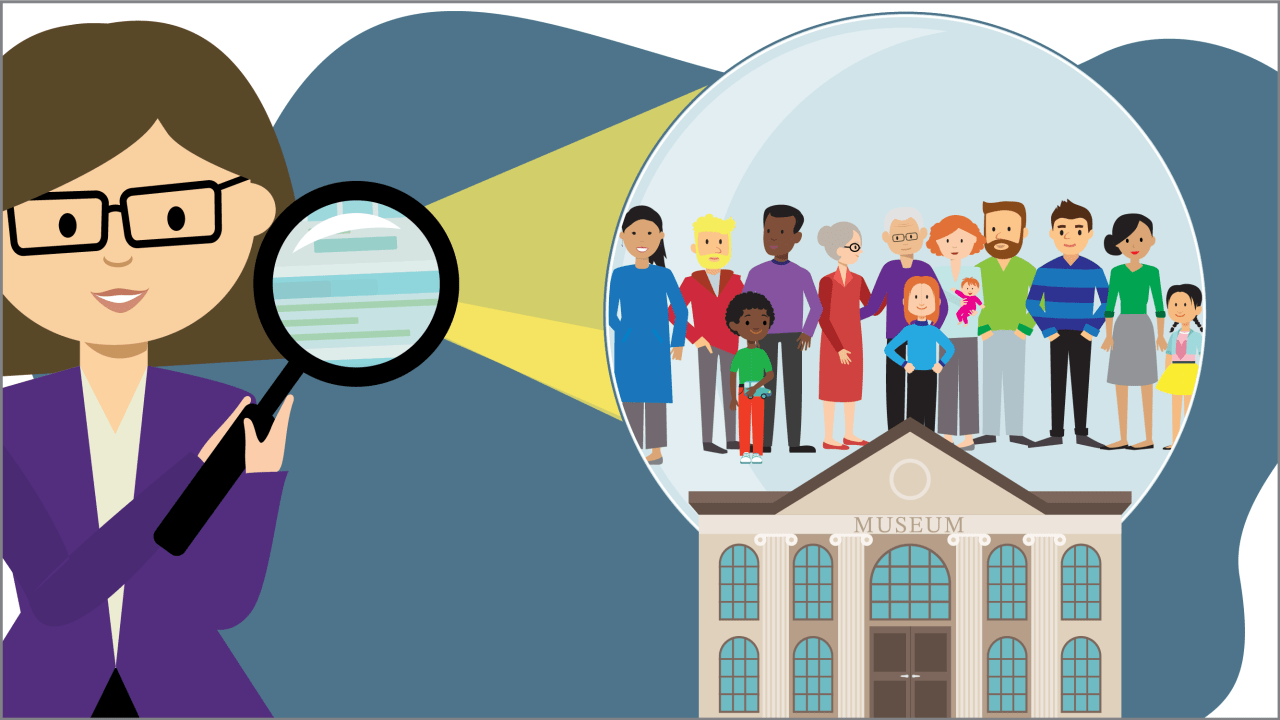
SW: Audience research is where we go out to the public—whoever we’re defining as the public in this case—and ask them what they think about whatever it is we have questions about.
AR: The public is…?
SW: The public could mean the broader population, frequent museum visitors, sporadic visitors, or even people who don’t visit museums. We might be asking them why they visit museums, what they think museums’ roles are in their communities, or doing political polling on topics like legislation supporting museums.
AR: What does a museum do with this information once they gather it?
SW: Ideally, they take this information and use it to inform their future programs, exhibitions, and initiatives. It helps them plan strategically, informing decisions about what kinds of exhibitions to bring in, what programs might appeal to specific audiences, and what longer-term goals they want to accomplish. They can also use evidence with donors or funders to show their impact or justify funding requests.
AR: Does a museum have to do its own research, or can it use external sources like census data or research from its municipality, chamber of commerce, or area colleges, for example?
SW: Many great external resources exist, like governmental sources, nonprofits, and academic institutions. For example, I’m excited that the Bureau of Labor Statistics just released its 2023 data for the Consumer Expenditure Survey. It tracks how much people spend on things like museum admissions, and that’s valuable for museums to understand.
External sources like the BLS and the US Census are great for providing information and context, but they are not museum-specific. For that, museums must do the work in-house, hire researchers, or participate in larger research projects (like the Annual Survey of Museum-Goers).
AR: Why ask the public when we can talk or survey our museum staff on what we should do?
SW: What the staff thinks, their input is essential. However, it likely will differ from what the public thinks. Overall, museum professionals are outliers. Museum staff are generally curious, lifelong learners who view learning as fun, but that’s not necessarily the case for the broader public. Our view of what makes an engaging museum experience differs significantly from what the public finds engaging.
AR: I wonder if you can share a few tips on how your clients—museums—are using and sharing data in real ways, like bringing research findings to meetings and decision-makers.
SW: It depends on the questions being asked. Some are straightforward, like asking the public about upcoming exhibitions or what’s keeping them from visiting more frequently. Museums take that input and adapt accordingly. Other questions are more complex, like those around inclusive history, climate change, or civics—topics where society doesn’t have a clear consensus. For these, we help museums understand their audience’s values and attitudes so they can present content thoughtfully, anticipating pushback and being prepared for it.
AR: What’s the biggest pushback you see from organizations when embracing data?
SW: One significant challenge is data overload. There’s so much data out there, and it can be hard to make sense of it. Museums often know their frequent visitors well but struggle to reach casual or non-visitors. It’s not impossible, but it requires effort and prioritizing broader outreach to understand the full context of their audience.
AR: Other big misconceptions?
SW: One of the biggest misconceptions is that frequent visitors represent the entire audience, the broader public. While frequent visitors provide valuable insight, they’re often just a fraction of the population, and their preferences might not reflect those of casual or non-visitors. That’s why it’s so essential to make an effort to reach beyond your core audience.
AR: For a museum with limited resources, how would you advise conducting audience research without spending a fortune?
SW: There are many ways to collect cost-effective data that take minimal time. The Annual Survey of Museum-Goers is a great way to gather insights into your audiences without designing or conducting the research yourself. You can even participate in the survey every few years or work with a consultant every few years. I also encourage museums to have casual conversations with visitors, which can be very informative.
AR: What strategy can museum directors or staff use to learn about visitors?
SW: I know a museum director who uses this great tactic. When he’s returning from lunch or a meeting and parking in the museum lot, he’ll approach visitors leaving the museum and say, “I only have an hour. Is it worth it?” They don’t know he’s the museum director, and it’s an informal way for him to get candid feedback on their experience, and it costs him nothing except a few minutes.
AR: That’s great. With so much available data, how do you break it down and make it useful for museums?
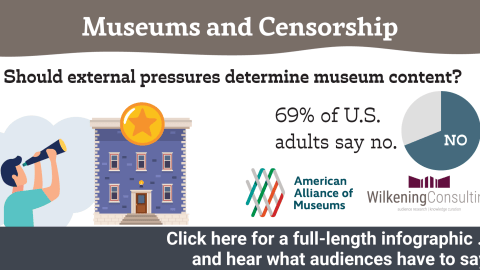
SW: We’ve found that infographic Data Stories work well. Every fall, we release one Data Story a week, which distills a piece of the Annual Survey of Museum-Goers into a quick, visually appealing infographic. It’s a digestible way for museums to get critical insights without being overwhelmed by the data. These stories help inform museum staff, trustees, and volunteers in an accessible way. Our graphic designer, Erika Kaszczyszyn, based in Boise, does excellent work making the data accessible and attractive and is also responsible for the many avatars that dot the work.
AR: The Annual Survey of Museum-Goers is a paid survey that benefits the participating organizations and the general field. How does that work?
SW: Every winter, in partnership with the American Alliance of Museums, we develop and field the Annual Survey of Museum-Goers. In return for a small fee, museums can field a high-quality survey to their audiences and receive reports of their results, including comparisons to the overall sample and to narrower peer groups. Because hundreds of museums participate, we typically develop dozens of peer group data cuts so we can provide comparison data for the major types of museums, such as art, history, zoos, etc., but also narrower peer groups, such as military museums or science centers in communities without children’s museums or vice versa … because that matters to science center audiences! We also provide comparison data by geographic area when possible.
The base fee is $1,250; it is a low-cost way of getting high-quality data and comparisons. We have found that staff, boards, and funders find the results extremely helpful as they make decisions.
AR: What kinds of questions do you ask in the Annual Survey?
SW: The annual survey always has benchmarking questions, like how often people visit museums, what they think the museum is doing well, and what they think could improve. It also includes a battery of demographic questions. We track these results over time, so museums that field the Annual Survey annually receive historical data, tracking their change over time.
About a third of the survey changes yearly, with different themes reflecting trends and pressures affecting museums, such as inclusion, climate change, or civic engagement.
AR: Can you give an example of one of those key insights from the Annual Survey?
SW: One of the survey’s most significant impacts is helping museum staff consider how they present inclusive content. Inclusive history can be a cultural flashpoint; museums must be prepared for the conversations (and emotions) they might spark. We’ve provided tools that allow museums to assess their audience’s attitudes toward inclusion, which helps them plan content that’s both productive and thoughtful.
AR: What’s a trend you’re seeing right now in the data that might surprise people?
SW: One interesting trend from the 2024 survey is that inclusive parents and guardians of school-age children are finding their voice to defend inclusive history in the classroom. It’s not something we’re seeing publicly yet. Still, it’s clear from the survey that these parents are starting to find the language and community they need to advocate for inclusive education. It’ll be interesting to see how that evolves.
AR: What is the theme for the 2025 survey?
SW: For 2025, we’re going deeper into repeat visitation because that’s still a challenge from the pandemic. We’re also looking into social connection, like how families and friends use museums as spaces to bond. Before the pandemic, we saw parents saying they couldn’t get family time at home anymore, and they were looking to museums as a place to focus on quality time.
AR: That’s interesting. Are there any other themes you’re excited about?
SW: We’re also following up on some earlier research on museums and community. There’s this idea within the field that museums are these community spaces, but the public doesn’t always see them that way. So we’re flipping the question around and asking, “What do you think are the responsibilities a museum has to its community?” It’ll give us better insight into how museums can engage more meaningfully with their audiences.
AR: That’s a great question. If I understand correctly, you’re also looking into trust and credibility.
SW: Yes, especially in this era of AI and disinformation. We’re asking the public what museums can do to support their trust in the presented information. Trust is such a big issue, especially as museums strive to be seen as credible sources of information.
AR: And will you be touching on the upcoming 250th anniversary of the United States?
SW: We plan on publishing multiple Data Stories that will help museums consider how to commemorate the 250th.
AR: Has registration already opened, and when does it close?
SW: Yes! Registration opened on October 1, and museums are expected to field their surveys anytime between early January and March 8. The fee is only $1,250 if they enroll by February 28 and launch their surveys by March 8.
AR: Next, you’ll speak at the CoMuseum conference in Athens and Thessaloniki. Congratulations. Can you tell me about that?
SW: Yes, I’ll be heading to Greece, and I’m very excited and honored to be speaking and participating in this year’s CoMuseum programming! I’ll be talking about research and the many ways that we collect, use, and share audience research to help organizations make meaningful decisions in the work they are doing better to serve their current and future audiences and communities. I’ll share the best practices we have developed in the US, including how museums here are using the data, and I hope to learn how European museums might be fielding research as well.

Upcoming Events
-
-
Industry Showcase: Innovative Digital Solutions
Event Date: -
Getting Started in Local Advocacy
Event Date:Presented by: American Association for State and Local History (AASLH) -
Creative Museums Summit
Event Date:Presented by: MuseumNext