Two of my favorite tags in my scanning library are “signals of hope” and “acts of resistance.” Last year I was heartened to come across a project—Save our Signs—meriting both these tags. Today on the blog, I have the pleasure of sharing an interview with Jenny McBurney, the organizer and instigator of this crowdsourced project to document material being censored from our National Parks.
–Elizabeth Merritt, Vice President, Strategic Foresight and Founding Director, Center for the Future of Museums, American Alliance of Museums
Jenny, can you introduce yourself and explain the premise of Save our Signs (SOS)? What triggered the formation of SOS?
Thanks so much for the invitation! I’m Jenny McBurney, the Government Publications Librarian at the University of Minnesota Twin Cities Libraries. I manage the government documents collections and assist students, researchers, and the public in finding government information and data. I’m one of the co-founders of Save Our Signs, a project to crowdsource photographs of National Park Service interpretive signs before they can be censored by the federal government.
After the second Trump administration began, government information of all types came under attack as research, datasets, and even photographs were removed from government websites, ranging from the Center for Disease Control to the Census Bureau to the Department of Justice. Like many government information librarians, I was immediately drawn into this problem as we tried to sort out what was at risk and how best to preserve essential public information. Most of the examples I was made aware of were online or born-digital resources, but in May 2025, I heard about Secretary of the Interior Order 3431, which instructed the land management bureaus of the Department of the Interior (DOI) to review and replace “negative” signage at their sites. Specifically, they were ordered to replace content that “inappropriately disparages Americans past or living (including persons living in colonial times), or, with respect to content describing natural features, that emphasizes matters unrelated to the beauty, abundance, or grandeur of said natural feature”. It turned out that the DOI order was based on Executive Order 14253, “Restoring Truth and Sanity to American History”. This dystopic order was actually the 107th Executive Order from Trump’s second term, but I had completely missed the news when it was originally issued in March, given the onslaught of other actions by the administration that impacted government information.
Reading these administrative orders was alarming, and I felt particularly concerned about the National Park Service, one of the main targets specified in each order. As a child, my family visited a number of NPS sites on camping road trips, and I especially loved visiting sites with historical reenactments, such as Grand Portage National Monument in Minnesota. Each National Park site has a unique mandate to tell the story of that place and why it is important, and the Parks have been called America’s “largest outdoor classroom.” Now those stories were at risk. As a librarian, part of my job is to ensure government information is freely available to the public, so I felt like I had to find a way to keep the information in these educational signs public, even if the signs themselves were censored through modification or removal.
I looked for like-minded colleagues who could help find a way to collect photographs of National Park signs, recruiting other librarians and geospatial data experts here at the University of Minnesota, as well as public historians from the libraries-based Mapping Prejudice project, which is a crowdsourced research project to identify and map racial covenants in historic property deeds. Together, we teamed up with librarians and data experts from the Data Rescue Project, a national network focused on preserving at-risk government data.
We knew from the experience of Mapping Prejudice that “the process is the product” and that engaging people in this work, and learning from and with them, would be just as important as the actual collection of photographs. Based on this, we decided to use crowdsourcing to collect photos anonymously, so anyone across the country could visit a park, take photos, and submit them to our project to become part of the “People’s Archive of National Park Signs.”
Give us a status report: how many people responded to your SOS, and what is the result of their efforts so far?
The project has been so much more successful than we could have dreamed, which I think is truly a testament to how much people love our National Parks and view them as a public good for our communities. Due to the amazing efforts of countless volunteers, since we launched on July 3, 2025, we have received over 14,700 photographs from 412 NPS sites, which are publicly accessible in the online Save Our Signs Archive. We have heard stories from people all over the country. Some have said they visited the parks and took photos specifically for this project, while others have recounted pulling out their old vacation photos and finding photos of signs to submit.
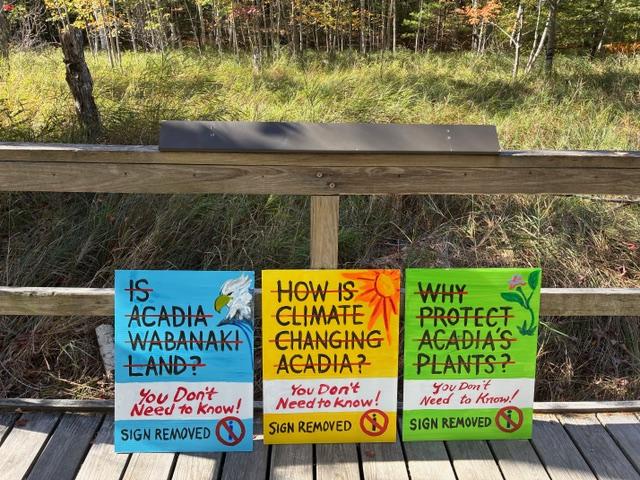
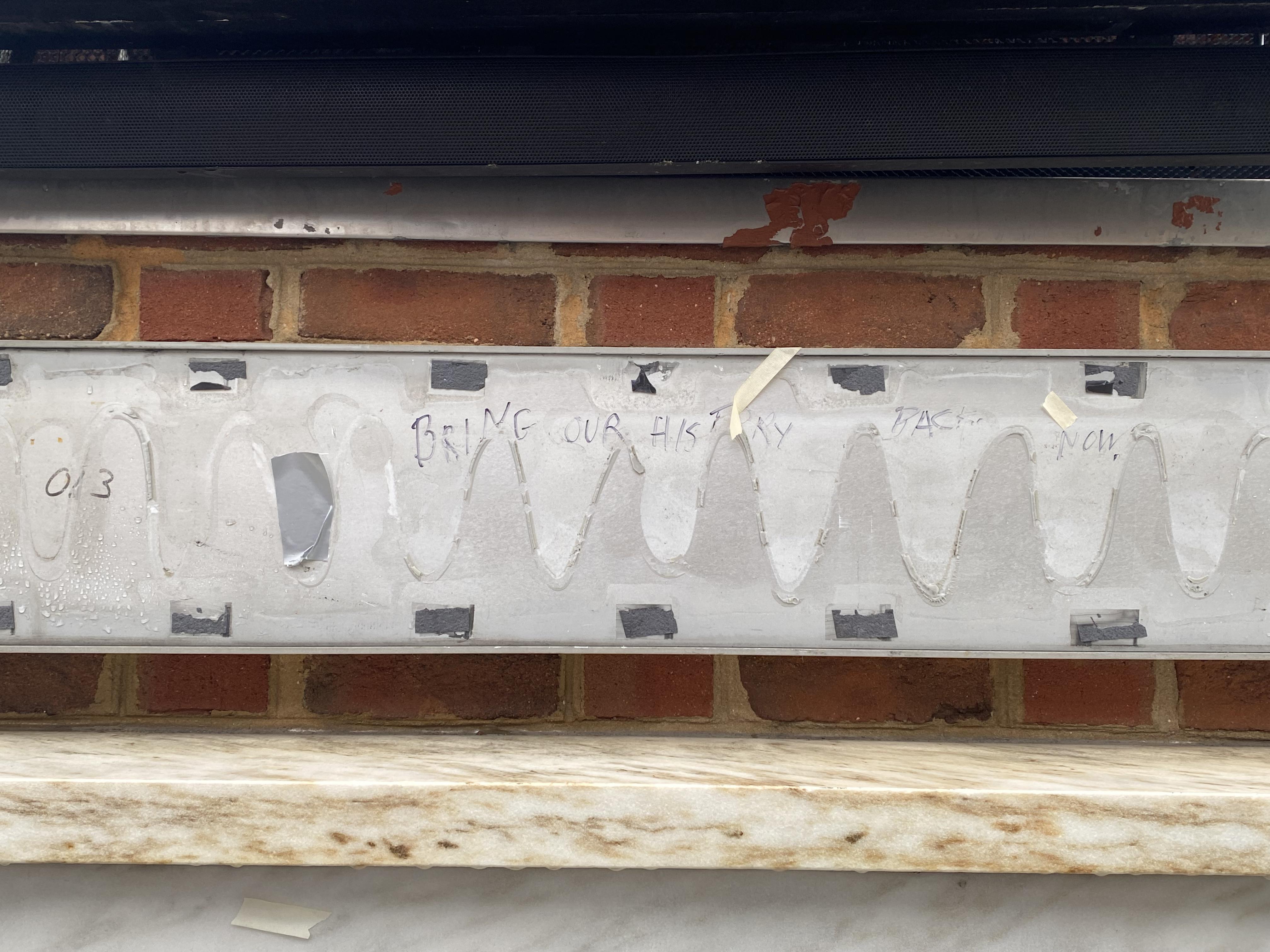
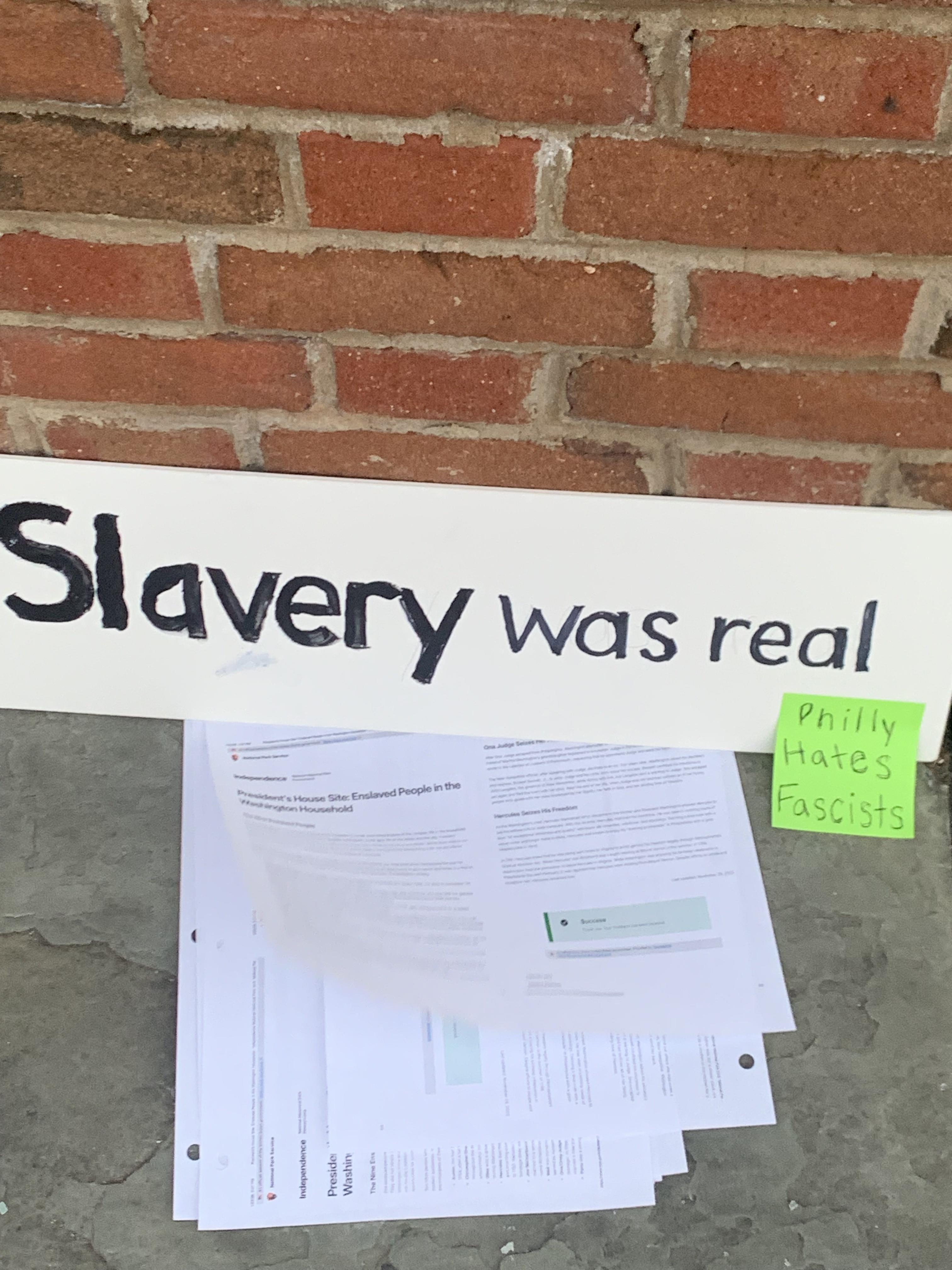
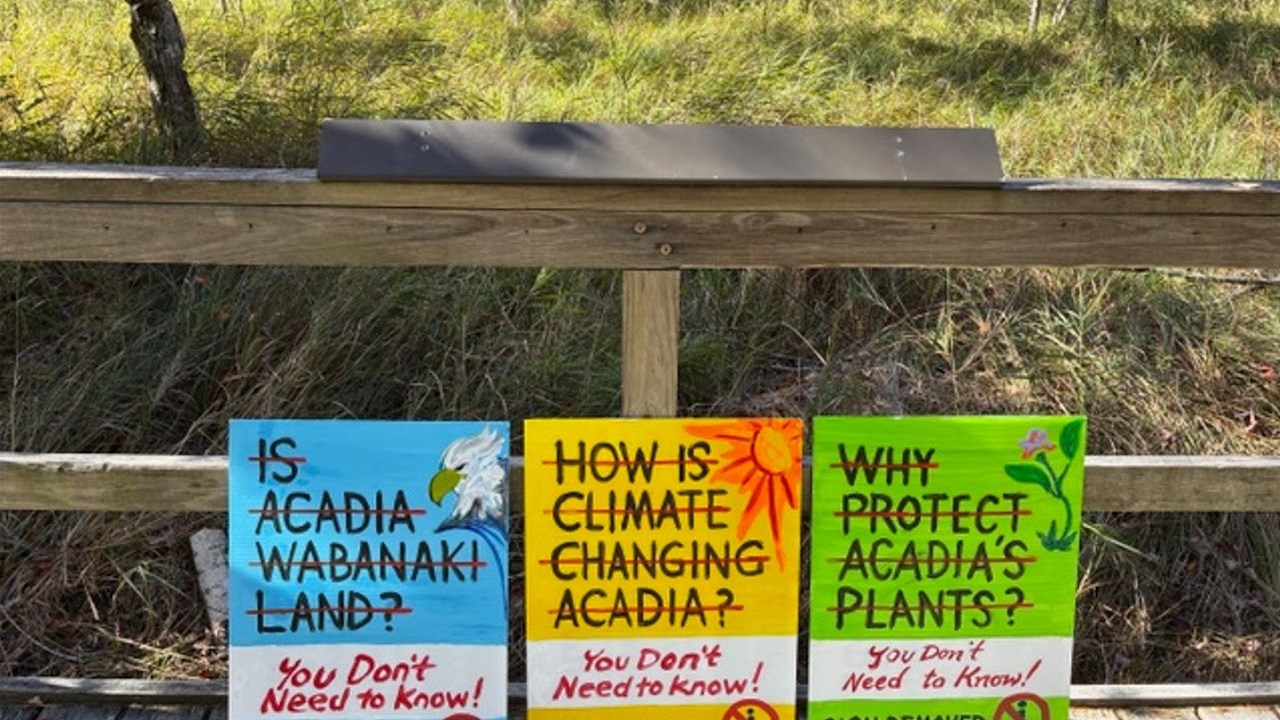
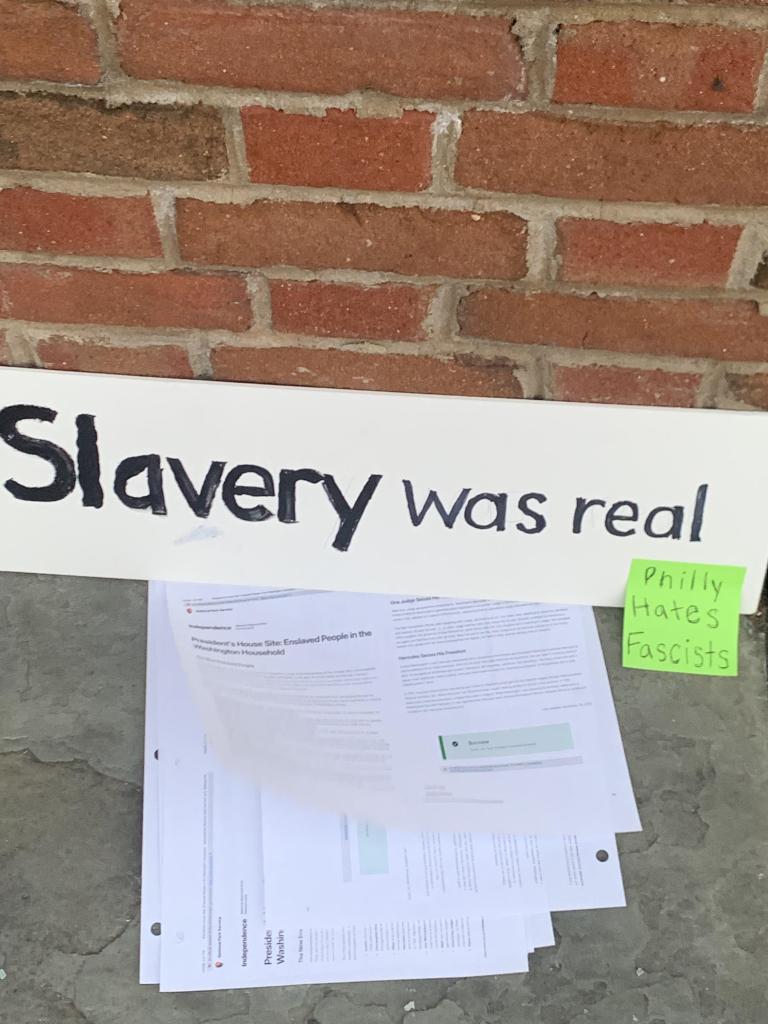
We also received photos from volunteers that inspired us to expand our scope. For example, after ten interpretive signs were removed from Acadia National Park in Maine last summer, local artists shared photos of paintings they had brought to Acadia with messages like “Why protect Acadia’s plants? You don’t need to know! Sign removed.” More recently, after dozens of educational panels were removed from the President’s House site at Independence National Historical Park, members of the Philadelphia community fought back by taping up signs in the blank spaces where the signs used to be, decrying this censorship with messages like, “Bring our history back now,” and “Slavery was real.” These powerful examples of community protest art inspired us to expand our scope to also collect photos of censored signs, such as empty frames or blank spaces where signs used to be, as well as photos of creative resistance from the community.
The vast number of photo submissions necessitated that we improve our backend database to make it more robust and enable future enhancements to the SOS Archive. Last month, we finished building a new database that enables us to process ongoing photo submissions more quickly and keep them organized and accessible for the long-term. We also have a new photo counter and updated SOS Archive map on our website that keeps track of what photos we have and what we still need, to help people find parks they could visit to help fill in our gaps.
Beyond this, we have also been inspired to create resources to help ourselves and the public understand the many ongoing developments in this saga of censorship. We maintain a Removal Tracker to help keep track of which specific signs have been censored; by our count, based on journalistic reports as well as before-and-after photos submitted to the SOS Archive, 58 interpretive signs have been removed or altered so far. After an internal NPS database was leaked to the public, revealing a list of hundred of NPS educational materials that were flagged for review and potential removal or revision, we developed a StoryMap called “Digging into the Leaked NPS Data” to help sort through what the data can tell us and identify sites that are at high risk for future censorship. As librarians and data experts, we believe we have both the skills and the duty to illuminate the complexity of the data and provide resources people can use to explore these current issues themselves.
How do you hope this archive will be used, and by whom?
Photos in the SOS Archive are all in the public domain, meaning that they are free for anyone to reuse. We hope that future researchers, educators, artists, and others will reuse the photos in new and creative ways, either as a way to learn about our parks or history, or as a way to understand this moment of government censorship at our National Parks. We encourage people to explore the archive for themselves and see what they think about the interpretive signs that have been captured. Whose story do the signs tell, and whose story is still missing? Who should get to write American history?
We also hope that students and young people will be inspired to explore the archives in their classrooms and bring this question of “who tells our history” to the next generation. If our history and sciences are censored today, it is today’s children and youth that will suffer the loss of knowledge, as the parks they visit will be devoid of nuance and complexity.
We have already seen a wonderful interaction between the SOS Archive and local journalists, where the stories these journalists write for their local communities inspire more participation in the project. For example, when Eric Thomas wrote about Save Our Signs in the Kansas Reflector in September 2025, he specially called out Nicodemus National Park, a site where we did not yet have any photo submissions. After his article ran, we received numerous photos to fill in that gap.
This is a foresight blog, so I’d love for you to imagine at least two ways the future might unfold, in relation to the NPS and to public history generally. What is the best outcome you can foresee? What is your darkest imagining?
In the darker potential futures I can imagine, all of our National Parks around the country have been stripped of nuance and whitewashed into a simple and easy-to-digest narrative: “America is perfect, and has always been perfect.” Visitors to the parks read the interpretive signs and listen to rangers’ talks, but learn only about the good, and never the bad or the ugly. Public history is not actually available in public spaces, and much of the public isn’t aware of the loss because it is hard to find accurate information. But even in this dark future, there would still be resistors who push back, and do what they can to continue to tell the full stories of our history and science, even though they have been displaced from the land and parks.
This displacement would be terribly damaging. Photographs of signs can help us remember what has been lost, but they can never replace the educational signs themselves, because place has meaning. Learning about history or science in the very place where it happened, or continues to happen, is a powerful engagement and educational experience. People choose to visit our parks rather than just read about them from home because they want to be in the very place that matters. They don’t want to just look at a picture of a glacier; they want to see the real thing. They don’t want to just read a book about the signing of the Declaration of Independence; they want to be in the room where it happened.
In the brighter futures I can imagine, we don’t need the SOS Archive anymore, and it can become a true archive rather than a living, frantic compilation of disappearing knowledge. In that future, the SOS Archive can stand as a snapshot of a period of government censorship that has since been overcome, to be used by future researchers to try to understand this period of time. The historical and scientific interpretation within the National Parks is a reflection of our shared narrative of history at any given time. The stories told in the Parks aren’t static, and they can be influenced both by top-down censorship and by grassroots activism. Hopefully, in the future, the SOS Archive will be just one of many examples of how everyday people around the country came together to push back against censorship and insist that our history and scientific knowledge matters and should not be forgotten or whitewashed.
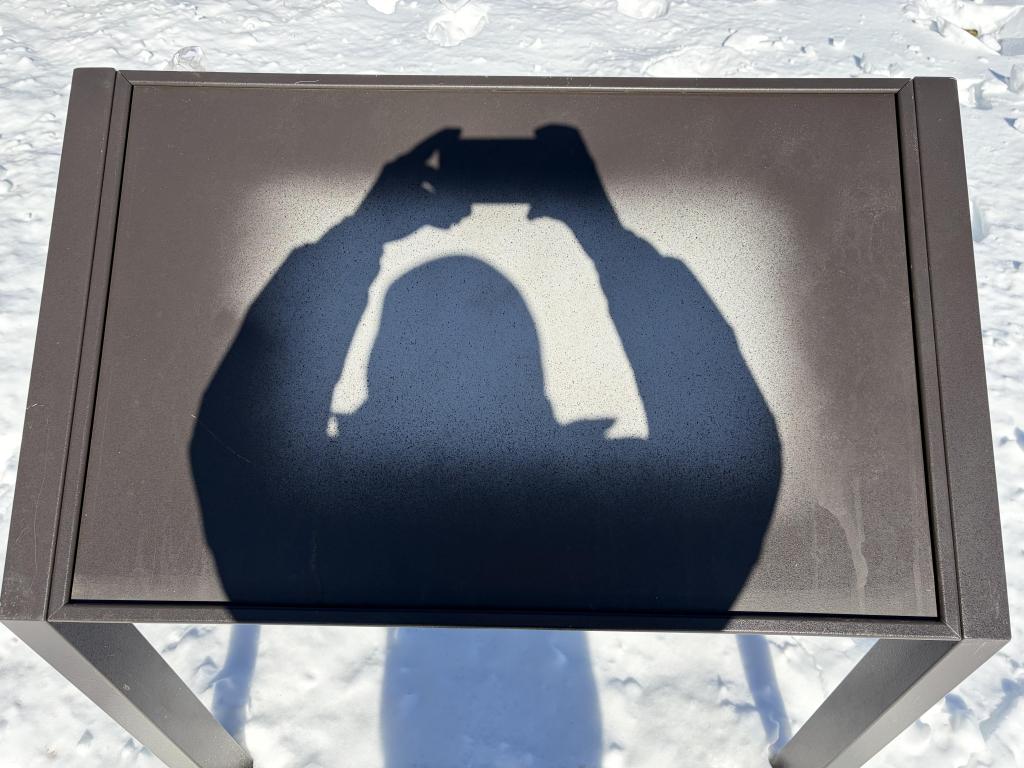
Regardless of the future to come, I gain hope from each person who has submitted a photo, shared a story with us, or donated to the project, as well as to the many colleagues that have stepped up to help our small team review and organize thousands of photos and improve our processes. I feel a deep sense of solidarity with our volunteers. When you look through the photos in the archive, you often see snippets of the person taking the photo – a shadow holding a camera, or a colorful shoe or backpack. These glimpses of the people behind the cameras help tell the story of all of us, working together, to try to save something that we believe in.