This article first appeared in the journal Exhibition (Spring 2026) Vol. 45 No. 1 and is reproduced with permission.
In a rapidly changing world marked by ecological crises, shifting political landscapes, and contested social narratives, museums occupy a complex cultural position. Traditionally understood as repositories of knowledge and heritage, museums are increasingly called upon to serve as active sites of public engagement and civic dialogue.
At the heart of this challenge lies a tension between the desire for clear narratives—where outcomes are known and moral lessons drawn—and the reality that many of today’s pressing issues defy such neat closure. Climate change, biodiversity loss, migration, and political polarization unfold in real time, with no settled endings or universally agreed-upon interpretations. Museums, therefore, must learn not only to present facts but to create spaces where doubt, multiplicity of perspectives, and “not knowing” can be acknowledged and embraced.[i]
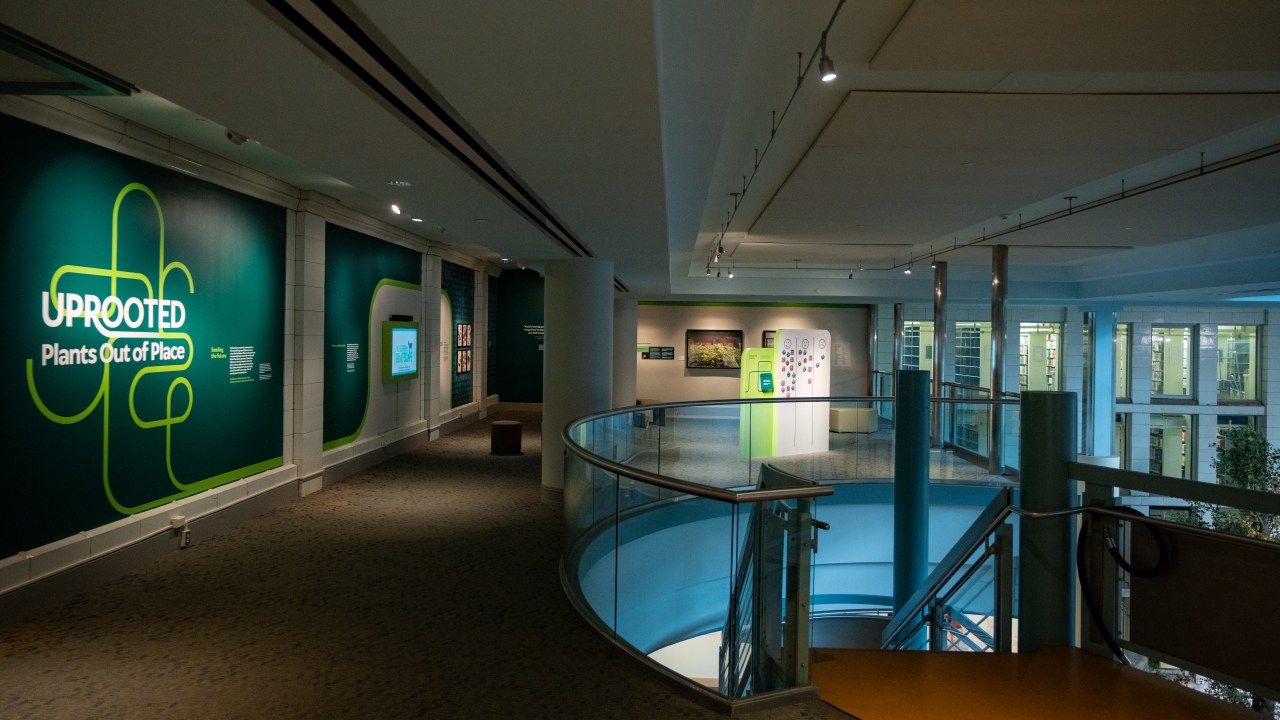
This article examines Uprooted: Plants Out of Place (2025–2027), a recent exhibition at Carnegie Museum of Natural History that confronts the complexities of introduced plants (intro image).[ii] The exhibition focuses on four plants invasive in the Pittsburgh area (garlic mustard, multiflora rose, stiltgrass, and knotweed) as a case study in contemporary interpretive practice, exploring intertwined ecological, cultural, and political themes—such as human migration, colonial legacies, and environmental justice—without offering simplistic conclusions or prescriptive messages. Instead, visitors are invited to sit with complexity, question received narratives, and consider the consequences of human actions in natural systems.
Background
The concept of invasive species is increasingly recognized as historically promoting exclusionary and xenophobic attitudes. Professor Banu Subramaniam summarizes the problems with these intersecting issues as follows:
“Paralleling human immigration, we hear calls to “fence” borders and develop policies to keep alien/exotic flora and fauna out of the nation and eradicate them within. It would appear that environmentalists worry about foreign plants and animals and anti-immigration activists worry about human immigration, with little interaction between them. Yet in tracking the rhetoric between humans and plants and animals, it is evident that xenophobic rhetoric gains force as it travels between anti-immigrant rhetoric of human migrants and the rhetoric of biological invasions of plants and animals. Suddenly, across sites, the “alien” is now rendered the problem and the “native” the victim.[iii]“
These outcomes, whether intended or not, reduce the public trust and interest in invasive species as a serious environmental issue, and can even feel exclusionary to certain communities of museum visitors. Unfortunately, due to the complexities of the invasive species topic, many museums have simply avoided it.
This analysis draws on interdisciplinary literature on museum studies, science communication, and environmental humanities to situate Uprooted within broader trends toward reflective museum practices. We first review relevant scholarship on the role of museums in shaping public discourse, the power of language in framing social attitudes, and the intersection of scientific and humanistic knowledge in exhibition design. We then detail the exhibition’s development process, highlighting how collaborative interdisciplinary work shaped its narrative and design. The article proceeds to evaluate visitor engagement and public reception, emphasizing tensions between scientific communication and open-ended interpretation. Finally, it reflects on Uprooted’s implications for museums striving to remain relevant and credible in the present tense.
Museums as Sites of Uncertainty and Dialogue
Several strands of scholarship provide critical context for understanding Uprooted and its significance. Despite the ecological pervasiveness of invasive species—present in nearly all the world’s ecosystems and central to most contemporary conservation strategies—natural history museums have largely avoided sustained interpretive engagement with the topic.[iv] This absence is particularly striking given that invasive species are not marginal concerns but defining features of the Anthropocene, entangled with the histories of empire, global capitalism, forced migration, and environmental change.[v] Invasive species raise complex questions about human agency, responsibility, and the ethics of ecological belonging—questions that scientific institutions have historically been hesitant to confront.
This reluctance is partly rooted in the disciplinary norms of natural history museums. Traditionally focused on classification, collection, and preservation, these institutions have emphasized taxonomic order and ecological stasis over dynamism and human entanglement. Invasive species demand narratives of disruption and hybridity that implicate human institutions and challenge notions of “pure” or “untouched” nature.[vi] Engaging invasive species meaningfully would require museums to abandon outdated ideas of objectivity and embrace interpretive approaches that foreground complexity, conflict, and co-responsibility.
The rhetoric commonly used to describe invasive species—“invaders,” “aliens,” “non-native threats”—borrows heavily from militaristic and nationalist discourses (fig. 1). Scholars have shown that these metaphors mirror language used in xenophobic immigration debates, reinforcing a vision of ecological and cultural purity under siege:
“[I]nvasion goads us on. It is a wonderful example of the power of framing, analogous to the difficulty we have with opposing tax cuts, even if it is in our best interest to do so. Fears of invasion also reinforce the emphasis on the boundaries that separate us from one another.[vii]“
This parallel is not just linguistic but ideological. Fear-based messaging about invasive species has been shown to decrease public trust and support for conservation interventions.[viii] Research landscape architect Paul H. Gobster highlights this distinction in many science-based research approaches to invasive species management, as opposed to the messaging in ecological restoration projects that deal with invasive species management:
“[W]hile ecological restoration and the science and management of invasive species share many of the same goals and concerns, there is a fundamental difference in how the two fields are conveyed to the public. This difference relates to the use of fear as a mechanism for gaining public support and motivating behavioral change.[ix]“
Yet most science museums remain silent on these issues, opting instead for seemingly apolitical messaging that often reinforces dominant (and problematic) cultural narratives under the guise of neutrality.
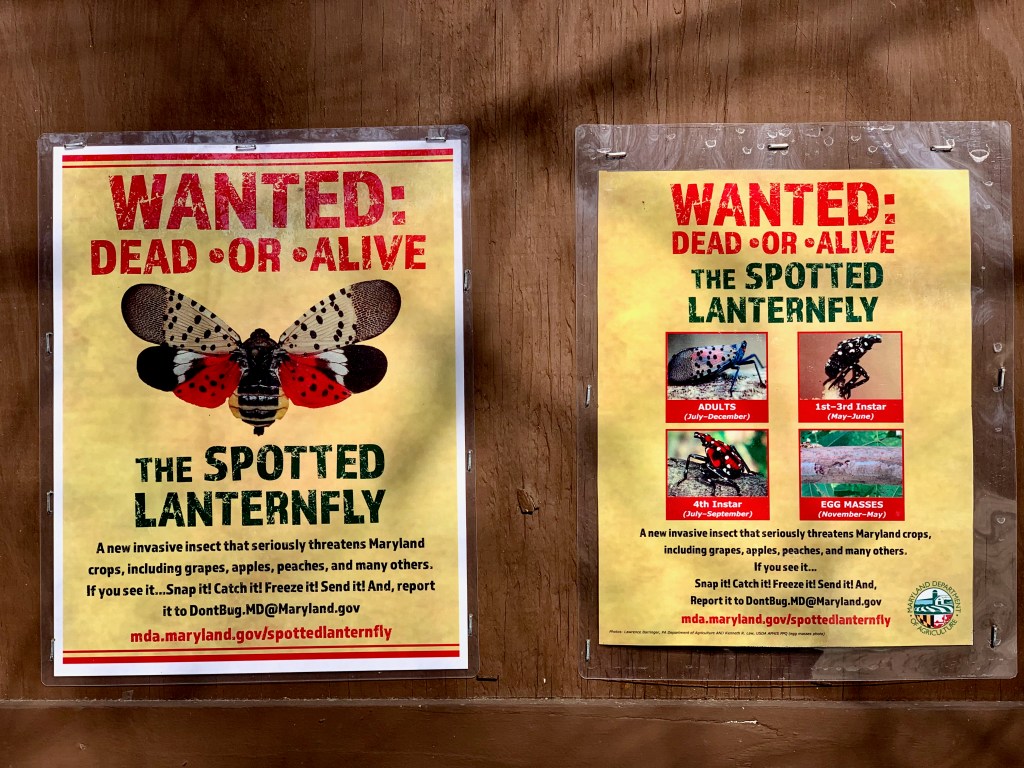
By avoiding the topic altogether, natural history museums miss critical opportunities for public dialogue and learning. They fail to address how invasion biology, like all scientific fields, is shaped by cultural assumptions, power relations, and ethical dilemmas. They also bypass a chance to support visitors in navigating ecological uncertainty and participating in co-creative environmental futures.[x] As scholar Candis Callison argues in the epilogue to her book, How Climate Change Comes to Matter: The Communal Life of Facts,museums and other sites of public engagement must shift from being temples of settled knowledge to platforms for open-ended inquiry and civic engagement.[xi] This requires engaging precisely the kinds of topics that resist easy answers.
What is particularly telling is that while science museums have largely avoided invasive species as interpretive content, contemporary art exhibitions have not. Numerous artists and curators have used invasive plants as vehicles for exploring borders, migration, identity, and the ethics of belonging in both ecological and human terms.[xii] These projects suggest that the public is not only capable of grappling with complexity and contradiction but hungry for it. The success of these artistic interventions reveals a missed opportunity for science institutions to reclaim interpretive leadership in an era of intersecting environmental and social crises.
By stepping into this vacuum, Uprooted serves as a rare and necessary intervention in the landscape of science communication. Rather than depoliticizing the invasive species narrative, it embraces the topic’s entanglements with colonialism, migration, and contested authority over nature. In doing so, it seeks to challenge the prevailing silences of natural history museums and models a way forward—toward science interpretation that is reflective, relational, and ethically engaged.
This shift did not happen by accident. It emerged from a deliberate process of interdisciplinary collaboration and self-reflection by the exhibition team. The following section traces the development of Uprooted, highlighting how museum staff, researchers, artists, and community partners co-created an exhibition that speaks in the present tense: uncertain, multifaceted, and deeply relevant.
Exhibition Development
The genesis of Uprooted began in 2022 with an institutional commitment to address pressing environmental concerns through innovative public programming. In 2023, Carnegie Museum of Natural History received a grant from the Richard King Mellon Foundation to spearhead a public awareness campaign about invasive plants that would culminate in an exhibition.[xiii]
We (two of the three authors of this paper), Mason Heberling, Associate Curator of Botany, and Rachel Reeb, a postdoctoral fellow with expertise in invasion biology, led the invasive species awareness program, and worked alongside content writer Anna Mirzayan (the third author), who led curation of the exhibition. As researchers at a natural history museum, Heberling and Reeb saw this project as an opportunity to confront growing confusion about and distrust of invasive species that they had witnessed in their academic and public outreach work. Given the ecological and social complexities of introduced species, the topic required a dedicated exhibition. From the outset, the team aimed to leverage best communication practices to increase public understanding of “the invasive species problem” and to inspire solution-making.[xiv]
The intersection of science communication and the humanities highlights the potential of interdisciplinary approaches to enrich museum practice. Scholars Sarah Davies and Maja Horst argue for integrating scientific content with narrative, ethical, and aesthetic dimensions to engage audiences more holistically.[xv] To cultivate a richer interpretive plan for the exhibition, we had to learn more about how to harness these interdisciplinary frameworks in our museum, so we formed a reading group of museum staff with diverse disciplinary perspectives in ecology, social science, history, and educational pedagogy. The group read texts spanning botany, environmental philosophy, postcolonial theory, and linguistics. Works by scholars like Anna Tsing on multispecies entanglements and Robin Wall Kimmerer on Indigenous ecological knowledge informed the team’s evolving interpretive approach.[xvi] We also read primers on the field of invasion biology, including the Intergovernmental Platform on Biodiversity and Ecosystem Services (IPBES) 2023 international consensus report on invasive species.
The group was able to explore different social, historic, and scientific lenses on invasive species and to establish a set of internal best practices for communicating invasion science to the public. This extensive, yet simple to navigate internal document included reducing fear-based appeals, replacing xenophobic language with neutral “passenger” based messaging that highlights the role humans play in introducing and managing invasive species, and the idea that one size does not fit all in approaches to conservation and land management.
An advisory council composed of land practitioners, environmental educators, and ecologists provided ongoing guidance on invasive species management. Known as the Invasive Species roundtable, it was attended by approximately 40 individuals across 17 different organizations in Pittsburgh. Members’ diverse voices ensured that the exhibition would attend to both ecological science and the ways audiences interact with the invasive plant issue. Expertise ranged from applied invasive species management to environmental education to academic research to urban farming. Gathering between 2023 and 2025 in a series of seasonal meetings, individuals participated in guided discussions about a range of topics related to invasive species management and best practices in communication. Information and personal narratives shared during these sessions were integral to exhibit development and outreach programming.[xvii] This participatory model exemplified a commitment to co-creation and decentralizing authority to include broader community knowledge.
Based on our readings and discussions with our advisors, the exhibition’s big idea resists closure: “The past, present, and future of invasive plants in our ecosystems is defined by human actions and notions of stewardship.” Rather than offering definitive guidance, this organizing principle of the show seeks to cultivate ecological literacy alongside critical consciousness. Visitors are encouraged to explore their own assumptions about “native” and “invasive,” the boundaries of home and belonging, and the politics of environmental management.
Shifts in Science Communication
Initially, the team conceived Uprooted as a traditional science exhibition emphasizing facts about invasive plant species’ ecological impacts. Early drafts featured standard components: maps of species distribution, data on biodiversity loss, and restoration case studies. However, collaborative discussions between exhibition staff and different scientific departments at the museum revealed the limitations to this approach: In an earlier attempt to update some labels in the museum’s existing Botany Hall dioramas, the desire to add language about invasive species was ultimately downplayed due to lack of space for the ecological and political complexity this topic requires. We were stuck in a mindset of “educating” visitors, assuming we had the “right” answers. But invasive species issues are deeply entangled with human histories and politics. We needed to shift from a top-down model to a dialogic, reflective one.[xviii]
This shift manifested in several ways:
- Narrative Reframing
Instead of demonizing species, the exhibition explores their cultural histories, uses, and meanings in different contexts, highlighting complexity rather than judgment. The exhibition quickly became as much about humans as it is about plants. - Metaphor and Storytelling
Botanical facts are embedded within narratives about human migration, displacement, and adaptation, drawing parallels between plants and people “uprooted” by forces beyond their control. - Inclusive Language
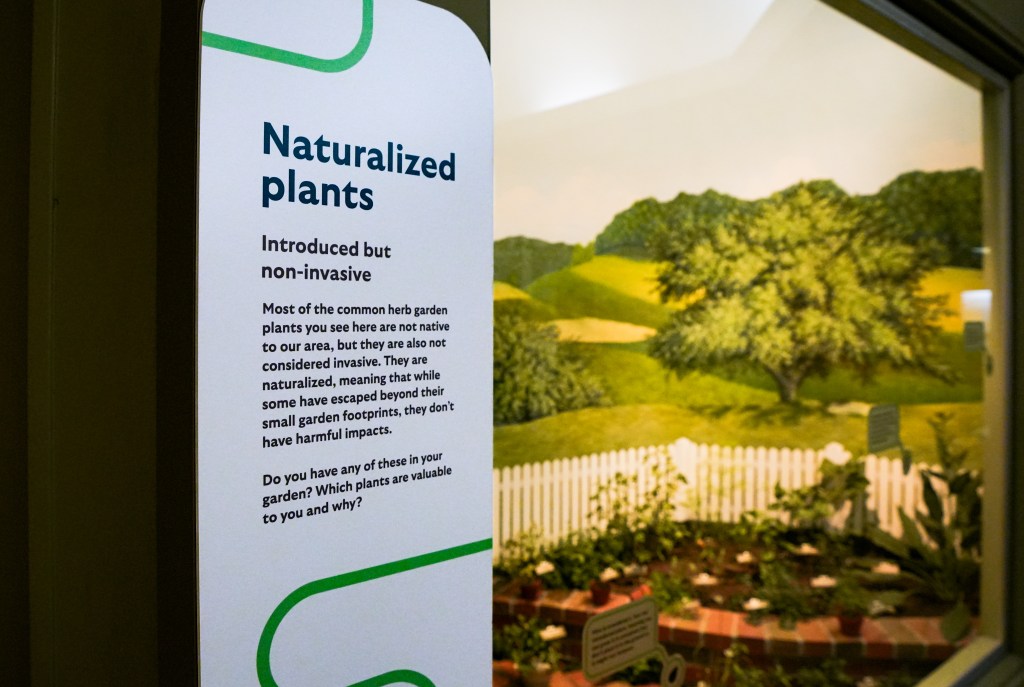
Interpretive texts avoid scientific jargon and an authoritative tone, opting instead for accessible, open-ended questions that invite visitor reflection (fig. 2). Language choices highlight human activities as the drivers of species introductions and plants as “passengers.” Geographic plant names (like those that mention a country of origin) are avoided. - Ethical Awareness
The team explicitly addresses colonial legacies embedded in invasive species discourse, acknowledging how such framing can reproduce xenophobic and/or exclusionary ideologies.
Exhibit Design and Content: Multisensory, Multivocal Engagement
Uprooted occupies two interlinked spaces within the museum: the Hall of Botany, where historic collections and invasion biology anchor ecological context, and the Third Floor Overlook, designed as an immersive and contemplative environment.
Key design elements include:
- Smell Stations
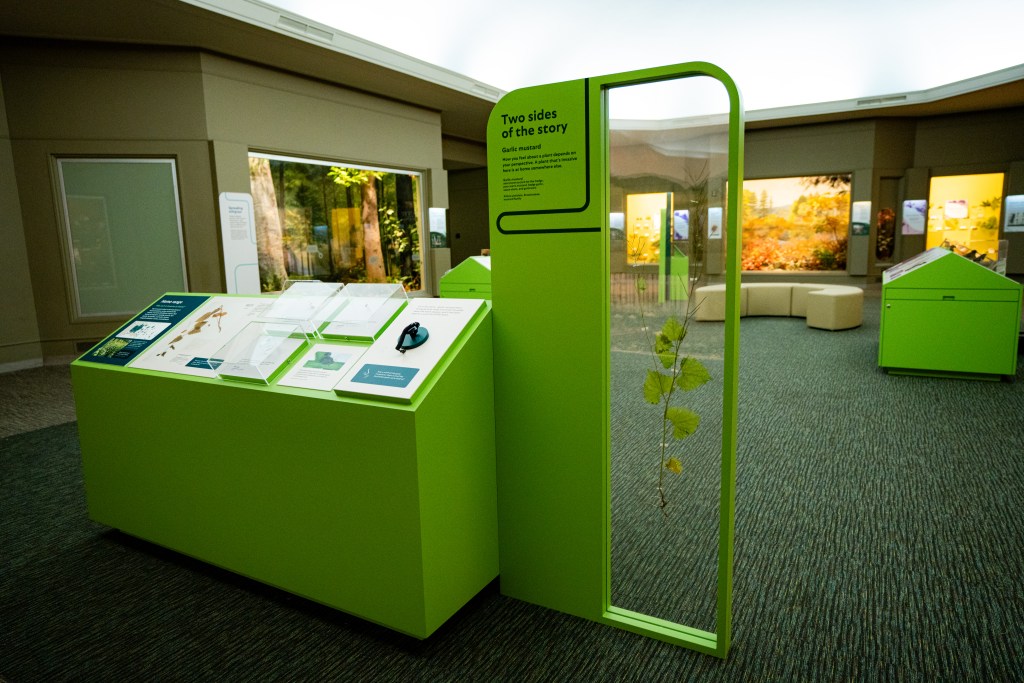
Visitors encounter the scents of plants like garlic mustard, engaging senses beyond vision and making plant life immediate and embodied (fig 3). - Tactile Models and Specimens
Touchable replicas invite hands-on learning, which is vital for activating diverse learning styles and fostering personal connection. - Historical Museum Specimens, Botanical Art, and Archival Materials
Museum objects and historical art, presented in collaboration with Carnegie Mellon University Library’s Hunt Institute for Botanical Documentation, provide scientific and historical context. - Video Interviews
Community partners share stories of land stewardship and ground the exhibition in actionable solutions for stewarding the future of the environment. - Interpretive Signage
Text panels with questions like, “Who decides which plants belong here?” and “How do our ideas about ‘nature’ reflect human values?” avoid didactic answers and connect plants to broader societal debates. - Interview with Meining Wang
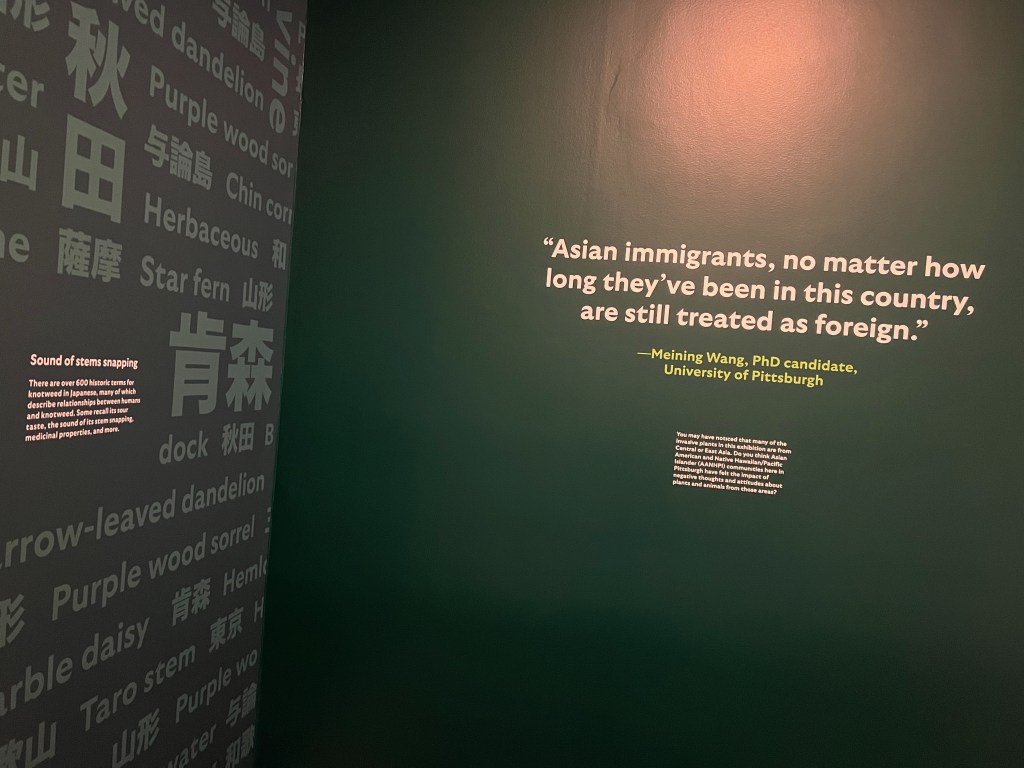
Wang, a History PhD student at the University of Pittsburgh and a member of the AAPI community, discusses the permanent sense of exclusion felt by Asian Americans, despite their long history in the United States. A quotation from Wang is featured in the exhibition (fig. 4).[xix]
Interdisciplinary and Community Collaboration: A Model for Present-Tense Exhibiting
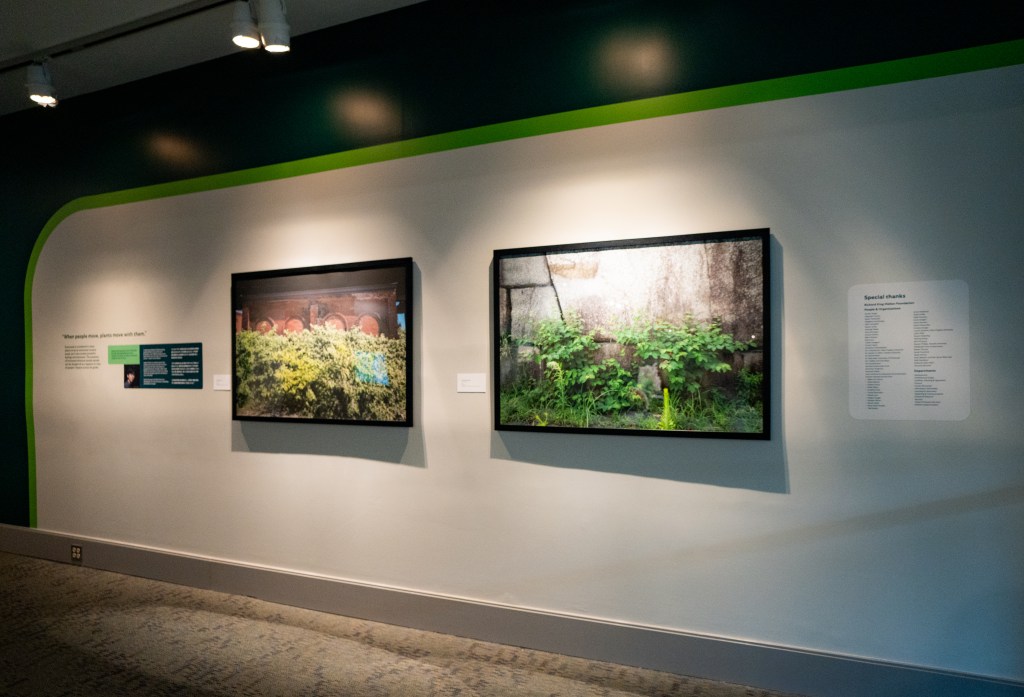
Central to the project’s success was the integration of a plethora of voices. One of the exhibition’s key collaborators was Japanese artist Koichi Watanabe, whose large-format photographs introduce an aesthetic and emotional dimension to itadori (knotweed), a plant native to Japan that is widely considered to be a major invasive species around the world. His images juxtapose invasive plants in their home (evolutionary) and invasive ranges, highlighting the role humans play in moving these plants around the world (fig. 5).
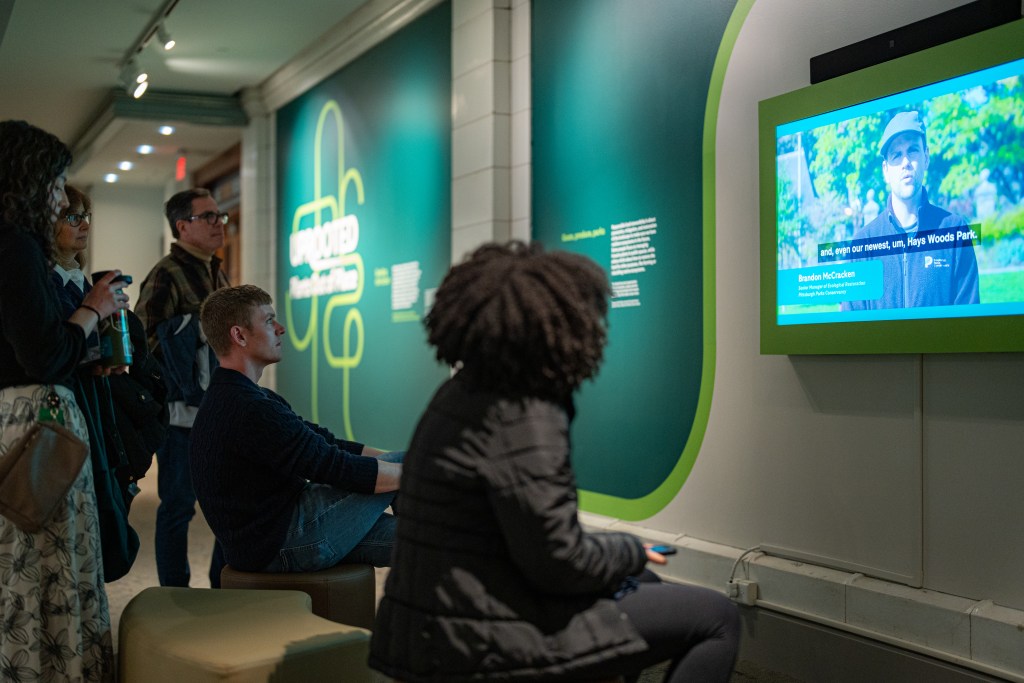
Local environmental organizations provided testimonies and expertise, illustrating the social complexity of invasive species management. A video features interviews with three local nonprofit land management organizations that deal with invasive species in different ways and for different purposes: Garfield Community Farm, which removes invasives by hand in order to plant food forests for the community; Allegheny GoatScape, whose goats-for-hire go around eating unwanted vegetation in the Pittsburgh area; and Pittsburgh Parks Conservancy, whose mission is to restore park ecosystems by planting and caring for native vegetation (fig 6). By foregrounding these perspectives, Uprooted resisted the temptation to present a single authoritative narrative. Visitors encounter a variety of struggles and reasons for removing invasive plants, while getting to know local organizations that they could contact to learn more or to take action.
Public Reception and Evaluation
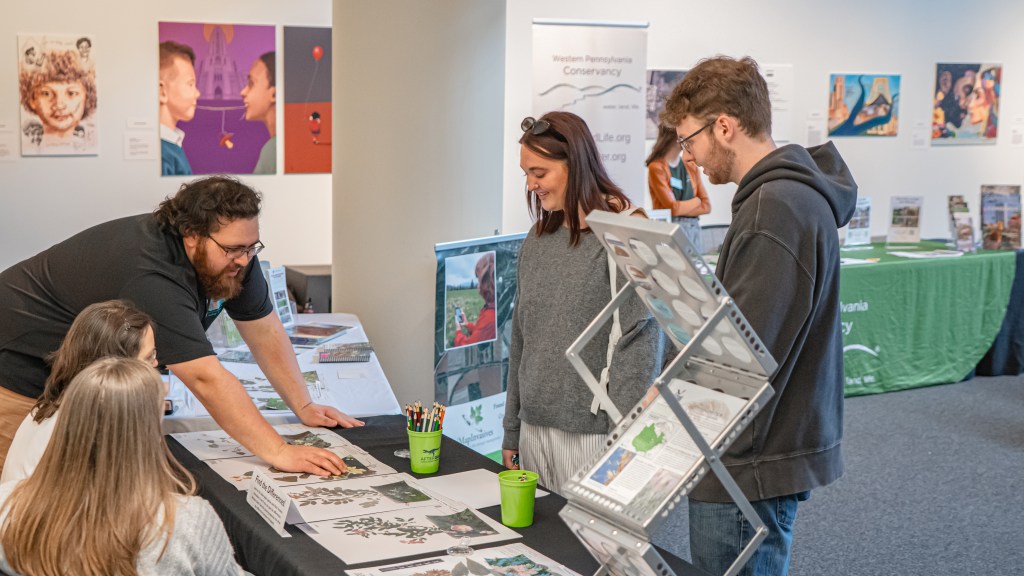
The exhibition’s debut coincided with the museum’s first annual NatureFest, a fun, family-friendly event that featured museum staff and tables from dozens of local collaborators (including many organizations from our advisory council) sharing information on environmental issues and stewardship and facilitating hands-on learning and play activities. Informal observations during this event indicated that visitors responded positively to Uprooted’s multisensory elements and visual storytelling. Families spent time at tactile stations, while teenagers and adults engaged in discussions prompted by provocative signage (fig. 7).
Visitor feedback also reveals challenges inherent to the present-tense approach. Some visitors expressed frustration at the absence of clear “takeaways” or actionable steps. For instance, a visitor remarked in a survey: “I liked learning about these plants, but I wasn’t sure what I was supposed to think or do. It felt like the exhibit raised questions but didn’t give answers.”
A staff interpreter recalled an interaction with a visiting Asian American family who noticed how many of the flora in the exhibition came from Asia and were relieved by the inclusion of garlic mustard as an example of an invasive species from Europe. They challenged the use of “invasive” versus “introduced” in the label copy, and the wisdom of linking that term to plants from a single geographic area.
The ambivalence of these visitors reflects a broader tension in museum practice between fostering inquiry and meeting audience expectations for closure. While some visitors appreciated the invitation to think critically, others found uncertainty unsettling.
Broader Cultural and Ethical Relevance
Uprooted’s thematic scope places it at the intersection of several urgent contemporary issues:
- Decolonizing Narratives
By questioning dominant frames of “native” and “invasive,” the exhibition critiques colonial histories embedded in scientific discourse and land management. - Climate Change and Land Use
Invasive species proliferation is linked to climate disruptions and habitat fragmentation, highlighting interconnected ecological crises. - Migration and Belonging
Parallels between plant dispersal and human displacement encourage visitors to reflect on notions of home, movement, and hospitality.
This multidimensional approach exemplifies museums’ potential to participate meaningfully in societal debates by presenting evidence in the context of ethical and cultural reflection.
Embracing the Present Tense
Uprooted exemplifies how museums can move beyond traditional exhibition models to embrace uncertainty, multiplicity, and evolving narratives.[xx] Rather than offering tidy resolutions, it invites visitors to inhabit complexity and engage critically with urgent environmental and social questions.
The project’s tangible outputs—an immersive exhibition, public programming, academic presentations, and community partnerships—demonstrate the value of integrating scientific knowledge with interpretive, humanistic, and artistic perspectives. More profoundly, the process reshaped institutional culture, encouraging staff to embrace ambiguity and co-creation.
Yet challenges remain. Evaluating success in present-tense exhibitions requires new metrics that value visitor reflection and dialogue over information retention or behavior change. Institutions must navigate risks associated with discomfort and indeterminacy, balancing accessibility with depth.
Looking forward, Uprooted offers a scalable model for other natural history museums confronting contemporary issues such as urban ecology, environmental justice, and the biodiversity crisis. Its interdisciplinary, collaborative approach and commitment to open-ended questioning align with the evolving role of museums as dynamic forums for inquiry rather than repositories of fixed knowledge. In uncertain and unsettled times, museums must become comfortable with “not knowing.” Exhibitions like Uprooted show that this vulnerability can be a strength—a catalyst for engagement, empathy, and critical thinking. Embracing the present tense means designing for openness, complexity, and ethical storytelling, allowing museums to remain relevant and trusted voices in the ongoing conversations that shape our collective futures.
[i] Theorizing Digital Cultural Heritage: A Critical Discourse,eds. Fiona Cameron and Sarah Kenderdine,(MIT Press, 2010).
[ii] The introductory panel to the exhibition makes clear the distinction between “introduced” and “invasive”; all invasive plants are introduced (by humans) into an environment, but not all introduced plants are invasive. Invasive plants specifically cause harm through their presence in an area. Even scientists recognize that the distinction, though important, is subjective. Invasion biologists Julie Lockwood and Dustin Welbourne write, “how we define invasive species is much more about us, how we interact with nature, and our values, than it is about the organism being labelled invasive” (Invasive Species, a Very Short Introduction, [Oxford University Press, 2023]).
[iii] Banu Subramaniam, “The Aliens in Our Midst: Managing Our Ecosystems,” in Controversies in Science and Technology: From Sustainability to Surveillance, ed. Daniel Lee Kleinman, Karen A. Cloud-Hansen, and Jo Handelsman (Oxford University Press, 2014): 231–32.
[iv] Daniel Simberloff, Invasive Species: What Everyone Needs to Know (Oxford University Press, 2013).
[v] Kathryn Yusoff, A Billion Black Anthropocenes or None (University of Minnesota Press, 2018).
[vi] Banu Subramaniam, “Aliens Have Landed! Reflections on the Rhetoric of Biological Invasions,” Meridians, 2, no. 1 (2001): 26–40.
[vii] Brendon Larson, Metaphors for Environmental Sustainability: Redefining Our Relationship with Nature (Yale University Press, 2011), 163.
[viii] Deborah Cameron, Verbal Hygiene (Routledge, 1995); Brian Wynne, “Public Understanding of Science,” Public Understanding of Science 1, no. 1 (1992): 1–15.
[ix] Paul H. Gobster, “Invasive Species as Ecological Threat: Is Restoration an Alternative to Fear-based Resource Management?” Ecological Restoration 23, no. 4 (December 2005): 261–70.
[x] Robin Boast, “Neocolonial Collaboration: Museum as Contact Zone Revisited,” Museum Anthropology, 34, no. 1 (2011): 56–70.
[xi] Candis Callison, How Climate Change Comes to Matter: The Communal Life of Facts (Duke University Press, 2014).
[xii] See, for example, Jumana Manna’s Wild Relatives (2018) film and installation; Ute Ritschel’s curatorial project, Forest Art Wisconsin and its included conference, Native/Invasive; and Yota Bataski’s 2024 essay “The Plant at the End of the World: Precious Okoyomon’s Invasive Art,” (Critical Inquiry 50, 4) on Precious Okoyomon’s invasive kudzu installations, among others.
[xiii] Richard King Mellon Foundation, grant 11958, “Confronting Plant Invasions through Awareness,” 2023–2025.
[xiv] As we concluded in our article on science communication, audiences are excited about content that weaves scientific fact with human experience. By emphasizing the human-driven causes of invasive species, we highlight opportunities for audiences to act to prevent the emergence of new ones. By reducing our reliance on xenophobic, militaristic language, we are able to bypass fear-based messaging and create an environment that supports hope and action in the face of conservation challenges; see, Mason Heberling and Rachel Reeb, “Lost in translation: The need for updated messaging strategies in invasion biology communication,” Plants, People, Planet, 7, no. 3 (2025): 536–45.
[xv] Sarah R. Davies and Maja Horst, Science Communication: Culture, Identity, and Citizenship (Palgrave Macmillan, 2016), 78–102.
[xvi] Anna Lowenhaupt Tsing, The Mushroom at the End of the World: On the Possibility of Life in Capitalist Ruins (Princeton University Press, 2015); Robin Wall Kimmerer, Braiding Sweetgrass: Indigenous Wisdom, Scientific Knowledge, and the Teachings of Plants (Milkweed Editions, 2013).
[xvii] The roundtable was attended on a voluntary basis. A subgroup of individuals who were directly involved in content creation for the museum exhibition were financially compensated.
[xviii] Matthew C. Nisbet, “Framing Science: A New Paradigm in Public Engagement,” Science Communication 30, no. 2 (2009): 178–97.
[xix] Wang reached out about studying some historical documents in the museum’s Botany section. We told her about our plan for Uprooted and asked if she would be willing to be interviewed about her experiences as an Asian American immigrant. Wang was compensated for her time.
[xx] Andrea Gallardo‑Ocampo and Miguel A. Híjar‑Chiapa, “Museums as Critical Spaces for Alterity in a Post‑Truth World,” History in a Post‑Truth World: Theory and Praxis, ed. Marius Gudonis and Benjamin T. Jones (Routledge, 2021).
Anna Mirzayan is Exhibit Coordinator at the Suquamish Museum, in Seattle, Washington.
Rachel Reeb is Forest Science Associate at Indiana University of Pennsylvania, Research Institute, in Indiana, Pennsylvania.
Mason Heberling is Associate Curator of Botany at Carnegie Museum of Natural History, in Pittsburgh, Pennsylvania.
Upcoming Events
-
Industry Showcase: Innovative Digital Solutions
Event Date: -
Getting Started in Local Advocacy
Event Date:Presented by: American Association for State and Local History (AASLH) -
Creative Museums Summit
Event Date:Presented by: MuseumNext -
So…You Want a Museum Career? Part II
Event Date:Presented by: Southeastern Museums Conference