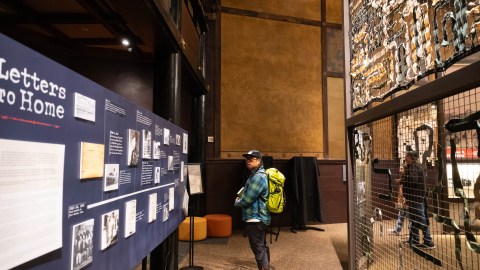
I’m guessing you’ve felt it too: museums are more visible, more scrutinized, and more politicized than ever. That scrutiny doesn’t always land where we’d like it to. It can jump from an exhibition to an institution, from an object to an executive, from a thoughtful interpretive choice to a headline that makes an exhibition look like a fight.
This article originally appeared in the July/August 2026 issue of Museum magazine, a benefit of AAM membership.
» Read Museum.
Here’s the uncomfortable truth behind a lot of museum stress right now: the communications environment has changed dramatically, and institutional habits haven’t caught up. Museums are under a microscope. Leaders often excel at governance, fundraising, collections, and community partnerships—but many feel unprepared when the media spotlight turns hot.
I wrote Museum Flack: A Public Relations Guide for Museums, published by the American Alliance of Museums, because I kept seeing the same pattern. It wasn’t that museum people didn’t care about communications. They were overwhelmed, under-resourced, and stuck trying to solve 2026 problems with 1996 playbooks.
The good news is that you don’t need a huge budget or a big team to make meaningful PR progress. These eight repeatable moves can protect your museum’s credibility, clarify your story, and help your staff and leadership show up confidently in public.
1. Untangle PR from marketing.
One of the most persistent misconceptions is that public relations and marketing are the same function. They overlap, they depend on each other, and they should absolutely collaborate—but they are not interchangeable.
Marketing prompts action: visit, buy, register, renew, attend. PR builds and protects long-term reputation: trust, legitimacy, community goodwill, and institutional confidence that makes everything else easier. When your reputation is strong, your marketing works better. When your reputation is shaky, even the best marketing feels like it’s rowing upstream.
In any planning conversation, museum professionals should ask two questions: “What do we want people to do?” and “What do we want people to believe about us over time?” If those answers are in conflict—if you’re selling an experience that your public narrative doesn’t support—you’ve found a gap worth addressing before someone outside the museum does it for you.
2. Think like a journalist before you talk like a museum.
Museums are packed with expertise, nuance, and carefully chosen language. That’s part of what makes the work meaningful. It’s also why museums sometimes struggle with media relations: they lead with what they think is important rather than what a reporter needs for a story.
Reporters are sorting through a flood of pitches and story ideas, often on tight deadlines. They’re asking, “Why now?” “Why should my audience care?” “What’s the human angle?” “What makes this visual?” “What’s the local hook?” If you can’t answer those questions in plain language, your pitch is headed for the digital equivalent of a black hole.
As a team, try a simple rewrite exercise. Take one museum announcement—an exhibition opening, a program launch, a new acquisition, a community partnership—and write it twice. First, write it in your internal voice, the way you’d explain it to colleagues. Then write it as if you’re a reporter introducing it to the public in a short segment. The exercise isn’t about “dumbing down.” It’s about translating museum value into public relevance.
And if you’re tempted to dismiss TV because stories are short, remember that reach still matters. A single segment on local TV news can generate enormous visibility, and you can repurpose that coverage across your own channels afterward. The point isn’t to chase attention for its own sake; you want the public to hear your story from you before they hear a distorted version from someone else.
3. Make your message simple on purpose.
Museums talk a lot about storytelling and they should. But storytelling works best when it is anchored in key messages: the few core ideas you want audiences to understand, remember, and repeat. Key messages are not slogans; they’re the spine of your narrative. They help you stay consistent across your website, social media, public programs, board conversations, docent tours, fundraising meetings, and, yes, media interviews.
Museums sometimes avoid key messages because they sound “corporate.” But you already have messages, whether you define them or not—and undefined messages become inconsistent. Different departments appropriately emphasize different things: education, preservation, innovation, community belonging, and more. But if these messages aren’t coordinated, the public can’t tell what your museum stands for.
Draft three short statements that anyone on your staff can say out loud without sounding like they’re reading a brochure. One sentence explains what you offer. One sentence explains why it matters now. And one sentence makes the experience tangible—what someone will see, feel, or do when they walk in the door. When those three statements are clear, you can tailor them for different audiences without changing the museum’s truth.
4. Choose your spokesperson with intention.
A spokesperson’s job is not simply to “answer questions.” The job is to represent the institution in a way that is clear, trustworthy, and composed, especially when the questions are negative or emotionally charged.
A good spokesperson needs more than knowledge. They need to be able to communicate succinctly, avoid speculation, and maintain credibility through consistent, transparent language—all while maintaining their composure. Media interactions can be high pressure, and in a crisis, every word carries weight. One phrase can change the direction of a story or become the story, unfortunately.
The most useful technique for spokespeople is what communicators call “bridging”: acknowledging a question respectfully, offering a brief truthful answer, and then steering the conversation back to your key messages. Bridging is not dodging. It’s how you keep the interview from becoming a long, meandering tour of the worst-case interpretation of your museum.
5. Pitch less, but pitch better.
Many museums are still stuck in a “press release only” mindset: issue a release about a new exhibition and hope someone bites. Press releases have their place, but they’re rarely enough. Media relations works best as a relationship practice over time.
The most realistic approach for most museums is to build a small “must-win” list of local and regional reporters, editors, producers, and community-focused creators who plausibly cover your kind of story. Then do the groundwork: read their work, understand their beat, and pitch with relevance and timing in mind.
When you pitch, don’t just announce. Create a narrative. Offer visuals (especially for TV or websites), access (behind-the-scenes is often more interesting than a ribbon cutting), and “real people” who embody the story, such as educators, artists, community partners, volunteers, visitors, or students. Reporters want the human element.
Also, always respond when a reporter calls, even if the story feels negative. You are not obligated to do an interview, but returning a call is part of being a credible institution. It also increases the likelihood that the reporter comes back when you have something positive to share.
6. Create a practical crisis plan.
In today’s media landscape, information moves fast, spreads wide, and invites more voices into the conversation. In this environment, the most common pitfalls are predictable: staying silent too long, speculating too early, contradicting yourself across channels, or sounding defensive and blame-shifty when the public wants accountability and empathy.
Museums need a short, actionable crisis communications plan that clarifies roles, decision rights, and the first steps you take when something happens. A clever statement won’t save you in a crisis. What can are timely acknowledgements, factual updates, consistent messaging across channels, and a credible leader with authority to make decisions.
And here’s something that can be hard to accept: you do not have to respond to everything at the volume that critics demand. Sometimes museums believe “the whole world is watching” when it’s actually a smaller conversation that feels bigger inside the building. Determine which stakeholders you truly need to communicate with, what they need now, and what actions back up your words.
7. Measure what you’re doing.
Museums often avoid evaluation because it feels like corporate jargon. But measurement isn’t about turning culture into spreadsheets; it’s about learning. Without evaluation, you can’t tell if your messages are landing, your coverage is improving, or your time is being spent in the right places.
You can start simply: track the tone of coverage (positive/neutral/negative), whether your key messages showed up accurately, which social posts generated meaningful engagement, and what changes you can observe in web traffic or inquiries after a media hit. Then decide on one thing to adjust next month. The point is continuous improvement, not perfection.
8. Your brand is not your logo.
One final idea that I hope museums embrace with less skepticism: brand isn’t a graphic identity exercise. Brand is the sum of experiences, perceptions, and interactions people associate with you. Your brand encompasses your institution’s values, personality, promise, and reputation—all reinforced (or undermined) by what you do and what you say.
You can have a beautiful logo and still sound untrustworthy in a crisis. You can have a strong mission and still confuse people with inconsistent messaging. Reputation is what happens when actions and communications align over time.
As a team, finish this sentence: “When someone leaves our museum, we want them to feel ___ because ___.” Then look honestly at whether your public statements, staff experience, signage, social tone, and community partnerships actually deliver that feeling. If they do, your reputation becomes more resilient. If they don’t, no clever campaign will fix the gap.
Museums are custodians of cultural memory, yes—but they’re also living civic institutions, operating in real communities with real expectations. They must build reputation intentionally, steadily, and with practical habits that work regardless of institution size. Doing so ensures that a museum’s mission stays visible even when the spotlight gets hot.
Crisis Communication Plan Checklist
This short crisis plan is designed for speed, clarity, and real-world use.
First-hour checklist. Who is notified? Who convenes? What gets paused? Prepare an initial acknowledgement (factual, concise, and speculation-free) that confirms you are aware of the situation and assessing it.
Crisis team + decision rights. Name the crisis lead and identify the core team (often communications + operations, with legal/HR as needed). Clarify who can approve statements after hours and who has authority to make rapid operational decisions.
Stakeholder map + contact list. These should include employees, board, donors, partners, community leaders, elected officials, and priority media. Maintain updated after-hours phone numbers.
Message guardrails. Establish principles in advance: be timely, transparent when possible, and consistent across channels. Acknowledge human impact with empathy.
Templates. Prepare short holding statements for likely scenarios (visitor safety incident, protest disruption, collection controversy, staff issue). Templates help you move quickly without sounding scripted.
Tough Q&A doc. Maintain a list of difficult questions and vetted responses, aligned with your key messages, so you are not improvising language under pressure.
A dedicated crisis page on your website. Make your site the central hub for accurate updates, FAQs, contact information, and official statements. Direct audiences there using your social media and other channels.
Social media protocols. Codify who posts, who monitors, how you correct misinformation, and how you coordinate messages across platforms.
Monitoring and listening. Track media coverage, social mentions, and audience sentiment so you understand what people are actually reacting to and where confusion may be spreading.
Debrief and update. After things stabilize, evaluate what worked, what didn’t, what slowed decision-making, and what needs to change. Then update the plan, because the next crisis will not look like the last.

Upcoming Events
-
-
Understanding the U.S. History Sector
Event Date:Presented by: American Association for State and Local History (AASLH) -
-
Industry Showcase: Innovative Digital Solutions
Event Date: