American philanthropy is being reshaped by the economy (who has the capacity to give), culture (what donors care about) and technology (including AI and digital donation platforms). How can museum people prepare for these shifts and future-proof their fundraising strategies? Join CFM director Elizabeth Merritt for a conversation with special guest Jessica Proctor, a longtime development professional whose most recent project has been fundraising for the new Museum of Utah opening in June 2026.
Transcript
Elizabeth Merritt:
Hello and welcome to Future Chat. I’m Elizabeth Merritt, Vice President of Strategic Foresight and Founding Director of the Center for the Future of Museums at the American Alliance of Museums. I’m so happy to see you today and talk a little bit about trends in development.
First, a request. As you log in, could you please use the chat feature to say hello and tell us a little bit about your function regarding development? Are you the principal fundraiser for your organization? Is it your full time role or something you add to many other responsibilities? Or maybe you aren’t responsible for development at all, but you are affected by how that works at your institution or you’re thinking of taking it on in the future.
So I’m gonna keep an eye on chat as you introduce yourselves. But as you log in, let me tell you a little bit about the format.
These chats are an opportunity for me to teach a little bit of foresight by sharing a piece of news from my scanning. I always like to say I read a lot of news so you don’t have to. I’ll share a few stories from my scanning. Each week via Dispatches from the Future of Museums.
That used to be a newsletter that you might have received. It’s now migrated to the web. And we’re gonna drop a link in chat to where you can find Dispatches on the web nowadays. After I share that story, I’m gonna model some good behavior thinking about how we look at the implications of that story, and we’ll explore that through our discussions today.
But very importantly, this is also an opportunity to network with your peers, which is something people tell AAM they want more of. The networking will take place in breakout rooms later in the chat and also via the chat feature that you’re already using in Airmeet. Thank you very much for weighing in, and I encourage you to keep using that throughout. We’ll also keep an eye on that in case you have questions or comments for the speakers.
Now before we dive in, a few notes on the culture of Future Chat. Notably confidentiality. While we’re recording my introductory conversation with our special guest, please respect that what’s said in the breakout rooms stays in the breakout rooms. Don’t repeat anything anybody has said, especially not with attribution.
So here’s how it will work. I’ll share a piece of news from my scanning, I’ll introduce our special guest who’s gonna help me explore some of the implications of this story, and then we’ll send you out into breakout rooms with suggestions to guide your conversation. We’ll bring you back in towards the end of the hour and encourage you to share your insights have some more back and forth and handle some questions. Make copious use of the chat throughout, and we’ll do our best to watch and respond. We’ll also be using the chat to share links and resources. Okay, let’s dive in.
I’m gonna ground this discussion in this piece of recent news. It’s an article by Rasheeda Childress who’s the senior editor for fundraising at The Chronicle of Philanthropy. And in this article, she shares her top five picks for trends that will shape philanthropy in 2026. Number one, is the adoption of artificial intelligence in everything from researching prospects to writing grants. Number two is the impact of the new tax law, which adds tax breaks for donors who take the standard deduction. Number three is the proliferation of donor advised funds, which hold soaring amounts of wealth but can be hard to access, you have to learn how to do it. And number four is the impact of economic uncertainty, which seems to get more uncertain day to day. Number five, finally, is the need to support and retain staff who are critical to fundraising efforts. We’re gonna drop a link in chat to that full article in case you’re interested. The Chronicle of Philanthropy is a subscription publication, but if you aren’t a subscriber, pro tip, you can create a free account that lets you read one article per month and I highly recommend.
Alright, before I introduce our guest for today’s chat, I’d like to get a feeling for your reactions to Rasheeda’s projections. So we’re gonna put a poll up on the screen. Where you can let us know which of these five trends you’re concerned about in 2026. And here are your options. You can pick all that apply. Role of AI in fundraising, the impact of new tax law, donor advised funds, economic uncertainty, supporting and retaining development staff, or other. And if you pick other, please add information in chat as to what that other is for you. So the way this works is after you choose your options, alright, and vote, you’ll see the results. Scrolling up on the screen. So you can tick see it ticking up in real time as people weigh in. And I’m gonna watch a moment until it starts to level out so we can get a feeling for what our overall answers are. And I’m also gonna keep an eye on chat to see if anybody’s dropping in some other concerns that weren’t reflected in the poll.
Let’s see. So far, the leading indicator by a good bit is economic uncertainty. Followed by a tie between the role of AI in fundraising and donor advised funds, followed by supporting and retaining development staff and the trailing indicator is impact of the new tax law. And it looks like that’s leveled out. So we’ll capture that data so we can use it later. But we’re gonna close the poll. And at this point, I’m going to introduce today’s special guest and if we bring her on stage.
Now with over two decades of experience Jessica Proctor has navigated the diverse landscapes of the cultural sector from the wings of performing arts stages to the halls of major museums. She’s now the director of development and membership for the Utah Historical Society, where she pairs her deep institutional knowledge with a broad perspective gained from serving on state and national national boards. Her career is defined by a commitment to strengthening the many different types of nonprofits that bring history and art to life. Welcome, Jessica.
Jessica Proctor:
Thank you. I’m delighted to be here.
Elizabeth Merritt:
So let’s start. I just wanna ask you, what are your thoughts on the philanthropy trends that Rasheeda pegged as important in her article?
Jessica Proctor:
I mean, it’s a really good list, isn’t it? Some of these that she’s brought up are ever present issues that we’ve been dealing with for years. Staff retention is a constant concern, especially in the development field. But I know throughout the nonprofit sector, The average timeline for someone to be in a position in development is eighteen months. Which is barely enough time to get up to speed on your portfolio and start moving targets and setting goals. And so that’s really scary for an organization that’s trying to build a long term sustainable plan for development and revenue.
But, additionally, economic uncertainty is always happening. I mean, I feel like we’re just constantly dealing with shifts through our economy. There’s definitely peaks. I feel like we are at a peak moment with a lot of political instability. There’s been a lot of economic change over the past few years. And so I think we are in a moment where we’re seeing that impact to our donors, and it’s hitting some of our fundraising opportunities in a pretty significant way. But those are things that within the field, we are always grappling with and always trying to address. And then things like the tax policy, the newest tax policy, is just a variant of a consistent, I’m not going to say problem.
Elizabeth Merritt:
Challenge.
Jessica Proctor:
Yes, we just have to be able to learn how to adapt and be nimble around those tax changes as they come around because that happens pretty consistently. There’s always something new we have to be learning and working our workaround. But then-
Elizabeth Merritt:
And educating donors about it because they’re
Jessica Proctor:
Oh, absolutely. Absolutely. We were talking about that beforehand. And some of these things really are truly new. AI, I love that people pick that out as one of the chief concerns because it is such an emerging thing. There’s so much we don’t know. There’s so much uncertainty around AI. I think it presents a lot of opportunity, but we’re learning as we go, and we’re we’re in it. We’re building that plane as we fly it. And so I think there is a lot of fear that people are feeling, but there’s a lot of opportunity within that as well. And we just don’t know exactly how this will pan out in the long term.
And then donor advised funds, is from what I see, it’s like the newest biggest thing over the past ten years, this has become one of the leading conversations in in the philanthropic sector. How are we dealing with this? How are we educating our donors? How are we managing this? And what are the strategies we’re building around this? So that’s, it’s potentially intimidating because there’s a lot of very specific, law and policy around donor advised funds, but there’s so much opportunity there. It’s an exciting new emergent thing.
Elizabeth Merritt:
Yeah. Well, we can talk more about this later perhaps. But just realizing we have a very diverse audience, can you take a moment and just define donor advised funds in case that’s a new concept for anyone?
Jessica Proctor:
Absolutely. So a donor advised fund oh, the easiest way to explain this is it’s a place where anyone and so this is something that I feel like is open to regular people who maybe don’t have access, deep capacity to huge funds like major donors would. But anyone can create this fund, put money into that fund, and as soon as the money goes into the fund, they receive the tax benefit. And then the money sits in the fund until they decide to disperse the funds wherever and it can go to any charity. So it’s a place where people can slowly stockpile funds over a long period of time and not pay out money, and they get the tax benefits as they’re putting the money in. Or sometimes people use it when they get a windfall of cash from a stock payout or a bonus or some kind of incentive, an inheritance, and they can put that large chunk of money into the DAF immediately, get that immediate huge tax benefit. They can pay it out however they like. Did that explain it?
Elizabeth Merritt:
Yes. And they can also pool their money because some DAFs that are, like, single issue DAFs say, you know, we’re about the environment. And so a lot of people can get together and put their smaller amounts in and amass of fair amount of capital to work together.
Jessica Proctor:
Yes. There are group DAFs. Yeah.
Elizabeth Merritt:
Yeah. Alright. Well, as you mentioned, pertaining to the tax code, these things can be challenging. But but risks are sort of go both ways. There are risks in terms of positive risk, there are opportunities. And there are negative risks, things that are challenges. How do you suggest museums lean into the positive aspects and minimize the negative risks?
Jessica Proctor:
I think a lot of it is thinking about where you have control, where you have influence, what what can you really monitor and and and have power over and leaning into that. There are always going to be things that turn on a dime, that we cannot control. So I think really focusing on the the the places, focusing in on where we do have control and we can be strategic gives us the strongest advantage. For example, things like diversifying your revenue, both contributed revenue and earned revenue making sure that you’re not too reliant on foundation donors government rev you know, government funding. Any one of these things.
I know a lot of organizations who relied really heavily on ticketing and that was their main source of revenue. Once they had to shut down because of COVID, it was really decimating to their organization. So making sure that you really have a really broad array of income streams so that if one becomes problematic, in terms of economic uncertainty, something hits one of those areas, you have all of the others that can keep your main operation funding. That I think, is the easiest way to mitigate risks. But then also focusing on long term opportunities. Endowment development, planned giving. I think doing the research on DAFs learning about new opportunities like DAFs so that you can maximize those and work with your donors to bring them into those. There are a lot of big term payouts you can have long term. That I think are really exciting.
I also think that we need to be listening to our employees more across the board. I think boots on the ground, how often are we allowing our frontline staff to talk about, to influence what we’re doing on an organizational level even though they are the people on the front lines talking to our visitors, talking to our patrons in our organizations. They are the ones get the most, who are the complained at and yelled at the most. And are we giving, empowering them to manage those conversations? Are we giving them the tools they need? Are we approaching, professional, are we really investing in professional development? Are we investing in the ongoing education of our staff? We talked about tax policy, DAFs, new trends coming up. Are we giving staff adequate opportunities to really lean in and learn about these things so they can approach these opportunities with strategy and sophistication rather than having to feel like they’re drowning and they’re reacting to things they don’t fully understand.
Are we really thinking about our employees as humans and giving them opportunities to be flexible, to work hybrid. I know in museums, there’s a lot of it’s very place based work, but I think there are more opportunities than we sometimes recognize to think about what do people really need to be successful and how can we support that? I think the more we create a sense of place and belonging for employees, the less that staff retention becomes an a risk or an issue.
Because people work in museums because they love it. Right?
Elizabeth Merritt:
Well, I really like what you said about also spreading education on the frontline staff. This gets to a point that you and I have this discussed, which is seeing everybody as a potential donor.
Jessica Proctor:
Mhmm.
Elizabeth Merritt:
So often, the strategies around fundraising and incentives for the development staff were around fighting the big donations, you know, landing huge gifts. And that comes with some opportunities, but it comes with its own risk. Whereas treating everybody as a potential small donor is a different strategy. And I know you have written about this recently for us, which you like to tell us a little bit about that?
Jessica Proctor:
Yeah. So, this all stems from an ideology that I’m very interested in called community centric fundraising. There is an official organization for community centric fundraising that really represents the movement. We have a link for that, I think Ariel’s gonna drop in the chat.
I am not an official part of this organization. I’m follow, I subscribe. I follow what they’re talking about, but they have a very specific council of leadership who’ve done a lot of writing, who’ve done a lot of work. They have regular events, and I just wanna sort of acknowledge that I am not one of the leaders in this organization.
But, this is an ideology that I really think has a lot of power and potential in it. On their website, they list 10 principles of community centric fundraising that I think can really become guiding markers for us as we try to think about how are we approaching our work, not just in fundraising, but across the organization.
In a way that through a lens of really social justice and community community collaboration, how are we seeing and valuing the contributions and potential of every single person that we we encounter? And I think that hits what you’re talking about. Are we really giving everyone in the organization the opportunity to be an ambassador? For our mission, and are we giving them the tools to do that. And are we listening to them and valuing what they bring back to us? And I think there’s a lot of just there’s a lot of opportunity within that.
Elizabeth Merritt:
Yes. I think that’s great. I think also, I like thinking about this because it’s a very integrated and structural way to think about development in a museum. Not just here are the development staff and here’s their assignment to bring in this much money.
One of the things that people who are regular followers of CFM will know is I talk about healthy metrics. And if the only metrics for development are the sum total of what you bring in, it can easily lead to a strategy where a museum is heavily dependent on two or three major donors.
Jessica Proctor:
Mhmm.
Elizabeth Merritt:
I’ve known small museums where or even medium sized museums where that’s the case. And that can be tremendously vulnerable. And I’ve seen real examples of this, if a single donor either changes their focus, doesn’t have a legally structured planned gift, or their own financial circumstances change.
Jessica Proctor:
Mhmm.
Elizabeth Merritt:
The other thing which we’re seeing right now is that kind of financial authority gives a lot of influence to people who may have opinions about what the museum should or shouldn’t say, which can be great if they’re very well aligned with the museum’s vision and values. But it also can cause conflicts.
One of the things I like about the idea of community, the philosophy of community centric fundraising as you’ve described it, is it seems very democratic with a small d. It really is giving the people who live in the community and use the museum and love the museum a direct voice a by voting with their dollars to support the work.
Jessica Proctor:
Absolutely. And it really, it builds ambassadors. It builds stakeholders, which I think can trickle into all of these other threads. If we talk about policy change or other things that might come up, community centric fundraising gives you an opportunity to build a much larger crew of stakeholders who are willing to speak up and speak out when your organization needs support, when it needs defending, when you need to rally people to make phone calls because something problematic is happening, which I’ve seen happen in organizations.
I also think that you mentioned major donors, and I think one of the big risks we see with these big, big donors is generational transitions and what happens when the wealth shifts from one generation to the next. I’ve seen so many instances where the younger generations don’t have the same priorities. And so the giving priorities do change. And all of a sudden, your organization was a significant beneficiary, and now it’s not. And so what does that mean for your organization? But then there’s also this emergent generation of potential donors that are coming up. This this Gen Z and Gen Alpha even, they have such different ideas about philanthropy and and investment than the boomers and Gen X and people like me even. Such different ideas.
We’re moving to a place where where donors are thinking much more philanthropically and much less transactionally in certain circles about what they’re doing, And so community centric fundraising really allows you to stay rooted in your mission in your work, in your impact in a way that helps you find people who really value your mission and find alignment with your values, and they want to invest in that work and support the work. And it’s not about getting their name on the wall. It’s not about the thing the the gift pack they’re going to receive for making the donation. It’s about feeling like they’re making a difference.
Elizabeth Merritt:
And feeling that they have the opportunity to participate. Some of the research that I’ve read about the values and behavior of millennials and Gen Z emphasize that they see themselves as change agents. They don’t want to just hand over the money. They want to be involved. They like to volunteer. And, again, that’s a very good match for community centric fundraising because it’s an and. It’s not give me money and we’ll go do things. It’s help us do the work.
Jessica Proctor:
Absolutely. What is that full investment look like? And rather than just valuing the dollars that are contributed to the organization, think about someone at your museum. So many museums have someone like this who’s been volunteering for fifteen years, and what is the value of their contribution over the span of their involvement with your organization, and how are you celebrating and recognizing that compared to someone who’s giving you a one time cash donation. Who is the stronger investor and who has the deeper investment and is the stronger stakeholder in your organization?
Elizabeth Merritt:
Absolutely. And I also loved what you said about cultivating a community of people who are willing to speak out because right now, grassroots advocacy is so important when there are potential pieces of legislation or action that could hurt museums and their ability to operate.
Alright. I wanna keep us on time. That’s a fabulous chat.
Thank you for helping me lay the groundwork for the discussions with our attendees. Now we’re gonna transition to our other regular feature, of Future Chat by giving all of you in the audience a chance to talk with your peers.
We’re gonna break you out into discussion groups, with a couple of questions to frame your conversation. And then we’re gonna bring you back together with us to compare notes and share thoughts. So you’ll be coming back into the room with us at 2:40 about.
Now remember, when we’re in Future Chat, what’s said in this chat, stays in chat, please hold anything that’s shared by your fellow attendees in confidence.
And a couple of notes about the breakouts before we start. Technological challenges. While we’re sending you out into rooms of eight, you may find yourself in a room by yourself or with only a couple of other people. You can use the join another room feature to move into a room with more people. So feel free to hop around. K?
Secondly, please make sure you’ve enabled your mic in your video to allow other participants to see and hear you in the rooms. Also, if you’re joining us via a mobile device, if you’re using your phone or a tablet, it may not support participation in the breakout rooms. It’s just a limitation of the platform. So if this proves to be the case, I encourage you to step away and then reengage with us at 2:40pm eastern time when we reconvene to share thoughts.
Okay. With that in mind, here’s your assignment. First, go around the virtual room and make introductions who you are, where you’re based in your organization. This is a lightning round. Make your intro super short so you have time to dive in and explore our discussion prompt, which is Jessica gave you an overview of the precepts of community centric fundraising, this broad involvement of many small donors, in ways that are more meaningful and than just handing off the cash. Your museum may already be doing this, or you may be considering it, or it may not be on your radar yet.
After the introductions, go around the room and have each of you make either a pro statement about community center fundraising. Yeah.” I like this because” Or raise a concern, “but this is difficult because”, or ask a question “I don’t understand”. Fill in the blank.
So spend the rest of your time together discussing your reactions and it could segue into other concerns about development. That’s great. Alright. We’re gonna be flipping you into breakout rooms. And we’ll see you back here at 2:40.
break
Well, welcome back. As you’re coming into the room, I encourage you to use chat to share some of the ideas that surfaced in your discussion runs. Either about community centric fundraising or other aspects of philanthropy that came up in discussion. While I’m waiting to see your comments, pop up in chat, I’m gonna ask Jessica to recap some comments she was making, while we were talking about development in our little chat room, which was about the effect that your organizational structure and where development is organized in the museum affects how this plays out and how different departments work together or potentially in conflict. Jessica, would you like to say a little bit about that?
Jessica Proctor:
Yeah. I’ll say some things. So I’ve noticed in a lot of organizations, there’s this sort of tension and conflict between marketing and development. In part because they have similar goals, but very different goals at the same time. And so how do they access information? How do they work together? And I know there are organizations where marketing and development get lumped under a broader advancement or external engagement umbrella,
Elizabeth Merritt:
Mhmm.
Jessica Proctor:
But then sometimes they’re kept very far apart, but then it gets even more complicated, and this is what I just saying, in my role currently, I’m over membership and development. And I work at a museum that doesn’t have an admission fee, so we’re thinking about membership a very philanthropic way. But I know there are a lot of organizations that see membership as very transactional. It’s free mem free admission to the organ to the museum. And so there are places where membership and development exist in very different departments, and they don’t necessarily talk to each other.
So depending on where development sits, how you how you work with other departments, how you’re accessing stakeholders and people who are involved and engaged with your organization. It might become very challenging or it might look very different depending on how you’re working together and what your organizational structure looks like.
Elizabeth Merritt:
It’s interesting. I don’t have the link in of me, so I can’t share that. But I would like to direct people to go over to Wilkening Consulting Data Stories.
Look for some data that Susie and her colleagues published about motivations around membership. Because if I’m remembering for correctly, you actually can find very distinct groups of people even interacting with the same museum. The people who are looking for very transactional relationships and they’re calculating the cost of if I go four times this week, this year, is that offsetting the cost of membership? Versus people who are doing it as a values based expression of support? It must be challenging because, yes, there’s a pull in two different directions, whether you’re treating that as sort of the earned income opportunity or whether you’re cultivating them as donors because they’re already treating that relationship as a donation in many ways.
Jessica Proctor:
And I think it ties into community centric fundraising because it’s really what is the mindset. Are you are you developing a philanthropic mindset across your organization? Is everyone seeing their interactions with every patron as a potential stakeholder? Are they valuing every member as someone who is building an investment and there’s an opportunity for that investment to deepen, whether through time, or more money or other kinds of engagement in the future.
Elizabeth Merritt:
Yeah, and I see Lisa comments from the Sixth Floor Museum at Dealey Plaza that they do offer limited admission passes with membership, but they find that their membership base is overwhelming philanthropic.
Jessica Proctor:
I love that because I think membership really can become the basis for your annual fund in development because these are the people who are giving every year at a low level. These are people who are demonstrating that investment. So when they are philanthropic, it gives you an opportunity to really get to know and engage with that group at a deeper level and see what you can build.
Elizabeth Merritt:
And Anne is also commenting that new donors often come from people who originally were volunteers. It’s about relationship building, and, actually, we address this in last year’s TrendsWatch report. It’s not just a question of who will do work for free. First of all, volunteering is an opportunity for people to enrich their lives through interacting and having relationships with your museum. But, yes, also, they may become your best friend in the future donors.
I think the economics get really complicated because I’m gonna throw into the mix as well. Admission revenue being free or paid. Some of you may be familiar with the fact that Max Anderson has long been a proponent of the fact that art museums should be free. And his contention is that it costs more to run an admissions program than you bring in through admissions revenue. Now that’s his experience with the museums that he’s run. Other art museums point out that this is not true for them. But it’s still a worthwhile conversation. And, of course, this depends on whether you’re a museum that is primarily getting tourist audiences who are just coming for the day and then never gonna see you again, or whether you’re really cultivating a local fan base. But where it is the relationship may be more important than they’re handing over when they walk in the door.
I think, however, this is an increasingly important topic right now. Because tourism is taking a big hit. International tourism is tanking because of concerns about border control and entry and restrictions and also some perceptions of the United States as a tourist destination. But even national tourism is taking a hit from strains on the economy and people’s economic ability to travel. So thinking about strategies that center on cultivating that local community, whether it’s through volunteering, whether it’s through membership, whether it’s through free admission, also is tying into this philosophy that you introduced of community centric fundraising. How do you see the people who use you as part of an expanded family?
Jessica Proctor:
And I think it’s interesting because it’s really just thinking who owns your space, who has ownership over your space, and who has authority in your space. And I think we’ve seen a shift in the past few decades from this notion of an ivory tower in the museum’s hold the truth and the good information, and we allow people to become cocreators of that. But I think this is an opportunity, especially if you’re used to this national tourist audience and that ‘ssuddenly depleted how are you giving your local community a sense of belonging in place inside your organization? It’s really about building belonging and inclusion.
Elizabeth Merritt:
Yes. Yes. Yes.
Jessica Proctor:
And you can do that in really strategic and creative ways that can be really exciting, I think.
Elizabeth Merritt:
And this is a virtual feedback, a virtuous feedback loop. One of the things we’re immensely proud of talking about at AAM. Proud on behalf of the museum sector is that museums are the most trusted in institutions together with libraries. We’re neck and neck in a tie on that. As sources of information in the US. And I’ve been reading some psychological literature, you know, not about institutions. So I’m making a leap here though. That the more you have reciprocal relationships with somebody, give and take, doing favors, helping somebody out economically, the more likely you are to trust them and feel personally connected. So I also wonder if there’s a relationship why that the more people who have bought in and become donors, it also boosts that trust level, which then gives us more power to do good in the community in terms of making the world better.
Jessica Proctor:
And I think a lot of it goes to the ongoing communication and stewardship and cultivation of those donors, which I think becomes one of the pieces of community centric fundraising that feels really possible and real. How are you reporting back? How are you sharing your impact? And where are you being transparent with people about the work that you’re doing? So that everyone who feels a sense of ownership over something you’re doing, whether it’s because they sent you a check because they’re an annual donor or because they come and volunteer once a year at this big event you do. They feel-
Elizabeth Merritt:
Yeah. Yeah. Yeah.
Jessica Proctor:
a slightly tiny piece of ownership or stake in your organization. And how are you how are you honoring that by sharing with them the the impact of the work you’re doing, being transparent with the things that are happening within your organization, giving them honoring that shared ownership.
Elizabeth Merritt:
Yeah. Yes. On the other hand, to go back to a topic you talked touched on at the very beginning, artificial intelligence. I think one of the concerns museums have to grapple with is the effect that AI and use of AI and development could have on trust.
Right now, the data is showing that if you talk to the American public, not technologists, but the American public generally, they feel more uncomfortable than comfortable about AI. And with, you know, writing communications copy, doing prospect research, a number of uses of AI that if we’re being transparent, people might feel either uncomfortable or less personally connected if they felt that they’re dealing with an AI interface rather than person. Do you have any thoughts about that?
Jessica Proctor:
I think it’s so tricky because I find people have such polar opinions on this where some people will say, well, you shouldn’t be cheating. You should do your own work. You should be doing all of this It’s not fair to not do the leg work. But then there’s other people who say it’s tool. You should be using it. This is brilliant. Save your time for the things that really matter. So it’s hard to find a blanket answer to this that would satisfy everyone.
I know in my institution, we have various, we have an AI policy. We have very specific constraints and guardrails around what has been deemed appropriate. But then also we are constantly being surveyed saying, “how are you using AI? Tell us what it’s doing for you. Is it saving time? What are your main functions?” Because rather than having a pronounced opinion, I think we’re in a space of learning. What is the actual potential of this and what is the risk? And let’s be careful about how much we’re engaging. But also, it’s inevitable, and so we need to be willing to try to figure some of this out.
Elizabeth Merritt:
But to being sure that at least we’re asking the right thoughtful conversations about it.
Jessica Proctor:
Absolutely. And I think being transparent with people. If someone asks me if I use AI, let’s be honest. Let’s not pretend we’re not. Do you use Google? Do you use GPS? We are all using AI all the time. So I feel like we’ve also created this blanket term for something very specific that we’re afraid of. But AI is-
Elizabeth Merritt:
Right. So defining more thoroughly what we’re meaning. Means.
Jessica Proctor:
Exactly yes. I feel like AI has been pervasive for years.
Elizabeth Merritt:
Yes. No. I think one of the essays I read recently that was waxing indignant was talking about prospect research because they said it felt I think they actually used the term creepy surveillance. Well, and it’s not it’s not like it’s not replicating what humans were doing anyway, but somehow it feels more threatening when it’s a machine. You had mentioned donor advised funds, DAFs earlier.
And I’ve been reading that one of the challenges with DAFs is that either intentionally or accidentally donors may be mask their identity. So you as a development officer, you get a donation. It’s like, who do I say thank you to? I came from the fund, but I’d like to know who recommended that they pay it out to me and who actually paid into it. And sometimes it’s difficult to find out. And I was reading another article saying, well, AI is one of the things that can help you try and do the detective work of tracking down who actually put money into that fund. Did you have any thoughts about that?
Jessica Proctor:
I mean, I’ve never tried doing that. My first response is, no, I think that’s really interesting. I mean, most of our prospect research tools, a lot of them are using AI to do scans, to do automatic wealth screenings on people. So, I mean, AI as a tool and development work is already very common.
With DAFs specifically, that’s such an interesting question. But how is I mean, how is that different than doing Google searching? How is that different than you know, we do some of this. I think there’s levels of professional respect and privacy, but with DAFs, I think one of the easiest strategies to start with is you need to get to know the officers who are running the donor advised funds. Because they know they know things, and they know where the lines can be drawn for some of these donors. And sometimes they have a lot of control or a lot of influence in how these donor advised funds are paid out.
Elizabeth Merritt:
Yes.
Jessica Proctor:
And so I think, especially in your immediate community, get to know those people who are working with a lot of the donor advised funds in your area, and that can be a gateway to addressing some of those issues in a way that feels a little more traditional, has maybe some deeper benefits to it than just getting the name you need that one time. I think development always comes back to cultivating relationships, and that’s harder to do via AI because it’s not real person to person interaction, which is the best way to development work happens.
Elizabeth Merritt:
Yes. Emma is pointing out from the Biggs Museum of American Art that for Gen Z, there’s a stigma when it comes to the use of AI because of its impact on the environment. And this creates a negative connotation around it for young people. So although AI is used everywhere, using it directly is a slight taboo. And I think this is where it comes down to making conscious values-based choices.
And that depends in part on what your museum is. Because, for example, if you’re the climate museum, I would sure as heck expect you to be very explicitly calculating the impact of the use you make or didn’t make of AI and factoring it into your decisions because there were you’re at odds with your own mission.
But, again, you could argue that for any museum that cares about its community, and about the world, this is an issue. So how do you do it in a way that really thoughtfully just doesn’t say it’s all one thing? It says, well, there are responsible uses and they’re not responsible uses. How do we feel about offsets, or do we feel that’s just greenwashing? But being aware that people care about that so it is a reputational issue.
Jessica Proctor:
And I would say that’s where especially for organization to organization. Emma, thank you so much for bringing this up. I think it’s important to then think about your specific institution and have those AI policies in place. AI is something that every organization I would encourage to develop a policy around so that your employees have guidance on what is a appropriate and what makes sense for your organization and what is not appropriate. Because people are out there just blindly trying to stumble through it. And unless they have some guidance professionally, it’s hard to know where those lines of propriety should be drawn.
Elizabeth Merritt:
Well, as we transition away from that topic, I’ll just mention to those of you in the audience who are interested in this topic, I’ll be giving my annual trends watching talk at the AAM Annual Meeting in Philadelphia in May on the topic of To Live or Die in AI. And I’m going to be out outlining these ethical and values-based decisions and talking about strong use cases for AI museums and where perhaps they’re more questionable. So I hope I can see you in the audience in May.
Well, before we wrap up, Jessica, any final thoughts you’d like to make? Anything you took away from the conversation? Anything you didn’t have chance to mention that you’d like to get out on the table?
Jessica Proctor:
There’s always so much I wanna talk about as you’ve learned. I think something that I’m increasingly interested in that I would love to see more on in the future, Elizabeth, is that relationship between philanthropic and transactional experiences within the museum structure, I think, I see that, and I think it plays into the community centric fundraising piece for me.
That’s one of the reasons why I think I’ve become so invested in this, but I think looking at what are we valuing as an organization, what are our patrons valuing, and how are we how are we supporting and responding to that? Is it a transactional experience where they’re paying for this and they get this? Or are we really building investment in our organization in a broader way? And that’s something that, for me, I know I’m gonna be looking at over the next little while because that’s something I’m specifically excited about and wondering about right now. I don’t know if that made sense. Sorry.
Elizabeth Merritt:
Oh, it does make sense. In fact it just sparked another thought in my mind that we hadn’t talked about, which is the relationship between development and impact investing. By which I mean, people who are people sitting on money that they would like to invest in good projects. Where they’re seeing instead of a financial return on their investments, unlike investors who are, like, going insane to a tech start up, I’ll give you money because I think you’re gonna pay me back 10 times over. They’re saying the good I want to do in the world, the social impact or the environmental impact is this. If you convince me that you can have that impact, I’ll invest in you by giving you this money.
But it’s a much more outcomes-based transaction than purely philanthropic. But it’s fuzzy boundaries. I think it’d be interesting to talk about the relationship between those two things.
Jessica Proctor:
Well, and I think a lot of it comes down to the same. How are you messaging your impact? How are you being transparent about the work you’re doing so people can really feel that values alignment? And feel solid in any investment they make in your organization. How are you projecting and talking about yourself, and how are you sharing?
Elizabeth Merritt:
Well, I think that’s a great recap and a great takeaway message for our audience. Thank you so much for joining me today. I love talking to you, and I hope to do so again, whether it’s online or in person. And I hope to see many of you at the AAM Annual Meeting in Philadelphia in May or online at a future AAM event. Thank you very much for joining us today.
Jessica Proctor:
Thank you so much.

Upcoming Events
-
Creative Museums Summit
Event Date:Presented by: MuseumNext -
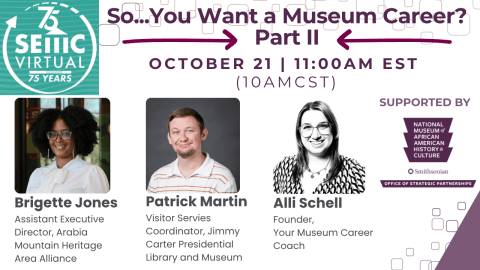
So…You Want a Museum Career? Part II
Event Date:Presented by: Southeastern Museums Conference -
-
Doing History in Polarized Times
Event Date:Presented by: American Association for State and Local History (AASLH)