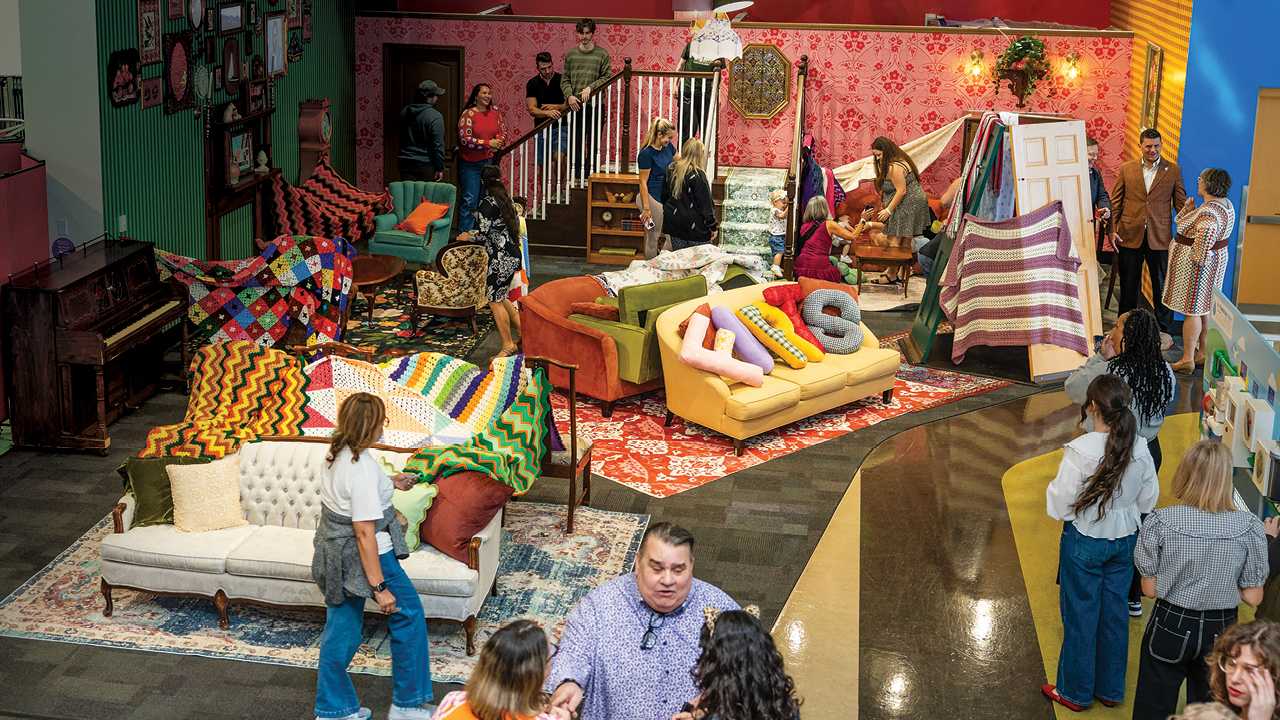
“Hey!! They just made the ruler larger!”
It had been more than a month since my (Matthew McNerney’s) 5-year-old son visited the Field Museum’s iconic “Underground Adventure,” a worm’s-eye journey into the soil where children meet the hidden critters that live there. Then one night at dinner, chatting about a completely unrelated school project, he blurted out his epiphany: he had not actually been shrunk down to crawl through dirt.
This article originally appeared in the May/June 2026 issue of Museum magazine, a benefit of AAM membership.
» Read Museum.
A museum designer for more than 20 years, I laughed—hard. But I was more impressed by how effective that experience was: it was living rent-free in his mind, transporting him to a never-before-seen world of bugs, spiders, and even crayfish.
It’s not easy to design something unforgettable.
Museum exhibits hold many simultaneous goals—building community, fostering empathy, educating visitors—but without retention, it all falls apart. So how do you crack the code of memory-making in an exhibit?
Regardless of the message you’re trying to communicate, the components of “unforgettable” exhibits are surprisingly consistent. In short: physical engagement.
One of the most reliable answers is what we call Whole-Body Learning, a pedagogical approach widely used by early childhood educators but relevant to everyone. It brings together mind, heart, and body in a learning experience. Done well, this design approach enables visitors to remember their visit and its lessons far more effectively than more passive strategies.
Why Whole-Body Learning Works
When a visitor moves through an exhibit, their brain is not filing facts into a neat cabinet. Rather, the visitor’s body detects signals and then gathers and integrates information. It takes fragments, sights, sounds, textures, spatial cues, and emotions, and stitches them into a coherent episode that may feel more or less accessible and relevant to a given visitor. The way the experience feels is key to how a visitor engages (or not) in the moment and to its long-term impact.
Whole-Body Learning highlights five facets of memorable experiences that help them stick: they are multisensory, repetitive, emotional, and novel, and offer agency. (See the graphic below.)
To make information easily and robustly accessible, experiences must offer multiple opportunities for interaction, which can be achieved through multisensory and repetitive design.
Summary: Five Whole-Body Learning Facets
Information Access:
Multisensory
Experiences that engage multiple senses in processing information.
Repetition
Repeated encounters with information.
Self-Relevance:
Emotion
Brief mental state arising from interpretation of bodily sensations to regulate arousal, attention, and behavior.
Novelty
Surprise; mismatch between expectations and our reality.
Agency
A sense of control over our own circumstance; match between expectations of our actions with reality.
Multisensory experiences engage multiple senses in processing information, making them more memorable than experiences relying on a single sensory channel. On the most basic level, engaging more senses provides more entry points for new information, more points of connection with existing knowledge, and more opportunities for later memory retrieval. This means more opportunities for information to stick. That’s why activating the sensory palate is so important: if an idea is attached to textures, sounds, movements, or smells, the brain has more handles to grab onto as it creates and recalls the memory. If your exhibit depends entirely on reading or looking, you are leaving memory on the table.
While multisensory experiences offer more avenues to access information, repetition strengthens information representation in the brain. “Neurons that fire together wire together” is the neural basis for learning and memory. Repeated encounters with information strengthen its presence at a physical level in the brain and body. “Practice makes permanent” reflects the embodied reality that repetition reinforces and strengthens existing neural connections, making experiences easier to recall.
To fully capitalize on the memory-enhancing power of multisensory and repetition-based design strategies, visitors must remain engaged with the exhibit experience. A key factor in sustained engagement and long-term impact is self-relevance: How and why is this relevant for me?
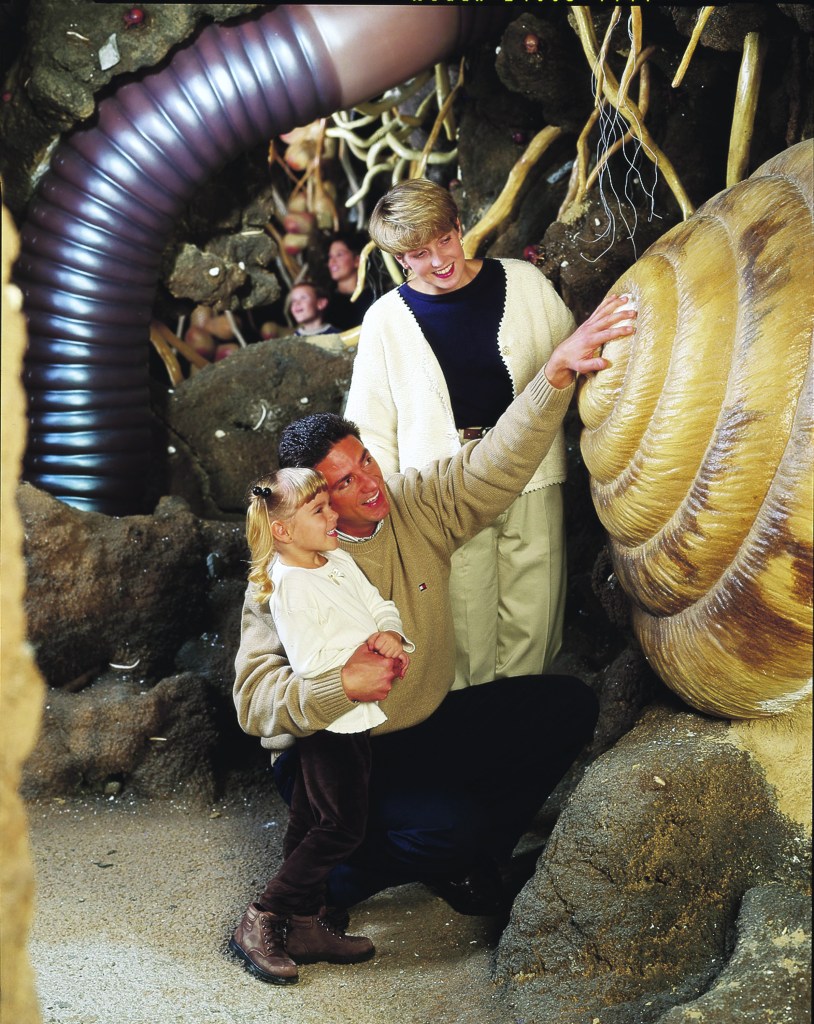
Courtesy of the Field Museum
We usually get our first answer to this question through emotion: brief mental states that shape attention and behavior. Emotion acts like a memory accelerant. We’re predisposed to remember moments that are subjectively emotionally resonant.
Science describes emotion along two dimensions: arousal (how intense something feels) and valence (whether it feels positive or negative). Arousal triggers a fight-or-flight response (sweaty palms, flushed face, pounding heart) that signals the urgency of information. Valence reflects the value of information.
Both dimensions shape memory. High-arousal moments tend to strengthen memory for core details like “what” and “where.” By contrast, strong positive and negative experiences tend to boost memory for contextual details. In other words, when something feels important, the brain treats it that way.
These effects map to underlying circuitry. Arousal is regulated by the amygdala, often called the brain’s “threat detector.” Emerging research suggests that amygdala activation makes later memory processes more efficient, as if tagging the information as important. This happens quickly, automatically, and without rational thought.
Valence is regulated by regions of the prefrontal cortex that support rational, task-relevant processing, which is slower and requires our attention. We often remember positive experiences more accurately than negative ones.
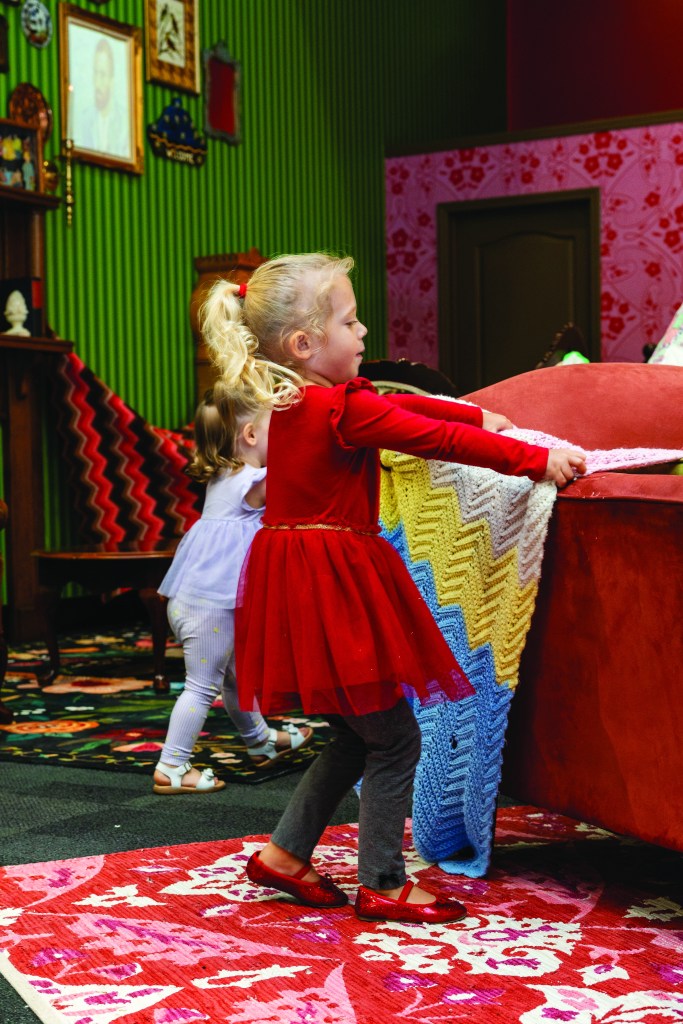
Evan Stout for Glazer Children’s Museum, 2025
Novelty is an unexpected encounter—a surprise. In the brain, it is a mismatch between expectations and reality. Our brains are trained to notice, and driven to resolve, such discrepancies. When we encounter newness, amygdala activation tags the incoming information as urgently important (i.e., we have an intense, or high-arousal, experience). As a result, we perk up, becoming naturally more present and attuned to our surroundings.
When we access curiosity, novelty drives us to seek new information and update our expectations. This process activates the brain’s reward system, reinforcing pleasure, motivation, and satisfaction (i.e., we have a pleasant, or high-valence, experience). Sometimes, though, factors like anxiety inhibit engagement of this curiosity-driven learning, creating a less pleasant (low-valence) experience, potentially limiting engagement and associated memory.
In short, creating distinct spaces primes our brains for information. Feeling transported, being in an alien environment, can help us learn. Our sense of agency within that environment plays a key role in this process (e.g., accessing curiosity). Many memorable exhibits share a common ingredient that is easy to underestimate: active participation—the visitor has a role. Agency is the term used to describe this sense of control over our own circumstances.
Decades of learning research on the enactment effect show that doing and generating often outperform passive receiving. In education research, active learning approaches outperform lecture-based instruction across many STEM contexts. When visitors perform actions rather than just hear or read instructions, memory performance improves.
In the brain, agency is a match between expectations of our own actions and reality (e.g., flipping the switch turns on the light). Like curiosity, agency is a pleasurable experience, and it keeps us coming back for more. By contrast, a mismatch between action expectations and reality leads to decreased agency and heightened vulnerability. These less pleasant, more intense experiences are less conducive to sustained engagement, learning, and memory.
The Real Promise
When my son believed he was shrunk into the soil in the “Underground Adventure,” what was he really feeling? Wonder, surprise, vulnerability, maybe a little nervousness.
Paced encounters with novelty create moments of high emotional arousal, signaling the importance of incoming information and priming memory-making circuitry. Familiar things (bugs, rocks, pennies) presented as gigantic kept him anticipating the next moment and made him feel like an explorer. Exhibit design that simultaneously offers visitors a high degree of agency in the face of unexpected elements is likely to increase the emotional valence of the experience, making it enjoyable and fun.
When visitors receive internal signals that an experience is both imminently important (via novelty) and valuable (via agency), they are likely to stay engaged, in turn allowing multisensory repetition to strengthen information in the brain and weave it into pre-existing knowledge. Around every corner, my son was reminded that he was underground, a feeling reinforced by the content, architecture, and lighting. Pairing novelty and agency can be a one-two punch that enhances the strength and vividness of visitors’ memories, creating a lasting impact over time.
Museums are among the rare places where learning can be physical, social, and fun. We can design moments that visitors carry for weeks, or years, and that return unexpectedly over dinner. That’s the bar.
Whole-Body Learning is a commitment to that kind of impact: memory-making through multisensory design, meaningful agency, emotional resonance, and the thrill of being transported into unexpected worlds. When we can do that, weeks later, something small—a texture, a sound, a smell, a feeling of having been powerful—makes people say: “Wait—I remember that!”
Tips to Make It Stick!
Whole-Body Learning is a discipline that aligns message and medium. When designing for memory retention, it helps to keep the following questions at the forefront of your mind.
Are we giving visitors multiple retrieval cues? Labels can be cues, but so can sounds, actions, textures, colors, and smells. The goal is not redundancy, but many ways back into the content.
Do visitors feel like the hero of the story? If visitors’ choices visibly change an exhibit’s outcomes, they are more likely to remember it.
Are we making people feel something? Emotional resonance is a signal to the brain that this moment matters.
Are we leveraging novelty and curiosity? If we want people to learn, we need them to be present. Curiosity is a proven amplifier.
Upcoming Events
-
AASLH-NCPH Joint Conference
Event Date:Presented by: American Association for State and Local History (AASLH)Providence, RI -
All You Need to Know to Drive Success for Your Museum Store Sunday!
Event Date:Presented by: Museum Store Association -
Transit Insurance in Practice for Traveling & Co‑Organized Exhibitions
Event Date:Presented by: American Alliance of Museums -
Digital Collections Summit
Event Date:Presented by: MuseumNext