Museums of all types are investing in digital technologies to expand access, deepen engagement, strengthen operations, and reach audiences beyond their walls. For Jewish museums, these efforts carry additional urgency. Digital tools can help preserve cultural heritage, broaden understanding of Jewish history and culture, connect dispersed communities, and provide resources that counter misinformation and antisemitism.
This article originally appeared in the Sept/Oct 2026 issue of Museum magazine, a benefit of AAM membership.
» Read Museum.
This past spring, with support from the David Berg Foundation, AAM invited us to research digital innovation in Jewish museums and present a series of webinars and a conference session exploring the topic. The Berg Foundation supports the conservation of Jewish artifacts, manuscripts, texts, and art; exhibitions about Jewish culture and heritage; and the advancement of Jewish museums and libraries.
In our conversations with institutional leaders across the field, many affiliated with the Council of American Jewish Museums, five organizations stood out for their distinctive approaches to digital access, engagement, and transformation: the Yiddish Book Center, the Magnes Collection of Jewish Art and Life at UC Berkeley, the Weitzman National Museum of American Jewish History, the Jewish Museum of Maryland, and the American Jewish Historical Society. The experiences of these institutions offer lessons for not only Jewish institutions but museums of all types.
Shared Access Through Collaboration
Founded in Amherst, Massachusetts, the Yiddish Book Center began as a preservation effort to rescue Yiddish books that were being discarded as fewer descendants could read the language. Over four decades, it has evolved into a major center for preserving, teaching, and celebrating Yiddish literature and culture.
The center has long embraced digital access. Its Steven Spielberg Digital Yiddish Library provides free access to more than 12,000 digitized titles, while oral history and audiovisual collections are available through an integrated search platform. The organization also developed open-source Yiddish optical character recognition technology, enabling full-text searching across its holdings.
Its most ambitious recent initiative is the Universal Yiddish Library, which aggregates collections from multiple repositories into a single web portal. Users can search tens of thousands of records and access materials regardless of where they are held. To date, the project includes approximately 67,000 book records from the New York Public Library, the YIVO Institute for Jewish Research, and the National Library of Israel.
The project required more than technical integration. It depended on building partnerships, securing funding, and creating agreements that preserved individual institutional ownership while enhancing public access. “Other organizations see the value of this resource and are now coming to us,” explains Susan Bronson, president of the Yiddish Book Center. “I believe that our work with books and libraries can be a model in creating broad access to related materials for research and other uses.”

Yiddish Library, an aggregate of various institutional
collections accessible via a web portal.
Investing in Digital Infrastructure
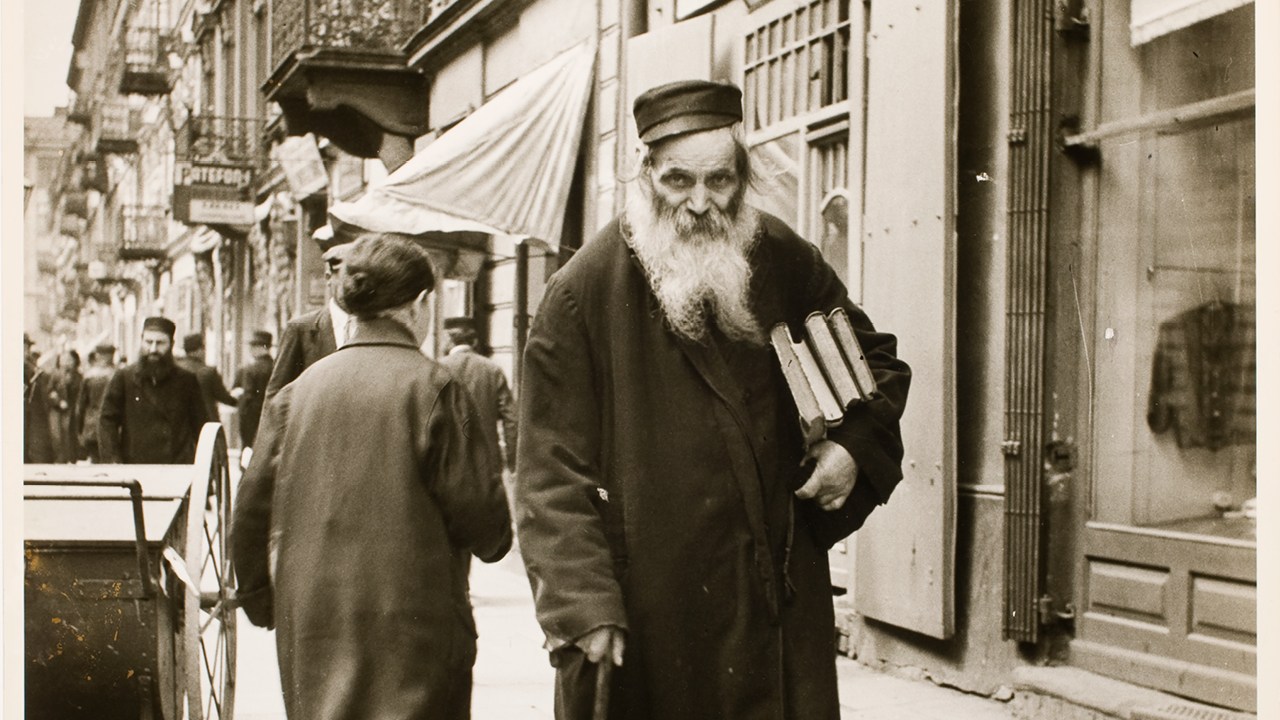
The Magnes Collection of Jewish Art and Life at the University of California, Berkeley, illustrates a different pathway to digital transformation—one centered on infrastructure. The museum’s collections document many aspects of Jewish cultural life throughout the global diaspora. A major turning point came in 2018 with the acquisition of the Roman Vishniac Archive, comprising approximately 30,000 images ranging from documentation of Jewish life in Central and Eastern Europe before the Holocaust to scientific photomicroscopy, along with related papers and objects.
The gift exposed limitations in the museum’s collections management environment, which relied on multiple disconnected systems. Rather than focusing solely on digitizing the Vishniac Archive, the museum undertook a broader improvement effort, adopting Maven, an integrated collections and digital asset management system that supports publishing, discovery, preservation, and workflow management across all holdings.
“Maven will allow us to do this specific project of publishing the Vishniac Archive,” says Executive Director Hannah Weisman, “but it’s also going to improve collection management across the entire collection.”
The Magnes experience underscores a familiar lesson: public-facing digital access depends on strong internal systems. Investments in collections management infrastructure, while less visible than many public-facing projects, can offer long-term benefits, including improved workflows, increased staff capacity, enhanced preservation practices, and new opportunities for broader public engagement.
The Magnes is also exploring responsible uses of AI to manage the Vishniac Archive. A graduate student is helping develop tools that could streamline licensing and rights management for materials in the archive. Revenue generated through licensing would support ongoing collection stewardship.
Using Technology in Storytelling
Located on Philadelphia’s Independence Mall, the Weitzman National Museum of American Jewish History is reimagining its visitor experience. Under President and CEO Dan Tadmor, the museum has embraced digital technologies while maintaining a clear principle: “Our approach is that technology is an enabler. It is not an end in itself,” Tadmor says.
That philosophy is evident in “The First Salute,” an exhibition exploring the role of Dutch Jewish merchants on the Caribbean island of St. Eustatius during the American Revolution. Because relatively little material culture survives to tell this story, the museum turned to digital tools—including AI-assisted video production—to create a more immersive and emotionally engaging experience.
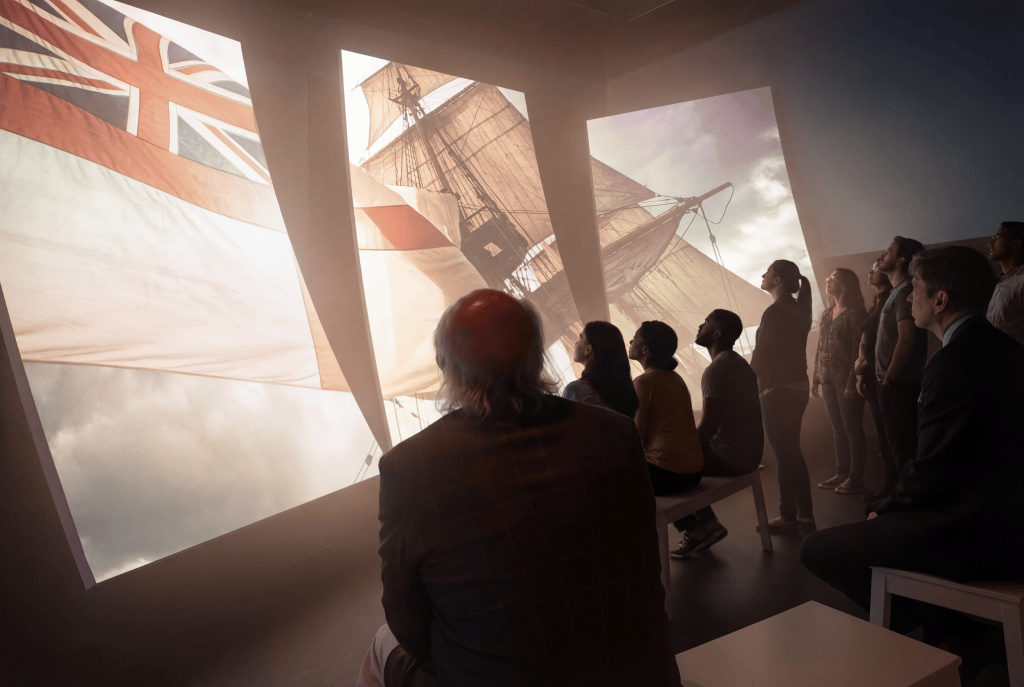
incorporated AI in some of its interpretive content.
“We wanted this exhibition to look and feel different from a ‘normal’ colonial-era exhibition,” Josh Perelman, the Weitzman’s senior advisor for content and strategy, says. “And we wanted to keep our minds open to how technology can enrich the experience and provide opportunities for storytelling when the material culture would not necessarily convey what we were trying to introduce to our visitors.”
AI allowed the museum to create compelling interpretive content at a fraction of the cost of more traditional production methods. Exhibition labels clearly identify where AI-generated elements are used, and the museum carefully distinguished between situations where digital interpretation enhanced understanding and those where authenticity was paramount. For example, footage filmed on location in St. Eustatius in the remains of the island’s historic synagogue was used when the emotional power of real people and real places was essential to the narrative.
The museum’s new family gallery, “Colors of Creation,” demonstrates a second approach. Half of the gallery is a fully immersive digital environment where visitors interact with projected imagery through movement and gesture. The other half is a hands-on laboratory focused on experimentation and creativity.
Together, these projects illustrate several important principles: digital experiences work best when aligned with interpretive goals, and immersion can complement—not replace—physical engagement.
Tadmor and Perelman also emphasize the importance of finding the right technical partners, “people who will bring their heart and soul into the project.” And museums need to recognize that technology requires ongoing maintenance. Service agreements, upgrades, and long-term support must be built into project planning from the beginning.
Building a Participatory Museum
At the Jewish Museum of Maryland (JMM) in Baltimore, digital innovation has become central to a broader institutional strategy focused on participation and community co-creation. The museum stewards the largest collection of regional Jewish Americana in the United States, encompassing oral histories, photographs, Judaica, rare books, textiles, archival materials, and everyday objects documenting Maryland’s Jewish communities.
Since becoming director in 2021, Sol Davis has pursued a participatory museum model that integrates digital engagement into both institutional strategy and visitor experience. “We have redesigned the JMM’s architecture and updated its technologies to prioritize collaboration with community on-site and online,” Davis explains.
A recent capital campaign transformed galleries and public areas while creating a state-of-the-art production studio. Digital programming is no longer treated as a separate activity but as an integral component of the visitor experience. Several early experiments demonstrated the potential of this approach—podcasts and virtual exhibitions attracted new audiences, including international visitors who would never have encountered the museum through traditional channels. For example, a digital version of an on-site painting exhibition featuring a Ukrainian artist reached viewers far beyond Maryland.
The museum has also repurposed existing content, including decades-old issues of its magazine, which contain rich historical documentation that had been largely inaccessible. By digitizing and reinterpreting these materials, the museum created new opportunities for engagement without significant new collecting efforts.
Organizational changes have accompanied these initiatives. The JMM now includes dedicated digital production expertise among its staff, recognizing that digital engagement requires sustained capacity.
Reaching Beyond the Museum
Founded in 1892, the American Jewish Historical Society (AJHS) in New York City holds one of the nation’s most significant repositories of American Jewish history, with more than 30 million documents and objects in its collections. Like many collecting institutions, however, it has constrained exhibition capacity, especially since it shares space in the Center for Jewish History with four other Jewish cultural organizations. And only a portion of its collections—currently about 12 percent—has been digitized. Rather than viewing these limitations as barriers, museum leadership has developed a digital strategy designed to extend the institution’s reach beyond traditional programmatic formats.
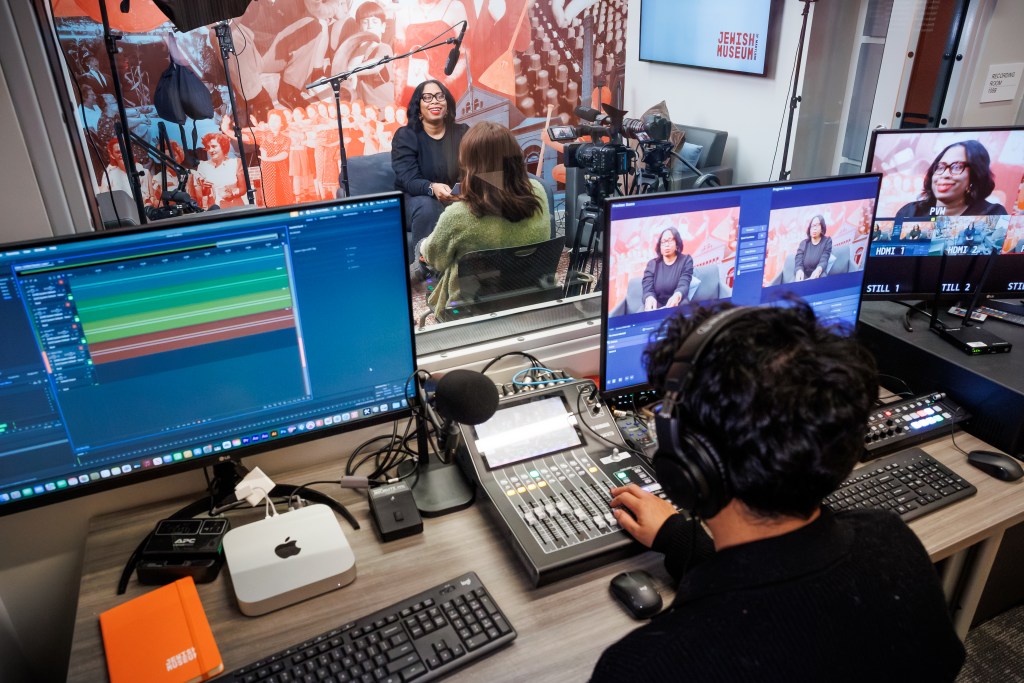
production studio in action.
Under Executive Director Gemma Birnbaum, AJHS has adopted a broad approach to audience engagement that integrates on-site, online, and traveling experiences. Digital programs are designed not as substitutes for exhibitions but as complementary channels that expand access and participation. Every on-site program is recorded for live-streaming or future airing. The goal, according to Birnbaum, is to “nationalize, even internationalize, the museum, and expand the audience beyond scholars.”
The organization’s programming related to the 250th anniversary of the Declaration of Independence illustrates this strategy. The on-site exhibition with the Center for Jewish History, “All We Have Standing Between Us: 250 Years of Jews and Democracy,” is paired with AJHS’s podcasts, teacher education programs, and object loans to partner institutions, creating multiple pathways for engagement and offering new insights into the role that diverse members of the Jewish community have played in fostering democratic awareness. An online podcast version of the exhibition, with special guests providing the voice-overs, will take audiences beyond New York and around the globe through key moments in US history.
Lessons for the Field
- Successful digital initiatives begin with mission and story. Technology is most effective when it supports clearly defined interpretive and institutional goals.
- Digital projects often generate value beyond public engagement. Improved workflows, stronger collections management, and increased staff capacity can be equally important outcomes.
- Collaboration matters. Whether through shared platforms, strategic partnerships, or community participation, collective approaches can amplify impact, increase operational efficiency, and reduce duplication.
- Existing collections and content frequently contain untapped opportunities. New technologies can help museums reinterpret, repurpose, and redistribute content in ways that reach new audiences.
- Digital transformation is not a one-time project. It requires ongoing investment, maintenance, and organizational commitment.
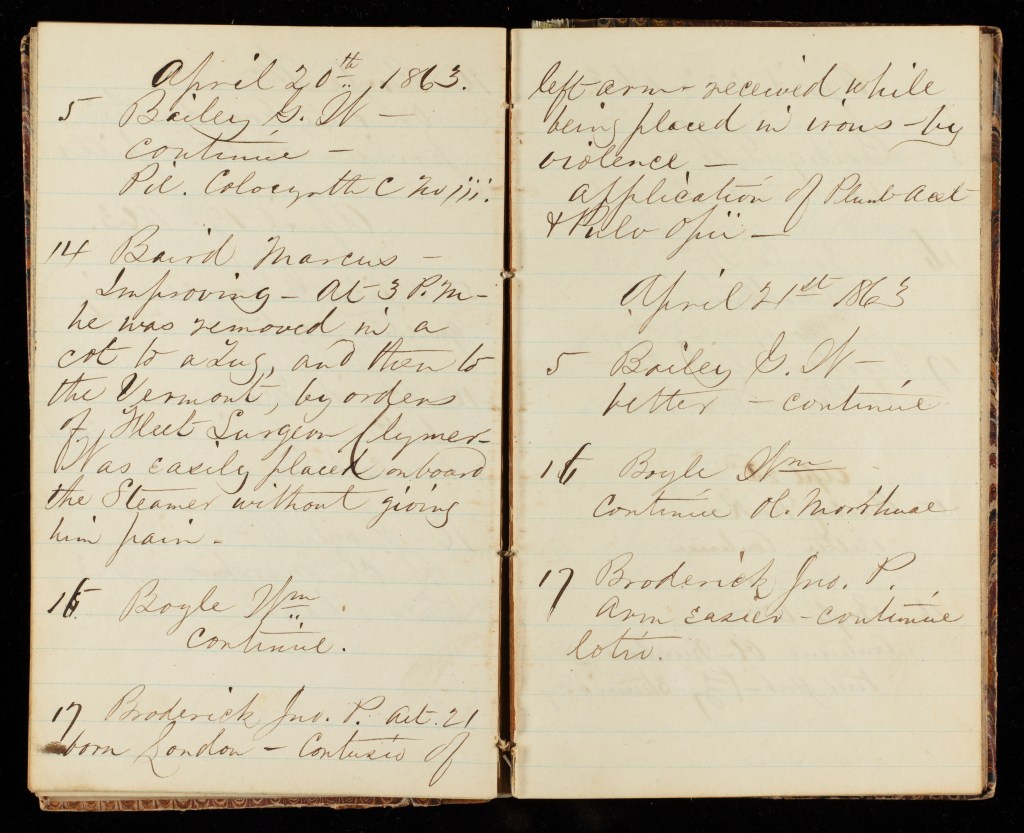
Jewish Historical Society collection, Jacob da Silva
Solis-Cohen, an assistant surgeon on a U.S. Navy ship,
kept notes on his patients’ medical progress.
“Jewish communities have never had a monolithic voice,” Birnbaum says, stressing that the “social contract for museums means that our job is to educate. Democracy requires active participation and it has always been so.”
In a key organizational shift, the museum created an integrated engagement function that combines education, public programming, and digital initiatives. This structure reflects the fact that audiences experience museums through multiple platforms rather than distinct departmental offerings.
The strategic efforts at each of these Jewish museums support digital access, engagement, and transformation. For the broader museum field, they provide compelling examples of how digital innovation can strengthen relevance, accessibility, and public impact while remaining firmly grounded in institutional mission.
Marsha L. Semmel, a former museum director and senior official at federal cultural agencies, is an independent museum professional working with cultural organizations on leadership development, planning, and partnerships. Greg Stevens is principal of Purple Cow Career and Talent Development, former director of the MA in Museum Professions program at Seton Hall University, and former director of professional development at AAM.
Upcoming Events
-
-
Industry Showcase: Innovative Digital Solutions
Event Date: -
Getting Started in Local Advocacy
Event Date:Presented by: American Association for State and Local History (AASLH) -
Creative Museums Summit
Event Date:Presented by: MuseumNext