This article first appeared in the journal Exhibition (Fall 2026) Vol. 45 No. 2 and is reproduced with permission.
Entering the Las Vegas Valley, the whole desert landscape seems alive with incredible electric lights, flashing signs, hotels, and casinos that are designed to excite. The Las Vegas visitor experience is predominately mediated through a digital world: screens guide visitors to their destinations on the Strip (intro image); phones ping with hotel reservation alerts, show tickets, and arriving Ubers; and payment for the city’s world-class entertainment can be done with the tap of a smart phone.
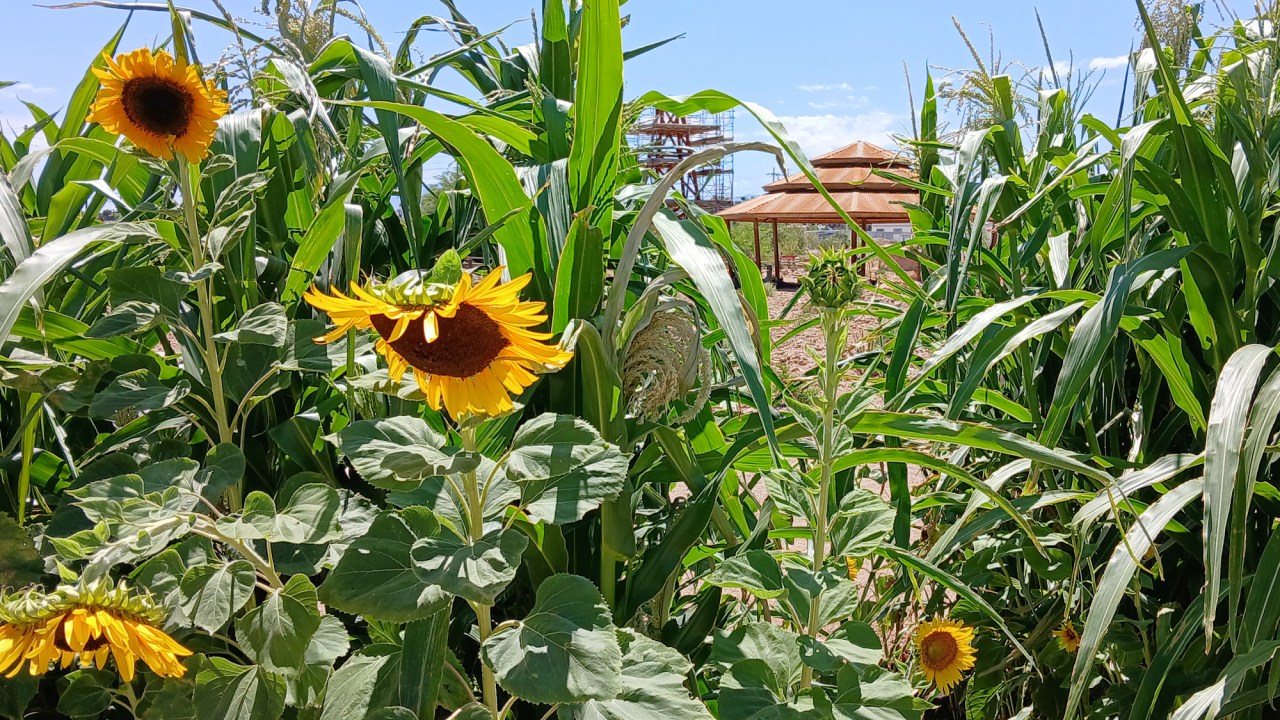
Just a few miles from the Strip, Nuwu Pahsats (The People’s Garden) at Springs Preserve reconnects visitors with the immediacy of the land and its people. Sun heats. Plants grow. Time slows (intro image). Springs Preserve opened as part of the Las Vegas Valley Water District’s sustainability outreach efforts in 2007. The 180-acre natural and cultural attraction encloses the original springs that gave Las Vegas its name: The Meadows. Springs Preserve includes multiple museum galleries, nine acres of botanical gardens, and 110 acres of natural areas including the sites of the original springs, historic water infrastructure, and ancient homes of Nuwuvi (Southern Paiute) ancestors. Springs Preserve welcomes over 275,000 visitors a year, including over 30,000 school children. More than 20,000 memberships are held by locals and other interested patrons.
In the garden, the worldview of theNuwuvi offers a practical and philosophical response to the brain rot of always-online virtual reality by rooting human perception in reciprocal relationships with the living world. The garden foregrounds deep-time relationships between Nuwuvi and plants, animals, water, and seasons. Nuwu Pahsats has grown in collaboration with a Nuwuvi way of thinking, speaking, and relating that understands the land and its inhabitants as kin.
“These plants have purpose in life,” explain the Nuwuvi participants who helped develop the garden, “they show that there is significance in this place, endurance of nature in its raw form.”
When the online world is designed to disconnect people from reality, the corrective is not an escape into another abstraction, but a reconnection to place. Touching rice grass (Achnatherum hymenoides), learning its name in Nuwu (wa-IHV), and understanding its role in a living system become quiet acts of resistance that restore attention, humility, and belonging in a landscape that has always been alive.
As author Richard Louv argues, modern life has produced a growing “nature-deficit disorder,” in which disconnection from the natural world has measurable social and psychological consequences.1 Nuwu Pahsats responds to this condition not simply by reintroducing people to nature, but by restoring the relationships—cultural, linguistic, and ecological—that make such encounters meaningful and sustainable.
The World Beneath the Neon
Beneath the neon bustle of Las Vegas lies tu-VEEP—the Nuwu concept that encompasses both earth as soil and Earth as the intelligent totality of the living world. This indigenous ecological bedrock persists despite centuries of colonial erasure. It is celebrated through the protection of sacred pilgrimage routes through landscapes of tu-VEEP’s first peoples, inspiring them to a right relationship with the Land and its marvelous biodiversity of inhabitants.
One study on the significance of Nuwuvi sites in Nevada by cultural anthropologists Richard Stoffle and Kathleen Van Vlack focuses on aNuwuvi pilgrimage trail through this valley landscape. Richard Arnold, a coauthor of the study and member of the Pahrump Paiute Tribe, offers the following foundational concepts:
- The Landscape Is Alive: There is power in all things such as rocks, water, air, plants, animals, and humans. All of these beings are interconnected; they can talk with each other and work together to balance the world. The land has eyes and ears. It can talk and knows our thoughts. This makes it in balance and provides guidance.
- The Mountains Are a Part of Us: It’s not just a mountain to us, it’s a living thing, a living spirit to us, the trees and the rocks and the air, the water, they’re all our cousins, part of this, related to us. So . . . it’s just not a big mountain there, it’s part of us. We’re related. It’s alive.2
Andrew Anderson of the Las Vegas Paiute Tribe and member of the Las Vegas Paiute Language Group summarized this worldview with a powerful metaphor:
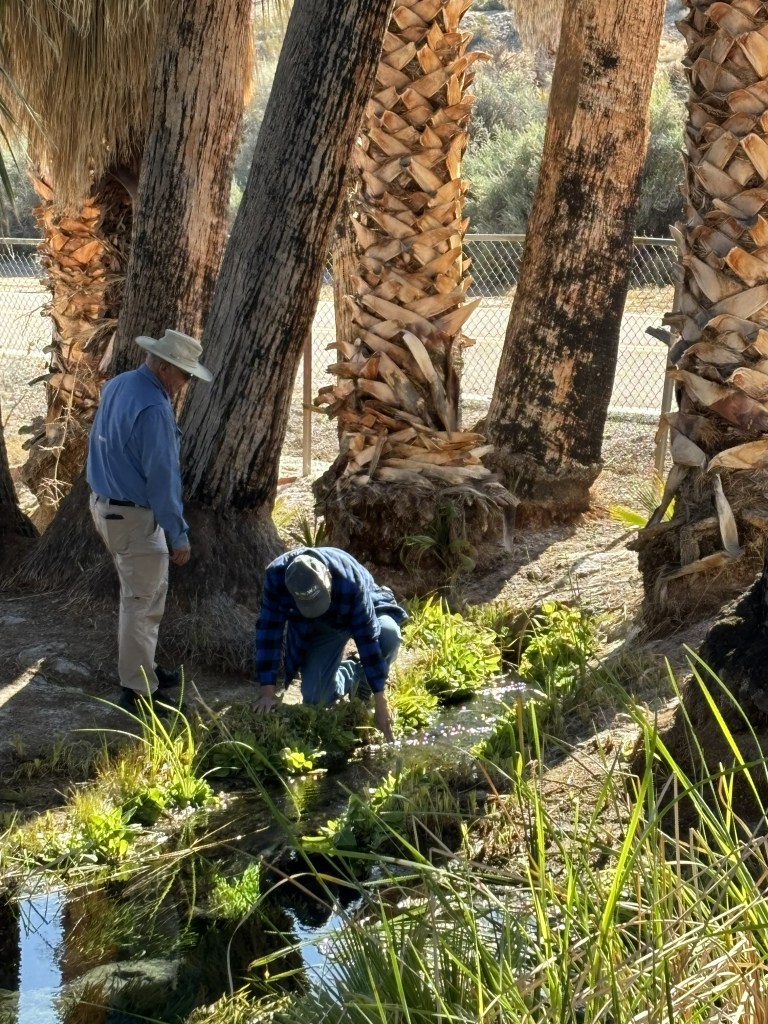
Water is not life. Life IS water. This is called puha, or life force, and we swim in it like fish in a sea. It is in constant flow, a living circulation. It interpenetrates and contains all of us. It IS us. But we do not own the energy; it penetrates and animates you, but it leaves to go elsewhere when you die. So, there’s water in the cactuses. There’s water all around. There’s even water in the earth and in you too, and it’s taught that the Earth is to be viewed as a person and that the actual water moving through it is similar to the water moving through a human being (fig. 2).
According to Stoffle, Arnold, and Van Vlack:
this energy [puha] permits Earth elements to talk, hear, have desires, travel, and know their Creation-based responsibility to each other. By following these responsibilities, they maintain balance for themselves and the Earth. Everything has a purpose. For these reasons, these elements are seen as people in various relationships and treated with respect byNuwuvipeople.3
In Nuwu Pahsats, tu-VEEP comes to the surface again. From the top of the Spring Mound, one of two ancestral Nuwuvi sites protected at the Springs Preserve, one can see mountains in each of the four directions. Water flows through underground channels from the mountains to replenish aquifers under the springs. In this spot, one might read the land and more directly perceive its flows of rock, water, and life, because where water flows, life gathers—tu-VEEP is revealed as an ongoing, intelligent, dynamic, and interdependent exchange.
A Landscape Made Legible
Nuwu Pahsats is a one-acre botanical microcosm of the Las Vegas Valley designed to re-root human perception in tu-VEEP.
Conversations around a dedicated space for a Southern Paiute garden go back to 2011, when the Las Vegas Paiute Language Group began a series of weekend programming activities at the Springs. These gatherings laid the groundwork for what would eventually become Nuwu Pahsats. The Language Group is composed of members from several Southern Paiute communities in the region who live in Las Vegas, Moapa, Pahrump, and Southern Utah. The group regularly meets to practice speaking Nuwu, discussing tribal issues or current events, trading new words and pronunciations, and at times acting as a de facto consultation team.
To use the designated funding, Springs Preserve reached out to the wider tribal community for assistance. This initial consultation group brought together members of Southern Paiute groups, a tribal ethnobotanist, and an Indigenous university organizer to identify initial themes and concepts. This group was clear that their consultation was limited; the project had to engage with the Southern Paiute Tribes and their representatives. This early consultation put the interpretive team on the path to better collaboration and understanding of what the process might look like and what roadblocks might lay ahead. One theme developed during this consultation phase that endured emphasized relationships.
Over the following years, Springs Preserve worked on conceptual designs and introductory themes for a garden. The Preserve approached the Language Group with concepts in 2015, and site visits were conducted with Las Vegas Paiute cultural representative Kenny Anderson to choose potential locations. Funds for a dedicated garden were finally provided by the State of Nevada in the summer of 2021, but the COVID-19 pandemic posed a significant challenge. Many tribes had closed themselves to protect Elders and the endangered from sickness. Despite these precautions, local tribes lost many people—a profound impact on small communities. The Language Group did not convene to advance the project.
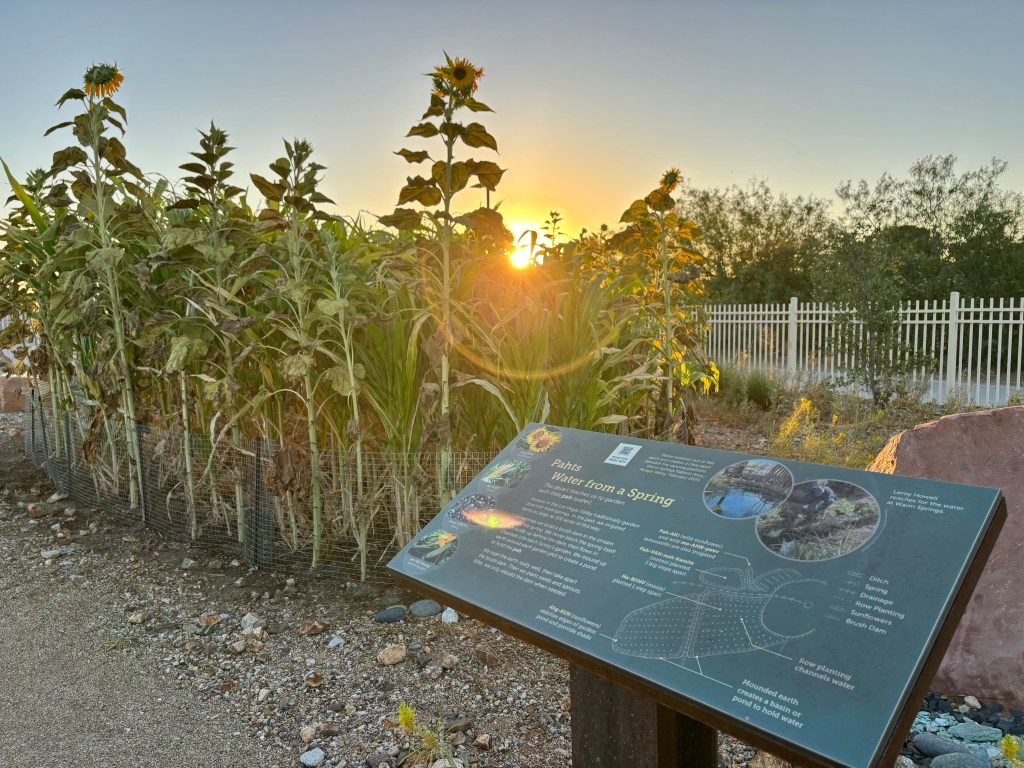
The relationship with the Language Group was reawakened in 2023. This began a transformation from the ground up. The “ethnobotanical garden” was reclaimed by the Language Group. They decided to name the garden Nuwu Pahsats, and favored specific, place-based stories and regional dialects in order to, as one Language Group member stated in an initial goals workshop, “share the stories of Southern Paiute’s specific relationship with the plants and the land.”
They decided what stories would be told, what interpretive structures would be built, what images would be used in the interpretation, and co-wrote all the interpretive text in a collaborative process (fig. 3). They also provided all the Nuwu language present in the garden and suggested that recordings be made to preserve the authentic pronunciations of the words in the Las Vegas regional dialect. This change in direction and in-depth process took longer than any party had expected and transformed the nature of the garden.
Some of the practical steps taken included:
- The project team prioritized meeting in person for the first gathering to build relationships and again for the final meeting to concentrate and refine the group’s collective efforts. For meetings in between, one facilitator participated virtually due to geographic and budgetary constraints. While not ideal, this was successful because the other facilitators were present in person.
- Meetings were held monthly, at a regular day and time. The overall pace and specific meeting dates were determined by the Language Group.
- Facilitators provided food for each meeting, and every gathering began with a shared meal to foster connection and collaboration.
- All participants committed to arriving prepared for each meeting and to completing work between sessions. Facilitators developed goals for upcoming meetings, prepared specific discussion questions, created and revised collaborative working documents, and conducted literature and photo archive research. Language Group members researched words, phrases, foods, plants, places, photographs, stories, and memories. Homework assignments were established at the conclusion of each meeting.
- The team spent time in one another’s communities and attended a variety of cultural events together. Facilitators traveled to the Tribal Offices to hand-deliver hard copies of working materials.
- The group participated in a team-building field trip to the Warm Springs Natural Area, a place of importance to all participants. The trip was combined with an all-day meeting and a birthday celebration.
- The translation process evolved significantly over the course of the project. Initially, the team attempted to translate English concepts into Nuwu Um-BAH-gha-ha (“people speaking”), but many of the ideas did not translate effectively. Instead, the group shifted its approach, beginning with ideas and phrases in Nuwu Um-BAH-gha-haand translating them into English. This process prioritized language revitalization over interpretation, aligned with the goals of the Language Group, and fundamentally transformed the project’s methodology.
- Everyone planted together in the garden.
Built on this solid foundation, the garden endeavors to provide contemporary, first-person narratives of cultural continuity to promote language vitalization, food sovereignty, and ecological conservation through cultural preservation. It provides a place to gather plants. And it provides a place to gather people.
Language as Ecological Technology
To see the land clearly, one must learn to think with it rather than about it. As Arnold remarks in “Landscape Is Alive,” “the land has eyes and ears. It can talk and knows our thoughts.”4 In Nuwu Pahsats, language functions as an ecological technology. Over 70 Nuwu words and phrases—spoken in the recordings by Leroy Howell, an elder of the Pahrump Paiute tribe—are vitalized throughout the garden through QR codes on the interpretive panels. Leroy, acting as the “voice of Nuwu Pahsats,” completes a profound circle of presence: his great-grandfather, John Howell, was the first rancher at the springs in the 1870s and married into the Nuwuvi community. By hearing Leroy speak, visitors connect directly to a living cultural lineage rooted in that very place. By learning the name of an element or plant in Nuwu—such as Pah for water, or wa-IHV for Indian rice grass—they reconnect with the living elements and puha of tu-VEEP—and find an antidote to nature-deficit disorder.
This has profound effects on visitors to Nuwu Pahsats, as they learn, even in small ways, to transform their perceptions and aspire to a more balanced relationship with tu-VEEP. An informal 2026 visitor survey (n=26) supports this: 77 percent of respondents reported no personal connection to the Native American community, yet many described feeling “more present,” newly aware that “the desert is not as desolate as it may appear,” or moved to learn “the ways the people lived with their environment in harmony.” Perception shifts were reported across Native-aligned (23 percent) and non-aligned respondents alike.5
A Reconstructed Landmark
According to Stoffle et al., sacred landscapes are organized into a hierarchy of meaning: holy landscapes, storyscapes, regional landscapes, ecoscapes, and landmarks. Within this sacred geography, Nuwu Pahsats serves as a reconstructed landmark—a concentrated, accessible node that opens the visitor’s awareness to the greater totality. “Special places are inherently meaningful but can only be fully understood by the role they play in the formation and operation of living cultural landscapes.”6 The garden is a place designed to facilitate that very interconnectedness.
As a landmark, the garden acts as a touchstone that reconnects the original springs to the vast spiritual architecture surrounding them (fig. 4).
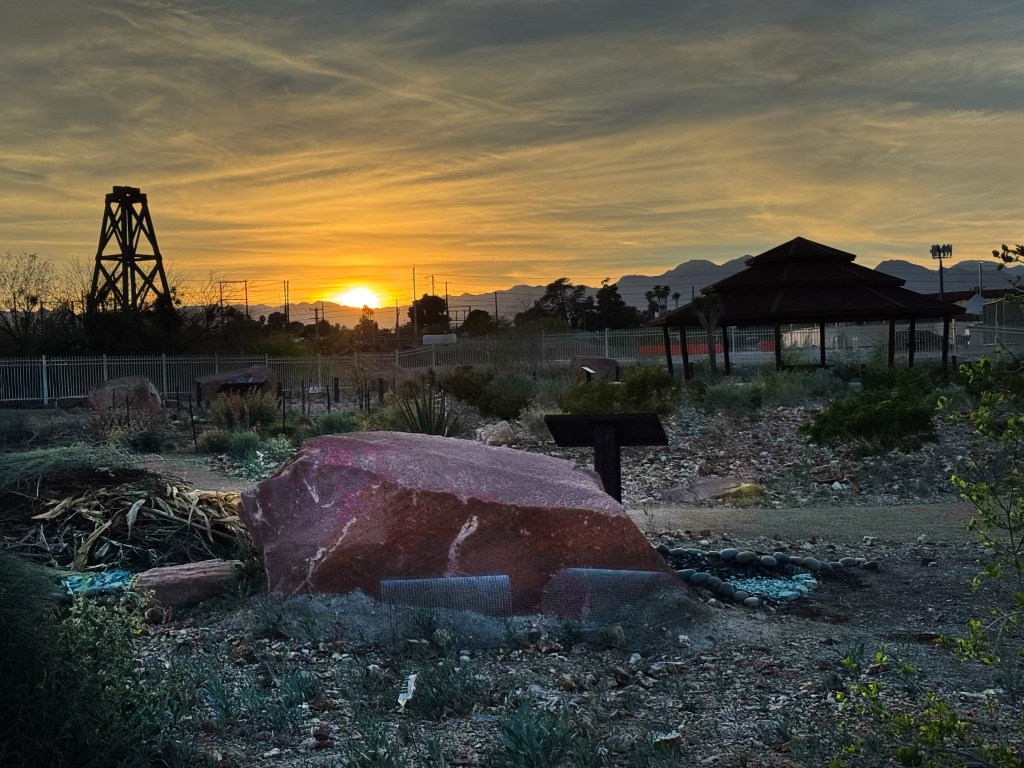
For the purposes of this article, Las Vegas Paiute cultural representative assistant and coauthor Andrew Anderson was asked: “Can you comment on Nuwu Pahsats as a constructed landmark, bringing the springs back to life in a way that is reconnected to the greater regional landscape and the significance of tu-VEEP in the wider region?” He responded:
It is wonderful to be able to see a very beautiful and majestic example of the fragility and the creative powers of Mother Earth, tu-VEEP. To see this place, which was visited by so many in both ancient times and today, brings a profound connection to the past. And this right here is some of the greatest restorative work that’s ever been undertaken—to be able to show that the old way can be constructed with these new modern techniques in order to preserve some of the ancient and most important biodiverse plant life. As for its significance, everything is living. All these plants, all these animals, they’re coming to see their home where they used to be, where their ancestors would talk. Oh, look, a hawk is here. I spoke true.
Reconnection as Resistance
With time and tending, the garden has grown—both the plants and the people who connect with them. In just a few short years, and with the persistence and vision of its participants, Nuwu Pahsats has grown to serve multiple purposes:
- It creates a social hub for local tribes and the urban Indigenous diaspora to reconnect with land, traditions, and culturally appropriate foods.
- It is an educational space that inspires guests to build a more sustainable relationship with Southern Nevada’s desert landscape, using the enduring traditions of its original inhabitants as a guide.
- It functions as a living seed bank and nursery for culturally significant native plants and heirloom crops, supporting regional biodiversity, water-wise landscaping, and food sovereignty efforts.
- It promotes language vitalization.
Nuwu Pahsats is one node in a broader pattern of Southern Paiute land reconnection: the Bureau of Land Management and National Park Service’s Yevingkarere Camp has returned Kaibab, Shivwits, Las Vegas, Moapa, and other Paiute youth to traditional homelands at Grand Canyon-Parashant National Monument since 2007, pairing them with Elders to learn land-based skill-building.7 Health researchers Jocelyn Sommerfeld, David Danto, and Russ Walsh distinguish such Indigenous land-based interventions as collective, identity-restoring practices aimed at repairing colonization’s rupture between people and ancestral land.8
These collaborations are also having a direct impact on the cultural vitalization of Tribal elders, as this statement from Leroy Howell attests:
My time spent working at [Nuwu Pahsats] . . . identifying plants used during my Paiute upbringing, and what they were used for during my grandfather’s and grandmother’s time, has brought me full circle to my roots.It is hard to identify which part of planting I enjoyed most. Perhaps it is starting seedlings knowing that they are growing and producing. Perhaps it is time speaking a language that is quickly becoming extinct and sharing enunciations in my native language. It could be seeing the new growth of plants and knowing we have built something for the coming generations of my culture (fig. 5).
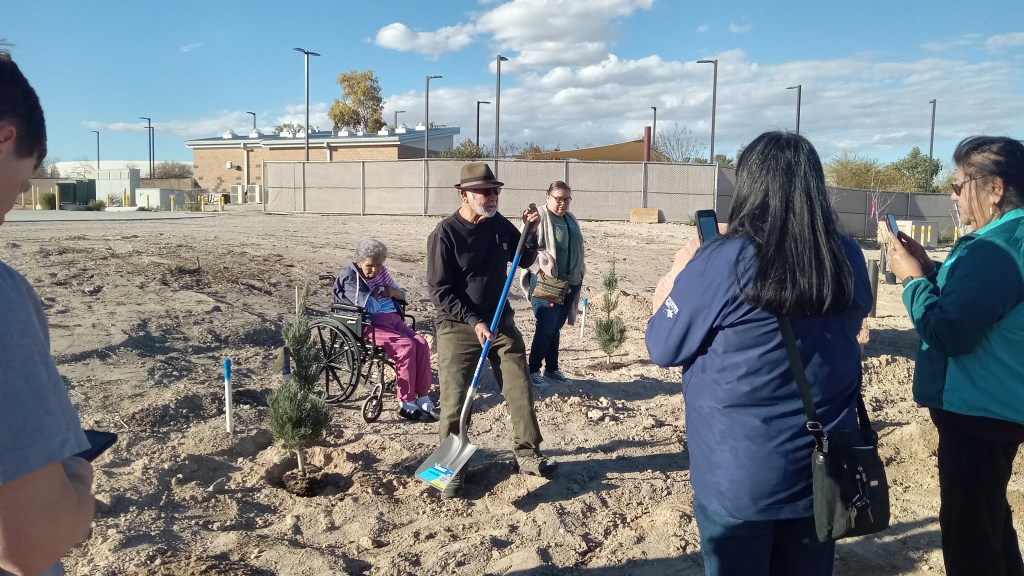
Nuwu Pahsats facilitates a profound act of reconnection as resistance. As a reconstructed landmark in tu-VEEP’s sacred architecture, a cultural and educational hub, and a production center for native plant conservation and food sovereignty, the garden provides the indigenous ecological bedrock to defy the conceptual divide that treats Earth as inert. Every Southern Paiute word spoken and every plant grown is an antidote to erasure, offering the next generation mental health and cultural vitalization rooted in soil. This restoration reframes the landscape. Restoring tu-VEEP’s living pulse ensures Nuwu Pahsats remains a place where Nuwuvi endure, speak, and belong from Time Immemorial into the future.
Lessons Learned from a Garden
Working on Nuwu Pahsats has taught the authors many lessons that may resonate for others looking to reconnect to place:
- “Ethnobotanical” includes people and plants. You’ll need to work with both.
- Spend time in deep observation. Go out, spend time in wild plant communities to see how they thrive. Do they cluster together? Avoid one another? Gather near water? The land, plants, and wildlife are in an ongoing conversation. Observe.
- Commit to collaboration. This goes deeper than asking for input or approval. Collaboration is about establishing mutually held values and creating goals together that none would have imagined on their own.
- Be ready to change direction. Collaboration will lead you into the unexpected. You must be ready to go there (and possibly explain it to your boss). Your mutually held values will guide you.
- Be ready to give more time. Cross-cultural collaboration has its own pace. The seasons turn at their own time. It is up to you to make things happen at the right time, but you cannot make the right time happen when you decide. Our garden took years (years!) longer than initially planned.
- Don’t take it personally. Be ready to answer tough questions, address real concerns, and to be critiqued along the way. Learn to say, “Thank you for telling me,” and, “I will work on that.”
- Not everything you try will work. Try planting a different species or asking a different question.
- Opening day is just the beginning. It’s a garden. Its purpose is to grow! What other events, happenings, people, and processes can your garden (or project) support?
In closing, Andrew Anderson offered this advice:
This is how you’re going to get your results. If you go into something expecting all the answers to fit your imagination of how the world is supposed to be and how this should be run, then you’re putting the cart before the horse. You’re trying to run before you can walk. It’s like the cycles of the seasons: when working with indigenous groups, no matter who or what they are, it has to be a form of mutual respect and understanding, and the knowledge that you are not dealing with a fixed image—the people that you will be seeing and talking to are living vestiges of history. Just as life is going through a constant state of flux, so too are the goals of the people, being made of all this stuff (elements, puha).
All of it is always changing, ever-flowing. People have lives, they have jobs, they have all this stuff going on, and just because something doesn’t work once doesn’t mean that it’s the wrong path. The most important part is to listen, because a lot of these people . . . may not have the words or the capabilities at the drop of a hat to be able to answer every question. And so, when they answer your questions or give you ideas or guidelines, they tell you that for a reason. That’s enough (fig. 6).
Acknowledgements
We would like to thank the Las Vegas Paiute Language Group for its collaboration on the creation of Nuwu Pahsats: from the Las Vegas Paiute Tribe, Kenny Anderson, Susan Anderson, and Andrew Anderson; from the Moapa Band of Paiutes, Lalovie Miller, Kami Miller, Tracy Miller, Lavinia Myers, Janet Myers, and Thelma Meyers; and from the Pahrump Paiute Tribe, Leroy Howell.
Ian Ford-Terry is an Archaeologist/Horticulturist at Springs Preserve in Las Vegas, Nevada.
Andrew Anderson is a Cultural Representative Assistant, Las Vegas Paiute Tribe.
Robin Anderson is Partner at Aldrich Pears Associates in Vancouver, British Columbia, Canada.
Nathan Harper is an Archaeologist at the Southern Nevada Water Authority.
- Richard Louv, Last Child in the Woods: Saving Our Children from Nature-Deficit Disorder (Algonquin Books, 2008). ↩︎
- Richard Stoffle, Richard Arnold, and Kathleen Van Vlack, “Landscape Is Alive: Nuwuvi Pilgrimage and Power Places in Nevada,” Land 11, no. 8 (2022): 1208. ↩︎
- Ibid. ↩︎
- Ibid. ↩︎
- Data drawn from an unpublished, informal visitor survey administered on-site at Nuwu Pahsats, Springs Preserve, June 2026 (n=26). Respondents were self-selected visitors who completed a voluntary written questionnaire during their visit; the survey was not randomized and is not a validated research instrument. “Native-aligned” respondents are those who indicated a personal or familial connection to the Native American community; all others are classified as “non-aligned.” Given the small sample size, percentages should be read as descriptive and suggestive rather than statistically generalizable. ↩︎
- Stoffle, Arnold, and Van Vlack, “Landscape Is Alive: Nuwuvi Pilgrimage and Power Places in Nevada.”
↩︎ - Rachel Carnahan, “Paiute Tribal Youth Learn Traditional Skills, Natural Resource Sciences from Tribal Elders, BLM and Partners,” Bureau of Land Management, November 27, 2023. ↩︎
- Jocelyn Sommerfeld, David Danto, and Russ Walsh, “Indigenous Land-Based Interventions and Nature-Oriented Wellness Programs: Commonalities and Important Differences,” Journal of Concurrent Disorders 1, no. 3 (2019): 38–40. ↩︎
Upcoming Events
-
From Informational Interview to Real Connection
Event Date:Presented by: American Alliance of Museums and National Emerging Museum Professionals Network -
Understanding the U.S. History Workforce
Event Date:Presented by: American Association for State and Local History (AASLH) -
TrendsWatching: To Live or Die in AI Webinar
Event Date:Presented by: American Alliance of Museums -