In a bid to increase attendance, the California Academy of Sciences shook up its exhibition schedule and marketing.
Tourism is the lifeblood of many museums and cultural attractions. Earlier this year, as the California Academy of Sciences approached the peak spring and summer travel season, attendance was trending lower than expected. It’s an issue museums nationwide are experiencing, driven by declines in local and international tourism, inflation, rising costs of living, and challenges regaining momentum post-pandemic. In San Francisco, we’re also facing another hurdle: a recent wave of misleading, negative media portrayals of the city, which are at odds with the reality of a healthy, thriving, vibrant San Francisco.
This article originally appeared in the Nov/Dec 2025 issue of Museum magazine, a benefit of AAM membership.
» Read Museum.
Facing all of that, it was hard not to feel like the cards were stacked against us. Like many museums, we operate with a lean team, often face economic headwinds, and work hard to evolve in an industry that often resists change. Also, like many museums, we typically plan exhibitions years in advance. Traditionally, our advertising calendar and budget have revolved around a singular exhibition as the peak season attendance draw.
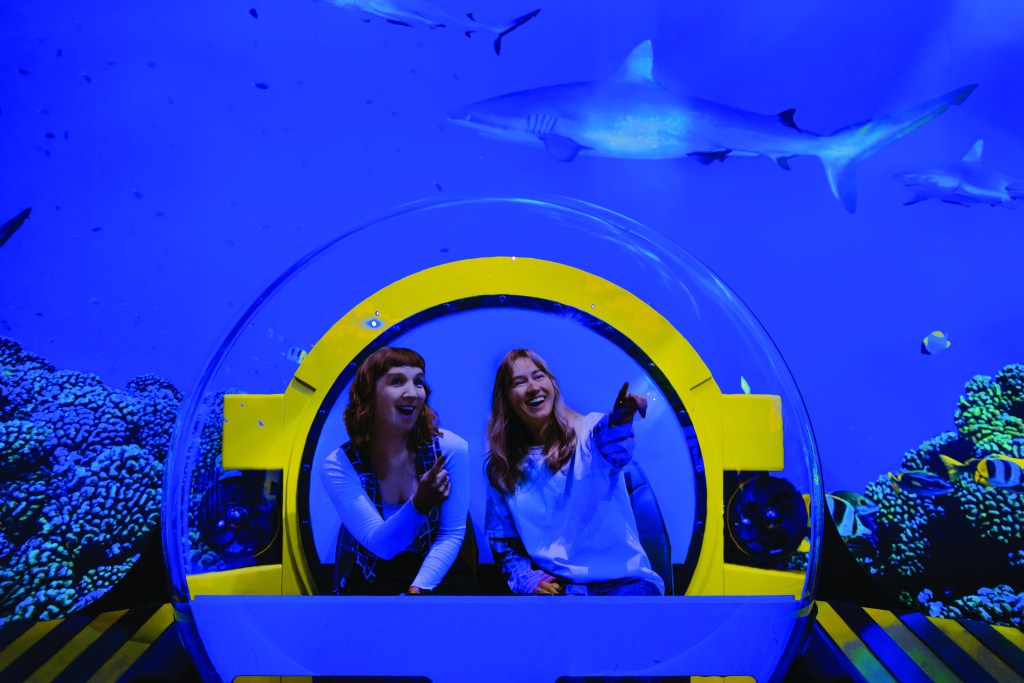
For a beloved institution with a 173-year history and over a million visitors annually, this year’s peak season marked a critical moment for us to remind audiences new and old about the magic and joy our institution continues to provide. For months, we’d planned our big advertising campaign around “Unseen Oceans,” an immersive deep-sea exhibition created by the American Museum of Natural History in New York, slated to open at the Academy in the spring. We were ahead of schedule.
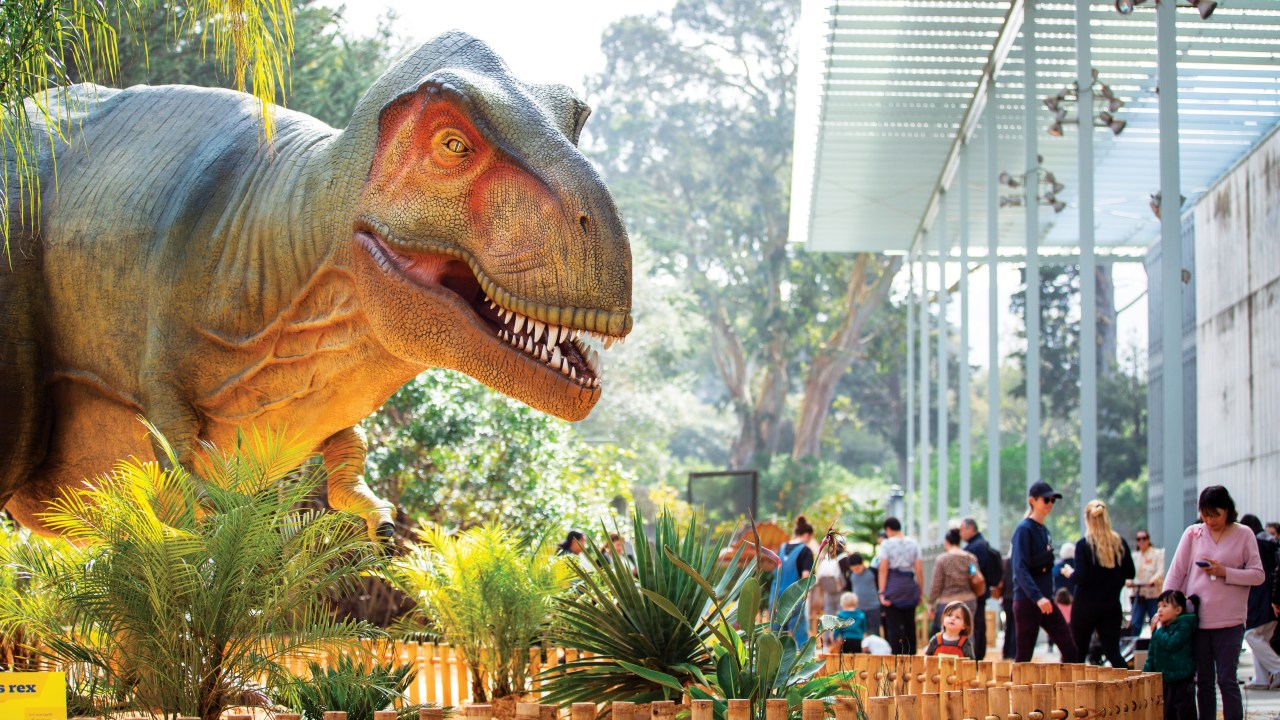
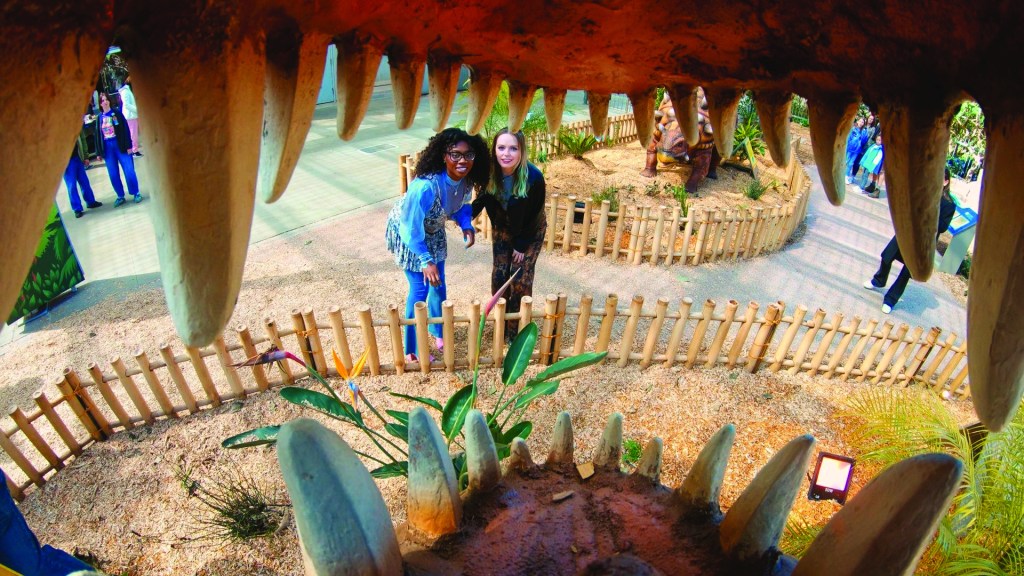
Then, midstream, our leadership saw the chance to combat the visitation dip and added a brand new exhibition to the calendar to run in tandem with “Unseen Oceans.” More is more, the thinking went. “Dino Days,” a temporary exhibition and a proven crowd favorite that had previously generated good visitation, would bring lively animatronic dinosaurs to the museum in hopes of boosting attendance during the spring and summer breaks.
The unexpected addition threw the marketing team a curveball that sparked a little apprehension but ultimately invited creative problem solving. With no extra budget or time, we faced a tough choice: run two separate campaigns competing for limited resources, or break new ground with our first-ever combined campaign, bringing two wildly different exhibitions together under one cohesive story. Our “Unseen Oceans” campaign was already underway, and there was nothing in the playbook for promoting two totally unrelated major exhibitions at once. So, why not try?
Embracing the Contrast
Choosing to pursue a major combined campaign was unprecedented for the Academy. Our original plan focused solely on “Unseen Oceans,” with a concept developed through deep collaboration with our creative agency partner, Ron Foth Advertising, which works with us to develop advertising creative and strategy.
But adding “Dino Days” to the mix changed everything. Our in-house marketing team of two had to pivot quickly to figure out how to market both exhibitions together despite their stark differences—the scientific revelations and moody mystery of the deep sea seemingly contrasting with the campy, purely joyful energy of animatronic dinosaurs. With limited media channels, a small budget, and a tight timeline, committing to a unified approach was risky, but it was also an opportunity to innovate.
How do you make dinosaurs and deep-sea science feel like they belong together? Embrace the contrast. Like dipping french fries into a chocolate milkshake, the pairing might sound odd at first, but it’s unexpectedly delicious when you try it.
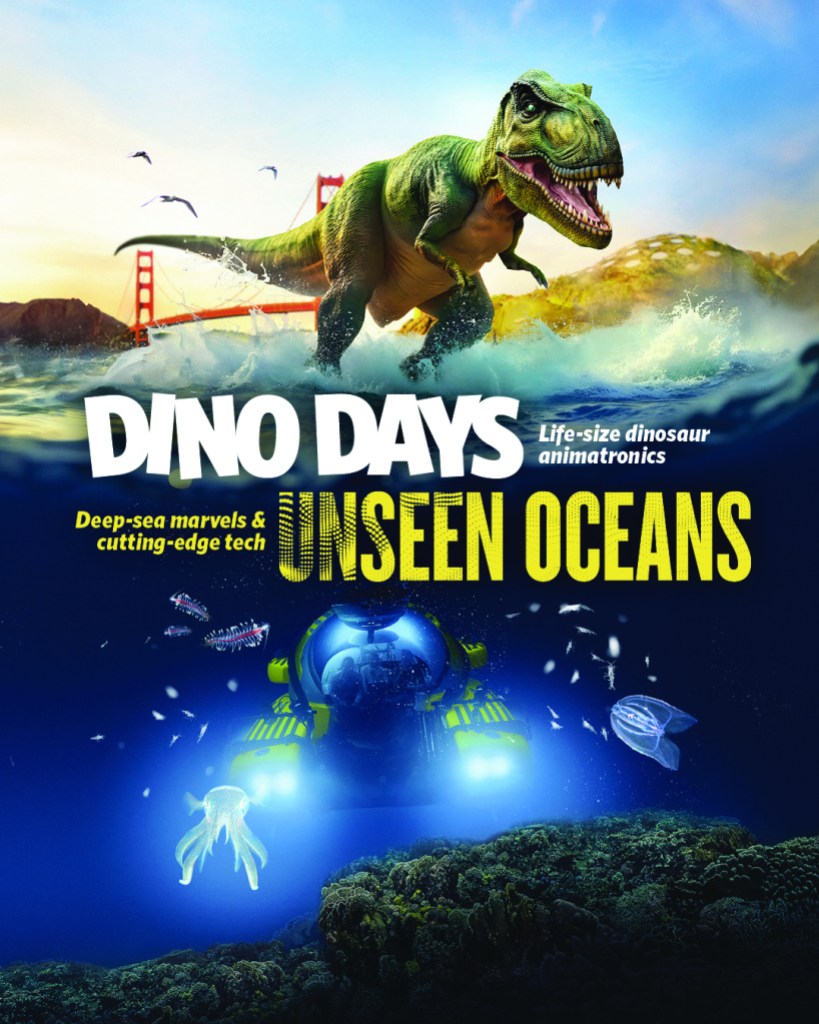
Both dinosaurs and ocean life are crowd-pleasers in their own right, inspiring curiosity about nature in audiences of all ages. That overlap became our creative spark, driving our inspiration. Taking a cue from the drama and scale of Hollywood blockbusters and ’90s theme park nostalgia, we took this campaign to the next level. We overlaid the crowd appeal of “Dino Days” with the evocative beauty of “Unseen Oceans”: a mighty T-rex stomping through crashing waves, a submersible beam cutting through the deep to reveal glowing sea creatures, all set in view of San Francisco’s most famous icon, the Golden Gate Bridge.
Our tagline, “Two new exhibits. One epic adventure,” distilled the concept into an invitation for visitors to explore the Academy’s full spectrum of discovery and wonder. We tested individual and combined exhibition campaign mock-ups in an emailed user study. Audiences responded to questions like: What about this advertising seems confusing to you? What about the visual advertising matches the written description, or what seems disjointed? From this we learned that the combined ad featuring “Dino Days” and “Unseen Oceans” performed best overall, with highest visit intent, strong match with the exhibition description, and good uniqueness and memorability. The results validated our instincts and quelled any ambivalence. Of course, it’s always a nice relief when the data backs up your gut.
The Power of a Diverse Asset Mix
To capture attention quickly and authentically, we led with bold, high-impact assets. Bus wraps transformed city streets into moving billboards—one side roaring with dinosaurs, the other glowing with ocean life—creating an unforgettable visual spectacle that sparked curiosity and conversation throughout San Francisco. These dynamic, large-format ads brought the campaign’s playful contrast to life in a way that couldn’t be ignored.
Complementing this street-level energy, video ads featured fast-paced content with a youthful, cool vibe designed to connect with Gen Z and millennials without children, an audience that holds great growth opportunity for us since families and children are already often big fans. These ads aimed to remind viewers that learning never gets old (and is even more fun with friends!). Short, punchy, and shareable, the videos brought the magic of dinosaurs and deep-sea creatures to life, inviting viewers into an epic adventure and driving digital engagement and attendance.
We supported these with bus shelter ads targeting daily commuters and visitors in high-traffic areas, vibrant print ads in local publications, radio spots that reached local audiences during peak travel times, and a robust digital presence that combined display banners and paid social media campaigns. This multichannel approach ensured we reached diverse audience segments consistently across physical and digital spaces. The strategy, developed in partnership with our agency, was informed by two things: our combined marketing experience and AI-based technological insights leveraging a new mixed media modeling tool.
As a whole, these assets created momentum and excitement, ensuring that the campaign was visible, vibrant, and compelling everywhere our audience was.
Fun as a Strategy
One of the most rewarding parts of this campaign was going all-in on fun and leaning into intentional randomness. Museums can often present as overly serious, which can make our spaces feel inaccessible and create a sense of exclusivity.
It seems obvious, but sometimes it’s good to remind ourselves and our audiences that science is fun! No matter the subject, we should communicate wonder and curiosity while being inviting to everyone from science nerds to newbies. Dinosaurs and oceans are innately fascinating, but not a natural combo, and it’s OK to admit that taken together they are a little silly. Instead of over-intellectualizing a connection, we leaned into that playfulness to grab attention and lower barriers to entry.
Presenting science through unexpected, joyful, and quirky combinations taps into natural curiosity, encouraging exploration without fear of complexity. In today’s crowded entertainment landscape, a little whimsy and unpredictability can be the key to sparking lifelong intrigue and connection.
We took a calculated risk, trusting that visitors would be drawn to the unexpected pairing. The result? A campaign that stood out and drove visitation. Attendance, including repeat member visits during our peak periods, spring break (March–April) and summer break (June–July), exceeded the prior year by 9–12 percent. This growth was fueled largely by the success of our affordable access programs and strong repeat member engagement. By going for the unexpected and trusting our instincts, we turned a potential setback into an opportunity—proving that sometimes, when dinosaurs meet the deep sea, magic happens.
This ad campaign reflects more than just a creative shift—it signals a broader change at the Academy. From exhibitions to marketing, we’re embracing evolution, leaning into fun, learning to approach projects in a new way, and stepping up as a stronger presence in the community. We’re reimagining the museum as a place that doesn’t just inform but invites, includes, and inspires. It’s an era of change, and I couldn’t be more excited.
Lessons Learned
Our experience reinforced the following key lessons for museums navigating changing visitor patterns and tight resources.
- Be agile: adapt quickly to new opportunities.
- Use contrast creatively to craft fresh stories.
- Highlight your institution’s full value.
- Trust your audience’s openness to bold ideas.
- Turn constraints into opportunities for innovation.
- Don’t be afraid to turn up the “fun.”
Christina Klingenberger-Valdez is the Senior Marketing Manager at the California Academy of Sciences in San Francisco.
Upcoming Events
-
Creative Museums Summit
Event Date:Presented by: MuseumNext -
-
-