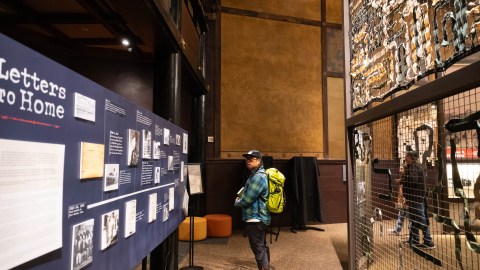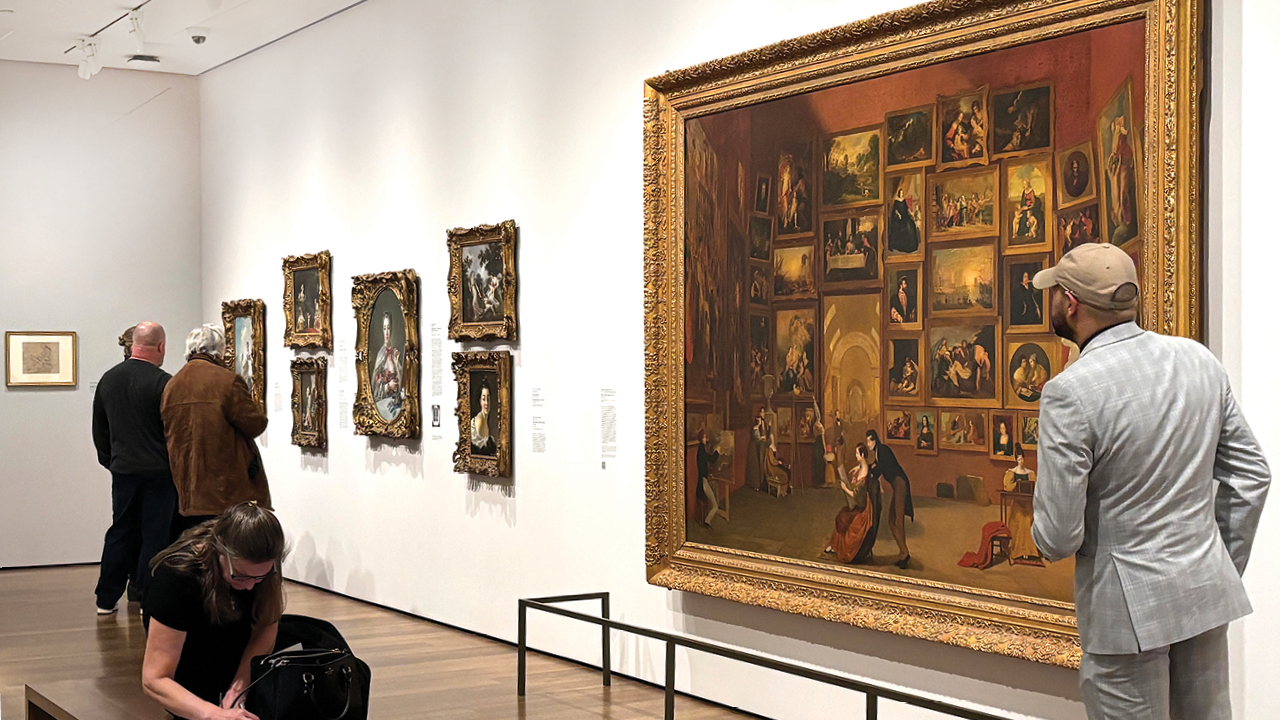
Does admission pricing limit access to museums? At the Harvard Art Museums, we stress-tested this question by launching free admission in 2023. The beautiful entrance piazza transformed into the bustling town square it was conceived to be. The galleries filled and attendance soared to record levels. Subsequent surveys showed a high percentage of first-time, non-Harvard visitors and high marks for feeling welcomed.
This article originally appeared in the July/August 2026 issue of Museum magazine, a benefit of AAM membership.
» Read Museum.
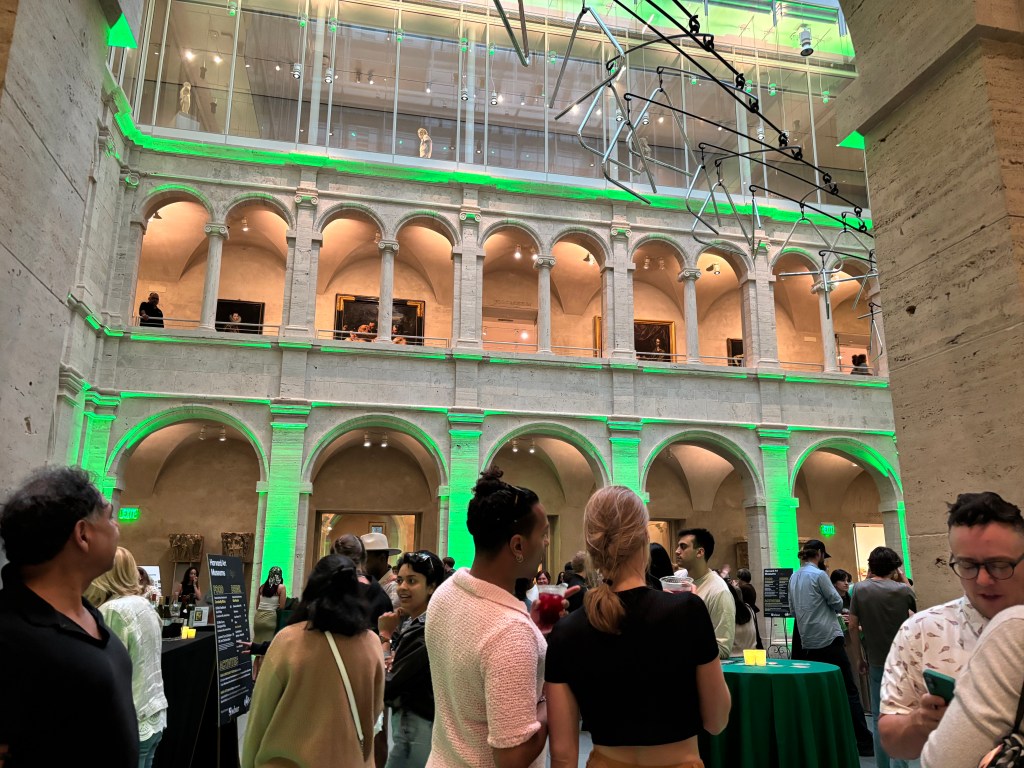
As attendance climbed, the challenge for marketing shifted from getting people through the doors to showing them enough value to return and engage more deeply. From a supporter standpoint, free admission, long used as a core benefit and incentive, was no longer a distinguishing enticement. Getting people through the doors is only one part of the job. The deeper challenge is what happens next.
Museum marketing is, by nature, front-loaded. It demands substantial resources to build awareness, establishing a compelling position in the public imagination before audiences are moved to visit. When visitors come in, the marketing does not end there. In a daunting sense, it is just the beginning. Few marketing budgets are structured to reflect this reality, yet building a sustainable model of deeper engagement starts with the visitor experience. How do we capture the moment of a positive visitor experience and turn it into an opportunity for deeper connection?
This is where the Nurturing Model (see diagram below) comes in: a framework that brings together a series of fundamental, visitor-focused functions to generate a committed and engaged stakeholder base that can help futureproof museums. It consists of segmentation, the visitor experience map, content supply chain, and the marketing funnel.
At the Harvard Art Museums, Marketing and Institutional Advancement set the Nurturing Model in motion, using our survey data to inform a goal-focused initiative to deepen engagement with existing subscribers, clarify supporter benefits, and reach unsubscribed visitors. Institutional Advancement stewards the museum’s supporter base, while Marketing manages email subscribers and social media followers. We cross-checked lists, examined engagement rates, tested and iterated digital and email-based campaigns, and tracked conversions. This process gave us a better understanding of how audiences responded to our content and what behaviors followed.
Understanding Your Audience
When marketing to an individual, we do not just drop a pallet of art history into their arms. We must make our content delivery more disciplined, planned, and nurturing. We must know what to say, to whom, and what impact we want it to have—then follow with more content over time.
Museums need a clearer understanding of who their visitors are and how they engage. As free-choice learning expert John Falk has argued, a single uniform message is rarely effective with diverse audiences. Segmentation serves as the organizing structure to categorize individuals into audience groups.
In the early 2000s, the Dallas Museum of Art boldly segmented visitors based on behavior and engagement with art, eschewing traditional models organized around demographics, income, and age. Shared behaviors often transcend these categories. Museums must gather information about who is visiting and then categorize them based on their different levels of engagement.
At the Harvard Art Museums, we redesigned our on-site survey to better understand our audiences and support personalized messaging. Our survey data revealed that we have four audience groups based on levels of engagement: Browsers, who approach museums tentatively; Active Scene Seekers, drawn to programming; Deep Divers, who seek diverse perspectives; and Soloists, who confidently navigate the museum on their own.
While surveying visitors is an ongoing process that can be labor intensive, advances in technology, most notably AI, have made this work more efficient. Most survey platforms have AI built in, including Qualtrics, which we use at the museum, and SurveyMonkey. Large language models such as ChatGPT can also categorize and interpret uploaded data instantaneously, but there are risks of hallucination. Museum marketers should build fluency in AI as the technology advances and stimulates new efficiencies.
Identifying audience groups is only the first step. To understand what those groups need, museums must look closely at the visitor experience, stepping into their shoes. Plotting a visitor experience map identifies points of pain and motivation for the visitor (both online and in person), along with possible fixes and opportunities. Visitor experience maps should be informed by survey research, but they can begin with insights from internal museum staff, especially front-line teams, which we did at the Harvard Art Museums. In the pursuit of data, there can be a tendency to overlook staff observations, even though they often provide a valuable starting point that later research can confirm or challenge.
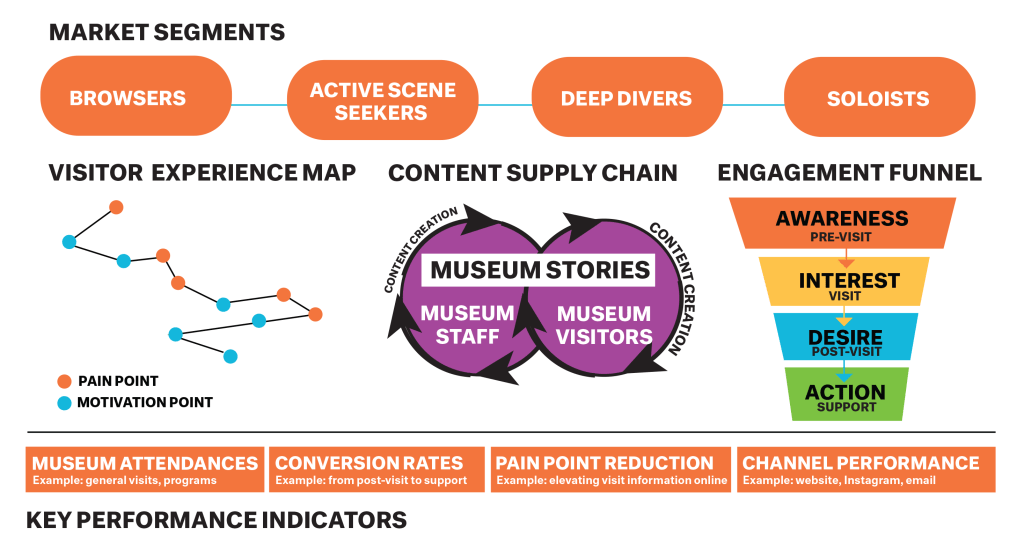
From a marketing perspective, a visitor experience map helps clarify what kind of useful content a museum should create at different points in the visitor journey. For example, foregrounding information on the visit page of a website may help remove pain points at the admissions desk. There is no need for separate maps for each audience segment, as most visitors share common pathways with select points of divergence. These can be recorded and modified based on satisfaction survey results.
Matching Content to Audience
If the visitor journey map shows where connection is won or lost, the content supply chain determines how the museum responds. With segments and the visitor journey map in place, the next step is to match museum stories to the right content platforms, whether social media, email, video, the website, or rack cards. The central tenet of the content supply chain is the development of visitor-centered, goal-oriented storytelling, where we are conversationalists rather than broadcasters.
Museums would be wise not to let AI create their content. Given their long history of separation from the public, museums must maintain an authentic, personalized voice focused on building emotional, intellectual, and transactional connections. The careful and strategic management of museum stories is central to nurturing visitor engagement and mitigating barriers to accessibility. The content supply chain is the machine that solicits and molds stories that are visitor centered, are capable of changing perspectives, and inspire connections with the museum.
At the Harvard Art Museums, Instagram is a dynamic storytelling channel because of its visual nature and capacity for authentic engagement. We post four to five times a week and use Stories daily, sharing things like behind-the-scenes glimpses of conservation work and reels promoting the monthly Museums at Night program. Social media followers are already signaling a desire for deeper connection with museum stories, creating opportunities to encourage visits or membership.
Email is an even more powerful asset for engagement. As an owned channel, the subscription database becomes especially valuable when organized around clear audience segments. A visitor who subscribes to a newsletter through a QR code while in the museum is clearly signaling that they want more, and we use email automation to instantly respond with either a message or token of gratitude. The challenge for marketers is to meet this enthusiasm with useful and compelling content.
“The goal is not to force the process, but to understand that relationships with museums tend to build gradually through relevance, trust, and repeated positive experiences.”
Top Tips for Maintaining Your Audience
- Protect and amplify the museum’s authentic voice. When it comes to public-facing content, museums should resist the urge to delegate their writing to AI.
- Collaborate across the museum, particularly in areas such as visitor experience mapping and content creation.
- When making changes to your marketing, start small. Test assumptions, build gradually, and learn as you go.
Email marketing can be labor intensive because it depends on clean data, careful list management, and a firm commitment to ethical opt-in practices. However, open rates, click-throughs, and event registrations can all indicate deepening interest, helping museums respond with more relevant and timely content. Email platforms can also set up automated campaigns based on behavior.
Deepening Engagement
The iconic marketing funnel gives museums a useful way to structure how engagement deepens over time. It has been around for more than a century, but the basic idea still holds: first you attract attention, then build interest, then create desire, and finally invite action. It shares some common ground with the visitor experience map, but the two have contrasting objectives. The funnel reflects the museum’s goals and infuses a transactional energy into the model, while the visitor journey map looks at the experience from the visitor’s side.
At the Harvard Art Museums, the top of the funnel represents the awareness stage, when someone is just noticing what the museum offers. It is the broadest part of the funnel with the most engagements. This is where short, clear messaging matters most, whether through Google ads or social media. Some institutions refer to it as the start of the patron pipeline.
As engagement deepens, some people fall away, while others move further downstream. They may visit, sign up for emails, or follow on social media. Those are small but meaningful signs of growing interest. From there, the pace slows. A person who joins the email list while on-site is signaling a deeper level of intent, and that opens the door to more tailored follow-up, such as program invitations or behind-the-scenes experiences.
For the Harvard Art Museums, the bottom of the funnel represents the conversion of prospects into supporters. The goal is not to force the process, but to understand that relationships with museums tend to build gradually, through relevance, trust, and repeated positive experiences. This builds on the cumulative work of the entire museum, from personalized content to thoughtful programming, creating the conditions in which support is earned. In the meantime, the top of the funnel continues to refill, and the cycle begins again.
Ultimately the model pursues a business benefit and must prove its value in practice. That means setting clear performance expectations and measuring results along the way. Even the most thoughtful plan can stall if it is not anchored in key performance indicators and open to data-driven adjustment. Conversion rates, attendance, and membership growth are all important measures of success within most museums. Benchmarking will support sharper goal-setting, better resource allocation, and stronger cases for increased budget investment.
Embedding a visitor Nurturing Model into museum practice inevitably brings more business thinking into museum culture, especially toward the transactional end of the process. All the more reason to focus on the essence of the Nurturing Model: fostering a culture of welcome, expanding accessibility, and giving visitors the opportunity to build a deeper relationship with the museum.
Free admission made this more urgent for us by widening access and bringing more first-time visitors into the museum, compelling us to nurture that initial visit into a lasting relationship. As museums continue to move from a collection-centered approach, that sense of welcome matters more than ever.
Upcoming Events
-
Understanding the U.S. History Sector
Event Date:Presented by: American Association for State and Local History (AASLH) -
-
-
Industry Showcase: Innovative Digital Solutions
Event Date: