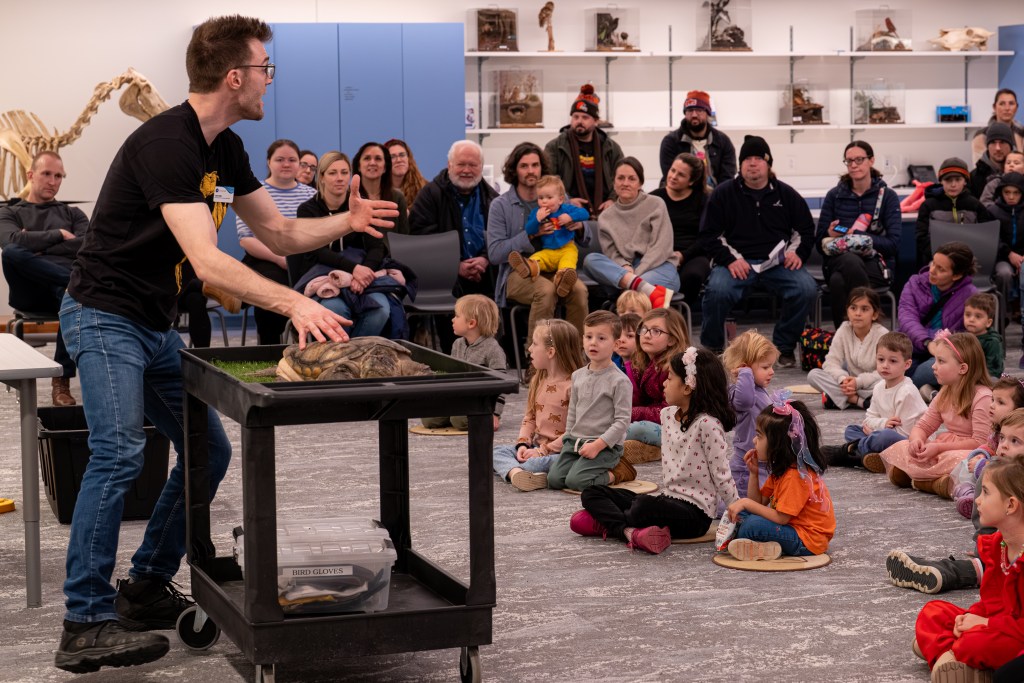
Today, walking into the Cleveland Museum of Natural History, located in Northeast Ohio, feels markedly different than it did just a few years ago. The galleries are brighter. The spaces feel more open. Visitors encounter educators leading hands-on activities, wildlife staff introducing animal ambassadors, and visitor experience staff helping families navigate exhibits.
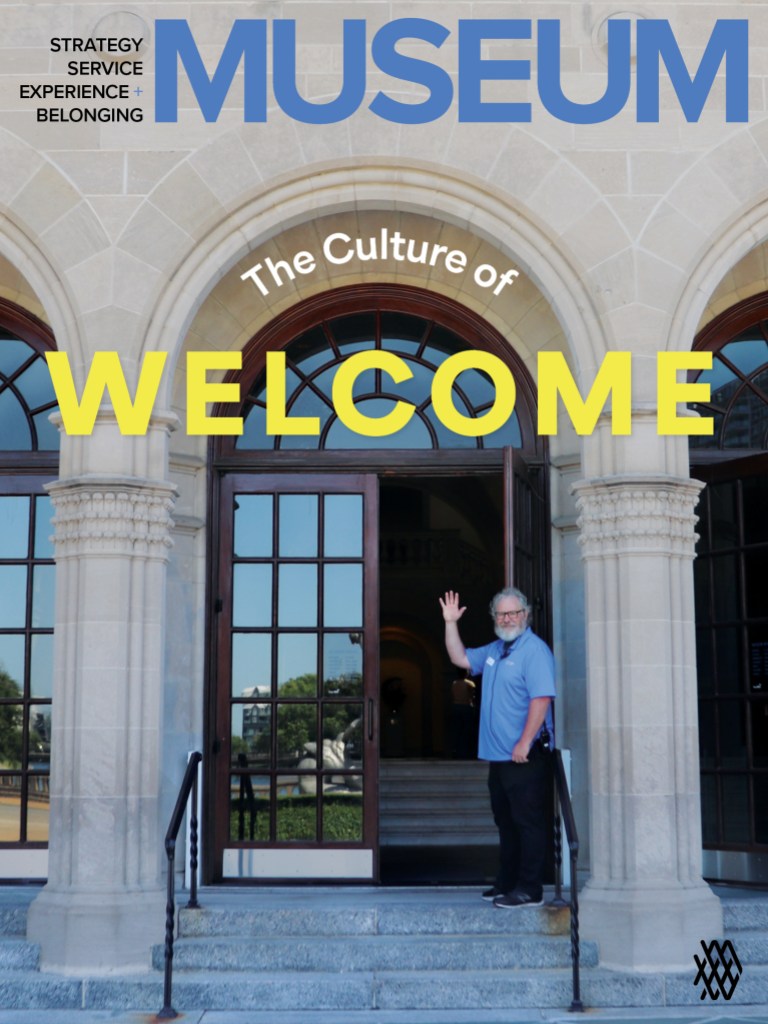
This article originally appeared in the Sept/Oct 2026 issue of Museum magazine, a benefit of AAM membership.
» Read Museum.
On select days, guests can also engage directly with scientists and collections staff through programs such as In the Lab. Children examine fossils found in the region; adults step into interactive environments that challenge and expand their understanding of the natural world; and families gain hands-on access to collections once reserved only for researchers.
Before our recent $150 million transformation, which concluded in December 2024, this museum looked more like the traditional model: collections organized by discipline, scientists working largely behind closed doors, and visitors moving through galleries as observers rather than participants. But today’s visitors increasingly want transparency, inclusivity, and relevance. And they expect institutions to be responsive to the realities shaping their lives—from climate change and biodiversity loss to public health and world-changing shifts in technology.
As we reimagined the museum, we also reconsidered what it means to be a natural history institution in the 21st century. We didn’t want to be a place that only represents the past; we want to also help shape the future. We therefore transformed not only our building but also our purpose as an organization—toward openness, belonging, and creating a visitor experience that makes natural history meaningful and accessible to everyone.
Rethinking the Visitor Experience
Museums sit at a powerful intersection of trust and accessibility. They can translate complex topics and academic or scientific research into compelling, relatable stories. They can bring people together in shared public spaces. They can spark curiosity that lasts a lifetime and shape how people understand science and the natural world.
To make that a reality at the museum, our entire team—from curators and educators to exhibit designers and frontline staff—needed to rethink how we welcome people into the process of discovery, shifting toward experiences that invite observations, questions, debate, and exploration. Just as importantly, we needed to rethink how visitors feel when they enter the building.
“The visitor experience was part of every conversation as we planned our transformation,” says Meenakshi Sharma, Acting President & CEO. “We wanted people to feel welcomed from the moment they walked through our doors. That meant creating a museum that feels more human, accessible, and connected to the community we serve.”
Throughout the transformation process, the museum emphasized inclusivity, customer service, and human interaction as essential parts of the learning experience. Frontline staff, including educators, volunteers, wildlife staff, and visitor experience staff, are now empowered not simply to provide information but to create welcoming, curiosity-driven interactions that help visitors feel more comfortable exploring natural history in their own way. Much like the scientific method, visitors’ observations and questions guide the conversation. They’re invited to connect concepts to their own lives and experiment with hands-on elements—such as examining real specimens from the museum’s collection—making the experience tangible in multiple ways.
“We know that visitors remember the people, not just the exhibits,” says Phoebe Lammert, Senior Manager of Visitor Experience. “That’s why we invest so much in our teams—staff and volunteers who are passionate, curious, and eager to share. A single conversation can be the thing that turns a first-time visitor into a lifelong learner.” In short, she says: “Human connection is the glue that keeps people coming back.”
At the Cleveland Museum of Natural History, engagement is not simply an outcome of effective exhibits and programs—it is an intentional learning strategy. When visitors ask questions, interact with objects, converse with staff, and connect new information to their own lives, they become active contributors to their learning.
An Inquiry-Based Model
As we worked to reinvent our exhibits and content from the ground up, we considered a central question: How do we show our visitors that they, too, are part of the story of natural history? The answer, we found, was in how we tell that story.
Traditional natural history museums often organize content by discipline or timeline: geology here, anthropology there, paleontology down the hall. But discovery does not unfold in linear or isolated ways. It is dynamic, interconnected, and shaped by human curiosity.
“We have a lot of competition for our attention,” says Dr. Nicole Burt, the museum’s Senior Director of Curatorial and Research Affairs. “Rather than waiting for our busy community to find how natural history relates to their story, we did the work of highlighting how relevant science is to their lives. This encourages a love of museums, but more importantly, helps them make more scientifically informed decisions that will positively affect our community.”
As we sought to create a more inquiry-based model, we prioritized storytelling, curiosity, and relevance over chronology. Rather than being organized by timeline, exhibits are grouped together by key concepts. Case studies and interactive features illustrate how these concepts play out in the real world—for example, showing the impacts climate change, biodiversity loss, and habitat destruction might have on communities, individuals, and their surrounding environment. Additionally, exhibits and labels in the museum’s new galleries now tell a unified story of life on our planet, sparking questions such as: Why does this matter to me? How does this connect to where I live? What does this discovery mean for the future?
In the museum’s new Visitor Hall, guests encounter specimens and stories of discovery rooted in their own city—reminding them that science is not something that happens “out there” but right here at home. In the Larry Sears and Sally Zlotnick Sears Dynamic Earth Wing, interactive models reveal how human behavior shapes our planet. For example, within a section of the Dynamic Earth Wing focused on Earth’s water cycle, visitors can press a display button to see how rainfall moves through natural, urban, and sustainable landscapes—demonstrating the impact of varying levels of human activity on both humans and nature. In the Evolving Life Wing, visitors trace the arc of life not as a distant concept but as a continuing process of change that also shapes their own lives.
Across all these spaces, innovative exhibit design strengthens the learning experience. Immersive media environments create emotional resonance. Interactive exhibits allow families to experiment and discover together. Upgraded planetarium technology offers new ways to explore the cosmos, while our open-access learning labs bring transparency to the scientific process.
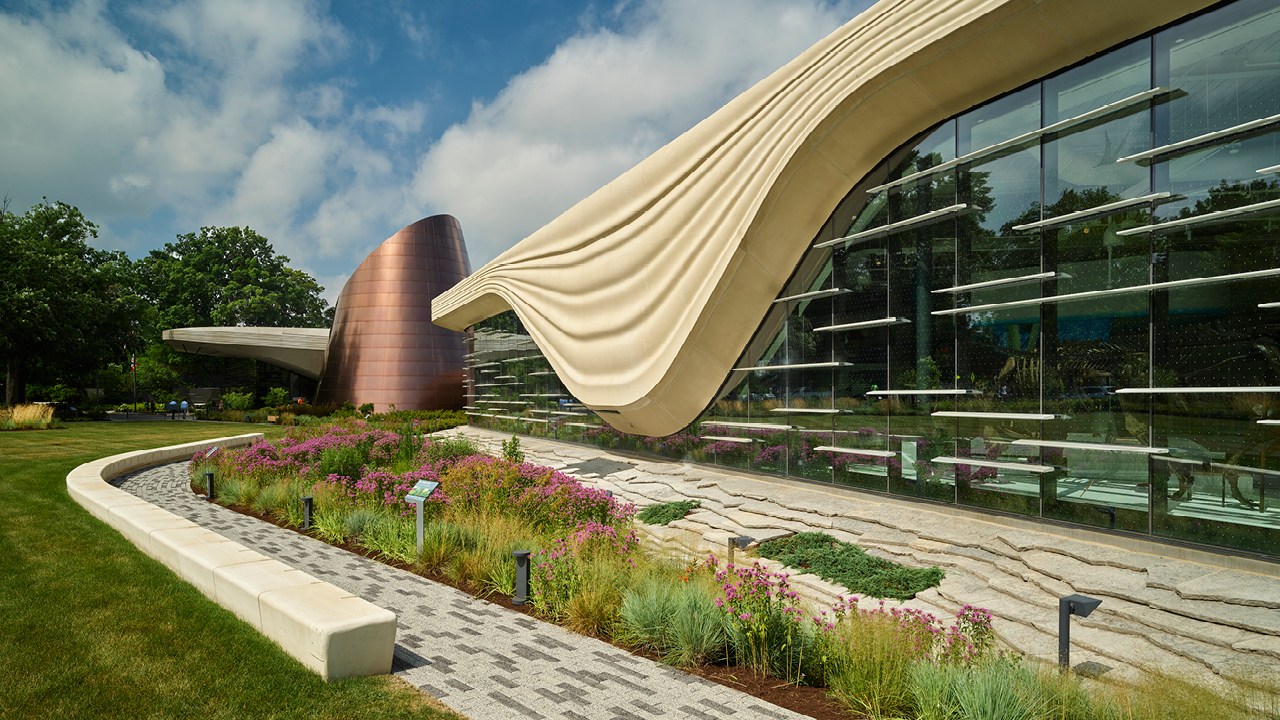
Even the architecture enhances the narrative. Throughout our LEED Platinum-certified building, light, materials, and landscape work in harmony to reflect the museum’s mission—to study, protect, and celebrate life and the natural world, both inside the galleries and out in the surrounding environment.
Accessibility at the Foundation
A key focus as we designed the new museum’s galleries, exhibits, and content was not just what they would contain but who would be welcomed to experience them.
Through our expanded Jack, Joseph and Morton Mandel Community Days, which provide free admission to residents of seven Northeast Ohio communities every Saturday and Sunday, and the Museums for All program, which provides $1 admission to participants in the Supplemental Nutrition Assistance Program, we have provided free and reduced admission to thousands of qualifying visitors since last year, many of them visiting for the first time. Since their launch in 2022, the Mandel Community Days alone have welcomed almost 76,000 visitors. These initiatives reduce barriers to cost and promote attendance from communities that have been historically underrepresented in our audience.
Inclusivity has also been built directly into our spaces. The Visitor Hall is always free for the public to access. In this space, people can gather, learn, and explore specimens that reflect the unique scientific legacy of our region. Examples include a lifelike reconstruction of Lucy, or Australopithecus afarensis, discovered in Ethiopia in 1974 by a team of scientists led by Dr. Donald Johanson, a paleoanthropologist and the museum’s former curator of physical anthropology. Other exhibits feature Dunkleosteus terrelli, an ancient armored fish first discovered in the cliffs along Lake Erie in 1867, and Haplocanthosaurus delfsi, a sauropod dinosaur discovered by a museum team in 1954.
Across the museum, spaces have been intentionally designed. All exhibit galleries and public spaces are fully wheelchair accessible, and the museum’s participation in Wheel the World, an online platform for wheelchair users, provides verified information and additional resources for navigation. The museum also achieved Sensory Inclusive Certification through KultureCity. In addition to marked quiet areas and headphone zones, visitors can check out KultureCity sensory bags at the front desk, and staff are trained on engaging with visitors who have sensory needs.
Visitor engagement and participation create a path toward inclusion. In our efforts to make science more broadly accessible, we have launched programs that create direct encounters with scientists and their work while also welcoming leading scientists for compelling guest lectures and Q&As.
Tips for Becoming More Visitor-Centered
- Start with people, not just exhibits. At the Cleveland Museum of Natural History, the visitor experience became a guiding principle across departments—from science and collections to exhibits, education, and operations.
- Create opportunities for participation, not just observation. Visitors increasingly want experiences that feel interactive, relevant, and welcoming.
- Invest in frontline teams. Public-facing staff often shape visitors’ strongest memories of a museum. Training them to foster curiosity and conversation can be just as impactful as designing a new gallery.
- Build accessibility into planning from the beginning. Consider physical, financial, sensory, and cultural accessibility early in the process so inclusion becomes foundational rather than additive.
- Most importantly, align every aspect of the experience around your shared mission. The strongest transformations feel cohesive because visitors can sense that intention in every interaction.
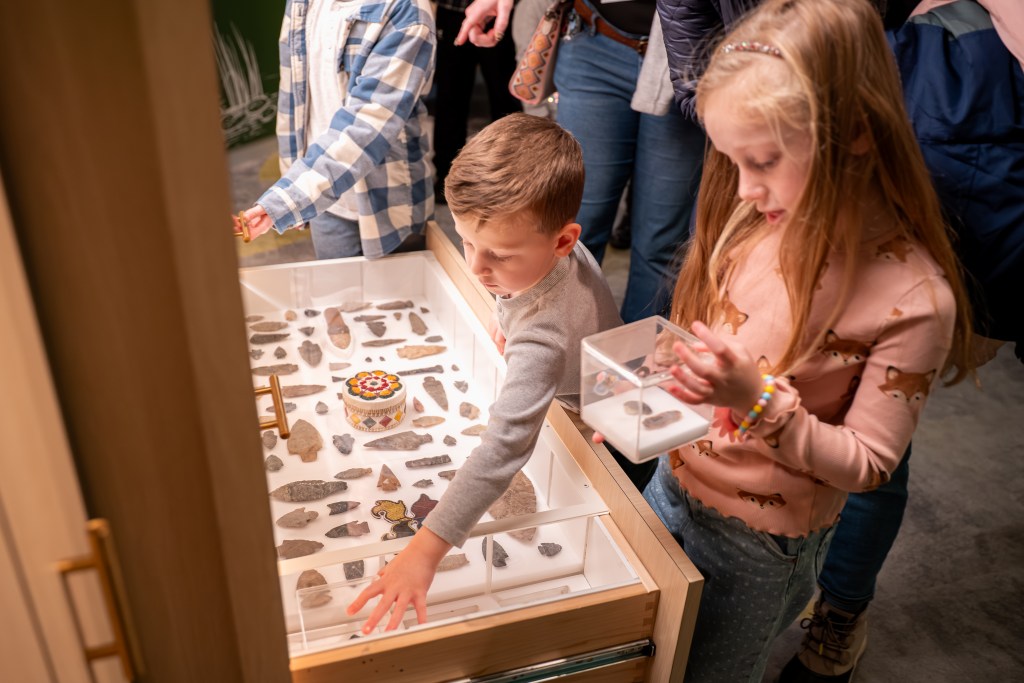
“I love putting fossils in people’s hands and showing them how we learn about the past,” said Dr. Caitlin Colleary, Curator and the Joan and Dan Holmes Family Endowed Chair of Vertebrate Paleontology. “It’s a direct way to share what inspired me to become a scientist and encourage others to think more about the world around them—past, present, and future.”
The Community’s Response
Since our Grand Opening in December 2024, nearly 400,000 visitors have explored the reimagined campus—more than double our typical yearly attendance. According to our visitor surveys, at least 42 percent were new visitors or had not visited in more than five years.
Ticket sales, memberships, and overall revenue show a strong upward trend. Visitor surveys reflect enthusiasm for the storytelling model, the welcoming environment, and the accessibility of complex scientific topics. And the transformation has received significant recognition, including selection as one of the Prix Versailles’ World’s Most Beautiful Museums, as the Ohio Museums Association’s Institution of the Year, and as one of USA TODAY’s top five Best New Museums in 2026 as chosen by readers. Community members are using the museum as an informal gathering space for learning, celebration, civic dialogue, and togetherness rather than simply a destination for occasional visits.
Our transformation demonstrates not only that museums can modernize but that they must—because our role in society is changing. Today’s audiences expect institutions to meet them where they are and to welcome them fully into the learning experience. When museums embrace that expectation, they become more than keepers of collections; they become engines of public trust, imagination, and empowerment.
Anna Alger is Senior Manager of Content and Creative Strategy at the Cleveland Museum of Natural History in Ohio.
Upcoming Events
-
-
Industry Showcase: Innovative Digital Solutions
Event Date: -
Getting Started in Local Advocacy
Event Date:Presented by: American Association for State and Local History (AASLH) -
Creative Museums Summit
Event Date:Presented by: MuseumNext