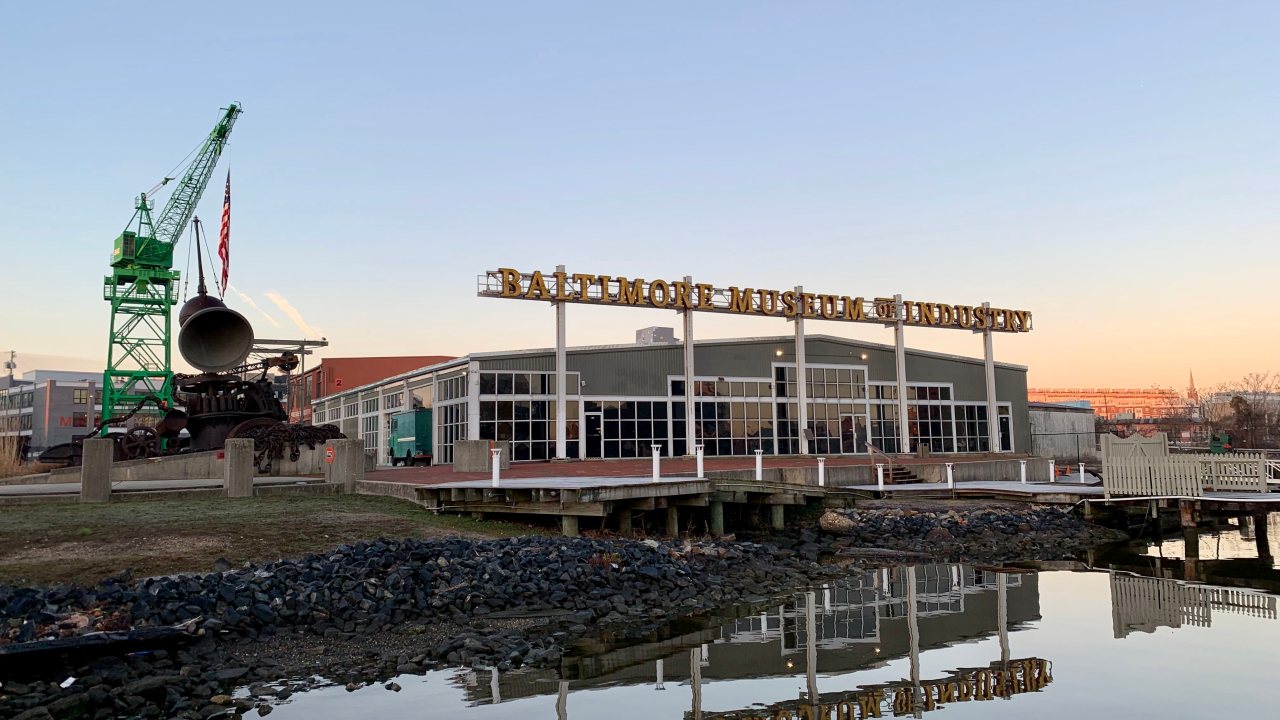
This article first appeared in the journal Exhibition (Spring 2026) Vol. 45 No. 1 and is reproduced with permission. If you don’t read the journal, become a member to receive your digital copy of the full upcoming issues.
In the early morning of March 26, 2024, Baltimore’s Francis Scott Key Bridge collapsed into the Patapsco River after a cargo ship collision. Six construction workers—all Latino immigrants—lost their lives. The disaster was more than an infrastructure failure; it was a human story about the labor that sustains Baltimore and its port.
Responding to the Key Bridge collapse placed the Baltimore Museum of Industry (BMI) in the “present tense” of history—collecting and interpreting while the story is still unfolding. In the weeks that followed, we began fielding media inquiries and community questions: What, if anything, were we planning to do? Would we be saving material related to the story in some way? Were we going to be actively collecting artifacts and documentation related to the event? Did we have thoughts or comments regarding this tragedy? In response to these queries, and in keeping with our way of working, we acted quickly, issuing a public call for artifacts and stories. Local media picked up our call, and the broader Baltimore community began to see us as a natural steward of the Key Bridge story.[i] We agreed with them. As a museum dedicated to interpreting work and industry, we were uniquely positioned to preserve all dimensions of this tragedy.
The collapse of the bridge also brought into sharp focus a gap in our own interpretive work: the story of the Port of Baltimore and its role in shaping our city. While information about the port runs through many of our exhibitions, the BMI has never mounted a major exhibition dedicated specifically to it. The Key Bridge collapse—because of its human toll and the way it paralyzed port operations—has become a catalyst for addressing that absence. The Echoes from the Key Bridge project, created in response to the bridge’s collapse, documents and shares community stories through oral histories, artifact collection, public programs, two exhibitions, and an outdoor installation. Through this work, we are not just documenting a tragedy, we are seizing the opportunity to tell a more complete story about the port, its workforce, and its central role in Baltimore’s economy and identity.
The Present Tense of History
As a smaller museum with fewer than 20 full-time staff members, we were able to make decisions quickly. When people asked us how the museum was responding, announcing our intentions to preserve the story was a natural response. We had launched calls for artifacts in the past—most recently as part of our efforts to document the story of Baltimore’s Bethlehem Steel mill—so we could tap processes that were already in place. But whereas the story of the mill’s decline was decades in the past, the Key Bridge story was evolving: Details related to the collapse were still emerging; the cleanup and recovery were in the headlines; and the story was a tragic one for many reasons but most profoundly because of the loss of life. Additionally, work at the port had paused, leaving a large community of workers without steady paychecks. Legal litigation followed, casting a long shadow. We had to take all these things into account as we proceeded.
It quickly became clear that this was a story that could not be told through artifacts and ephemera alone. We needed to document lived experiences—and to do so thoughtfully, with an eye toward whose voices we centered and how. We were fortunate to secure seed funding through the Baltimore Community Foundation’s Maryland Tough Baltimore Strong Key Bridge Fund, which provided support to organizations and small businesses and funding to honor the legacy of the Key Bridge in the wake of the disaster. The relationship we developed with the Foundation, and our ability to demonstrate the impact of their investment in the BMI and our project, were pivotal to our work as it unfolded.
Through existing community networks, we connected with individuals and partners who were close to the tragedy. One of these partners, Catalina Rodriguez-Lima, Director of the Mayor’s Office of Immigrant Affairs, encouraged us to engage a consultant with the cultural competency to build trust within Baltimore’s Latino immigrant communities. As Rodriguez-Lima reminded us, the collapse not only “impacted the lives of these … families, but also a community at large that identify themselves with these six men and their families.”[ii]
Guided by the input of Rodriguez-Lima and others, we hired Maria Gabriela Aldana, a community storyteller and artist with deep roots in Baltimore’s Latino communities who uses storytelling and sharing as a means of healing. Her approach, grounded in relationship-building and mutual respect, emphasized the power of listening and human connection: “Telling their stories and being a conduit as a person who hears them, it’s not only an honor, but it’s a way to bridge people together.”[iii]
Recording Oral Histories with Trust and Trade-offs
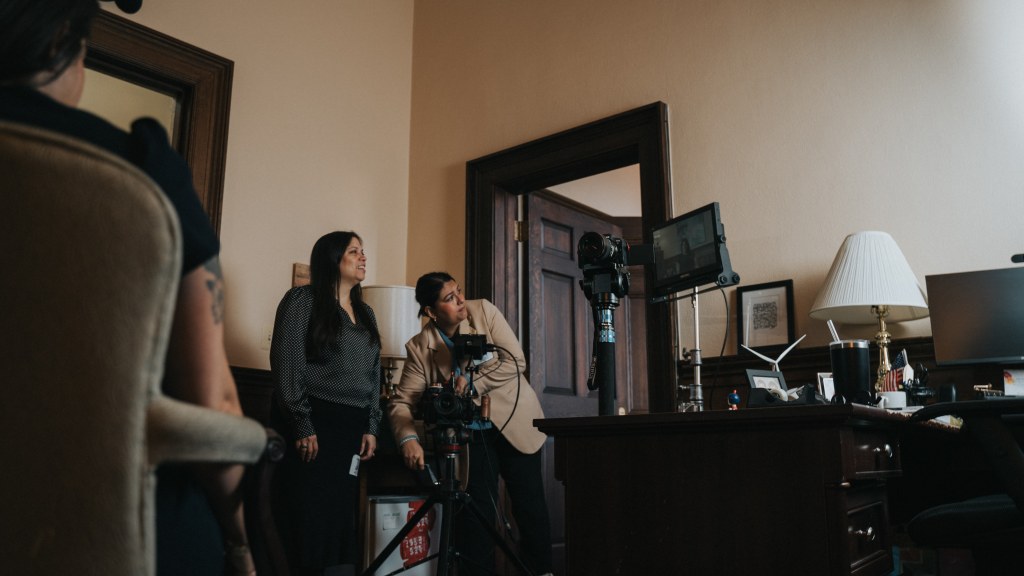
Our oral history initiative, encompassing both audio and video interviews, remains a cornerstone of Echoes from the Key Bridge (fig. 1). Working with museum staff, Aldana helped establish an Advisory Committee that guided key aspects of the project. It included Rodriguez-Lima and Giuliana Valencia-Banks, Chief of Immigrant Affairs for Baltimore County, a Port of Baltimore executive, and a longshoreman. The committee shared their networks, identified categories of potential interviewees, helped define goals for the oral histories, and shaped the project’s overall scope. It met at the outset and continued to convene regularly, serving as a sounding board for Aldana and helping her broaden her outreach to ensure diverse voices and perspectives were represented.
For the BMI, partnering with Aldana—a bilingual artist deeply embedded in the affected communities—proved invaluable in reaching participants we might otherwise not have. Her empathy and connections opened doors, from longshoremen to grieving families. Though most of the recorded oral histories are in English, Aldana was able to speak Spanish with some interviewees. Through her network and with support from Rodriguez-Lima, she reached out to and interviewed the widows of several of the men who died; they talked about their husbands—their hopes from before the bridge collapsed and the effect of this profound loss on their lives. Some shared their stories through video and audio interviews; others declined to participate, wary of legal entanglements. Several of their interviews remain restricted pending case resolutions.
Documenting in real time meant accepting uncertainty as a constant. That choice came with trade-offs. As an artist-storyteller, Aldana brought different expectations for deliverables and creative control to her work. Unlike an oral historian or curator, Aldana allowed the dozen-plus oral history participants to listen to and edit their stories. She felt strongly that our participants needed to be “in charge of their stories (and) in complete control of how they tell their stories.”[iv]
In addition to oral and video interviews, she created a documentary short, Echoes from the Key Bridge: A Baltimore Longshoreman, shaped from the conversations she’d had, that was accepted into the 2025 Richmond International Film Festival—a win for visibility but a temporary setback for our mission to make the material collected through this process immediately accessible to the public. We could not release the film publicly until after its September 2025 premiere, requiring us to balance our access goals with the benefits of festival exposure. This tension underscores a reality of contemporary collecting: visibility and accessibility do not always move on the same timetable.
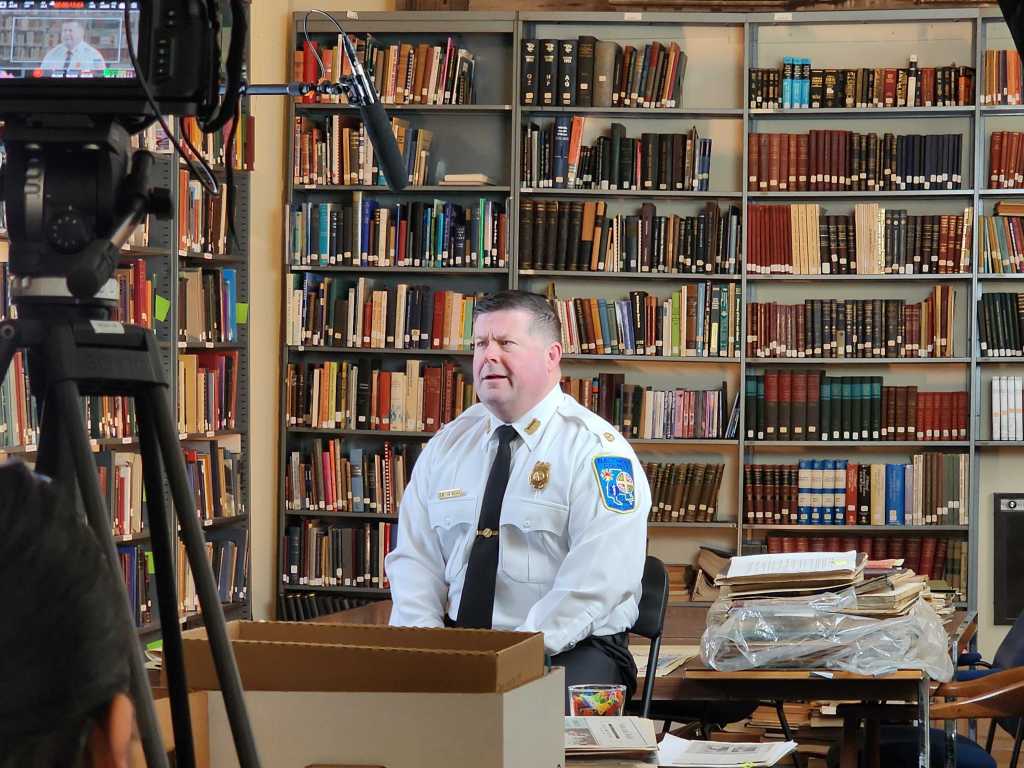
Even with these complexities, the interviews—more than 30 to date, in English and Spanish—form a vital record (fig. 2). They capture voices from port workers, widows, first responders, social service providers, business owners, and government leaders, including figures like Estee Pinchasin, former Baltimore District Commander for the Army Corps of Engineers, who oversaw cleanup and recovery efforts; Wendell Supreme Shannon, a longshoreman and artist who helped raise funds for out-of-work port workers; and Guiliana Valencia-Banks, a tireless advocate for the families of the men who lost their lives on the bridge. These testimonies will inform exhibitions, programs, and curricula, while becoming a permanent resource for researchers and educators. Oral history transcripts are available on the museum’s website and researchers can also access audio recordings and video footage.
Collecting in the Wake of Crisis
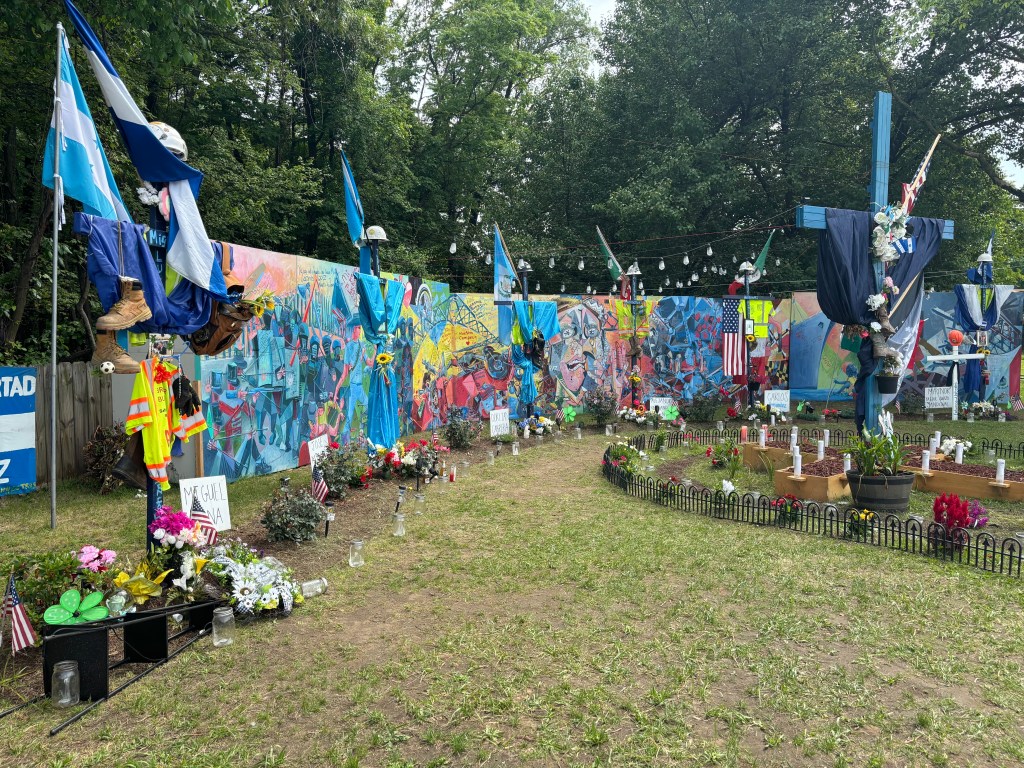
Beyond oral histories, our early collecting efforts met with mixed success. One of the most powerful and enduring outcomes, however, has been our stewardship—through a long-term loan—of artist Roberto Marquez’s memorial mural. Created in the days following the collapse of the Key Bridge, the mural is a tribute to the six men who lost their lives while working to maintain the bridge.[v] When it was first installed near the collapse site, it quickly became a community shrine (fig. 3).
Soon after the mural appeared, BMI staff visited. The experience was moving—not just because of the mural’s powerful visual language, but because of the way the site itself had become sacred. Marquez had intentionally created a participatory memorial, inviting members of the community to add their own tributes. Families of the fallen workers draped work boots, safety vests, and other personal belongings on the crosses placed in front of the mural. Community members kept the site impeccably maintained. The visit underscored how public art can serve as a vital form of collective expression.
After that first visit, our board chair learned about the mural. As president of a local firm specializing in 3D scanning solutions, he offered to create a complete 3D scan so there would be a permanent digital record regardless of the mural’s fate. His team returned to the site, capturing the work in precise detail; the resulting scan is now available on our website, providing another way for the public to encounter and reflect on the piece.
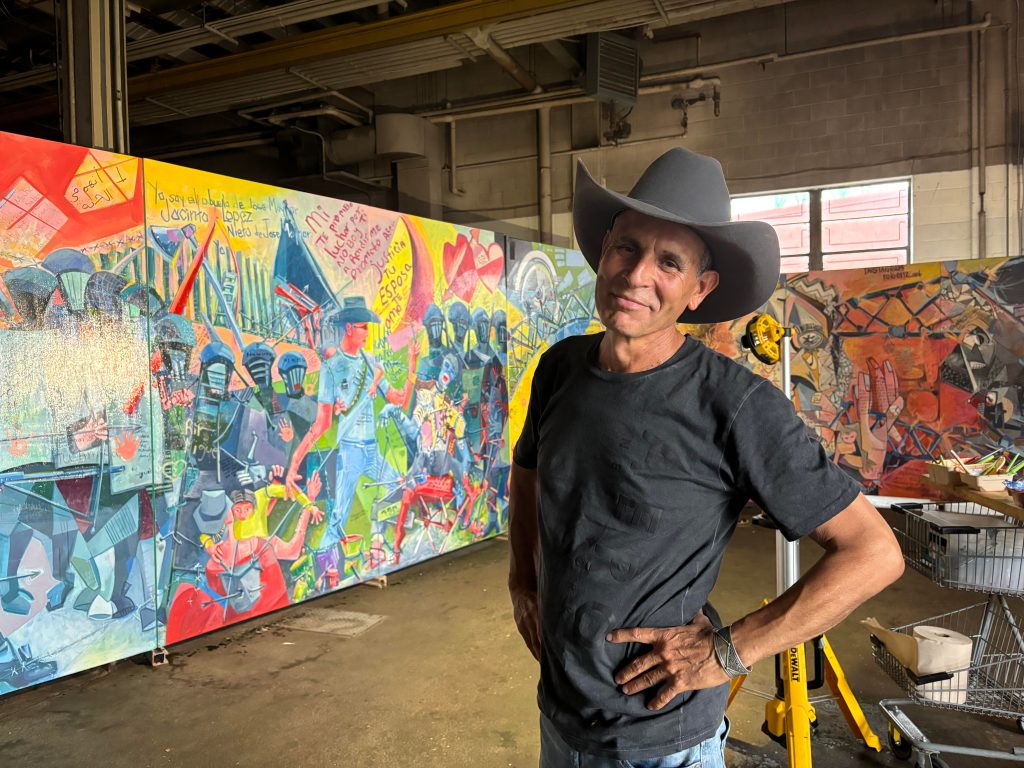
The BMI’s director also returned to the memorial to meet Marquez in person. The artist was gracious and warm, and a conversation began—first in person, then through ongoing text and WhatsApp messages as Marquez traveled the country and beyond to create healing works in the wake of other disasters. When the owners of the site where the mural had been created asked that it be removed, Marquez and the museum were already in dialogue about a potential new home.
There was a brief period of uncertainty, after the mural had come down and before a permanent home had been secured. Rodriguez-Lima stepped in, locating a temporary storage site—a large Baltimore City Fire Department repair garage, located serendipitously right next to the museum. When Marquez returned to Baltimore to touch up the mural, museum staff were able to visit, and Marquez ultimately agreed to place the work in our care.
Shortly thereafter, Aldana conducted a filmed oral history interview with Marquez at the museum, using the mural as a backdrop (fig. 4). What began as a gesture of respect for the families and workers impacted by the bridge collapse has grown into a meaningful partnership. Today, we are proud to serve as stewards of this extraordinary work.
Other tangible artifacts have been harder to secure. Much of what the BMI collects are historical artifacts and workday objects that reflect labor and industry—hard hats, lunchboxes, tools, union cards. These types of items don’t always spring to mind when people consider what belongs in a museum, especially so soon after a tragedy. Our experience with the Bethlehem Steel Legacy Project taught us that robust artifact collecting often emerges in tandem with exhibition development, when curators can help communities envision how their belongings could illustrate a story. As we shift from rapid-response to curated interpretation, we expect our object holdings related to the bridge to grow.
Engagement Beyond the Galleries
After beginning our work by listening to those closest to the collapse, largely through the oral histories and our rapid-collecting efforts, we began to expand the conversation. Over the past year, the museum has organized several programs designed to foster reflection and dialogue around the collapse and its broader implications for labor, infrastructure, and community identity.
In December 2024, we hosted Echoes from the Key Bridge: Stories of Loss, Labor, and Legacy, a public program designed to both share the work we had been doing and invite the community into a deeper conversation about an event that touched so many lives in the region.[vi] More than 100 people attended, their enthusiastic engagement a testament to the community’s interest and investment in our work.
The evening began with a brief history of the Key Bridge from Baltimore Heritage, a local nonprofit organization dedicated to saving historic buildings and revitalizing neighborhoods. It was followed by journalist Tim Prudente’s reflections about reporting on the collapse for theBaltimore Banner, which offered an inside look at covering history in real time. Poet Melania Luisa performed an original piece in Spanish and English honoring the workers who died, and Aldana read the workers’ names and reflected on the process of co-creating oral histories with the victims’ families.
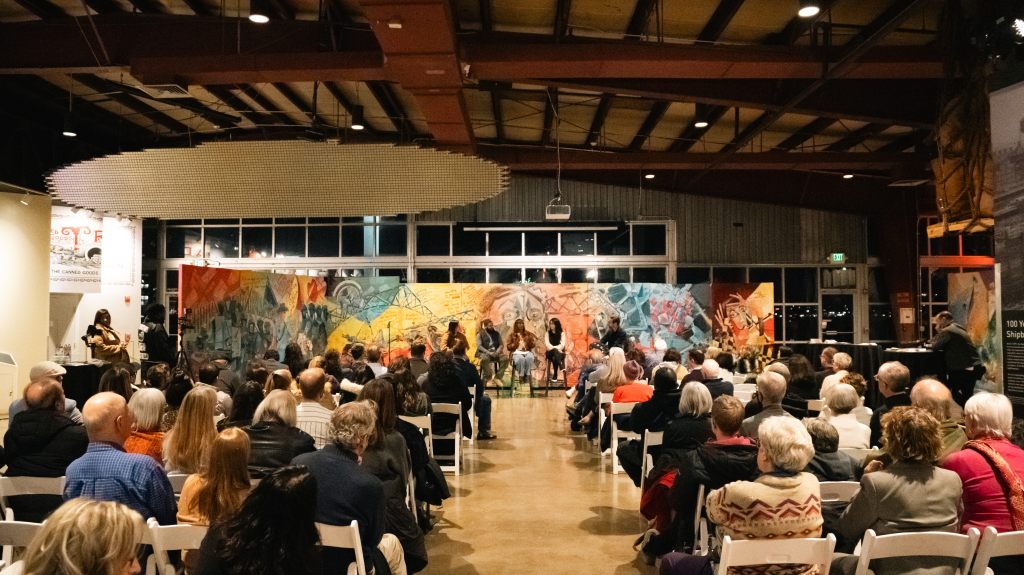
An accompanying pop-up exhibition featured Marquez’s mural and work by artists directly impacted by the collapse, including artist and longshoreman Wendell Supreme Shannon, whose contributions blended advocacy, reflection, and healing through creative practice. A central feature of the program was a panel discussion with Shannon, Aldana, Rodriguez-Lima, longshorewoman Lynette Dent, and radio producer Aaron Henkin, exploring intersections of art, identity, labor, and public memory (fig. 5). They also considered the role of museums as conveners in moments of civic crisis—places where difficult stories can be acknowledged and narratives of resilience foregrounded. As Becky Eisen of the Baltimore Community Foundation observed, “When bad things happen, often the story that is told is about the terrible things that happen to people. But I think there’s a lot of power in creating a narrative around the empowered people.”[vii] It was a serious evening, but one that was also uplifting and galvanizing.
The program drew significant media attention. In the lead-up, the Baltimore Community Foundation, moved by the project’s impact, asked if they could co-promote it, and we leapt at the opportunity. Press coverage included more than 15 segments across local television and radio stations, complemented by newspaper stories including a feature in the Baltimore Banner.[viii] A press release that was distributed to channels with a combined audience of more than 50 million people was picked up by 130 media outlets, receiving nearly 2,000 views.[ix]
Participants affirmed the event’s power. Responses to an emailed survey indicated that some attendees came “to be together as a community to address this terrible loss,” while others wanted “to see the art and hear the stories of the impact.” Many spoke about the value of connection and the importance of continuing to tell these stories, one participant urging, “Keep doing these kinds of powerful events, connecting to community. You do it so well.”
In addition, the BMI offered a virtual presentation on the history of the Key Bridge that drew more than 500 registrants from across Maryland and beyond. The program explored the bridge’s construction in the 1970s, the controversies surrounding it, and its early challenges—including a ship strike in 1980—helping participants contextualize the current moment. With the Maryland Transportation Authority then preparing to break ground on a replacement, the talk provided rich content for history enthusiasts while inviting attendees to stay engaged with the museum’s continuing work on this evolving story.
As we deepened our engagement with those most closely affected by the bridge collapse, we hosted two Family Days at the museum specifically for the relatives of the men who lost their lives that night. In all, we welcomed around 60 family members, including relatives who traveled from Mexico. We invited them to an interactive and bilingual experience at the museum featuring guided tours, children’s activities, a reception, and other community-building activities. We developed the programs in consultation with the families and respected their desire for a personal environment, without photography or significant advertising of the occasions. These events offered families a space to connect, honor their loved ones, and share their stories.
The Family Days inspired a new quarterly series, Bienvenidos al Museo, launched in August 2025. Designed to make the museum more accessible and engaging for Spanish-speaking visitors, the public program offers free admission, Spanish-language tours led by museum educators, Spanish-language audioguides, and hands-on activities for families. Visitors can connect with Latino community organizations on-site, explore outdoor artifacts along our waterfront campus, and enjoy opportunities for conversation and connection. The series reflects the museum’s commitment to fostering a welcoming environment for all, expanding access, and sharing the stories of local workers and neighbors with a broader, more diverse audience.
Together, these programs have reinforced the BMI’s role as a trusted civic space where history is preserved and shared and community members can come together to reflect, connect, and envision the future. They have also deepened relationships with community leaders, elected officials, and stakeholders from the port and beyond, strengthening the foundation for ongoing dialogue and collaboration.
The Present and Future: Interpreting an Unfinished Story
The BMI is now planning two exhibitions and an outdoor installation that will anchor the Key Bridge narrative while illuminating the broader role of the Port of Baltimore. The first, Key Bridge: Building a Baltimore Landmark, opened on March 26, 2026, marking the second anniversary of the collapse. The second, a major long-term exhibition about the Port of Baltimore, will overlook sweeping views of the active port terminal at Domino Sugar and open on the third anniversary of the collapse in March 2027. Outdoors, the museum will install one or two pieces of steel salvaged from the Key Bridge and generously provided by the Maryland Transportation Authority.
Through email and in-gallery surveys, we have learned that BMI visitors—both long-standing and new—strongly agree that the museum is a good place to memorialize the men who lost their lives in the Key Bridge collapse. The outdoor installation of pieces salvaged from the clean-up will serve as a powerful, tangible reminder of the bridge’s place in Baltimore’s landscape and history. It will offer visitors a place to reflect on the collapse while deepening the museum’s connection to the port as a working, living entity.
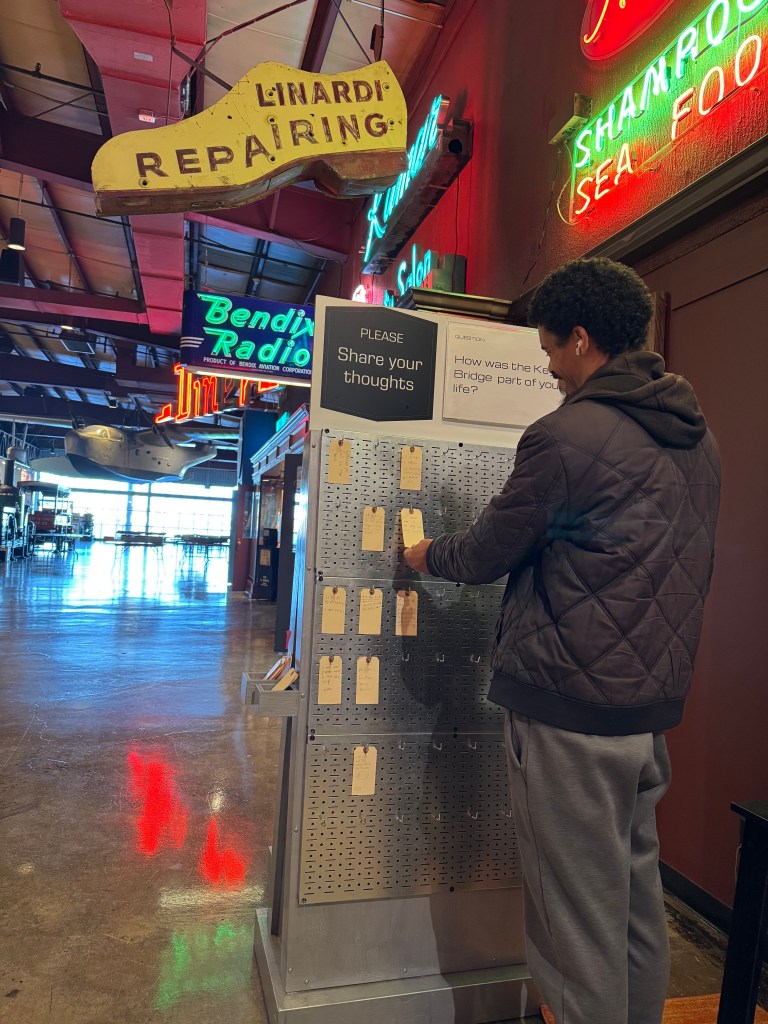
All these projects are being shaped by community input, as we work to tell a story still in progress. Museum interpretation consultant and bilingual visitor researcher Dr. Verónica E. Betancourt is leading surveys and formative evaluation to ensure the themes reflect public curiosity and need, not just institutional priorities. Visitors can share their views of both the port and bridge through a range of modalities: open-ended response cards and a concise bilingual survey in a high-traffic area of the museum, as well as a longer email survey that uncovers visitor values and interpretive priorities (fig. 6).
This research is revealing that many visitors see the bridge as an icon. Some know it as a site of personal work and loss:
My mom is a self-made first-generation business owner of a Drayage Trucking company in the Port of Baltimore. The bridge collapse nearly put her and her 8 truck drivers out of business #ARealBaltimoreHon.
Others see it as a landmark visible from the city and the water:
It is a marker of my home port, My Place! I can belong with the bridge and me —Ady, an 11 year old girl!
Knowing that visitors both recognize the value of the bridge and acknowledge its absence as a loss, we can focus on a multifaceted story of the work that built and sustained it, adding complexity and humanity to an icon that some may only know from a distance.
We are working on both exhibitions with consulting historian Dr. Deborah R. Weiner, who curated our Bethlehem Steel Legacy Project and brings deep expertise in labor history and a proven ability to integrate community voices into complex historical narratives. This collaborative approach builds on the trust, shared authority, and interpretive richness we achieved during the Bethlehem Steel project. The first exhibition focuses on the bridge’s construction in the 1970s and the labor that made it possible. Through artifacts, photographs, and oral history excerpts, visitors will learn about how the bridge took shape, the people who built it, and the impact of their work on Baltimore’s infrastructure and economy.
The second will explore the port’s past and present, the human and economic impact of the bridge collapse, and the region’s recovery. Our research shows that while more than 96 percent of BMI visitors acknowledge the port’s historical role in the economic development of Baltimore, only 10 percent have direct work experience at a port.[x] This gap in visitor understanding clarifies the museum’s role: to use immersive media, original artifacts, and interactive elements to bring the port to life—its workforce, vulnerabilities, and resilience—and connect local labor stories to global commerce.
We have secured funding for the first exhibition through a grant from the Maryland Heritage Areas Authority. The scope and scale of the long-term exhibition and the outdoor installation will depend on additional fundraising. Our progress has been greatly advanced by a six-figure grant from the Baltimore Community Foundation, awarded after they saw the impact of our early work.[xi] This gift allows us to move forward with confidence, even as we continue to seek the resources needed to realize our full vision for this project. We remain committed to unveiling these exhibitions, regardless of whether we have reached our ultimate fundraising goal.
Lessons from the Key Bridge Project
Echoes from the Key Bridge has challenged us to think, plan, and act in new ways. In responding to a live, unfolding story, we’ve had to navigate uncertainty, grief, and shifting timelines while staying true to our mission. Along the way, we’ve learned:
- Start before you’re ready. Collecting and storytelling can lose urgency when delayed.
- Trust and cultural competence matter as much as technical skill.
- Flexibility is nonnegotiable. Litigation, grief, and evolving narratives demand adaptive timelines and expectations.
- Community-first interpretation is essential. Our job isn’t to speak for Baltimore but to amplify Baltimore’s voices.
- Mission alignment enables agility. This project’s clear resonance with the BMI’s mission made it possible to act quickly and with confidence.
The project has also exposed gaps—in our language capacity as an English-dominant institution; in the need for better digital access systems; and in the challenge of securing sustained funding for responsive work. These lessons will guide both the next phases of this project and the museum’s future work more broadly.
The Francis Scott Key Bridge collapse is not just a historical event; it is a living story of grief, resilience, and renewal. For the BMI, Echoes from the Key Bridge has underscored that museums are not just interpreters of the past, but active civic participants in the present. In moments of crisis, we can provide stability, attentive listening, and spaces for meaning-making. And we can help communities not only to remember, but to rebuild.
[i] Wesley Case, “Baltimore Museum of Industry is collecting Key Bridge, Port of Baltimore artifacts,” Baltimore Banner, April 16, 2024.
[ii] Abigail Gruskin, “A Baltimore Museum of Industry project is saving the city’s Key Bridge stories, Baltimore Banner, December 6, 2024.
[iii] Maria Gabriela Aldana, quoted in Gruskin, “A Baltimore Museum of Industry project is saving the city’s Key Bridge stories.”
[iv] Ibid.
[v] Amy Davis, “Mural artist shapes pain and grief into shrine to Baltimore bridge workers,” Baltimore Sun, May 29, 2024.
[vi] “Preserving a Legacy: The Key Bridge, the Port of Baltimore, and the workers who were lost,” Baltimore Museum of Industry, accessed August 21, 2025.
[vii] Becky Eisen, quoted in Gruskin, “A Baltimore Museum of Industry project is saving the city’s Key Bridge stories.”
[viii] Gruskin, “A Baltimore Museum of Industry project is saving the city’s Key Bridge stories.”
[ix] These figures were provided by Abel Communications, which supported promotion of the event.
[x] These statistics are accurate as of November 12, 2025. The survey data collection will continue in-gallery through early 2026 and numbers may change.
[xi] “Baltimore Museum of Industry to Launch Key Bridge Exhibition with $545,000 Grant from Baltimore Community Foundation,” Baltimore Community Foundation, March 18, 2025. ground our practices in Indigenous worldviews.
Anita Kassof is Executive Director at the Baltimore Museum of Industry in Baltimore, Maryland.
Beth Maloney is Director of Curatorial Affairs at the Baltimore Museum of Industry.
Verónica E. Betancourt is Principal and Founder of Verónica E. Betancourt Consulting.
Upcoming Events
-
AASLH-NCPH Joint Conference
Event Date:Presented by: American Association for State and Local History (AASLH)Providence, RI -
Transit Insurance in Practice for Traveling & Co‑Organized Exhibitions
Event Date:Presented by: American Alliance of Museums -
Digital Collections Summit
Event Date:Presented by: MuseumNext -
The Federal Grant Landscape: What Museums Need to Know
Event Date:Presented by: Ohio Museums Association
Hello! The documentary film, “Echoes from the Key Bridge: A Baltimore Longshoreman” written, directed, produced and edited by Maria Gabriela Aldana, has been officially selected into 8 international and national film festivals, earning three “Best Documentary Short” awards, a finalist, semi-finalist, and nomination for the “Best Human Rights” film as of August 6, 2026. Thank you for sharing!