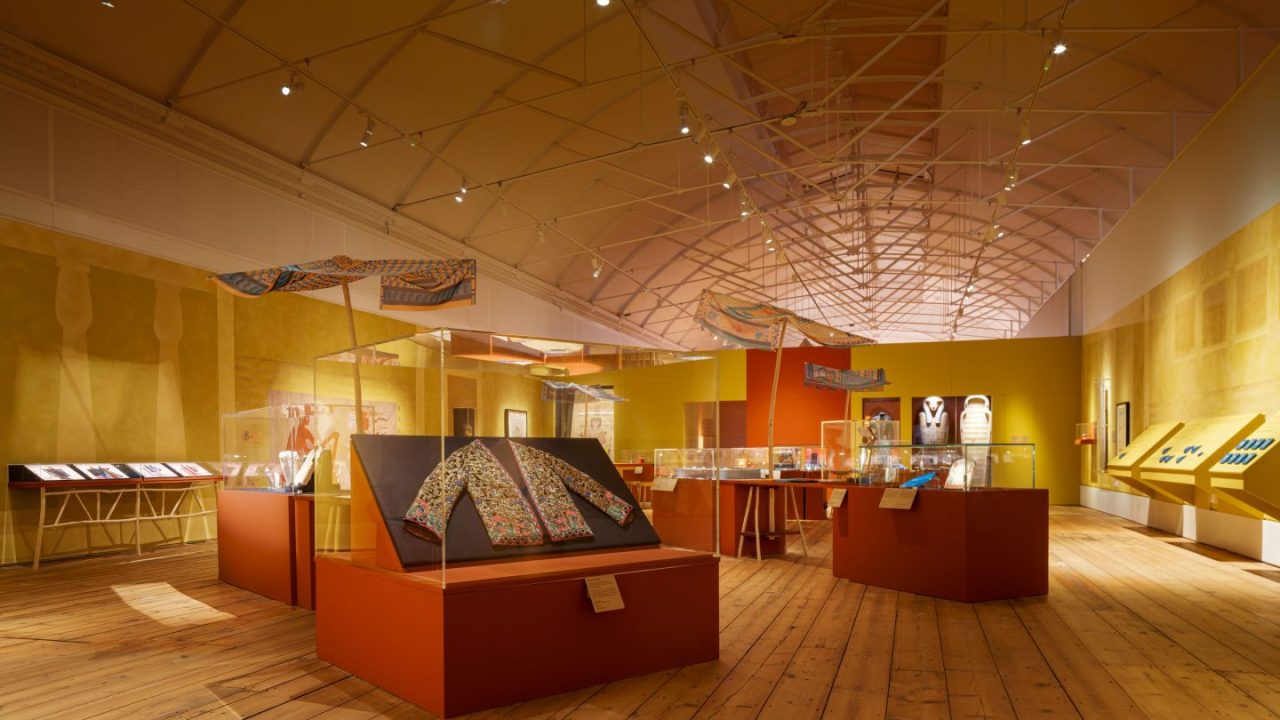
This article first appeared in the journal Exhibition (Spring 2026) Vol. 45 No. 1 and is reproduced with permission.
The need to find more sustainable ways of living first gained prominence in the 1970s, when the term “green” became increasingly commonplace. A decade later, the term “green design” began to be widely discussed in the specialist press, and seminal exhibitions took place, including The Design Council’s 1986 exhibition The Green Designer, which showcased environmentally sustainable work from many designers. This exhibition framed environmental challenges from a solution-focused perspective, speculating about “green products” and what it meant to be a “green consumer.” For over 50 years, green design has embraced ecological considerations, including recycling, resource conservation, and the creation of cleaner, quieter, and safer domestic environments.[i] In the context of the present climate crisis, approaches to sustainable design must extend to all areas of society.
Sustainability and Exhibition Design
Sustainability has become one of the greatest challenges in exhibition design, particularly in temporary exhibitions, which are often very resource intensive—in terms of both materials and energy—and pose challenges to the environment. Exhibition design encompasses everything from display cases and set-builds to museum mounts and mannequins. From an environmental perspective, these elements present two major challenges: 1) their creation produces significant waste; and 2) they result in increased carbon emissions. Reducing these impacts has become a strategic priority for designers looking to improve the field’s sustainability.
In recent years, designers have made progress in developing systematic methods to make exhibition design more sustainable. Guidelines and toolkits have been developed for designers and museums looking to decrease their negative impact on the environment, such as the CiMAM Toolkit on Sustainability in the Museum Practice and URGE Collective’s Guide to designing exhibitions with a low environmental impact. These guidelines are useful tools for those looking to establish sustainable design principles and implement decision-making tools to decrease carbon emissions and waste across exhibition production, design, and mount-making.
The aforementioned guidelines and toolkits primarily focus on set design. Mount-making has received comparatively little attention. This article focuses on a partnership between the Victoria and Albert Museum (V&A) and University College London (UCL) exploring exhibition mounts and potential ways to design them more sustainably. Mounts are essential components of exhibitions. They are in direct contact with the objects; they hold them and present them to the viewer. At the V&A, a museum of design, we are fascinated by the ways mount fabrication can evolve toward more sustainable approaches.
Mounts: Uses, Materials, and Potential
Museum mounts are arguably the most complex design element in the physical making of an exhibition. Mounts are crucial to presenting objects in ways that are both engaging for the visitor and safe for the object. Some mounts are relatively standard, such as book cradles or brackets, while others need to be carefully tailored to the specific requirements of the object. In the case of mannequins, there are a range of approaches, from figurative representation of the human body to invisible mounts. In all cases, the goal is to balance stability, display, and conservation standards. Ultimately, mounts can be understood as a way of caring for an object through preventative conservation.[ii]
The materials that mounts are made of must meet specific preventative conservation criteria. In 1973, Andrew Oddy, a conservation scientist from the British Museum, published an accelerated corrosion test to detect potentially harmful materials.[iii] This method, called Oddy testing, has become a standard museum technique for assessing whether a material is suitable for use in the display case environment; in particular, to assess the risk of corrosion and tarnishing of metal objects.
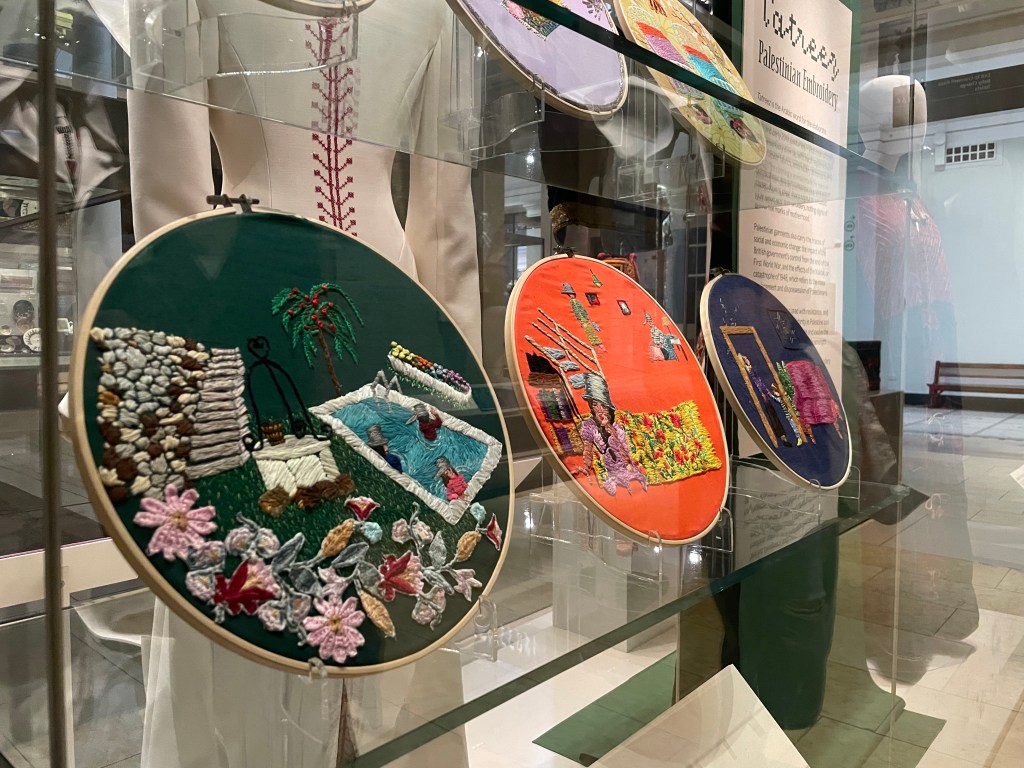
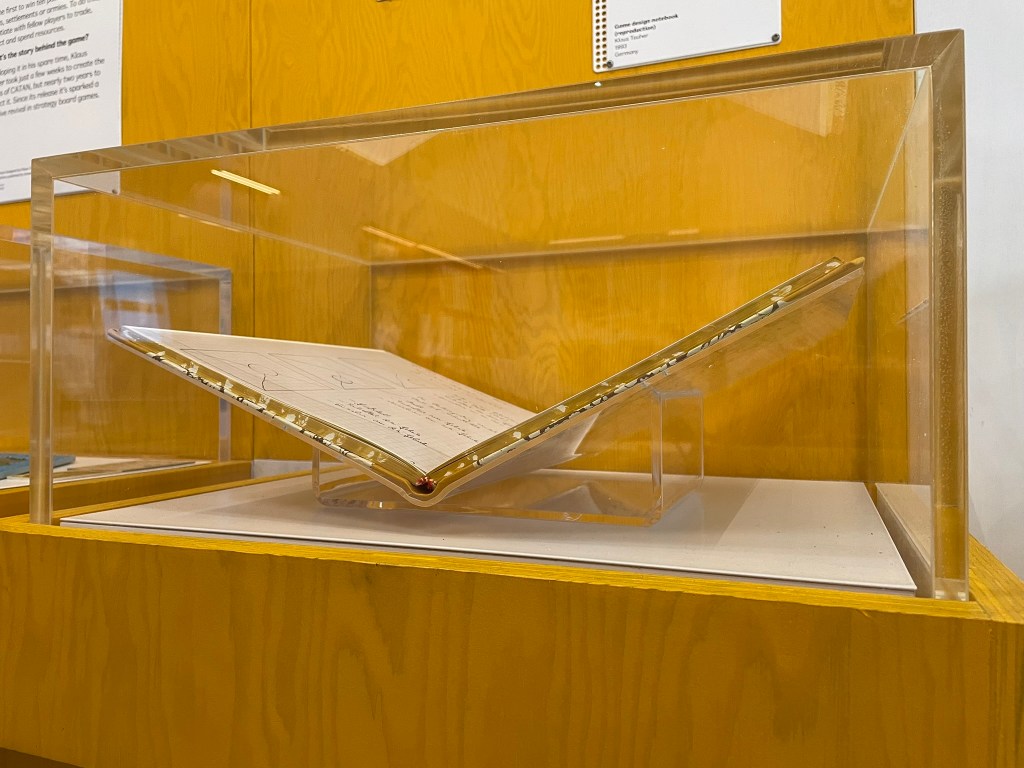
From a design perspective, most mounts strive for invisibility or inconspicuousness so as not to distract from the object on display. To meet preventative conservation requirements and to be as visually inconspicuous as possible, most mounts have traditionally been made of petrochemical materials (figs. 1 and 2) and metal. The inert and malleable qualities of these materials make them ideal to adapt to the complex and unique forms of each object. However, these materials are not ideal from an environmental perspective, as they are not naturally biodegradable. Although in many cases mounts can be reused—over the past 20 years the V&A has reused and adapted mannequins to serve the needs of different garments—if the material it is made from can’t be recycled, the mount will ultimately become waste.
As we look to the future, it is critical that exhibition design comes closer to zero-waste and carbon-neutral design solutions. Data can help with identifying priorities across set-build and other areas. Even though sustainability cannot be considered only through a carbon lens, carbon data can be a useful tool in analyzing current exhibition practices and identifying areas for research and development.
In 2024, we began to analyze the carbon emissions associated with temporary exhibitions in collaboration with the carbon accounting software Normative. As part of this process, the V&A monitors different processes across exhibitions, including loan transport, set-build, mounts, display cases, and energy use. The balance of these factors varies depending on the type of show, as some are more loan-heavy, while others involve larger set-builds.
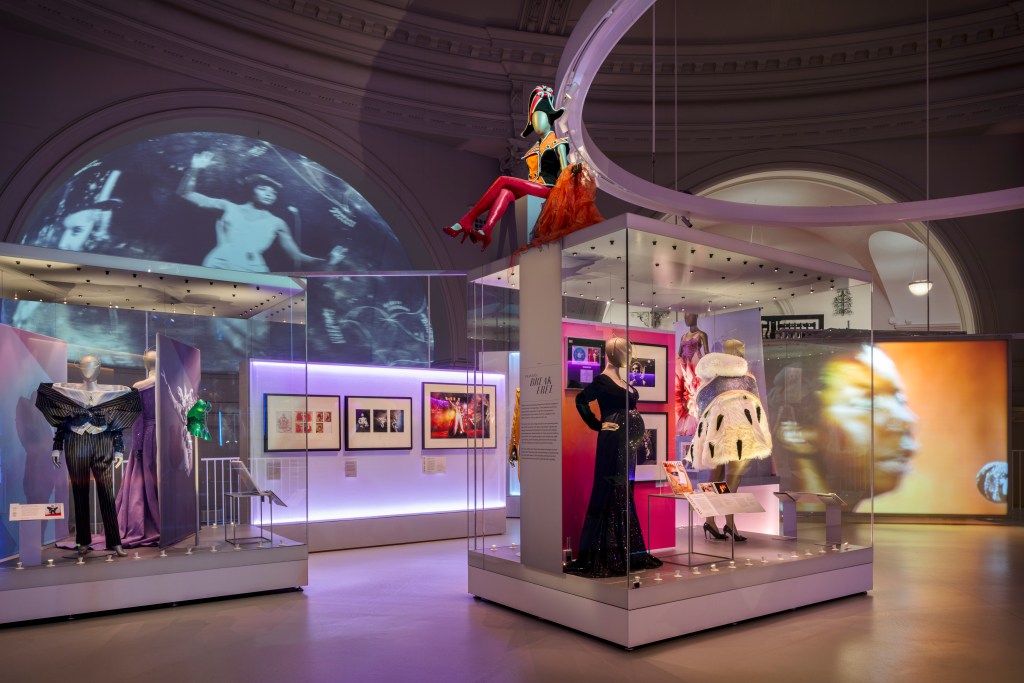
In our carbon accounting, mannequins emerged as a significant contributor in exhibitions focusing on fashion and performance (fig. 3). Comparing the carbon footprint of producing bespoke mannequins with the carbon footprint of the set-build (not including mannequins), we found that the former equates to between 30 percent and 100 percent of the latter. Although this calculation does not consider the potential reusability of bespoke mannequins, which could extend their useful life to decades, it raises an important question about the sustainability of museum mounts and the potential positive impacts of greener approaches and materials.
Reuse is a practice that should be developed and continued; however, the materials commonly used for set-build, mannequins, and mount-making, such as acrylic, fiberglass, and Fosshape, do not allow for a fully circular design approach, where materials are eventually returned to the earth and allowed to biodegrade. To find materials that fit the conservation needs of collections and are fully biodegradable, the V&A has been experimenting with biomaterials. The field of biomaterial science has significantly advanced in recent years in its application in biological engineering. As we look to the future of exhibition design, we ask: How can biomaterials be used in the manufacture of more sustainable museum mounts?
What Are Biomaterials?
Biomaterials are materials derived from or produced by biological organisms and are used across a wide range of sectors, from medical applications and food packaging to cosmetics and design. In recent years there have been key developments in the exploration and use of biomaterials, which come in many forms. In design contexts, biomaterials are often discussed in terms of how they behave once in use:
- Bio-inert materials are derived from biological sources but remain stable in use, without actively changing over time
- Bio-responsive materials alter their properties in response to external conditions such as light, humidity, pH, or temperature
- Bioactive materials go a step further, continuing to interact with their environment over time[iv]
Biomaterials can be made from bacteria, algae, yeast, mycelium, or plants and have opened the door not only to commercial and lab-based design materials but also to DIY materials, with designers experimenting and testing their own approaches. A number of biomaterials are still in the early experimental stages of proof-of-concept, while others are in the early commercialization stage. The rise of DIY approaches has enabled designers and architects to further explore the potential of these materials in highly specific applications.
Bio-Based Materials in Exhibition Design
In the context of exhibitions and museums, the use of biomaterials is still at an early stage. While there is growing interest in their potential, their application raises a number of challenges, including conservation standards, structural performance, aesthetics, and curatorial requirements. A small number of research-led projects have begun to explore how these materials might be applied within exhibition contexts.
For example, one research-led project explored the use of additive manufacturing and eco-sustainable materials in the design of modular exhibition structures.[v] Developed in an academic research context, the project resulted in a full-scale, lightweight structure for use in temporary exhibitions. The modules were 3D printed using a biodegradable bioplastic filament made from agricultural waste fibers (hemp) combined with PLA (polylactide). The prototype functioned as a proof-of-concept, demonstrating the potential of such materials in exhibition architecture and other structures in terms of performance, printability, and environmental impact.
Another case study looked at developing bio-based transport crates for museum collections.[vi] The project involved rethinking the materials used in the outer shell, insulation, and padding of the crates and testing options such as hemp, sunflower, and corn. Some of these materials also show promise in future shelving solutions. These examples demonstrate that the challenges museums face are not insurmountable. In rethinking how they design temporary exhibitions, storage solutions, and much more, museums have the potential to go beyond current processes to become drivers of material innovation.
V&A Feasibility Study: Biomaterials in Museum Environments
In 2024/2025, the V&A Design Studio hosted its first six-month PhD placement from University College London (UCL). The intention was to develop knowledge about the ways in which biodegradable materials could be used in exhibition design. We (the authors) set out to explore the potential and limitations of using bio-based materials within the museum environment:
“What would it mean for museum practitioners if they considered using these materials?”
“What would the process look like to formulate bespoke biomaterials designed specifically for the risks and potentials of a museum?”
This partnership between the museum and UCL was mutually beneficial, allowing the PhD researcher to put some of the techniques and knowledge developed during their academic training to practical use, and supporting the V&A Design Studio in exploring innovative materials and manufacturing methods.
The study focused on mount design and fabrication. As outlined earlier, internal monitoring at the V&A has shown that, particularly in temporary exhibitions, bespoke mounts can represent a significant material and carbon impact. In many cases, mounts are fabricated from acrylic and other petrochemical materials and cannot easily be repurposed once an exhibition closes. Given both their essential role in exhibition-making and their material intensity, mounts offered a clear opportunity to explore whether bio-based alternatives could provide lower-impact solutions. As with any material introduced into the museum environment, this focus also posed a conservation challenge: all materials that come into contact with collection objects must be assessed through Oddy testing.
A key principle of this pilot study was to test whether incrementally adjusting material recipes alongside Oddy testing could offer a more effective approach to developing museum-compatible biomaterials. The materials typically in use in museum mounts are finished products, making it difficult to identify which specific components may be responsible for a failed Oddy result. Rather than aiming to define a single final recipe, our study explored whether a recipe-based, iterative workflow could provide greater insight and control during material formulation. Such an approach could, in future, allow material properties to be adjusted in response to the specific requirements of different objects, including weight, structural support, display performance, and aesthetics.
We selected sodium alginate as our base material for this study. Sodium alginate is a biodegradable polymer extracted from brown seaweed that is both easy to source and work with and whose properties can be adjusted depending on the intended application. Indeed, its adaptability has led to its use across many fields, including in textiles, packaging, medical, and environmental contexts, making it a relevant candidate for investigation in museums.
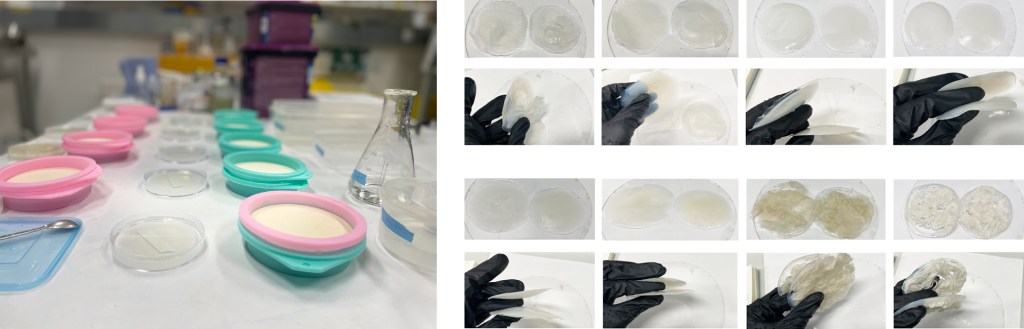
To begin, we combined sodium alginate with water to form a hydrogel—a gel-like substance that could be shaped and modified. To transform this hydrogel into a stable, solid material, we introduced calcium chloride—a widely used compound whose applications range from food processing to moisture control to construction. After pouring the hydrogel into molds to define its shape, we applied calcium chloride to initiate crosslinking and solidification (fig. 4). We then dried the molds in controlled conditions to allow excess moisture to evaporate. Using this basic process, we were able to develop a series of material recipes, adjusting the formulation with additional powders to explore variations in strength and flexibility.
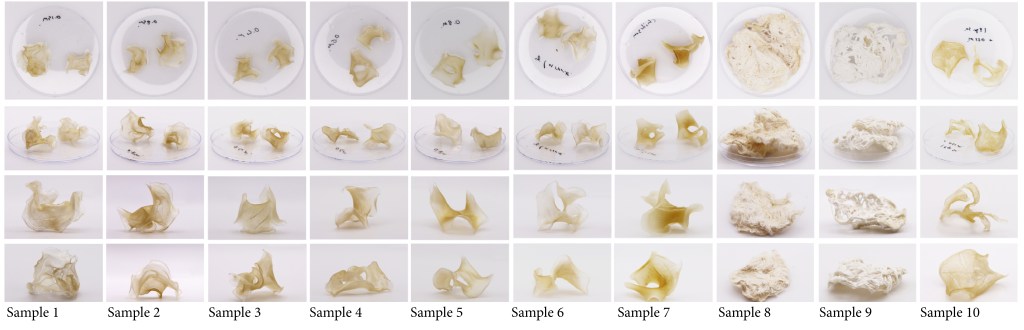
To test these bio-based materials against museum standards, we conducted two rounds of Oddy testing, evaluating a total of 13 material recipes (fig. 5). In the first round, we focused on understanding the base recipe and examined whether changes in the amount of sodium alginate and the type and amount of curing agent affected the results. From this we learned that the simplest version of the material recipe had the potential to pass the test and that the material was particularly sensitive to the curing agent.
We built on these findings in the second round of testing, which focused on further refinement. In this round, we tested a narrower range of recipes to identify the threshold at which the amount of calcium chloride could consistently pass Oddy testing. We introduced additional materials, including chitosan, a biopolymer derived from shellfish waste that can increase material strength, and glycerin, which was used to improve flexibility. We also combined the recipes with textile fibers to assess whether this further enhanced material performance.
Overall, the results were promising: five recipes passed for permanent use; four could potentially pass with further refinement; and four did not meet the required standards. Although this study was exploratory, the findings indicate that the base recipe is particularly sensitive to formulation changes, reinforcing the value of incremental, test-led approaches when introducing new materials into museum contexts.
Early Findings and Next Steps
Our results suggest that bio-based recipes can be iteratively developed and tuned through direct testing to meet museum-grade standards. This early-stage study demonstrates that working in parallel across material development and conservation testing offers a practical model for future research. Rather than proposing a singular solution, the study shows a broader methodology: programmable material recipes can be designed and refined to align with conservation and exhibition needs. The research outcome is an example of how an interdisciplinary and collaborative approach among designers, preventative conservation, and an external researcher can lead to innovative and sustainable solutions in exhibition design.
The project has prompted discussions within the V&A across conservation, curatorial, and design teams about the potential that bio-based materials could have within future museum environments—from their environmental performance to their visual and material character. We view the project as an initial step toward future conversations, not only within the V&A but also with wider industry colleagues and peers, to imagine and research together what it might mean for a museum environment to adapt and work with bio-based materials. How can such materials respond to current protocols, the lifespans of exhibitions, risks, conservation needs, and structural standards? What could the future of museum mounts look like, and what could their dialogue with the objects be?
Ultimately, the findings of this collaboration open up a complex design challenge: to re-design exhibition mounts. As a next step in our collaboration, the V&A and UCL plan to research how to set up key manufacturing parameters for a full-body mannequin made from biomaterials, research that we can continue thanks to UCL’s Knowledge Exchange Funding.
Images courtesy of the authors, unless otherwise stated.
Acknowledgements
We would like to thank our colleagues at the V&A: Evonne Mackenzie, Head of Design and Creative, for her generous support throughout this project; Oliver Cox, Head of Academic Partnerships, for his encouragement and belief; Lara Flecker, Lead Conservator (Textiles and Fashion Display) for her knowledgeable and creative contributions; and Amanda Hahn, Senior Preservation Conservator, for her care, rigour, and technical expertise.
[i] Jonathan M. Woodham, A Dictionary of Modern Design (1 ed.), (Oxford University Press, 2004).
[ii] Shelly Uhlir, BJ Farrar, and McKenzie Lowry, “INTRODUCTION: Mountmaking Special Issue,” Journal of the American Institute for Conservation 51, no. 1 (Spring/Summer 2012): 1.
[iii] L.R. Green and D.Thickett, “Testing Materials for Use in the Storage and Display of Antiquities: A Revised Methodology,” Studies in Conservation 40, no. 3 (August 1995):145–52.
[iv] Zehra Koç and Gökçe Tuna, “Design and Manufacturing of Building Products Based on Biomaterials: A Systematic Literature Review and Framework Proposal Based on the Meta-Synthesis Method,” Megaron – Yıldız Technical University Faculty of Architecture E-Journal 20, no. 2 (June 2025): 263–77.
[v] Stefano Invernizzi et al., “Design of a Modular Exhibition Structure with Additive Manufacturing of Eco-Sustainable Materials,” Curved and Layered Structures 8, no. 1 (2021): 196–209.
[vi] Caroline Biro, “Researching and Developing Bio-Based Materials for the Transport, Conservation and Exhibition of Museum Collections: A Case Study from France,” Museum International 75, no. 1–4 (2023): 136–47.
Nikoletta Karastathi is a PhD candidate at the Bartlett School of Architecture, University College London.
Alicia González-Lafita Pérez is Design Team Lead at the Victoria and Albert Museum in London.
Upcoming Events
-
Industry Showcase: Innovative Digital Solutions
Event Date: -
Getting Started in Local Advocacy
Event Date:Presented by: American Association for State and Local History (AASLH) -
Creative Museums Summit
Event Date:Presented by: MuseumNext -
So…You Want a Museum Career? Part II
Event Date:Presented by: Southeastern Museums Conference