Advocacy Alert – May 8, 2026
In this Alliance Advocacy Alert:
- Appropriations Updates
- Appropriations Advocacy
- Humanities Court Case
- Invite Congress 2026
- Upcoming Advocacy Programming at AAM Annual Meeting & MuseumExpo
- Advocacy Tip of the Month: Your Representatives Don’t Know Unless You Tell Them
Appropriations Updates
The House Appropriations Committee has begun considering its drafts of the FY27 Appropriations Bills. The current schedule (subject to change) of the committee’s consideration of key bills for museums:
- Commerce, Justice, Science and Related Agencies (CJS) was considered in the subcommittee on April 30 and in the full committee on May 5. This bill contains funding for STEM Education programs at the National Science Foundation (NSF), National Aeronautics and Space Administration (NASA), and the National Oceanic and Atmospheric Administration (NOAA).
- Interior, Environment, and Related Agencies (Interior) is expected to be considered in the subcommittee on May 21 and in the full committee on June 3. This bill contains funding for the National Endowment for the Arts (NEA), National Endowment for the Humanities (NEH), historic preservation programs, the Smithsonian Institute, and the National Park Service (NPS).
- Labor, Health and Human Services, Education, and Related Agencies (LHHS) is expected to be considered in the subcommittee on June 5 and full committee on June 9. This bill contains funding for the Institute of Museum and Library Services (IMLS).
The Senate Appropriations Committee has not yet released its schedule for considering its version of the bills.
In the lead-up to committee consideration of the bills, write your members of Congress in support of museum funding. Please make sure to personalize your letters.
Want to learn more about the Appropriations process? Check out AAM’s March 2026 advocacy webinar “Appropriations 101: The Process of Funding the Federal Government”
Appropriations Advocacy
Community Letter:
AAM would like to give a huge thank you to the 1,325 museums, associations, and companies that signed onto the community letter to Congressional leadership supporting funding in the FY27 appropriations bills for agencies and programs that support museums. This strong showing comes on the heels of the museum community sending more than 90,000 emails to Congress last year in support of museum-funding agencies and programs.
Congress continues to fund these agencies and programs despite the President’s Budget Request to eliminate funding and that is thanks to the advocacy efforts of the museum ecosystem. While AAM has shared the community letter directly with all Congressional offices, we encourage you to share it again when you reach out to Congress.
Dear Colleague Letters:
- Forty members of the Senate signed the Senate Dear Colleague letter in support of the Office of Museum Services at IMLS, which is one more than last year. See if your Senate member signed the letter.
- 133 members of the House signed the House Dear Colleague letter, which is 10 more than last year. See if your House member signed the letter.
Testimony:
AAM also submits written testimony to both the House and Senate Appropriations Committees in support of museum funding. Below is the written testimony AAM submitted this year.
Humanities Court Case
The US District Judge ruled that mass termination of NEH grants last year were “unlawful, unconstitutional, ultra vires, and without legal effect.”
The Judge’s ruling says the government “is permanently enjoined from enforcing, implementing, or giving any effect to the Mass Termination.” The government is also required to “provide written notice of this Opinion and Order to all affected grant recipients whose awards were terminated as part of the Mass Termination.”
Read more from the American Historical Association.
Invite Congress 2026
Members of Congress are usually in their home districts for most of August to meet with constituents, visit local businesses, and attend local events. Inviting your members of Congress to visit your museum or company during this period is one of the best ways to show your representatives the important work that you do. This is a great opportunity to show them how your museum used any federal funding you received or how it could use federal funding in the future. Sign up for Invite Congress 2026 to get access to:
- A detailed Invite Congress How-To Guide
- A dedicated community in Museum Junction
- A special Invite Congress webinar
- AAM staff office hours to ask any questions
Sign-up is free. Please only sign up if your museum is interested in participating in Invite Congress 2026.
Note: Museums and companies are responsible for writing and submitting the invites to their members of Congress. AAM is helping to provide the how-to materials, contact information, guidance, and community.
Upcoming Advocacy Programming at AAM Annual Meeting & MuseumExpo
Are you coming to AAM 2026 in Philadelphia this month? Check out the advocacy and government relations sessions and activities:
- Government Relations and Policy 101 with AAM Staff, May 21 from 8:30-9:30 am. Learn about the interconnectivity of the federal government and advocacy. Delve into ongoing efforts to expand awareness of museums’ importance as economic drivers, educational spaces, and centers of culture and community—and how you can help.
- Advocacy & Policy Roundtable Conversations, May 22 from 11:00 am-12:00 pm. Come have facilitated conversations about museum advocacy and policy with your colleagues from across the country and network.
- Advocacy Open House, May 21 from 4-5 pm. Questions about museum advocacy and policy or just want to meet AAM’s Advocacy and Government Relations staff? Stop by the AAM Resource Center in the Expo Hall.
- Write Your Representatives. AAM will have a setup in the AAM Resource Center for attendees to write their members of Congress.
Advocacy Tip of the Month: Your Representatives Don’t Know Unless You Tell Them
Your elected representatives and their staff manage a wide range of issues, making it impossible for them to fully understand everything affecting their districts without hearing directly from constituents. That’s why advocacy is so important. Policymakers can’t always see how specific laws and policies impact different sectors unless the people affected speak up. And because of competing priorities and staff turnover, they often need to hear these concerns more than once. Never assume they understand the challenges your museum is facing or how important an issue is to your organization without you telling them.
Upcoming Events
-
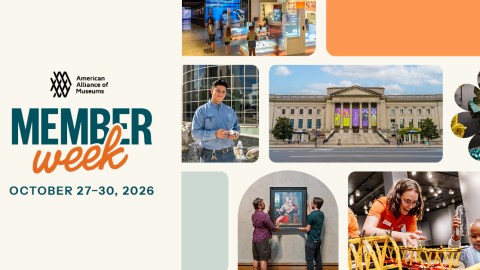
AAM Member Week
Event Date:Presented by: American Alliance of Museums -
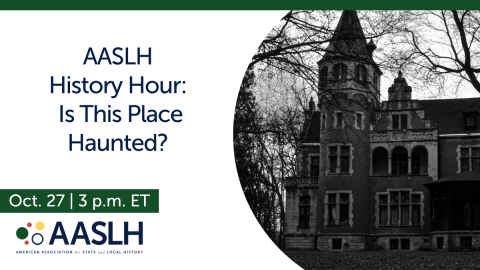
AASLH History Hour: Is This Place Haunted?
Event Date:Presented by: American Association for State and Local History (AASLH) -
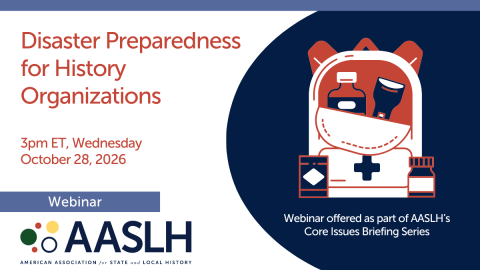
Disaster Preparedness for History Organizations
Event Date:Presented by: American Association for State and Local History (AASLH) -
From Informational Interview to Real Connection
Event Date:Presented by: American Alliance of Museums and National Emerging Museum Professionals Network