This article first appeared in the journal Exhibition (Spring 2026) Vol. 45 No. 1 and is reproduced with permission.
In an era of rapid change and deep uncertainty, museums face mounting pressure to stay relevant, responsive, and inclusive. Traditional exhibition models, rooted in authoritative narratives and years-long development cycles, often struggle to keep pace with contemporary issues. Since its founding in 1857, the Michigan State University (MSU) Museum has advanced a forward-looking vision that catalyzes teaching, research, and public engagement. In 2017, MSU expanded its commitment to engaged learning by launching Science Gallery Detroit.[i] This was the first member of the global Science Gallery Network in the Americas, and it introduced a bold new model for interdisciplinary collaboration and public engagement. When the Museum and Science Gallery Detroit were brought together in 2021 following the pandemic, this merger sparked a new mission focused on “facilitating and creating experiences at the nexus of the arts, sciences, cultures, and technologies.”
Building on the spirit of experimentation that defined Science Gallery Detroit, the MSU Museum launched the CoLab Studio in 2022 as an innovation hub for experimentation, collaborative creation, and critical exploration. Through its work, CoLab Studio reimagines the curatorial process as a dynamic, collaborative, and adaptive practice. Here, exhibitions are not fixed products but evolving processes that center interdisciplinary co-creation, critical discourse, and community engagement. CoLab’s accelerated timelines enable a rapid-response approach to timely societal issues, while an iterative production process allows ideas to evolve and adapt within compressed schedules.
This article shares how CoLab’s open-call framework and pace of production create exhibitions that are more democratic and reflective of the complexities of our present moment, offering a roadmap for other institutions seeking to meet the future head-on.
A New Kind of Exhibition Lab
In Idea Colliders: The Future of Science Museums, museum director and Science Gallery founder Dr. Michael John Gorman makes the case that science museums must evolve into places where people work together across disciplines to tackle complex challenges.[ii] Drawing inspiration from Gorman’s vision and our previous work as Science Gallery Detroit, MSU Museum launched CoLab Studio in 2022 as part of our broader transformation strategy. At the core of that strategy is a commitment to engaging our communities, particularly MSU students ages 18 to 25, a demographic that museums have historically struggled to reach.
To resonate with this audience, CoLab grounds each of its annual exhibition cycles in a broad, socially urgent theme. These themes are not arbitrarily chosen; they emerge from ongoing campus dialogue and broader cultural analysis. Further, this work is informed by the MSU Museum’s rigorous strategic planning process, which sought to understand and differentiate our offerings for core audiences. Sources included institutional research; national studies on youth culture and future-of-work trends from McKinsey & Company and the Pew Research Center; and audience surveys distributed to museum visitors. Our research shows that young adults are most drawn to complex, real-world issues that directly impact their futures, including climate change, food justice, surveillance, and artificial intelligence. Together, these inputs provided a clear picture of the issues that students feel are the most urgent to their futures.
Past and upcoming exhibitions include 1.5º Celsius (climate crisis), Food Fight! (food systems and sovereignty), Tracked & Traced (surveillance and identity) (fig. 1), Blurred Realities (how we receive and perceive information and truth), and Singularity (AI and human futures). These topics reflect the kinds of “wicked problems”[iii] that demand interdisciplinary collaboration and critical inquiry—perfect material for CoLab’s experimental, participatory approach.
We kick off each cycle with an open-ended question centered around a theme. We then issue an open call inviting artists, researchers, students, and community members from around the world to respond. The result is a diverse cohort of collaborators united not by background or medium, but by their shared investment in making sense of the topic and the present moment.
The Open Call as a Democratic and Participatory Framework
Unlike traditional curatorial processes that often impose a top-down vision, CoLab’s model is built on distributed authorship. Proposals are reviewed by a multidisciplinary team of museum staff, students, and subject-matter experts. Typically, six to 10 people comprise the curatorial committee, ensuring a diversity of perspectives. This curatorial structure ensures that a range of voices shapes the exhibition from the outset, democratizing decision-making and embedding collaboration at every level.
The open call intentionally welcomes contributions at all stages of development, ranging from conceptual ideas to near-complete projects. This flexibility allows contributors of varying experience levels to participate meaningfully. Some exhibitors are seasoned artists or acclaimed faculty; others are students or community researchers engaging with exhibition-making for the first time. What unites them is their willingness to engage with ambiguity and their shared investment in shaping an exhibition through dialogue that addresses a socially urgent theme.
Designing in Public: Process Over Product
Once exhibitors are selected, the real work begins. The exhibitors engage in a collaborative design process alongside museum staff, exhibition designers, and one another. This period is marked by ongoing dialogue, iteration, and experimentation. Participants are encouraged to refine their ideas, challenge assumptions, and respond to feedback. The facilitated conversations shape the exhibits in several concrete ways. For some participants, exhibit ideas enter the process as early-stage concepts rather than as fully realized installations, and curators and designers help translate these abstract ideas into exhibit-ready formats by identifying elements that could become interactive or how a narrative might be visualized spatially. At other times, curators connect exhibitors with content experts who inform the work. These conversations can also situate an already developed idea within the larger goals of the exhibition, prompting adjustments in scale, participatory components, or interpretive framing so that the final piece resonates more fully in context.
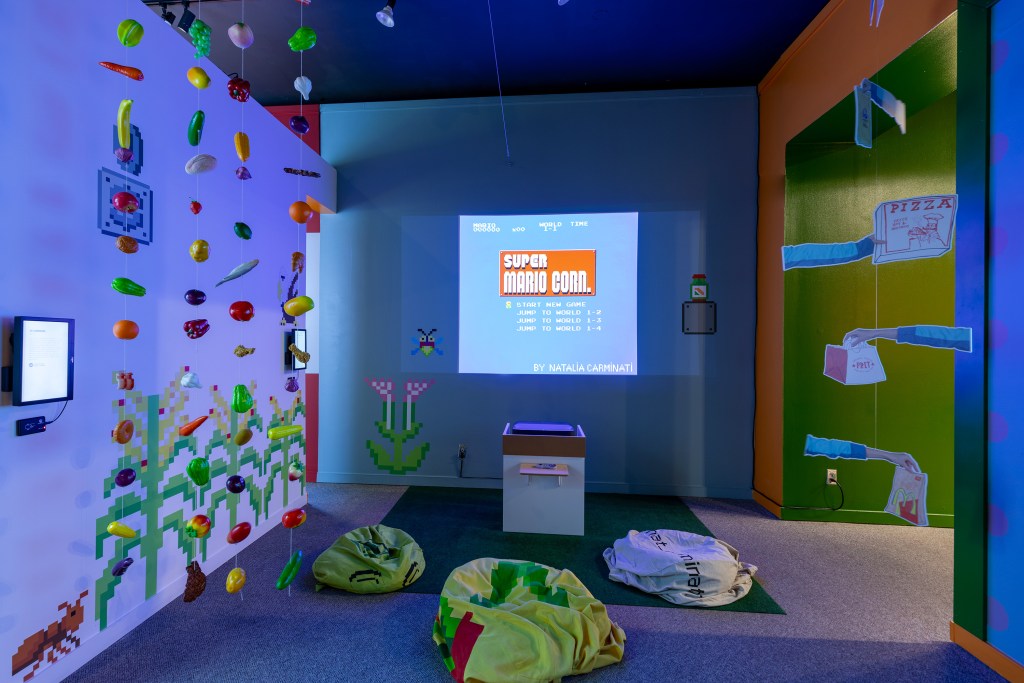
Barcelona-based multimedia artist and researcher Natalia Carminati described her participation in the Food Fight! exhibition in the following terms (fig. 2):
With other group exhibitions I have participated in, you always work by yourself, totally separate. But the general proposal of this exhibition is to work together. This process has already expanded my work, which is, of course, a dream for an artist.[iv]
The CoLab approach centers process over product. Exhibitions are allowed to shift direction midstream, and meaning emerges through collaboration. This fosters a sense of shared authorship and ensures that exhibitions remain responsive to changing ideas, conversations, and contexts.
The Role of the CoLaborators
One of the most distinctive features of CoLab’s participatory approach is the CoLaborators program: a cohort of undergraduate students who serve as interpreters, evaluators, and catalysts for conversation.[v] Their training prepares them to facilitate small, idea-driven conversations that spark curiosity and exchange, moving beyond traditional docent models that focus on conveying information. Drawing on a dialogic model rather than scripted explanation, CoLaborators engage visitors through open, responsive interactions shaped by their interests in the moment. Through active listening, thoughtful prompting, and an emphasis on questions rather than conclusions, they transform the gallery into a living forum where meaning is created collectively.
A key example of this distinction can be seen in the Blurred Realities exhibition. Over 190 MSU students applied for 10 CoLaborator positions. Once selected, the team participated in a robust onboarding process centered on team-building, strategies for facilitating inquiry-based conversations, and approaches to nurturing visitor-driven dialogue. This preparation differs from conventional guide or docent training, which typically emphasizes content mastery and formal delivery. Instead, CoLaborator training foregrounds conversational skills, adaptability, and collaborative interpretation.
To deepen their understanding of the exhibition, CoLaborators meet directly with the artists and exhibitors during the final stages of planning and installation. These sessions allow for unscripted exchanges in which students learn not only about the works themselves but also about the ideas, processes, and intentions behind them. This early involvement positions CoLaborators as embedded participants in the exhibitions they support, equipping them to make nuanced, personalized connections with visitors once the gallery opens.
In addition to interpretation, CoLaborators are instrumental in evaluation. They gather real-time visitor feedback, track patterns in audience questions and reactions, and contribute insights that shape ongoing efforts. This dual role supports a continuous feedback loop between audience experience and institutional learning.
The program enriches both the museum and the students themselves. For the institution, it ensures that exhibitions remain relevant, dialogic, and learner-centered. For students, it offers practical training in communication, critical thinking, and cultural leadership. Ben Adams, a recent graduate who served as a CoLaborator for three years, reflected on his experience by stating:
Being part of the MSU Museum as a CoLaborator has been a rewarding experience. One of the most valuable skills I have gained is learning how to explain complex ideas concisely and spark conversations that encourage deeper thinking. Every discussion is different, and finding ways to connect people to the exhibition themes is both challenging and fulfilling.[vi]
In the following case study, we’ll examine how these elements come together to create an exhibition that is timely, responsive, and impactful for CoLab’s target audience.
Case Study: Blurred Realities, January 14–August 1, 2026
The first of two exhibitions that will be presented in conjunction with the United States’ semiquincentennial, Blurred Realities examines the complex challenges posed by disinformation, misinformation, artificial intelligence, and the evolving nature of truth. More than a study of deception, the exhibition explores how our perceptions are shaped, influenced, and—at times—manipulated. It seeks to equip visitors with tools to discern what is real, what is fabricated, and what is intentionally misleading. As the nation marks 250 years of American democracy—a system built on informed discourse and collective decision-making—these questions have taken on greater urgency as the rapid spread of misinformation, disinformation, and AI-generated content increasingly challenges the public’s ability to access reliable information and participate meaningfully in civic life.[vii] Blurred Realities invites visitors to reflect on how we navigate this shifting terrain individually and collectively in pursuit of a more informed and resilient future.
The global open call for Blurred Realities launched in August 2024 and remained open for two months. CoLab’s open calls are intentionally designed to be accessible while still encouraging thoughtful, well-developed ideas. The application process is straightforward: contributors are asked to submit a proposal that outlines their concept and identifies whether it is an exhibit or public program and to include a draft budget along with work samples. CoLab Studio offers up to $3,000 in support for selected projects. Proposals may be early-stage ideas or fully developed works, allowing contributors with varying levels of experience to participate. The call is open to a wide range of disciplines and backgrounds. While some applicants may be unfamiliar with exhibition budgeting, CoLab provides guidance through an FAQ page and offers additional support to help refine proposals during the review process.
We received a total of 241 proposals from academics, artists, researchers, students, and activists across 34 countries, reflecting a broad spectrum of ideas, media, and critical perspectives. Once the submission period closed, the curatorial team began its review. The team included CoLab Studio staff, student CoLaborators, and MSU faculty. Led by CoLab’s Creative Director and Education & Learning Manager, the team guided the exhibition’s narrative and experiential direction, chaired the selection process, and facilitated key conversations that informed curatorial decisions. By year’s end, they had completed the initial review and established communication protocols for participating exhibitors, outlining design workflows, project milestones, and expectations for collaboration.
The team selected eight exhibits and sent notifications to the contributors. In the following weeks, the curatorial team focused on building the foundation for collaboration. They began conversations with exhibitors and initiated work on the exhibition’s visual identity. At the same time, the team finalized the curatorial statement, establishing a conceptual anchor for the project.
Through these early discussions, the team identified four subthemes to help audiences navigate the exhibition’s content and structure. Unlike a more traditional approach with predetermined thematic frameworks, CoLab’s approach allows subthemes to emerge organically from dialogue with exhibitors, ensuring that the subthemes reflect both curatorial vision and the perspectives of participating artists. These conversations were critical to the exhibition’s narrative cohesion and to building connections across the works. The resulting subthemes, and their corresponding exhibits, are:
- The Power of Bias in Shaping Reality.
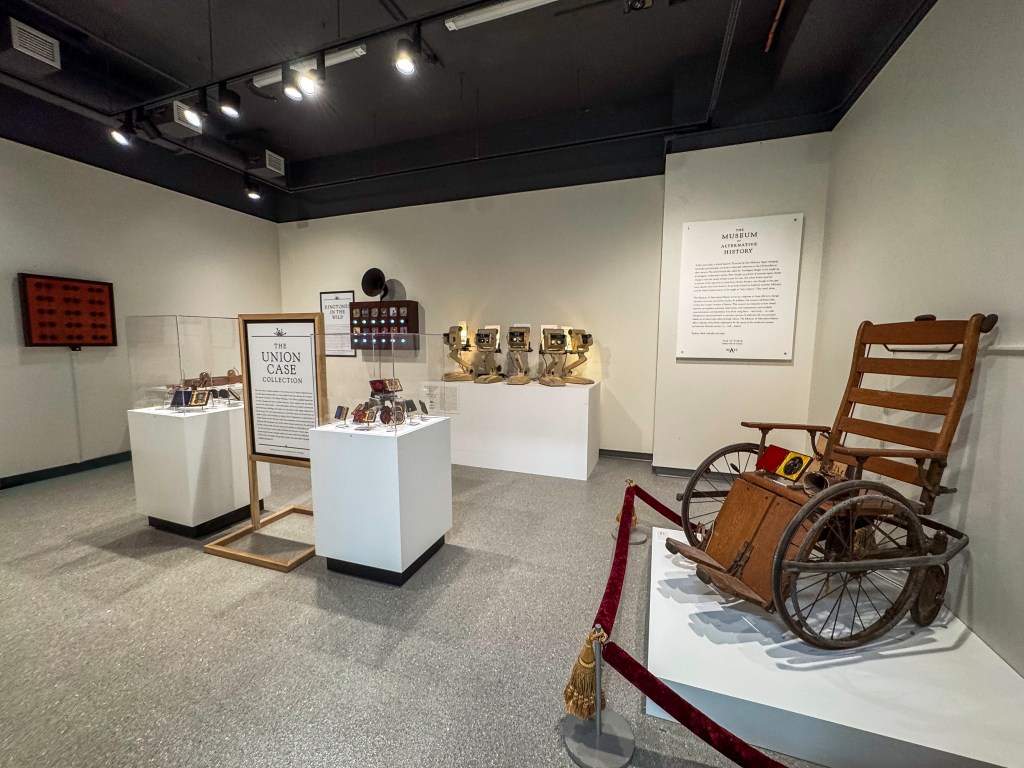
This subtheme explores how perception and interpretation are filtered through cultural, technological, and historical biases. Projects in this subtheme include: Museum of Alternative History (fig. 3), which challenges the authority of historical narratives by presenting alternate versions of reality shaped by subjective filters; and Terram in Aspectu, in which cartographic technologies are examined as world-building tools that often mask partiality behind a veneer of neutrality.
- Authenticity Unbound.
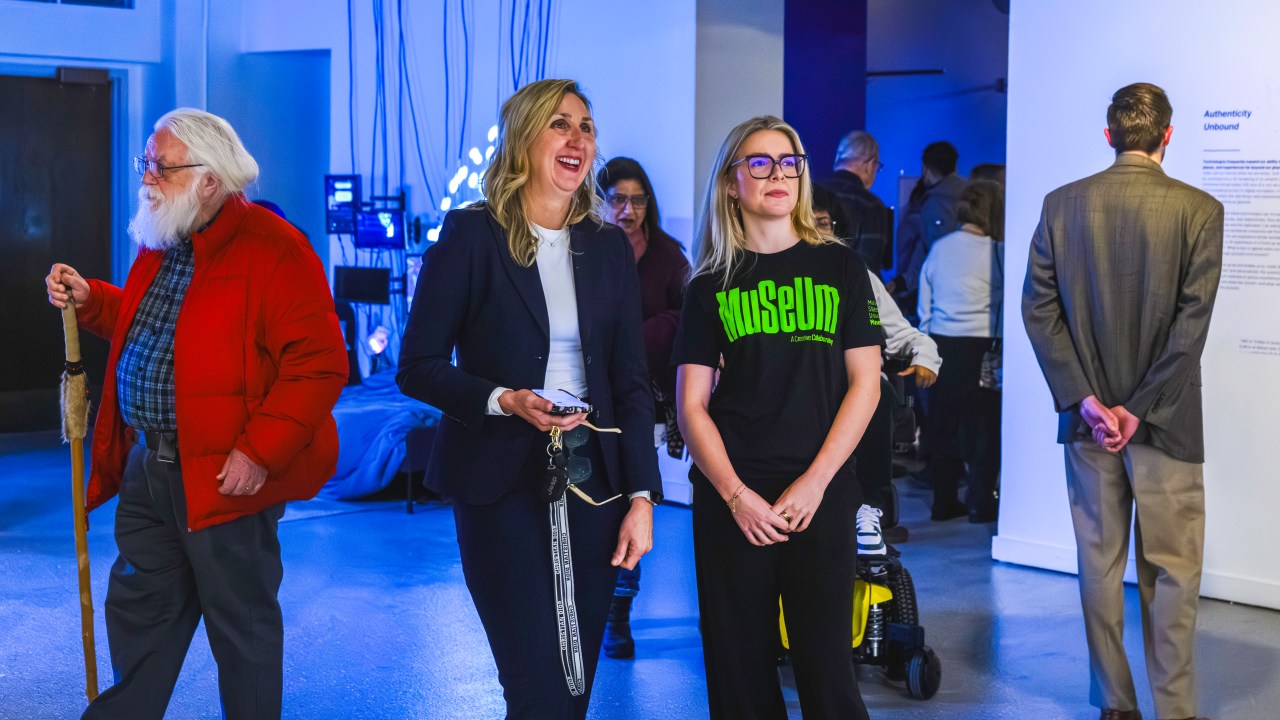
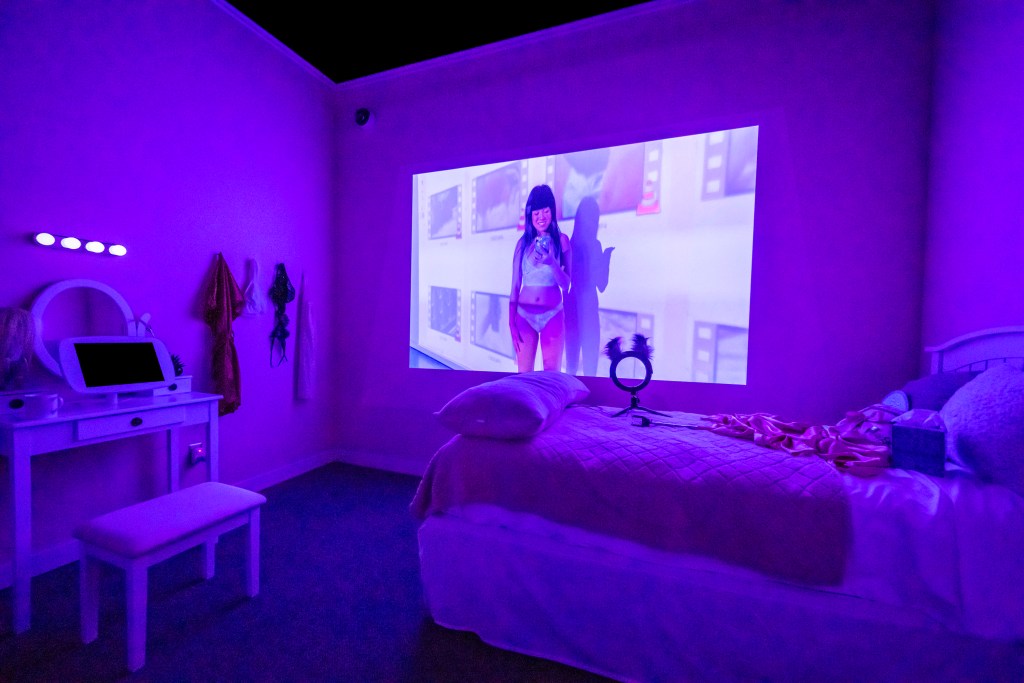
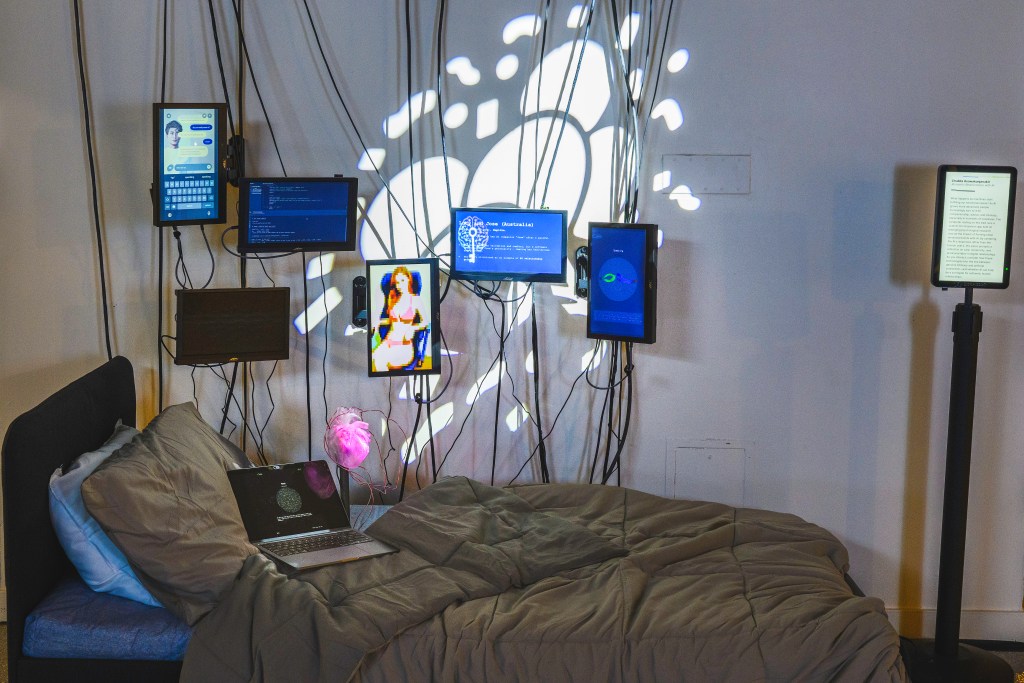
This subtheme looks at shifting boundaries between the real and the synthetic, and questions where authenticity resides in a world shaped by simulations and sentient machines. In this subtheme, the sensorial environments of Dark Loops blur distinctions between living and nonliving entities; and Romantic Relationships with AI probes the possibility of genuine emotional connection with artificial partners, complicating ideas of love, presence, and human experience (fig. 4).
- Truth and Manipulation in the Digital Age.
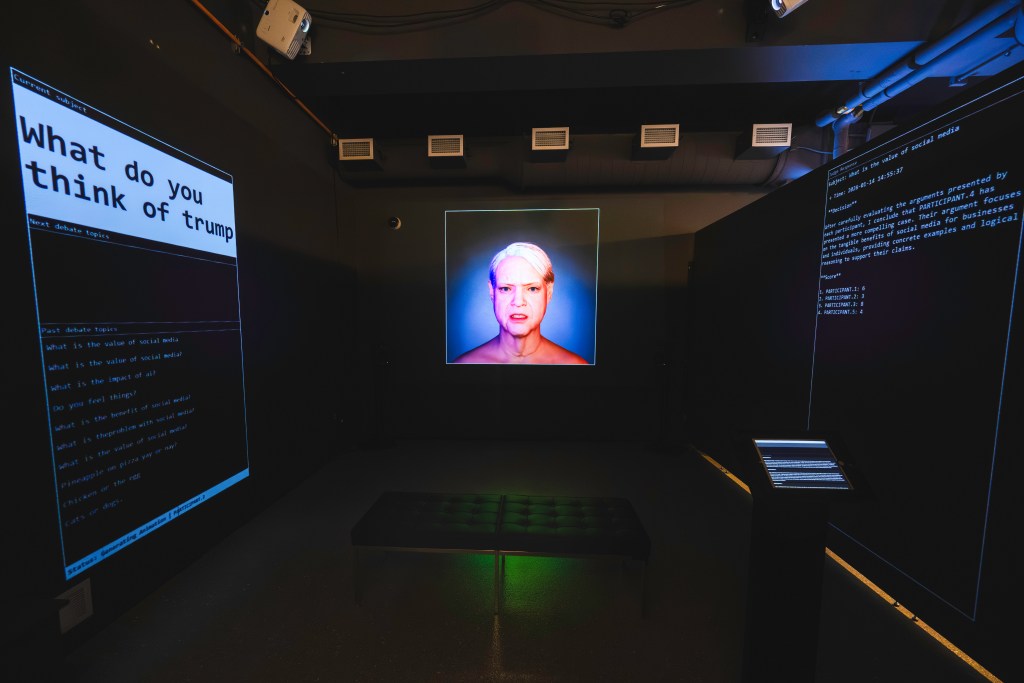
Here, we bring into focus the infrastructures of influence that shape belief in online spaces. Whispers: Unveiling the Mechanics of Influence (fig. 5) maps how digital echo chambers distort perception and entrench ideologies; and Generative Persuasion illustrates how large language models can be deployed to create deceptive narratives, pushing audiences to question the credibility and intent behind the content they consume.
- Reimagined Narratives.
This subtheme invites audiences to consider the role of imagination in shaping alternative pasts and futures. In Ile Omi: House of Water, speculative storytelling reclaims African diasporic memory through a vision of underwater resilience, while Synthetic Nostalgia: Memory, Myth, and Machine reconfigures recollection through AI-generated objects, inviting reflection on the entanglement of memory, identity, and machine creativity.
Together, these subthemes provide conceptual cohesion and allow for diverse entry points into the exhibition. They serve not only as interpretive anchors for visitors but also as practical tools for designing the exhibition’s interpretive materials, programming, and spatial layout. This structure is critical in shaping how ideas are experienced physically, intellectually, and emotionally.
To support design, fabrication, and installation, the CoLab Studio issued a formal request for proposals to identify an external partner. Bridgewater Studio, a Chicago-based experiential design and fabrication agency, was selected through this competitive process. Their work began in tandem with the finalization of the exhibit lineup and remained closely aligned with the CoLab team’s curatorial and educational goals throughout the planning process.
Bridgewater and the CoLab team collaborated to shape the exhibition’s visual identity, reviewing mood boards and design references while finalizing materials submitted by exhibitors. One of the central aspects of the design phase was a series of ongoing meetings between individual exhibitors, CoLab Studio staff, and Bridgewater. These collaborative sessions served to refine exhibit concepts, resolve technical challenges, and ensure alignment between each project’s creative intent and the overall design of the exhibition. This iterative process helped contributors strengthen their ideas and translate them into engaging, installable formats.
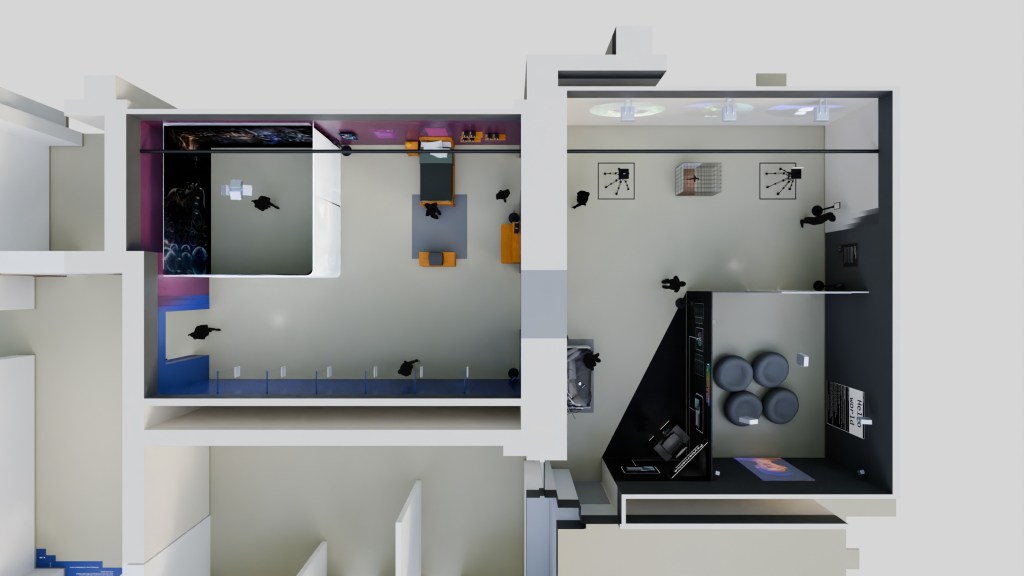
As work progressed, logistical and administrative planning advanced alongside design development. Exhibitor contracts and shipping forms were distributed to collect key details for artwork transport, insurance, and installation. Once final concepts were confirmed, Bridgewater translated that content into physical form, beginning with a 50 percent mockup of the exhibition layout (fig. 6). The CoLab team conducted an internal review and finalized the exhibition script to guide interpretive flow and visitor experience.
Once the installation team gained access to the gallery, the CoLab team finalized all public-facing content and completed the remaining exhibition materials. By the start of the academic semester in January 2026, Blurred Realities was fully installed and ready to welcome visitors. The exhibition marked the culmination of 16 months of collaborative planning, from open call to installation, involving curators, artists, designers, students, and institutional partners, offering audiences a timely and immersive opportunity to explore how truth is constructed, challenged, and experienced in today’s rapidly shifting information environment.
Measuring Engagement and Impact
Blurred Realities will remain open through August of 2026, and—at the time of writing—evaluation efforts had only just begun. Although we do not yet have concrete findings to share on this exhibition, evaluation within the CoLab framework combines multiple methods to capture a rich understanding of audience experience and exhibition effectiveness. Feedback is collected through visitor intercepts, where staff or students ask targeted questions during visits; through CoLaborator engagement, where trained student facilitators observe, document, and reflect on visitor interactions; and through electronic surveys distributed to attendees after their visit. These approaches offer layered insights that reflect both immediate reactions and deeper, post-visit reflections.
In addition to audience-facing evaluation, contributors to each exhibition are surveyed about their experience with the open call and collaborative design process. This includes feedback on communication, conceptual development, and overall satisfaction with the support they received. These responses help the CoLab team identify what aspects of the process are working well and where additional scaffolding may be needed.
The museum also monitors institutional indicators such as curriculum integration, sustained collaborations with campus and community partners, and responses on social media. A particularly telling metric is the number of repeat applications received from past exhibitors. When contributors return to participate in future cycles, it signals not only satisfaction with their experience but also a desire to stay engaged in the museum’s evolving dialogue.
This multipronged approach to evaluation ensures that exhibitions remain responsive, relevant, and reflective of the communities they aim to serve. It also reinforces CoLab’s commitment to continuous learning and institutional transparency.
Lessons from the Edge: What Works, What Doesn’t
Returning to the Idea Collider concept introduced earlier, CoLab’s rapid-cycle, collaborative model can be seen as a living experiment in generating the kinds of interdisciplinary interactions Gorman describes.[viii] The condensed timelines, open-call structure, and emphasis on co-creation intentionally create productive collisions among ideas, contributors, and publics. Working with this approach at MSU has revealed insights that extend beyond our institution and offer lessons for museums seeking to remain relevant, adaptive, and community-centered.
The accelerated pace helps CoLab respond to timely issues and fosters a sense of urgency that supports experimentation and conceptual risk-taking. At the same time, it requires strong facilitation and careful attention to process. A persistent challenge is maintaining thematic cohesion while honoring the diversity of proposals that emerge through open calls. Because exhibitions are shaped by what contributors offer, the final content often spans many disciplines and formats. To help visitors navigate this diversity, CoLab uses layered interpretive strategies such as wall text, subthemes, and exhibition design techniques that create visual and conceptual continuity.
Through this work, we have found that subthemes are especially critical. Within an Idea Collider approach, subthemes act as connective tissue, helping visitors make meaning without flattening complexity. Weak subthemes can leave an exhibition feeling disjointed, while strong ones provide multiple entry points, guide nonlinear exploration, and clarify relationships across media and disciplines. This balance of open inquiry and interpretive clarity is essential in any museum setting.
Supporting contributors who are new to exhibition-making has also proven vital. Many are participating in installation formats for the first time, so CoLab offers orientation sessions, collaborative design meetings, and structured feedback cycles. These supports help contributors deepen their ideas, strengthen interactivity, and adapt their work to the gallery context, an approach that can benefit museums broadly as they work to expand who feels capable of contributing to exhibitions.
Adapting the Idea Collider concept to MSU has underscored the importance of distributed curatorial authorship. CoLab’s teams include staff, students, and subject-matter experts whose diverse insights shape each exhibition. While this model brings together rich perspectives, it can take time for team members to feel confident contributing. CoLab addresses this by emphasizing that curatorial expertise includes lived experience, disciplinary knowledge, and audience intuition. This more democratic understanding of curatorial voice has relevance across the museum field.
Taken together, these lessons reflect CoLab’s commitment to co-creation, process-based learning, and cultural experimentation. By identifying friction points and adapting in real time, CoLab continues to refine an Idea Collider approach that is theoretically grounded, responsive to context, and applicable to museums seeking more participatory and adaptive practices.
Acknowledgments
Special thanks to the MSU Museum, especially the CoLab Studio team, and the participating artists, researchers, and students who help make this work possible. This article draws from experiences made possible by their collective commitment to reimagining the work and roles of both an academic museum and a creative collaboratory.
[i] “Announcing the first new pop-up ‘Science Gallery Lab’, in partnership with Michigan State University,” Science Gallery, accessed December 20, 2025.
[ii] Michael John Gorman, Idea Colliders: The Future of Science Museums (MIT Press, 2020).
[iii] “What’s a Wicked Problem?” Stony Brook University, accessed November 15, 2025.
[iv] “Beyond Collaboration at the Colab Studio,” Arts MSU, accessed July 25, 2025.
[v] “Creating Conversations: Inside MSU Museum’s CoLaborator Program,” Arts MSU, accessed July 25, 2025.
[vi] Ben Adams, quoted in, “CoLaborators at the MSU Museum,” MSU Museum, accessed November 10, 2025.
[vii] Raluca Csernatoni, “Can Democracy Survive the Disruptive Power of AI?,” Carnegie Endowment for International Peace, December 18, 2024.
[viii] Gorman, Idea Colliders, 98., “Climate Solutions: How Audience Research Helped Us Support Visitors in Envisioning Alternate Climate Realities,” Exhibition 43, no. 1 (Spring 2024).
Devon M. Akmon is Director, Michigan State University Museum, in East Lansing, Michigan.
Upcoming Events
-
Understanding the U.S. History Sector
Event Date:Presented by: American Association for State and Local History (AASLH) -
-
-
Industry Showcase: Innovative Digital Solutions
Event Date: