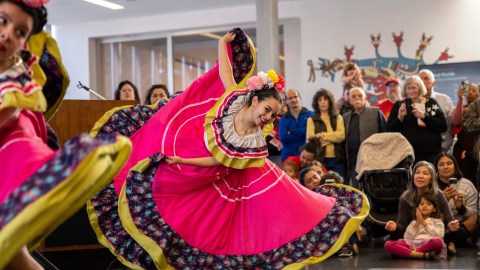
Youth-driven storytelling, like that at Penn Museum, can transform museums into spaces where identity, belonging, and community voice are actively shaped.
“Did you know Mali dropped French as their official language?” Samantha asked, picking up on Bhairab’s reflection about British colonial histories. “I mean, I don’t understand this because they’ve been taught and speaking it for at least 100 years.”
And when Tara from Mali and Bhairab from Assam linked colonization’s impact on beauty standards across continents, they weren’t just sharing knowledge—they were teaching each other, building frameworks together, and asserting expertise.
This article originally appeared in the May/June 2026 issue of Museum magazine, a benefit of AAM membership.
» Read Museum.
These moments happened at the University of Pennsylvania Museum of Archaeology and Anthropology (Penn Museum), an academic institution often associated with ancient relics and distant voices. Yet here were 10 teenagers analyzing contemporary colonial legacies, connecting dots between West African and South Asian experiences, and moving from surface-level cultural sharing to collaborative critical analysis.
Such transformations—when youth realize they can safely voice their truths—don’t typically occur in a museum space. But they happened at Penn Museum after we asked two questions: Could the museum center contemporary voices alongside historical artifacts, making this a space for all lived realities? And, most fundamentally, what happens when museums shift from telling stories about communities to creating programs that elevate community voices?
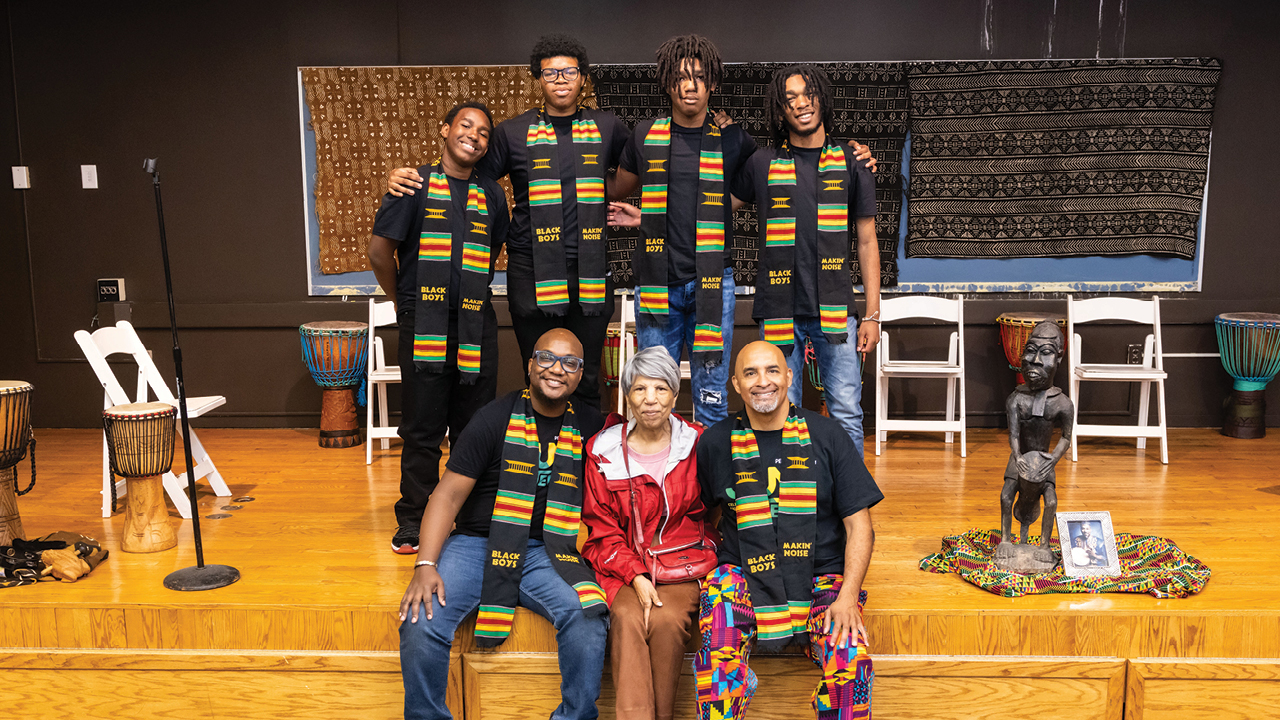
Penn Museum has sought to answer these questions through two programs: Teen Dialogues (led by Dr. Rorujorona Ferrell), a research pilot in which 10 students explored cultural identity through structured dialogue and student-led presentations, and Black Boys Makin’ Noise (led by Paul Best), a youth-initiated storytelling collective presenting African heritage oral traditions citywide. Both demonstrate how museums can move from object-centered to community-centered programming, where museums become platforms where young patrons can explore their experiences, and youth become leaders.
The Teen Dialogues Story
In 2024, 10 high school students from diverse immigrant backgrounds participated in a 10-week structured, intercultural dialogue program at the Penn Museum. The goal was to create a psychologically safe space for vulnerable conversations about cultural identity in which participants could discover unexpected connections across cultural differences. Trust, mutual respect, and authenticity are key attributes of a psychologically safe space—where all experiences are valued and supportive feedback is offered in the context of learning.
As the Assistant Director of Community Engagement Programs at the Penn Museum, Ferrell led this program as the core of her dissertation research on intercultural dialogue and global competency development. Over two months, students attended 10 two-hour inquiry sessions where they engaged in guided discussions, reflective activities, and museum-based experiences.
The dissertation explored how young people from immigrant families navigate cultural identity and engage across cultures—and what shapes their path toward global competency. The research was especially compelling because it didn’t stay theoretical. The Teen Dialogues program put those ideas directly into practice, placing students at the heart of the study.
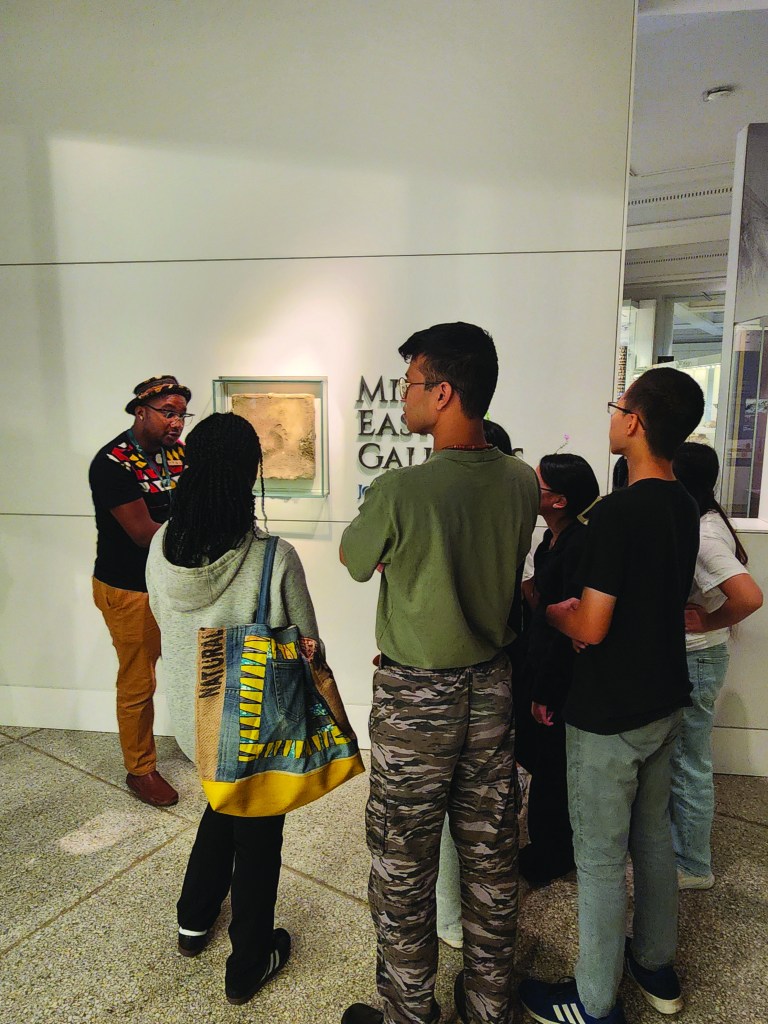
Teen Dialogues positioned youth as active constructors of cultural understanding rather than passive recipients. Ferrell designed a semi-structured approach with intentional flexibility, establishing group expectations around mutual respect, physical items, and talking time, while giving students agency to shape discussions week to week. Honoring their different learning styles, the students participated in whole-group dialogue, tabletop activities (such as cultural identity collages), museum gallery tours, and personal reflection journals.
To recruit the students, Ferrell reached out to local schoolteachers with whom she had previously worked on Penn Museum K–12 programming and requested they share the announcement with their students. In respecting the student participants as cultural experts, and to minimize the barriers to participation, Dr. Ferrell compensated the students with a modest gift card at the end of the program and provided refreshments at each session.
The Penn Museum itself provided neutral ground distinct from school hierarchies. Ferrell supported this by maintaining a consistent room setup and framing the museum as “their space.” The students were free to move around the galleries and public spaces, engaging with the museum on their own terms.
From recruitment through final presentations, students were positioned as cultural experts. Ferrell front-loaded expectations (“I’m here as a listener and learner”), provided multiple pathways for voice (speaking up, journaling, private messages), and consistently affirmed students’ autonomy. Early sessions featured exciting discoveries: Bhairab from Assam and Samantha noted shared practices around not eating with the left hand. Students compared Indonesian, Bhutanese, and Nepali traditional clothing.
But when the conversation turned to beauty standards and colorism, dialogue transformed. Tara from Mali observed that both African and Asian cultures share problematic preferences for lighter skin, tracing this to colonization. Bhairab built on Tara’s analysis: “Not too long ago, having dark skin was seen as very attractive, like Krishna, Shiva, all of our gods … but because of colonization, we sort of put light skin up on a high pedestal, and it really just erases a ton of people with dark skin.” In discussions like this, students moved beyond multicultural celebration to collaborative critical analysis—connecting historical power structures across continents and examining how colonization continues to shape contemporary practices in their communities.
The program aimed to advance a range of intercultural competencies—including empathy, critical thinking, cross-cultural communication, respect for diversity, and a secure sense of one’s own identity—drawn from frameworks like those created by UNESCO and Global Competence Associates. Taiba noted she now asks questions because “it’s more fun learning about different cultural identities.” Kevin sought out an Indonesian student to continue conversations.
Students moved from viewing cultural exploration as uncomfortable to seeing it as an exciting opportunity.
In addition to providing academic data on youth global competency development, this pilot study was also designed to bear practical fruit for learners. Post-program self-assessments found enhanced intercultural competencies, strengthened cultural identity security, and expanded peer networks.
With Teen Dialogues, the museum engaged a new audience—youth exploring the space as young adults beyond school field trips. After the program concluded, and now more than a year later, multiple program participants continue to be involved with the museum as volunteers and youth community collaborators. Some are involved in creating a commissioned mural that will be displayed at the Penn Museum.
The Black Boys Makin’ Noise Story
Black Boys Makin’ Noise (BBMN) is a storytelling troupe founded in November 2022, when Paul Best, a history teacher, was planning a solo storytelling show for Kwanzaa, a weeklong celebration of African and African American culture, at the Penn Museum. Eight of his students, aged 13–17, wanted to help with the show, and Best decided they should be the storytellers.
Over four days, Best introduced the students to the seven principles of Kwanzaa and taught them common devices used in spoken word and the Black oral tradition, including African drumming, call-and-response, and using their bodies and voices as instruments. The boys recited poems, performed dances, and dramatized various African folktales.
Best stressed that behaviors that could be seen as disruptive in school were the very components needed to produce an engaging storytelling performance. They were given permission to “be extra” and “do the most.” With that in mind, they named the program “Kwanzaa: Black Boy Joy Edition.” They performed over four days in the Penn Museum galleries; by day two, more chairs were added to accommodate the growing attendance.
With positive feedback from the boys, their parents, and attendees, Best decided to turn the group into a formal collective. Since then, the boys have returned to perform at the museum for Juneteenth and subsequent Kwanzaa celebrations and can be found volunteering at various museum events throughout the year. Whenever Best, now a museum educator at Penn Museum, was booked for a storytelling performance, he found ways to incorporate the boys into the event, giving them opportunities to improve their storytelling skills and their knowledge of folk traditions.
The oral tradition and museums have parallel missions: they preserve information and aim to share it. Bringing the oral tradition into a museum validates the culture and people it represents while simultaneously validating the museum as an essential component of a community. The boys in BBMN have learned that sharing the oral tradition with their community is truth telling, and an act of social justice. As custodians of a timeless tradition, they recognize their duty to their communities to develop and share it.
Performing at the Penn Museum allowed BBMN members to meet other folk artists working in Philadelphia, most of whom were elders. The first time the boys saw drummer Karen Smith perform at the Penn Museum, they rushed up to her afterwards, complimenting her, asking questions, and warmly demanding photos with her. Now, when Smith sees the boys at other cultural events, she makes it a point to shout them out. The boys walk taller, knowing they are seen as talented folk artists like Smith. They recently expressed a desire to do a joint performance with her.
BBMN continues, performing year-round across the city and the East Coast. This has happened because the museum made space for these boys. By inviting young people inside as cultural knowledge-bearers, museums can remove the barriers that divide the generations.
What Made These Programs Work
Both programs succeeded by prioritizing people above institutional agendas and uplifting culture. Authentic relationship-building—not performative diversity work—fostered these transformations. BBMN emerged when youth approached Best, an educator they trusted, wanting to learn an art form he practiced. Teen Dialogues was designed with intentional respect: Ferrell didn’t know who was going to be a part of the program, but she trusted that youth have stories to tell and experiential knowledge to share.
The programs also positioned youth as experts, not students to be taught. In Black Boys Makin’ Noise, Best introduced the boys to a folk tradition not often practiced or appreciated by youth and gave them voice and choice in selecting stories, performance opportunities, and even the logo design. In Teen Dialogues, Ferrell asked questions to better understand what students shared about their school experiences, identity challenges, media engagement, and navigation strategies. This reciprocal exchange—where adults genuinely learned from youth—validated the students’ expertise.
For both programs, the museum objects became secondary to human connection. Even during the Teen Dialogues’ gallery highlights tour with Best, the richest engagement came from storytelling connecting historical generations to present experiences. Both programs focused on community and how traditions hold meaning within relationships. The museum followed the community’s lead rather than dictating terms, proving youth voices can lead—even in an academic institution they may assume exists for someone else, not for them.
What Museums Can Learn
The success and richness of both programs point to untapped potential. Museums must honestly assess who accesses our spaces. What barriers exist for populations who are not visiting museums? How do we view our institutions—as a gallery for observing or a space for genuine engagement?
To widen their communities, museums must rethink how to maximize their resources. For museums studying human experience, leaning into lived voices—not just objects—is essential. But any museum can bring people and storytelling into its space, honoring cultural and art-making traditions.
If institutions envision continuing relevance, they must serve younger generations—who need access now. They must bring youth in as empowering, effective voices. Museum professionals must remain open to their suggestions through evaluations, assessments, and staff competency development.
This work can be challenging; it requires vulnerability and willingness to decenter institutional authority. Building authentic relationships with younger generations means ceding control and accepting that youth may critique established practices.
Teen Dialogues and BBMN prove museums can be cultural laboratories where diverse audiences are elevated. They can be living spaces where voices echo from past to future, far beyond objects in cases or art on walls. How can different museums embrace this transformation?
Upcoming Events
-
AASLH-NCPH Joint Conference
Event Date:Presented by: American Association for State and Local History (AASLH)Providence, RI -
All You Need to Know to Drive Success for Your Museum Store Sunday!
Event Date:Presented by: Museum Store Association -
Transit Insurance in Practice for Traveling & Co‑Organized Exhibitions
Event Date:Presented by: American Alliance of Museums -
Digital Collections Summit
Event Date:Presented by: MuseumNext