This article first appeared in the journal Exhibition (Fall 2026) Vol. 45 No. 2 and is reproduced with permission.
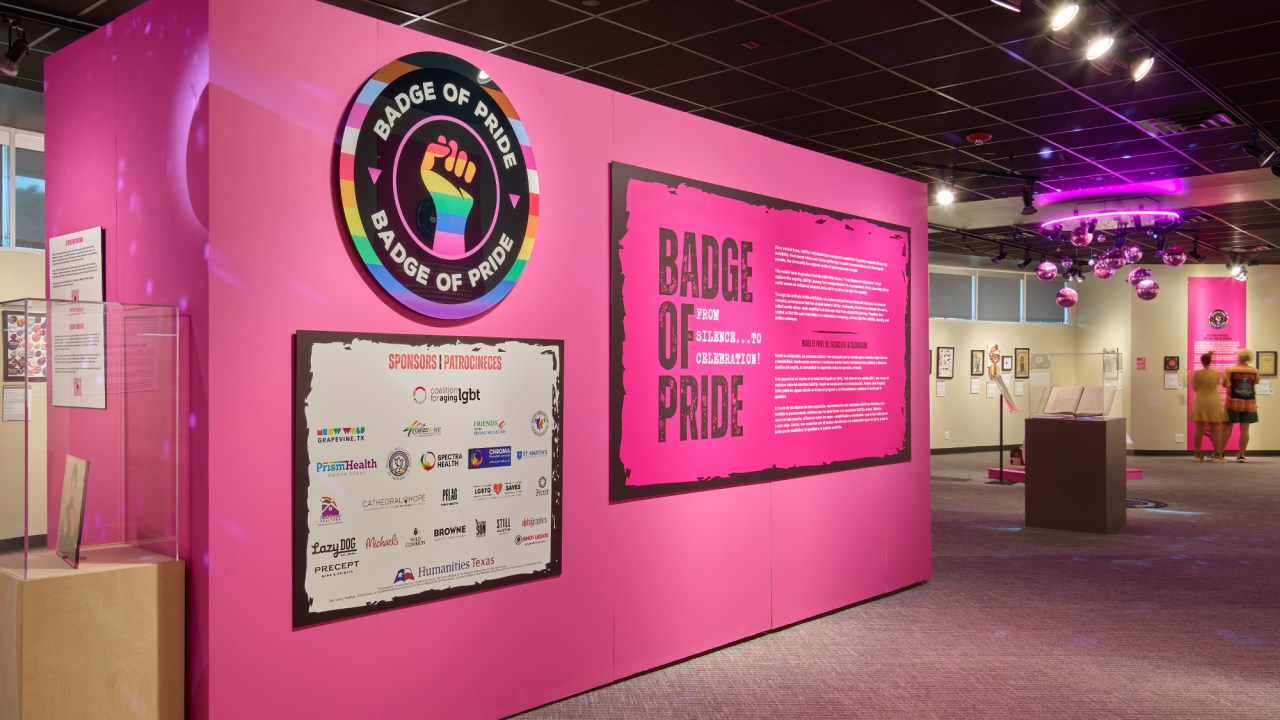
In the summer of 2025, the Irving Archives & Museum (IAM) and Badge of Pride premiered Badge of Pride: From Silence . . . to Celebration!,the largest LGBTQ+ history exhibition ever presented in Texas (fig. 1). The culmination of a three-year partnership, the exhibition and related programming demonstrated how a midsize municipal museum and a grassroots LGBTQ+ history nonprofit could partner to create an experience that cut through the politicized noise surrounding LGBTQ+ lives and instead cultivate visibility, truth, and belonging.
Together, the two organizations navigated a complex political landscape and built trust with local and national LGBTQ+ partners to create an artifact-driven exhibition and programming that framed Queer history not as ideology but as lived human experience. The political climate not only made the project feel riskier, it also made it more vital and important to provide for our community. From Silence . . . to Celebration! was conceived not simply as an exhibition about LGBTQ+ history, but as a deliberate intervention that stood its ground and declared: We will not disappear.
This article will demonstrate how community-driven curatorial practices, artifact-centered storytelling, and intentionally low-tech interactives can help museums cut through polarized public discourse by grounding visitors in human stories and connections. Drawing on visitor evaluation data and direct comments, the authors will demonstrate how artifact-centered exhibitions can foster empathy and provide safe spaces where marginalized communities can feel seen, valued, and connected.
A Word About Language
Language was one of the first curatorial decisions, and it was made in community.1 The team centered terminology in its early conversations with community members, partner organizations, and elders, asking: What should this exhibition call us? Terms that read as inclusive to one generation landed as clinical or as insults to another. After conversations with stakeholders, we selected LGBTQ+ as our primary term because it was the most widely recognized across generations, with the plus sign holding space for identities the letters alone do not name. We also chose to use Queer as an umbrella term, holding both its painful history and its reclamation by the community as equally true.
We also decided early in planning that all text would be presented in English and gender-inclusive Spanish. Language inclusivity and accessibility remained essential points throughout development.
Community Partnership and Shared Authority
IAM is a municipal museum located in Irving, Texas, a city of approximately 250,000 residents within the Dallas-Fort Worth metropolitan region, which has a population of 8+ million. Irving is one of the most diverse cities in the United States.2 From its opening in 2020, IAM adopted a community-centered exhibition model designed to feature the diverse cultures and histories that shape the region. Rather than relying on traditional curatorial authority, the museum developed a community partnership program that pairs museum staff with local organizations and cultural groups to co-create exhibitions and programs.
The program is designed to be flexible and scalable based on our community partners’ interests and capacity. For example, IAM’s inaugural project highlighted Indian culture and arts through an exhibition of local artists and textiles and through programs that featured poetry, dance, and cuisine that was created in collaboration with local nonprofit ThinkIndia. When IAM hosted the Smithsonian traveling exhibition, The Negro Motorist Green Book, we partnered with the Irving Black Arts Council to create a local companion exhibition and a panel discussion of elders who had lived in the area during the Jim Crow era.
IAM’s approach was informed by broader shifts within museum practice over the last several decades, particularly the creation of spaces that serve the public good and are community-centric. The museum was designed to curatorially and programmatically emphasize engagement and shared authority.3 Through its participatory practices, IAM creates spaces where communities contribute knowledge, stories, and lived experiences that deepen historical interpretation.
The partnership that produced From Silence . . . to Celebration! began in 2022 when IAM staff learned of a privately assembled LGBTQ+ history collection curated by Adrian Cardwell (author). Cardwell did not conceive his collection as a formal archival project but as an act of deliberate witness. Growing up in west Texas in the 1980s and ’90s, he came of age in a place and time where being openly Queer carried social and even physical consequences. While specialized LGBTQ+ archives had existed since the 1970s, they were concentrated on the coasts, and for a young person like Cardwell there was an absence of accessible resources about LGBTQ+ history. The dominant narrative for Cardwell and other young LGBTQ+ people was AIDS, death, and discrimination. To connect with his community’s history, Carwell began reaching out directly to activists around the country. These elders sent him materials documenting the community’s history: buttons, flyers, posters, newsletters, and publications. Over the following decades, that effort grew into a collection of 10,000+ artifacts spanning LGBTQ+ activist culture and everyday life.
At the time Cardwell and IAM Director Jennifer S. Landry (author) connected, the collection was transitioning from a personal archive into a nonprofit organization, with a mission to preserve and activate LGBTQ+ histories. Badge of Pride’s purpose centers on a distinction between keeping history and putting it to work. The organization was founded on the conviction that LGBTQ+ history is not an academic exercise and that a community under attack cannot approach history as a passive record. The collection is evidence that the community has repeatedly survived oppression while creating vibrant culture and achieving victories in the quest for equality. Badge of Pride activates the archive through exhibitions, theatrical productions, oral history projects, walking tours, and civic engagement.
Creating a Project Community
Recognizing the historical significance of the collection, IAM and Badge of Pride began exploring how the artifacts might be presented in a public exhibition. Over the next three years, Cardwell and Landry built a network of local and national partners that loaned additional objects and advised and collaborated on the project (fig. 2).
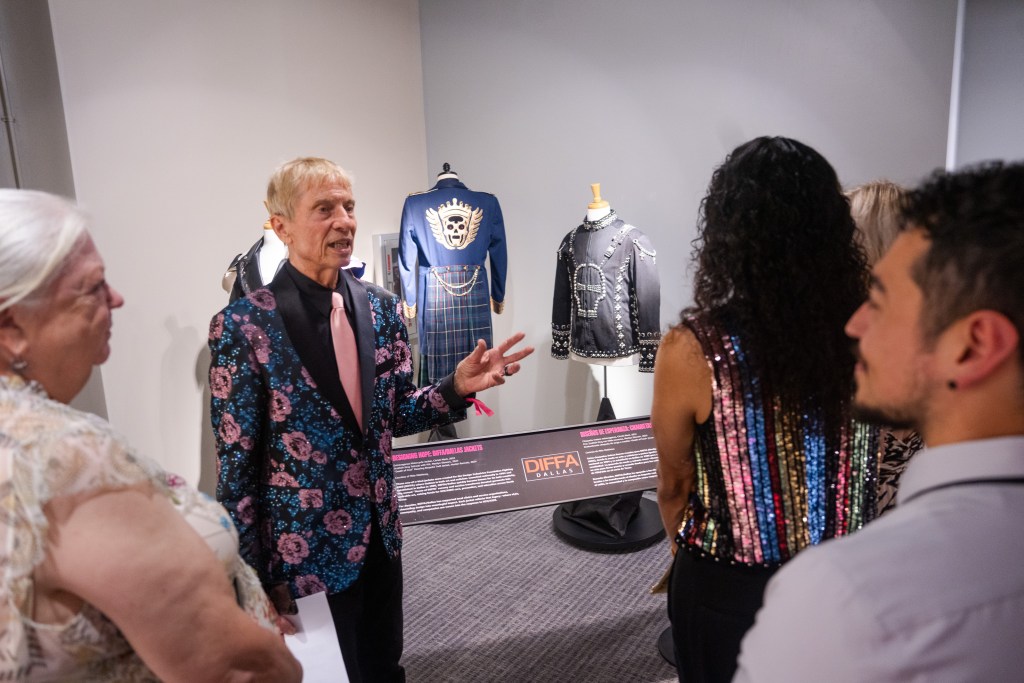
This collaborative approach aligns with what public historian Susan Ferentinos identifies as a core principle in interpreting LGBTQ+ history in museums: meaningful representation requires both historical research and engagement with the communities whose stories are being interpreted.4 By providing primary authority to community voices throughout the planning process, the exhibition positioned LGBTQ+ history not as an abstract topic but as a living narrative grounded in local and national experiences. Badge of Pride’s approach operates from a straightforward principle inspired by disability rights activists: nothing about us without us. Before selecting a single artifact, the team spent the first 12 months of the project in conversation with community. That process shaped not only which objects and stories entered the exhibition, but how they were interpreted and framed.
Many of those community conversations took place at Queer history meet-ups, PRIDE festivals, and local LGBTQ+ historical collections such as the Dallas Way collection at the University of North Texas and Yesterqueer in Fort Worth. In 2023, we assembled a formal advisory committee that included one academic advisor and six community members, representing a range of identities, backgrounds, and ages. The committee reviewed the interpretive plan and provided feedback to ensure the exhibition’s core messages were resonant and grounded in human stories not in an academic framework.
Artifact-Centered Storytelling
At the core of the project was an interpretive plan that provided the strategic framework for the exhibition’s content and visitor experience:
The exhibition employs a range of interpretive strategies designed to center lived experience, invite reflection, and activate emotional and intellectual engagement. These methods are rooted in community-based storytelling, multisensory design, and accessible presentation—honoring the diversity of LGBTQ+ expression and history. . . . At the core of the exhibit are rare and everyday objects. . . . These items are not presented as static relics, but as carriers of meaning and memory.5
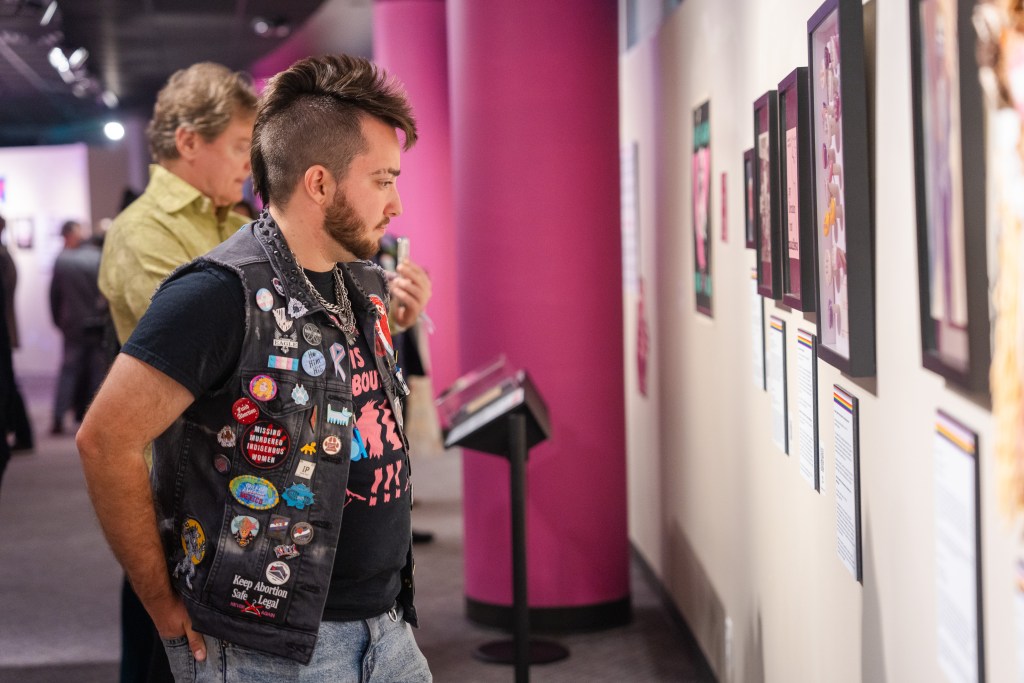
This artifact-centered approach proved particularly important given the political context in which the exhibition was presented. Rather than framing the exhibition as a direct political argument, the exhibition invited visitors to encounter Queer history through over 600 objects and personal narratives. Visitors encountered artifacts such as National AIDS Memorial Quilt panels, protest materials from LGBTQ+ and anti-LGBTQ+ campaigns, and archival materials documenting the lived experiences of generations of LGBTQ+ community members navigating discrimination and activism (fig. 3).
In polarized public conversations, historical topics are often framed through abstract arguments about rights, policy, or morality. Object-based interpretation can shift that encounter. Artifacts document the actions, emotions, and aspirations of a particular person at a particular moment in time. Encountering these materials invites visitors to consider the human impact of historical events before making judgments about the issues surrounding them. In this way, artifacts can function as interpretive mediators, allowing visitors to engage emotionally and intellectually with difficult histories.6
Designing for Reflection and Participation
In addition to artifact-centered storytelling, From Silence . . . to Celebration! incorporated design strategies intended to encourage reflection and sustained visitor engagement. Design elements and exhibition text were intentionally developed to “touch the heart” and reach visitors emotionally before inviting them to explore intellectually. For example, in a set of photographs featuring women participating in a wedding ceremony around 1918, we included the following text:
Taken in Kalamazoo, Michigan during or shortly after World War I, the absence of men may have created space for a more openly staged same-sex ceremony. Look closely: hidden among the bushes are the faces of children and an elderly woman—silent observers whose presence raises powerful questions. Were they simply watching, or participating in quiet solidarity? This moment suggests not just defiance, but possibly joy—and community.7
We partnered with Bloomberg Connects to create an exhibition guide that provided both in-depth content and increased accessibility for on-site and off-site exploration. QR codes were placed throughout the exhibition where further content could be explored. For example, we used the app to provide important emotional touchpoints, such as the opportunity to listen to Duane Puryear, whose quilt panel was part of one of the National AIDS Memorial Quilts on display, speak about his experiences as young gay man in Dallas in his own voice (fig. 4).
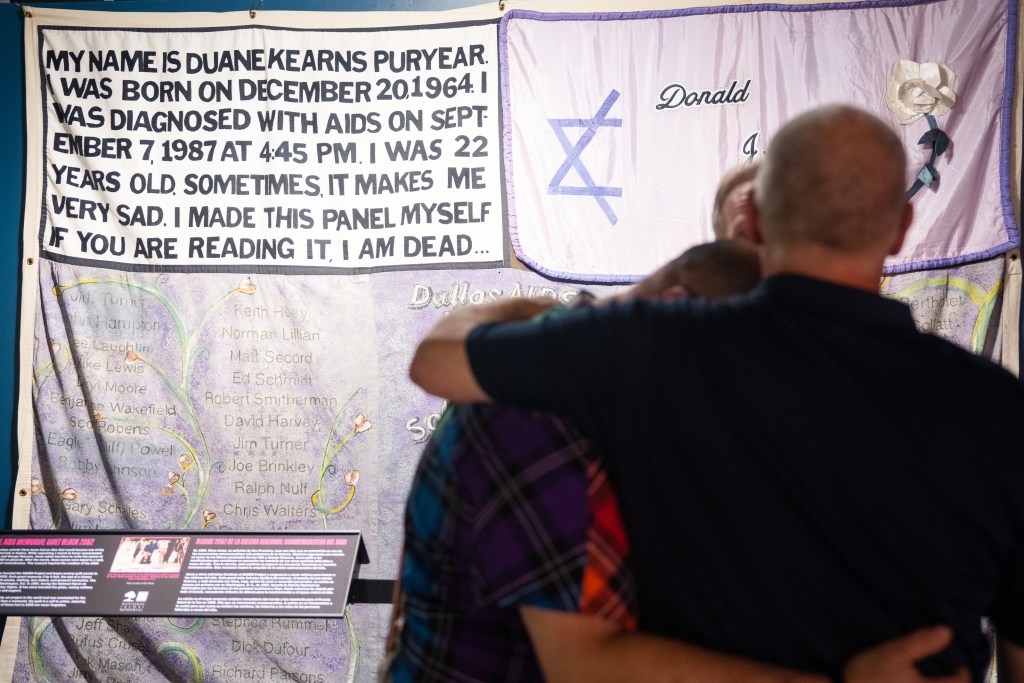
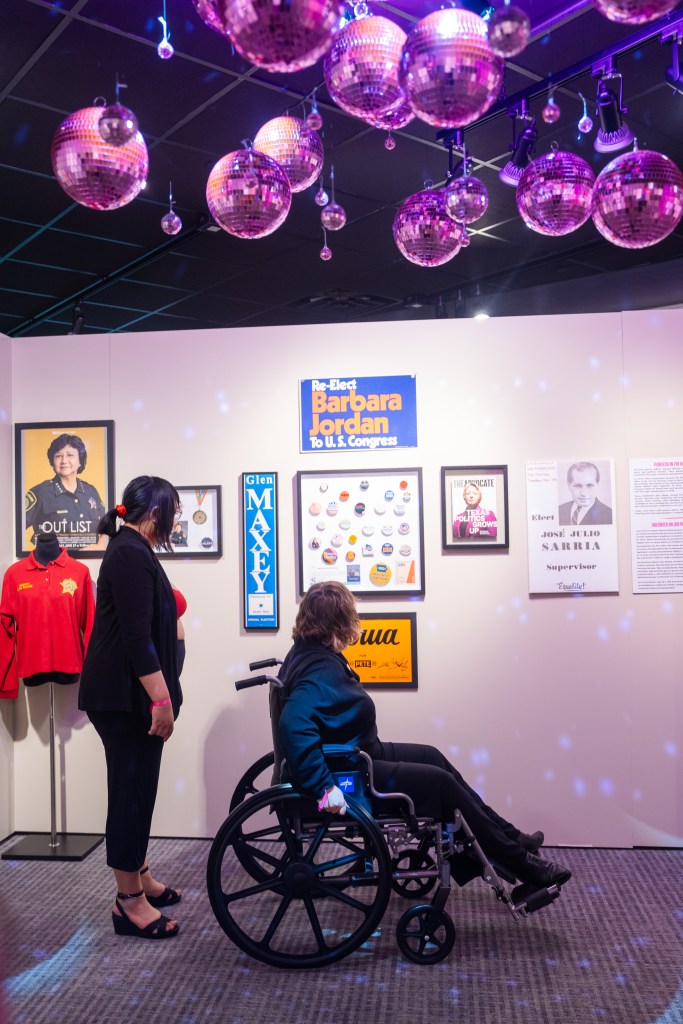
While much of what visitors encountered in the exhibition was challenging, we purposefully countered this with joyful elements like bold pink walls (Badge of Pride’s signature color) and disco balls. This framing was deliberate: LGBTQ+ history is frequently presented through the lens of trauma. That history is real and belongs in the narrative. But the record also includes joy—through the arts, the chosen families, and the culture-making that communities sustain even under conditions of suppression. To present only the suffering is to replicate a reductive narrative that marginalizes the full humanity of LGBTQ+ lives.
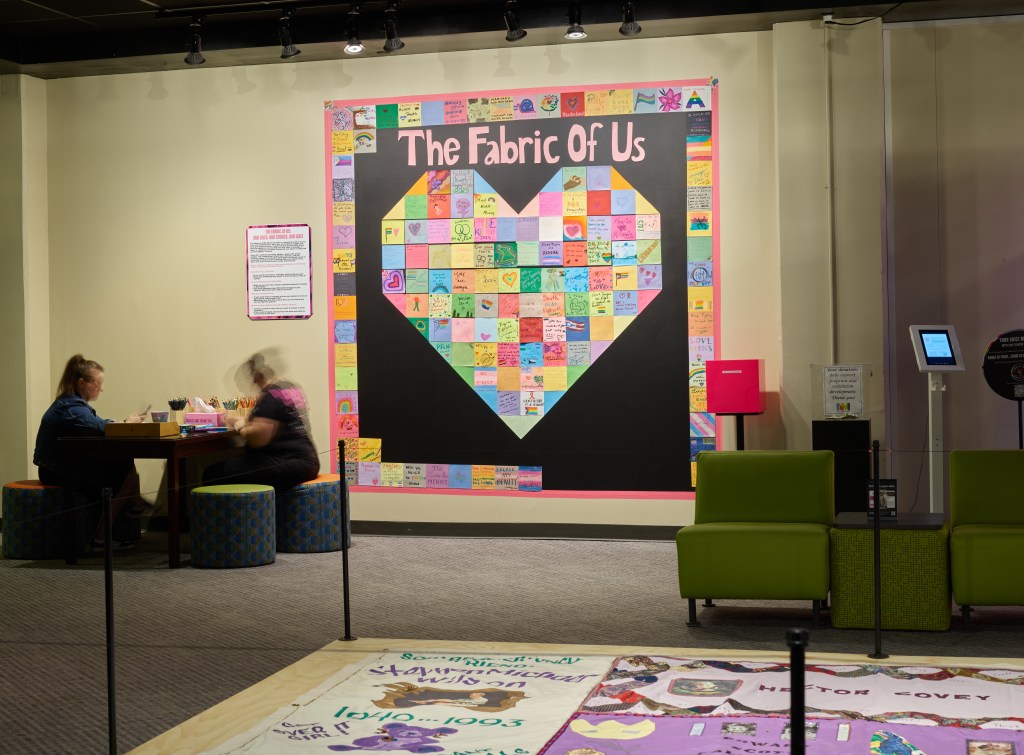
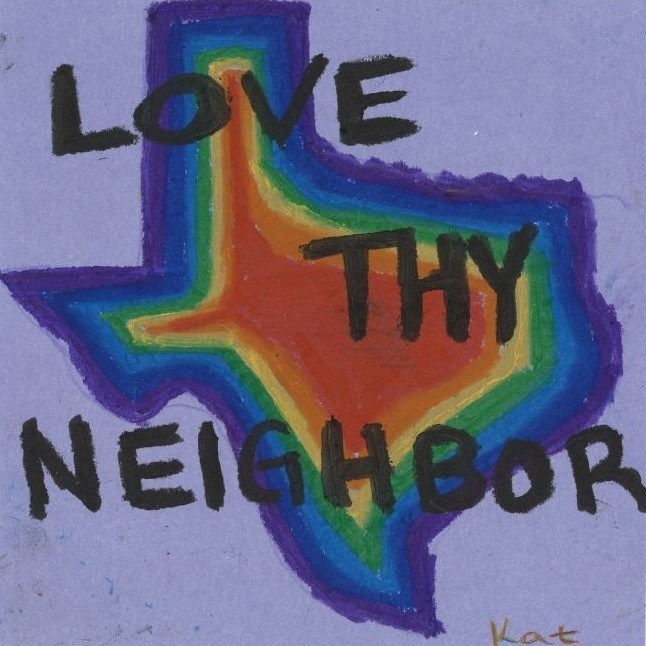
Participatory strategies played a central role in the exhibition experience. The exhibition incorporated low-tech interaction through the installation The Fabric of Us, where visitors were invited to create small artworks inspired by panels from the AIDS Memorial Quilt. Visitors created artworks that reflected identity, hope, and belonging. Collectively, these artworks were assembled into a collaborative “quilt” displayed within the gallery that gradually expanded as more visitors contributed (figs. 5 and 6).
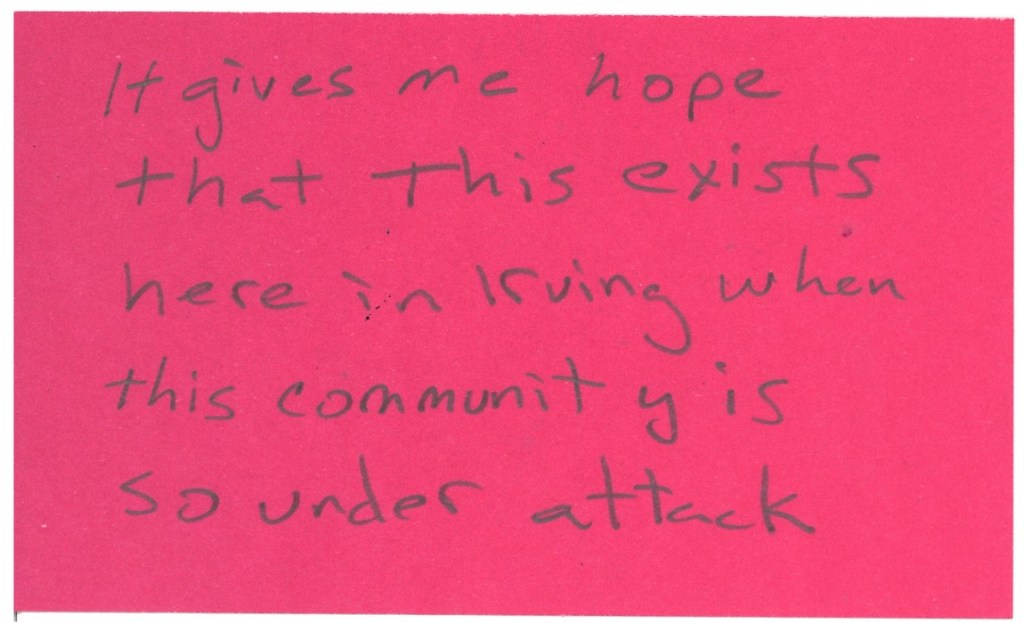
Evaluation tools also encouraged visitor reflection. Digital surveys were available via QR codes and tablet kiosks, but the most successful feedback mechanism proved to be a simple comment card station that was installed about one week after opening. Responses to the digital survey were lower than hoped during the show’s first week, but frontline staff reported hearing from visitors who wanted to share their thoughts, emotions, and memories. The simple, physical act of writing proved to be well-received by visitors who wanted to express their experience in the exhibition; hundreds shared their personal connections to the exhibition and its themes (fig. 7).
Seating areas and reflection spaces were incorporated throughout the gallery to allow visitors to pause and process emotionally challenging content. We included tissues in these areas, quietly acknowledging that it was okay to sit and process difficult emotions in the space.
Visitor Experience and Impact
During its four-month run From Silence . . . to Celebration! attracted more than 3,000 visitors, the highest attendance recorded for a temporary exhibition at IAM. Visitor evaluation ran through three channels: structured exit surveys that combined Likert-scale and open-ended questions, brief docent-conducted exit interviews, and an in-gallery reflection station with handwritten comment cards. Overall, we documented 214 response units, representing roughly 7 percent of total attendance through these voluntary, self-initiated channels. The comment card station was the dominant channel by a wide margin.
Several patterns emerge across channels: roughly one in seven responses invokes the word hope; another 16 percent of responses document return visits or voluntarily share visitors’ own histories. Participation was self-selected, and visitors with strong reactions are likely overrepresented; the thematic patterns, however, hold consistent across all three channels.
Emotional Engagement
Coded by theme, emotional impact and personal identity affirmation account for roughly 40 percent of documented responses, concentrated around the AIDS crisis and the Trans remembrance sections:
I put in a card earlier saying the AIDS area was extremely moving and I’ve been sitting here reflecting on what exactly was so moving. Seeing the letter that the man wrote his aunt and the quilt panel that was in the man’s own words. It really lets you see the people that suffered. . . . It helps you imagine how you might react if something like that happened to you.
Such responses suggest that artifact-centered storytelling can deepen historical engagement by connecting visitors emotionally to the individuals represented in the exhibition.
Recognition and Representation
For self-identified LGBTQ+ visitors, the exhibition also provided a sense of institutional recognition:
This exhibit is the first time I have seen my community and our history take the forefront and have its own dedicated space for quiet contemplation, remembrance, and conversation and commiseration.
This underscores the importance and the impact of representation within public cultural institutions. Encountering LGBTQ+ history within a municipal museum allowed visitors to see their experiences reflected within the broader narrative of American history.
Connecting Past and Present
Visitors frequently drew connections between historical materials and contemporary political events. Several comments referenced current debates surrounding LGBTQ+ rights and expressed appreciation for encountering historical context that helped them interpret present-day challenges:
I am here just days after the Charlie Kirk assassination and am terrified of the backlash as a trans person. I am both horrified of how history repeats itself . . . but also finding peace in being reminded how we have always been here.
Responses suggest that exhibitions addressing contested histories can function as spaces where visitors process contemporary social tensions through historical perspectives.
Across four months of anonymous, unmonitored collection, not a single hateful or anti-LGBTQ+ response was submitted. There was also minimal negativity on social media channels where we promoted the exhibition and shared posts about content and programs. The feared backlash that often shadows projects like this one simply never manifested in the visitor record.
It is difficult to speculate why; however, there was certainly an element of self-selection in those who chose to attend the exhibition. But even when museum visitors chose not to visit From Silence . . . to Celebration!, they also did not complain or voice their opinion to IAM staff. The previous year, the city had posted a generic “Happy PRIDE” post on its social media channels that “blew up” with hatred and negativity.8 We took that as a lesson and ensured that both the exhibition’s content and what we shared on our social platforms was based on artifacts and personal histories. In our experience, a historically grounded post was harder to attack than a generic one.
Say It Loud!
An unexpected impact of the project was the creation of additional artistic works in response to the exhibition. After opening, a writer created poetry based on her experience in the exhibition and shared it online. Inspired by this type of response, we commissioned 14 LGBTQ+ poets from the Dallas-Fort Worth region to respond directly to the historical materials on display. The resulting work, Say It Loud! An Anthology of Queer Poetics, Protest, and Power, was performed live at a public event immediately following the exhibition’s close and compiled into a printed anthology.9 Generative poetry as a documented outcome of a history exhibition is unusual and its existence here is its own argument for what artifact-centered storytelling can set in motion. This project demonstrated that participatory strategies can generate creative and cultural production that outlasts the exhibition itself (fig. 8).
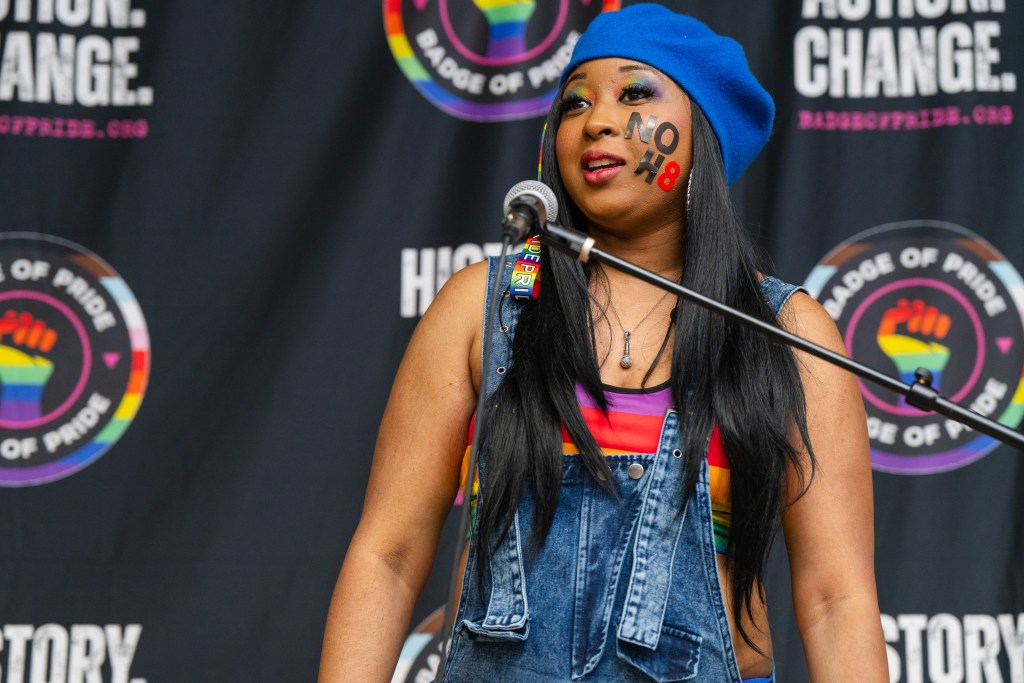
Say It Loud! also demonstrated how creating longer run times for exhibitions and being open to nontraditional interpretation of history exhibitions can result in new connections. Longer exhibitions allow time for more complimentary programming and increase opportunities for the community to respond.
Lessons for Museums
The experience of developing and presenting From Silence . . . to Celebration! suggests several lessons for museums seeking to engage audiences in complex or politically sensitive topics.
- Artifact-centered interpretation builds credibility in polarized environments. When exhibitions foreground objects and personal narratives, visitors encounter historical evidence not ideological rhetoric.
- Community partnerships strengthen trust and interpretive depth. Collaborative curatorial models ensure that exhibitions reflect the knowledge and lived experiences of the communities whose histories are being presented. These partnerships can also expand museum networks, deepen community relationships, and strengthen institutional relevance.
- Participatory and low-tech design strategies can foster deep reflection and encourage contemplation. Tools such as comment cards, collaborative art installations, and quiet reflection spaces encourage visitors to slow down and process historical material more thoughtfully.
- Representation in civic institutions matters. When marginalized histories are presented within public museums, visitors often experience a sense of recognition and belonging that extends beyond historical learning. As one visitor wrote, “It gives me hope to see how my elders fought so that people like me could have a voice and fight for my rights. They helped make me visible—that makes it harder to erase me.”
- Embedding flexibility and space for response into exhibition plans can generate unexpected connections. As evidenced by Say It Loud!, when museums observe how visitors and community partners are responding to an exhibition, and remain open to expanding those responses, new interpretive and creative possibilities can emerge.
- Organic community response requires time, space, and resources. Museums often plan exhibitions around defined outcomes, schedules, and deliverables, but meaningful public engagement may develop in ways that cannot be fully anticipated at the outset. Building in capacity to support these responses—through staff time, modest funding, program space, and willingness to adapt—allows museums to honor community creativity as part of the exhibition’s interpretive life rather than treating it as an add-on.
Conclusion: Museums and Community
Author and activist Mike Murawski describes museums as agents of change when they engage actively with the social realities of their communities.10 From Silence . . . to Celebration! illustrates how this role can unfold in practice. By prioritizing artifacts, community voices, and participatory engagement, the exhibition created an environment where visitors could encounter LGBTQ+ history in ways that were both historically grounded and personally meaningful (fig. 9).
For museums addressing contested histories, the lesson is not to avoid difficult topics but to approach them through interpretive strategies that prioritize the voices of those most impacted and give primacy to shared storytelling. When exhibitions and programs are designed in this way, they can help visitors encounter complex histories with curiosity rather than defensiveness.
The experience of From Silence . . . to Celebration! may best be captured by this comment card:
I am so glad queer history has a place, even temporarily, to be learned from and seen and heard and touched. We will not be erased.
When marginalized communities encounter their own histories within public institutions, the outcome extends beyond historical learning. It is recognition, belonging, and a sense of community that represents the fullest expression of what museums can achieve.
- Visit our FAQ page to view how we communicated with the public about language selection and frequently asked questions. ↩︎
- Sarah Bahari, “This North Texas city is one of the country’s most diverse, and it’s getting even more diverse,” Dallas Morning News, January 3, 2022. ↩︎
- Susan Ferentinos, Interpreting LGBT History at Museums and Historic Sites (Rowman & Littlefield, 2015). ↩︎
- Susan Ferentinos, Interpreting LGBT History at Museums and Historic Sites (Rowman & Littlefield, 2015). ↩︎
- “Badge of Pride Interpretive Plan,” Badge of Pride, 7. ↩︎
- Studies of object-based learning suggest that material culture helps audiences move beyond purely conceptual understandings of the past by engaging observation, emotion, empathy, and historical analysis together. For object-based learning and its relationship to creating human connections with artifacts, see Elizabeth Wood and Kiersten F. Latham, The Objects of Experience: Transforming Visitor-Object Encounters in Museums (Routledge, 2016). For an example of object-centered interpretation of difficult history, see Lonnie G. Bunch III, A Fool’s Errand: Creating the National Museum of African American History and Culture in the Age of Bush, Obama, and Trump (Smithsonian Books, 2019), especially his discussion of the inaugural exhibitions and the interpretive role of objects, photographs, media, and narrative structure. ↩︎
- Explore the “Pearce Wedding” images and more of the exhibition’s content on the Bloomberg Connects App (search “Badge of Pride”). ↩︎
- The city’s “Happy PRIDE” and “Happy Juneteenth” social media posts received hundreds of racist and hateful comments over several days, many apparently from accounts outside the local community. The posts were subsequently made unavailable to the public, and the city discontinued general holiday posts on its social media channels. Author’s conversations with City of Irving leadership, June 2024. ↩︎
- Say It Loud! An Anthology of Queer Poetics, Protest and Power (Badge of Pride, 2025). ↩︎
- Mike Murawski, Museums as Agents of Change: A Guide to Becoming a Changemaker (Rowman & Littlefield, 2021). ↩︎
Adrian Cardwell is Executive Director of Badge of Pride in Dallas, Texas.
Jennifer S. Landry is Director of Museums at the Irving Archives & Museum in Irving, Texas.
Upcoming Events
-
From Informational Interview to Real Connection
Event Date:Presented by: American Alliance of Museums and National Emerging Museum Professionals Network -
Understanding the U.S. History Workforce
Event Date:Presented by: American Association for State and Local History (AASLH) -
TrendsWatching: To Live or Die in AI Webinar
Event Date:Presented by: American Alliance of Museums -