At the heart of every great museum is the promise to protect and share the stories that define us. But for those of us in the field, we know a story only reaches its fullest potential when it is experienced. The physical space between an artifact and a visitor is a powerful bridge for connection. When that bridge is built with inclusive design, it does more than provide access; it fosters a profound sense of belonging.
We often speak of inclusion as a milestone to be reached, but at Solid Light, we understand that inclusivity isn’t a destination—it’s our moral imperative to move beyond compliance and toward universal autonomy. In an increasingly fractured world, museums stand as essential public squares. These are the places where people of all backgrounds, abilities, and perspectives gather to find common ground.
Elevating Experiences Through Autonomy
For a long time, the industry’s standard for accessibility was defined by compliance—the “how” of getting someone through a door. But the “why” is much deeper. The “why” is about dignity.
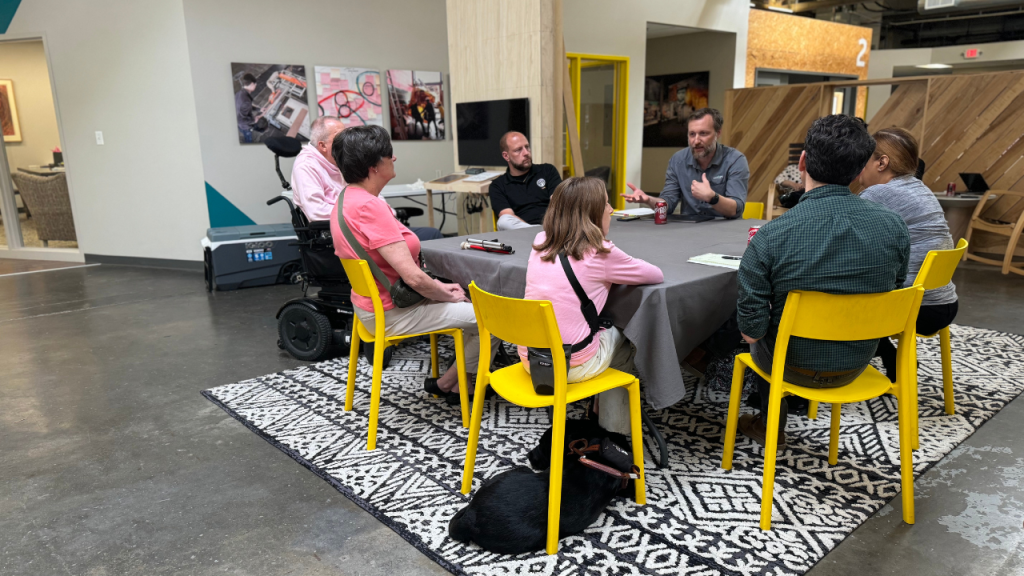
When visitors can move through an experience independently, it fosters a sense of agency and respect. This is the essence of universal autonomy. True inclusion means every visitor can engage on their own terms—without assumptions about their body, senses, or background. An experience is most welcoming when no one needs to ask for a different map, a separate entrance, or an alternate version of the story.
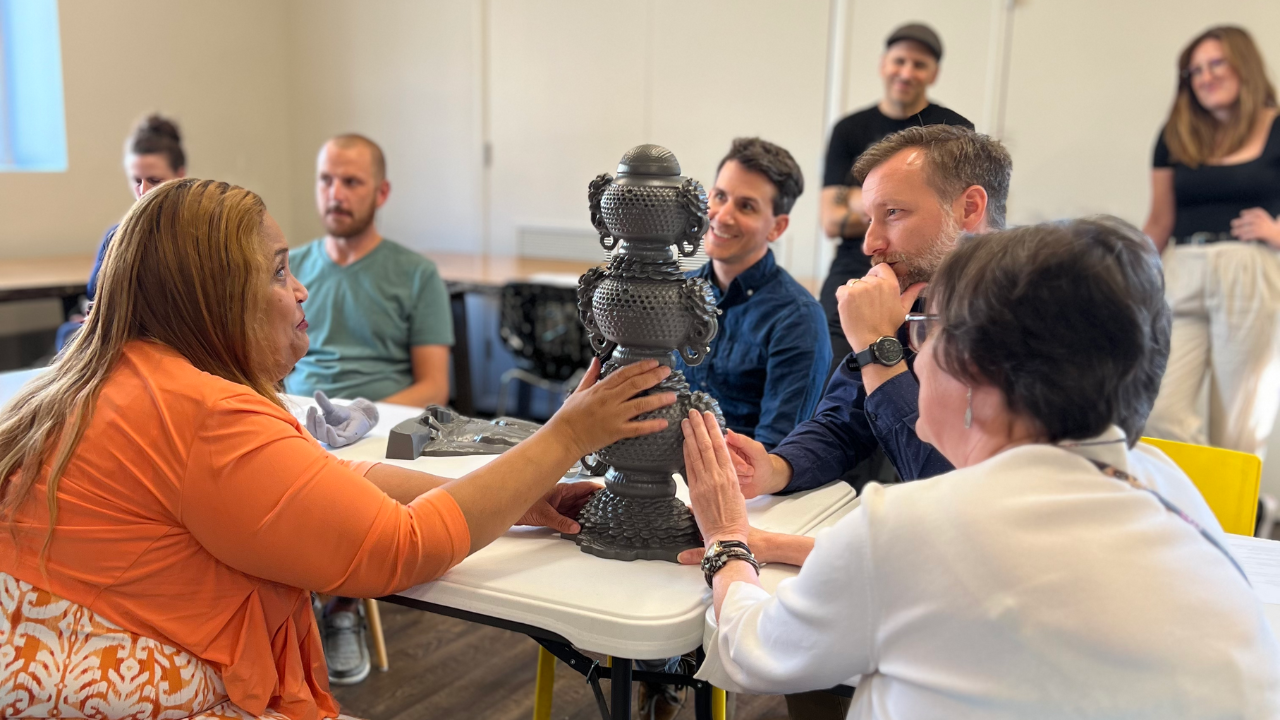
To achieve this, we utilize multi-sensory storytelling. By layering information through sound, touch, and light, we ensure that discovery happens through many channels simultaneously. A blind visitor exploring a high-relief model and a sighted visitor following a narrative arc are not having “separate but equal” experiences; they are participating in the same story, at the same time, in the same room.
This philosophy is the heartbeat of our work on The Dot Experience with the American Printing House for the Blind—a project designed to set a global benchmark for universal access, proving that when we design for the most complex needs, we create a space that’s welcome to all.
The “Nothing About Us Without Us” Standard
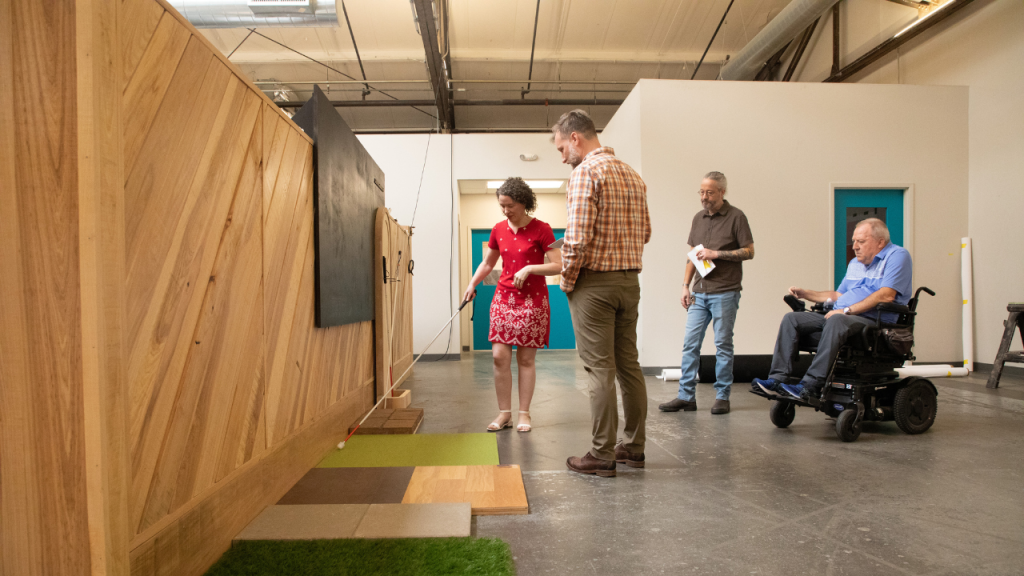
The “right thing to do” is often found in who we choose to listen to. We have traded the expert-down model for a spirit of co-creation, moving away from designing for communities and toward designing with communities.
Through our inclusive prototyping process, we invite individuals with lived experience—those who navigate the world with mobility aids, those who are neurodivergent, or those from marginalized communities—to test our concepts while they are still malleable. This is not a focus group held at the end of a project to check a box. It is a fundamental partnership where feedback becomes a structural pillar of the project. This collaborative spirit both acknowledges the individuals’ vital role in the community, and ensures that the final space reflects the actual needs and voices of the public we serve.
Designing with Emotion
We often think of accessibility in terms of ramps and doorways, but some of the most significant barriers are invisible. A welcoming environment requires sensory equity, and museums are, by nature, high-stimulation environments. The echo of a marble hall, the hum of a ventilation system, or the glare of a display case can quickly become a barrier to engagement.
To be considerate of these needs, we utilize our technique of emotional mapping to carefully choreograph the visitor journey by holistically linking story and environment to emotional and intellectual engagement. We thoughtfully manage the pace of an exhibit by balancing high-energy interactions with intentional quiet zones for reflection.
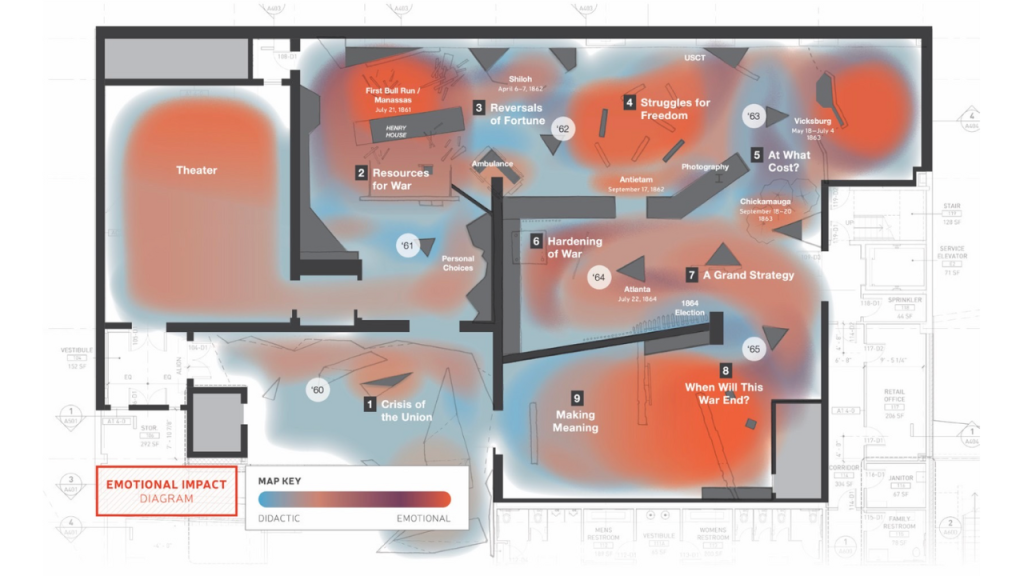
This strategic use of space creates psychological safety and becomes a critical tool for connecting communities. By designing for the nervous system, visitors are no longer focused on their own struggle to navigate the space; they are free to focus on the story of someone else. This is how museums build bridges between cultures, generations, and lived experiences.
Protecting the Inclusive Vision
The success of an inclusive museum depends on the integrity of its execution. As a design-build firm, we recognize that the most visionary goals are only as strong as the final physical details. Our integrated approach intentionally places the “why” of a project alongside the “how.”
When the people who imagine the story and the people who build the environment share the same mission, the result is a space that is both beautiful and functional. Real-time problem solving happens in this collaborative environment, where a fabricator and a designer can stand side-by-side to test and perfect every element of a space. With inclusion as the lens, this method provides a single point of accountability, ensuring the project’s core values remain at the forefront.
A New Standard of Belonging
As we continue to push the boundaries of what a visitor space can be, the physical space remains our most powerful tool for human connection. When we prioritize designing for the full spectrum of human experience, we send a message of profound respect.
The future of our industry lies in this commitment to the human scale. Solid Light is leading this charge by proving when you remove the barriers to entry—physical, sensory, and emotional—you don’t just increase your visitor numbers; you increase your institutional relevance. We are building a world where every visitor, upon entering, feels the quiet, powerful affirmation that they belong.
About Solid Light, Inc.
Solid Light has delivered award-winning visitor experiences for museums, tourism and cultural institutions, corporate environments, and public spaces nationwide since 1999. The firm seamlessly merges design, media, and fabrication in their 55,000 square foot facility, located in Louisville, KY.
Some of the firm’s previous projects include the Heaven Hill Bourbon Experience (Bardstown, KY); the American Civil War Museum (Richmond, VA); the Falls of the Ohio (Jeffersonville, IN); Discovery Park of America (Union City, TN); the Eternal Ghandi Museum Houston (Houston, TX); and most recently the National Baseball Hall of Fame (Cooperstown, NY).
Current Solid Light clients include the American Printing House for the Blind’s The Dot Experience (Louisville, KY); George Washington’s Mount Vernon (Mount Vernon, VA); National Society of the Sons of the American Revolution (Louisville, KY); and the National Susan B. Anthony Museum (Rochester, NY.) For more information about Solid Light, Inc., visit https://solidlight-inc.com/.
Upcoming Events
-
AAM Member Week
Event Date:Presented by: American Alliance of Museums -
AASLH History Hour: Is This Place Haunted?
Event Date:Presented by: American Association for State and Local History (AASLH) -
Disaster Preparedness for History Organizations
Event Date:Presented by: American Association for State and Local History (AASLH) -
From Informational Interview to Real Connection
Event Date:Presented by: American Alliance of Museums and National Emerging Museum Professionals Network